
Laith


Added to listOwnedwith 24 books.


Added to listOwnedwith 22 books.


I'd classify The Ministry for the Future as an essential read.
In my view, no other book captures the current crisis facing humanity as effectively as this one, nor presents potential solutions as compellingly. Spanning the 2020s, 2030s, and 2040s, Robinson vividly portrays the apocalyptic scenario that could unfold if we fail to address carbon emissions in the coming decade. The novel opens with a devastating heatwave that claims over 20 million lives in India and then progresses through time, focusing on the complex issue of climate change and the efforts of the bureaucratic agency designed to combat it, the titular Ministry for the Future. Set primarily in the cosmopolitan city of Zurich, the story follows two central characters: Mary Murphy, the no-nonsense former Foreign Minister of Ireland now leading the Ministry's efforts, and Franck May, a former aid worker and PTSD survivor from the heatwave in Lucknow.
This is the first Kim Stanley Robinson novel I've read, and it's clear why he is so highly regarded as a master of “realistic” science fiction. Robinson's writing is characterized by a strong commitment to plausible extrapolation and literary finesse. His extensive body of work is focused on contemporary science and often explores scientific development and ecological sustainability. While this isn't Robinson's first venture into climate change fiction, it's his first climate novel released after the U.S. withdrawal from the Paris Agreement. Published during the pandemic and amidst a devastating hurricane season and record-breaking wildfires in the U.S. and Australia, the book resonates with a palpable sense of frustration—a sorrowful cry of vindication from a voice in the wilderness. The focus on realism makes this book incredibly impactful, because climate change-induced disasters are no longer hard to imagine; they're increasingly frequent. I know that many people avoid the topic because it makes them uncomfortable, leaving it to activists and news anchors; but that's not going to save Phoenix from a heatwave or LA from a flood. As a global community, we celebrate figures like Greta Thunberg, yet we undermine her cause by treating the subject as taboo in polite conversation. The Ministry for the Future breaks these conventions; it will make you uncomfortable about the current state of affairs, even if climate change seems like a dry topic. Robinson makes it engaging and thought-provoking, and is even kind enough to give the world a happy ending.
The message and theme are clear from the outset, and Robinson sets out to show us exactly what we have to look forward to in the fight to curb climate change. He identifies the key elements of the problem, pausing the story at certain points to deliver full on lectures concerning the specifics of a subject like modern economics or fluid dynamics. Don't snooze! It's not all classroom subjects, things like crypto and eco-terrorism feature prominently; there are entire passages devoted to the effort of re-educating and later out-right murdering the billionaires. You would think that it would kill the pace, but the prose and structure carry you through; in a lot of ways it's adopting that iconic cut-away structure from the big summer disaster movie. We jump from place to place, character to character, following a plot that's as simple as “save the world”; what that really boils down to is a book about bureaucracy that takes you to pumping stations in Antarctica, flood devastated LA, and secret Swiss bunkers in the Alps. The visual details, the scope and depth, it's just so grand! . ‘Cinematic' perfectly describes it, if I were James Cameron, I'd quit playing around with the blue people and acquire the film rights to this instead. No other book has ever cried out for his unique mix of grand visuals and emotional depth like this one.
There are bugs if you go looking, there's a distinct Democratic-socialist bent to the problem-solving on offer, and a particular emphasis on the failings of capitalist markets. A big part of this book is about explaining how unsuited our current economy is to a task like reversing global warming, how the markets need to evolve in order to incentivize clean industry and carbon capture. That might come off as preachy, particularly if you disagree with his diagnosis of the market (probably a little more if you're a climate denier). I admit that parts of the book border on the extreme, presuming the ubiquity of eco-terrorism if not outright framing it as a part of the climate solution being among the most incendiary views on offer. But personally, I can't find the faults in what he's proposing in this book, his outline of the process to save the world has the distinct merit of not only being well-formed but written down to boot.
To a certain degree, this book is just Robinson telling us the what and why about his politics, couching it in an illustrative story. As a perpetual student of government, law, and policy, I just assume that this stuff is more interesting to me than the average Joe. That said, this was entertaining and well paced throughout, and I think that you're more likely than not to find something fascinating in this book. I can't recommend this book enough, an instant favorite, with a physical copy already in the mail.
I'd classify The Ministry for the Future as an essential read.
In my view, no other book captures the current crisis facing humanity as effectively as this one, nor presents potential solutions as compellingly. Spanning the 2020s, 2030s, and 2040s, Robinson vividly portrays the apocalyptic scenario that could unfold if we fail to address carbon emissions in the coming decade. The novel opens with a devastating heatwave that claims over 20 million lives in India and then progresses through time, focusing on the complex issue of climate change and the efforts of the bureaucratic agency designed to combat it, the titular Ministry for the Future. Set primarily in the cosmopolitan city of Zurich, the story follows two central characters: Mary Murphy, the no-nonsense former Foreign Minister of Ireland now leading the Ministry's efforts, and Franck May, a former aid worker and PTSD survivor from the heatwave in Lucknow.
This is the first Kim Stanley Robinson novel I've read, and it's clear why he is so highly regarded as a master of “realistic” science fiction. Robinson's writing is characterized by a strong commitment to plausible extrapolation and literary finesse. His extensive body of work is focused on contemporary science and often explores scientific development and ecological sustainability. While this isn't Robinson's first venture into climate change fiction, it's his first climate novel released after the U.S. withdrawal from the Paris Agreement. Published during the pandemic and amidst a devastating hurricane season and record-breaking wildfires in the U.S. and Australia, the book resonates with a palpable sense of frustration—a sorrowful cry of vindication from a voice in the wilderness. The focus on realism makes this book incredibly impactful, because climate change-induced disasters are no longer hard to imagine; they're increasingly frequent. I know that many people avoid the topic because it makes them uncomfortable, leaving it to activists and news anchors; but that's not going to save Phoenix from a heatwave or LA from a flood. As a global community, we celebrate figures like Greta Thunberg, yet we undermine her cause by treating the subject as taboo in polite conversation. The Ministry for the Future breaks these conventions; it will make you uncomfortable about the current state of affairs, even if climate change seems like a dry topic. Robinson makes it engaging and thought-provoking, and is even kind enough to give the world a happy ending.
The message and theme are clear from the outset, and Robinson sets out to show us exactly what we have to look forward to in the fight to curb climate change. He identifies the key elements of the problem, pausing the story at certain points to deliver full on lectures concerning the specifics of a subject like modern economics or fluid dynamics. Don't snooze! It's not all classroom subjects, things like crypto and eco-terrorism feature prominently; there are entire passages devoted to the effort of re-educating and later out-right murdering the billionaires. You would think that it would kill the pace, but the prose and structure carry you through; in a lot of ways it's adopting that iconic cut-away structure from the big summer disaster movie. We jump from place to place, character to character, following a plot that's as simple as “save the world”; what that really boils down to is a book about bureaucracy that takes you to pumping stations in Antarctica, flood devastated LA, and secret Swiss bunkers in the Alps. The visual details, the scope and depth, it's just so grand! . ‘Cinematic' perfectly describes it, if I were James Cameron, I'd quit playing around with the blue people and acquire the film rights to this instead. No other book has ever cried out for his unique mix of grand visuals and emotional depth like this one.
There are bugs if you go looking, there's a distinct Democratic-socialist bent to the problem-solving on offer, and a particular emphasis on the failings of capitalist markets. A big part of this book is about explaining how unsuited our current economy is to a task like reversing global warming, how the markets need to evolve in order to incentivize clean industry and carbon capture. That might come off as preachy, particularly if you disagree with his diagnosis of the market (probably a little more if you're a climate denier). I admit that parts of the book border on the extreme, presuming the ubiquity of eco-terrorism if not outright framing it as a part of the climate solution being among the most incendiary views on offer. But personally, I can't find the faults in what he's proposing in this book, his outline of the process to save the world has the distinct merit of not only being well-formed but written down to boot.
To a certain degree, this book is just Robinson telling us the what and why about his politics, couching it in an illustrative story. As a perpetual student of government, law, and policy, I just assume that this stuff is more interesting to me than the average Joe. That said, this was entertaining and well paced throughout, and I think that you're more likely than not to find something fascinating in this book. I can't recommend this book enough, an instant favorite, with a physical copy already in the mail.
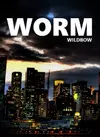
Worm took me two months to finish and it would have dragged on for much longer if not for the folks behind the audio.worm project, I regret only finding it after reading 90% through. Before I get into this book I want to thank that group of likely insane fans for the hundreds of hours they took to read and record this behemoth. To any potential reader, I highly recommend finding the fan-made audiobook on Apple podcasts because simply finding the time to READ this whole thing was driving me insane.
This has been a constant in my life for the last two months so I'm sorry if this review runs a little long. I think for a book like this I need to change up my review format, so I will frame this as a Q&A for potential readers.
Q: What is Worm?
A: Worm was/is a superhero web serial novel published between Jan 2011 and Nov 2013, It has 30 Volumes/arcs and was published bi-weekly at a pace of around 80 pages a week. If that doesn't drop your jaw consider it like this: Wildbow was basically publishing a complete novel a month, every month, for nearly THREE YEARS. Reading this in 2023 means reading the presumably edited epub edition (though you can read this chapter by chapter for free online) with minor changes to the original story.
Q: Okay maybe I should have been more specific smartass, What is Worm about?
A: Worm is set in a world where people start getting superpowers, usually this process occurs after some type of deeply traumatic incident. The story follows Taylor Hebert, a high school student who has recently lost her mother in a car accident and is facing a targeted campaign of bullying at school. As a result of the bullying Taylor awakens a power to control all of the bugs in her vicinity and her priorities change. With the purest of intentions, Taylor dons the tights of justice only to find out that the distinction between hero and villain isn't as clear cut as she thought.
If this sounds like every other cut-and-dried superhero premise that's because it is. But Worm is something a little more, It's not obvious from the premise or the early chapters but this is the sort of superhero story cut from the same cloth as Watchmen and The Boys. Taylor's early attempts to fit herself into the mold of a hero run into a series of setbacks that erode her faith in the establishment. She opts to cross the line, adopting the monicker “Skitter”, Taylor joins a group of up-and-coming villains called the Undersiders.
But that's just the premise and early plot, what Worm is really about is escalation. This is a story about someone making all the right decisions at the moment, only to have that decision trigger an even larger crisis, rinse, and repeat until the stakes are beyond global.
Q: What makes this special, why should I read something like this?
A: A concise answer would be the intricate world-building, well-defined characters, and expansive power system. The author delves deep into the psychological and emotional aspects of being a superhero, as well as the consequences of their actions on society and themselves. The narrative is both engaging and unpredictable, filled with twists and turns that keep readers hooked.
Worm has a lot in common with traditional superhero stories, but where it excels is where it subverts the trope and convention of the genre. Characters face realistic consequences for their actions, and there is a constant sense of danger and stakes. The story also delves into themes of identity, morality, and the blurry line between good and evil. The author's willingness to explore these themes in a thought-provoking manner sets “Worm” apart from more conventional superhero stories.
There's something to be said for the medium as well, your standard superhero story has almost always existed within the pages and the conventions of comic books. Worm trades the convenience and artistry of illustrated chapters for the depth and nuance that comes with an all-text story. Every character has a backstory that gets explored, details about the world are plainly stated, and as a reader you are made aware of all of those small things that would have traditionally been hidden in panel art.
Q: Okay you've talked pros, give me some cons, what's wrong with it?
A: I want to say clearly before I dive deep and nerdy into this that If I didn't like this series I wouldn't have stuck with it to the conclusion, I wouldn't be masocistically contemplating reading the sequel either. That said there were a number of things that bothered me enough that I almost DID put the book down, and I am not sure how much of me powering through was due to Worm's overall quality and how much it was me trying to complete a challenge I'd taken on.
The early chapters suck and I knew that going in, I am under the impression that Wildbow went back while editing the epub and strengthened some of these early chapters but that doesn't really impact how good/interesting it is at the outset. Every hero and villain needs their origin story, and at this point in the novel, the story reads like most other fan fiction. It takes a while for the narrative engine of escalation to take hold in the universe; I would wager that it's not until the introduction of Coil and Dinah (nearly 4 or 5 Volumes into the series) that the story finds the beats that will continue to run throughout.
This story was published and planned piecemeal. Wildbow has stated that he would often write himself into deadends and then force himself to write back out just to keep the tension of the narrative going; after all, if even the author doesn't know where this is going how can the reader know? I'm sure that this piecemeal approach allowed the story to benefit from reader feedback in real-time, and to his credit, there is a significant amount of tension surrounding key moments in the story so it's a partial success. But not having a planned story really fucks with the flow of this book, the pacing is all over the place, there are time skips and the additions of whole hosts of never before seen heroes, and the backstory has been delivered in donation-driven interludes that breakup this already gasping story even further.
Another consequence of working from a rough or non-existent outline is that your story runs the risk of losing the reader even at the best of times. There are whole volumes in Worm that I cannot riddle the meaning or significance of, some revelations are buried in detail-rich text and leave you scratching your head for hours of storytime. We never get a consistent villain and the world continues to evolve and confound with each twist. When Wildbow is on the ball this is the most exhilarating part of reading the book, but the quality is not consistent chapter by chapter.
Q: Anything else I need to know?
A: Worm is exciting, varied, and endlessly complex. Just reading the wiki could entertain you for hours and hours. The peaks are high and the valleys are low. I thought that reading the edited epub compilation would mean that I would skip over some of those valleys but I was wrong. Do not go into this book expecting to read something that's been run through with a fine tooth comb, expect some ends to remain loose, and for developments to be nonsensical or even cartoonish. All things told though this is a superhero book at its heart and it's okay to be all of those things.
I really wish that Wildbow had sat down, read this whole series over, and just went to town with the red pen. I see no reason why the retail publication had to be the same as the web publication, warts, and all. This could have been a 3,000-page, 4 or 5 Volume box set, and I am positive that all of these arcs could have been condensed into six 800 page books. Portions of the plot could have been reworked, interludes brought into the primary narrative, and foreshadowing could have been added retroactively. There is so much potential in here and this is not the publishing release I would have hoped for.
I want to talk about fanfic for just a second as well. There is such a City of Heroes RP vibe coming off of this book and I don't know if it's intentional or just a consequence of writing a scenario like this to begin with. I don't say that to put anyone off, but if you're thinking of picking this up you should know that there is a whole fanfic universe that surrounds Worm, lots of readers who write in this universe. Obviously, I am not a contemporary reader but some of the unexplained gaps and surprise characters seemed to be Wildbow folding in some of those fanfic stories and heroes. I could be wrong on that point so don't quote me.
I wouldn't pick this up unless you have some time to kill, all the reviews that say this is nectar from the gods are from serious nerds that have probably already read more comics than everyone you know put together and have been dying for more content. Worm is good, even great at times but there are so many better ways to spend your time. If Wildbow ever comes back to this volume I hope he really considers a partial rewrite and some serious consolidation. I enjoyed this book a lot but I would not recommend something like this to 99% of the people that I know, it just isn't in a state that invites someone to read it.
Worm took me two months to finish and it would have dragged on for much longer if not for the folks behind the audio.worm project, I regret only finding it after reading 90% through. Before I get into this book I want to thank that group of likely insane fans for the hundreds of hours they took to read and record this behemoth. To any potential reader, I highly recommend finding the fan-made audiobook on Apple podcasts because simply finding the time to READ this whole thing was driving me insane.
This has been a constant in my life for the last two months so I'm sorry if this review runs a little long. I think for a book like this I need to change up my review format, so I will frame this as a Q&A for potential readers.
Q: What is Worm?
A: Worm was/is a superhero web serial novel published between Jan 2011 and Nov 2013, It has 30 Volumes/arcs and was published bi-weekly at a pace of around 80 pages a week. If that doesn't drop your jaw consider it like this: Wildbow was basically publishing a complete novel a month, every month, for nearly THREE YEARS. Reading this in 2023 means reading the presumably edited epub edition (though you can read this chapter by chapter for free online) with minor changes to the original story.
Q: Okay maybe I should have been more specific smartass, What is Worm about?
A: Worm is set in a world where people start getting superpowers, usually this process occurs after some type of deeply traumatic incident. The story follows Taylor Hebert, a high school student who has recently lost her mother in a car accident and is facing a targeted campaign of bullying at school. As a result of the bullying Taylor awakens a power to control all of the bugs in her vicinity and her priorities change. With the purest of intentions, Taylor dons the tights of justice only to find out that the distinction between hero and villain isn't as clear cut as she thought.
If this sounds like every other cut-and-dried superhero premise that's because it is. But Worm is something a little more, It's not obvious from the premise or the early chapters but this is the sort of superhero story cut from the same cloth as Watchmen and The Boys. Taylor's early attempts to fit herself into the mold of a hero run into a series of setbacks that erode her faith in the establishment. She opts to cross the line, adopting the monicker “Skitter”, Taylor joins a group of up-and-coming villains called the Undersiders.
But that's just the premise and early plot, what Worm is really about is escalation. This is a story about someone making all the right decisions at the moment, only to have that decision trigger an even larger crisis, rinse, and repeat until the stakes are beyond global.
Q: What makes this special, why should I read something like this?
A: A concise answer would be the intricate world-building, well-defined characters, and expansive power system. The author delves deep into the psychological and emotional aspects of being a superhero, as well as the consequences of their actions on society and themselves. The narrative is both engaging and unpredictable, filled with twists and turns that keep readers hooked.
Worm has a lot in common with traditional superhero stories, but where it excels is where it subverts the trope and convention of the genre. Characters face realistic consequences for their actions, and there is a constant sense of danger and stakes. The story also delves into themes of identity, morality, and the blurry line between good and evil. The author's willingness to explore these themes in a thought-provoking manner sets “Worm” apart from more conventional superhero stories.
There's something to be said for the medium as well, your standard superhero story has almost always existed within the pages and the conventions of comic books. Worm trades the convenience and artistry of illustrated chapters for the depth and nuance that comes with an all-text story. Every character has a backstory that gets explored, details about the world are plainly stated, and as a reader you are made aware of all of those small things that would have traditionally been hidden in panel art.
Q: Okay you've talked pros, give me some cons, what's wrong with it?
A: I want to say clearly before I dive deep and nerdy into this that If I didn't like this series I wouldn't have stuck with it to the conclusion, I wouldn't be masocistically contemplating reading the sequel either. That said there were a number of things that bothered me enough that I almost DID put the book down, and I am not sure how much of me powering through was due to Worm's overall quality and how much it was me trying to complete a challenge I'd taken on.
The early chapters suck and I knew that going in, I am under the impression that Wildbow went back while editing the epub and strengthened some of these early chapters but that doesn't really impact how good/interesting it is at the outset. Every hero and villain needs their origin story, and at this point in the novel, the story reads like most other fan fiction. It takes a while for the narrative engine of escalation to take hold in the universe; I would wager that it's not until the introduction of Coil and Dinah (nearly 4 or 5 Volumes into the series) that the story finds the beats that will continue to run throughout.
This story was published and planned piecemeal. Wildbow has stated that he would often write himself into deadends and then force himself to write back out just to keep the tension of the narrative going; after all, if even the author doesn't know where this is going how can the reader know? I'm sure that this piecemeal approach allowed the story to benefit from reader feedback in real-time, and to his credit, there is a significant amount of tension surrounding key moments in the story so it's a partial success. But not having a planned story really fucks with the flow of this book, the pacing is all over the place, there are time skips and the additions of whole hosts of never before seen heroes, and the backstory has been delivered in donation-driven interludes that breakup this already gasping story even further.
Another consequence of working from a rough or non-existent outline is that your story runs the risk of losing the reader even at the best of times. There are whole volumes in Worm that I cannot riddle the meaning or significance of, some revelations are buried in detail-rich text and leave you scratching your head for hours of storytime. We never get a consistent villain and the world continues to evolve and confound with each twist. When Wildbow is on the ball this is the most exhilarating part of reading the book, but the quality is not consistent chapter by chapter.
Q: Anything else I need to know?
A: Worm is exciting, varied, and endlessly complex. Just reading the wiki could entertain you for hours and hours. The peaks are high and the valleys are low. I thought that reading the edited epub compilation would mean that I would skip over some of those valleys but I was wrong. Do not go into this book expecting to read something that's been run through with a fine tooth comb, expect some ends to remain loose, and for developments to be nonsensical or even cartoonish. All things told though this is a superhero book at its heart and it's okay to be all of those things.
I really wish that Wildbow had sat down, read this whole series over, and just went to town with the red pen. I see no reason why the retail publication had to be the same as the web publication, warts, and all. This could have been a 3,000-page, 4 or 5 Volume box set, and I am positive that all of these arcs could have been condensed into six 800 page books. Portions of the plot could have been reworked, interludes brought into the primary narrative, and foreshadowing could have been added retroactively. There is so much potential in here and this is not the publishing release I would have hoped for.
I want to talk about fanfic for just a second as well. There is such a City of Heroes RP vibe coming off of this book and I don't know if it's intentional or just a consequence of writing a scenario like this to begin with. I don't say that to put anyone off, but if you're thinking of picking this up you should know that there is a whole fanfic universe that surrounds Worm, lots of readers who write in this universe. Obviously, I am not a contemporary reader but some of the unexplained gaps and surprise characters seemed to be Wildbow folding in some of those fanfic stories and heroes. I could be wrong on that point so don't quote me.
I wouldn't pick this up unless you have some time to kill, all the reviews that say this is nectar from the gods are from serious nerds that have probably already read more comics than everyone you know put together and have been dying for more content. Worm is good, even great at times but there are so many better ways to spend your time. If Wildbow ever comes back to this volume I hope he really considers a partial rewrite and some serious consolidation. I enjoyed this book a lot but I would not recommend something like this to 99% of the people that I know, it just isn't in a state that invites someone to read it.


This is my second reading, and I really never thought I'd open this book again. When I first cracked this in college my feelings were typical of the general reception to the book: I found it excessive in its violence and sadism, nihilistic to a fault; the only apparent goal seemed to be to shock the reader. In fact I don't think I made it past chapter 42 (Girl) in my first reading, I know I put it down thinking that what I was reading was truly appalling and that 41 chapters and the movie had driven the point home well enough. This book is just as appalling the second time through, but- and maybe because my sense for this stuff has been dulled by I Was Dora Suarez or maybe it's my increased exposure to rich white assholes- I found myself looking past the smokescreen of insanity and violence and realizing just how prophetically reflective this book is.
Given the popularity and fidelity of the film adaptation I doubt that I need to tell anyone what American Psycho is about; Patrick Bateman is a part of the zeitgeist, for better or worse. That said it's not difficult to summarize the book, it's the diary of a crazed yuppie serial murder; a sensory experience rather than a traditional story-a manic episode of a novel. In fact, based on interviews with Ellis that's precisely the intention with which he sat down to write what was initially conceptualized as a continuation of his prior works (Less than Zero and Rules of Attraction).
I won't quote directly but Ellis held firm to a belief that the only remaining frontier in literature was sensationalism for the sake of sensationalism. So he sought to craft a story which evoked in the reader extreme feelings, sought to provide otherwise inaccessible experiences that would addict and alienate. This is lost on anyone who wasn't 20ish in the early 80's but Ellis was a rock star, authors could be rock stars- back then you see, people used to read. His two prior books were supremely popular with the MTV generation- his first an instant bestseller and quickly adapted for film, his second getting the same treatment. Since Ellis was eighteen he'd been thrust into the limelight, his name on NYC guest-lists second only to Andy Warhol, his evenings out recounted to him secondhand by the tabloids. It's from the isolating, surreal, and indulgent cocaine-fueled lifestyle of success and celebrity that Ellis was living where we get the seeds of Patrick Bateman.
If I were to judge this book based solely off of intention and execution then I would have to give it full marks. It was one of the most banned books of all time, sold shrink wrapped in Australia- from a perspective of shock and awe this book is a tour de force. But obviously that's not the sole criteria on which anyone would judge a book; a novel is judged on the quality of its world and narrative not just its sensory effects. This kind of judgement based on sensation was/is typically reserved exclusively for pieces in a visual medium, which begs the obvious question, are we to take this plainly repulsive and horrifying thing that Ellis made and treat it as a piece of art? This is the lens through which most people digest this book, as piece of concept art, a discourse of aesthetics.
That discourse is a surface level one, one that could be had with any other piece of transgressive lit. But, American Psycho captured the public's attention like nothing that came before. Unlike Crash or Naked Lunch, books which garnered immense critical praise and eventual cult popularity, Psycho ascended past cult status and into the mainstream almost immediately and its popularity has endured since- Why? Why is it that this specific piece of literature has shifted into mainstream awareness when all the other equally good-equally sensationalist pieces are just cult obscura in the modern day?
The simplest answer is that AP is shallow and accessible on its surface- this is a book about a consumerist serial killer in the 80s. Consumerism bad, Bateman bad, 80s bad, world is bad. It's not just a reflection on and of the culture of the time, it's also made for that self same culture- a kind of cultural Ouroboros. You don't even have to read through the whole thing to get yourself there, the themes may as well be printed on the dust jacket they're so loud. The magic of American Pyscho isn't in the portrayal of white collar douche-bags, for me it's what's subtly buried beneath the noise.
In many ways, despite its immediate popularity, this is a book that's waited for the current moment to unfold itself. What is Patrick Bateman if not the archetype of the modern conservative operator? It was lost on me in the initial reading, partly because the culture and political gap between left and right wasn't as wide at the time. But take a look at the the exchange on politics in the first chapter, it is eerily close to what you'd hear at CPAC today, and the orators not all too dissimilar from Bateman:
But we can’t ignore our social needs either. We have to stop people from abusing the welfare system. We have to provide food and shelter for the homeless and oppose racial discrimination and promote civil rights while also promoting equal rights for women but change the abortion laws to protect the right to life yet still somehow maintain women’s freedom of choice. We also have to control the influx of illegal immigrants. We have to encourage a return to traditional moral values and curb graphic sex and violence on TV, in movies, in popular music, everywhere. Most importantly we have to promote general social concern and less materialism in young people.
Bateman is plainly echoing the classic circular talking points that had already worn themselves out at the time of AP's publishing. The reader knows Bateman doesn't give a single care about anything he's talking about, he's saying what he says because he believes it to be the "correct" answer. Deep down at the core of Patrick Bateman is an all consuming void, he's an automaton in the thrall of his cyrenaic pursuits. His politics like his person are the mask by which he disguises his contempt for humanity and lust for power/control/violence.
There's also his incredibly coincidental obsession with Donald Trump, the man he views as paragon and benchmark. Is it coincidence? Ellis was likely in the first wave of NY socialites put off by Don's gaudy mien and rapacity, who better to symbolize the kind of person Bateman is than the Barron and his golden toilet. The fact that Ellis's icon of social rot became the President and pseudo-deity of the corrupt and malformed can't be coincidence. Ellis knew where we were going, I think he saw what American society valued and sought to paint its portrait. Like a modern day Stańczyk sat in his chair, Ellis presents us with truth dressed as the absurd, animals in clean and pressed Armani suits- something for us to ogle and gasp at, to mock and reference and laugh at- though he's the only person not laughing, the ever ironic Jester.
This is a completely different book from what I first read, though I think the point remains the same. American Psycho is a looking glass into a part of reality that is just not accessible from the normal vantage- it's nihilistic and insane, but that's the rub, the world is the same way, and just like Bateman the very worst of it hides in plain sight. This is fascinating and horrible, if you make it past the blood and gore you'll walk away with plenty to think about.
This is my second reading, and I really never thought I'd open this book again. When I first cracked this in college my feelings were typical of the general reception to the book: I found it excessive in its violence and sadism, nihilistic to a fault; the only apparent goal seemed to be to shock the reader. In fact I don't think I made it past chapter 42 (Girl) in my first reading, I know I put it down thinking that what I was reading was truly appalling and that 41 chapters and the movie had driven the point home well enough. This book is just as appalling the second time through, but- and maybe because my sense for this stuff has been dulled by I Was Dora Suarez or maybe it's my increased exposure to rich white assholes- I found myself looking past the smokescreen of insanity and violence and realizing just how prophetically reflective this book is.
Given the popularity and fidelity of the film adaptation I doubt that I need to tell anyone what American Psycho is about; Patrick Bateman is a part of the zeitgeist, for better or worse. That said it's not difficult to summarize the book, it's the diary of a crazed yuppie serial murder; a sensory experience rather than a traditional story-a manic episode of a novel. In fact, based on interviews with Ellis that's precisely the intention with which he sat down to write what was initially conceptualized as a continuation of his prior works (Less than Zero and Rules of Attraction).
I won't quote directly but Ellis held firm to a belief that the only remaining frontier in literature was sensationalism for the sake of sensationalism. So he sought to craft a story which evoked in the reader extreme feelings, sought to provide otherwise inaccessible experiences that would addict and alienate. This is lost on anyone who wasn't 20ish in the early 80's but Ellis was a rock star, authors could be rock stars- back then you see, people used to read. His two prior books were supremely popular with the MTV generation- his first an instant bestseller and quickly adapted for film, his second getting the same treatment. Since Ellis was eighteen he'd been thrust into the limelight, his name on NYC guest-lists second only to Andy Warhol, his evenings out recounted to him secondhand by the tabloids. It's from the isolating, surreal, and indulgent cocaine-fueled lifestyle of success and celebrity that Ellis was living where we get the seeds of Patrick Bateman.
If I were to judge this book based solely off of intention and execution then I would have to give it full marks. It was one of the most banned books of all time, sold shrink wrapped in Australia- from a perspective of shock and awe this book is a tour de force. But obviously that's not the sole criteria on which anyone would judge a book; a novel is judged on the quality of its world and narrative not just its sensory effects. This kind of judgement based on sensation was/is typically reserved exclusively for pieces in a visual medium, which begs the obvious question, are we to take this plainly repulsive and horrifying thing that Ellis made and treat it as a piece of art? This is the lens through which most people digest this book, as piece of concept art, a discourse of aesthetics.
That discourse is a surface level one, one that could be had with any other piece of transgressive lit. But, American Psycho captured the public's attention like nothing that came before. Unlike Crash or Naked Lunch, books which garnered immense critical praise and eventual cult popularity, Psycho ascended past cult status and into the mainstream almost immediately and its popularity has endured since- Why? Why is it that this specific piece of literature has shifted into mainstream awareness when all the other equally good-equally sensationalist pieces are just cult obscura in the modern day?
The simplest answer is that AP is shallow and accessible on its surface- this is a book about a consumerist serial killer in the 80s. Consumerism bad, Bateman bad, 80s bad, world is bad. It's not just a reflection on and of the culture of the time, it's also made for that self same culture- a kind of cultural Ouroboros. You don't even have to read through the whole thing to get yourself there, the themes may as well be printed on the dust jacket they're so loud. The magic of American Pyscho isn't in the portrayal of white collar douche-bags, for me it's what's subtly buried beneath the noise.
In many ways, despite its immediate popularity, this is a book that's waited for the current moment to unfold itself. What is Patrick Bateman if not the archetype of the modern conservative operator? It was lost on me in the initial reading, partly because the culture and political gap between left and right wasn't as wide at the time. But take a look at the the exchange on politics in the first chapter, it is eerily close to what you'd hear at CPAC today, and the orators not all too dissimilar from Bateman:
But we can’t ignore our social needs either. We have to stop people from abusing the welfare system. We have to provide food and shelter for the homeless and oppose racial discrimination and promote civil rights while also promoting equal rights for women but change the abortion laws to protect the right to life yet still somehow maintain women’s freedom of choice. We also have to control the influx of illegal immigrants. We have to encourage a return to traditional moral values and curb graphic sex and violence on TV, in movies, in popular music, everywhere. Most importantly we have to promote general social concern and less materialism in young people.
Bateman is plainly echoing the classic circular talking points that had already worn themselves out at the time of AP's publishing. The reader knows Bateman doesn't give a single care about anything he's talking about, he's saying what he says because he believes it to be the "correct" answer. Deep down at the core of Patrick Bateman is an all consuming void, he's an automaton in the thrall of his cyrenaic pursuits. His politics like his person are the mask by which he disguises his contempt for humanity and lust for power/control/violence.
There's also his incredibly coincidental obsession with Donald Trump, the man he views as paragon and benchmark. Is it coincidence? Ellis was likely in the first wave of NY socialites put off by Don's gaudy mien and rapacity, who better to symbolize the kind of person Bateman is than the Barron and his golden toilet. The fact that Ellis's icon of social rot became the President and pseudo-deity of the corrupt and malformed can't be coincidence. Ellis knew where we were going, I think he saw what American society valued and sought to paint its portrait. Like a modern day Stańczyk sat in his chair, Ellis presents us with truth dressed as the absurd, animals in clean and pressed Armani suits- something for us to ogle and gasp at, to mock and reference and laugh at- though he's the only person not laughing, the ever ironic Jester.
This is a completely different book from what I first read, though I think the point remains the same. American Psycho is a looking glass into a part of reality that is just not accessible from the normal vantage- it's nihilistic and insane, but that's the rub, the world is the same way, and just like Bateman the very worst of it hides in plain sight. This is fascinating and horrible, if you make it past the blood and gore you'll walk away with plenty to think about.

This is an extension to the Library of Babel short story by Borges. Where Borges sketches out the concept this is a story told from the perspective of someone living in his imagined hell. It's a mundane, ruthlessly boring hell, one where you could spend lightyears just falling down to the very first floor, your eventual exit a guaranteed inevitability. The torment is mathematical, hope is made infinite and therefore unusable- suffering born not from ignorance but from the unbearable proximity of an inaccessible truth. Hope survives, but only as torment.
It's a short read that adds a little levity, drama, and needed characterization to Borges' sketch. It's a creative twist on a fantastic concept, and it sticks with you just like its inspiration.
This is an extension to the Library of Babel short story by Borges. Where Borges sketches out the concept this is a story told from the perspective of someone living in his imagined hell. It's a mundane, ruthlessly boring hell, one where you could spend lightyears just falling down to the very first floor, your eventual exit a guaranteed inevitability. The torment is mathematical, hope is made infinite and therefore unusable- suffering born not from ignorance but from the unbearable proximity of an inaccessible truth. Hope survives, but only as torment.
It's a short read that adds a little levity, drama, and needed characterization to Borges' sketch. It's a creative twist on a fantastic concept, and it sticks with you just like its inspiration.
This is an extension to the Library of Babel short story by Borges. Where Borges sketches out the concept this is a story told from the perspective of someone living in his imagined hell. It's a mundane, ruthlessly boring hell, one where you could spend lightyears just falling down to the very first floor, your eventual exit a guaranteed inevitability. The torment is mathematical, hope is made is made infinite and therefore unusable- suffering born not from ignorance but from the unbearable proximity of an inaccessible truth. Hope survives, but only as torment.
It's a short read that adds a little levity, drama, and needed characterization to Borges' sketch. It's a creative twist on a fantastic concept, and it sticks with you just like its inspiration.
This is an extension to the Library of Babel short story by Borges. Where Borges sketches out the concept this is a story told from the perspective of someone living in his imagined hell. It's a mundane, ruthlessly boring hell, one where you could spend lightyears just falling down to the very first floor, your eventual exit a guaranteed inevitability. The torment is mathematical, hope is made is made infinite and therefore unusable- suffering born not from ignorance but from the unbearable proximity of an inaccessible truth. Hope survives, but only as torment.
It's a short read that adds a little levity, drama, and needed characterization to Borges' sketch. It's a creative twist on a fantastic concept, and it sticks with you just like its inspiration.
