
Michael


Added to listOwnedwith 124 books.


The Son of Man is a novel with three main characters known only as the father, the mother, and the son (or sometimes the child). The mother became pregnant with the child at 17. A few years after that, the father disappears, presumably, but not certainly to prison. Six years later he returns. He insists that the mother and the child accompany him to a derelict cabin in the woods for a new beginning. It does not go well.
The novel has shifts in time and POV, which I thought were handled well. It was very detailed, and the details were also handled well. The details of nature, the cabin, etc., were an interesting stylistic contrast to the fact that the main characters remained nameless throughout the novel. One of the most important details about a person was missing from this novel full of detail.
In addition, the writing gave me a real sense of foreboding.
However, I really didn’t like the style of the writing or at least the vocabulary used, especially in the prologue. I will occasionally need to consult a dictionary to look up a word, but I was constantly having to do this for this novel. When I did look these words up, I found that many of them had a perfectly good synonym that would have been much more comprehensible to the general reader. I wonder if this was a choice made by the author or the translator. Anyway, I don’t know if I reacted so strongly to this aspect of the book because it just took me out of the flow of the narrative, or simply because it made me feel stupid.
I almost DNFed this. I’m glad I didn’t because it is a good novel. The atmosphere that del Amo creates is really something, the sense of foreboding is unrelenting.
And the ending is something that will hang over me for a long time.
For everything other than language/style-4 or 4.5. For language and style-3. So 3.5
The Son of Man is a novel with three main characters known only as the father, the mother, and the son (or sometimes the child). The mother became pregnant with the child at 17. A few years after that, the father disappears, presumably, but not certainly to prison. Six years later he returns. He insists that the mother and the child accompany him to a derelict cabin in the woods for a new beginning. It does not go well.
The novel has shifts in time and POV, which I thought were handled well. It was very detailed, and the details were also handled well. The details of nature, the cabin, etc., were an interesting stylistic contrast to the fact that the main characters remained nameless throughout the novel. One of the most important details about a person was missing from this novel full of detail.
In addition, the writing gave me a real sense of foreboding.
However, I really didn’t like the style of the writing or at least the vocabulary used, especially in the prologue. I will occasionally need to consult a dictionary to look up a word, but I was constantly having to do this for this novel. When I did look these words up, I found that many of them had a perfectly good synonym that would have been much more comprehensible to the general reader. I wonder if this was a choice made by the author or the translator. Anyway, I don’t know if I reacted so strongly to this aspect of the book because it just took me out of the flow of the narrative, or simply because it made me feel stupid.
I almost DNFed this. I’m glad I didn’t because it is a good novel. The atmosphere that del Amo creates is really something, the sense of foreboding is unrelenting.
And the ending is something that will hang over me for a long time.
For everything other than language/style-4 or 4.5. For language and style-3. So 3.5

A Room Above a Shop is a novel about tenderness, true love, yearning, and fear.
B and M live in small town Wales in the 1980s. They are gay in a time and place where that was considered disgusting, evil, etc., etc. They find each other by chance and fall in love. They have no way to declare their love to the world, but in their “room above [M’s] shop” they carefully build a life together. This room is their refuge.
The ending is heartbreaking.
Anthony Shapland writes in sparse, spare prose. It is almost like poetry. There is much left unsaid in his prose, but despite this we know what is unsaid.
“He learned the things he needed to like. If he got the wrong ear pierced…if he looked at his finger-nails the wrong way…”. I grew up in Tennessee and not small-town Wales, but I still remember trying to remember which ear was the correct ear to be pierced or how to look at my fingernails the right way. The fear of getting it wrong and that people would know.
This short, poetic novel about yearning and love (and fear) is wonderful.
However, the next gay novel I read will have a happy ending.
A Room Above a Shop is a novel about tenderness, true love, yearning, and fear.
B and M live in small town Wales in the 1980s. They are gay in a time and place where that was considered disgusting, evil, etc., etc. They find each other by chance and fall in love. They have no way to declare their love to the world, but in their “room above [M’s] shop” they carefully build a life together. This room is their refuge.
The ending is heartbreaking.
Anthony Shapland writes in sparse, spare prose. It is almost like poetry. There is much left unsaid in his prose, but despite this we know what is unsaid.
“He learned the things he needed to like. If he got the wrong ear pierced…if he looked at his finger-nails the wrong way…”. I grew up in Tennessee and not small-town Wales, but I still remember trying to remember which ear was the correct ear to be pierced or how to look at my fingernails the right way. The fear of getting it wrong and that people would know.
This short, poetic novel about yearning and love (and fear) is wonderful.
However, the next gay novel I read will have a happy ending.
Added to listOwnedwith 123 books.


Added to listOwnedwith 122 books.

I loved Celeste Ng’s Little Fires Everywhere.
The Richardson family lives in Shaker Heights, Ohio. The family is made up or Mr. and Mrs. Richardson and their four children: Lexie, Trip, Moody, and Izzy. They are comfortably upper middle class and live in comfortably upper middle-class Shaker Heights, Ohio, just outside Cleveland. Elena Richardson inherited a small duplex from her parents and rents it out. She rents it to Mia, a single mother and her daughter Pearl.
The novel begins with the Ricardson’s house burning down. We go back in time to find out why.
Ng gives us characters that are good but do questionable things at times. She shows us that while we think things are black and white, they are really shades of gray. Sometimes when faced with choices you must pick the least bad thing. Sometimes when you are faced with two good choices, you must pick the choice that is the most good, and hopefully the person choosing is aware that this choice is sure to hurt someone who doesn’t deserve to be hurt.
Although I know that there are some who see this differently, I felt that there were no bad characters. There were decent people who made bad choices, or perhaps we should say, they made unthinking choices in the heat of the moment.
The novel covers the important themes of cultural identity, motherhood, economic privilege, and white privilege.
Ng shows that there are rules we live by, but she asks, should we? If we choose not to live by these rules, she asks, who do we hurt.
I liked and could identify with most of the characters, but I didn’t like Izzy very much. Perhaps it is my age. I thought Mia was also a little hard to take at the beginning. No one could be that wise, that caring, and that talented. But as we go along, we learn that Mia too has made a terrible choice for the most understandable of reasons.
I was debating between a 4.75 and 5 and then realized I would remember and think about this novel for a long time, so 5 it is.
I loved Celeste Ng’s Little Fires Everywhere.
The Richardson family lives in Shaker Heights, Ohio. The family is made up or Mr. and Mrs. Richardson and their four children: Lexie, Trip, Moody, and Izzy. They are comfortably upper middle class and live in comfortably upper middle-class Shaker Heights, Ohio, just outside Cleveland. Elena Richardson inherited a small duplex from her parents and rents it out. She rents it to Mia, a single mother and her daughter Pearl.
The novel begins with the Ricardson’s house burning down. We go back in time to find out why.
Ng gives us characters that are good but do questionable things at times. She shows us that while we think things are black and white, they are really shades of gray. Sometimes when faced with choices you must pick the least bad thing. Sometimes when you are faced with two good choices, you must pick the choice that is the most good, and hopefully the person choosing is aware that this choice is sure to hurt someone who doesn’t deserve to be hurt.
Although I know that there are some who see this differently, I felt that there were no bad characters. There were decent people who made bad choices, or perhaps we should say, they made unthinking choices in the heat of the moment.
The novel covers the important themes of cultural identity, motherhood, economic privilege, and white privilege.
Ng shows that there are rules we live by, but she asks, should we? If we choose not to live by these rules, she asks, who do we hurt.
I liked and could identify with most of the characters, but I didn’t like Izzy very much. Perhaps it is my age. I thought Mia was also a little hard to take at the beginning. No one could be that wise, that caring, and that talented. But as we go along, we learn that Mia too has made a terrible choice for the most understandable of reasons.
I was debating between a 4.75 and 5 and then realized I would remember and think about this novel for a long time, so 5 it is.

Confidence Man by Maggie Haberman is a well-researched look at Donald Trump. It is an overall picture of Trump himself and not about his policies as such. While much of what is reported in the book was already known, Maggie Haberman puts everything together in such a way that I can see the big picture more easily.
The big picture takeaway is that Trump was always Trump. The way he was at the end of his first term (when the book ends) is the way he always was. He was always narcissistic and thin skinned. He was always more interested in money and power than the public good. He just had and has a bigger stage now and with a complacent Congress he probably has more power than any other president.
This book is well worth reading. It is a very depressing book about a man that no one is neutral about. I’m surprised I could get through it.
Confidence Man by Maggie Haberman is a well-researched look at Donald Trump. It is an overall picture of Trump himself and not about his policies as such. While much of what is reported in the book was already known, Maggie Haberman puts everything together in such a way that I can see the big picture more easily.
The big picture takeaway is that Trump was always Trump. The way he was at the end of his first term (when the book ends) is the way he always was. He was always narcissistic and thin skinned. He was always more interested in money and power than the public good. He just had and has a bigger stage now and with a complacent Congress he probably has more power than any other president.
This book is well worth reading. It is a very depressing book about a man that no one is neutral about. I’m surprised I could get through it.
Added to listOwnedwith 121 books.


Under the Eye of the Big Bird is a dystopian novel that spans hundreds of thousands of years. I consider this a gentle dystopia in that there are no wars, plagues, or environmental disasters in the novel itself. There is no real violence. It is about the characters.
It is written in a spare but beautiful style that leaves you thinking about what happened in the novel, and what will happen to humanity in the future. It explores themes of humanness, love, and relationships, and it is heartbreaking, moving, and haunting. However, you must be willing to live with a little ambiguity as you don’t really understand everything until the very end.
Written in a short story/vignette style these individual “chapters” all connect, not just with the previous story, but with all the previous stories, even though they take place in different time periods. I liked how some of my favorite characters reappeared (sort-of) in subsequent stories. I don’t know how Kawakami pulled this off, because I usually find this kind of thing annoying and hard to follow.
The ending shows that humanity is becoming extinct and there is something comforting in its inevitability.
I know that I will be thinking about this for a very long time and I am so glad I read it.
Under the Eye of the Big Bird is a dystopian novel that spans hundreds of thousands of years. I consider this a gentle dystopia in that there are no wars, plagues, or environmental disasters in the novel itself. There is no real violence. It is about the characters.
It is written in a spare but beautiful style that leaves you thinking about what happened in the novel, and what will happen to humanity in the future. It explores themes of humanness, love, and relationships, and it is heartbreaking, moving, and haunting. However, you must be willing to live with a little ambiguity as you don’t really understand everything until the very end.
Written in a short story/vignette style these individual “chapters” all connect, not just with the previous story, but with all the previous stories, even though they take place in different time periods. I liked how some of my favorite characters reappeared (sort-of) in subsequent stories. I don’t know how Kawakami pulled this off, because I usually find this kind of thing annoying and hard to follow.
The ending shows that humanity is becoming extinct and there is something comforting in its inevitability.
I know that I will be thinking about this for a very long time and I am so glad I read it.
Added to listOwnedwith 120 books.


Gilda is depressed and anxious and can’t stop thinking about death. She responds to a flyer from a local Catholic church about therapy, but Father Jeff thinks she is there for a job, and Gilda is too embarrassed to tell him otherwise, although she is a lesbian and an atheist. So begins her masquerade as a heterosexual Roman Catholic. There is also a sub-plot, or is it the main plot, about the death of the previous church secretary.
This is a very funny premise and there were times when I laughed out loud, but generally, I didn’t connect with this book. I didn’t like Gilda. We are told that she is a “lesbian and an atheist” over and over again. A couple of times was enough. I understand rumination and anxiety, but this is a novel, not a case study. I thought Eleanor was a fool for staying with her, Father Jeff was nice but not very consequential, Barney and Giuseppe seemed to be well-meaning at times and at others odious. Her parents are clueless. I liked her brother Eli, and I would have liked to know more about him, but he hardly figures in the story.
(I guess you will have to read to book to find out who these characters are-no spoilers here).
The ending was hopeful, but it didn’t really fit with the rest of the book. So, while I liked the premise, and some of the scenes were funny, and some lines were very quotable, this one just wasn’t for me, at least not right now. Maybe later it will sit better
Gilda is depressed and anxious and can’t stop thinking about death. She responds to a flyer from a local Catholic church about therapy, but Father Jeff thinks she is there for a job, and Gilda is too embarrassed to tell him otherwise, although she is a lesbian and an atheist. So begins her masquerade as a heterosexual Roman Catholic. There is also a sub-plot, or is it the main plot, about the death of the previous church secretary.
This is a very funny premise and there were times when I laughed out loud, but generally, I didn’t connect with this book. I didn’t like Gilda. We are told that she is a “lesbian and an atheist” over and over again. A couple of times was enough. I understand rumination and anxiety, but this is a novel, not a case study. I thought Eleanor was a fool for staying with her, Father Jeff was nice but not very consequential, Barney and Giuseppe seemed to be well-meaning at times and at others odious. Her parents are clueless. I liked her brother Eli, and I would have liked to know more about him, but he hardly figures in the story.
(I guess you will have to read to book to find out who these characters are-no spoilers here).
The ending was hopeful, but it didn’t really fit with the rest of the book. So, while I liked the premise, and some of the scenes were funny, and some lines were very quotable, this one just wasn’t for me, at least not right now. Maybe later it will sit better
Added to listOwnedwith 119 books.

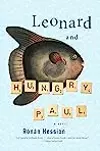
Leonard and Hungry Paul is about two slightly weird best friends. Leonard’s mother has just died, and Hungry Paul lives with his parents. His older sister is getting married. That is it. What can I say that others haven’t? Not much. But that is okay.
This is a moving, charming, warm, and gentle novel about two quiet and kind men. There is no real drama; there are no damaged feelings. The wedding goes off without a hitch and at the end Leonard may have a girlfriend, and Hungry Paul may have found a job, albeit a very weird one.
This is a novel about good and loving people, and except for Leonard’s mother dying before the start of the novel, nothing bad happens. It is also a novel about the value of silence and of simple pleasures, like board games and jig saw puzzles and watching the birds in the bird feeders. Reading this was like sitting on a porch looking at the flowers swaying in the wind. It is not a cute book, although there are cute moments in it. It is a sometimes profound book. It is a perfect book for these times
Leonard and Hungry Paul is about two slightly weird best friends. Leonard’s mother has just died, and Hungry Paul lives with his parents. His older sister is getting married. That is it. What can I say that others haven’t? Not much. But that is okay.
This is a moving, charming, warm, and gentle novel about two quiet and kind men. There is no real drama; there are no damaged feelings. The wedding goes off without a hitch and at the end Leonard may have a girlfriend, and Hungry Paul may have found a job, albeit a very weird one.
This is a novel about good and loving people, and except for Leonard’s mother dying before the start of the novel, nothing bad happens. It is also a novel about the value of silence and of simple pleasures, like board games and jig saw puzzles and watching the birds in the bird feeders. Reading this was like sitting on a porch looking at the flowers swaying in the wind. It is not a cute book, although there are cute moments in it. It is a sometimes profound book. It is a perfect book for these times
Added to listOwnedwith 117 books.


Here Again Now is a novel about fathers and sons, about love, about how we wound each other, and about what it means to be a man.
Achike and Ekene are both Black, gay, and are childhood friends. Achike is an actor just on the cusp of being famous. Ekene teaches drama. They love each other, but something is holding them back so they can’t act on this love. It isn’t because they are denying being gay-they both have other relationships-but due to upbringing and expectations, they can’t bring themselves to act on this love. Chibuike is Achike’s father. He is an alcoholic and some of the most touching parts of the novel are his reflections on whether he was ever a good father, and his regret at not being there for Achike when he was needed.
It is clear that all three men have been failed by their upbringing, and this has left both scars and unhealed wounds.
The novel is written from the POV of the three men. There is a focus on the internal thoughts of the three men. It is very reflective and beautifully written. It is also very, very sad and full of wasted opportunities. But there is also just a hint of hope and healing at the end. It would have been unbearable for me if this had not been the case.
Here Again Now is a novel about fathers and sons, about love, about how we wound each other, and about what it means to be a man.
Achike and Ekene are both Black, gay, and are childhood friends. Achike is an actor just on the cusp of being famous. Ekene teaches drama. They love each other, but something is holding them back so they can’t act on this love. It isn’t because they are denying being gay-they both have other relationships-but due to upbringing and expectations, they can’t bring themselves to act on this love. Chibuike is Achike’s father. He is an alcoholic and some of the most touching parts of the novel are his reflections on whether he was ever a good father, and his regret at not being there for Achike when he was needed.
It is clear that all three men have been failed by their upbringing, and this has left both scars and unhealed wounds.
The novel is written from the POV of the three men. There is a focus on the internal thoughts of the three men. It is very reflective and beautifully written. It is also very, very sad and full of wasted opportunities. But there is also just a hint of hope and healing at the end. It would have been unbearable for me if this had not been the case.