
Michael


Added to listOwnedwith 100 books.


Jess, the main character studies suicide in nature, specifically in spiders. She is a Ph.D. level evolutionary psychologist, and seeks to prove that in nature, suicide can be evolutionarily advantageous. Silently, she feels that suicide can be advantageous in humans as well, and there is some good that can come from suicide. She has an entirely logical reason to believe this.
Jess is a lesbian and the book also explores her relationship with Jamie, and while no single relationship can be representative of a group, this does a good job portraying a certain type of relationship (from the back cover “Jessica is coming to terms with her own relationships, and reflecting on what it means to be queer”).
The ending appears to be controversial, with many disliking it as too abrupt a change and too much leaning into tropes and stereotypes. However, I disagree. Again, no relationship, no single person, and especially no book can represent an entire group.
In any case, I am tip-toeing around a lot because I really liked this novel and don't want to reveal too much. It raises interesting points about suicide, children, child-rearing, and relationships, and it gives no absolute answers. I really appreciated this aspect of the novel.
Of course, it discusses suicide and there are several suicides that take place in the course of the novel, so anyone considering reading In Defence of the Act, should keep this in mind. While at 72 I am in a much better place than I was at 16, it was still uncomfortable reading at times.
I know I will be thinking about this for a long time.
4.75
Jess, the main character studies suicide in nature, specifically in spiders. She is a Ph.D. level evolutionary psychologist, and seeks to prove that in nature, suicide can be evolutionarily advantageous. Silently, she feels that suicide can be advantageous in humans as well, and there is some good that can come from suicide. She has an entirely logical reason to believe this.
Jess is a lesbian and the book also explores her relationship with Jamie, and while no single relationship can be representative of a group, this does a good job portraying a certain type of relationship (from the back cover “Jessica is coming to terms with her own relationships, and reflecting on what it means to be queer”).
The ending appears to be controversial, with many disliking it as too abrupt a change and too much leaning into tropes and stereotypes. However, I disagree. Again, no relationship, no single person, and especially no book can represent an entire group.
In any case, I am tip-toeing around a lot because I really liked this novel and don't want to reveal too much. It raises interesting points about suicide, children, child-rearing, and relationships, and it gives no absolute answers. I really appreciated this aspect of the novel.
Of course, it discusses suicide and there are several suicides that take place in the course of the novel, so anyone considering reading In Defence of the Act, should keep this in mind. While at 72 I am in a much better place than I was at 16, it was still uncomfortable reading at times.
I know I will be thinking about this for a long time.
4.75

María Fernanda Ampuero is a writer from Ecuador who I believe is currently living in Spain.
This is a collection of 13 short stories, none longer than 12 pages and many much shorter. What to say about them other than they are brutal and ugly. Ampuero addresses issues such as racism, classism, sexism, and sexual abuse in the most direct way possible. Her gaze is unflinching. This is a fast read, but a very hard one to stomach. It is also an important book.
Her style is simple and direct, a perfect fit for the subjects she covers.
Why a 3.25 rating? It seemed to me that in some of the stories the author was so intent on describing the abuse, usually but not always sexual, that she lost sight of the sufferer. Perhaps because the stories are so short, the person suffering the abuse can't be fleshed out, they are simply an object. The abuse, sexual and otherwise, becomes the object of the story. It is almost voyeuristic.
So why not a 1 star review? Because I have never read a short story collection in which I had so many different reactions to the stories. Some were 1 star reads. Some were 5 star. What I ended up doing was rating each story and averaging the ratings to come up with a rating for the book as a whole. Pasión was my favorite, with Nam close behind. I also liked Monstruos, and Ali. Otra was the last story in the book and it gave a small—very small—ray of hope.
Trigger warnings for just about everything. Really. Don't read it if you would be triggered by sexual abuse, extreme sexism, etc. Just about anything having to do with human cruelty.
Loved the two epigrams that open the book: one by Fabián Casas and the other by Clarice Lipsector.
María Fernanda Ampuero is a writer from Ecuador who I believe is currently living in Spain.
This is a collection of 13 short stories, none longer than 12 pages and many much shorter. What to say about them other than they are brutal and ugly. Ampuero addresses issues such as racism, classism, sexism, and sexual abuse in the most direct way possible. Her gaze is unflinching. This is a fast read, but a very hard one to stomach. It is also an important book.
Her style is simple and direct, a perfect fit for the subjects she covers.
Why a 3.25 rating? It seemed to me that in some of the stories the author was so intent on describing the abuse, usually but not always sexual, that she lost sight of the sufferer. Perhaps because the stories are so short, the person suffering the abuse can't be fleshed out, they are simply an object. The abuse, sexual and otherwise, becomes the object of the story. It is almost voyeuristic.
So why not a 1 star review? Because I have never read a short story collection in which I had so many different reactions to the stories. Some were 1 star reads. Some were 5 star. What I ended up doing was rating each story and averaging the ratings to come up with a rating for the book as a whole. Pasión was my favorite, with Nam close behind. I also liked Monstruos, and Ali. Otra was the last story in the book and it gave a small—very small—ray of hope.
Trigger warnings for just about everything. Really. Don't read it if you would be triggered by sexual abuse, extreme sexism, etc. Just about anything having to do with human cruelty.
Loved the two epigrams that open the book: one by Fabián Casas and the other by Clarice Lipsector.
María Fernanda Ampuero is a writer from Ecuador who I believe is currently living in Spain.
This is a collection of 13 short stories, none longer than 12 pages and many much shorter. What to say about them other than they are brutal and ugly. Ampuero addresses issues such as racism, classism, sexism, and sexual abuse in the most direct way possible. Her gaze is unflinching. This is a fast read, but a very hard one to stomach. It is also an important book.
Her style is simple and direct, a perfect fit for the subjects she covers.
Why a 3.25 rating? It seemed to me that in some of the stories the author was so intent on describing the abuse, usually but not always sexual, that she lost sight of the sufferer. Perhaps because the stories are so short, the person suffering the abuse can't be fleshed out, they are simply an object. The abuse, sexual and otherwise, becomes the object of the story. It is almost voyeuristic.
So why not a 1 star review? Because I have never read a short story collection in which I had so many different reactions to the stories. Some were 1 star reads. Some were 5 star. What I ended up doing was rating each story and averaging the ratings to come up with a rating for the book as a whole. Pasión was my favorite, with Nam close behind. I also liked Monstruos, and Ali. Otra was the last story in the book and it gave a small—very small—ray of hope.
Trigger warnings for just about everything. Really. Don't read it if you would be triggered by sexual abuse, extreme sexism, etc. Just about anything having to do with human cruelty.
Loved the two epigrams that open the book: one by Fabián Casas and the other by Clarice Lipsector.
María Fernanda Ampuero is a writer from Ecuador who I believe is currently living in Spain.
This is a collection of 13 short stories, none longer than 12 pages and many much shorter. What to say about them other than they are brutal and ugly. Ampuero addresses issues such as racism, classism, sexism, and sexual abuse in the most direct way possible. Her gaze is unflinching. This is a fast read, but a very hard one to stomach. It is also an important book.
Her style is simple and direct, a perfect fit for the subjects she covers.
Why a 3.25 rating? It seemed to me that in some of the stories the author was so intent on describing the abuse, usually but not always sexual, that she lost sight of the sufferer. Perhaps because the stories are so short, the person suffering the abuse can't be fleshed out, they are simply an object. The abuse, sexual and otherwise, becomes the object of the story. It is almost voyeuristic.
So why not a 1 star review? Because I have never read a short story collection in which I had so many different reactions to the stories. Some were 1 star reads. Some were 5 star. What I ended up doing was rating each story and averaging the ratings to come up with a rating for the book as a whole. Pasión was my favorite, with Nam close behind. I also liked Monstruos, and Ali. Otra was the last story in the book and it gave a small—very small—ray of hope.
Trigger warnings for just about everything. Really. Don't read it if you would be triggered by sexual abuse, extreme sexism, etc. Just about anything having to do with human cruelty.
Loved the two epigrams that open the book: one by Fabián Casas and the other by Clarice Lipsector.
Updated a reading goal:
Read 60 books by December 31, 2025
Progress so far: 72 / 60 120%


+This novel reads like the truth.
This is about the Sri Lankan civil war that pitted the Tamils in the northern part of the island against the majority Sinhala as told by Sashki. Sashki, a Tamil, is 16 at the beginning of the novel, and in her 40s when the novel ends. Her dearest wish is to become a doctor, but she is caught up in the war which delays her studies. She has 4 brothers: 2 die, one is lost to her in a different way, one escapes to London. Although she works with the Tamils in their field clinic, she ends up documenting the absolute horrors of the war, not sparing the Tamils, the Sinhalas, or the soldiers sent by India to keep the peace, who end up being just as bad as everyone else.
Some of the characters are based on real people. I can’t imagine being as brave as they were.
What an inadequate synopsis.
This novel is about loyalty, family bonds, hatred, politics, and violence.
It is about how terrible things can become when people become blindly righteous when they feel that they are fighting for what is right. It is about how they leave their humanity behind. It is about how terrorists are born.
+This novel reads like the truth.
This is about the Sri Lankan civil war that pitted the Tamils in the northern part of the island against the majority Sinhala as told by Sashki. Sashki, a Tamil, is 16 at the beginning of the novel, and in her 40s when the novel ends. Her dearest wish is to become a doctor, but she is caught up in the war which delays her studies. She has 4 brothers: 2 die, one is lost to her in a different way, one escapes to London. Although she works with the Tamils in their field clinic, she ends up documenting the absolute horrors of the war, not sparing the Tamils, the Sinhalas, or the soldiers sent by India to keep the peace, who end up being just as bad as everyone else.
Some of the characters are based on real people. I can’t imagine being as brave as they were.
What an inadequate synopsis.
This novel is about loyalty, family bonds, hatred, politics, and violence.
It is about how terrible things can become when people become blindly righteous when they feel that they are fighting for what is right. It is about how they leave their humanity behind. It is about how terrorists are born.

This is a novel that is a counterfactual/alternate history. Since I was 12 or 13, this has been one of my favorite genres. Binet is the son of an historian and it shows!
The novel is in four parts. Part 1 tells the story of Freydis, the female leader of a group of Vikings who don’t return to Europe, but heads south along the coast until they reach Panama. Part 2 consists of the fragmentary chronicles of Christopher Columbus who is convinced of his own superiority in spite of the setbacks he receives. He eventually dies a forgotten and beaten man who never returns to Europe. It turns out the earlier expedition led by Freydis has endowed the natives of the “New World” with horses, knowledge of iron working, and most of all, immunity to European diseases. Part 3 tells of the adventures of Atahualpa, the last Inca emperor (in our world) who arrives in Europe because of the war between Atahualpa and his brother and conquers much of it. Part 4 tells of the adventures of Miquel Cervantes and El Greco as soldiers and slaves and ends with their voyage to the “Old World” that is, the hemisphere we know as the western hemisphere. Whew.
I liked this book very much although I did not like it nearly as much as HHhH. Because this was written as a history, or better a wikipedia style survey, I couldn’t get emotionally involved with the characters. It was all a little dry. The fourth part was certainly entertaining, but it seemed to me only slightly connected to the earlier narrative.
As far as I can tell, all of the European characters were real personages put into this alternate history, but I needed a better grasp of history to keep track of them. And Atahualpa, the Son of the Sun, bringer of religious tolerance, destroyer of the inquisition, reformer of agriculture and commerce and taxation, and student of Machiavelli, is just a little to good to be true. But I liked him anyway.
I enjoyed the book by Jared Diamond titled Guns, Germs, and Steel and obviously Binet did as well. And no matter if you agree with the thesis presented in G, G,and S, this is an interesting and for the most part fun novel.
(really 3.75, not 4)
This is a novel that is a counterfactual/alternate history. Since I was 12 or 13, this has been one of my favorite genres. Binet is the son of an historian and it shows!
The novel is in four parts. Part 1 tells the story of Freydis, the female leader of a group of Vikings who don’t return to Europe, but heads south along the coast until they reach Panama. Part 2 consists of the fragmentary chronicles of Christopher Columbus who is convinced of his own superiority in spite of the setbacks he receives. He eventually dies a forgotten and beaten man who never returns to Europe. It turns out the earlier expedition led by Freydis has endowed the natives of the “New World” with horses, knowledge of iron working, and most of all, immunity to European diseases. Part 3 tells of the adventures of Atahualpa, the last Inca emperor (in our world) who arrives in Europe because of the war between Atahualpa and his brother and conquers much of it. Part 4 tells of the adventures of Miquel Cervantes and El Greco as soldiers and slaves and ends with their voyage to the “Old World” that is, the hemisphere we know as the western hemisphere. Whew.
I liked this book very much although I did not like it nearly as much as HHhH. Because this was written as a history, or better a wikipedia style survey, I couldn’t get emotionally involved with the characters. It was all a little dry. The fourth part was certainly entertaining, but it seemed to me only slightly connected to the earlier narrative.
As far as I can tell, all of the European characters were real personages put into this alternate history, but I needed a better grasp of history to keep track of them. And Atahualpa, the Son of the Sun, bringer of religious tolerance, destroyer of the inquisition, reformer of agriculture and commerce and taxation, and student of Machiavelli, is just a little to good to be true. But I liked him anyway.
I enjoyed the book by Jared Diamond titled Guns, Germs, and Steel and obviously Binet did as well. And no matter if you agree with the thesis presented in G, G,and S, this is an interesting and for the most part fun novel.
(really 3.75, not 4)
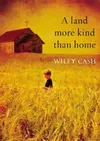
A Land More Kind than Home is a novel in which a brother (named Christoper but called Stump by everyone other than his mother) snoops and sees something that sets in motion a tragedy.
The novel has three POVs: Christopher’s younger brother Jess, the elderly midwife/healer Adelaide Lyle, and the sheriff Clem Barefield. Other important characters are Ben and Julie Hall, Stump and Jess’s parents, Jimmy Hall, Jess’s grandfather, and looming over everything, Carson Chambliss the con man/criminal/preacher of one of the church’s in town. The novel deals with good and evil, right and wrong, and what fathers pass down to sons.
It takes place in Madison County, NC, outside of the small town of Marshall, the county seat. I lived in Asheville, NC for a number of years, just south of Madison county, and worked in Mars Hill, NC, another small town in Madison county. I knew people from the small settlements in Appalachians, and I’ve visited Marshall a number of times, so the novel was weirdly familiar. The novel is written as if someone from the mountains was telling a story, so it was winding and there was a lot of backstory. At first this structure bothered me, but as I settled into it, I began to like it. The dialog bothered me at times—I never heard anyone use “ain’t” as much as these characters did, but then Wiley Cash is from western NC, so he should know. Maybe because I was so obviously a city boy, people were on their best behavior!
The novel ends on a dark note, which fits with the story as a whole and the general atmosphere of the novel. It seems to me that it does trade in some Appalachian stereotypes, but I was able to put these aside after awhile.
Is there a note of hope in the ending? Some people see one, but I did not. An entertaining, fast read. Maybe it is not great literature, but I’m am certainly glad I read it.
A Land More Kind than Home is a novel in which a brother (named Christoper but called Stump by everyone other than his mother) snoops and sees something that sets in motion a tragedy.
The novel has three POVs: Christopher’s younger brother Jess, the elderly midwife/healer Adelaide Lyle, and the sheriff Clem Barefield. Other important characters are Ben and Julie Hall, Stump and Jess’s parents, Jimmy Hall, Jess’s grandfather, and looming over everything, Carson Chambliss the con man/criminal/preacher of one of the church’s in town. The novel deals with good and evil, right and wrong, and what fathers pass down to sons.
It takes place in Madison County, NC, outside of the small town of Marshall, the county seat. I lived in Asheville, NC for a number of years, just south of Madison county, and worked in Mars Hill, NC, another small town in Madison county. I knew people from the small settlements in Appalachians, and I’ve visited Marshall a number of times, so the novel was weirdly familiar. The novel is written as if someone from the mountains was telling a story, so it was winding and there was a lot of backstory. At first this structure bothered me, but as I settled into it, I began to like it. The dialog bothered me at times—I never heard anyone use “ain’t” as much as these characters did, but then Wiley Cash is from western NC, so he should know. Maybe because I was so obviously a city boy, people were on their best behavior!
The novel ends on a dark note, which fits with the story as a whole and the general atmosphere of the novel. It seems to me that it does trade in some Appalachian stereotypes, but I was able to put these aside after awhile.
Is there a note of hope in the ending? Some people see one, but I did not. An entertaining, fast read. Maybe it is not great literature, but I’m am certainly glad I read it.

his is a biting, almost vicious satire about race and expectations. At times, it is also very funny.
Thelonious “Monk” Ellison is Black and the product of an upper middle class upbringing. He is also an extremely erudite writer of dense, almost incomprehensible novels respected by critics but shunned by the reading public. He becomes enraged when a middle-class Black woman visits Harlem for a few days and then writes a novel titled We’s Lives in Da Ghetto. It is full of the stereotypes beloved of publishers and the white reading public. Of course, it becomes a best seller. So Ellison writes a parody titled My Pafology, that he later retitles "Fuck.” He writes under a pseudonym and to his horror it becomes a best seller. Everett includes the entire fake novel in Erasure and it was obvious to me that it was a parody. But I wonder if it would have been obvious if I hadn’t known this beforehand. In parallel to this the novel covers his family life: his dead father, his murdered sister, his gay brother, and his mother drifting away due to dementia.
I think this novel is about so many things: a satire about the white reading public who can’t comprehend that there are Black writers who are educated and erudite, the publishing industry that really doesn’t care about what they publish, and academic pretension. There is a stark difference between Monk’s life and his somewhat arrogant attitude along with the novel within a novel My Pafology and the tenderness and sadness of his interactions with his flawed but very real family.
I didn’t understand all the literary references. Undoubtedly that is a me problem, but it interfered just a little with my enjoyment.
This is the third novel by Percival Everett that I have read and I am in awe about how good all three novels are and how different in style they are. What a talent.
his is a biting, almost vicious satire about race and expectations. At times, it is also very funny.
Thelonious “Monk” Ellison is Black and the product of an upper middle class upbringing. He is also an extremely erudite writer of dense, almost incomprehensible novels respected by critics but shunned by the reading public. He becomes enraged when a middle-class Black woman visits Harlem for a few days and then writes a novel titled We’s Lives in Da Ghetto. It is full of the stereotypes beloved of publishers and the white reading public. Of course, it becomes a best seller. So Ellison writes a parody titled My Pafology, that he later retitles "Fuck.” He writes under a pseudonym and to his horror it becomes a best seller. Everett includes the entire fake novel in Erasure and it was obvious to me that it was a parody. But I wonder if it would have been obvious if I hadn’t known this beforehand. In parallel to this the novel covers his family life: his dead father, his murdered sister, his gay brother, and his mother drifting away due to dementia.
I think this novel is about so many things: a satire about the white reading public who can’t comprehend that there are Black writers who are educated and erudite, the publishing industry that really doesn’t care about what they publish, and academic pretension. There is a stark difference between Monk’s life and his somewhat arrogant attitude along with the novel within a novel My Pafology and the tenderness and sadness of his interactions with his flawed but very real family.
I didn’t understand all the literary references. Undoubtedly that is a me problem, but it interfered just a little with my enjoyment.
This is the third novel by Percival Everett that I have read and I am in awe about how good all three novels are and how different in style they are. What a talent.


Answered a promptWhat books have changed you as a person?


What I’d Rather Not Think About centers around a brother’s suicide and the emotional aftermath for his sister, who happens to be his twin. This is a deeply melancholy book told in very short vignettes-some only half a page long and the longest no more than two pages. There is a certain emotionless quality to the novel that somehow makes it even more melancholy. As the back of the book says “Posthuma tells the story oof a depressive brother, viewed from the perspective of the sister who both loves and resents her twin, struggles to understand him, and misses him terribly.” I would add that she does miss him terribly, but to me at least there is something pathological in how much she misses him and for how long she acts in a slightly strange way. (she is presented as seeing a therapist, so we don’t know if she too has some emotional scars from before the time of the suicide.)
In full disclosure I would add that I have never had someone close to me commit suicide so I have no idea how I would respond. I only know that there is no “right” response.
Anyway, this is a sad, deeply human story about real people and real grief. There are no easy answers.
Anyone triggered by suicide should not read this book. Everyone else should read it.
What I’d Rather Not Think About centers around a brother’s suicide and the emotional aftermath for his sister, who happens to be his twin. This is a deeply melancholy book told in very short vignettes-some only half a page long and the longest no more than two pages. There is a certain emotionless quality to the novel that somehow makes it even more melancholy. As the back of the book says “Posthuma tells the story oof a depressive brother, viewed from the perspective of the sister who both loves and resents her twin, struggles to understand him, and misses him terribly.” I would add that she does miss him terribly, but to me at least there is something pathological in how much she misses him and for how long she acts in a slightly strange way. (she is presented as seeing a therapist, so we don’t know if she too has some emotional scars from before the time of the suicide.)
In full disclosure I would add that I have never had someone close to me commit suicide so I have no idea how I would respond. I only know that there is no “right” response.
Anyway, this is a sad, deeply human story about real people and real grief. There are no easy answers.
Anyone triggered by suicide should not read this book. Everyone else should read it.

Added to listOwnedwith 1 book.