
Michelle Dsouza

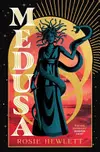
This was my first Greek mythology retelling, and I went in knowing Medusa only the way most people do, through pop culture. The snakes. The stone gaze. The monster. What I didn't know was the circumstance that made her. That part of the story is unbearable, and it stayed with me. The book itself I'm more conflicted about.
Medusa retells the myth from Medusa's own perspective, reclaiming her as a wronged woman rather than a monster. I rooted for her, though the myth hands you most of that sympathy before Hewlett does anything with it. Her death moved me to tears, but I have to be honest about why. The circumstance is unbearable on its own. Medusa's story is a few thousand years old and devastating regardless of who tells it. The tears were the myth's doing, not the book's, and once I separated the two, I could see how much the telling worked against the material rather than for it.
My central problem is the language. It's modern, consistently and throughout, and I couldn't make peace with it. It pulled me out of the world the book was trying to build. I understand the strategy. Modern language makes mythology accessible, and it's a genuinely effective way to get a new generation to pick up these stories and feel that they belong to them too. But there's a cost. The contemporary phrasing felt disrespectful to the genre and, more than that, to who Medusa was. It didn't read like the interior voice of a woman from this world. It read like a voice imported from ours.
That bleeds into my second issue. Hewlett's foreword is explicit about wanting women's voices heard, and the book carries a clear #MeToo current underneath it. The cause is valid and formidable, and I have no quarrel with it as a cause. But you can feel the agenda being pushed through the narrative, specifically in the way Medusa speaks and the things she says, which often didn't feel like how she would actually have thought. The message kept stepping in front of the character. A well told tale that could have been told better, because the telling was always slightly visible.
The thing I couldn't reconcile at all is Athena. The book has her wanting Medusa dead, seemingly as punishment for the rape rather than for the god who committed it. For a goddess, that's morally incoherent. Wouldn't a deity be beyond that kind of misdirected blame? And if she truly is a goddess, wouldn't she have been able to see what actually happened? The book never resolves this in a way that satisfied me, and it's the kind of gap that matters when the whole project is about justice and who deserves blame.
I wouldn't read this again. I'd reach for something more traditional. But as an entry point into a genre I'd never touched, it did enough to make me want more of it, just told differently.
Originally posted at www.instagram.com.
This was my first Greek mythology retelling, and I went in knowing Medusa only the way most people do, through pop culture. The snakes. The stone gaze. The monster. What I didn't know was the circumstance that made her. That part of the story is unbearable, and it stayed with me. The book itself I'm more conflicted about.
Medusa retells the myth from Medusa's own perspective, reclaiming her as a wronged woman rather than a monster. I rooted for her, though the myth hands you most of that sympathy before Hewlett does anything with it. Her death moved me to tears, but I have to be honest about why. The circumstance is unbearable on its own. Medusa's story is a few thousand years old and devastating regardless of who tells it. The tears were the myth's doing, not the book's, and once I separated the two, I could see how much the telling worked against the material rather than for it.
My central problem is the language. It's modern, consistently and throughout, and I couldn't make peace with it. It pulled me out of the world the book was trying to build. I understand the strategy. Modern language makes mythology accessible, and it's a genuinely effective way to get a new generation to pick up these stories and feel that they belong to them too. But there's a cost. The contemporary phrasing felt disrespectful to the genre and, more than that, to who Medusa was. It didn't read like the interior voice of a woman from this world. It read like a voice imported from ours.
That bleeds into my second issue. Hewlett's foreword is explicit about wanting women's voices heard, and the book carries a clear #MeToo current underneath it. The cause is valid and formidable, and I have no quarrel with it as a cause. But you can feel the agenda being pushed through the narrative, specifically in the way Medusa speaks and the things she says, which often didn't feel like how she would actually have thought. The message kept stepping in front of the character. A well told tale that could have been told better, because the telling was always slightly visible.
The thing I couldn't reconcile at all is Athena. The book has her wanting Medusa dead, seemingly as punishment for the rape rather than for the god who committed it. For a goddess, that's morally incoherent. Wouldn't a deity be beyond that kind of misdirected blame? And if she truly is a goddess, wouldn't she have been able to see what actually happened? The book never resolves this in a way that satisfied me, and it's the kind of gap that matters when the whole project is about justice and who deserves blame.
I wouldn't read this again. I'd reach for something more traditional. But as an entry point into a genre I'd never touched, it did enough to make me want more of it, just told differently.
Originally posted at www.instagram.com.