
Michelle Dsouza

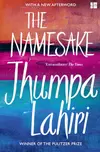
The Namesake follows Gogol Ganguli, born in America to Bengali parents and named after a Russian writer because of a train accident his father barely survived. Across twelve chapters and thirty years, Lahiri traces what a name carries, what a family carries, and what survives when a culture crosses an ocean.
I want to start with the structure, because it nearly lost me. Twelve chapters, each of them long, written in long paragraphs of short declarative sentences. The first chapter is slow, and the early sections seem crowded with detail that goes nowhere. Hairstyles. Wall paint colours. Side stories about people who never return. By chapter five I understood what Lahiri was doing. Identity does not live in plot points. It lives in small things, and the accumulation of those small things is the entire method of this book. Once I read it on those terms, the writing opened up completely. I still wonder whether Lahiri would structure it the same way if she wrote it today, and I mean this as curiosity rather than complaint.
This is not a plot-driven novel. There are stretches that feel directionless, and the momentum comes almost entirely from the characters. But what characters. By chapter ten I was so invested in Gogol that a late betrayal, which I will not name, made me genuinely angry on his behalf. When a reader wants to guard a fictional man's heart, the author has done something right.
The authenticity is what sets the book apart. I am a child of displaced Indian heritage. My father grew up in India and was of Portuguese descent, my mother grew up in Sri Lanka and is of Dutch descent, and the culture Gogol inherits in fragments is the same culture that reached me in fragments. Lahiri gets every fragment right. The tea sellers running alongside train windows with aluminium kettles, still true in 2026. The four locks on the front door in a country with nothing to fear. The folklore, including the legend of the Taj Mahal masons losing their thumbs so they could never build anything more beautiful. My father told me that story in 1996. He died three years ago, and he lives on in the stories I catch myself retelling. Meeting one of them inside this novel is a reading experience I will not forget.
More than anything, this book understands the children of first-generation immigrants, raised in a country their parents were not, for whom building traditions of their own feels like a quiet betrayal of everything their parents sacrificed. Lahiri wrote this in 2003. It was ahead of its time then and it is accurate now.
A note on the audiobook, since I listened while reading the physical. Sarita Choudhury was a puzzling choice of narrator. Words this book depends on are mispronounced throughout. Desh and desi lose their correct sounds, and Gogol himself is read as Gaw-gawl rather than Go-gol, a strange fate for the name the entire novel is about. This did not affect my rating of the book, but choose the page over the audio if you can.
4.5 stars. Outstanding, with one reservation about the wandering middle, and prose I would follow anywhere.
Originally posted at www.instagram.com.
The Namesake follows Gogol Ganguli, born in America to Bengali parents and named after a Russian writer because of a train accident his father barely survived. Across twelve chapters and thirty years, Lahiri traces what a name carries, what a family carries, and what survives when a culture crosses an ocean.
I want to start with the structure, because it nearly lost me. Twelve chapters, each of them long, written in long paragraphs of short declarative sentences. The first chapter is slow, and the early sections seem crowded with detail that goes nowhere. Hairstyles. Wall paint colours. Side stories about people who never return. By chapter five I understood what Lahiri was doing. Identity does not live in plot points. It lives in small things, and the accumulation of those small things is the entire method of this book. Once I read it on those terms, the writing opened up completely. I still wonder whether Lahiri would structure it the same way if she wrote it today, and I mean this as curiosity rather than complaint.
This is not a plot-driven novel. There are stretches that feel directionless, and the momentum comes almost entirely from the characters. But what characters. By chapter ten I was so invested in Gogol that a late betrayal, which I will not name, made me genuinely angry on his behalf. When a reader wants to guard a fictional man's heart, the author has done something right.
The authenticity is what sets the book apart. I am a child of displaced Indian heritage. My father grew up in India and was of Portuguese descent, my mother grew up in Sri Lanka and is of Dutch descent, and the culture Gogol inherits in fragments is the same culture that reached me in fragments. Lahiri gets every fragment right. The tea sellers running alongside train windows with aluminium kettles, still true in 2026. The four locks on the front door in a country with nothing to fear. The folklore, including the legend of the Taj Mahal masons losing their thumbs so they could never build anything more beautiful. My father told me that story in 1996. He died three years ago, and he lives on in the stories I catch myself retelling. Meeting one of them inside this novel is a reading experience I will not forget.
More than anything, this book understands the children of first-generation immigrants, raised in a country their parents were not, for whom building traditions of their own feels like a quiet betrayal of everything their parents sacrificed. Lahiri wrote this in 2003. It was ahead of its time then and it is accurate now.
A note on the audiobook, since I listened while reading the physical. Sarita Choudhury was a puzzling choice of narrator. Words this book depends on are mispronounced throughout. Desh and desi lose their correct sounds, and Gogol himself is read as Gaw-gawl rather than Go-gol, a strange fate for the name the entire novel is about. This did not affect my rating of the book, but choose the page over the audio if you can.
4.5 stars. Outstanding, with one reservation about the wandering middle, and prose I would follow anywhere.
Originally posted at www.instagram.com.