
nicanical


Crashlander collects all of Larry Niven's Beowulf Shaeffer short stories. Beowulf is a Crashlander pilot whose circumstances repeatedly drive him to dangerous jobs. Beowulf is known for some pivotal discoveries in Known Space like the core explosion, and one way of destroying General Products hulls. These are important stories in Known space because they build out the lore with interesting and unique happenings. As with his other stories though, Niven's characterization work is weak.
This collection is tied together with the frame narrative Ghosts. It is the weakest story being merely a series of conversations moving readers between the other stories.
Crashlander collects all of Larry Niven's Beowulf Shaeffer short stories. Beowulf is a Crashlander pilot whose circumstances repeatedly drive him to dangerous jobs. Beowulf is known for some pivotal discoveries in Known Space like the core explosion, and one way of destroying General Products hulls. These are important stories in Known space because they build out the lore with interesting and unique happenings. As with his other stories though, Niven's characterization work is weak.
This collection is tied together with the frame narrative Ghosts. It is the weakest story being merely a series of conversations moving readers between the other stories.

Updated a reading goal:
Read 100 books in 2026
Progress so far: 50 / 100 50%


My first Graham Greene novel. Travels With My Aunt amuses, particularly where Wordsworth appears. There's humor from the contrasting personalities of Henry Pulling, the narrator, and Aunt Augusta, the titular aunt, but it's subtle.
Cozy prose like blankets. Comfortable to read but I fell asleep to it a lot.
Travels reminds me of Kazuo Ishiguro's The Remains of the Day. The two books share a reserved, introspective English protag changed by travel; missed connections; and Nazis play a minor but far-reaching element in both too. Between the two, Travels is the better brew thanks to the lively anecdotes from Aunt Augusta's bohemian life.
My first Graham Greene novel. Travels With My Aunt amuses, particularly where Wordsworth appears. There's humor from the contrasting personalities of Henry Pulling, the narrator, and Aunt Augusta, the titular aunt, but it's subtle.
Cozy prose like blankets. Comfortable to read but I fell asleep to it a lot.
Travels reminds me of Kazuo Ishiguro's The Remains of the Day. The two books share a reserved, introspective English protag changed by travel; missed connections; and Nazis play a minor but far-reaching element in both too. Between the two, Travels is the better brew thanks to the lively anecdotes from Aunt Augusta's bohemian life.

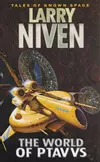
Larry Niven's first novel. Relative to other stories in Known Space, World of Ptavvs is like an origin story. (Some short stories predate Ptavvs in-universe like The Coldest Place and How the Heroes Die, but they are narrower in focus.)
Puppeteers and Kzinti and other familiar creatures are absent (although there's some background on Bandersnatchi). Instead, Ptavvs introduces the Thrintuns and the Tnunctipuns who are all but extinct, with the antagonist likely being the last Thrintun. Ptavvs also reveals the origins of life on Earth and lays foundations for technologies and later developments in Known Space.
Ptavvs could have used more editing: narrative flow is disjointed because of abrupt perspective shifts and fast forwards, and confusing descriptions frustrate visualization. Some exposition is repetitive, self-indulgent, and could have been removed entirely. Niven seems to have a fetish for describing ship propulsion in particular; maybe he got a kick out of seeing words like "fusion" and "uranium" and "hydrogen" on the page a lot. There are also too many characters for a book of this length and their sometimes-strange behavior strains credulity.
As expected of Niven: the worldbuilding is good. Highlights include the Earth, the Belters, and the intrigue between them, and the fate of the Thrintuns. I also like that Niven features timing and communications concerns across the vast distances of sub-light space travel.
Larry Niven's first novel. Relative to other stories in Known Space, World of Ptavvs is like an origin story. (Some short stories predate Ptavvs in-universe like The Coldest Place and How the Heroes Die, but they are narrower in focus.)
Puppeteers and Kzinti and other familiar creatures are absent (although there's some background on Bandersnatchi). Instead, Ptavvs introduces the Thrintuns and the Tnunctipuns who are all but extinct, with the antagonist likely being the last Thrintun. Ptavvs also reveals the origins of life on Earth and lays foundations for technologies and later developments in Known Space.
Ptavvs could have used more editing: narrative flow is disjointed because of abrupt perspective shifts and fast forwards, and confusing descriptions frustrate visualization. Some exposition is repetitive, self-indulgent, and could have been removed entirely. Niven seems to have a fetish for describing ship propulsion in particular; maybe he got a kick out of seeing words like "fusion" and "uranium" and "hydrogen" on the page a lot. There are also too many characters for a book of this length and their sometimes-strange behavior strains credulity.
As expected of Niven: the worldbuilding is good. Highlights include the Earth, the Belters, and the intrigue between them, and the fate of the Thrintuns. I also like that Niven features timing and communications concerns across the vast distances of sub-light space travel.


Picked this up after seeing praise for M. John Harrison as a stylist and, yeah, I have to agree. Light has a definite style to it, slick and propulsive. I got Neuromancer vibes, especially from Harrison's scene-setting:
Downtown was black and gold towers, designer goods in the deserted pastel malls, mute fluorescent light skidding off the precise curves of matte plastic surfaces, the foams of lace and oyster satin. Down by the ocean, transformation dub, saltwater dub, pulsed from the bars, the soundtrack of a human life, with songs like "Dark Night, Bright Light" and others.
The neon vegetation, bluish, pale and strong, grew over its half-mile length like radioactive ivy over a fluted stone column.
The spaceport was empty. Everyone had gone home long ago. The night was just chain-link rattling in the wind, smell of the tide, a voice calling out from some motel cabin.
The style carried me to the end, Light's plot and characterization and all that other stuff are too off-the-wall to sustain my interest on their own. The plot and characterization aren't bad bear in mind, just too loosey-goosey for me. Like Harrison built the plot out with dice rolls. I'm probably just not sophisticated enough to appreciate those facets of the book.
Picked this up after seeing praise for M. John Harrison as a stylist and, yeah, I have to agree. Light has a definite style to it, slick and propulsive. I got Neuromancer vibes, especially from Harrison's scene-setting:
Downtown was black and gold towers, designer goods in the deserted pastel malls, mute fluorescent light skidding off the precise curves of matte plastic surfaces, the foams of lace and oyster satin. Down by the ocean, transformation dub, saltwater dub, pulsed from the bars, the soundtrack of a human life, with songs like "Dark Night, Bright Light" and others.
The neon vegetation, bluish, pale and strong, grew over its half-mile length like radioactive ivy over a fluted stone column.
The spaceport was empty. Everyone had gone home long ago. The night was just chain-link rattling in the wind, smell of the tide, a voice calling out from some motel cabin.
The style carried me to the end, Light's plot and characterization and all that other stuff are too off-the-wall to sustain my interest on their own. The plot and characterization aren't bad bear in mind, just too loosey-goosey for me. Like Harrison built the plot out with dice rolls. I'm probably just not sophisticated enough to appreciate those facets of the book.

A collection of short stories set in Larry Niven's Known Space: a broadly integrated vision of the future Solar System with Earth and Belter politicks, Mars colonization attempts, and some Alien contact. Extrasolar colonies are mentioned too, and some characters hail from these colonies. Because of their age, the stories have elements that may appear contrived or silly—space helmets have cigarette dispensers built into them for example—but such elements are mostly quaint and not detracting.
Niven's writing style is tolerable: choppy pacing, confusing narrative jumps, characters lacking depth, and exposition that sometimes read like science textbook excerpts are balanced out by his big ideas, worldbuilding, and the generally creative conflicts and obstacles that thwart his protagonists.
A collection of short stories set in Larry Niven's Known Space: a broadly integrated vision of the future Solar System with Earth and Belter politicks, Mars colonization attempts, and some Alien contact. Extrasolar colonies are mentioned too, and some characters hail from these colonies. Because of their age, the stories have elements that may appear contrived or silly—space helmets have cigarette dispensers built into them for example—but such elements are mostly quaint and not detracting.
Niven's writing style is tolerable: choppy pacing, confusing narrative jumps, characters lacking depth, and exposition that sometimes read like science textbook excerpts are balanced out by his big ideas, worldbuilding, and the generally creative conflicts and obstacles that thwart his protagonists.

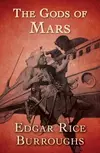
I like this follow-up to A Princess of Mars but it feels like it's on rails because of its constant fast pace, and how luck (or chance) resolves many of its conflicts.
The Gods of Mars has greater variety in settings and characters than Princess thanks to the introduction of two races: the Therns and the Black Pirates. Edgar Rice Burroughs gives readers more of the same action from the first book, set against a backdrop of new histories and superstitions intertwined with those of the Red Martians and Tharks, met previously. We also learn what happened to Dejah Thoris after the ending of Princess.
Burroughs follows a pattern: John Carter is captured; in captivity, John Carter meets an ally or a damsel in distress; John Carter escapes, rescuing his new companion; John Carter is captured again. Gods is several of these arcs back to back. I worry about subsequent entries in this series being too predictable.
I like this follow-up to A Princess of Mars but it feels like it's on rails because of its constant fast pace, and how luck (or chance) resolves many of its conflicts.
The Gods of Mars has greater variety in settings and characters than Princess thanks to the introduction of two races: the Therns and the Black Pirates. Edgar Rice Burroughs gives readers more of the same action from the first book, set against a backdrop of new histories and superstitions intertwined with those of the Red Martians and Tharks, met previously. We also learn what happened to Dejah Thoris after the ending of Princess.
Burroughs follows a pattern: John Carter is captured; in captivity, John Carter meets an ally or a damsel in distress; John Carter escapes, rescuing his new companion; John Carter is captured again. Gods is several of these arcs back to back. I worry about subsequent entries in this series being too predictable.


You could alternatively call this Diary of an NPC because that's what the main character is: butler Stevens (I don't recall a first name) takes a week-long vacation during which he reminisces about his previous service to the late Lord Darlington. Stevens served loyally and unquestioningly through tough times and objectionable demands. He believes this exemplifies a form of dignity but, by the end of the story, realizes that it exemplifies more his lack of a backbone.
I think the pacing is good, the scenes are balanced in weight and Kazuo Ishiguro doesn't linger too long in any given one—a sometimes-issue when stories rely heavily on deeply introspective characters. However, it's frustrating to follow along with Stevens: he is stiff, awkward, and naive in his blind loyalty to his employer. I don't like his highfalutin manner of speech and his habit of justifying himself ex post facto with sophistry. I admire The Remains of the Day as a composition but this doesn't make up for its uninspiring protagonist.
You could alternatively call this Diary of an NPC because that's what the main character is: butler Stevens (I don't recall a first name) takes a week-long vacation during which he reminisces about his previous service to the late Lord Darlington. Stevens served loyally and unquestioningly through tough times and objectionable demands. He believes this exemplifies a form of dignity but, by the end of the story, realizes that it exemplifies more his lack of a backbone.
I think the pacing is good, the scenes are balanced in weight and Kazuo Ishiguro doesn't linger too long in any given one—a sometimes-issue when stories rely heavily on deeply introspective characters. However, it's frustrating to follow along with Stevens: he is stiff, awkward, and naive in his blind loyalty to his employer. I don't like his highfalutin manner of speech and his habit of justifying himself ex post facto with sophistry. I admire The Remains of the Day as a composition but this doesn't make up for its uninspiring protagonist.