
nicanical


Isaac Asimov's The Caves of Steel is a detective story fused with sci-fi. New York City detective Elijah Baley is paired with R. Daneel Olivaw (R. meaning robot) to investigate a murder in Spacetown—a delegation of Spacers just outside New York City, Spacers being the descendants of settlers from Earth's extrasolar colonies.
The murder investigation is sloppy but that's fine because it's really a frame for Baley and R. Daneel to discuss humanity's future: the paths leading to man thriving or declining. Asimov will feature similar reasoning in The End of Eternity, published three years later.
The story drags in the middle where Baley goes on Bible story tangents and also incorrectly fingers R. Daneel as the killer twice. Justification is given for Baley's error, but he still emerges looking inept.
The twist reveal at the end is nicely-crafted, a good one, but rushed—Baley literally has a 45 minute window to summarize his case.
Isaac Asimov's The Caves of Steel is a detective story fused with sci-fi. New York City detective Elijah Baley is paired with R. Daneel Olivaw (R. meaning robot) to investigate a murder in Spacetown—a delegation of Spacers just outside New York City, Spacers being the descendants of settlers from Earth's extrasolar colonies.
The murder investigation is sloppy but that's fine because it's really a frame for Baley and R. Daneel to discuss humanity's future: the paths leading to man thriving or declining. Asimov will feature similar reasoning in The End of Eternity, published three years later.
The story drags in the middle where Baley goes on Bible story tangents and also incorrectly fingers R. Daneel as the killer twice. Justification is given for Baley's error, but he still emerges looking inept.
The twist reveal at the end is nicely-crafted, a good one, but rushed—Baley literally has a 45 minute window to summarize his case.

Isaac Asimov's The Caves of Steel is a detective story fused with sci-fi. New York City detective Elijah Baley is paired with R. Daneel Olivaw (R. meaning robot) to investigate a murder in Spacetown—a delegation of Spacers just outside New York City, Spacers being the descendants of settlers from Earth's extrasolar colonies.
The murder investigation is sloppy. It's fine because it's really a frame for Baley and R. Daneel to discuss humanity's future: the paths leading to man thriving or declining. Asimov will use a similar conceit in The End of Eternity, published three years later.
Asimov's execution drags in the middle. There are awkward injections of religion, awkward because the payoff only arrives at the end of the story in one line. Baley also incorrectly fingers R. Daneel as the killer twice; justification is provided for these but Baley still emerges looking inept.
The reveal at the end is nicely-crafted, a good twist, but it is rushed. Baley even has a time limit.
Isaac Asimov's The Caves of Steel is a detective story fused with sci-fi. New York City detective Elijah Baley is paired with R. Daneel Olivaw (R. meaning robot) to investigate a murder in Spacetown—a delegation of Spacers just outside New York City, Spacers being the descendants of settlers from Earth's extrasolar colonies.
The murder investigation is sloppy. It's fine because it's really a frame for Baley and R. Daneel to discuss humanity's future: the paths leading to man thriving or declining. Asimov will use a similar conceit in The End of Eternity, published three years later.
Asimov's execution drags in the middle. There are awkward injections of religion, awkward because the payoff only arrives at the end of the story in one line. Baley also incorrectly fingers R. Daneel as the killer twice; justification is provided for these but Baley still emerges looking inept.
The reveal at the end is nicely-crafted, a good twist, but it is rushed. Baley even has a time limit.


A good follow-up to Neuromancer. Count Zero fleshes out William Gibson's Sprawl nicely, introducing a new cast, but also revisiting some characters and locations from Neuromancer for continuity.
Gibson goes with three narrative streams this time: one follows Turner, a mercenary hired to run a corporate defection; another follows budding console jockey Bobby Newmark—the titular Count; the final stream follows disgraced curator Marly Krushkhova, hired to find the creator of enigmatic box-shaped sculptures.
The story unfolds like a Greek tragedy. Unlike Neuromancer where Case and Molly ran the show, Turner, Bobby, and Marly aren't so much inciting events as they are being dwarfed and manipulated by wildly influential entities: multibillionaires, multinationals, and mysterious 'voodoo gods' in cyberspace—remnants of the Neuromancer-Wintermute merger.
Count Zero's prose and pacing is good, following the same propulsive style as Neuromancer's. Two complaints though. First, Gibson excessively name-drops corporations, e.g., Sony Biomonitor, Citroen-Dornier car. In moderation, this technique enhances the realism and grounds the world but here it's overused and distracting. Second, there are some decking sequences in the latter half but once again they underwhelm like in Neuromancer—just autopilot milk runs in the Matrix.
A good follow-up to Neuromancer. Count Zero fleshes out William Gibson's Sprawl nicely, introducing a new cast, but also revisiting some characters and locations from Neuromancer for continuity.
Gibson goes with three narrative streams this time: one follows Turner, a mercenary hired to run a corporate defection; another follows budding console jockey Bobby Newmark—the titular Count; the final stream follows disgraced curator Marly Krushkhova, hired to find the creator of enigmatic box-shaped sculptures.
The story unfolds like a Greek tragedy. Unlike Neuromancer where Case and Molly ran the show, Turner, Bobby, and Marly aren't so much inciting events as they are being dwarfed and manipulated by wildly influential entities: multibillionaires, multinationals, and mysterious 'voodoo gods' in cyberspace—remnants of the Neuromancer-Wintermute merger.
Count Zero's prose and pacing is good, following the same propulsive style as Neuromancer's. Two complaints though. First, Gibson excessively name-drops corporations, e.g., Sony Biomonitor, Citroen-Dornier car. In moderation, this technique enhances the realism and grounds the world but here it's overused and distracting. Second, there are some decking sequences in the latter half but once again they underwhelm like in Neuromancer—just autopilot milk runs in the Matrix.


Cloud Atlas by David Mitchell tells six stories, separated by time and place but connected through a birthmark implying the main character's reincarnation. A film adaptation directed by the Wachowskis released in 2012.
Cloud Atlas's stories are nested: the first five stories halt midway, the sixth story is told in full, then the first five are concluded in reverse order. The stories also happen to be presented in increasingly engaging order: the first two stories are collections of diary entries, archaically-styled and, frankly, boring; these are followed by an action-mystery, a "prison" break, a dystopian thriller, and a post-apocalyptic survival story.
The drawback with the nested structure is the most engaging stories end in the middle and the weaker stories close out the book. Also, when each story is interrupted halfway, momentum lost. Readers have to recalibrate when resuming the story later—like matching revs before shifting gears. It's not a smooth reading experience.
I think this is one of those times where the film adaptation is better because the film allows itself to deviate from the book's nested structure. By switching between the stories several times, and also by grouping scenes of similar energy, the film avoids momentum issues, and the weak ending.
Interestingly, the book's US and UK editions differ but the differences are only in the content of the Sonmi-451 story—nothing with the nested structure. (The US edition is the basis for the film and also later electronic editions, but neither has been declared as the definitive edition).
Cloud Atlas by David Mitchell tells six stories, separated by time and place but connected through a birthmark implying the main character's reincarnation. A film adaptation directed by the Wachowskis released in 2012.
Cloud Atlas's stories are nested: the first five stories halt midway, the sixth story is told in full, then the first five are concluded in reverse order. The stories also happen to be presented in increasingly engaging order: the first two stories are collections of diary entries, archaically-styled and, frankly, boring; these are followed by an action-mystery, a "prison" break, a dystopian thriller, and a post-apocalyptic survival story.
The drawback with the nested structure is the most engaging stories end in the middle and the weaker stories close out the book. Also, when each story is interrupted halfway, momentum lost. Readers have to recalibrate when resuming the story later—like matching revs before shifting gears. It's not a smooth reading experience.
I think this is one of those times where the film adaptation is better because the film allows itself to deviate from the book's nested structure. By switching between the stories several times, and also by grouping scenes of similar energy, the film avoids momentum issues, and the weak ending.
Interestingly, the book's US and UK editions differ but the differences are only in the content of the Sonmi-451 story—nothing with the nested structure. (The US edition is the basis for the film and also later electronic editions, but neither has been declared as the definitive edition).

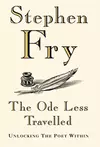
The Ode Less Travelled by Stephen Fry is an informative, candid volume on poetic forms and structures. Ode feels geared more towards aspiring poets than readers with how Fry pushes its writing exercises. But there's great material in the first half on scansion and meter and basic forms valuable for those who just want to read more poetry too.
I'm in the latter group, but I tried to do the exercises anyway. I got through thirteen before I stopped. That is about where the book starts covering more exotic forms which appeal little at my fledgling level.
The Ode Less Travelled by Stephen Fry is an informative, candid volume on poetic forms and structures. Ode feels geared more towards aspiring poets than readers with how Fry pushes its writing exercises. But there's great material in the first half on scansion and meter and basic forms valuable for those who just want to read more poetry too.
I'm in the latter group, but I tried to do the exercises anyway. I got through thirteen before I stopped. That is about where the book starts covering more exotic forms which appeal little at my fledgling level.


David Weber's On Basilisk Station is a nice piece of military sci-fi pulled down by too much exposition.
A lot of exposition isn't immediately a story's death knell for me. I like Robert A. Heinlein's Starship Troopers and it has plenty of exposition. Working through Weber's exposition though is like spooning mouthfuls of cement dust. Get ready to wade through swathes of gobbledygook.
Maybe Weber put extensive effort into crafting the setting and he included the dense expository passages out of excitement for his worldbuilding. Who knows? But have the courtesy to move that stuff into an appendix man. That's what Dune did: follow Frank Herbert's example, not Neal Stephenson's.
Otherwise, the rest of story is well-paced and enjoyable. I like Honor, the main character. I like how the Fearless's crew comes together. I like how Honor exploits all the resources of her ship—the marines, the pinnaces, the weather probes (down to reconfiguring them into proximity sensors). The occasional views into the background political intrigue was a nice touch. I could have used more of it if Weber clearly telegraphed perspective shifts.
David Weber's On Basilisk Station is a nice piece of military sci-fi pulled down by too much exposition.
A lot of exposition isn't immediately a story's death knell for me. I like Robert A. Heinlein's Starship Troopers and it has plenty of exposition. Working through Weber's exposition though is like spooning mouthfuls of cement dust. Get ready to wade through swathes of gobbledygook.
Maybe Weber put extensive effort into crafting the setting and he included the dense expository passages out of excitement for his worldbuilding. Who knows? But have the courtesy to move that stuff into an appendix man. That's what Dune did: follow Frank Herbert's example, not Neal Stephenson's.
Otherwise, the rest of story is well-paced and enjoyable. I like Honor, the main character. I like how the Fearless's crew comes together. I like how Honor exploits all the resources of her ship—the marines, the pinnaces, the weather probes (down to reconfiguring them into proximity sensors). The occasional views into the background political intrigue was a nice touch. I could have used more of it if Weber clearly telegraphed perspective shifts.
Cloud Atlas by David Mitchell tells six stories, separated by time and place but connected through a birthmark implying the main character's reincarnation. A film adaptation directed by the Wachowskis released in 2012.
Cloud Atlas's stories are nested: the first five stories halt midway, the sixth story is told in full, then the first five are concluded in reverse order. The stories also happen to be presented in increasingly engaging order: the first two stories are collections of diary entries, archaically-styled and, frankly, boring; followed by an action-mystery, a "prison" break, a dystopian thriller, and a post-apocalyptic survival story.
The drawback with the nested structure is the most engaging stories end in the middle and the weaker stories close out the book. Also, when each story is interrupted halfway, momentum lost. Readers have to recalibrate when resuming the story later—like matching revs before shifting gears. It's not a smooth reading experience.
I think this is one of those times where the film adaptation is better because the film allows itself to deviate from the book's nested structure. By switching between the stories several times, and also by grouping scenes of similar energy, the film avoids momentum issues, and the weak ending.
Interestingly, the book's US and UK editions differ but the differences are only in the content of the Sonmi-451 story—nothing with the nested structure. (The US edition is the basis for the film and also later electronic editions, but neither has been declared as the definitive edition).
Cloud Atlas by David Mitchell tells six stories, separated by time and place but connected through a birthmark implying the main character's reincarnation. A film adaptation directed by the Wachowskis released in 2012.
Cloud Atlas's stories are nested: the first five stories halt midway, the sixth story is told in full, then the first five are concluded in reverse order. The stories also happen to be presented in increasingly engaging order: the first two stories are collections of diary entries, archaically-styled and, frankly, boring; followed by an action-mystery, a "prison" break, a dystopian thriller, and a post-apocalyptic survival story.
The drawback with the nested structure is the most engaging stories end in the middle and the weaker stories close out the book. Also, when each story is interrupted halfway, momentum lost. Readers have to recalibrate when resuming the story later—like matching revs before shifting gears. It's not a smooth reading experience.
I think this is one of those times where the film adaptation is better because the film allows itself to deviate from the book's nested structure. By switching between the stories several times, and also by grouping scenes of similar energy, the film avoids momentum issues, and the weak ending.
Interestingly, the book's US and UK editions differ but the differences are only in the content of the Sonmi-451 story—nothing with the nested structure. (The US edition is the basis for the film and also later electronic editions, but neither has been declared as the definitive edition).
David Weber's On Basilisk Station is a nice piece of military sci-fi pulled way down by too much exposition.
A lot of exposition isn't immediately a story's death knell for me. I like Robert A. Heinlein's Starship Troopers and it has plenty of exposition. Working through Weber's exposition though is like spooning mouthfuls of cement dust. Get ready for slabs of gobbledygook squatting swathes of the text.
Maybe Weber put extensive effort into crafting the setting and he included the dense expository passages out of excitement for his worldbuilding. Who knows? But have the courtesy to move that stuff into an appendix man. That's what Dune did: follow Frank Herbert's example, not Neal Stephenson's.
Otherwise, the rest of story is well-paced and enjoyable. I like Honor, the main character. I like how the crew of the Fearless comes together. I like how Honor exploits all the resources of her ship—the marines, the pinnaces, the weather probes (down to reconfiguring the latter into proximity sensors). The occasional views into the background political intrigue was a nice touch. I could have used more of it if Weber clearly telegraphed perspective shifts.
David Weber's On Basilisk Station is a nice piece of military sci-fi pulled way down by too much exposition.
A lot of exposition isn't immediately a story's death knell for me. I like Robert A. Heinlein's Starship Troopers and it has plenty of exposition. Working through Weber's exposition though is like spooning mouthfuls of cement dust. Get ready for slabs of gobbledygook squatting swathes of the text.
Maybe Weber put extensive effort into crafting the setting and he included the dense expository passages out of excitement for his worldbuilding. Who knows? But have the courtesy to move that stuff into an appendix man. That's what Dune did: follow Frank Herbert's example, not Neal Stephenson's.
Otherwise, the rest of story is well-paced and enjoyable. I like Honor, the main character. I like how the crew of the Fearless comes together. I like how Honor exploits all the resources of her ship—the marines, the pinnaces, the weather probes (down to reconfiguring the latter into proximity sensors). The occasional views into the background political intrigue was a nice touch. I could have used more of it if Weber clearly telegraphed perspective shifts.
David Weber's On Basilisk Station is a nice piece of military sci-fi pulled way down by too much exposition.
A lot of exposition isn't immediately a story's death knell for me. I like Robert A. Heinlein's Starship Troopers and it has plenty of exposition. Working through Weber's exposition though is like spooning mouthfuls of cement dust. Get ready for slabs of gobbledygook squatting swathes of text.
Maybe Weber put extensive effort into crafting the setting and he included the dense expository passages out of excitement for his worldbuilding. Who knows? But have the courtesy to move that stuff into an appendix man. That's what Dune did: follow Frank Herbert's example, not Neal Stephenson's.
Otherwise, the rest of story is well-paced and enjoyable. I like Honor, the main character. I like how the crew of the Fearless comes together. I like how Honor exploits all the resources of her ship—the marines, the pinnaces, the weather probes (down to reconfiguring the latter into proximity sensors). The occasional views into the background political intrigue was a nice touch. I could have used more of it if Weber clearly telegraphed perspective shifts.
David Weber's On Basilisk Station is a nice piece of military sci-fi pulled way down by too much exposition.
A lot of exposition isn't immediately a story's death knell for me. I like Robert A. Heinlein's Starship Troopers and it has plenty of exposition. Working through Weber's exposition though is like spooning mouthfuls of cement dust. Get ready for slabs of gobbledygook squatting swathes of text.
Maybe Weber put extensive effort into crafting the setting and he included the dense expository passages out of excitement for his worldbuilding. Who knows? But have the courtesy to move that stuff into an appendix man. That's what Dune did: follow Frank Herbert's example, not Neal Stephenson's.
Otherwise, the rest of story is well-paced and enjoyable. I like Honor, the main character. I like how the crew of the Fearless comes together. I like how Honor exploits all the resources of her ship—the marines, the pinnaces, the weather probes (down to reconfiguring the latter into proximity sensors). The occasional views into the background political intrigue was a nice touch. I could have used more of it if Weber clearly telegraphed perspective shifts.
David Weber's On Basilisk Station is a nice piece of military sci-fi pulled down by too much exposition.
A lot of exposition isn't immediately a story's death knell for me. I like Robert A. Heinlein's Starship Troopers and it has plenty of exposition. Working through Weber's exposition though is like spooning mouthfuls of cement dust. Get ready for slabs of gobbledygook squatting swathes of text. Maybe Weber put extensive effort into crafting the setting and he included the dense expository passages out of excitement for his worldbuilding. But have the courtesy to move that stuff into an appendix man. That's what Dune did: follow Frank Herbert's example, not Neal Stephenson's.
Otherwise, the story is well-paced and an enjoyable read. I like how the crew of the Fearless comes together, and also how Honor exploits all the resources of her ship—the marines, the pinnaces, the weather probes (down to reconfiguring the latter into proximity sensors). The occasional views into the background political intrigue was a nice touch. I could have used more of it, but only if Weber clearly telegraphed perspective shifts.
David Weber's On Basilisk Station is a nice piece of military sci-fi pulled down by too much exposition.
A lot of exposition isn't immediately a story's death knell for me. I like Robert A. Heinlein's Starship Troopers and it has plenty of exposition. Working through Weber's exposition though is like spooning mouthfuls of cement dust. Get ready for slabs of gobbledygook squatting swathes of text. Maybe Weber put extensive effort into crafting the setting and he included the dense expository passages out of excitement for his worldbuilding. But have the courtesy to move that stuff into an appendix man. That's what Dune did: follow Frank Herbert's example, not Neal Stephenson's.
Otherwise, the story is well-paced and an enjoyable read. I like how the crew of the Fearless comes together, and also how Honor exploits all the resources of her ship—the marines, the pinnaces, the weather probes (down to reconfiguring the latter into proximity sensors). The occasional views into the background political intrigue was a nice touch. I could have used more of it, but only if Weber clearly telegraphed perspective shifts.
The Ode Less Travelled by Stephen Fry is an informative, candid volume on poetic forms and structures. Ode feels geared more towards aspiring poets than readers with how Fry pushes its writing exercises. But there's great material in the first half on scansion and meter and basic forms valuable for those who just want to read more poetry too.
I'm in the latter group, but I tried to do the exercises anyway. I got through thirteen before I stopped. That's where the book starts covering more exotic forms which appeal little at my fledgling level.
The Ode Less Travelled by Stephen Fry is an informative, candid volume on poetic forms and structures. Ode feels geared more towards aspiring poets than readers with how Fry pushes its writing exercises. But there's great material in the first half on scansion and meter and basic forms valuable for those who just want to read more poetry too.
I'm in the latter group, but I tried to do the exercises anyway. I got through thirteen before I stopped. That's where the book starts covering more exotic forms which appeal little at my fledgling level.
The Ode Less Travelled by Stephen Fry is an informative, candid volume on poetic forms and structures. Ode feels geared towards aspiring poets than readers with how it encourages completion of its exercises. But there's great material in the first half on scansion and meter and basic forms valuable for those those who just want to read more poetry.
I'm in the latter group, but I tried to do the exercises anyway. I got through thirteen before I stopped. That's where the book starts covering more exotic forms which aren't appealing at my level.
The Ode Less Travelled by Stephen Fry is an informative, candid volume on poetic forms and structures. Ode feels geared towards aspiring poets than readers with how it encourages completion of its exercises. But there's great material in the first half on scansion and meter and basic forms valuable for those those who just want to read more poetry.
I'm in the latter group, but I tried to do the exercises anyway. I got through thirteen before I stopped. That's where the book starts covering more exotic forms which aren't appealing at my level.