
norb




I thought this one dragged a bit. The plot was just OK. A bit of plot armor here and there. The villain was overly villainous and pretty one dimensional. Still an enjoyable read, but not as good as the first three.
I thought this one dragged a bit. The plot was just OK. A bit of plot armor here and there. The villain was overly villainous and pretty one dimensional. Still an enjoyable read, but not as good as the first three.

Overall I found these books to be a relatively quick reads. The premise is good. Keanu Reeves, I mean B/Unute, is a demigod (maybe? or he's an alien? Or something else?) who can't die. Well he can die but he comes back from an egg. Either way, he's been alive for tens of thousands of years. He's seen and done it all. He has a perfect memory. He's now working for the governement as a special forces type soldier, out doing special forces things except instead of fighting bad guys, he's out collecting weird artifacts for the government to use in experiments on him.
Overall, the story is rather shallow. Where the novel really outshines the comics is the additional world building and background on Unute. The comics I think actually did a better job at exploring a bit more of Unute's past, but he's pretty one dimensional here.
I preferred the overall plot of the novel to these volumes. I feel like the comics took the “easy way out” at the end, even though they left something else to follow. The end of the novel felt more satisfying to me.
All in all though, I enjoyed these and will explore the other entries at some point.
Overall I found these books to be a relatively quick reads. The premise is good. Keanu Reeves, I mean B/Unute, is a demigod (maybe? or he's an alien? Or something else?) who can't die. Well he can die but he comes back from an egg. Either way, he's been alive for tens of thousands of years. He's seen and done it all. He has a perfect memory. He's now working for the governement as a special forces type soldier, out doing special forces things except instead of fighting bad guys, he's out collecting weird artifacts for the government to use in experiments on him.
Overall, the story is rather shallow. Where the novel really outshines the comics is the additional world building and background on Unute. The comics I think actually did a better job at exploring a bit more of Unute's past, but he's pretty one dimensional here.
I preferred the overall plot of the novel to these volumes. I feel like the comics took the “easy way out” at the end, even though they left something else to follow. The end of the novel felt more satisfying to me.
All in all though, I enjoyed these and will explore the other entries at some point.

I've never read any Nabokov before. Had never been really interested in Lolita, just due to the noise around it. Decided to read this book on a whim because it was available at my local library and I needed something for a trip.
I am glad I picked this one! I found this book confusing in a good way. What is the point? I think it's meant to be a bit of a lark on Russian emigres, and university culture in general (something I have first hand knowledge of). It was much funnier than I expected (a bit more on that later).
Pnin is a very interesting character. His description really reminded me of Gru from Despicable Me, down to the funny accent and way of speaking. (Maybe they cribbed him for the movie? I have no idea.)
The little vignettes give a view into this man's strange world. His past is interwoven with his present, kind of. The narrator/writer clearly has a fondness for the main character, and you kind of find out why by the end.
There isn't much conflict to the story. There aren't many big, dramatic moments. There are some very funny bits - to whit “The evolution of sense is, in a sense, the evolution of nonsense.” I had to read it 3 or 4 times to get it, but when I did HA! Other little one liners and “throw away” jokes abound. There are bits of other languages (especially Russian), mostly phonetically written in English, and I think probably a few jokes in those snippets that I didn't get.
Overall, it was a pretty lighthearted read about a character that is both believable and unbelievable at the same time. By the end, you are kind of left to question if the stories are actually true or not since they are being recounted second- and possibly third-hand, but it probably doesn't really matter, which is maybe the point.
I will definitely check out more Nabokov. The Luzhin Defense seems interesting for sure!
I've never read any Nabokov before. Had never been really interested in Lolita, just due to the noise around it. Decided to read this book on a whim because it was available at my local library and I needed something for a trip.
I am glad I picked this one! I found this book confusing in a good way. What is the point? I think it's meant to be a bit of a lark on Russian emigres, and university culture in general (something I have first hand knowledge of). It was much funnier than I expected (a bit more on that later).
Pnin is a very interesting character. His description really reminded me of Gru from Despicable Me, down to the funny accent and way of speaking. (Maybe they cribbed him for the movie? I have no idea.)
The little vignettes give a view into this man's strange world. His past is interwoven with his present, kind of. The narrator/writer clearly has a fondness for the main character, and you kind of find out why by the end.
There isn't much conflict to the story. There aren't many big, dramatic moments. There are some very funny bits - to whit “The evolution of sense is, in a sense, the evolution of nonsense.” I had to read it 3 or 4 times to get it, but when I did HA! Other little one liners and “throw away” jokes abound. There are bits of other languages (especially Russian), mostly phonetically written in English, and I think probably a few jokes in those snippets that I didn't get.
Overall, it was a pretty lighthearted read about a character that is both believable and unbelievable at the same time. By the end, you are kind of left to question if the stories are actually true or not since they are being recounted second- and possibly third-hand, but it probably doesn't really matter, which is maybe the point.
I will definitely check out more Nabokov. The Luzhin Defense seems interesting for sure!

I wasn't sure what to expect from this book. I did not know about the comic it is based off of before I picked it up. I wasn't sure what role Keanu Reeves had vs. China Miéville. This book has some of the dense prose that I would expect from a Miéville book, but also is a bit toned down in that regard as it compares to some of his other work I've read. In other words, there were less bits where I was just going WTF? and trying to get through it to figure out what the hell was going on.
So you have a guy who can't die? What does that really look like? I thought the explanations for how that has effected B (or Unute, our protagonist) very well thought out. There are sections of the book where he just seems like Bill Murray in Groundhog day, just doing whatever the fuck he wants and not caring about what comes from it. There are sections where he's found a “regular” human to spend some time with. You can tell that he still feels for the people around him, even if he knows they are temporary and he'll encounter countless others in the future.
I liked that the philosophical aspects are not quite front and center. I liked that the story was a mystery within other mysteries. The ending was good, but kind of unsatisfying? It left room for more stories, which I would happily read if they write them.
All in all, this was a good read and I'll check out the comics too. The intro implies that this story isn't like those, which intrigues me.
I wasn't sure what to expect from this book. I did not know about the comic it is based off of before I picked it up. I wasn't sure what role Keanu Reeves had vs. China Miéville. This book has some of the dense prose that I would expect from a Miéville book, but also is a bit toned down in that regard as it compares to some of his other work I've read. In other words, there were less bits where I was just going WTF? and trying to get through it to figure out what the hell was going on.
So you have a guy who can't die? What does that really look like? I thought the explanations for how that has effected B (or Unute, our protagonist) very well thought out. There are sections of the book where he just seems like Bill Murray in Groundhog day, just doing whatever the fuck he wants and not caring about what comes from it. There are sections where he's found a “regular” human to spend some time with. You can tell that he still feels for the people around him, even if he knows they are temporary and he'll encounter countless others in the future.
I liked that the philosophical aspects are not quite front and center. I liked that the story was a mystery within other mysteries. The ending was good, but kind of unsatisfying? It left room for more stories, which I would happily read if they write them.
All in all, this was a good read and I'll check out the comics too. The intro implies that this story isn't like those, which intrigues me.

Once again, Martha Wells spins out a fun Muderbot tale.
I've enjoyed the journey that Wells has taken us on in regards to Murderbot's progress to more “humanity.”
In many ways, Murderbot is often the most humane of characters in these stories as it is always putting itself in danger before the “real” humans.
I enjoyed that as these books have progressed, SecUnit has had to become more human for survival, but also apparently for it's own self improvement. As it ran out of more and more drones in this story, it even commented on how being a human must be terrible.
I'm always impressed with Wells' ability to put the reader into the shoes of something that is inherently not human, but yet still shows us a better side of humanity.
Once again, Martha Wells spins out a fun Muderbot tale.
I've enjoyed the journey that Wells has taken us on in regards to Murderbot's progress to more “humanity.”
In many ways, Murderbot is often the most humane of characters in these stories as it is always putting itself in danger before the “real” humans.
I enjoyed that as these books have progressed, SecUnit has had to become more human for survival, but also apparently for it's own self improvement. As it ran out of more and more drones in this story, it even commented on how being a human must be terrible.
I'm always impressed with Wells' ability to put the reader into the shoes of something that is inherently not human, but yet still shows us a better side of humanity.

Wow! I really, really liked this book. It was not at all what I expected. The entire premise is just absurd. I expected the story to also be just as absurd, but it ... wasn't.
Scalzi has approached this book, like his last two, from a point of realism. The premise is, of course, absolutely insane. The moon becomes “cheese” (an organic matrix I think is the way book NASA states it). That is impossible! But the book characters also know it is impossible!
The entire structure of this isn't much of a story. It's more a rumination on what might the moon turning to cheese really be like? How might people react? What might some real consequences be? Each chapter is a day of the lunar cycle, and they focus on different people. There are some repeat characters and some mentions of characters across chapters, but really the Cheese Moon (Of course Scalzi gives us a “real” name for it - Caseus) is the main character.
About 2/3 or 3/4 of the way through, there is a real bit of danger that comes kind of out of nowhere. And from then on the book becomes a series of explorations of death, of relationships, and of consequences.
And then there's the end. I marked this for spoilers, so here's the spoiler. The moon just turns back to normal at the end of the lunar cycle. No explanation given - just like none was given for why it changed in the first place. It was really a huge Steven King moment for me (an ending that is just kind of like ... well I don't know where to go next so yeah it was insert easy way out). And for a minute I was like “Oh no Scalzi... not you too!”
But then, the last two chapters. One 10 years out and one I think 100 years out, I didn't do the math... those two, very short chapters are what sold me. Those two chapters made the ending have a point. They showed us one of our major flaws, which is that hindsight is never 20/20. History is never what we think it is. And, given enough time and enough misinformation and enough humanity - we will forget the truth. We will make it something else. And that was a powerful ending to the dumbest premise ever turned into a full novel.
Wow! I really, really liked this book. It was not at all what I expected. The entire premise is just absurd. I expected the story to also be just as absurd, but it ... wasn't.
Scalzi has approached this book, like his last two, from a point of realism. The premise is, of course, absolutely insane. The moon becomes “cheese” (an organic matrix I think is the way book NASA states it). That is impossible! But the book characters also know it is impossible!
The entire structure of this isn't much of a story. It's more a rumination on what might the moon turning to cheese really be like? How might people react? What might some real consequences be? Each chapter is a day of the lunar cycle, and they focus on different people. There are some repeat characters and some mentions of characters across chapters, but really the Cheese Moon (Of course Scalzi gives us a “real” name for it - Caseus) is the main character.
About 2/3 or 3/4 of the way through, there is a real bit of danger that comes kind of out of nowhere. And from then on the book becomes a series of explorations of death, of relationships, and of consequences.
And then there's the end. I marked this for spoilers, so here's the spoiler. The moon just turns back to normal at the end of the lunar cycle. No explanation given - just like none was given for why it changed in the first place. It was really a huge Steven King moment for me (an ending that is just kind of like ... well I don't know where to go next so yeah it was insert easy way out). And for a minute I was like “Oh no Scalzi... not you too!”
But then, the last two chapters. One 10 years out and one I think 100 years out, I didn't do the math... those two, very short chapters are what sold me. Those two chapters made the ending have a point. They showed us one of our major flaws, which is that hindsight is never 20/20. History is never what we think it is. And, given enough time and enough misinformation and enough humanity - we will forget the truth. We will make it something else. And that was a powerful ending to the dumbest premise ever turned into a full novel.

A good finish to the series. A few of the things wrapped up a little too neatly, but also some surprises at the end.
I enjoyed that we get to see Juliette united with Charlotte and move toward the start of their next adventure with the survivors from Silos 17/18.
I am wondering what else the author has planned with these characters. The bit about the people from 17 being “wrong” (i.e. “infected” by Anna with the nanobots that keep the people in Silo 1 alive/healthy for so long) seems too good to pass up!
I enjoyed how Howey weaved in the reasons behind what happened mostly in the background, but did make it pretty explicit what happened by the end, so if you missed some of the hints you weren't left completely clueless. I think that bit above about the Silo 17 survivors having healing nanobots being one of the last things left (mostly) unsaid.
Great series!
A good finish to the series. A few of the things wrapped up a little too neatly, but also some surprises at the end.
I enjoyed that we get to see Juliette united with Charlotte and move toward the start of their next adventure with the survivors from Silos 17/18.
I am wondering what else the author has planned with these characters. The bit about the people from 17 being “wrong” (i.e. “infected” by Anna with the nanobots that keep the people in Silo 1 alive/healthy for so long) seems too good to pass up!
I enjoyed how Howey weaved in the reasons behind what happened mostly in the background, but did make it pretty explicit what happened by the end, so if you missed some of the hints you weren't left completely clueless. I think that bit above about the Silo 17 survivors having healing nanobots being one of the last things left (mostly) unsaid.
Great series!

Great follow up to Wool. Didn't go where I thought it would - but glad Howey did what he did.
The edition I have had a nice afterword from the author and I appreciated the insight to his thought process for the plot.
I liked going back to see how it all ended up (or started?) where it did in Wool. Getting Solo's story was fantastic. Finding out why the silos were made (fanatics!! Who'da think? Yes I'm being sarcastic there) was a good choice as well.
Looking forward to the rest of Juliette's story. Interested to see if/when she meets Donald.
Great follow up to Wool. Didn't go where I thought it would - but glad Howey did what he did.
The edition I have had a nice afterword from the author and I appreciated the insight to his thought process for the plot.
I liked going back to see how it all ended up (or started?) where it did in Wool. Getting Solo's story was fantastic. Finding out why the silos were made (fanatics!! Who'da think? Yes I'm being sarcastic there) was a good choice as well.
Looking forward to the rest of Juliette's story. Interested to see if/when she meets Donald.

I really enjoyed the breadth (and depth) of the analysis the Weinersmith's make in this book. The science-y bits were great, but the law related pieces were the most interesting in my opinion.
I think their point about how space exploration geeks just completely skip over law was really insightful. The fact that we already have international law that most likely applies to the moon, and the different reasons why powerful countries agree to international law or not, was interesting.
After reading this book, I came away significantly less enthusiastic about a settlement on Mars (or the Moon) however I still, like the authors, think it is a good use of time and money if done the right way.
I really enjoyed the breadth (and depth) of the analysis the Weinersmith's make in this book. The science-y bits were great, but the law related pieces were the most interesting in my opinion.
I think their point about how space exploration geeks just completely skip over law was really insightful. The fact that we already have international law that most likely applies to the moon, and the different reasons why powerful countries agree to international law or not, was interesting.
After reading this book, I came away significantly less enthusiastic about a settlement on Mars (or the Moon) however I still, like the authors, think it is a good use of time and money if done the right way.
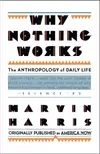
This book absolutely blew me away. I got it on a whim from an offhand comment I read somewhere online (had to request it from a library in another city, even). I wasn't expecting much, and honestly thought I'd just be reading a bunch of antiquated anthropological ideas from 1980, but I couldn't have been more wrong!
The ideas presented in this book share a web of events in post-WWII United States that led to what Harris describes as a somewhat broken society. His arguments were well thought out and researched (extensive citations are provided). The way he combines business consolidation/conglomeration, the feminist movement, the gay right movement, cults, and a lot of other ideas into one cohesive argument for why things were the way they were in 1980 was eye opening.
The most impressive part of all of it was how relevant his observations are here in 2023! 40 years later and we've not learned enough (or maybe, more to the unstated point of the book, things haven't gotten bad enough yet) for us to make large changes to the way our society operates.
I would highly recommend this book to anyone that wants a bit of a history lesson on why we seem to be stuck spinning our wheels in society today.
This book absolutely blew me away. I got it on a whim from an offhand comment I read somewhere online (had to request it from a library in another city, even). I wasn't expecting much, and honestly thought I'd just be reading a bunch of antiquated anthropological ideas from 1980, but I couldn't have been more wrong!
The ideas presented in this book share a web of events in post-WWII United States that led to what Harris describes as a somewhat broken society. His arguments were well thought out and researched (extensive citations are provided). The way he combines business consolidation/conglomeration, the feminist movement, the gay right movement, cults, and a lot of other ideas into one cohesive argument for why things were the way they were in 1980 was eye opening.
The most impressive part of all of it was how relevant his observations are here in 2023! 40 years later and we've not learned enough (or maybe, more to the unstated point of the book, things haven't gotten bad enough yet) for us to make large changes to the way our society operates.
I would highly recommend this book to anyone that wants a bit of a history lesson on why we seem to be stuck spinning our wheels in society today.