
Sam Moore


National Service
Read if you like: modern British theatre; the case for publicly funding the arts; gossip; David Hare; being on the cusp of great change; Alan Bennett; absent friends, and those who are here now
***
My go-to re-read for when my brain can't do new or complex things. Feel very Seen by Eyre and the ways in which his work ethic seems rooted in a certain anxiety and imposter syndrome (as opposed to say, Peter Hall). I think about the way he writes about his family, how he loves them but they remain a little unreachable to him, more and more every time. Makes me realise I need to read more plays, see more theatre, and be a better, more attentive friend
Read if you like: modern British theatre; the case for publicly funding the arts; gossip; David Hare; being on the cusp of great change; Alan Bennett; absent friends, and those who are here now
***
My go-to re-read for when my brain can't do new or complex things. Feel very Seen by Eyre and the ways in which his work ethic seems rooted in a certain anxiety and imposter syndrome (as opposed to say, Peter Hall). I think about the way he writes about his family, how he loves them but they remain a little unreachable to him, more and more every time. Makes me realise I need to read more plays, see more theatre, and be a better, more attentive friend

read if you like: theatre; industrial relations; feeling like you’re doing too much and not enough; gossip; the fact that when you’ve got friends like these, who needs enemies
read if you like: theatre; industrial relations; feeling like you’re doing too much and not enough; gossip; the fact that when you’ve got friends like these, who needs enemies

Read if you like: Poetry; verses; drinking the haterade; Claudia Rankine; the fact man's reach should exceed his grasp, or what else is a heaven for; trying, failing, failing again, failing better
***
Been thinking about the idea of failure a lot lately and what comes after it so this ended up being very much up my alley for my current obsession; the idea that the point of poetry is to fail -- perfect poems exist in dreams and divinity but we'll never write them down. Love Lerner's willingness to be combative and surprising, even when he talks to himself. All for anything that challenges narratives of the "universal" through what we might diplomatically call a Very Specific Lens; Lerner goes to bat for things and poets that really pleasantly surprised me. This is a great, lean piece of criticism
Read if you like: Poetry; verses; drinking the haterade; Claudia Rankine; the fact man's reach should exceed his grasp, or what else is a heaven for; trying, failing, failing again, failing better
***
Been thinking about the idea of failure a lot lately and what comes after it so this ended up being very much up my alley for my current obsession; the idea that the point of poetry is to fail -- perfect poems exist in dreams and divinity but we'll never write them down. Love Lerner's willingness to be combative and surprising, even when he talks to himself. All for anything that challenges narratives of the "universal" through what we might diplomatically call a Very Specific Lens; Lerner goes to bat for things and poets that really pleasantly surprised me. This is a great, lean piece of criticism

Fox is too proscriptive about language for his own good here; that his defence and deconstruction of "pretentiousness" begins with millennia-old etymology and Ancient Greek theatrical traditions while, not making the book impenetrable or anything, does seem to be an act of refusal to approach the word through its actual, contemporary usage. Ironically then, I really agree with his conclusions about why this term -- or a term like it! -- matters: why our artistic reach should exceed our grasp and we should always challenge ourselves and cultivate a curiosity about the world around us. I like the ideal of being culturally omnivorous -- or, as an old uni lecturer used to say, "intellectually promiscuous" -- as a good thing rather than just a byproduct of postmodernism collapsing high/low distinctions.
The postscript of his sort of creative and professional becoming, his relationship to his brothers and parents and how formative they were in generating an organic and curious love of everything from the Velvet Underground to Complicite is where this all really shines, shows why it all matters from that human perspective, that the point is discovery. That's what its for. Its for discovery.
Fox is too proscriptive about language for his own good here; that his defence and deconstruction of "pretentiousness" begins with millennia-old etymology and Ancient Greek theatrical traditions while, not making the book impenetrable or anything, does seem to be an act of refusal to approach the word through its actual, contemporary usage. Ironically then, I really agree with his conclusions about why this term -- or a term like it! -- matters: why our artistic reach should exceed our grasp and we should always challenge ourselves and cultivate a curiosity about the world around us. I like the ideal of being culturally omnivorous -- or, as an old uni lecturer used to say, "intellectually promiscuous" -- as a good thing rather than just a byproduct of postmodernism collapsing high/low distinctions.
The postscript of his sort of creative and professional becoming, his relationship to his brothers and parents and how formative they were in generating an organic and curious love of everything from the Velvet Underground to Complicite is where this all really shines, shows why it all matters from that human perspective, that the point is discovery. That's what its for. Its for discovery.

Occasionally rolled my eyes at Wilson's bizarre impulse towards self-flagellation for daring to diminish popular music ("Oh, come on!" featured in my notes) but this largely entertaining and interesting; maybe more so as a document of fan culture and what we gain (and maybe lose) when we so aggressively humanise an artist. He ends up weirdly dismissive of his own tastes and why they matter and might get hung up on some of the wrong things, but its a really interesting case study of Celine herself and live music in particular; its no surprise he's most moved when he sees her perform live. A deeply curious text
Occasionally rolled my eyes at Wilson's bizarre impulse towards self-flagellation for daring to diminish popular music ("Oh, come on!" featured in my notes) but this largely entertaining and interesting; maybe more so as a document of fan culture and what we gain (and maybe lose) when we so aggressively humanise an artist. He ends up weirdly dismissive of his own tastes and why they matter and might get hung up on some of the wrong things, but its a really interesting case study of Celine herself and live music in particular; its no surprise he's most moved when he sees her perform live. A deeply curious text

Feels really special in its ability to create such a strong sense of depth and emotional nuance while making it look easy? I can't really think of another way to put it, but the way Ferrante uses language -- somewhere between the age of narrator and their adolescent self as the story unfolds, with a few fascinating interjections from the present tense -- understands these themes of rage, disillusionment, political upheaval, not just with the benefit of hindsight but as something that's always been there and feels deeply embodied. Constantly alive with the transformation of the characters and their neighbourhood; what might be always struggling to be born in fits and starts, held in place by choice or by force. Really terrific
Feels really special in its ability to create such a strong sense of depth and emotional nuance while making it look easy? I can't really think of another way to put it, but the way Ferrante uses language -- somewhere between the age of narrator and their adolescent self as the story unfolds, with a few fascinating interjections from the present tense -- understands these themes of rage, disillusionment, political upheaval, not just with the benefit of hindsight but as something that's always been there and feels deeply embodied. Constantly alive with the transformation of the characters and their neighbourhood; what might be always struggling to be born in fits and starts, held in place by choice or by force. Really terrific
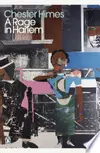
enjoyably gonzo and shot through with dark humour; does the almost farcical escalation of stakes and double crossing that I got from watching The Big Sleep (maybe noir thrillers and farce are inherently similar?)
Jackson at the center a naive, suffering figure but one who remains fundamentally good in the face of a strange and violent underbelly. Love Himes’ ear for dialogue and the bleak poetry in his more protracted description
enjoyably gonzo and shot through with dark humour; does the almost farcical escalation of stakes and double crossing that I got from watching The Big Sleep (maybe noir thrillers and farce are inherently similar?)
Jackson at the center a naive, suffering figure but one who remains fundamentally good in the face of a strange and violent underbelly. Love Himes’ ear for dialogue and the bleak poetry in his more protracted description


Fascinated by this formally; its refusal to really do much of anything with plot, and absolute absence of dialogue or character's as individuals -- they're always a couple, always defined together and always through the prism of other things. Their relationship to objects, geography, night clubs, sex shops, all the patchwork that defines them, becoming ever more rigid, as if their sense of selves might calcify and trap them forever. The way distance -- from a time, a place -- changes the way we see it and constantly try to make things seem better than they are (through our own eyes, and when we're perceived). Morbidly compelling, and really rather good
Fascinated by this formally; its refusal to really do much of anything with plot, and absolute absence of dialogue or character's as individuals -- they're always a couple, always defined together and always through the prism of other things. Their relationship to objects, geography, night clubs, sex shops, all the patchwork that defines them, becoming ever more rigid, as if their sense of selves might calcify and trap them forever. The way distance -- from a time, a place -- changes the way we see it and constantly try to make things seem better than they are (through our own eyes, and when we're perceived). Morbidly compelling, and really rather good

Wrongness
(read for work)
Epistolary break-ups will always be my jam; all those ghosts and failures, letters as archive of a past, a self, what might have been. Full of really incisive stuff -- obviously reminded me of things like Kraus and Anne Carson -- that I naturally devoured. Haunted, not just by a lost lover but a lost self, one that for better and for worse, emerged through intimacy with a specific person. All alchemy, magic
(read for work)
Epistolary break-ups will always be my jam; all those ghosts and failures, letters as archive of a past, a self, what might have been. Full of really incisive stuff -- obviously reminded me of things like Kraus and Anne Carson -- that I naturally devoured. Haunted, not just by a lost lover but a lost self, one that for better and for worse, emerged through intimacy with a specific person. All alchemy, magic


Dynamic and transformative in a way that surprised me. The San Quentin section all superb; feelings that can't be given a name but that end up haunting much of the novel, especially its final part -- a novel that constantly grapples with how to define Freedom and what people do when they don't have it. A stark, lonely thing, a generation of people who never had Opportunity in the way that their parents (so often absent, dead) did; the world itself seemingly haunted by what came before and what never quite came after. Violence the only language these people know; the way things calcify and take root. Very good
Dynamic and transformative in a way that surprised me. The San Quentin section all superb; feelings that can't be given a name but that end up haunting much of the novel, especially its final part -- a novel that constantly grapples with how to define Freedom and what people do when they don't have it. A stark, lonely thing, a generation of people who never had Opportunity in the way that their parents (so often absent, dead) did; the world itself seemingly haunted by what came before and what never quite came after. Violence the only language these people know; the way things calcify and take root. Very good

Added to listOwnedwith 133 books.


Updated a reading goal:
Read 52 books by December 31, 2026
Progress so far: 13 / 52 25%

- Hal Foster
- Craig Owens
- Edward W. Said
- Gregory L. Ulmer
- Jean Baudrillard
- Douglas Crimp
- Kenneth Frampton
- Jürgen Habermas
- Fredric Jameson
- Rosalind E. Krauss
A serious ranking of contributors to The Anti-Aesthetic in order of readability:
Edward Said
Douglas Crimp
Rosalind Krauss
Frederic Jameson
Craig Owens
Jurgen Habermas
Kenneth Frampton
Jean Baudrillard
***
Struck by how this an After the End of Art both talk about modernism -- a stripping back, a search for purity, a kind of formal absolutism -- as much as by its post- The questions here about rebellion and mass culture are interesting but I was really struck by was how some of the contributors attack things from an angle that feels very contemporary and alive decades later; Craig Owens' essay on feminism was a real pleasant surprised.
Shoutout to Said specifically for being more readable than his comrades; for approaching theory and academic discipline in a way that, perhaps in a way that feels most appropriate for postmodernism, asks for more: for an understanding of theory and politics and pedagogy that refuses to be siloed into one, ornamental thing.
This kind of dense theory is always a bit of a fight for me to get through, its been a while since I was in the academy; but I always get a lot from it, should read more of it, keep the muscle limber
A serious ranking of contributors to The Anti-Aesthetic in order of readability:
Edward Said
Douglas Crimp
Rosalind Krauss
Frederic Jameson
Craig Owens
Jurgen Habermas
Kenneth Frampton
Jean Baudrillard
***
Struck by how this an After the End of Art both talk about modernism -- a stripping back, a search for purity, a kind of formal absolutism -- as much as by its post- The questions here about rebellion and mass culture are interesting but I was really struck by was how some of the contributors attack things from an angle that feels very contemporary and alive decades later; Craig Owens' essay on feminism was a real pleasant surprised.
Shoutout to Said specifically for being more readable than his comrades; for approaching theory and academic discipline in a way that, perhaps in a way that feels most appropriate for postmodernism, asks for more: for an understanding of theory and politics and pedagogy that refuses to be siloed into one, ornamental thing.
This kind of dense theory is always a bit of a fight for me to get through, its been a while since I was in the academy; but I always get a lot from it, should read more of it, keep the muscle limber

(re-read)
Read it if you like: Seinfeld; greed being good; Huey Lewis and the News; molecular gastronomy; the world ending not with a bang but with a whimper; architectural digest tours; Ludwig Van and a bit of the old ultraviolence
***
Weirder and more like Seinfeld than I remember; the stream of consciousness so effective in terms of just burying you in Bateman's brain and the way he sees the world: all slick, hollow surfaces. Struck by the fact there's not much violence and grizzly stuff (but when it rains, it pours...), so much of it is Bateman wandering through a hell-ish, barren landscape, a world that's different to everyone around him; informed by money, status, suits, Those little flickering moments of the mask slipping, mode of address changing is great.
It's also, incredbly funny; in the dialogue, in the ridiculous food, even in some of the most brutal and unsettling moments there are jokes that cut through it.
(re-read)
Read it if you like: Seinfeld; greed being good; Huey Lewis and the News; molecular gastronomy; the world ending not with a bang but with a whimper; architectural digest tours; Ludwig Van and a bit of the old ultraviolence
***
Weirder and more like Seinfeld than I remember; the stream of consciousness so effective in terms of just burying you in Bateman's brain and the way he sees the world: all slick, hollow surfaces. Struck by the fact there's not much violence and grizzly stuff (but when it rains, it pours...), so much of it is Bateman wandering through a hell-ish, barren landscape, a world that's different to everyone around him; informed by money, status, suits, Those little flickering moments of the mask slipping, mode of address changing is great.
It's also, incredbly funny; in the dialogue, in the ridiculous food, even in some of the most brutal and unsettling moments there are jokes that cut through it.