
Sam Moore


Public transport read
Really struck by Salinger here as a writer of childhood and innocence, how fragile it all is; the child on the beach in the first story; Esme; the slightly strange, Buddihst Teddy. Salinger evokes peoeple who don't know just how much they don't know, putting them at odds with a brutal, postwar world -- a world that's going through an existential crisis of its own
Great ear for dialogue, the spare prose does a lot to capture so much of this sense of the unknown; having thoughts and feelings that his protagonists so rarely have the words for.
---------------------------------------------------------------------------------------------------------------------------------
Read if you like: coming of age with the world around you; the fact a baseball game takes a whole day to play; telling a long story and getting lost along the way; not knowing who you could be tomorrow
Public transport read
Really struck by Salinger here as a writer of childhood and innocence, how fragile it all is; the child on the beach in the first story; Esme; the slightly strange, Buddihst Teddy. Salinger evokes peoeple who don't know just how much they don't know, putting them at odds with a brutal, postwar world -- a world that's going through an existential crisis of its own
Great ear for dialogue, the spare prose does a lot to capture so much of this sense of the unknown; having thoughts and feelings that his protagonists so rarely have the words for.
---------------------------------------------------------------------------------------------------------------------------------
Read if you like: coming of age with the world around you; the fact a baseball game takes a whole day to play; telling a long story and getting lost along the way; not knowing who you could be tomorrow


I love a book of theory that I can butt heads with, and this is one of them; it has some wild ideas around modernism and the political undercurrents that Danto associates with it are kind of wild -- and I don't agree with them at all. And it feels like he picks and chooses when questions of like, institutional value and taste matter in a way that aligns with his taste and thesis: a Rembrandt forgery is bad because history has moved on from the way Rembrandt is historically understood; but Gureilla Girls aiming to skewer male-dominated museums is bad because...? There are some really curious moments of uncertainty about like, when the roles of these institutions matter and when they don't. Maybe I'm just mirroring Danto and looking to see the artists I like (GG) given the like, attention I feel they deserve in the way Danto does with some of his history-remixing-case studies.
But the idea of being at the end of something and what comes after it is something I've been thinking about a lot. Inevitably feels like it needs to be tied into Fukuyama? That yes, we're at the end of something but that just means a sort of full stop in the macro, things in the micro will still happen. The question of the worth and merit they get in a world without these narrative arcs of history/artistic development is one Danto doesn't really answer: maybe the point is that there is no answer.
I love a book of theory that I can butt heads with, and this is one of them; it has some wild ideas around modernism and the political undercurrents that Danto associates with it are kind of wild -- and I don't agree with them at all. And it feels like he picks and chooses when questions of like, institutional value and taste matter in a way that aligns with his taste and thesis: a Rembrandt forgery is bad because history has moved on from the way Rembrandt is historically understood; but Gureilla Girls aiming to skewer male-dominated museums is bad because...? There are some really curious moments of uncertainty about like, when the roles of these institutions matter and when they don't. Maybe I'm just mirroring Danto and looking to see the artists I like (GG) given the like, attention I feel they deserve in the way Danto does with some of his history-remixing-case studies.
But the idea of being at the end of something and what comes after it is something I've been thinking about a lot. Inevitably feels like it needs to be tied into Fukuyama? That yes, we're at the end of something but that just means a sort of full stop in the macro, things in the micro will still happen. The question of the worth and merit they get in a world without these narrative arcs of history/artistic development is one Danto doesn't really answer: maybe the point is that there is no answer.

Bizarre inasmuch as it always flirts with being a Bond parody in ways that stress how grotesque a lot of spy fictioh can be but it has a really interesting thematic core about voids and how people choose to fill them: with country, with wealth, with sex, with food. And I think more than anything this is probably a spiritual novel; about the decay of Hillier's soul, if it happens as a requirement for spycraft and if the cost, in the end, could ever be worth it. It's also just full of really smart uses of language, even in throwaway lines and moments that all add up to something that's occassionally confounding, but always really interesting. Had an enjoyably strange time with this one
Bizarre inasmuch as it always flirts with being a Bond parody in ways that stress how grotesque a lot of spy fictioh can be but it has a really interesting thematic core about voids and how people choose to fill them: with country, with wealth, with sex, with food. And I think more than anything this is probably a spiritual novel; about the decay of Hillier's soul, if it happens as a requirement for spycraft and if the cost, in the end, could ever be worth it. It's also just full of really smart uses of language, even in throwaway lines and moments that all add up to something that's occassionally confounding, but always really interesting. Had an enjoyably strange time with this one




Answered a promptWhat are your favorite books of all time?
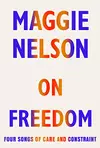
What I love about Maggie is her work always makes me think; it seems animated by an impulse I relate to in a big way: writing in order to understand what one actually thinks about something. Here, she returns to the metaphor of the "knot" across her four essays, the idea of something complicated and worth untangling in order to understand what to actually do with it; how to feel, how to move forward. This works better in some of the more culture-forward essays, because in the essay on climate, it does seem to veer towards the idea of progressive passivity and a continually outstretched hand to those who act against the idea of meaningful change (she's too generous to climate deniers, to put it bluntly)
But my qualms with her approach to ideology aside, what's great about this is what's great about a lot of her writing: a sense of malleability, a desire to see what the limits of language are. I think about the moment early in The Argonauts where she writes "it is idle to fault a net for having holes," and here the holes seem just as important as the net itself -- she grapples with the ethics of writing about addiction, the tensions around sex positivity and what it means to think of desire as something constantly explored, in flux. She's such a good writer of flux, of surprise; there's a moment -- in the climate essay, maybe ironically -- where she remembers spending time with her son, and the idea that it's possible to be that happy. And while this isn't a happy book by any means, it does seem to be interested in those moments of clarity, of understanding (especially since so much of it is about what we owe to each other)
There's a sense of a practice here, the idea that care and its end product is labour, is constant; needs to exist beyond gendered lines and beyond the self. It's a curious book; thorny and sometimes frustrating in terms of what she gives weight and importance to. But that thorniness is the point. And it is, after all, idle to fault a net for having holes; On Freedom seems to ask what's worth reaching through the holes of a net to hold onto and keep close
What I love about Maggie is her work always makes me think; it seems animated by an impulse I relate to in a big way: writing in order to understand what one actually thinks about something. Here, she returns to the metaphor of the "knot" across her four essays, the idea of something complicated and worth untangling in order to understand what to actually do with it; how to feel, how to move forward. This works better in some of the more culture-forward essays, because in the essay on climate, it does seem to veer towards the idea of progressive passivity and a continually outstretched hand to those who act against the idea of meaningful change (she's too generous to climate deniers, to put it bluntly)
But my qualms with her approach to ideology aside, what's great about this is what's great about a lot of her writing: a sense of malleability, a desire to see what the limits of language are. I think about the moment early in The Argonauts where she writes "it is idle to fault a net for having holes," and here the holes seem just as important as the net itself -- she grapples with the ethics of writing about addiction, the tensions around sex positivity and what it means to think of desire as something constantly explored, in flux. She's such a good writer of flux, of surprise; there's a moment -- in the climate essay, maybe ironically -- where she remembers spending time with her son, and the idea that it's possible to be that happy. And while this isn't a happy book by any means, it does seem to be interested in those moments of clarity, of understanding (especially since so much of it is about what we owe to each other)
There's a sense of a practice here, the idea that care and its end product is labour, is constant; needs to exist beyond gendered lines and beyond the self. It's a curious book; thorny and sometimes frustrating in terms of what she gives weight and importance to. But that thorniness is the point. And it is, after all, idle to fault a net for having holes; On Freedom seems to ask what's worth reaching through the holes of a net to hold onto and keep close