
Sam Moore

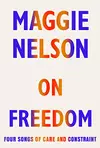
What I love about Maggie is her work always makes me think; it seems animated by an impulse I relate to in a big way: writing in order to understand what one actually thinks about something. Here, she returns to the metaphor of the "knot" across her four essays, the idea of something complicated and worth untangling in order to understand what to actually do with it; how to feel, how to move forward. This works better in some of the more culture-forward essays, because in the essay on climate, it does seem to veer towards the idea of progressive passivity and a continually outstretched hand to those who act against the idea of meaningful change (she's too generous to climate deniers, to put it bluntly)
But my qualms with her approach to ideology aside, what's great about this is what's great about a lot of her writing: a sense of malleability, a desire to see what the limits of language are. I think about the moment early in The Argonauts where she writes "it is idle to fault a net for having holes," and here the holes seem just as important as the net itself -- she grapples with the ethics of writing about addiction, the tensions around sex positivity and what it means to think of desire as something constantly explored, in flux. She's such a good writer of flux, of surprise; there's a moment -- in the climate essay, maybe ironically -- where she remembers spending time with her son, and the idea that it's possible to be that happy. And while this isn't a happy book by any means, it does seem to be interested in those moments of clarity, of understanding (especially since so much of it is about what we owe to each other)
There's a sense of a practice here, the idea that care and its end product is labour, is constant; needs to exist beyond gendered lines and beyond the self. It's a curious book; thorny and sometimes frustrating in terms of what she gives weight and importance to. But that thorniness is the point. And it is, after all, idle to fault a net for having holes; On Freedom seems to ask what's worth reaching through the holes of a net to hold onto and keep close
What I love about Maggie is her work always makes me think; it seems animated by an impulse I relate to in a big way: writing in order to understand what one actually thinks about something. Here, she returns to the metaphor of the "knot" across her four essays, the idea of something complicated and worth untangling in order to understand what to actually do with it; how to feel, how to move forward. This works better in some of the more culture-forward essays, because in the essay on climate, it does seem to veer towards the idea of progressive passivity and a continually outstretched hand to those who act against the idea of meaningful change (she's too generous to climate deniers, to put it bluntly)
But my qualms with her approach to ideology aside, what's great about this is what's great about a lot of her writing: a sense of malleability, a desire to see what the limits of language are. I think about the moment early in The Argonauts where she writes "it is idle to fault a net for having holes," and here the holes seem just as important as the net itself -- she grapples with the ethics of writing about addiction, the tensions around sex positivity and what it means to think of desire as something constantly explored, in flux. She's such a good writer of flux, of surprise; there's a moment -- in the climate essay, maybe ironically -- where she remembers spending time with her son, and the idea that it's possible to be that happy. And while this isn't a happy book by any means, it does seem to be interested in those moments of clarity, of understanding (especially since so much of it is about what we owe to each other)
There's a sense of a practice here, the idea that care and its end product is labour, is constant; needs to exist beyond gendered lines and beyond the self. It's a curious book; thorny and sometimes frustrating in terms of what she gives weight and importance to. But that thorniness is the point. And it is, after all, idle to fault a net for having holes; On Freedom seems to ask what's worth reaching through the holes of a net to hold onto and keep close