
Sarah Schumacher

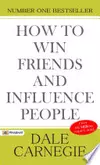
I was surprised to discover that this book is actually delightful, and much more engaging than I expected for something written in 1936. It feels like the polar opposite of the terrible 48 Laws of Power (“here’s how to take total advantage of people with no shame whatsoever.”)
Instead, How to Win Friends presents common sense recommendations for personal engagement with anyone, plainly, with examples from Carnegie’s students who attended the lectures that inspired the book. He explains the ideas in a way that somehow feels refreshing, nearly 100 years later. Perhaps it’s because the inability of the general public to be halfway decent to service staff post-pandemic has me wishing for the most basic manners. Either way, there’s clearly a reason this has been a best seller for so long, and I’m a little disappointed I blew it off until now. Unlike some of the more obnoxious classics, this one is certainly worth reading.
I was surprised to discover that this book is actually delightful, and much more engaging than I expected for something written in 1936. It feels like the polar opposite of the terrible 48 Laws of Power (“here’s how to take total advantage of people with no shame whatsoever.”)
Instead, How to Win Friends presents common sense recommendations for personal engagement with anyone, plainly, with examples from Carnegie’s students who attended the lectures that inspired the book. He explains the ideas in a way that somehow feels refreshing, nearly 100 years later. Perhaps it’s because the inability of the general public to be halfway decent to service staff post-pandemic has me wishing for the most basic manners. Either way, there’s clearly a reason this has been a best seller for so long, and I’m a little disappointed I blew it off until now. Unlike some of the more obnoxious classics, this one is certainly worth reading.

Added to listPersonal Librarywith 171 books.


Added to listBiographywith 1 book.
Just an incredible book, but hard to describe. It’s about much more than a misunderstood artist. In order to understand what an iconoclast William Blake was, you need a deeper understanding of how others view reality, then and now.
John Higgs deftly weaves discussions of Einstein’s theory of relativity or the nature of dualism into commentary on a fascinating artist’s life and philosophy. It’s unlike anything I’ve ever read and it was glorious. As a philosophical, science-loving artist myself, I highly recommend this book if this description resonates with you.
Just an incredible book, but hard to describe. It’s about much more than a misunderstood artist. In order to understand what an iconoclast William Blake was, you need a deeper understanding of how others view reality, then and now.
John Higgs deftly weaves discussions of Einstein’s theory of relativity or the nature of dualism into commentary on a fascinating artist’s life and philosophy. It’s unlike anything I’ve ever read and it was glorious. As a philosophical, science-loving artist myself, I highly recommend this book if this description resonates with you.


Added to listMemoirwith 5 books.


Added to listTechwith 1 book.
Andy Greenberg has quickly become one of my favorite writers. His pieces for Wired are amazing, but this is the first book of his I’ve read, and it won’t be the last.
He has a masterful way of writing where he simply disappears and you’re fully inside of the story. And not just because “technothriller” is an apt description. His writing is effortless and unobtrusive. I particularly appreciate how he draws out and subtly highlights the importance of small details: a chance meeting in a coffeeshop resulting in a breakthrough, a single search result mentioned at the right time that saves an entire case. It’s an immersive experience, with never a hint of unwieldy dialogue and only a rare first person mention of himself or his role in the interviews. He centers the subjects with enough background to humanize their roles and keep them straight in your mind, weaving threads together so you’re able to see the big picture of many separate ongoing investigations and entities.
He also explains tech constructs simply and effectively. There are no long asides about the blockchain, just enough well-crafted explanations to understand the impact. The end result is the feeling that every sentence is chosen with care; he’s clearly extremely detail-oriented and thorough, which made this a joy to read. I’m also glad to see dissenting voices included in the discussion of the impact of crypto and thoughtful source notes.
Andy Greenberg has quickly become one of my favorite writers. His pieces for Wired are amazing, but this is the first book of his I’ve read, and it won’t be the last.
He has a masterful way of writing where he simply disappears and you’re fully inside of the story. And not just because “technothriller” is an apt description. His writing is effortless and unobtrusive. I particularly appreciate how he draws out and subtly highlights the importance of small details: a chance meeting in a coffeeshop resulting in a breakthrough, a single search result mentioned at the right time that saves an entire case. It’s an immersive experience, with never a hint of unwieldy dialogue and only a rare first person mention of himself or his role in the interviews. He centers the subjects with enough background to humanize their roles and keep them straight in your mind, weaving threads together so you’re able to see the big picture of many separate ongoing investigations and entities.
He also explains tech constructs simply and effectively. There are no long asides about the blockchain, just enough well-crafted explanations to understand the impact. The end result is the feeling that every sentence is chosen with care; he’s clearly extremely detail-oriented and thorough, which made this a joy to read. I’m also glad to see dissenting voices included in the discussion of the impact of crypto and thoughtful source notes.


This is a must-read for anyone who even slightly identifies as being a perfectionist. The author is a therapist with the ability to encapsulate deep truths in simple statements; this is currently the all-time most highlighted book in my library (414 highlights).
While she presents 5 types of perfectionists as personalities she’s noticed in her practice, this isn’t a huge talking point in the book and I love her caveat at the end that, like many other frameworks presented by other authors, her labels are just additional lenses that might be helpful.
The entire book is uplifting, encouraging, discusses trusting yourself, self-compassion, self-forgiveness, self-worth, types of perfectionism, being present, making meaning, and so much more. There are patient stories/breakthroughs as examples of concepts she’s presenting.
If you’re even slightly interested in this book - just read it. I’d also recommend On Our Best Behavior by Elise Loehnen.
"When you’re in an adaptive space, you allow what’s perfect for you to change because you know that the perfection is coming from inside of you. When you’re in a maladaptive space, you’re not connected to your wholeness (perfection), so you try to outsource perfection. Your world becomes superficially perfect while you’re miserable on the inside." (Katherine Morgan Schafler, The Perfectionist’s Guide to Losing Control)
This is a must-read for anyone who even slightly identifies as being a perfectionist. The author is a therapist with the ability to encapsulate deep truths in simple statements; this is currently the all-time most highlighted book in my library (414 highlights).
While she presents 5 types of perfectionists as personalities she’s noticed in her practice, this isn’t a huge talking point in the book and I love her caveat at the end that, like many other frameworks presented by other authors, her labels are just additional lenses that might be helpful.
The entire book is uplifting, encouraging, discusses trusting yourself, self-compassion, self-forgiveness, self-worth, types of perfectionism, being present, making meaning, and so much more. There are patient stories/breakthroughs as examples of concepts she’s presenting.
If you’re even slightly interested in this book - just read it. I’d also recommend On Our Best Behavior by Elise Loehnen.
"When you’re in an adaptive space, you allow what’s perfect for you to change because you know that the perfection is coming from inside of you. When you’re in a maladaptive space, you’re not connected to your wholeness (perfection), so you try to outsource perfection. Your world becomes superficially perfect while you’re miserable on the inside." (Katherine Morgan Schafler, The Perfectionist’s Guide to Losing Control)

One chapter in, and the writing is redundant and… irritating, like the author is trying really, really hard to convince me this is the most brilliant guy/concept/book ever written. It’s really weird to start a book by saying (and I paraphrase) “the name on the cover isn’t the guy that actually wrote this - it’s me! And he thinks it’s better than if he’d written it!” I get what he’s going for, but also… weird.
One chapter in, and the writing is redundant and… irritating, like the author is trying really, really hard to convince me this is the most brilliant guy/concept/book ever written. It’s really weird to start a book by saying (and I paraphrase) “the name on the cover isn’t the guy that actually wrote this - it’s me! And he thinks it’s better than if he’d written it!” I get what he’s going for, but also… weird.

