
Syndrie


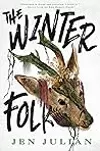
In some ways this is a story about found family and connecting with others, but in others it’s about escapism and survival. On one side we have a girl who has not felt connected to her family in a very long time and is currently struggling to find her place in life, and on the other side we have the same girl finding a place she’d like to call home — but that place is tinged with horror and governed by rules and beings that she is not fully knowledgeable of. It’s a story that has both realistic family drama as well as life-threatening adventures (for lack of a better word) in a fantasy world where few actually care about the safety of human lives.
I really enjoyed the pacing here and found the story really easy to fall into. This is definitely one of those novels that grabbed my attention from the very beginning! The prose flowed well and the alternating timelines were presented in a way that made sense and was easy to follow. I’d say that the present day timeline being sprinkled in throughout the novel really helped build up some tension and curiosity that made me want to keep on reading so I could figure out exactly what happened next in Moth’s backstory.
I also have to say that Jen Julian did a fantastic job of introducing the world around Deerhaven and the enigmatic guests that resided there — the worldbuilding felt very natural and never felt like a big infodump that I needed to take time to sit back and process. As the reader I felt like I was discovering everything I really needed to know alongside Moth, who was also entering the world of Deerhaven completely blind. The atmosphere crafted here manages to be eerie but also comforting at times, which sounds like an odd paradox but it definitely works in this case. There’s also a rather unique cast of characters here with the majority of them really managing to stand out and be memorable, despite some of them only getting a handful of mentions throughout.
If you’re a fan of atmospheric stories that blend reality with fantasy, and don’t mind having some gothic horror elements thrown into the mix, then I highly recommend you pick this one up! It really was a story that managed to feel both unique and familiar at the same time and I’m very glad I took a chance on it.
(I received an advance review copy of this book from the publisher, Run For It, via NetGalley and I am leaving this review voluntarily. All opinions are my own.)
In some ways this is a story about found family and connecting with others, but in others it’s about escapism and survival. On one side we have a girl who has not felt connected to her family in a very long time and is currently struggling to find her place in life, and on the other side we have the same girl finding a place she’d like to call home — but that place is tinged with horror and governed by rules and beings that she is not fully knowledgeable of. It’s a story that has both realistic family drama as well as life-threatening adventures (for lack of a better word) in a fantasy world where few actually care about the safety of human lives.
I really enjoyed the pacing here and found the story really easy to fall into. This is definitely one of those novels that grabbed my attention from the very beginning! The prose flowed well and the alternating timelines were presented in a way that made sense and was easy to follow. I’d say that the present day timeline being sprinkled in throughout the novel really helped build up some tension and curiosity that made me want to keep on reading so I could figure out exactly what happened next in Moth’s backstory.
I also have to say that Jen Julian did a fantastic job of introducing the world around Deerhaven and the enigmatic guests that resided there — the worldbuilding felt very natural and never felt like a big infodump that I needed to take time to sit back and process. As the reader I felt like I was discovering everything I really needed to know alongside Moth, who was also entering the world of Deerhaven completely blind. The atmosphere crafted here manages to be eerie but also comforting at times, which sounds like an odd paradox but it definitely works in this case. There’s also a rather unique cast of characters here with the majority of them really managing to stand out and be memorable, despite some of them only getting a handful of mentions throughout.
If you’re a fan of atmospheric stories that blend reality with fantasy, and don’t mind having some gothic horror elements thrown into the mix, then I highly recommend you pick this one up! It really was a story that managed to feel both unique and familiar at the same time and I’m very glad I took a chance on it.
(I received an advance review copy of this book from the publisher, Run For It, via NetGalley and I am leaving this review voluntarily. All opinions are my own.)

This is a collection of ten stories that I have to admit I did not fully appreciate until hitting the final three stories. The first seven stories were mostly all just okay for me — not bad by any means but nothing that really wowed me either. If anything, these first seven just felt like they only skimmed the surface of what they could offer and really left me wanting more. (However the fourth story, “What We Look Like Together,” was an outlier here because I did enjoy that one quite a lot.)
So as I was reading through the first chunk of stories I was fully prepared to settle on an average three star rating and call it a day, but then the final three stories came into play and they completely changed my mind about the entire collection. “No Future” and “Going Up” both had some interesting ideas that grabbed my attention quickly while being just long enough to pull off what felt like a proper full story arc. Although out of these two, I’d have to say “Going Up” manages to be a bit more of a standout and even though I was perfectly satisfied with the length and the ending of the story, I kind of want a full book in this particular universe as well. The idea of The Speaker, who is an unknown entity that randomly calls people and begs them to take ownership of a still beating heart, is perfectly creepy and mysterious and the world seems to have no idea why this phenomenon is actually happening.
But the final, and longest, story is the absolute standout of this collection. Spanning the final 35% of the book, “Heaven is Fine for Girls Who Miss Their Mothers” managed to be a moving and powerful story that also made me sit back and reflect on some of the earlier stories as well. It really re-framed the collection as a whole for me and I definitely gained a new appreciation for those stories that I had originally been writing off as just okay. I don’t want to give too much away here because I really think going into “Heaven…” blind will offer the best reading experience, so I’ll just say that reading it really made pushing through the beginning half of the book absolutely worth it for me.
I’d definitely recommend this to readers who are interested in speculative fiction and aren’t afraid to just sit back and trust the process. I may be rating this as a four overall due to some of the less interesting stories, but I’d argue that sitting through all of them is definitely worth it for those final three — which I would individually rate at a 4, 4.5 and 5 respectively.
(I received an advance review copy of this book from the publisher, William Morrow, via NetGalley and I am leaving this review voluntarily. All opinions are my own.)
This is a collection of ten stories that I have to admit I did not fully appreciate until hitting the final three stories. The first seven stories were mostly all just okay for me — not bad by any means but nothing that really wowed me either. If anything, these first seven just felt like they only skimmed the surface of what they could offer and really left me wanting more. (However the fourth story, “What We Look Like Together,” was an outlier here because I did enjoy that one quite a lot.)
So as I was reading through the first chunk of stories I was fully prepared to settle on an average three star rating and call it a day, but then the final three stories came into play and they completely changed my mind about the entire collection. “No Future” and “Going Up” both had some interesting ideas that grabbed my attention quickly while being just long enough to pull off what felt like a proper full story arc. Although out of these two, I’d have to say “Going Up” manages to be a bit more of a standout and even though I was perfectly satisfied with the length and the ending of the story, I kind of want a full book in this particular universe as well. The idea of The Speaker, who is an unknown entity that randomly calls people and begs them to take ownership of a still beating heart, is perfectly creepy and mysterious and the world seems to have no idea why this phenomenon is actually happening.
But the final, and longest, story is the absolute standout of this collection. Spanning the final 35% of the book, “Heaven is Fine for Girls Who Miss Their Mothers” managed to be a moving and powerful story that also made me sit back and reflect on some of the earlier stories as well. It really re-framed the collection as a whole for me and I definitely gained a new appreciation for those stories that I had originally been writing off as just okay. I don’t want to give too much away here because I really think going into “Heaven…” blind will offer the best reading experience, so I’ll just say that reading it really made pushing through the beginning half of the book absolutely worth it for me.
I’d definitely recommend this to readers who are interested in speculative fiction and aren’t afraid to just sit back and trust the process. I may be rating this as a four overall due to some of the less interesting stories, but I’d argue that sitting through all of them is definitely worth it for those final three — which I would individually rate at a 4, 4.5 and 5 respectively.
(I received an advance review copy of this book from the publisher, William Morrow, via NetGalley and I am leaving this review voluntarily. All opinions are my own.)

I’d say this is really a story about broken and dysfunctional families that keep a few too many secrets, and the children that have to suffer because of it.
All of the characters here are absolutely flawed, but unfortunately they’re also quite realistic. This story really nails how cycles of abuse come to happen — especially when the abuse is more emotional than physical. Neither Chuck nor Lettie grew up with the best of role models to look up to and it definitely shows in their actions. Most of my time spent reading through Chuck and Lettie’s POV chapters I was just left feeling frustrated by their poor choices. And although it was clearly obvious that they truly wanted to do better for their own children, the reality is that it’s not always easy to do so. I was much more invested in Baby’s POV and was rooting for her to break the cycle of bad behavior and be able to really succeed in life. So overall, even though I felt frustrated a lot, I’d say the fact that the story was able to bring up any emotions at all is a testament to it having been well-written enough to cause an impact.
I went back and forth on rating this as a 3 or 4 star, but I’ve settled on 3 for two main reasons: firstly, I just had a hard time keeping track of all the characters names and exactly what their relations to each other were. There are a bunch of nicknames to remember as well as the family trees being confusing due to both confirmed and implied infidelity, with a lot of divorces and breakups leading to the introduction of stepparents that muddy the waters even more. (But I’ll fully admit that I do have a tendency to struggle with larger casts of characters, so there’s probably plenty of other readers that won’t have any problem at all keeping up with all of the names!) My second critique is that the “curse” really wasn’t that prominent in the story at all, and that’s the biggest selling point that had me wanting to pick the book up. The curse definitely has some meaningful mental and emotional effects on the characters that are able to see those premonitions, but overall it kind of felt like a tool of convenience instead of a fully integrated plot piece.
I definitely see this book resonating much harder with readers who grew up in similar situations or who were close with another person that had to face them. Those who have pretty much only seen more happy nuclear families may struggle to really identify with the story being told here, but it might still be a good read if only for the sake of opening your eyes to a different life experience.
(I received an advance review copy of this book from the publisher, Tiny Reparations Books, via NetGalley and I am leaving this review voluntarily. All opinions are my own.)
I’d say this is really a story about broken and dysfunctional families that keep a few too many secrets, and the children that have to suffer because of it.
All of the characters here are absolutely flawed, but unfortunately they’re also quite realistic. This story really nails how cycles of abuse come to happen — especially when the abuse is more emotional than physical. Neither Chuck nor Lettie grew up with the best of role models to look up to and it definitely shows in their actions. Most of my time spent reading through Chuck and Lettie’s POV chapters I was just left feeling frustrated by their poor choices. And although it was clearly obvious that they truly wanted to do better for their own children, the reality is that it’s not always easy to do so. I was much more invested in Baby’s POV and was rooting for her to break the cycle of bad behavior and be able to really succeed in life. So overall, even though I felt frustrated a lot, I’d say the fact that the story was able to bring up any emotions at all is a testament to it having been well-written enough to cause an impact.
I went back and forth on rating this as a 3 or 4 star, but I’ve settled on 3 for two main reasons: firstly, I just had a hard time keeping track of all the characters names and exactly what their relations to each other were. There are a bunch of nicknames to remember as well as the family trees being confusing due to both confirmed and implied infidelity, with a lot of divorces and breakups leading to the introduction of stepparents that muddy the waters even more. (But I’ll fully admit that I do have a tendency to struggle with larger casts of characters, so there’s probably plenty of other readers that won’t have any problem at all keeping up with all of the names!) My second critique is that the “curse” really wasn’t that prominent in the story at all, and that’s the biggest selling point that had me wanting to pick the book up. The curse definitely has some meaningful mental and emotional effects on the characters that are able to see those premonitions, but overall it kind of felt like a tool of convenience instead of a fully integrated plot piece.
I definitely see this book resonating much harder with readers who grew up in similar situations or who were close with another person that had to face them. Those who have pretty much only seen more happy nuclear families may struggle to really identify with the story being told here, but it might still be a good read if only for the sake of opening your eyes to a different life experience.
(I received an advance review copy of this book from the publisher, Tiny Reparations Books, via NetGalley and I am leaving this review voluntarily. All opinions are my own.)


This was a beautiful story that I'd say really focuses on the importance of history and the connections that can form when you share and remember people's stories and form a real community together—even if many of those stories aren't exactly happy ones.
A bit more character driven than plot driven, I'd say this is a good pick for anybody who tends to enjoy books that are more on the literary fiction side of things. With smooth prose that makes it very easy for the reader to slide right into the story, this book was a delight to read from beginning to end—despite some of the more heavy subject matter regarding racism and girls who have mysteriously gone missing without a trace. And even though there were some spiritual elements in the form of ghostly ancestors (or at least something akin to ghosts), the story still felt extremely down to earth and the spiritual elements felt perfectly in place with the Native American ancestry of the girl who connected with said ghosts the most.
If I had to give one piece of advice to readers looking to pick up this book, it would be to maybe keep a notepad handy nearby as there are a lot of characters in this one! Featuring POV's from five different women, there's quite a few names to keep up with between each of them, their families, and the assorted people they know around town. Having three of these women be related to each other—daughter, mother, and (great) aunt—did help ease the burden of keeping track of everybody though! And the way their stories all entwined by the end of the book really made for a satisfying ending—none of the POV's felt like they were out of place and all felt very necessary to be able to tell the entire story.
So if you're looking for a story that explores grief, ancestral trauma, and the sense of community while also addressing the underlying issues behind the way indigenous people have been historically treated in America, then I highly recommend you pick this one up!
(I received an advance review copy of this book from the publisher, Aunt Lute Books, via NetGalley and I am leaving this review voluntarily. All opinions are my own.)
This was a beautiful story that I'd say really focuses on the importance of history and the connections that can form when you share and remember people's stories and form a real community together—even if many of those stories aren't exactly happy ones.
A bit more character driven than plot driven, I'd say this is a good pick for anybody who tends to enjoy books that are more on the literary fiction side of things. With smooth prose that makes it very easy for the reader to slide right into the story, this book was a delight to read from beginning to end—despite some of the more heavy subject matter regarding racism and girls who have mysteriously gone missing without a trace. And even though there were some spiritual elements in the form of ghostly ancestors (or at least something akin to ghosts), the story still felt extremely down to earth and the spiritual elements felt perfectly in place with the Native American ancestry of the girl who connected with said ghosts the most.
If I had to give one piece of advice to readers looking to pick up this book, it would be to maybe keep a notepad handy nearby as there are a lot of characters in this one! Featuring POV's from five different women, there's quite a few names to keep up with between each of them, their families, and the assorted people they know around town. Having three of these women be related to each other—daughter, mother, and (great) aunt—did help ease the burden of keeping track of everybody though! And the way their stories all entwined by the end of the book really made for a satisfying ending—none of the POV's felt like they were out of place and all felt very necessary to be able to tell the entire story.
So if you're looking for a story that explores grief, ancestral trauma, and the sense of community while also addressing the underlying issues behind the way indigenous people have been historically treated in America, then I highly recommend you pick this one up!
(I received an advance review copy of this book from the publisher, Aunt Lute Books, via NetGalley and I am leaving this review voluntarily. All opinions are my own.)


An interesting premise, but unfortunately the execution didn’t quite work out for me with this one.
I was expecting a lot of the story to be about Marguerite and following her descent into madness as she remains locked away in the attic with no other people for company. And while we did get some of that, there was a lot more exposition about Marguerite’s mother Cécile as well as Cécile’s backstory. Obviously the mother’s story is important for us to understand how Marguerite ended up in her predicament, but for me it did feel like the story was a bit too heavily focused on mom. This might be more on me for misunderstanding what I was walking into however, so readers who are prepared to learn a lot about the jailor and less about the prisoner might have a better experience going into this than I did.
That said, the chapters that focus on Cécile’s story are nice in that they help give a break from the horrors that are going on in Marguerite’s sections — readers need to be prepared for body horror both gory and gross when it comes to Marguerite. More than just some bloody bits, there’s quite a bit of detail about bodily functions and excretions as well. This is definitely one of few books so far that’s made me physically grimace in disgust while reading it. But even with the gross factor highly present, I still felt intrigued by Marguerite’s descent into madness and wanted to keep reading to find out just how her story would end off. And although I did find the prose a tad dense for my personal taste, I’d say it definitely does a great job of setting the grim atmosphere and portraying a sense of anxiety. I think the majority of readers will end up feeling something while reading this novel, even if the main feeling is disgust!
So although this isn’t quite the story I was personally hoping to get, I do acknowledge that it’s still well written and really nails the creepy and disturbing atmosphere. If you’re a reader who is more inclined to slow burn literary writing with a lot of character study and don’t mind a dark and disturbing story, then this one may work for you. I’d definitely recommend anybody on the fence to take a look at some of the higher rated reviews, because there definitely is an audience out here that’s enjoying this novel!
(I received an advance review copy of this book from the publisher, Pushkin Press, via NetGalley and I am leaving this review voluntarily. All opinions are my own.)
An interesting premise, but unfortunately the execution didn’t quite work out for me with this one.
I was expecting a lot of the story to be about Marguerite and following her descent into madness as she remains locked away in the attic with no other people for company. And while we did get some of that, there was a lot more exposition about Marguerite’s mother Cécile as well as Cécile’s backstory. Obviously the mother’s story is important for us to understand how Marguerite ended up in her predicament, but for me it did feel like the story was a bit too heavily focused on mom. This might be more on me for misunderstanding what I was walking into however, so readers who are prepared to learn a lot about the jailor and less about the prisoner might have a better experience going into this than I did.
That said, the chapters that focus on Cécile’s story are nice in that they help give a break from the horrors that are going on in Marguerite’s sections — readers need to be prepared for body horror both gory and gross when it comes to Marguerite. More than just some bloody bits, there’s quite a bit of detail about bodily functions and excretions as well. This is definitely one of few books so far that’s made me physically grimace in disgust while reading it. But even with the gross factor highly present, I still felt intrigued by Marguerite’s descent into madness and wanted to keep reading to find out just how her story would end off. And although I did find the prose a tad dense for my personal taste, I’d say it definitely does a great job of setting the grim atmosphere and portraying a sense of anxiety. I think the majority of readers will end up feeling something while reading this novel, even if the main feeling is disgust!
So although this isn’t quite the story I was personally hoping to get, I do acknowledge that it’s still well written and really nails the creepy and disturbing atmosphere. If you’re a reader who is more inclined to slow burn literary writing with a lot of character study and don’t mind a dark and disturbing story, then this one may work for you. I’d definitely recommend anybody on the fence to take a look at some of the higher rated reviews, because there definitely is an audience out here that’s enjoying this novel!
(I received an advance review copy of this book from the publisher, Pushkin Press, via NetGalley and I am leaving this review voluntarily. All opinions are my own.)
An interesting premise, but unfortunately the execution didn’t quite work out for me with this one.
I was expecting a lot of the story to be about Marguerite and following her descent into madness as she remains locked away in the attic with no other people for company. And while we did get some of that, there was a lot more exposition about Marguerite’s mother Cécile as well as Cécile’s backstory. Obviously the mother’s story is important for us to understand how Marguerite ended up in her predicament, but for me it did feel like the story was a bit too heavily focused on mom. This might be more on me for misunderstanding what I was walking into however, so readers who are prepared to learn a lot about the jailor and less about the prisoner might have a better experience going into this than I did.
That said, the chapters that focus on Cécile’s story are nice in that they help give a break from the horrors that are going on in Marguerite’s sections — readers need to be prepared for body horror both gory and gross when it comes to Marguerite. More than just some bloody bits, there’s quite a bit of detail about bodily functions and excretions as well. This is definitely one of few books so far that’s made me physically grimace in disgust while reading it. But even with the gross factor highly present, I still felt intrigued by Marguerite’s descent into madness and wanted to keep reading to find out just how her story would end off. And although I did find the prose a tad dense for my personal taste, I’d say it definitely does a great job of setting the grim atmosphere and portraying a sense of anxiety. I think the majority of readers will end up feeling something while reading this novel, even if the main feeling is disgust!
So although this isn’t quite the story I was personally hoping to get, I do acknowledge that it’s still well written and really nails the creepy and disturbing atmosphere. If you’re a reader who is more inclined to slow burn literary writing with a lot of character study and don’t mind a dark and disturbing story, then this one may work for you. I’d definitely recommend anybody on the fence to take a look at some of the higher rated reviews, because there definitely is an audience out here that’s enjoying this novel!
(I received an advance review copy of this book from the publisher, Pushkin Press, via NetGalley and I am leaving this review voluntarily. All opinions are my own.)
An interesting premise, but unfortunately the execution didn’t quite work out for me with this one.
I was expecting a lot of the story to be about Marguerite and following her descent into madness as she remains locked away in the attic with no other people for company. And while we did get some of that, there was a lot more exposition about Marguerite’s mother Cécile as well as Cécile’s backstory. Obviously the mother’s story is important for us to understand how Marguerite ended up in her predicament, but for me it did feel like the story was a bit too heavily focused on mom. This might be more on me for misunderstanding what I was walking into however, so readers who are prepared to learn a lot about the jailor and less about the prisoner might have a better experience going into this than I did.
That said, the chapters that focus on Cécile’s story are nice in that they help give a break from the horrors that are going on in Marguerite’s sections — readers need to be prepared for body horror both gory and gross when it comes to Marguerite. More than just some bloody bits, there’s quite a bit of detail about bodily functions and excretions as well. This is definitely one of few books so far that’s made me physically grimace in disgust while reading it. But even with the gross factor highly present, I still felt intrigued by Marguerite’s descent into madness and wanted to keep reading to find out just how her story would end off. And although I did find the prose a tad dense for my personal taste, I’d say it definitely does a great job of setting the grim atmosphere and portraying a sense of anxiety. I think the majority of readers will end up feeling something while reading this novel, even if the main feeling is disgust!
So although this isn’t quite the story I was personally hoping to get, I do acknowledge that it’s still well written and really nails the creepy and disturbing atmosphere. If you’re a reader who is more inclined to slow burn literary writing with a lot of character study and don’t mind a dark and disturbing story, then this one may work for you. I’d definitely recommend anybody on the fence to take a look at some of the higher rated reviews, because there definitely is an audience out here that’s enjoying this novel!
(I received an advance review copy of this book from the publisher, Pushkin Press, via NetGalley and I am leaving this review voluntarily. All opinions are my own.)
An interesting premise, but unfortunately the execution didn’t quite work out for me with this one.
I was expecting a lot of the story to be about Marguerite and following her descent into madness as she remains locked away in the attic with no other people for company. And while we did get some of that, there was a lot more exposition about Marguerite’s mother Cécile as well as Cécile’s backstory. Obviously the mother’s story is important for us to understand how Marguerite ended up in her predicament, but for me it did feel like the story was a bit too heavily focused on mom. This might be more on me for misunderstanding what I was walking into however, so readers who are prepared to learn a lot about the jailor and less about the prisoner might have a better experience going into this than I did.
That said, the chapters that focus on Cécile’s story are nice in that they help give a break from the horrors that are going on in Marguerite’s sections — readers need to be prepared for body horror both gory and gross when it comes to Marguerite. More than just some bloody bits, there’s quite a bit of detail about bodily functions and excretions as well. This is definitely one of few books so far that’s made me physically grimace in disgust while reading it. But even with the gross factor highly present, I still felt intrigued by Marguerite’s descent into madness and wanted to keep reading to find out just how her story would end off. And although I did find the prose a tad dense for my personal taste, I’d say it definitely does a great job of setting the grim atmosphere and portraying a sense of anxiety. I think the majority of readers will end up feeling something while reading this novel, even if the main feeling is disgust!
So although this isn’t quite the story I was personally hoping to get, I do acknowledge that it’s still well written and really nails the creepy and disturbing atmosphere. If you’re a reader who is more inclined to slow burn literary writing with a lot of character study and don’t mind a dark and disturbing story, then this one may work for you. I’d definitely recommend anybody on the fence to take a look at some of the higher rated reviews, because there definitely is an audience out here that’s enjoying this novel!
(I received an advance review copy of this book from the publisher, Pushkin Press, via NetGalley and I am leaving this review voluntarily. All opinions are my own.)
An interesting premise, but unfortunately the execution didn’t quite work out for me with this one.
I was expecting a lot of the story to be about Marguerite and following her descent into madness as she remains locked away in the attic with no other people for company. And while we did get some of that, there was a lot more exposition about Marguerite’s mother Cécile as well as Cécile’s backstory. Obviously the mother’s story is important for us to understand how Marguerite ended up in her predicament, but for me it did feel like the story was a bit too heavily focused on mom. This might be more on me for misunderstanding what I was walking into however, so readers who are prepared to learn a lot about the jailor and less about the prisoner might have a better experience going into this than I did.
That said, the chapters that focus on Cécile’s story are nice in that they help give a break from the horrors that are going on in Marguerite’s sections — readers need to be prepared for body horror both gory and gross when it comes to Marguerite. More than just some bloody bits, there’s quite a bit of detail about bodily functions and excretions as well. This is definitely one of few books so far that’s made me physically grimace in disgust while reading it. But even with the gross factor highly present, I still felt intrigued by Marguerite’s descent into madness and wanted to keep reading to find out just how her story would end off. And although I did find the prose a tad dense for my personal taste, I’d say it definitely does a great job of setting the grim atmosphere and portraying a sense of anxiety. I think the majority of readers will end up feeling something while reading this novel, even if the main feeling is disgust!
So although this isn’t quite the story I was personally hoping to get, I do acknowledge that it’s still well written and really nails the creepy and disturbing atmosphere. If you’re a reader who is more inclined to slow burn literary writing with a lot of character study and don’t mind a dark and disturbing story, then this one may work for you. I’d definitely recommend anybody on the fence to take a look at some of the higher rated reviews, because there definitely is an audience out here that’s enjoying this novel!
(I received an advance review copy of this book from the publisher, Pushkin Press, via NetGalley and I am leaving this review voluntarily. All opinions are my own.)


Simply put, this is a story about a half-Choctaw man who just wanted to find a home and a place to belong amidst a life encumbered by discrimination and many many tragedies.
This is one of those stories that I call "unfortunately realistic." So many terrible things take place in George's life to the point where you'll probably be thinking that surely nobody is this unlucky. However the reality is that growing up non-white in America—especially in the 1930s—meant that you were pretty much guaranteed to have a life filled with injustices. And while George definitely made some poor decisions at certain points that led to him continuing on what was most likely the more difficult path, the story still feels very believable and his choices make sense for his character.
I have to say that the title for this novel fits the story perfectly as well. Although "the walls are closing in on us" is a phrase used a couple of times in the story itself, the experience of actually reading the novel really takes things a step further. There were multiple points in the novel where I myself started to feel anxious as if the walls were closing in on me as well.
This is definitely one of those debut novels that feels more refined than one would probably expect! It's a compelling story that's able to bring up real emotions in the reader. I'd absolutely recommend this one to readers who enjoy character driven novels and don't mind reading a story that's more tragic than it is happy.
(I received an advance review copy of this book from the publisher, Malarkey Books, via NetGalley and I am leaving this review voluntarily. All opinions are my own.)
Simply put, this is a story about a half-Choctaw man who just wanted to find a home and a place to belong amidst a life encumbered by discrimination and many many tragedies.
This is one of those stories that I call "unfortunately realistic." So many terrible things take place in George's life to the point where you'll probably be thinking that surely nobody is this unlucky. However the reality is that growing up non-white in America—especially in the 1930s—meant that you were pretty much guaranteed to have a life filled with injustices. And while George definitely made some poor decisions at certain points that led to him continuing on what was most likely the more difficult path, the story still feels very believable and his choices make sense for his character.
I have to say that the title for this novel fits the story perfectly as well. Although "the walls are closing in on us" is a phrase used a couple of times in the story itself, the experience of actually reading the novel really takes things a step further. There were multiple points in the novel where I myself started to feel anxious as if the walls were closing in on me as well.
This is definitely one of those debut novels that feels more refined than one would probably expect! It's a compelling story that's able to bring up real emotions in the reader. I'd absolutely recommend this one to readers who enjoy character driven novels and don't mind reading a story that's more tragic than it is happy.
(I received an advance review copy of this book from the publisher, Malarkey Books, via NetGalley and I am leaving this review voluntarily. All opinions are my own.)
