
Kyrie

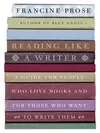
This book should be called "Reading Like a Writer, If You Want to Write Like a 18th - 19th Century European/Russian Contemporary Fiction Author Who Writes Art With a Capital A". Which, I'm sure there are people who do want to write like that. But even back when the book was published in 2006, that seems like such a narrow scope of writing to focus on.
The advice that the book offers boils down to "actually pay attention to what you're reading" and "there are no rules for writing because every example of a writing rule can be overturned by an example of someone doing the opposite of that, and the book still being really good!"
The specific advice for each section - dialogue, pacing, descriptions, etc - make some decent points. But it's good to keep in mind that different genres aren't handled the same way, and what works in the tropes and trappings of one may not work well in another. For example, the author points out that in today's writing world (again, as of 2006) publishers were pushing authors to write likeable characters and to provide a happily ever after. Back in the Good Old Days you could have a character be miserable at the end of the book and it was Important to the Work!!!
And yet, if you were writing a modern romance novel, you would be doing a disservice to the community, and flagrantly ignoring the rules of the genre if you were to end your story with both MC and Love Interest miserable or dead. Genre matters.
I do agree with her on the other portion of that statement though, that so many characters these days feel like they're made likeable and relatable in order for people to enjoy the book. I want characters with actual, human flaws that aren't clumsiness! I want darkness, and nuance, and despair, and redemption! I hate the current trend of a large group of people seeing a character (in books, movies, video games, whatever) and being like, "Omg I can't believe Author said that the main character once ate a baby! They're personally condoning baby eating!!!"
My other issue here is the heavy focus on primarily European and Russian literature. Outside of mentioning Pedro Paramo and One Hundred Years of Solitude, there's very little diversity in the selections that the author praises and uses as examples. I mean, I understand writing what you know (though that's an awfully silly way to write) but just like with genres, each culture has different rules and themes and shorthands that are important to the way that they write. And for a moment, I wondered if perhaps it was because of the added layer of translation and how to localize a story without losing the original meaning and authorial intent behind the deliberate word choice...but the Russian novels and my South American examples above all had to be translated into English.
Eh. At the end of the day, I'm not a writer. Those things just kind of stood out to me.
This book should be called "Reading Like a Writer, If You Want to Write Like a 18th - 19th Century European/Russian Contemporary Fiction Author Who Writes Art With a Capital A". Which, I'm sure there are people who do want to write like that. But even back when the book was published in 2006, that seems like such a narrow scope of writing to focus on.
The advice that the book offers boils down to "actually pay attention to what you're reading" and "there are no rules for writing because every example of a writing rule can be overturned by an example of someone doing the opposite of that, and the book still being really good!"
The specific advice for each section - dialogue, pacing, descriptions, etc - make some decent points. But it's good to keep in mind that different genres aren't handled the same way, and what works in the tropes and trappings of one may not work well in another. For example, the author points out that in today's writing world (again, as of 2006) publishers were pushing authors to write likeable characters and to provide a happily ever after. Back in the Good Old Days you could have a character be miserable at the end of the book and it was Important to the Work!!!
And yet, if you were writing a modern romance novel, you would be doing a disservice to the community, and flagrantly ignoring the rules of the genre if you were to end your story with both MC and Love Interest miserable or dead. Genre matters.
I do agree with her on the other portion of that statement though, that so many characters these days feel like they're made likeable and relatable in order for people to enjoy the book. I want characters with actual, human flaws that aren't clumsiness! I want darkness, and nuance, and despair, and redemption! I hate the current trend of a large group of people seeing a character (in books, movies, video games, whatever) and being like, "Omg I can't believe Author said that the main character once ate a baby! They're personally condoning baby eating!!!"
My other issue here is the heavy focus on primarily European and Russian literature. Outside of mentioning Pedro Paramo and One Hundred Years of Solitude, there's very little diversity in the selections that the author praises and uses as examples. I mean, I understand writing what you know (though that's an awfully silly way to write) but just like with genres, each culture has different rules and themes and shorthands that are important to the way that they write. And for a moment, I wondered if perhaps it was because of the added layer of translation and how to localize a story without losing the original meaning and authorial intent behind the deliberate word choice...but the Russian novels and my South American examples above all had to be translated into English.
Eh. At the end of the day, I'm not a writer. Those things just kind of stood out to me.