
Kyrie


Retrospectively, I'm pretty sure it was The Phantom Tollbooth that cemented my perpetual annoyance at puns. Puns are easy - everyone can, and will, make puns. Puns are only funny when the person making the pun acknowledges how painful the pun they're making is.
Wordplay, though...that is a thing of beauty. And Phantom Tollbooth is nothing but wordplay.
There's the Whether Man, the Terrible Dynne, and the Senses Taker. In Dictionopolis you have to eat your own words. There's a forest where children grow down so that their perspective never changes. You can get to the Island of Conclusions by jumping...the list just goes on and on.
“I don't think you understand,” said Milo timidly as the watchdog growled a warning. “We're looking for a place to spend the night.”“It's not yours to spend,” the bird shrieked again, and followed it with the same horrible laugh.“That doesn't make any sense, you see—” he started to explain.“Dollars or cents, it's still not yours to spend,” the bird replied haughtily.“But I didn't mean—” insisted Milo.“Of course you're mean,” interrupted the bird, closing the eye that had been open and opening the one that had been closed. “Anyone who'd spend a night that doesn't belong to him is very mean.”“Well, I thought that by—” he tried again desperately.“That's a different story,” interjected the bird a bit more amiably. “If you want to buy, I'm sure I can arrange to sell, but with what you're doing you'll probably end up in a cell anyway.”“That doesn't seem right,” said Milo helplessly, for, with the bird taking everything the wrong way, he hardly knew what he was saying.“Agreed,” said the bird, with a sharp click of his beak, “but neither is it left, although if I were you I would have left a long time ago.”
“It has been a long trip,” said Milo, climbing onto the couch where the princesses sat; “but we would have been here much sooner if I hadn't made so many mistakes. I'm afraid it's all my fault.”“You must never feel badly about making mistakes,” explained Reason quietly, “as long as you take the trouble to learn from them. For you often learn more by being wrong for the right reasons than you do by being right for the wrong reasons.”
much
Retrospectively, I'm pretty sure it was The Phantom Tollbooth that cemented my perpetual annoyance at puns. Puns are easy - everyone can, and will, make puns. Puns are only funny when the person making the pun acknowledges how painful the pun they're making is.
Wordplay, though...that is a thing of beauty. And Phantom Tollbooth is nothing but wordplay.
There's the Whether Man, the Terrible Dynne, and the Senses Taker. In Dictionopolis you have to eat your own words. There's a forest where children grow down so that their perspective never changes. You can get to the Island of Conclusions by jumping...the list just goes on and on.
“I don't think you understand,” said Milo timidly as the watchdog growled a warning. “We're looking for a place to spend the night.”“It's not yours to spend,” the bird shrieked again, and followed it with the same horrible laugh.“That doesn't make any sense, you see—” he started to explain.“Dollars or cents, it's still not yours to spend,” the bird replied haughtily.“But I didn't mean—” insisted Milo.“Of course you're mean,” interrupted the bird, closing the eye that had been open and opening the one that had been closed. “Anyone who'd spend a night that doesn't belong to him is very mean.”“Well, I thought that by—” he tried again desperately.“That's a different story,” interjected the bird a bit more amiably. “If you want to buy, I'm sure I can arrange to sell, but with what you're doing you'll probably end up in a cell anyway.”“That doesn't seem right,” said Milo helplessly, for, with the bird taking everything the wrong way, he hardly knew what he was saying.“Agreed,” said the bird, with a sharp click of his beak, “but neither is it left, although if I were you I would have left a long time ago.”
“It has been a long trip,” said Milo, climbing onto the couch where the princesses sat; “but we would have been here much sooner if I hadn't made so many mistakes. I'm afraid it's all my fault.”“You must never feel badly about making mistakes,” explained Reason quietly, “as long as you take the trouble to learn from them. For you often learn more by being wrong for the right reasons than you do by being right for the wrong reasons.”
much


- Ellen Datlow
- Maria Dahvana Headley
- Carl Engle-Laird
- Liz Gorinsky
- David G. Hartwell
- Patrick Nielsen Hayden
- Peter Joseph
- Marco Palmieri
- Paul Stevens
- Ann VanderMeer
- Charlie Jane Anders
- Dale Bailey
- Kelly Barnhill
- Richard Bowes
- Marie Brennan
- Adam Christopher
- John Chu
- A.M. Dellamonica
- Ruthanna Emrys
- Max Gladstone
- Kathleen Ann Goonan
- Nicola Griffith
- Pasi Ilmari Jääskeläinen
- Ken Liu
- Daniel José Older
- Mary Rickert
- John Scalzi
- Veronica Schanoes
- Genevieve Valentine
- Jo Walton
- Kai Ashante Wilson
- Ray Wood
- Isabel Yap
- Seanan McGuire
- Yoon Ha Lee
As Good as New - Charlie Jane Anders. It's a story of post-apocalyptic wishes gone wrong, and a playwright/surgeon.
The End of the End of Everything - Dale Bailey. Another post-apocalyptic story, but where As Good as New was hopeful about the world being saved, The End of the End of Everything just accepts that humanity is doomed.
Mrs Sorensen and the Sasquatch - Kelly Barnhill. It's full of Sasquatch lovin'.
Sleep Walking Now and Then - Richard Bowes. I liked the idea of interactive plays, and the history was kind of interesting...but otherwise, there wasn't much in this story for me.
Daughter of Necessity - Marie Brennan. An examination of Penelope's role in The Odyssey. There is a lot of weaving and unweaving.
Brisk Money - Adam Christopher. I really liked this one. Noir is always hit or miss for me, but I enjoyed the sci-fi play on the genre.
A Cost-Benefit Analysis of the Proposed Trade-Offs for the Overhaul of the Barricade - John Chu. I wasn't expecting to like this one very much, based on that insane title. It pleasantly surprised me, though. There's lots of neat imagery.
The Color of Paradox - A.M. Dellamonica. I swear, the only thing I could think about while reading this one was 12 Monkeys.
The Litany of Earth - Ruthanna Emrys. I do love me a good Lovecraft-fic.
A Kiss with Teeth - Max Gladstone. I liked the ideas the story tackled, and the twist on the “mid-life crisis affair”.
A Short History of the Twentieth Century, or When You Wish Upon a Star - Kathleen Ann Goonan. WWII, Disney, the space program, and feminism, all rolled up into one.
Cold Wind - Nicola Griffith. The story itself wasn't very complex, but I loved the imagery in the story, and the cold, end of the year feelings that it invoked.
The Tallest Doll in New York City Maria Dahvana Headley. I'm still trying to figure out what the hell just happened.
Where the Trains Turn - Pasi Ilmari Jääskeläinen. If it weren't for the way the mother handled every single situation in the first half of the story, this would have easily been a full five star read for me. I just can't quite get over how insanely dedicated to eradicating anything remotely related to fantasy she was. Poor, poor Rupert.
Combustion Hour - Yoon Ha Lee. The imagery is gorgeous. That's about all it did for me, though.
Reborn - Ken Liu. This one confused me a bit. The anthology really only contains the first part of The Anderson Project, which is the story “Reborn”, by Ken Liu. The title page for this section, though, makes it seem like there are actually three stories.
Midway Relics and Dying Breeds - Seanan McGuire. Dinosaurs and carnies.
Anyway: Angie - Daniel José Older. I'm not quite sure what's going on. But there are prostitutes. And cockroaches. And cultists.
The Mothers of Voorhisville - Mary Rickert. It mostly just left me wanting that final book in The Great and Secret Show series.
Unlocked: An Oral History of Haden's Syndrome - John Scalzi. I don't normally like sci-fi stories with terrifying diseases of the future, but this one was really well done.
Among the Thorns - Veronica Schanoes. It's a revengequel!
The Insects of Love - Genevieve Valentine. The writing is very pretty, but it doesn't really go anywhere.
Sleeper - Jo Walton. The story plays on perceptions, but it's incredibly short.
The Devil in America - Kai Ashante Wilson. Folk magic mixed with tragic racial relations, with a depressing end result.
In the Sight of Akresa - Ray Wood. A beautiful love story that ends in betrayal.
A Cup of Salt Tears - Isabel Yap. Forget being the first modern story I've read with a kappa - this is also the first romance I've read with a kappa.
As Good as New - Charlie Jane Anders. It's a story of post-apocalyptic wishes gone wrong, and a playwright/surgeon.
The End of the End of Everything - Dale Bailey. Another post-apocalyptic story, but where As Good as New was hopeful about the world being saved, The End of the End of Everything just accepts that humanity is doomed.
Mrs Sorensen and the Sasquatch - Kelly Barnhill. It's full of Sasquatch lovin'.
Sleep Walking Now and Then - Richard Bowes. I liked the idea of interactive plays, and the history was kind of interesting...but otherwise, there wasn't much in this story for me.
Daughter of Necessity - Marie Brennan. An examination of Penelope's role in The Odyssey. There is a lot of weaving and unweaving.
Brisk Money - Adam Christopher. I really liked this one. Noir is always hit or miss for me, but I enjoyed the sci-fi play on the genre.
A Cost-Benefit Analysis of the Proposed Trade-Offs for the Overhaul of the Barricade - John Chu. I wasn't expecting to like this one very much, based on that insane title. It pleasantly surprised me, though. There's lots of neat imagery.
The Color of Paradox - A.M. Dellamonica. I swear, the only thing I could think about while reading this one was 12 Monkeys.
The Litany of Earth - Ruthanna Emrys. I do love me a good Lovecraft-fic.
A Kiss with Teeth - Max Gladstone. I liked the ideas the story tackled, and the twist on the “mid-life crisis affair”.
A Short History of the Twentieth Century, or When You Wish Upon a Star - Kathleen Ann Goonan. WWII, Disney, the space program, and feminism, all rolled up into one.
Cold Wind - Nicola Griffith. The story itself wasn't very complex, but I loved the imagery in the story, and the cold, end of the year feelings that it invoked.
The Tallest Doll in New York City Maria Dahvana Headley. I'm still trying to figure out what the hell just happened.
Where the Trains Turn - Pasi Ilmari Jääskeläinen. If it weren't for the way the mother handled every single situation in the first half of the story, this would have easily been a full five star read for me. I just can't quite get over how insanely dedicated to eradicating anything remotely related to fantasy she was. Poor, poor Rupert.
Combustion Hour - Yoon Ha Lee. The imagery is gorgeous. That's about all it did for me, though.
Reborn - Ken Liu. This one confused me a bit. The anthology really only contains the first part of The Anderson Project, which is the story “Reborn”, by Ken Liu. The title page for this section, though, makes it seem like there are actually three stories.
Midway Relics and Dying Breeds - Seanan McGuire. Dinosaurs and carnies.
Anyway: Angie - Daniel José Older. I'm not quite sure what's going on. But there are prostitutes. And cockroaches. And cultists.
The Mothers of Voorhisville - Mary Rickert. It mostly just left me wanting that final book in The Great and Secret Show series.
Unlocked: An Oral History of Haden's Syndrome - John Scalzi. I don't normally like sci-fi stories with terrifying diseases of the future, but this one was really well done.
Among the Thorns - Veronica Schanoes. It's a revengequel!
The Insects of Love - Genevieve Valentine. The writing is very pretty, but it doesn't really go anywhere.
Sleeper - Jo Walton. The story plays on perceptions, but it's incredibly short.
The Devil in America - Kai Ashante Wilson. Folk magic mixed with tragic racial relations, with a depressing end result.
In the Sight of Akresa - Ray Wood. A beautiful love story that ends in betrayal.
A Cup of Salt Tears - Isabel Yap. Forget being the first modern story I've read with a kappa - this is also the first romance I've read with a kappa.
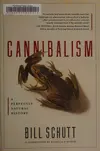
Finally made it through this one!
This was an interesting look at the history of cannibalism. The author purposely goes out of his way to avoid sensationalism, which I appreciated.
I mean, I can appreciate sensationalized cannibalism. I lived in Colorado for several years. I went through an Alferd Packer phase. Cannibal, by Trey Parker and Matt Stone, is one of my favorite musicals.
(I was a strange child. I also went through a Lovecraft phase - still a Lovecraft fan - and a taxidermy phase.)
But, that's not what this book is. It's a response to the question of whether or not cannibalism is normal in humanity.
And for what it is, the book's not bad. The last third dragged a bit, when the focus shifted from examples of cannibalism in nature and in human history, to looking at mad cow disease, scrapies, and kuru. (There was another one in there, but it escapes my mind at the moment.)
Editor's Note: Past Maki doesn't know what she was talking about. Re-reading this review, the brain-altering disease section of the books sounds absolutely fascinating! Maybe it's because I'm writing this post covid, where the idea of communicable diseases is such a recent memory.
Finally made it through this one!
This was an interesting look at the history of cannibalism. The author purposely goes out of his way to avoid sensationalism, which I appreciated.
I mean, I can appreciate sensationalized cannibalism. I lived in Colorado for several years. I went through an Alferd Packer phase. Cannibal, by Trey Parker and Matt Stone, is one of my favorite musicals.
(I was a strange child. I also went through a Lovecraft phase - still a Lovecraft fan - and a taxidermy phase.)
But, that's not what this book is. It's a response to the question of whether or not cannibalism is normal in humanity.
And for what it is, the book's not bad. The last third dragged a bit, when the focus shifted from examples of cannibalism in nature and in human history, to looking at mad cow disease, scrapies, and kuru. (There was another one in there, but it escapes my mind at the moment.)
Editor's Note: Past Maki doesn't know what she was talking about. Re-reading this review, the brain-altering disease section of the books sounds absolutely fascinating! Maybe it's because I'm writing this post covid, where the idea of communicable diseases is such a recent memory.

I might try to come back to this one later, but it's just not my thing.
I might try to come back to this one later, but it's just not my thing.

I love how this book is so victim-centric, giving them so much more time and exploration than the alleged killers/the actual killer. And just, the respect he had for the families. There was one who didn't really appreciate the way that he depicted her in the book, and instead of ranting about it and vilifying the woman, he has a very nice paragraph dedicated to understanding and acknowledging her perspective.
I love how this book is so victim-centric, giving them so much more time and exploration than the alleged killers/the actual killer. And just, the respect he had for the families. There was one who didn't really appreciate the way that he depicted her in the book, and instead of ranting about it and vilifying the woman, he has a very nice paragraph dedicated to understanding and acknowledging her perspective.