
tsar


Before I delve in the novel, I just want to credit the introduction and notes that Marilyn Butler has added to the Oxford World's Classics edition. Through her notes, she provides the much needed societal and scientific context that served as an inspiration for MWS. This genuinely made my reading experience ten times better!
Now onto the review, I can't stress how much I enjoyed the faulty main characters in this book. MWS really develops the morally ambiguous characters of Frankenstein and the creature in 200 pages. Both Frankenstein and the creature have their Achilles' heel - Frankenstein's ambition & the creature's need to belong. These faults create this toxic pattern that destroys everyone in the process. I loved the overall theme and it is executed very well. Again a well deserved classic.
Yet, it doesn't feel new so I didn't emotionally connect with this book enough. Although one can also argue that because it feels repeated now, that just solidifies its impact - that this book became a bedrock for other sci-fi horror.
Before I delve in the novel, I just want to credit the introduction and notes that Marilyn Butler has added to the Oxford World's Classics edition. Through her notes, she provides the much needed societal and scientific context that served as an inspiration for MWS. This genuinely made my reading experience ten times better!
Now onto the review, I can't stress how much I enjoyed the faulty main characters in this book. MWS really develops the morally ambiguous characters of Frankenstein and the creature in 200 pages. Both Frankenstein and the creature have their Achilles' heel - Frankenstein's ambition & the creature's need to belong. These faults create this toxic pattern that destroys everyone in the process. I loved the overall theme and it is executed very well. Again a well deserved classic.
Yet, it doesn't feel new so I didn't emotionally connect with this book enough. Although one can also argue that because it feels repeated now, that just solidifies its impact - that this book became a bedrock for other sci-fi horror.

DNF-ing this one.
I don't think this is for me. It mainly just does hero-worship of tech people. After a point I got tired.
Maybe I shouldn't be surprised considering it is called Hackers: "Heroes" of the computer revolution.
DNF-ing this one.
I don't think this is for me. It mainly just does hero-worship of tech people. After a point I got tired.
Maybe I shouldn't be surprised considering it is called Hackers: "Heroes" of the computer revolution.

~3.5 stars
Now, I am a Dickens fan. Seriously, I am. I had this book’s absolute banger of an opening paragraph printed up on my bedroom wall growing up. (Yeah I was a wanna-be theater nerd, sue me!) Maybe those great expectations (pun intended) set this up to be a let down or maybe there’s some substance to my humble criticism.
Although I have to tip my hat off to Dickens for creating solid characters, having well described motivations and wrapping all that up in a well-paced book. I say solid characters but not multi-dimension because some characters are just there for symbolism like Lucie, she depicts innocence and a peaceful, stable state of England contrasted with the volatile state of France. It is not a bad thing though to use characters for representing themes, especially for a book marketed as “one of the greatest novels on the French Revolution.”
Yes, the literary titan can write!
I loved how he shows the reader that revolution, erosion of the social fabric while necessary is also painful and destructive; more often than not leads to a dark time for the aforementioned society. A theme that’s perennially relevant, be it 250 years ago or now. This is a good outsider view of French Revolution and its impact. Much emphasis on the word - outsider, because it appears like Dickens is preaching the greatness of the British empire and looking down at the French society. There’s a strong nationalism undertone associated in this book, regarding how much more human and meritorious Great Britain is compared to French empire and I didn’t like that because, well colonialism.
If one chooses to ignore the nationalist flair in the book, then there’s no issue but can you ignore it though considering its blurb literally proclaims it as - “one of the greatest novels on the French Revolution.”
~3.5 stars
Now, I am a Dickens fan. Seriously, I am. I had this book’s absolute banger of an opening paragraph printed up on my bedroom wall growing up. (Yeah I was a wanna-be theater nerd, sue me!) Maybe those great expectations (pun intended) set this up to be a let down or maybe there’s some substance to my humble criticism.
Although I have to tip my hat off to Dickens for creating solid characters, having well described motivations and wrapping all that up in a well-paced book. I say solid characters but not multi-dimension because some characters are just there for symbolism like Lucie, she depicts innocence and a peaceful, stable state of England contrasted with the volatile state of France. It is not a bad thing though to use characters for representing themes, especially for a book marketed as “one of the greatest novels on the French Revolution.”
Yes, the literary titan can write!
I loved how he shows the reader that revolution, erosion of the social fabric while necessary is also painful and destructive; more often than not leads to a dark time for the aforementioned society. A theme that’s perennially relevant, be it 250 years ago or now. This is a good outsider view of French Revolution and its impact. Much emphasis on the word - outsider, because it appears like Dickens is preaching the greatness of the British empire and looking down at the French society. There’s a strong nationalism undertone associated in this book, regarding how much more human and meritorious Great Britain is compared to French empire and I didn’t like that because, well colonialism.
If one chooses to ignore the nationalist flair in the book, then there’s no issue but can you ignore it though considering its blurb literally proclaims it as - “one of the greatest novels on the French Revolution.”

I am in awe of this book and it is a must read for all Indians.
While reading it, I felt like this book is written for Indians to consume. The author references a lot of protests and events that happened in India, that had one not lived those experiences the subtle underlying commentary might be missed. So, as an Indian and someone who has the pre-requisite context for this book, I find it hard to be objective about this book. Rather this book made me realise my own ignorance, privilege and silent complicity in turning a blind eye.
The book shows a point-of-view of India that is more often than not, ignored and left behind by the masses. Even if you don’t particularly agree with Roy’s critique and politics, you should still read this.
I am in awe of this book and it is a must read for all Indians.
While reading it, I felt like this book is written for Indians to consume. The author references a lot of protests and events that happened in India, that had one not lived those experiences the subtle underlying commentary might be missed. So, as an Indian and someone who has the pre-requisite context for this book, I find it hard to be objective about this book. Rather this book made me realise my own ignorance, privilege and silent complicity in turning a blind eye.
The book shows a point-of-view of India that is more often than not, ignored and left behind by the masses. Even if you don’t particularly agree with Roy’s critique and politics, you should still read this.

This book honestly has one of the most interesting plot, I have read in a while. The plot is - there's a war between two factions and they are fighting the war across different times and want their version of future to happen. Amidst this war, two fighters from opposing factions befriend each other through letters. See, really fucking interesting!
But the final outcome comes across as... pretentious and superficial. It is something trying to be deep but it never actually hit that note for me.
Don't get me wrong the writing is fantastic (I loved the letters) but it feels more appropriate for short stories that are meant to be ambiguous so that the reader interprets. Here the characters, motivations behind their actions lack the emotional weight that should be shown to the reader.
Hence, I would have liked this book a lot more, had it been a collection of short stories set in this world.
This book honestly has one of the most interesting plot, I have read in a while. The plot is - there's a war between two factions and they are fighting the war across different times and want their version of future to happen. Amidst this war, two fighters from opposing factions befriend each other through letters. See, really fucking interesting!
But the final outcome comes across as... pretentious and superficial. It is something trying to be deep but it never actually hit that note for me.
Don't get me wrong the writing is fantastic (I loved the letters) but it feels more appropriate for short stories that are meant to be ambiguous so that the reader interprets. Here the characters, motivations behind their actions lack the emotional weight that should be shown to the reader.
Hence, I would have liked this book a lot more, had it been a collection of short stories set in this world.

There's nothing subtle about Tender is the Flesh. Everything is in your face, which isn't necessarily bad. Some of the best satire is also unsubtle; it is in your face and raw, written specifically to make one uncomfortable and think.
Did this book make me uncomfortable?
Yes, I felt uncomfortable because of the gory details mentioned but that's expected as it is there to shock and provoke. Yet it didn't make me uncomfortable enough to think about this dystopia.
The book chronicles the moral decline of human society into cannibalism, parodying the animal meat industry and its overconsumption.
Through this dystopian society, the author highlights the dog-eat-dog (pun not intended) nature of humans. She wants you to be grossed out by the human condition — its gullibility, ignorance, selfishness and silent complicity.
Still, I didn't buy it.
Although the book primarily tells the story of the protagonist and his POV showing how someone working in this human meat processing plant seemingly starts taking the red pill and questioning the motives of this government sanctioned cannibalism and he isn't alone. There are others who also believe that conspiracy.
So, it felt hard to buy into this dystopian society because the book never goes deeper into that plot point.
It starts and ends with the theme that everyone uses everyone to meet their needs.
Hence I think it is a good horror book, not a good dystopian fiction.
There's nothing subtle about Tender is the Flesh. Everything is in your face, which isn't necessarily bad. Some of the best satire is also unsubtle; it is in your face and raw, written specifically to make one uncomfortable and think.
Did this book make me uncomfortable?
Yes, I felt uncomfortable because of the gory details mentioned but that's expected as it is there to shock and provoke. Yet it didn't make me uncomfortable enough to think about this dystopia.
The book chronicles the moral decline of human society into cannibalism, parodying the animal meat industry and its overconsumption.
Through this dystopian society, the author highlights the dog-eat-dog (pun not intended) nature of humans. She wants you to be grossed out by the human condition — its gullibility, ignorance, selfishness and silent complicity.
Still, I didn't buy it.
Although the book primarily tells the story of the protagonist and his POV showing how someone working in this human meat processing plant seemingly starts taking the red pill and questioning the motives of this government sanctioned cannibalism and he isn't alone. There are others who also believe that conspiracy.
So, it felt hard to buy into this dystopian society because the book never goes deeper into that plot point.
It starts and ends with the theme that everyone uses everyone to meet their needs.
Hence I think it is a good horror book, not a good dystopian fiction.

Tomorrow, Tomorrow and Tomorrow by Gabrielle Zevin made a big splash when it came out in 2022. It is a novel about a creative and personal partnership between two friends, Sam and Sadie and the highs and lows of this partnership.
Does it live up to the hype? Well, sometimes it does.
There are moments when the misunderstandings between Sam and Sadie are represented in such a real, raw manner that you can’t help but appreciate it. But these same misunderstandings are biased and mostly always want the reader to favor Sam. It is like the author decided that Sadie’s actual issues with Sam are always going to be swept under the rug or well, time is supposed to heal them and make Sadie realize that she overreacted. She does the same thing with her toxic ex, Dov — another storyline that feels unresolved, as if the author wanted tension without true closure. I feel bad for Sadie honestly because she is just not well fleshed out but an added accessory to other characters or someone who is bound to suffer.
Yet if we ignore the one poorly written main character, the book is pretty good. It makes you appreciate the effort that goes behind the scenes in making games, depicts the ethos that makes people play games. I don’t particularly enjoy video games, but this book made me want to pick up a controller and try out a couple video games.
Tomorrow, Tomorrow and Tomorrow by Gabrielle Zevin made a big splash when it came out in 2022. It is a novel about a creative and personal partnership between two friends, Sam and Sadie and the highs and lows of this partnership.
Does it live up to the hype? Well, sometimes it does.
There are moments when the misunderstandings between Sam and Sadie are represented in such a real, raw manner that you can’t help but appreciate it. But these same misunderstandings are biased and mostly always want the reader to favor Sam. It is like the author decided that Sadie’s actual issues with Sam are always going to be swept under the rug or well, time is supposed to heal them and make Sadie realize that she overreacted. She does the same thing with her toxic ex, Dov — another storyline that feels unresolved, as if the author wanted tension without true closure. I feel bad for Sadie honestly because she is just not well fleshed out but an added accessory to other characters or someone who is bound to suffer.
Yet if we ignore the one poorly written main character, the book is pretty good. It makes you appreciate the effort that goes behind the scenes in making games, depicts the ethos that makes people play games. I don’t particularly enjoy video games, but this book made me want to pick up a controller and try out a couple video games.

I'm gonna keep this review short and sweet maybe because I think this book could've been more succinct :)
Let me start off by saying that I loved the descriptions of medieval England in the first half of the book here. I was genuinely so engrossed. But it is the sheer magnitude of the book and how after around 70 percent of the book, it starts to feel like a more political and gruesome version of cat and mouse. The bad side will try to be cunning and the good side will be morally right, play fair and win. This push and pull got so... boring.
Honestly, I think my interest in this book genuinely went away after (spoiler alert I guess?) Jack became the master builder.
I'm gonna keep this review short and sweet maybe because I think this book could've been more succinct :)
Let me start off by saying that I loved the descriptions of medieval England in the first half of the book here. I was genuinely so engrossed. But it is the sheer magnitude of the book and how after around 70 percent of the book, it starts to feel like a more political and gruesome version of cat and mouse. The bad side will try to be cunning and the good side will be morally right, play fair and win. This push and pull got so... boring.
Honestly, I think my interest in this book genuinely went away after (spoiler alert I guess?) Jack became the master builder.
Updated a reading goal:
Read 30 books by December 30, 2025
Progress so far: 25 / 30 83%

Let me first talk about the never-ending chokehold this book has on Delhi wholesale booksellers, you’ll find this book in every second stall. Due to this free publicity, I ended up picking this book and giving it a try. I’ll first talk about the things I really liked - its attention to detail and the structure of the book. There are two timelines going on - one in 1240s and the other one in 2000s. There’s a spiritual connection between the two, which is depicted very well. The attention to detail can be seen in even something as small as choosing to begin every chapter with the letter ‘B’ because it is the first letter in Bismillah, an Arabic phrase said before beginning any work for good luck, blessing, etc. whatever strikes your fancy.
Yet, even after all this the characters and the overall plot is too surface level and can be summarised in one sentence (imagine this being said in a wise, melancholy, mystical voice) - “If you want something, it is you who can get it for you. Everything can be solved if you look inwards instead of outwards.” I just came up with this tidbit of knowledge in under a minute but that’s what all the 40 rules in “40 rules of love” sound like and are trying to say. So yeaaah the books tends to get repetitive and sounds very parable-like. I will admit I liked some of the characters but they were just not given enough time for me to actually be invested in them and they were dropped as soon as the lesson in the parable was completed.
Let me first talk about the never-ending chokehold this book has on Delhi wholesale booksellers, you’ll find this book in every second stall. Due to this free publicity, I ended up picking this book and giving it a try. I’ll first talk about the things I really liked - its attention to detail and the structure of the book. There are two timelines going on - one in 1240s and the other one in 2000s. There’s a spiritual connection between the two, which is depicted very well. The attention to detail can be seen in even something as small as choosing to begin every chapter with the letter ‘B’ because it is the first letter in Bismillah, an Arabic phrase said before beginning any work for good luck, blessing, etc. whatever strikes your fancy.
Yet, even after all this the characters and the overall plot is too surface level and can be summarised in one sentence (imagine this being said in a wise, melancholy, mystical voice) - “If you want something, it is you who can get it for you. Everything can be solved if you look inwards instead of outwards.” I just came up with this tidbit of knowledge in under a minute but that’s what all the 40 rules in “40 rules of love” sound like and are trying to say. So yeaaah the books tends to get repetitive and sounds very parable-like. I will admit I liked some of the characters but they were just not given enough time for me to actually be invested in them and they were dropped as soon as the lesson in the parable was completed.
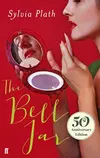
Okay, I understand the hype. This book is a deserved classic, that captures its era in a way only a few books can. It explores the ideas of individuality, feminism, mental health, meaning and purpose of one’s life in just over 200 pages.
The first half of the book shows the protagonist (Esther Greenwood) living her life in New York City having autonomy and enjoying freedom for the first time, while the latter half focuses on her inner turmoil and declining mental health.
Now, while reading the first part of the book it made me realise that I have never had an original thought ever because Plath brings to paper emotions that everyone tasting freedom for the first time experiences. Or maybe I am just too emo :P
The second half is another beast itself, that’s where the book gets less about Esther’s young adult ennui and more about the mental health institutions at that time.
Although the book majorly consists of Greenwood’s inner monologues, the readers never really gets to know what exactly is the reason that leads to her breakdown. It appears that Plath has made a conscious choice to describe the state of women in the society, failing mental health institutions and obviously the societal perception of mental illness. I will probably read this book again as I think that there is still some commentary that I might have missed.
Okay, I understand the hype. This book is a deserved classic, that captures its era in a way only a few books can. It explores the ideas of individuality, feminism, mental health, meaning and purpose of one’s life in just over 200 pages.
The first half of the book shows the protagonist (Esther Greenwood) living her life in New York City having autonomy and enjoying freedom for the first time, while the latter half focuses on her inner turmoil and declining mental health.
Now, while reading the first part of the book it made me realise that I have never had an original thought ever because Plath brings to paper emotions that everyone tasting freedom for the first time experiences. Or maybe I am just too emo :P
The second half is another beast itself, that’s where the book gets less about Esther’s young adult ennui and more about the mental health institutions at that time.
Although the book majorly consists of Greenwood’s inner monologues, the readers never really gets to know what exactly is the reason that leads to her breakdown. It appears that Plath has made a conscious choice to describe the state of women in the society, failing mental health institutions and obviously the societal perception of mental illness. I will probably read this book again as I think that there is still some commentary that I might have missed.

I like how this book doesn't lie and mention that it is a manifesto because all the ideas in it are briefly touched upon.
If one isn't familiar with any feminist writing maybe this book can provide something new.
I like how this book doesn't lie and mention that it is a manifesto because all the ideas in it are briefly touched upon.
If one isn't familiar with any feminist writing maybe this book can provide something new.

So, pretty basic and forgettable book.
Beautiful illustration though.
So, pretty basic and forgettable book.
Beautiful illustration though.

Jane Austen being Jane Austen.
She criticizes the genteel class in an amazing comical way.
Jane Austen being Jane Austen.
She criticizes the genteel class in an amazing comical way.

Constant Reader is a collection of columns written by Dorothy Parker, screenwriter who rose to prominence in early 20th century.
Her reviews are so witty sprinkled with just the right amount of sarcasm, making it feel like you are reading a stand-up comic’s set.
Although one has to have a phone nearby to look almost a century old gossip to get the context of the review.
Constant Reader is a collection of columns written by Dorothy Parker, screenwriter who rose to prominence in early 20th century.
Her reviews are so witty sprinkled with just the right amount of sarcasm, making it feel like you are reading a stand-up comic’s set.
Although one has to have a phone nearby to look almost a century old gossip to get the context of the review.
Constant Reader is a collection of columns written by Dorothy Parker, screenwriter who rose to prominence in early 20th century.
Her reviews are so witty sprinkled with just the right amount of sarcasm, making it feel like you are reading a stand-up comic’s set.
Although one has to have a phone nearby to look almost a century old gossip to get the context of the review.
Constant Reader is a collection of columns written by Dorothy Parker, screenwriter who rose to prominence in early 20th century.
Her reviews are so witty sprinkled with just the right amount of sarcasm, making it feel like you are reading a stand-up comic’s set.
Although one has to have a phone nearby to look almost a century old gossip to get the context of the review.
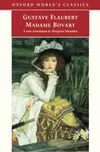
I just wasted my time reading this book.
Let me shed some light on this book's premise - woman marries someone stable, realises that married life lucks any luster, wants more excitement so she cheats on her husband and has multiple lovers.
Obviously, cheating is bad and totally the cheater's fault. At least I expected a book that would have some comments on the French society - gender roles, addressing marital dissatisfaction at a time when divorce is rare.
But all this book does is serve as a PSA to husbands that they need to control their wives because the other men are out to take advantage of them and your wife is a stupid, naive creature who just wants passion.
Now, I actually liked the description and motivations of Emma in the first part of the book. The portrayal of her dissatisfaction is depicted quite well but damn, second part onwards Emma is just a caricature not a real character. Actually, all character are caricatures only.
Husband - A gullible man who adores his wife so much that he turns a blind eye to all her transgressions
Affair #1 - An evil man who honestly just wants to bang a hot woman regardless of whether she is married or not. All he wants to do is corrupt her and tempt her towards sin.
Affair #2 - Another impressionable man who cares about the social fabric of the society but just loves Emma so much that if Emma wants something, he'll do it for her.
But again, our author is not kind to these affair partners either. The moment things with Emma are not new anymore, Emma and these men are bored and want to find a new plaything.
There is another plot point about how Emma drives herself into immeasurable debt, just so that the author can drive home the point that this woman is stupid and impulsive and doesn't care about the consequences at all.
The point still stands, this book is filled with stereotypes - wife = naive, other single men = predators, passion = destruction.
It is just a bad story overall. But then again what more can you expect from a male European author writing about a woman in 1857.
I just wish I can go back in time and not buy this book.
I just wasted my time reading this book.
Let me shed some light on this book's premise - woman marries someone stable, realises that married life lucks any luster, wants more excitement so she cheats on her husband and has multiple lovers.
Obviously, cheating is bad and totally the cheater's fault. At least I expected a book that would have some comments on the French society - gender roles, addressing marital dissatisfaction at a time when divorce is rare.
But all this book does is serve as a PSA to husbands that they need to control their wives because the other men are out to take advantage of them and your wife is a stupid, naive creature who just wants passion.
Now, I actually liked the description and motivations of Emma in the first part of the book. The portrayal of her dissatisfaction is depicted quite well but damn, second part onwards Emma is just a caricature not a real character. Actually, all character are caricatures only.
Husband - A gullible man who adores his wife so much that he turns a blind eye to all her transgressions
Affair #1 - An evil man who honestly just wants to bang a hot woman regardless of whether she is married or not. All he wants to do is corrupt her and tempt her towards sin.
Affair #2 - Another impressionable man who cares about the social fabric of the society but just loves Emma so much that if Emma wants something, he'll do it for her.
But again, our author is not kind to these affair partners either. The moment things with Emma are not new anymore, Emma and these men are bored and want to find a new plaything.
There is another plot point about how Emma drives herself into immeasurable debt, just so that the author can drive home the point that this woman is stupid and impulsive and doesn't care about the consequences at all.
The point still stands, this book is filled with stereotypes - wife = naive, other single men = predators, passion = destruction.
It is just a bad story overall. But then again what more can you expect from a male European author writing about a woman in 1857.
I just wish I can go back in time and not buy this book.

A short novella about two people in love (not necessarily with each other) containing little to no substance.
A short novella about two people in love (not necessarily with each other) containing little to no substance.

This is a book that makes you come face-to-face with the mortality of life as it is a memoir where the author is witnessing her mom die.
The author, Michelle Zauner, is the singer-songwriter best known for her band Japanese Breakfast.
Through her complicated but mostly positive relationship she shows the reader that why food and H mart is the place where she misses her mother the most. One of those reasons being that H marts (Korean American supermarket chain) were the places where her mom, a Korean native, felt right at home and could share her culture with her wasian daughter.
It is scared because that’s the place where her otherwise impassive, calm and collected mother, who advised her to keep 10 percent of herself hidden from everyone, expressed her emotions.
So, this is a sad book about someone losing their loved one.
It is particularly hard one to “review” because you don’t want to critique real people and their grief.
I guess, I’ll just leave it at that.
On a side note, I do feel really happy that Japanese Breakfast’s first successful album is essentially the songs that Michelle wrote while seeing her mom battle cancer.
This is a book that makes you come face-to-face with the mortality of life as it is a memoir where the author is witnessing her mom die.
The author, Michelle Zauner, is the singer-songwriter best known for her band Japanese Breakfast.
Through her complicated but mostly positive relationship she shows the reader that why food and H mart is the place where she misses her mother the most. One of those reasons being that H marts (Korean American supermarket chain) were the places where her mom, a Korean native, felt right at home and could share her culture with her wasian daughter.
It is scared because that’s the place where her otherwise impassive, calm and collected mother, who advised her to keep 10 percent of herself hidden from everyone, expressed her emotions.
So, this is a sad book about someone losing their loved one.
It is particularly hard one to “review” because you don’t want to critique real people and their grief.
I guess, I’ll just leave it at that.
On a side note, I do feel really happy that Japanese Breakfast’s first successful album is essentially the songs that Michelle wrote while seeing her mom battle cancer.

I picked up this book solely because I liked the cover but I am only judging it after completing it :p
It is a good book to binge read, the author has added one flaw to each character and that’s their entire personality. Not many layered characters, easy to read book.
The novel spans the whirlwind romance of Cleo & Frank (Cleopatra & Frankenstein) and its ultimate demise, with their friends’ lives sprinkled here and there.
Some good things about the writer is that she starts and ends the book well. Both Cleo & Frank are charmingly flirtatious in the beginning and somberly reflective in the end.
However, the book is a hot mess in the middle. Men date women decades younger than them and then cry about having to support them financially. Just date someone who is your age then!
Honestly, almost every relationship depicted, with the exception of Santigo’s and Eleanor’s, can be reduced to something transactional. After a point I actually started wondering - is the author promoting May-December relationships because the younger person gets stability and the older person can relive their youth?
It lowkey reminded me of another hot mess movie called Closer.
But one thing that’s common about hot messes is that you can’t help but watch it unfold and wonder how it is gonna end. That’s how my experience was with this book.
I picked up this book solely because I liked the cover but I am only judging it after completing it :p
It is a good book to binge read, the author has added one flaw to each character and that’s their entire personality. Not many layered characters, easy to read book.
The novel spans the whirlwind romance of Cleo & Frank (Cleopatra & Frankenstein) and its ultimate demise, with their friends’ lives sprinkled here and there.
Some good things about the writer is that she starts and ends the book well. Both Cleo & Frank are charmingly flirtatious in the beginning and somberly reflective in the end.
However, the book is a hot mess in the middle. Men date women decades younger than them and then cry about having to support them financially. Just date someone who is your age then!
Honestly, almost every relationship depicted, with the exception of Santigo’s and Eleanor’s, can be reduced to something transactional. After a point I actually started wondering - is the author promoting May-December relationships because the younger person gets stability and the older person can relive their youth?
It lowkey reminded me of another hot mess movie called Closer.
But one thing that’s common about hot messes is that you can’t help but watch it unfold and wonder how it is gonna end. That’s how my experience was with this book.
