
Wren

Whenever she got particularly depressed Greta would remind herself how lucky she was to be able to do things like drastically improving a patient’s quality of life with a few hours of work and some extremely basic supplies, and the clouds would lift a bit.
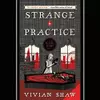
Another mixed bag. I seem to be landing on quite a few of those lately. The cover style and some quotes I’ve seen from the book originally led me to believe this was a historical urban fantasy, something set in Victorian times, or possibly 1920s at the latest. But no, it’s your regular contemporary UF, just written in a more formal, almost old-timey language than is commonly associated with the subgenre. It actually suited the vibe of the story and the side characters around Greta, who are nearly all quite old-timey themselves. (And all male. Why couldn’t she have a single female friend for more varied dynamics / cast? Missed opportunity, sigh).
The story starts fairly low-key, with the protagonist paying a doctor’s visit to a long-time patient/friend’s place, and then progresses into an increasingly higher stakes mystery that gets infernal and celestial powers involved. I admit it lost me at some point of that progression. There was just less and less emphasis on the things that drew me in, and also the way the story was structured stood in the way of immersion for me personally. It was kind of TV/movie-like, with the metaphorical camera zooming out sometimes to show a detail the POV character was missing, or a scene getting injected into the narrative that showed something the bad guys were up to without giving away too much. There’s nothing objectively wrong with this approach to structuring a book, and it was actually executed technically really well here! I simply don’t prefer it.
I did very much enjoy the concept of a doctor for the supernaturals, a lot of the worldbuilding (especially the distinction between the vampires and the vampyres), and the found family vibes. The book got me thinking that in a lot of found families in fiction, the protagonist ends up forging a lot of sibling-type bonds and/or becoming a surrogate parent figure to someone younger, and sometimes they also get a single mentor figure who’s kind of way on the fringes. Here, the MC is very much the baby of the found family, and it’s a fine change in dynamic. Also, I really liked the kindness and compassion Greta was able to show others.
I don’t think I’ll be continuing with this series, given the amount of series in progress and other TBR books that already threaten to bury me. But this first novel surely had its moments and I don’t regret trying it out.
Whenever she got particularly depressed Greta would remind herself how lucky she was to be able to do things like drastically improving a patient’s quality of life with a few hours of work and some extremely basic supplies, and the clouds would lift a bit.
Another mixed bag. I seem to be landing on quite a few of those lately. The cover style and some quotes I’ve seen from the book originally led me to believe this was a historical urban fantasy, something set in Victorian times, or possibly 1920s at the latest. But no, it’s your regular contemporary UF, just written in a more formal, almost old-timey language than is commonly associated with the subgenre. It actually suited the vibe of the story and the side characters around Greta, who are nearly all quite old-timey themselves. (And all male. Why couldn’t she have a single female friend for more varied dynamics / cast? Missed opportunity, sigh).
The story starts fairly low-key, with the protagonist paying a doctor’s visit to a long-time patient/friend’s place, and then progresses into an increasingly higher stakes mystery that gets infernal and celestial powers involved. I admit it lost me at some point of that progression. There was just less and less emphasis on the things that drew me in, and also the way the story was structured stood in the way of immersion for me personally. It was kind of TV/movie-like, with the metaphorical camera zooming out sometimes to show a detail the POV character was missing, or a scene getting injected into the narrative that showed something the bad guys were up to without giving away too much. There’s nothing objectively wrong with this approach to structuring a book, and it was actually executed technically really well here! I simply don’t prefer it.
I did very much enjoy the concept of a doctor for the supernaturals, a lot of the worldbuilding (especially the distinction between the vampires and the vampyres), and the found family vibes. The book got me thinking that in a lot of found families in fiction, the protagonist ends up forging a lot of sibling-type bonds and/or becoming a surrogate parent figure to someone younger, and sometimes they also get a single mentor figure who’s kind of way on the fringes. Here, the MC is very much the baby of the found family, and it’s a fine change in dynamic. Also, I really liked the kindness and compassion Greta was able to show others.
I don’t think I’ll be continuing with this series, given the amount of series in progress and other TBR books that already threaten to bury me. But this first novel surely had its moments and I don’t regret trying it out.