
Wren

Updated a reading goal:
Read 111 books by December 30, 2026
Progress so far: 56 / 111 50%

Evil can only be comprehended by evil.
I have pretty much no idea what I’ve just read, but my, it’s been a wild ride.
We’ve got that classic gothic set-up here: a young governess arrives to a dark old mansion that belongs to a rather unpleasant family: a husband whose main hobby is measuring people’s skulls, a wife who has no qualms with making servants sleep in the dog’s kennel, kids who are decidedly not alright. But it’s the governess who turns out to be the real monster in this one. (Though I must say, many of the unpleasant people we meet end up making a worse impression than Miss Notty does; she at least is sincere and fun in her unhinged glory).
I weirdly found myself completely uninvested in the overall plot and very invested in the various situations it’s comprised of. Like, I didn’t particularly care what all the weird, gory shenanigans were building up to, each of the episodes in the isolation was simultaneously gross compelling in that “can’t look away from a trainwreck” way.
I feel like Anna Burnett, the audiobook narrator, added a lot to this dark charm. Her irreverent, nonchalant, slightly dreamy delivery is spot-on, and she really sells Winifred Notty as a sociopath who doesn’t even really try to blend in, just stands there observing other humans as if they were a different species and shining a light on their flaws, remaining wrapped in her inner darkness herself.
A weird experience, truly, but also a deeply interesting one.
Evil can only be comprehended by evil.
I have pretty much no idea what I’ve just read, but my, it’s been a wild ride.
We’ve got that classic gothic set-up here: a young governess arrives to a dark old mansion that belongs to a rather unpleasant family: a husband whose main hobby is measuring people’s skulls, a wife who has no qualms with making servants sleep in the dog’s kennel, kids who are decidedly not alright. But it’s the governess who turns out to be the real monster in this one. (Though I must say, many of the unpleasant people we meet end up making a worse impression than Miss Notty does; she at least is sincere and fun in her unhinged glory).
I weirdly found myself completely uninvested in the overall plot and very invested in the various situations it’s comprised of. Like, I didn’t particularly care what all the weird, gory shenanigans were building up to, each of the episodes in the isolation was simultaneously gross compelling in that “can’t look away from a trainwreck” way.
I feel like Anna Burnett, the audiobook narrator, added a lot to this dark charm. Her irreverent, nonchalant, slightly dreamy delivery is spot-on, and she really sells Winifred Notty as a sociopath who doesn’t even really try to blend in, just stands there observing other humans as if they were a different species and shining a light on their flaws, remaining wrapped in her inner darkness herself.
A weird experience, truly, but also a deeply interesting one.

If fear is your only weapon, it’s useless here.
The blurb, the dedication, and the first chapter all suggested the story was going to be focused on healing, but I would call it more of a “painkiller” one. The difference, for me, is that healing can get messy and hurt sometimes, while painkillers simply make everything stop hurting and can put you in a pleasant haze where you get to ignore whatever is wrong. Which is exactly how this book feels. And don’t get me wrong, I definitely feel stories like this have their place and their purpose, but apparently, I happen to prefer the ones that don’t shy away from the messier parts of healing, even if there’s lots of coziness and gentleness around the characters. Stories like The Spellshop and Violet Thistlewaite Is Not a Villain Anymore, for example.
Regardless, there were a lot of nice moments here. I liked the overall vibe of the fairy tale village, the absolutely adorable baby griffon, all the fairy-like beings in the forest and the bog. The writing itself is pretty atmospheric, with the kind of descriptions that really pull you in, and the author really, really commits to creating something unapologetically and self-indulgently cozy. So while this wasn’t a particularly memorable experience for me personally, it was undeniably a pleasant one, and I can still recommend it to those who are after this kind of vibe.
If fear is your only weapon, it’s useless here.
The blurb, the dedication, and the first chapter all suggested the story was going to be focused on healing, but I would call it more of a “painkiller” one. The difference, for me, is that healing can get messy and hurt sometimes, while painkillers simply make everything stop hurting and can put you in a pleasant haze where you get to ignore whatever is wrong. Which is exactly how this book feels. And don’t get me wrong, I definitely feel stories like this have their place and their purpose, but apparently, I happen to prefer the ones that don’t shy away from the messier parts of healing, even if there’s lots of coziness and gentleness around the characters. Stories like The Spellshop and Violet Thistlewaite Is Not a Villain Anymore, for example.
Regardless, there were a lot of nice moments here. I liked the overall vibe of the fairy tale village, the absolutely adorable baby griffon, all the fairy-like beings in the forest and the bog. The writing itself is pretty atmospheric, with the kind of descriptions that really pull you in, and the author really, really commits to creating something unapologetically and self-indulgently cozy. So while this wasn’t a particularly memorable experience for me personally, it was undeniably a pleasant one, and I can still recommend it to those who are after this kind of vibe.

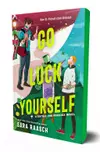
I thought the balance to being in a constant state of anxiety was peace; but what if it’s chaos?
This felt less like a sequel and more like a… remix? The external plot with all the joy stealing and having to attend another holiday kingdom’s festivities etc was incredibly similar to the first book. The LI here basically has the same arc as the first book’s MC. Kris even tells Lach as much in that “you’re just like my brother Coal” scene. And then later Hex, Coal’s LI from the first book, approaches Kris with “I’ve been exactly where you are now,” so I guess at least the narrative is self-aware when it comes to these similarities. But still, reading this story felt like going around in circles.
For the good/better stuff: I think an effort was made to un-muddy the worldbuilding a bit—it still begs to not be looked at too closely, but I think I’ve got a better grasp on the whole joy economy, at least. There were some genuinely funny moments, though on the other hand Lach and Kris also managed to out-cringe Coal sometimes, which is no mean feat. Also, much like the first book, this one takes a sharp turn from a somewhat YA-flavored PG-13 romcom to pages upon pages of smut, but this time, I liked the smut and the feels that go with it more.
I won’t say I had a bad time reading it, but I liked it far less than the first book. And that one was already far from a five-star read for me, but at least it made me care for the characters and want to know what happens next once Coal is Santa. I still would like to know what happens next, but instead, sadly, I got this remix thing. So I don’t know if I want to pick up the third book at all, for fear of it just being another ride on the same merry-go-round.
I thought the balance to being in a constant state of anxiety was peace; but what if it’s chaos?
This felt less like a sequel and more like a… remix? The external plot with all the joy stealing and having to attend another holiday kingdom’s festivities etc was incredibly similar to the first book. The LI here basically has the same arc as the first book’s MC. Kris even tells Lach as much in that “you’re just like my brother Coal” scene. And then later Hex, Coal’s LI from the first book, approaches Kris with “I’ve been exactly where you are now,” so I guess at least the narrative is self-aware when it comes to these similarities. But still, reading this story felt like going around in circles.
For the good/better stuff: I think an effort was made to un-muddy the worldbuilding a bit—it still begs to not be looked at too closely, but I think I’ve got a better grasp on the whole joy economy, at least. There were some genuinely funny moments, though on the other hand Lach and Kris also managed to out-cringe Coal sometimes, which is no mean feat. Also, much like the first book, this one takes a sharp turn from a somewhat YA-flavored PG-13 romcom to pages upon pages of smut, but this time, I liked the smut and the feels that go with it more.
I won’t say I had a bad time reading it, but I liked it far less than the first book. And that one was already far from a five-star read for me, but at least it made me care for the characters and want to know what happens next once Coal is Santa. I still would like to know what happens next, but instead, sadly, I got this remix thing. So I don’t know if I want to pick up the third book at all, for fear of it just being another ride on the same merry-go-round.

Forever sorry for what they will do to each other. Forever bound to do it again.
Well, hello, main contender for my favorite book of 2026! Maybe it’s just all the fresh feels from finishing it, but right now I can’t see how anything can top it. I just want to get my hands on the second book ASAP. What do you mean I have to wait until freaking late April 2027?! Rude.
The characters and their relationships are definitely the main draw here. I initially got hooked by the promise of my favorite somewhat niche trope: friends to enemies to lovers. I love that shift in dynamics it provide, the history, the what-if’s, the might-have-been’s, the second chance vibes during the reconnection except the break-up never happened. Red City definitely delivers on that front, but there’s also an extra web of characters sand connections around Sam and Ari that are all extremely compelling in their own right.
My first introduction to Marie Lu as an author was her Young Elites YA series 10 years ago or so, and even then I greatly admired how she handled morally grey characters. Red City takes that to a whole new level. I love how she made me literally cry for utterly reprehensible fictional people, never absolving them from their guilt and responsibility, but showing me a glimpse of humanity hidden in the dark. That “what-if” and “might-have-been” vibe definitely spreads far beyond the limits of the central relationship.
I also love the POV work here, although technically, I don’t know if the POV switches can be called such, given that there’s definitely an omniscient narrator standing between the characters and the reader at all times. It’s just that they reveal their omniscience one character at a time. But anyway, I loved the chapters that focused on the secondary and tertiary characters, inserting tidbits of information that aren’t known to either Ari or Sam. That helps inject so much dramatic irony into the plot and often actually ramps up the tension. You know the protagonist would have made a different choice if they had all the information you had, but they don’t have it, and you can’t slip it to them from beyond the page.
My one semi-complaint is tangentially related to the POV switches, though. Sam and Ari get a roughly similar amount of “screentime” and are equally important to the plot, just as the plot is equally important to their development. However, most of the time this felt to me like Sam’s story, even when I was reading some of Ari’s chapters. Even though the book often tells us Ari is incredibly charismatic and has a strong soul, this doesn’t always come across on the page. I feel like the problem here is that outside of a few specific moments that are all connected to Sam, he doesn’t have much of an agenda. The story happens *to* him. Sam, on the other hand, retains an agenda even when her agency is taken away from her. She has a purpose, she makes decision, she’s always moving forward. Where Ari was plucked out of obscurity by another character, Sam seeks out the world of alchemy on her own.
I wouldn’t call it a flaw as such; it seems more like a deliberate contrast (it’s also interesting how Ari, with his tendency to go where the currents push him, is the shy but charismatic people magnet, and the special thing about Sam, the driven decision-maker, is how forgettable and easily overlooked she is). But it definitely made me sliiiiiiightly less invested in Ari’s chapters. I can’t help it, I like the characters with a purpose more.
I’d be, of course, remiss not to mention the awesomely dark setting. The whole thing with magic mafia syndicates and the underground wars they wage against each other for the sake of power? The noir vibes? The drug that makes everyone better and worse at the same time? How alchemy is depicted with an almost sci-fi vibe? The price people pay for wielding it? The way every fight between alchemists was so unbelievably badass and inventive? I loved it all.
Oh, and a random thing that absolutely broke me: the relationship between Sam and her mother. Just that entire arc. I didn’t give the book a permission to hurt me like that, damn it.
Forever sorry for what they will do to each other. Forever bound to do it again.
Well, hello, main contender for my favorite book of 2026! Maybe it’s just all the fresh feels from finishing it, but right now I can’t see how anything can top it. I just want to get my hands on the second book ASAP. What do you mean I have to wait until freaking late April 2027?! Rude.
The characters and their relationships are definitely the main draw here. I initially got hooked by the promise of my favorite somewhat niche trope: friends to enemies to lovers. I love that shift in dynamics it provide, the history, the what-if’s, the might-have-been’s, the second chance vibes during the reconnection except the break-up never happened. Red City definitely delivers on that front, but there’s also an extra web of characters sand connections around Sam and Ari that are all extremely compelling in their own right.
My first introduction to Marie Lu as an author was her Young Elites YA series 10 years ago or so, and even then I greatly admired how she handled morally grey characters. Red City takes that to a whole new level. I love how she made me literally cry for utterly reprehensible fictional people, never absolving them from their guilt and responsibility, but showing me a glimpse of humanity hidden in the dark. That “what-if” and “might-have-been” vibe definitely spreads far beyond the limits of the central relationship.
I also love the POV work here, although technically, I don’t know if the POV switches can be called such, given that there’s definitely an omniscient narrator standing between the characters and the reader at all times. It’s just that they reveal their omniscience one character at a time. But anyway, I loved the chapters that focused on the secondary and tertiary characters, inserting tidbits of information that aren’t known to either Ari or Sam. That helps inject so much dramatic irony into the plot and often actually ramps up the tension. You know the protagonist would have made a different choice if they had all the information you had, but they don’t have it, and you can’t slip it to them from beyond the page.
My one semi-complaint is tangentially related to the POV switches, though. Sam and Ari get a roughly similar amount of “screentime” and are equally important to the plot, just as the plot is equally important to their development. However, most of the time this felt to me like Sam’s story, even when I was reading some of Ari’s chapters. Even though the book often tells us Ari is incredibly charismatic and has a strong soul, this doesn’t always come across on the page. I feel like the problem here is that outside of a few specific moments that are all connected to Sam, he doesn’t have much of an agenda. The story happens *to* him. Sam, on the other hand, retains an agenda even when her agency is taken away from her. She has a purpose, she makes decision, she’s always moving forward. Where Ari was plucked out of obscurity by another character, Sam seeks out the world of alchemy on her own.
I wouldn’t call it a flaw as such; it seems more like a deliberate contrast (it’s also interesting how Ari, with his tendency to go where the currents push him, is the shy but charismatic people magnet, and the special thing about Sam, the driven decision-maker, is how forgettable and easily overlooked she is). But it definitely made me sliiiiiiightly less invested in Ari’s chapters. I can’t help it, I like the characters with a purpose more.
I’d be, of course, remiss not to mention the awesomely dark setting. The whole thing with magic mafia syndicates and the underground wars they wage against each other for the sake of power? The noir vibes? The drug that makes everyone better and worse at the same time? How alchemy is depicted with an almost sci-fi vibe? The price people pay for wielding it? The way every fight between alchemists was so unbelievably badass and inventive? I loved it all.
Oh, and a random thing that absolutely broke me: the relationship between Sam and her mother. Just that entire arc. I didn’t give the book a permission to hurt me like that, damn it.

“Interesting choice of garden decor. I would’ve gone with a gnome or a flamingo maybe, but a corpse definitely has a vibe.”
A reasonably fun, feel-good cozy mystery that probably isn’t going to stick with me all that long, but I’ve sure enjoyed the process of reading it. Something about it reminded me subtly of The House in the Cerulean Sea. Probably the mix of irreverent humor and the supernatural beings used as a metaphor for queerness and general otherness.
It took me a hot second to connect with the characters (except for Lore who’s been my favorite throughout). Sal in particular was kind of a tough sell because of how completely over the top he is. But first I found myself strongly agreeing with his some of his opinions, and then I started laughing at some of his shenanigans, and eventually, I was hooked. With Arthur, there was less friction at the start, but a bit of a roller coaster in the middle. Overall, I had fun with both leads and ended up enjoying the more serious aspects of their relationship hidden behind the veneer of comedy.
My favorite parts were all the ones involving dangerous nocturnal animals (aka raccoons), the mix of investigation and matchmaking, and that one twist near the end. Maybe those will stick with me for a bit, after all!
My least favorite part: the one where they give milk to a cat. Please don’t. Most adult cats are lactose intolerant with all that entails. (Yes, I sometimes get worried even for fictional cats, lol)
“Interesting choice of garden decor. I would’ve gone with a gnome or a flamingo maybe, but a corpse definitely has a vibe.”
A reasonably fun, feel-good cozy mystery that probably isn’t going to stick with me all that long, but I’ve sure enjoyed the process of reading it. Something about it reminded me subtly of The House in the Cerulean Sea. Probably the mix of irreverent humor and the supernatural beings used as a metaphor for queerness and general otherness.
It took me a hot second to connect with the characters (except for Lore who’s been my favorite throughout). Sal in particular was kind of a tough sell because of how completely over the top he is. But first I found myself strongly agreeing with his some of his opinions, and then I started laughing at some of his shenanigans, and eventually, I was hooked. With Arthur, there was less friction at the start, but a bit of a roller coaster in the middle. Overall, I had fun with both leads and ended up enjoying the more serious aspects of their relationship hidden behind the veneer of comedy.
My favorite parts were all the ones involving dangerous nocturnal animals (aka raccoons), the mix of investigation and matchmaking, and that one twist near the end. Maybe those will stick with me for a bit, after all!
My least favorite part: the one where they give milk to a cat. Please don’t. Most adult cats are lactose intolerant with all that entails. (Yes, I sometimes get worried even for fictional cats, lol)

A partnership shouldn't fill missing pieces, but instead enhance what was already present.
Here comes another attempt to fill the Big Bad Wolf-shaped hole! This one’s more successful than some previous ones, for sure. Especially when it comes to the “solving a mystery together” part. I genuinely adored how the mystery itself was constructed and how Larkin and Doyle played off each other during the investigation. The deeper they got into the mystery, the more engrossed I was, and I’ve gotta say my investment hinged in equal part on wanting to do who did it and to see how they solve it.
As for the romance part, I found it to be a curious mix of fast and slow burn. On one hand, the whole book happens over the course of a few days, and that’s somehow enough for Larkin to have a misunderstanding with Doyle, overcome it along with the initial wariness, feel very seen by Doyle, catch feelings, have an epiphany about his failing marriage, etc, etc. On one hand, I get it; when you haven’t felt seen and accepted in a very long time, entrenched in that “People don’t want to know feeling,” and then someone offers validation, acceptance, warmth, and everything you’ve been lacking, it’s hard not to latch onto that full-force. But still, things felt a little too rushed. On the plus side, between the specific way it was executed, with Larkin reflecting on every step, and the fact that by the end of the book the relationship itself has progressed very little, there are some good slow burn vibes.
I also have to say I absolutely adore Larkin as a protagonist. His memory condition and the way it affects his life and his personality is so interestingly portrayed, and there are a lot of aspects of his inner life I greatly relate to. His head is a fascinating place to spend time in.
A partnership shouldn't fill missing pieces, but instead enhance what was already present.
Here comes another attempt to fill the Big Bad Wolf-shaped hole! This one’s more successful than some previous ones, for sure. Especially when it comes to the “solving a mystery together” part. I genuinely adored how the mystery itself was constructed and how Larkin and Doyle played off each other during the investigation. The deeper they got into the mystery, the more engrossed I was, and I’ve gotta say my investment hinged in equal part on wanting to do who did it and to see how they solve it.
As for the romance part, I found it to be a curious mix of fast and slow burn. On one hand, the whole book happens over the course of a few days, and that’s somehow enough for Larkin to have a misunderstanding with Doyle, overcome it along with the initial wariness, feel very seen by Doyle, catch feelings, have an epiphany about his failing marriage, etc, etc. On one hand, I get it; when you haven’t felt seen and accepted in a very long time, entrenched in that “People don’t want to know feeling,” and then someone offers validation, acceptance, warmth, and everything you’ve been lacking, it’s hard not to latch onto that full-force. But still, things felt a little too rushed. On the plus side, between the specific way it was executed, with Larkin reflecting on every step, and the fact that by the end of the book the relationship itself has progressed very little, there are some good slow burn vibes.
I also have to say I absolutely adore Larkin as a protagonist. His memory condition and the way it affects his life and his personality is so interestingly portrayed, and there are a lot of aspects of his inner life I greatly relate to. His head is a fascinating place to spend time in.


I—the Dark Lord who had toppled three kingdoms by the time I was twenty-five—now had a new, far more daunting challenge than war. I had to woo my own wife.
This book helped me realize that even when it comes to lighthearted, humorous takes on the villain protagonist trope, I really need said villain to have reasons for doing villainous things with villainous magic from their villainous castle full of villainous underlings. Like, I had my issues with Assistant to the Villain by Hannah Nicole Maehrer, but I got the titular Villain’s motivations. Or in How I Stole the Princess’s White Knight... by A.J. Sherwood, Tan was mostly like, “well, the world’s going to designate me as a dark evil sorcerer anyway, so might as well own up to it,” and it worked well enough for the story. Here though, it’s like Kazimir is a villain because he wants to be a villain, and it’s all really circular, and I couldn’t help but get stuck on this every time I picked up the book, even though I realized the book was doing the opposite of asking me to take it seriously. Oops.
Another thing I’m now… not so much realizing as articulating: for me to agree to stop overthinking and just roll with the punches and not take anything too seriously in a humorous book, I need the humor to be on the same wavelength as my own. In other words, I need it to be kindly provided by India Holton 😂 Here, alas, there’s no such perfect match, and besides, while the beginning is quirky and humorous, the further you go, the more the book turns into just a regular romantasy with slightly snarkier characters than usual. (With the exception of chapter titles; those never stopped being quirky and funny.)
Also, I’m sorry to say it, but it also just plain drags. This book genuinely didn’t need to be over 500 pages. There was just too much fluff, too many repetitive scenes, and the external plot felt like an afterthought. Which is actually a pity, because whenever it peeked shyly out of all that fluff, I found myself quite hooked.
Despite all these complaints, the story’s definitely had its moments. I liked the scenes where Arabella asserted her desire to be her own person, and the ones where Kaz showed some vulnerability. Vex was a highlight among the secondary characters. The dragon was cute. The banter was occasionally snort-inducing. But overall, alas, not even that cliffhanger is going to lure me into book 2.
I—the Dark Lord who had toppled three kingdoms by the time I was twenty-five—now had a new, far more daunting challenge than war. I had to woo my own wife.
This book helped me realize that even when it comes to lighthearted, humorous takes on the villain protagonist trope, I really need said villain to have reasons for doing villainous things with villainous magic from their villainous castle full of villainous underlings. Like, I had my issues with Assistant to the Villain by Hannah Nicole Maehrer, but I got the titular Villain’s motivations. Or in How I Stole the Princess’s White Knight... by A.J. Sherwood, Tan was mostly like, “well, the world’s going to designate me as a dark evil sorcerer anyway, so might as well own up to it,” and it worked well enough for the story. Here though, it’s like Kazimir is a villain because he wants to be a villain, and it’s all really circular, and I couldn’t help but get stuck on this every time I picked up the book, even though I realized the book was doing the opposite of asking me to take it seriously. Oops.
Another thing I’m now… not so much realizing as articulating: for me to agree to stop overthinking and just roll with the punches and not take anything too seriously in a humorous book, I need the humor to be on the same wavelength as my own. In other words, I need it to be kindly provided by India Holton 😂 Here, alas, there’s no such perfect match, and besides, while the beginning is quirky and humorous, the further you go, the more the book turns into just a regular romantasy with slightly snarkier characters than usual. (With the exception of chapter titles; those never stopped being quirky and funny.)
Also, I’m sorry to say it, but it also just plain drags. This book genuinely didn’t need to be over 500 pages. There was just too much fluff, too many repetitive scenes, and the external plot felt like an afterthought. Which is actually a pity, because whenever it peeked shyly out of all that fluff, I found myself quite hooked.
Despite all these complaints, the story’s definitely had its moments. I liked the scenes where Arabella asserted her desire to be her own person, and the ones where Kaz showed some vulnerability. Vex was a highlight among the secondary characters. The dragon was cute. The banter was occasionally snort-inducing. But overall, alas, not even that cliffhanger is going to lure me into book 2.

“Are you happy, Sophia?”
I went into this little book knowing almost nothing about it, except that I’ve seen a couple of my favorite authors praise it and that I tend to like Valente’s brand of surreal weirdness. The blurb made me think that this was essentially a mix of Bluebeard’s Bride and The Stepford Wives, and that’s quite true indeed, except there’s a third, even more important source/influence I’ve only guessed an embarrassingly small number of pages before the explicit reveal. There were so many clues, I should have known sooner! 😅 Though in my defense, the story does a really good job toying with the reader and hiding clues in plain sight. You kind of recognize what a detail’s alluding to, but you think it’s just an extra layer, not the whole point of the allegory, and then oops, you’re fooled.
In all honesty, I’m not sure I would have picked this book up if I knew where it led, so it’s a good thing I didn’t. I can’t say I 100% enjoyed the way the core themes are handled here, but it was interesting to study the way the story’s constructed, and the ending absolutely has a fantastic wham factor.
“Are you happy, Sophia?”
I went into this little book knowing almost nothing about it, except that I’ve seen a couple of my favorite authors praise it and that I tend to like Valente’s brand of surreal weirdness. The blurb made me think that this was essentially a mix of Bluebeard’s Bride and The Stepford Wives, and that’s quite true indeed, except there’s a third, even more important source/influence I’ve only guessed an embarrassingly small number of pages before the explicit reveal. There were so many clues, I should have known sooner! 😅 Though in my defense, the story does a really good job toying with the reader and hiding clues in plain sight. You kind of recognize what a detail’s alluding to, but you think it’s just an extra layer, not the whole point of the allegory, and then oops, you’re fooled.
In all honesty, I’m not sure I would have picked this book up if I knew where it led, so it’s a good thing I didn’t. I can’t say I 100% enjoyed the way the core themes are handled here, but it was interesting to study the way the story’s constructed, and the ending absolutely has a fantastic wham factor.

No matter what happens, I’m a stronger man now because of you.
A bit of a mixed bag for me, emotions/vibes-wise, but ultimately, such a good book. I really appreciated the portrayal of being hard of hearing. It was so immersive, really showcasing the day-to-day challenges and frustrations, but also the joys found in moments when accessibility needs are met. I also generally loved the approach to writing someone who’s disabled and has a history of depression. It’s just extremely believable, and I empathized with Ethan so hard. At times, I did feel he came too close to throwing a self-pity party (not an undeserved one, let’s be honest), but he remained so open to letting something good into his life, it really made me root for him. I was happy to see him get out of the dark place he started in.
Clay’s part of the story was perhaps even more compelling to me. He’s such a kind and brave person, and did I mention kind? We all need more Clays around. I’m not often a fan of late bloomer identity discovery narratives, but this one was so thoughtfully and tenderly done. It was great to see this character take a step into the unknown and be so willing to learn about himself and others. I really enjoyed his relationship with his daughter and, almost even more so, the bond he retained with his ex-wife. Also, he seems like a great dog dad (and what an adorable dog he has), that earns him extra points in my book!
Despite the fact that the two POVs switch up fairly consistently every 1-2 chapters throughout the story, I was left with the distinct feeling that roughly the first half of the book, the one where they were on their trip/tour around Australia, was Ethan’s part, and then after that, it was Clay’s part. Interestingly enough, the first half also felt practically like a slow burn, even though not much time has passed at all, and the second was where everything picked up the pace. Which again contributed to that “Ethan’s part, Clay part” feeling, because I think for Ethan, despite the tight timeframe, the whole thing was a gradual climb out of the pit the double betrayal in the beginning left him in. While for Clay, things were somewhat more whirlwind.
I did have some uncertainty around the fact that for Ethan, this romance was basically a rebound. But I feel like the author did a good job acknowledging the potential pitfalls and working with them instead of glossing them over. I also liked how the situation with his ex cheating was handled within the narrative: Michael and Todd weren’t portrayed as wrong for *what* they wanted, but they were held fully responsible for *how* they handled it.
All in all, this is a sensitively handled, well-researched story with lots of much needed kindness in it.
No matter what happens, I’m a stronger man now because of you.
A bit of a mixed bag for me, emotions/vibes-wise, but ultimately, such a good book. I really appreciated the portrayal of being hard of hearing. It was so immersive, really showcasing the day-to-day challenges and frustrations, but also the joys found in moments when accessibility needs are met. I also generally loved the approach to writing someone who’s disabled and has a history of depression. It’s just extremely believable, and I empathized with Ethan so hard. At times, I did feel he came too close to throwing a self-pity party (not an undeserved one, let’s be honest), but he remained so open to letting something good into his life, it really made me root for him. I was happy to see him get out of the dark place he started in.
Clay’s part of the story was perhaps even more compelling to me. He’s such a kind and brave person, and did I mention kind? We all need more Clays around. I’m not often a fan of late bloomer identity discovery narratives, but this one was so thoughtfully and tenderly done. It was great to see this character take a step into the unknown and be so willing to learn about himself and others. I really enjoyed his relationship with his daughter and, almost even more so, the bond he retained with his ex-wife. Also, he seems like a great dog dad (and what an adorable dog he has), that earns him extra points in my book!
Despite the fact that the two POVs switch up fairly consistently every 1-2 chapters throughout the story, I was left with the distinct feeling that roughly the first half of the book, the one where they were on their trip/tour around Australia, was Ethan’s part, and then after that, it was Clay’s part. Interestingly enough, the first half also felt practically like a slow burn, even though not much time has passed at all, and the second was where everything picked up the pace. Which again contributed to that “Ethan’s part, Clay part” feeling, because I think for Ethan, despite the tight timeframe, the whole thing was a gradual climb out of the pit the double betrayal in the beginning left him in. While for Clay, things were somewhat more whirlwind.
I did have some uncertainty around the fact that for Ethan, this romance was basically a rebound. But I feel like the author did a good job acknowledging the potential pitfalls and working with them instead of glossing them over. I also liked how the situation with his ex cheating was handled within the narrative: Michael and Todd weren’t portrayed as wrong for *what* they wanted, but they were held fully responsible for *how* they handled it.
All in all, this is a sensitively handled, well-researched story with lots of much needed kindness in it.

Monsters are more often than not one-hundred percent humans, and they don’t even have the excuse of following their nature.
Yay, it’s back to Widdershins! I was worried that this spin-off series won’t live up to its amazing predecessor for me, but fortunately, those fears didn’t come true. I absolutely adored this first installment. I love how it’s both clearly a sequel to the first series and its own thing. The connections between the OG books and this one are clear, but tentative. There are several characters we’re familiar with from the first series, but they never took center stage there. There’s a nicely done small nod at the core group from the first series that explains their absence in the plot and pushes the reader to focus on the new characters. The plot of the series is shaping up to be explicitly overarching, whereas the first one started off as a bunch of loosely connected individual adventures that only gradually began to form a big whole.
My absolute favorite part here is getting to properly hang out in the Ladysmith Museum’s library. The museum has always been something of a home base to the OG characters, with the library and its mysterious workers serving as an increasingly important resource, but all of it remained woefully underexplored. The spin-off fixes that with gusto, not only showing us the library’s inner workings, but also providing some nice forays into the history of the whole establishment. It’s honestly amazing. I can’t wait for more.
The new characters are really fun and promising, and I like all the new sets of dynamics and the big emphasis on kindness. Sebastian and Vesper are both adorable; Vesper’s definitely my favorite because of his backstory and arc; that whole “raised to be a weapon, chooses to be a human, still thinks of himself as a monster” thing he’s got going on is my catnip. Sebastian is the perfect self harbor for him, and the way Sebastian’s family embraces him as well made me tear up in the best way. I particularly adore Bonnie and hope to see lots of her in the following books. She’s the sweetest.
Back to the worldbuilding for a bit—I love all the small changes in how Widdershins functions now, with the increasing awareness of the occult (not that it was ever that well-hidden, but, you know) and how these open secrets are treated. It all makes so much sense after what transpired in the finale of the OG series. I also greatly enjoyed how the author included various real world conspiracy theories, superstitions, myths, etc into the narrative, from the Halley’s Comet as a potential harbinger of doom to things like the Beast of Gevaudan.
Really, genuinely, so glad to be back in this amazing setting and to have a new set of fictional besties to follow on their adventures. Can’t wait for more tentacles and murder books!
Monsters are more often than not one-hundred percent humans, and they don’t even have the excuse of following their nature.
Yay, it’s back to Widdershins! I was worried that this spin-off series won’t live up to its amazing predecessor for me, but fortunately, those fears didn’t come true. I absolutely adored this first installment. I love how it’s both clearly a sequel to the first series and its own thing. The connections between the OG books and this one are clear, but tentative. There are several characters we’re familiar with from the first series, but they never took center stage there. There’s a nicely done small nod at the core group from the first series that explains their absence in the plot and pushes the reader to focus on the new characters. The plot of the series is shaping up to be explicitly overarching, whereas the first one started off as a bunch of loosely connected individual adventures that only gradually began to form a big whole.
My absolute favorite part here is getting to properly hang out in the Ladysmith Museum’s library. The museum has always been something of a home base to the OG characters, with the library and its mysterious workers serving as an increasingly important resource, but all of it remained woefully underexplored. The spin-off fixes that with gusto, not only showing us the library’s inner workings, but also providing some nice forays into the history of the whole establishment. It’s honestly amazing. I can’t wait for more.
The new characters are really fun and promising, and I like all the new sets of dynamics and the big emphasis on kindness. Sebastian and Vesper are both adorable; Vesper’s definitely my favorite because of his backstory and arc; that whole “raised to be a weapon, chooses to be a human, still thinks of himself as a monster” thing he’s got going on is my catnip. Sebastian is the perfect self harbor for him, and the way Sebastian’s family embraces him as well made me tear up in the best way. I particularly adore Bonnie and hope to see lots of her in the following books. She’s the sweetest.
Back to the worldbuilding for a bit—I love all the small changes in how Widdershins functions now, with the increasing awareness of the occult (not that it was ever that well-hidden, but, you know) and how these open secrets are treated. It all makes so much sense after what transpired in the finale of the OG series. I also greatly enjoyed how the author included various real world conspiracy theories, superstitions, myths, etc into the narrative, from the Halley’s Comet as a potential harbinger of doom to things like the Beast of Gevaudan.
Really, genuinely, so glad to be back in this amazing setting and to have a new set of fictional besties to follow on their adventures. Can’t wait for more tentacles and murder books!