
Lee


[2.5/5]
Despite the cool cover, Exiles was a big let down on just about every front, especially atmosphere and tension. The characters leave a lot to be desired and halfway through the already short book I was struggling to note who was who. There's a mobile choose your own adventure game that executed the psychological space horror and thrills far better, but I forgot what it was called.
[2.5/5]
Despite the cool cover, Exiles was a big let down on just about every front, especially atmosphere and tension. The characters leave a lot to be desired and halfway through the already short book I was struggling to note who was who. There's a mobile choose your own adventure game that executed the psychological space horror and thrills far better, but I forgot what it was called.


David Lynch’s Silent Hill. Not a horror book at all, but more so a brilliantly paced psychological thriller that peels layers I'd your mind little by little as the snowy weather out in this liminal landscape gets worse and worse. What are you waiting for? The first two things you'll notice about Ian Reid’s I’m Thinking of Ending Things are, just how shockingly short it is, and the exuberant amount of eerie atmosphere he is able to exude in each page. What are you waiting for? With such well-crafted pacing and little hints of context and foreshadowing here and there, I applaud Reid for not relying on cliches or jumpscares as he lets this strange story just marinate in your brain. That all too familiar feeling you have when you think someone or something else is in your room as you're lying down to sleep persists throughout a majority of this brisk and sprinkled mysterious read. What are you waiting for?
Alongside the aforementioned Lynchian vibes, there are a handful of moments throughout ITOET that called to mind Gerald’s Game and the iconic and massively underrated cartoon, Courage the Cowardly Dog. Ranging from King Ramses, Freaky Fred, and the episode where Courage is opening various doors to reveal different horrors, the book dripped with a surreal nightmarish plane of our character’s reality. What are you waiting for? But beyond the more creepy elements, I think the true horror lies within the more mundane real-world struggles and fears depicted and hinted at within: the fear of failure, what-if dream scenarios, failed relationships, isolation, loneliness, and being stuck in your hometown. Reid doesn't explicitly dive deep into themes of mental health, but it's irrefutably poured over the narrative from its opening words, “I’m thinking of ending things,” to the closing words, “No more thinking. I answered the question.”
This is a rare book where the word of mouth hype around it actually holds true by the time you finish reading it. It isn't as mind-blowing as I had expected—seeing how I pieced it together mostly before the halfway mark—but my detective penchant didn't obstruct any of my enjoyment and intrigue. I highly recommend this, especially if you're a fellow fan of any shows, film, games I mentioned. Bonus points if you read this at a window table of a Dairy Queen during winter.
David Lynch’s Silent Hill. Not a horror book at all, but more so a brilliantly paced psychological thriller that peels layers I'd your mind little by little as the snowy weather out in this liminal landscape gets worse and worse. What are you waiting for? The first two things you'll notice about Ian Reid’s I’m Thinking of Ending Things are, just how shockingly short it is, and the exuberant amount of eerie atmosphere he is able to exude in each page. What are you waiting for? With such well-crafted pacing and little hints of context and foreshadowing here and there, I applaud Reid for not relying on cliches or jumpscares as he lets this strange story just marinate in your brain. That all too familiar feeling you have when you think someone or something else is in your room as you're lying down to sleep persists throughout a majority of this brisk and sprinkled mysterious read. What are you waiting for?
Alongside the aforementioned Lynchian vibes, there are a handful of moments throughout ITOET that called to mind Gerald’s Game and the iconic and massively underrated cartoon, Courage the Cowardly Dog. Ranging from King Ramses, Freaky Fred, and the episode where Courage is opening various doors to reveal different horrors, the book dripped with a surreal nightmarish plane of our character’s reality. What are you waiting for? But beyond the more creepy elements, I think the true horror lies within the more mundane real-world struggles and fears depicted and hinted at within: the fear of failure, what-if dream scenarios, failed relationships, isolation, loneliness, and being stuck in your hometown. Reid doesn't explicitly dive deep into themes of mental health, but it's irrefutably poured over the narrative from its opening words, “I’m thinking of ending things,” to the closing words, “No more thinking. I answered the question.”
This is a rare book where the word of mouth hype around it actually holds true by the time you finish reading it. It isn't as mind-blowing as I had expected—seeing how I pieced it together mostly before the halfway mark—but my detective penchant didn't obstruct any of my enjoyment and intrigue. I highly recommend this, especially if you're a fellow fan of any shows, film, games I mentioned. Bonus points if you read this at a window table of a Dairy Queen during winter.


Added to listEerie Atmosphericwith 7 books.


Added to listOwnedwith 250 books.


Added to listBooks Read Before Watching The Film/Showwith 97 books.


David Lynch’s Silent Hill. The first two things you'll notice about Ian Reid’s I’m Thinking of Ending Things are, just how shockingly short it is, and the exuberant amount of eerie atmosphere he is able to exude in each page. What are you waiting for? Not a horror book at all, but more so a brilliantly paced psychological thriller that peels layers I'd your mind little by little as the snowy weather out in this liminal landscape gets worse and worse. What are you waiting for? I applaud Reid for not relying on cliches or jumpscares as he lets this strange story just marinate in your brain. That all too familiar feeling you have when you think someone or something else is in your room as you're lying down to sleep persists throughout a majority of this brisk and sprinkled mysterious read. What are you waiting for? Alongside the aforementioned Lynchian vibes, there are a handful of moments throughout ITOET that called to mind Gerald’s Game and the iconic and massively underrated cartoon, Courage the Cowardly Dog. Ranging from King Ramses, Freaky Fred, and the episode where Courage is opening various doors to reveal different horrors, the book dripped with a surreal nightmarish plane of our character’s reality. What are you waiting for? But beyond the more creepy elements, I think the true horror lies within the more mundane real-world struggles and fears depicted and hinted at within: the fear of failure, what-if dream scenarios, failed relationships, isolation, loneliness, and being stuck in your hometown. Reid doesn't explicitly dive deep into themes of mental health, but it's irrefutably poured over the narrative from its opening words, “I’m thinking of ending things,” to the closing words, “No more thinking. I answered the question.”
This is a rare book where the word of mouth hype around it actually holds true by the time you finish reading it. I highly recommend this, especially if you're a fellow fan of any shows, film, games I mentioned. Bonus points if you read this at a window table of a Dairy Queen during winter.
David Lynch’s Silent Hill. The first two things you'll notice about Ian Reid’s I’m Thinking of Ending Things are, just how shockingly short it is, and the exuberant amount of eerie atmosphere he is able to exude in each page. What are you waiting for? Not a horror book at all, but more so a brilliantly paced psychological thriller that peels layers I'd your mind little by little as the snowy weather out in this liminal landscape gets worse and worse. What are you waiting for? I applaud Reid for not relying on cliches or jumpscares as he lets this strange story just marinate in your brain. That all too familiar feeling you have when you think someone or something else is in your room as you're lying down to sleep persists throughout a majority of this brisk and sprinkled mysterious read. What are you waiting for? Alongside the aforementioned Lynchian vibes, there are a handful of moments throughout ITOET that called to mind Gerald’s Game and the iconic and massively underrated cartoon, Courage the Cowardly Dog. Ranging from King Ramses, Freaky Fred, and the episode where Courage is opening various doors to reveal different horrors, the book dripped with a surreal nightmarish plane of our character’s reality. What are you waiting for? But beyond the more creepy elements, I think the true horror lies within the more mundane real-world struggles and fears depicted and hinted at within: the fear of failure, what-if dream scenarios, failed relationships, isolation, loneliness, and being stuck in your hometown. Reid doesn't explicitly dive deep into themes of mental health, but it's irrefutably poured over the narrative from its opening words, “I’m thinking of ending things,” to the closing words, “No more thinking. I answered the question.”
This is a rare book where the word of mouth hype around it actually holds true by the time you finish reading it. I highly recommend this, especially if you're a fellow fan of any shows, film, games I mentioned. Bonus points if you read this at a window table of a Dairy Queen during winter.
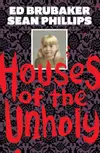
True Detective, this was not.
True Detective, this was not.


Added to listDisappointed :(with 22 books.


Mmm, yeah I dont know about this. From start to finish, something felt off about the author’s self-account. Something overtly aggrandizing and forcibly boss girl. My first point of question starting with how she doesn't explain why she goes by “Patric” despite being Patricia, leading me to assume it's a business tactic to evoke thoughts of Patrick Bateman. A majority of the book read to me as a privileged upper class White kid growing up and whining woe is me, but also always conveniently being the one to solve everything including her own diagnosis. Patric writes herself with extreme bias: being way too all-knowing of her situation, too caring of those around her, some kind of martyr for all sociopaths struggling in life, her being skilled enough to commit various crimes, and also lacking any struggle and difficulty when it comes to getting into UCLA or even on a lesser front, finding a therapist she trusts. Things went way too smooth, and a lot of it could possibly be from the fact that she had a wealthy upbringing and full support of a rich father during her university time, while also being conventionally good looking. I'd be far more curious of a similar idea for a biography coming from someone who did not have wealth, privilege, and social liberation.
Patric Gagne comes off to me as someone who is just anti-social, as there are various points of overlap between what she describes and what I feel about myself and one of my best friends. I'm of no position to diagnose her or myself, but a handful of moments just didn't line up and fit with this autobiography. Had she co-written this with a respected and well-known professional in the mental disorders field, ping-ponging between her memories and the professional’s insights, the book could've yielded a more well-rounded and accepted end result.
Mmm, yeah I dont know about this. From start to finish, something felt off about the author’s self-account. Something overtly aggrandizing and forcibly boss girl. My first point of question starting with how she doesn't explain why she goes by “Patric” despite being Patricia, leading me to assume it's a business tactic to evoke thoughts of Patrick Bateman. A majority of the book read to me as a privileged upper class White kid growing up and whining woe is me, but also always conveniently being the one to solve everything including her own diagnosis. Patric writes herself with extreme bias: being way too all-knowing of her situation, too caring of those around her, some kind of martyr for all sociopaths struggling in life, her being skilled enough to commit various crimes, and also lacking any struggle and difficulty when it comes to getting into UCLA or even on a lesser front, finding a therapist she trusts. Things went way too smooth, and a lot of it could possibly be from the fact that she had a wealthy upbringing and full support of a rich father during her university time, while also being conventionally good looking. I'd be far more curious of a similar idea for a biography coming from someone who did not have wealth, privilege, and social liberation.
Patric Gagne comes off to me as someone who is just anti-social, as there are various points of overlap between what she describes and what I feel about myself and one of my best friends. I'm of no position to diagnose her or myself, but a handful of moments just didn't line up and fit with this autobiography. Had she co-written this with a respected and well-known professional in the mental disorders field, ping-ponging between her memories and the professional’s insights, the book could've yielded a more well-rounded and accepted end result.