
Daren



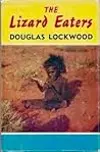
Douglas Lockwood was an Australian author and newspaper correspondent well known for his writing about Aboriginals. When he published this book, in 1964 he was the Darwin correspondent for he Melbourne Herald.
He was given the opportunity to accompany a patrol by the Welfare Branch of the Northern Territory Administration. The patrol was to travel along the Gun Barrell Road into the Gibson Desert to a point about 600 miles west of Alice Springs and about 200 miles over the Western Australia border. Ostensibly they were out seeking the nomadic Aboriginal people who were living in the most incredibly harsh conditions - they saw their role as a sort of rescue and introduction of the Aboriginals to white men.
Lockwood was fascinated by the possibility that there were Aboriginal families out there who had never seen or had contact with white men - there proved to be plenty. The name of the book comes from the fact there is little to hunt in the desert, and the Pintubi people survive primarily on a diet of lizards.
The patrol was led by Jeremy Long, accompanies by a cadet patrol officer, an American cine camera operator employed by the ABC, plus several other white men, and a number of Aboriginal trackers and interpreters, all established in three Landrovers, plus a fourth that was to accompany them briefly to get them established. In short time one of the Landrovers broke down and the temporary one left, meaning a redeployment of people as they were down a vehicle to begin with.
The whittled down patrol carried on, and Lockwood describes their journey, the hardships of the desert, the men, women and children they meet and introduce to damper, tea and tinned meat! IN this day and age it would not be the preferred method of engaging with tribes who have had no contact with 'civilisation', but it was 1960, and Lockwood is describing here what the Welfare Branch were tasked to do.
Lockwood does a good job of describing all around him, adding some history about previous desert explorers in this area, and about the creation of the Gun Barrell Road. The pastedown contains a basic map of the journey and within a generous number of black and white photographs.
A snapshot of time, of course dated by modern standards.
3 stars
Douglas Lockwood was an Australian author and newspaper correspondent well known for his writing about Aboriginals. When he published this book, in 1964 he was the Darwin correspondent for he Melbourne Herald.
He was given the opportunity to accompany a patrol by the Welfare Branch of the Northern Territory Administration. The patrol was to travel along the Gun Barrell Road into the Gibson Desert to a point about 600 miles west of Alice Springs and about 200 miles over the Western Australia border. Ostensibly they were out seeking the nomadic Aboriginal people who were living in the most incredibly harsh conditions - they saw their role as a sort of rescue and introduction of the Aboriginals to white men.
Lockwood was fascinated by the possibility that there were Aboriginal families out there who had never seen or had contact with white men - there proved to be plenty. The name of the book comes from the fact there is little to hunt in the desert, and the Pintubi people survive primarily on a diet of lizards.
The patrol was led by Jeremy Long, accompanies by a cadet patrol officer, an American cine camera operator employed by the ABC, plus several other white men, and a number of Aboriginal trackers and interpreters, all established in three Landrovers, plus a fourth that was to accompany them briefly to get them established. In short time one of the Landrovers broke down and the temporary one left, meaning a redeployment of people as they were down a vehicle to begin with.
The whittled down patrol carried on, and Lockwood describes their journey, the hardships of the desert, the men, women and children they meet and introduce to damper, tea and tinned meat! IN this day and age it would not be the preferred method of engaging with tribes who have had no contact with 'civilisation', but it was 1960, and Lockwood is describing here what the Welfare Branch were tasked to do.
Lockwood does a good job of describing all around him, adding some history about previous desert explorers in this area, and about the creation of the Gun Barrell Road. The pastedown contains a basic map of the journey and within a generous number of black and white photographs.
A snapshot of time, of course dated by modern standards.
3 stars


Until I read this book, I had not heard of Negley Farson. He is an American author and explorer who has published many books. Here he travels with Alexander Wicksteed, an eccentric Englishman who is domiciled in Moscow, living in a run down tenement with a 'rose-tinted glasses' view of Russia. Their journey takes them from Moscow to and through the Caucasus - the strategically vital, mountainous region between the Black and Caspian Seas, serving as a boundary between Europe and Asia. Primarily the journey takes place in Russian lands, although it crosses into Georgia for a time.
Most importantly, the journey takes place in 1929, (so some seven years after the formation of the USSR) but Farson wrote this book much later, publishing only in 1952. This means it is constantly written with knowledge of future events, to which the author refers or mentions. Interesting this largely consists of comments such as this example on P127:
A footnote to history may be added here: the Karachaites (population 150,000) sided with the German drive into the Caucasus, in 1942, in the Second World War. As a result their autonomous semi-republic was abolished, Georgia being given the major part of it; its population was deported to Siberia in 1944 - along with the entire Tchetchen, Balkar and Inguish tribes - and Utsch-Kalan is now called Klukhori, and belongs to the Georgian SSR. Another gift from Stalin to his own people; who, with these other fantastically freedom-loving tribesmen deported, have now become the master people of the Caucasus.
This was such a repetitive theme, where people were noted as having been all deported to Siberia.
I have to admit I found this slender book quite hard work for the first 50 pages. It was really a lot of scene setting, preparation, establishment, travelling from Moscow by train and riverboat and the horse riding journey took a long time to begin. Perhaps it is that I appreciated the wonderful mountain descriptions more that the rivers? There is a density to the text, and Farson tends to talk of events other than his journey - bringing a wide sweep of history into his narrative, but often confusing me - albeit I was probably not focusing as much as was necessary. Certainly after the horse journey began it became much more readable. There were interesting aspects all through, but there was a tendence to repetition that a constant journey often suffers from.
The following was a page of the book I found was a telling reflection.
P121
I take this from my notebook, just as most of this book is transposed from notes written by the light of campfires in the Caucasus. If, in the light of later events, it may seem a naive appreciation of the Communists, it at least has the veracity of being true to the time: no one, not even the leaders, could have foreseen the way the Kremlin, perhaps as an inevitable outcome of the police state, would abolish all liberties in the name of liberty. After a few days in Utsch-Kalan I wrote:
"When it comes to dealing with the inherent stupidity , the greed, and the shiftlessness of the average Russian peasant, I am on the side of the Communists. They are at least trying to show him the way to a better life; and if the peasant resists - like the stupid cow which just won't believe it is being led to better pasture - and the Communists appear brutal in their methods of forcing him, their intentions are unquestionably honest. If they are going to have the last word in this struggle, the peasant is going to progress - and it is refreshing to see what a handful of Russians are doing in Utsch-Kalan."
Here is the way fellow-travellers are made: for although those Russian instructors we met in the Kaachaite capital, most of them from Moscow, were almost unbearably arrogant, even infuriating with their assumption of having the answers to everything, they were all inspired by their cause. And this inspired anyone who watched them work. I have not the least doubt, even now, that the lower ranks of these Communists in the Caucasus, the 'workers in the field,' all believed that they were leading the mountaineers to a new and glorious life; a communal existence in which each person worked for the good of all, and in which - here is where the naivety came in - human nature was going to be reformed and all greed would vanish.
Farson's descriptive writing of the fantastic scenery is a highlight, and his wrapping in of Russian literature (albeit much unknown to me) seemed very astute and clever.
4 stars.
Until I read this book, I had not heard of Negley Farson. He is an American author and explorer who has published many books. Here he travels with Alexander Wicksteed, an eccentric Englishman who is domiciled in Moscow, living in a run down tenement with a 'rose-tinted glasses' view of Russia. Their journey takes them from Moscow to and through the Caucasus - the strategically vital, mountainous region between the Black and Caspian Seas, serving as a boundary between Europe and Asia. Primarily the journey takes place in Russian lands, although it crosses into Georgia for a time.
Most importantly, the journey takes place in 1929, (so some seven years after the formation of the USSR) but Farson wrote this book much later, publishing only in 1952. This means it is constantly written with knowledge of future events, to which the author refers or mentions. Interesting this largely consists of comments such as this example on P127:
A footnote to history may be added here: the Karachaites (population 150,000) sided with the German drive into the Caucasus, in 1942, in the Second World War. As a result their autonomous semi-republic was abolished, Georgia being given the major part of it; its population was deported to Siberia in 1944 - along with the entire Tchetchen, Balkar and Inguish tribes - and Utsch-Kalan is now called Klukhori, and belongs to the Georgian SSR. Another gift from Stalin to his own people; who, with these other fantastically freedom-loving tribesmen deported, have now become the master people of the Caucasus.
This was such a repetitive theme, where people were noted as having been all deported to Siberia.
I have to admit I found this slender book quite hard work for the first 50 pages. It was really a lot of scene setting, preparation, establishment, travelling from Moscow by train and riverboat and the horse riding journey took a long time to begin. Perhaps it is that I appreciated the wonderful mountain descriptions more that the rivers? There is a density to the text, and Farson tends to talk of events other than his journey - bringing a wide sweep of history into his narrative, but often confusing me - albeit I was probably not focusing as much as was necessary. Certainly after the horse journey began it became much more readable. There were interesting aspects all through, but there was a tendence to repetition that a constant journey often suffers from.
The following was a page of the book I found was a telling reflection.
P121
I take this from my notebook, just as most of this book is transposed from notes written by the light of campfires in the Caucasus. If, in the light of later events, it may seem a naive appreciation of the Communists, it at least has the veracity of being true to the time: no one, not even the leaders, could have foreseen the way the Kremlin, perhaps as an inevitable outcome of the police state, would abolish all liberties in the name of liberty. After a few days in Utsch-Kalan I wrote:
"When it comes to dealing with the inherent stupidity , the greed, and the shiftlessness of the average Russian peasant, I am on the side of the Communists. They are at least trying to show him the way to a better life; and if the peasant resists - like the stupid cow which just won't believe it is being led to better pasture - and the Communists appear brutal in their methods of forcing him, their intentions are unquestionably honest. If they are going to have the last word in this struggle, the peasant is going to progress - and it is refreshing to see what a handful of Russians are doing in Utsch-Kalan."
Here is the way fellow-travellers are made: for although those Russian instructors we met in the Kaachaite capital, most of them from Moscow, were almost unbearably arrogant, even infuriating with their assumption of having the answers to everything, they were all inspired by their cause. And this inspired anyone who watched them work. I have not the least doubt, even now, that the lower ranks of these Communists in the Caucasus, the 'workers in the field,' all believed that they were leading the mountaineers to a new and glorious life; a communal existence in which each person worked for the good of all, and in which - here is where the naivety came in - human nature was going to be reformed and all greed would vanish.
Farson's descriptive writing of the fantastic scenery is a highlight, and his wrapping in of Russian literature (albeit much unknown to me) seemed very astute and clever.
4 stars.

An Olaf Ruhen novel probably written with the youth reader in mind. It is pretty simple and tells the story of a young man setting off into the Australian bush to extend his knowledge.
Bobby is living with his brother, looking after his fathers farm - the father is not present, and being cared for in the city by another relative - details left vague, but it is obvious he is not coming back. The farm is small and not well sited to pay its own way. Bobby's brother has taken to branding cleanskins from the neighbouring property with his own brand and selling them to meet the costs. Bobby finds out by mistake, and the two argue, but Peter knows he is doing wrong.
They decide to hand over the deed to the farm to the neighbour to make good - they end up being offered employment, which Peter accepts. This sets Bobby on his way, with a horse and not much else.
The chapters after the setup are a series of short interactions Bobby has with different characters. The book is made up of short stories previously published in dividually in newspapers - a note at the front says they have been edited to bring them in to line.
I enjoyed this, despite it being written in a simple style. Bobby shares his stories of droving, horsemanship, there are rescues of people trapped by a flood, he helps people out who he comes across between droving jobs and describes various outback and cattle country of Australia.
3.5 stars.
An Olaf Ruhen novel probably written with the youth reader in mind. It is pretty simple and tells the story of a young man setting off into the Australian bush to extend his knowledge.
Bobby is living with his brother, looking after his fathers farm - the father is not present, and being cared for in the city by another relative - details left vague, but it is obvious he is not coming back. The farm is small and not well sited to pay its own way. Bobby's brother has taken to branding cleanskins from the neighbouring property with his own brand and selling them to meet the costs. Bobby finds out by mistake, and the two argue, but Peter knows he is doing wrong.
They decide to hand over the deed to the farm to the neighbour to make good - they end up being offered employment, which Peter accepts. This sets Bobby on his way, with a horse and not much else.
The chapters after the setup are a series of short interactions Bobby has with different characters. The book is made up of short stories previously published in dividually in newspapers - a note at the front says they have been edited to bring them in to line.
I enjoyed this, despite it being written in a simple style. Bobby shares his stories of droving, horsemanship, there are rescues of people trapped by a flood, he helps people out who he comes across between droving jobs and describes various outback and cattle country of Australia.
3.5 stars.
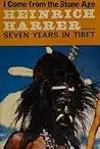
Heinrich Harrer is best known for his book Seven Years in Tibet, his friendship with the Dalai Lama, and his mountaineering book the White Spider. Here Harrer tells of his expeditions in the Dutch Papua (now West Papua, in the control of Indonesia). At the time of writing the other (eastern) half of the island was the Territory of Papua, administered by Australia after Germany was forced to give it up after World War II.
Harrer spent around 6 months there early in 1962, his efforts comprising three separate expeditions, all described in this book.
The first was an overland expedition to reach and then climb the highest mountain on Papua, the Carstensz Pyramid (4,884 m) later named Puncak Jaya. This was previously unclimbed, and they went on to climb a great number of other peaks, many snow-capped. He was joined on this expedition by Russell Kippax, an Australian whose role was expedition doctor; Bert Huizenga, a Dutch Patrol Officer and New Zealand mountaineer Philip Temple (a prolific author - I have read a number of his books).
The second was an overland expedition to the source of the stone axes - a quarry where the natives obtain their stone, the location of which they were very secretive about. Phil Temple continues on this section of the expedition too.
The third, which Harrer undertakes with Dutch geologist Gerard van der Wegen, is to travel through the Baliem Gorge, previously un-travelled by Europeans and through very hard jungle to the far coast of Papua where Michael Rockerfeller had recently disappeared in circumstances not clear at the time.
The three expeditions are well described by Harrer. There were no end of trials and tribulations on these journeys - personally he was injured very badly in a fall down a waterfall, very lucky to have survived, his perseverance admirable. Harrer mixes excellent description of the tribes people, anthropology (albeit probably amateur), great descriptions of the jungle, the rivers, the mountains.
The book includes some very good photographs (for the time) - some in colour and some in black and white, and plenty of maps of reasonable quality. There is no index in my edition (1965 Rupert Hart-Davis).
Harrer is a good observer, and comes across as very even handed with his description of the natives. The book title refers to stone-age people, but this is not intended to be derogatory, it is a fact that these tribes live the way our ancestors did twenty or thirty thousand years ago. Harrer treats all those who porter for him well (albeit that authority is maintained and men engaged to carry out a task must do so to be rewarded), but you can't help feel that the giving of steel axes, knives, beads and the like instigates a change to what Harrer finds so fascinating about them. He discusses this in the Epilogue a little, noting to these people the steel axe is a status symbol, but the tribes value their function no more than stone axes - the fact the work is carried out much faster is of little benefit to them - time is not a commodity in their lives like it is in ours.
I enjoyed Harrer's book. It reminded me I should re-read his Tibet books, which I read decades ago and have little recollection of (other than Brad Pitt's movie). For those looking for Harrer's mountaineering, this one is fairly light on that.
4.5 stars.
Heinrich Harrer is best known for his book Seven Years in Tibet, his friendship with the Dalai Lama, and his mountaineering book the White Spider. Here Harrer tells of his expeditions in the Dutch Papua (now West Papua, in the control of Indonesia). At the time of writing the other (eastern) half of the island was the Territory of Papua, administered by Australia after Germany was forced to give it up after World War II.
Harrer spent around 6 months there early in 1962, his efforts comprising three separate expeditions, all described in this book.
The first was an overland expedition to reach and then climb the highest mountain on Papua, the Carstensz Pyramid (4,884 m) later named Puncak Jaya. This was previously unclimbed, and they went on to climb a great number of other peaks, many snow-capped. He was joined on this expedition by Russell Kippax, an Australian whose role was expedition doctor; Bert Huizenga, a Dutch Patrol Officer and New Zealand mountaineer Philip Temple (a prolific author - I have read a number of his books).
The second was an overland expedition to the source of the stone axes - a quarry where the natives obtain their stone, the location of which they were very secretive about. Phil Temple continues on this section of the expedition too.
The third, which Harrer undertakes with Dutch geologist Gerard van der Wegen, is to travel through the Baliem Gorge, previously un-travelled by Europeans and through very hard jungle to the far coast of Papua where Michael Rockerfeller had recently disappeared in circumstances not clear at the time.
The three expeditions are well described by Harrer. There were no end of trials and tribulations on these journeys - personally he was injured very badly in a fall down a waterfall, very lucky to have survived, his perseverance admirable. Harrer mixes excellent description of the tribes people, anthropology (albeit probably amateur), great descriptions of the jungle, the rivers, the mountains.
The book includes some very good photographs (for the time) - some in colour and some in black and white, and plenty of maps of reasonable quality. There is no index in my edition (1965 Rupert Hart-Davis).
Harrer is a good observer, and comes across as very even handed with his description of the natives. The book title refers to stone-age people, but this is not intended to be derogatory, it is a fact that these tribes live the way our ancestors did twenty or thirty thousand years ago. Harrer treats all those who porter for him well (albeit that authority is maintained and men engaged to carry out a task must do so to be rewarded), but you can't help feel that the giving of steel axes, knives, beads and the like instigates a change to what Harrer finds so fascinating about them. He discusses this in the Epilogue a little, noting to these people the steel axe is a status symbol, but the tribes value their function no more than stone axes - the fact the work is carried out much faster is of little benefit to them - time is not a commodity in their lives like it is in ours.
I enjoyed Harrer's book. It reminded me I should re-read his Tibet books, which I read decades ago and have little recollection of (other than Brad Pitt's movie). For those looking for Harrer's mountaineering, this one is fairly light on that.
4.5 stars.
Added to listUsa Authorwith 569 books.


Added to listNon Fictionwith 2201 books.


Added to listOwnedwith 2818 books.


I am not familiar with this author, but when a GR friend read it recently it sounded intriguing, and I noticed almost everyone has read this, so thought I better get a copy and read it! Noted as a book for book lovers, and a charming story - it certainly lives up to both of those.
I don't intent to give much away - it is a slim book, read fairly easily in a handful of hours. This is a book of letters (fancy people would call it an epistolary story (of non fiction)), the majority of which are between the author and a man working in a bookstore.
The author, living in New York, sees an advertisement for a bookshop in London 'antiquarian booksellers' specialising in out-of-print books, so she writes in the hope of obtaining some reasonably priced books. This commences twenty years (from 1949 to 1969) of written communication between the shop employee and the author, cataloguing their interactions and conversations. It explains the books requested, the books provided and move steadily from a formal communication to warmer letters of authentic friendship.
There is much to like about this quick to read book. Referred to as a love-story - it is certainly a platonic love story, and those of us who are familiar with American and British sensibilities will have a chuckle at both the sassy script writer and the reserved bookseller.
4 stars
I am not familiar with this author, but when a GR friend read it recently it sounded intriguing, and I noticed almost everyone has read this, so thought I better get a copy and read it! Noted as a book for book lovers, and a charming story - it certainly lives up to both of those.
I don't intent to give much away - it is a slim book, read fairly easily in a handful of hours. This is a book of letters (fancy people would call it an epistolary story (of non fiction)), the majority of which are between the author and a man working in a bookstore.
The author, living in New York, sees an advertisement for a bookshop in London 'antiquarian booksellers' specialising in out-of-print books, so she writes in the hope of obtaining some reasonably priced books. This commences twenty years (from 1949 to 1969) of written communication between the shop employee and the author, cataloguing their interactions and conversations. It explains the books requested, the books provided and move steadily from a formal communication to warmer letters of authentic friendship.
There is much to like about this quick to read book. Referred to as a love-story - it is certainly a platonic love story, and those of us who are familiar with American and British sensibilities will have a chuckle at both the sassy script writer and the reserved bookseller.
4 stars




This is a slender book, containing two stand alone novella, published in 1964.
The titular story The Flier rolls out the story of Cat Fallon, a rough pilot who flies a battered old Mustang, and by surprise inherits an airfield and all the commercial developments around it from an old army buddy he hasn't heard from for years - who died in an accident when he flew into a storm. Fallon has a feeling it wasn't an accident, and Tucker was wrapped up in something he had covered up pretty well.
This period, of course, was all about the communist risk and Cuba, being in he middle of the Cold War era and so the story wraps around that. In typical Spillane style there are two dames who feature heavily in the storyline, so there is plenty of sauciness and macho attitude on show.
This was an ok story with some plot turns obvious and some not so.
3 stars for this story.
The second The Seven Year Kill was not so good. This featured Phil Rocca, a newspaper reporter who had taken on the mob and been framed up, a young go getter who prosecuted the case to make DA and didn't look too hard. This was all a few years ago, and Rocca was quietly drinking himself to death, when a chance situation opened up an opportunity to get some revenge on the mobster who set him up, and everyone thought was dead.
In this novella Rocca plays a tough-guy, beating up on Mob heavies and taking plenty of hidings - it didn't work very well for me. Tough guy reporters? There were also some really obvious plot twists and the place the evidence has been hidden, which was the race sequence near the end of the story, was hidden in plain sight, pretty obvious to the reader, so was a bit of a flop.
There was still a Spillane damsel in distress, so that wasn't missing from the plot.
Probably one of the worst of Spillane's stories that I have read.
2 stars.
I almost always give Spillane books three stars, the second was definitely weak, but the first was ok.
This is a slender book, containing two stand alone novella, published in 1964.
The titular story The Flier rolls out the story of Cat Fallon, a rough pilot who flies a battered old Mustang, and by surprise inherits an airfield and all the commercial developments around it from an old army buddy he hasn't heard from for years - who died in an accident when he flew into a storm. Fallon has a feeling it wasn't an accident, and Tucker was wrapped up in something he had covered up pretty well.
This period, of course, was all about the communist risk and Cuba, being in he middle of the Cold War era and so the story wraps around that. In typical Spillane style there are two dames who feature heavily in the storyline, so there is plenty of sauciness and macho attitude on show.
This was an ok story with some plot turns obvious and some not so.
3 stars for this story.
The second The Seven Year Kill was not so good. This featured Phil Rocca, a newspaper reporter who had taken on the mob and been framed up, a young go getter who prosecuted the case to make DA and didn't look too hard. This was all a few years ago, and Rocca was quietly drinking himself to death, when a chance situation opened up an opportunity to get some revenge on the mobster who set him up, and everyone thought was dead.
In this novella Rocca plays a tough-guy, beating up on Mob heavies and taking plenty of hidings - it didn't work very well for me. Tough guy reporters? There were also some really obvious plot twists and the place the evidence has been hidden, which was the race sequence near the end of the story, was hidden in plain sight, pretty obvious to the reader, so was a bit of a flop.
There was still a Spillane damsel in distress, so that wasn't missing from the plot.
Probably one of the worst of Spillane's stories that I have read.
2 stars.
I almost always give Spillane books three stars, the second was definitely weak, but the first was ok.

Published in 1940, this book runs in two parts, both covering Freya Stark's time in Yemen from November 1937.
After a brief introduction to explain her return (Stark had been in Hadhramaut in 1934 in what is now Yemen - a journey that ended in her illness and evacuation), then Stark provides a diary covering about four months spent settled in Hadhramaut. She settled with two other women - a geologist and an archaeologist, Stark is an unofficial accompaniment to them, although it is obvious she is more benefit to the British rule (Aden was a part of British India until 1937 when it became a British Protectorate) in terms of building relationships and her ability to explain some of the decisions the British made.
While her diary is fairly repetitive, it explains her everyday interactions and makes fascinating reading. Stark builds relationships with a whole range of people from high officials to her servants to the ragtag children. She is very even handed - those who treat her well are likewise treated - those seek to take advantage, are rude, or break their word are given short shift. Mixed in with her daily observations and interactions are commentary on some of the work undertaken by the other two women of the house; the three of them having quite an impact on Arab and Bedouin society at this time. Amongst other challenges throughout their time, each of the three women are troubled by illness during their time in the village, often coming down with fevers, Malaria is a risk, as are all forms of food poisoning for which European and local remedies are sought.
Stark keeps it amusing with her sometimes dry sense of humour.
P29
No one in their senses would say, 'I have spent ten years in holland and therefore I know all about Bulgaria'; but it is a fact that seven people out of ten will assume that a visit to Morocco opens out the secrets of Samarkand. The East is just East in their mind, a homogenous lump, and I take it the fault lies with the printers of maps, who give to almost every state in Europe a page to itself, while they separate the infinite variety of Asia only by faint lines of pink and green and yellow.
P58
"You will like it" said Husain. "There will be horse racing. You should have been here last year, for there were three horses, but now two have died."
"Then who does the racing?" said I.
"The one that is left," said Husain, evidently surprised as so evident a question.
At a point around two thirds of the way through the book, the three women all move on, albeit in different directions. Stark elects to hire camels and make the journey to the coast, and the book takes a more standard travel book format where some of the daily repetition falls away.
I always enjoy reading Freya Stark. She is intelligent, a good person, is a good judge of character & fairness and has a good sense of humour. She writes well - not always very fast paced or action filled, but always interesting.
4 stars
Published in 1940, this book runs in two parts, both covering Freya Stark's time in Yemen from November 1937.
After a brief introduction to explain her return (Stark had been in Hadhramaut in 1934 in what is now Yemen - a journey that ended in her illness and evacuation), then Stark provides a diary covering about four months spent settled in Hadhramaut. She settled with two other women - a geologist and an archaeologist, Stark is an unofficial accompaniment to them, although it is obvious she is more benefit to the British rule (Aden was a part of British India until 1937 when it became a British Protectorate) in terms of building relationships and her ability to explain some of the decisions the British made.
While her diary is fairly repetitive, it explains her everyday interactions and makes fascinating reading. Stark builds relationships with a whole range of people from high officials to her servants to the ragtag children. She is very even handed - those who treat her well are likewise treated - those seek to take advantage, are rude, or break their word are given short shift. Mixed in with her daily observations and interactions are commentary on some of the work undertaken by the other two women of the house; the three of them having quite an impact on Arab and Bedouin society at this time. Amongst other challenges throughout their time, each of the three women are troubled by illness during their time in the village, often coming down with fevers, Malaria is a risk, as are all forms of food poisoning for which European and local remedies are sought.
Stark keeps it amusing with her sometimes dry sense of humour.
P29
No one in their senses would say, 'I have spent ten years in holland and therefore I know all about Bulgaria'; but it is a fact that seven people out of ten will assume that a visit to Morocco opens out the secrets of Samarkand. The East is just East in their mind, a homogenous lump, and I take it the fault lies with the printers of maps, who give to almost every state in Europe a page to itself, while they separate the infinite variety of Asia only by faint lines of pink and green and yellow.
P58
"You will like it" said Husain. "There will be horse racing. You should have been here last year, for there were three horses, but now two have died."
"Then who does the racing?" said I.
"The one that is left," said Husain, evidently surprised as so evident a question.
At a point around two thirds of the way through the book, the three women all move on, albeit in different directions. Stark elects to hire camels and make the journey to the coast, and the book takes a more standard travel book format where some of the daily repetition falls away.
I always enjoy reading Freya Stark. She is intelligent, a good person, is a good judge of character & fairness and has a good sense of humour. She writes well - not always very fast paced or action filled, but always interesting.
4 stars