
Josh


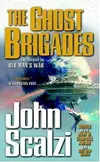
For the most part it has the same strengths as the first book with the exception of a reduction in humour. I also though Dirac's personal journey was fairly compelling and it expands the setting in a way I'm interested in seeing unfold.
It also maintains the criticisms I had with the first book though with the thin supporting cast and lack of emotional weight. That coupled with the reduction in humour means while I enjoyed it, I didn't enjoy it as much as the first book.
3.75 Ghosts out of 5.
For the most part it has the same strengths as the first book with the exception of a reduction in humour. I also though Dirac's personal journey was fairly compelling and it expands the setting in a way I'm interested in seeing unfold.
It also maintains the criticisms I had with the first book though with the thin supporting cast and lack of emotional weight. That coupled with the reduction in humour means while I enjoyed it, I didn't enjoy it as much as the first book.
3.75 Ghosts out of 5.


Added to listClassicswith 6 books.


As someone who loves military sci-fi this hit a lot of things I look for in the genre. The story gets moving quickly with good pacing and Scalzi does a great job making the world and technology easy to follow without drowning the reader in dense hard sci-fi expositions. I ended up reading the entire thing in about 24 hours because it just kept me turning the pages and I didn't want to put it down.
The biggest strength is easily the humour. The style is right in my wheelhouse with sarcastic banter, witty dialogue, and even some excellent deadpan humour throughout the entire story. Even in the middle of a war story (and part love story really) the characters feel fun to spend time with. I also appreciated that it never felt like it was trying to preach a particular viewpoint as military sci-fi often can. I greatly enjoyed the premise as well which I thought added some nice flair.
It's not a 5 star book for me though unfortunately. I didn't find the emotional weight often landed. Characters die, sometimes in significant ways, but the story rarely slows down to really explore the impact those losses have. Speaking of characters, while they aren't one dimensional, outside of John and Jane to some extent, I didn't find many of the supporting characters particularly deep or memorable outside their humour.
The other thing that held it back for me is purely a matter of personal preference. My favourite military sci-fi tends to balance light and dark. The humour alongside the overwhelming scale, danger, and horror of war. This book absolutely delivers on the humour, but I wanted more moments where the characters and myself as the reader really felt the enormity and terror of what they were facing before the humour cut through.
That said while it may not have had the atmosphere or emotional depth I personally look for, it was funny, fast paced and a genuinely enjoyable read.
4.5 Old Farts out of 5
As someone who loves military sci-fi this hit a lot of things I look for in the genre. The story gets moving quickly with good pacing and Scalzi does a great job making the world and technology easy to follow without drowning the reader in dense hard sci-fi expositions. I ended up reading the entire thing in about 24 hours because it just kept me turning the pages and I didn't want to put it down.
The biggest strength is easily the humour. The style is right in my wheelhouse with sarcastic banter, witty dialogue, and even some excellent deadpan humour throughout the entire story. Even in the middle of a war story (and part love story really) the characters feel fun to spend time with. I also appreciated that it never felt like it was trying to preach a particular viewpoint as military sci-fi often can. I greatly enjoyed the premise as well which I thought added some nice flair.
It's not a 5 star book for me though unfortunately. I didn't find the emotional weight often landed. Characters die, sometimes in significant ways, but the story rarely slows down to really explore the impact those losses have. Speaking of characters, while they aren't one dimensional, outside of John and Jane to some extent, I didn't find many of the supporting characters particularly deep or memorable outside their humour.
The other thing that held it back for me is purely a matter of personal preference. My favourite military sci-fi tends to balance light and dark. The humour alongside the overwhelming scale, danger, and horror of war. This book absolutely delivers on the humour, but I wanted more moments where the characters and myself as the reader really felt the enormity and terror of what they were facing before the humour cut through.
That said while it may not have had the atmosphere or emotional depth I personally look for, it was funny, fast paced and a genuinely enjoyable read.
4.5 Old Farts out of 5


It took me a long time to settle into this book and for much of the first half I wasn't sure it was going to click with me. A large part of that comes from its structure. Chapters are only a few pages long and constantly rotate between a dozen characters give or take, so it took time to become invested in anyone's story. The narration also didn't work well for me. While the novel is set in a rural Wisconsin farming community, the characters' inner thoughts are conveyed in a literary voice that felt at odds with the setting.
I also found many of the major conflicts resolved with surprising ease. Individually they were believable enough, but together they gave off an almost idyllic sense that life's biggest problems simply work themselves out.
Where the novel excels though is in its people. Nuanced, believable characters whose strengths and flaws feel authentically human. The portrayal of life in a small agricultural community is equally as compelling and feels lived in rather than romanticised.
Overall, I'm glad I read it. Its structure and tidy resolutions kept me from fully connecting with it, but it's characters and portrayal of ordinary rural life made it a worthwhile read.
3.5 peonies out of 5
It took me a long time to settle into this book and for much of the first half I wasn't sure it was going to click with me. A large part of that comes from its structure. Chapters are only a few pages long and constantly rotate between a dozen characters give or take, so it took time to become invested in anyone's story. The narration also didn't work well for me. While the novel is set in a rural Wisconsin farming community, the characters' inner thoughts are conveyed in a literary voice that felt at odds with the setting.
I also found many of the major conflicts resolved with surprising ease. Individually they were believable enough, but together they gave off an almost idyllic sense that life's biggest problems simply work themselves out.
Where the novel excels though is in its people. Nuanced, believable characters whose strengths and flaws feel authentically human. The portrayal of life in a small agricultural community is equally as compelling and feels lived in rather than romanticised.
Overall, I'm glad I read it. Its structure and tidy resolutions kept me from fully connecting with it, but it's characters and portrayal of ordinary rural life made it a worthwhile read.
3.5 peonies out of 5



This was my first audiobook (at least completed one) and I enjoyed it. I've always though Obama was a good orator and that plays well into narration with a clear, study voice and a natural cadence that is easy to listen to. Easy, but also very very long. 29 hours in fact, because he has a lot to say, often isn't concise in saying it, and can be prone to side tangents. I can relate with all that given that I'm much the same, but even with that there were definitely some instances where I was thinking "my man, get to the point".
For the content itself, it's interesting to get a glimpse behind the curtain and see the realities of governing. Seeing how decisions are made, the competing pressure involved, and the day to day responsibilities of the office. It is very much though an interpretation of his presidency by himself. That's not a criticism so much as the nature of an autobiography, but worth keeping in mind. It's not a neutral history, but an explanation and defense of decisions that were made, some of which are much less compelling than others or glossed over almost entirely.
It is also very, let's call it statesmanlike. You don't always get Obama's raw thoughts or personal reactions to events, but rather the measured perspective of a president looking back and explaining how things unfolded. While I can understand why he'd go that route, I did find it a little disappointing. All in all though I'd recommend it to anyone interested in modern American politics. 3.75 tangents out of 5
This was my first audiobook (at least completed one) and I enjoyed it. I've always though Obama was a good orator and that plays well into narration with a clear, study voice and a natural cadence that is easy to listen to. Easy, but also very very long. 29 hours in fact, because he has a lot to say, often isn't concise in saying it, and can be prone to side tangents. I can relate with all that given that I'm much the same, but even with that there were definitely some instances where I was thinking "my man, get to the point".
For the content itself, it's interesting to get a glimpse behind the curtain and see the realities of governing. Seeing how decisions are made, the competing pressure involved, and the day to day responsibilities of the office. It is very much though an interpretation of his presidency by himself. That's not a criticism so much as the nature of an autobiography, but worth keeping in mind. It's not a neutral history, but an explanation and defense of decisions that were made, some of which are much less compelling than others or glossed over almost entirely.
It is also very, let's call it statesmanlike. You don't always get Obama's raw thoughts or personal reactions to events, but rather the measured perspective of a president looking back and explaining how things unfolded. While I can understand why he'd go that route, I did find it a little disappointing. All in all though I'd recommend it to anyone interested in modern American politics. 3.75 tangents out of 5


