
Beth Tabler


There once was a girl that lived in a deep and damp and dark celler...
Caroll has crafted another beautifully atmospheric and decadent novel that skirts the line of horror and the gothic. A curious and courageous cat-eared girl braves the castle of a vampiric countess with plans to destroy her. Plans change and go pear-shaped when the strange catgirl instead finds that the countess is waiting for her. Soon, the girl is sent into a maze of tragic fairy tales and stories that she must claw her way through holding as best she can on to her purpose and sanity. The tales trapped behind red doors, the house, countess, and her; all is not what it seems.
This story is a rich work that you need to read a few times to get all the meanings. It is beautifully executed, much is conveyed in the simple palette of three colors; bone white, black, and blood red. It is gothic; ornate when it needs to be and simple when it doesn't. The backgrounds are simple with repeating patterns, but still very useful. It is a hauntingly scary work for a short graphic novella much in the style of her other novels (Out of Skin, Through The Woods) and shouldn't be missed.


Nothing gory or shocking about the pictures, not a drop of blood, but the animals were dead. One charcoal sketch depicted a pair of rabbits and some kind of bird on their backs, eyes shut, a hunter's fresh catch. Another captured a single spread-winged pheasant, neck bent in eternal slumber.
Would you like a story that has ghosts, witches ghouls – and a crime noir style plot with an intrepid reporter. Have I got the story for you.
Ghosts of Gotham is about Lionel Page, referred to as little lion occasionally, a thirty-something investigative journalist. Lionel is given an investigation by a mysterious woman, Regina Dunkle. Is she just a wealthy reclusive heiress with a fascination for all things old or is she more? What follows is a well-written adventure into the world of antiques, the Poe Manuscript, mythology, and lore. Instead of going the way of some crime books, with a “who done it?” Schaffer has involved all sorts of creatures of myth and lore that are dealt out to you slowly like receiving cards while playing poker. He expertly and slowing brings the “things that go bump in the night” into the narrative that by the end of it you realize had you followed the clues the whole story you would have realized they were there all along waiting for you in the wings.
These days I prefer to interact with humanity through books, as exclusively as possible. The pages, the type, they're like...the glass walls of a zoo enclosure. I can watch the wild animals all evening long, safe on my side of the window.
I haven't read any of Schaffer's books, something I plan on rectifying, but I found this book to be a very well formed story. Plot and pacing were perfect for me, the dialog was some of the best I have read, and it was simply a very fun read. The story could go on to more in a series or be an excellent stand-alone story and a great place to start reading his work. This story was a great introduction to me of Schaffers works, and I am looking forward to diving into his other series. Check it out.


Thank you to Netgalley and the publisher for providing me with a copy of this in exchange for my honest review.
How is food processed? What is processed food? Reading this you learn that pretty much everything is one way or another. Temple does thoughtful deep dives on things like micronutrients, salt, fat, and the British diet. She dives into staples like cheese and bread which are thoughtful and interesting. I love learning about things like this. I was a fan of this book and although at times it could be a bit dry, the material is well presented.


Cryptofauna is a crazy batshit insane book. But in a good way. It is almost impossible to describe the plot to you, and If I even tried you would look at me like I lost my damn mind. Imagine writing a bunch of randomly selected nouns on papers, tossing them in a hat and producing a great story out of them. That is what Patrick Canning did.
Nouns include a Job at an insane asylum, cilantro, a bag of ash, the color blue, a dog, a Belgian, being marooned, leprous long living French monks, a body press made of mint, and shape-shifting animals.
That is just the start. It is a fantastically strange book where you completely fall in love with the characters and cheer Jim and his cohorts on in the grand competition. You want Jim to win, and you want to keep reading to see what else Canning can pull out of a hat. It is a great adventure, well worth checking out. You will not believe the Hitchhikers Guide to The Galaxy/Alice in Wonderland type journey the author will take you on. Give it a try.


Thank you to the author and Netgalley for providing me with a copy of this in exchange for my open and honest review.
I am very taken by this story. Distilled down, this is a story of boy meets girl. However, it is so much more than that. The premise follows two characters who are in the autumn of their lives. The first is Ulysses. He is in his sixties and has just recently been forcibly retired. The once very active Ulysses is now at a loss about how to move on with his life. Mediterranea recently lost her mother after being her sole caretaker for the last nine months. Mediterranea runs a cheese store inherited from her father, again she is at a bit of a loss in knowing what to do at this point in her life. At a chance encounter at Ulysses sons OB/GYN office, the two of them spark a romance. The writing about romance is so on point. It isn't forced and hackneyed. It is sweet with heat. Chemistry bubbles between them. It feels like a fresh and real love affair. Love that can blossom in the Autumn of their lives.
Graphically this is fantastic. The panels have a misty quality to them, and the characters are drawn well. The art is enough to make me want to read more of this authors work.
It is a life-affirming and wonderful love story that has a great twist of an ending and should be read. You don't come by comics like this often.


Laura and the Shadow King was a strange read for me. It is a book that straddles many different genres without sticking a full toe into any of them. For me, that can be good and interested or leave me feeling unanchored as a reader. I think in this situation, it was a bit of the later rather than the former.
The world that Soares creates is a world reeling from a devastating outbreak that leaves countries and governments in ruins. It has also left most of the population a sort of zombie type creature. Alive, but full of incredible aggression with an infectious bite. The apocalypse is all background and setting for what the real narrative is, that of JJ Berger. the leader of a military outfit called Shadow Troop and a woman named Maria. Maria is a woman determined to save her young daughter from the Russian mafia that has taken control of them. The story is shifting perspectives between these two individuals as their lives, as their destinies slowly become intertwined. I think the issue I had with the story was the military jargon. Soares did an excellent job with the dialog. The character's personalities are clear and concise; it felt like hearing actual conversations between individuals rather than what we think a discussion should sound like. But the amount of military jargon juxtaposed against maria's chapters kept knocking me out of the story. At times I found the dialog difficult to parse and keep up with.
I do, however, recommend this story if you are a fan of military fiction type stories interspersed with a bit of apocalypse and fantasy elements. It is well written and interesting but left me cold.


I very much wanted to like this story. The artwork is well done, and the narrative is inviting and interesting. But, I could not get past the impossibilities behind the science. That might just be me. If they would have addressed any of the science things: oceans, oxygen, plants, animals, anything it would have been a better story for me.
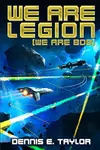


Oh my heavens. Bob. Bob might be my spirit animal. You will have to pardon me if I am late for the Bobverse party. This story has been on my TBR forever, but a good friend recommended this as a palette cleanser from all the heavy reading I have been doing lately, I bumped it up. It was the perfect bit of science fiction fun I needed to reset myself. Even better, I downloaded the audible version of this story and listened to it in tandem with reading the book. I am so glad I did. The voice acting rivals Hitchhikers Guide to the Galaxy for how much it laughed. I am a connoisseur of the snark.
The story follows Bob Johansson as he is reveling in selling his tech company and be set up for life. What does he do with his newfound wealth? He signs a contract to have his head cryogenically frozen. It sounds like a stretch, but the author Dennis E. Taylor made it work. He sells the idea. Bob is at once a like-able character. He and his employees, whom he treats as a family, are sitting around laughing and showing support for Bob who just got out of a bad breakup. He mentions the cryogenics thing, and everyone laughs. As they should, it seems like such an absurd thing to do. Later, Bob is crossing the street and bam! Bob gets hit by a car and instantly killed. He wakes up disoriented, looking for his body. Bob's conscience has been turned into software and downloaded into a computer!
What follows is light science fiction fun. It involves enemies from other countries, duplication, 3D printing, colonization, and the human race. I laughed out loud many times reading this. Especially with the voice acting from the audiobook. This story lends itself to different voices. There are many, many Bob's by the end of it. You need to be able to differentiate easily, and even though the writing does help with the differentiation, voice changes from the audiobook speaker help a lot.
My only quibble with this story is it is a bit fragmented. There are so many Bob's and all their adventures that it can be hard to keep up with who is who and who is doing what. But this small quibble and did not keep me from enjoying the book, far from it. Check this story of the many Bob's for they are Legion and are coming to save the universe.


Thank you to netgalley and the publisher for providing me with a copy of this story in exchange for my open and honest review.
I loved this story. Mafia meets magic. The story begins with a man in the street under the influence of a necromantic drug that allows you to see or live the life of the dead body the drug is made out of. The drugs are created with different purposes, so the family needs different bodies with a different background to make them. The story is dark and gloomy, albeit a typical story arc. Family with a heart of gold has a tragedy, strikes revenge, sniffs the charred remains of their enemies as they are driven before them, and tacos. Just kidding, no tacos.
This is a winner of a book, good story, great art, interesting and inventive take on mafia families. Check it out.


Thank you to Netgalley and the publisher for providing me with a copy of this title in exchange for my open and honest review.
This is a solid midgrade graphic novel. I wanted to like it, the premise was interesting but the execution of character, dialog, and setting was jumpy and spotty. At places, the pacing of the story seemed over-rushed while in others it crawled by. The graphics felt distracting in oversaturated colors that did nothing to further the plot. In the end, there was little in the way of ending of this particular story arc. It ended up not being the comic for me.


Author, Kristin Ward did a remarkable thing with the story. She took the environmental disaster story that is very common right now due to all the concerns about climate change and made it fresh. No small feat. Ward gives us a glimpse into a very possible environmentally destroyed world that is a bit harrowing when you think that something like this could be right around the corner.
The story is about a character named Enora. She is an 18-year-old high school student when we first start this novel. Much of her education is created and run by an organization called DMC, a company that controls water and water allocation and by extension the fate of the citizens of the US. The DMC controls the future of every citizen including their profession and how they contribute to the community. Any deviation from class or societal rules is met with harsh and quick punishment. There is a lot of information to be taken in, in short order. How society works, why society has crumbled and risen the way it has. How Enora and her family fit into the niche of society the way they do. Once you get past all the back story, the pace slows down a bit and Ward works on showing you the kind of person Enora is. Scared and confused, sure. But Enora has a strong core of strength that gets more apparent as the story moves towards its denouement. My only complaint about it is the way the story ended. The story abruptly stopped when it felt like it just was getting started. I wanted more to be a part of this book, at least something that could be considered a turning point of climax. That being said, it is a very well written story with a lot of promise. I look forward to jumping into book two and seeing how Enora's journey pans out.


I received this as an eARC from Netgalley and the publisher Archaia in exchange for my open and honest review.
We all have that moment where we are storm-tossed and sheltering in a proverbial dingy clinging for safety. A moment where we look upon the future, and it seems like nothing more than waves crashing against the boat. Miscarriage, but really infertility in general, is one of those things that can toss you among the crashing waves and cause you to have to find your way back home. It is damaging, brutal, heart wrenching and prompts you to question everything you have ever held dear. It is also one of those things that are rarely discussed but affects so many. In Ingrid Chabbert graphic novel, Waves” she speaks of the before, during, and after of miscarriage and heartbreak after suffering miscarriage. It is poignant and painful, and she broke my heart as she stood in her little boat and faced a future among the crashing ways after a miscarriage. She is fierce in the most real sense of the world, and she broke my damn heart...
This story is a true story of Ingrid Chabbert and her partner's struggle with infertility, pregnancy, and miscarriage and then the struggle back to the light of life afterward. Anyone at all who has dealt with infertility can tell you how devastating it can be on every aspect of your life. Pregnancy is everywhere from the woman at the grocery store to adds on TV. It is such an important book to write and create because no one wants to talk candidly about it. With pregnancy rates as they are 1 in 10 women are infertile or have problems staying pregnant. This is such a real struggle, and that is 6 million women out there that have to contend with this every day.
No one wants to tell stories like this; it is as if our collective culture thinks something like infertility is a catchable disease like cooties or chicken pox. But Chabbert does, and she tells it beautifully. Not only is it a gripping and emotional read, but it is also beautifully rendered by Carole Maurel. Each page is done in a kaleidoscope of soft and beautiful colors and the images Maurel created of Chabbert being lost among the sea's waves are so right and so real.
Readers and people appreciative of graphic novels should read this. She put her heart out there and her journey with this story, and this is an incredible work of art.


I received a digital edition of this from the publisher as well as a copy from Netgalley. Thank you to both of them for giving me the opportunity to review this in exchange for my open and honest review.
This story isn't Firefly, and it isn't trying to be. But it has bits and pieces of what made Firefly so beloved. This story is a straight-up space opera complete with quipping protagonist and smart and scheming “second in command”(he isn't second yet – but you get the vibe). I love stories like this. Space opera is the guilty pleasure of the sci/fi loving crowd. Action, sex, humor, and excitement all rolled into a little sci/fi package. If Space Opera were a food, it would be a glazed donut.
Who the hell doesn't like a glazed donut?
At least that is how I think about it. It doesn't mean that space opera doesn't have literary value or merit, quite the opposite. Star Wars is a space opera and where would we be without that. It just a genre type like anything else.
There are a few things (according to Wikipedia) that define what a space opera is. I am going to relate a few of them to Vagrant Queen.
“Colorful” – This story is colorful, both in dialog and commentary as well as the cast of characters. Multi-humanoid races are represented as well a smattering of alien races. It all makes for a rich stew of characters.
“Dramatic” – “Former child queen Elida was driven from her throne at age ten and forced to wander the galaxy, evading the revolutionary forces that wanted her dead.” Does this not sound like high drama to you?
“Large-scale science fiction adventure” – Again, multi-planet conquests spanning an entire generation searching for child queen Elida.
“Competently and sometimes beautifully written” – This written well. I enjoyed Elida quite a bit. She had a definite Han Solo/Malcolm Reynolds vibe to her. Being that I am a ride or die Firefly fan, this appealed to me.
“Usually focused on a sympathetic, heroic central character and plot action” – Elida is a sympathetic character without appearing weak. She can't be weak; everyone is coming to get her. She needs to be wily, strong and intelligent – and she is. It is such a refreshing thing to see in graphic novels. Elida needs no one to save her; she can save her damn self.
“Characteristically optimistic in tone” – This isn't a dystopia. The narrative of the story is not about the overarching problems of society and how they relate to Elida. It is about how Elida is going to escape past gunships that are blocking her way.
“Large stakes” – Elida is a former child queen being chased across the galaxy. The stakes are high.
See you should read this! Action, adventure, power struggles, history, it is all here. Is it perfect? Not yet. The story just started, and the writing and art are getting their proverbial feet under them. But it has a ton of promise.


I received an eARC of this novel from Netgalley and Thomas Nelson Publishing in exchange for my open and honest review.
“Rhen Tellus opened it simply to see if she could scrape off the ink and derive which substances it's been created from. Using her father's strangely fashioned microscope. Which is how she discovered that this time the lettering was created from two types of resin, a binding paste, gold flecks, and a drop of something that smelled quite remarkably like magic.”
To Best the Boys is a lot of great and grand things. It is surprising, exciting, sad, bittersweet, and most of all remarkable. Mary Weber wrote a noteworthy book. It is a YA dipped in light fantasy without coming off as silly or unsophisticated, a rare feat nowadays. I cheered Rhen, she is a hero that young and teenage girls can look up to. Who says that women can't be excellent at science and math? Who says they can't look at dead bodies and not squeal. Rhen can! Rhen is the person capable of doing the saving, and if you listen to her, respect her opinion, she might help you out along the way and be your savior instead.
Rhen is a woman in her late teens trapped in her families financial situation. They dare to be working class people. Rhen's parents, her mother born an Upper and her father born a lesser, fell in love and married against her mother's families wishes. Rhen's family has been shunned by her mother's side her entire life. But, in a city built on familial connections, Rhen has been associating with her Aunt and cousin Seleni most of her life. In a bid to help her out of the Lesser social class. Rhen is a bit of a prodigy in math and sciences, and along with her father work tirelessly to find a cure to whatever is ailing the poorer classes in her port town. Those affected include Rhen's mother. Here is the impetus of the story. Rhen must work tirelessly to find a cure, but Rhen is a woman and therefore not worthy of having her opinions heard. She is stuck in a catch-22 unless she can change the social equation. Each year a wealthy aristocrat and inventor holds a contest of magical and mathematical tests.
“All gentlepersons of university age (respectively seventeen to nineteen) are cordially invited to test for the esteemed annual scholarship given by Mr. Holm toward one full-ride fellowship at Stemwick Men's University. Aptitude contenders will appear at nine o'clock in front of Holm's Castle entrance above the seaside town of Pinsbury Port on the evening of 22 September, during the festival of the Autumnal Equinox.”
If Rhen can win the tests, she can gain access to the education that is necessary to help her friends, family, and people of Pinsbury Port fight off this spreading disease. She has the need and drive to succeed in this. What she faces as a contestant is fantastical creatures, science, math, and logic puzzles. As well as other contestants conspiring against her. You know she can do this, but Weber affectively amps up the suspense of the story until the reader is on proverbial pins and needles.
How does this story mimic our world today?
Although we live in a reasonably forward-thinking world, generally speaking, little girls face the same challenges of sexism when it comes to STEM(science, technology, engineering, math). Woman are still considered too illogical by some to be analytical enough to be a scientist. There are still real sociological and environmental barriers that girls need to overcome to become immersed in STEM. This story echoes that. Rhen is a woman continually being told that she does not have the mind and attitude for male-dominated STEM subjects.
Different men in Rhen's Life
A quality I appreciated in this story was how men were depicted. Men are just as varied in personality, intelligence and spirit as women are. The author could have gone the route of stereotyping the male characters, but she didn't. There was no type-casting for characters. Each of the players in this story has an individual mind and personality that mimics the variances in actual culture.
Political opinions and class warfare
Rhen comes from a poorer class, and although it is a peripheral plot point, Rhen's working-class neighbors and friends have to deal with out of touch upper-class people thinking they know what is best for them. Those decisions cause a significant calamity for the working middle class and poor people of this village. It is an important vignette that mirrors political and social change taking place in our world even as we speak.
What I did not like
There is very little not to like with this story. My only slight complaint was that I felt like maybe there were one too many ideas in the plot. The plotline with the town's fisherman seemed just a little much. Maybe that plotline would have been better seen in book 2.
Should you read this?
Absolutely. I cannot stress this enough, I loved this book. It is exceptionally well written, the plot is interesting, the characters are cheer-worthy. The message is one that can resonate with young girls, and when you get to the end, the reader feels empowered. You want to do better in your life and for those around you after reading this book.
Quotes taken from eARC are subject to change upon publishing.


“Whenever I think of Clarissa, I always think of her mind. I told her that once, but she called me a liar around a plume of smoke she'd been exhaling.”
Lingering by Melissa Simonson is a story about a man who is dealing with the sudden and violent death of his fiance and the grief exploitation thereof. The story begins with the main protagonist, Ben visiting the graveyard of his newly deceased fiance. He is a mess, as one would be after experiencing his loss. Simonson talks a lot about the all-consuming viciousness of grief and how it can change your perspective and personality. This particular day at the cemetery Ben is accosted by a woman named Jess, much like a dealer to a junky, Jess mentions that she has a way for Joe to speak to his fiance Clarissa again.
“She examined the dismal paint job on a thumbnail. “What would you say if I told you you could talk to her again?” I pressed a hand to my eye hard enough to make red patterns bloom. “I'd say you're a real bitch with a serious lack of anything better to do, trolling around a cemetery. What is this: your singles lounge?”
She has a way to alleviate Joe's pain, and it is rather disgusting. Her character comes off as a used car salesman selling pain relief. She claims she is a Lingering Specialist.
After a challenging evening, Ben closes his hand around something like a receipt in his pocket but it wasn't a receipt but the card he had received in the cemetery. On a whim, he calls Jess and sets up a meeting to find out what she can do for him. After the initial call, the story moves at a quick pace. Ben is drawn into the world of Jess and Nick. Nick is the technology behind the company Lingering. A revolutionary way to speak to your deceased loved ones via gathered social media data that is collated into a profile and voice of your loved one. Something of a painkiller for your grief. The new reincarnation of an almost-but-not-quite perfect Clarissa pulls Ben from the world and his friends. Specifically, a man named Joe, who is also dealing with the grief of losing his wife. Joe acts as a counterpoint to Lingering. He is dealing with his grief in a real an entirely human way unlike Lingering that is exploitation and has a wrongness to it. The story progresses, and Ben gets pulled further and further into Lingering until the story has a very dramatic emotional climax and cliffhanger.
Simonson has written some very believable but not entirely relatable characters. Specifically in the character Nick. I can see a person like him existing in the world. His ethical boundaries are non-existent, and he seeks to exploit a piece of technology that he has created. I find him a completely irredeemable and well-written character. His smug smarminess practically dripped off off the page. The issue that I have with the story is Ben. He is a well-written character but, for me, he jumped the shark a few times and threw me out of the story. I had a few times where I thought, “absolutely no way would someone do this.” Maybe they would? But, I had a difficult time understanding his choices. This led to a level of disbelief for the story. I couldn't wrap my mind around the premise.
The story is marketed as science fiction; however, I found that it had a tough time finding its voice. Was it a murder mystery, a treatise on guilt and grief, or a science fiction about AI? I think if Simonson focused more on the science fiction aspect of it and less on the grief and murder aspect it would be a more successful read for me. To her credit though, Simonson created a very original idea. It is an intriguing, AI to deal with grief. Science Fiction has explored a lot of the AI plot ideas; power, desire, sexuality but this is the first I have read about grief. Although I might not be the correct reader for this story, I am looking forward to Simonson's next read. She has a great voice inside of her, and her next book will be even better.


Thank you to Netgalley and the publisher for providing me with an eARC of this in exchange for my open and honest review.
K Chess's debut novel, “Famous Men Who Never Lived” is a diverse blend of different science fiction, sociological, and psychological ideas. It is a profoundly cerebral collection of ideas of who we are, and how do we go on after facing the loss of an entire timeline. The premise is what if a whole group of UDP (universally displaced persons) fled their failing and dying timeline and came into ours and how survivors of that would fare in our new world. The UDP's each have a different history both large and small, and even though they have gone through an intensive reintegration program to adapt to the new timeline, they still remain a curiosity to some and a focus of outright hostility and prejudice for others.
The narrative follows a few different people as they surf the woes and difficulties adapting to living in a new timeline — specifically those of Hel and Vikram. Vikram's favorite author in the old timeline was a man named Sleight. Vikram managed to bring one of Sleight's books with him, a book that was never written in this timeline due to Sleight dying at a young age. Hel feels like there is something strange about Sleight and how he somehow caused the divergence between the two timelines and Vikram and Hel decide to figure out what that is.
“Famous Men Who Never Lived” is marketed as a science fiction novel; however, I felt it was more a character study based on a science fiction premise. Those looking for a heavy parallel universe novel should look elsewhere as the parallel universe premise is a means of talking about the effects of displacement for people. The writing is well done, the characters are well-formed and interesting, especially for a debut novel but I felt that the story did not know precisely what it wanted to be and that led to it feeling choppy.


I started listening to All Systems Red on Scribd with the hopes of passing some time listening to something fun and simple while doing kitchen chores. Boy, was I wrong. I ended up not only cleaning the kitchen, reorganizing the pantry, fridge, cooking dinner, and meals for the next day in the hopes of listening to as much of this as possible before having to put it away for the night. It is compulsive and addictive read. Once you start reading it, it is so short and exciting you will not want to stop till you get to the end.
All Systems Red is a perfect and tidy story. When I say tidy, it isn't derogatory. Novellas have to get a lot done in a short amount of time. The author needs to convey thought, history, emotion, narrative, and plot progression. So all of the choices the author makes need to be concise and tidy. In Martha Wells, All Sytems Red, she created an exceptional character in Murderbot, Murderbot being the name he calls himself. He is cynical, confused, and courageous but more than anything, Murderbot has very human emotions. This character works quite well within the context of a novella because the reading audience has a cultural dialog regarding machines with human emotions, i.e., The Terminator. There isn't a lot of groundwork to be laid, we already have a feel for what this scenario could look like. Murderbot is an artificial life form with organic components, and these components work in tandem with its artificial ones to create the perfect killing machine.
How life works for the Murderbot is that he is deployed on contract through his host company, The Company. In the first installment of the quadrilogy of short stories, Murderbot is protecting and defending a group of scientists and geographers on an inhospitable planet. Murderbot hacks his mainframe to start making independent choices aside from is company programming. Most of his decisions consist of which type of soap opera to watch on the entertainment channels available at his outpost. However, when another outpost on the same planet gets attacked, Murderbot needs to step in to protect the scientists that he has become attached to. What plays out over the brief story is exciting scenes, great dialog (both internal and external), and an excellent plot jump to the next novella. I loved this, and it is easily understood why the author received so many well-deserved accolades. It is funny and enjoyable.


Thank you to Netgalley and the Publisher for providing me with a copy of this in exchange for my honest opinion.
Right from the get-go of this regrettably short story, you get two impressions. Impression the first, Tim Powers is an excellent writer. The story flows smoothly, the dialog is excellent, and the plot is intriguing. The second, the first few chapters are Keystone Cops (the professors) in a graveyard. This story is not a comedy, but I found the first few chapters funny. What this is, is a modern-day occult ghost story. Three professors from Cal-tech enter a graveyard to perform an occult ritual to materialize the ghost of departed Armand Vitrielli, what happens is they materialize Vitrelli's daughter instead. They flee the cemetery with the “daughter” in tow (keystone cops part) completely missing what emerged after they left. From this beginning, Powers crafts a well written, if sometimes bland plot. The story is solid, but after the initial chapters in the graveyard it didn't resonate and connect with me as much as I would have liked it too. I would certainly want to read Power's other works, however. Powers is an excellent writer of dialog and story flow. But this just wasn't my favorite.


If you are just reading the description of this story, on the surface it looks like a pretty common plotline about magic users and magic competition. An urban fantasy story set in the already magical New York City. But what you don't know, and you learn in the first few pages of this novel is that it is so much more than that. This is a nuanced story involving political machinations, abuse of power, and privilege. Those who have the power abuse those who are considered expendable.
The story opens with a seemingly innocent, but still amazing feat of magic. Sydney, the stories protagonist lifts cars with magic, “The cars around her, as one, lifted gracefully into the air. Sydney held them there, rust-stained taxis and sleek black sedans with tinted windows, courier vans and a tour bus blaring the opening number of the latest Broadway hit. Ten feet above the ground, floating through the intersection like some bizarre migration of birds. A smile stretched, bright and wild, across her face. If the people in the cars could have seen it, they might have called it exhilaration. They might have called it joy.” Was it joy or was it a necessity? We won't know till the very end of Sydney's journey.
This story has a multiple POV narrative. Often authors fail to write definitive voices when using this narrative style, but Kat Howard's characters are clear and definable from one another. Sydney goes through a bit of a badass transition into an incredible force of will and magic. She will change society and win The Turning or die in the process. We have Ian formerly of House Merlin, who plays a good counterpart to Sydney. Laurent, the man who is highers Sydney to represent him in The Turning is also a force of good in the story. It is refreshing and wonderful to have a story that is mostly trope free. Sydney is a badass. Just that. She doesn't need a man to save her nor make ridiculous mistakes that are out of her character for sake of literary convention. No. She is just a badass. I loved it, and you will too.
The narrative and plot arc is fast-paced. The story comes at you in the first chapter or so and doesn't stop. The narrative takes place over a short amount of time so this helps keep up the action.
I've read quite a lot of Urban Fantasy and it is one of my favorite genres. I can say this is one of the better books I have read representing the genre. I am certainly looking forward to a second book to continue Sydney's story. Good characters, great world-building, interesting magic system. You can't go wrong.


When reading this story the question you have to ask your self repeatedly is:
“What is the Fusion World Project?”
Because while reading the first hundred pages or so, the reader doesn't know. This story is written as if you are coming into a TV show in the middle of a season. This might seem a bit discombobulating for some readers, but for me, I was intrigued. I wanted to know more about the characters, and why they were reacting the way they did. The author keeps you in the dark a bit, doling out pieces of information as the story progresses until you can put everything together like a jigsaw puzzle in the end. Often when authors write multiple books in a series, each book is a mini story in of itself. Each book has a small story arc that plays into a much larger story arc. This does have a story arc, but instead, I felt like I was reading one part of a single story. But, I know that this story is only laying the general framework for great things to come.
One thing that completely floored me was the ending. As I said, I spent a lot of this book grasping at the pieces of the story and slowly building the backstories. But, right around the 75% mark, BAM. Everything began to fall into place and I audibly said “Oh Holy Shit” a few times. Tamone brought everything together and I was cheering for the characters.
A fun parallel I drew while reading this story was the Philanthropy Team was a ragtag group of members. All had different strengths and weaknesses trying to overcome huge odds. It made me think of the 80's movie Red Dawn. The writing is much better in this story, but I could just imagine Sajaler shouting “PHILANTHROPY” while spray painting it on an enemy tank.
I had a lot of fun reading this story. Even when it felt disjointed in the beginning, it still had amazing dialog and character creation. I am looking forward to the next book where Tamone feels even more comfortable in the characters and they stretch out a bit. Give this story a try, you will dig it. It is a great example of science fiction.


“Graphic Novels. They Aren't Books. They have no literary value.”
Sigh.
I have often heard this. Repeatedly. Books like Stitches are the reason that the argument against graphic novels not being literature heavyweights is so brainless. This story is poignant, as well as painful and oh so very real.
David Small is a famous children's illustrator who took his childhood memories held them, squeezed them, and wrapped them up into a ball and served us this novel. His childhood was not a happy one; “Dad was never there except occasionally for one of mother's dry, burned little meals; mother coiled tight inside her shell of angry, resentful silence; my brother in his, and I in mine.” This is a story full of angry moments. At the beginning usually from his mother, later into David's adolescence, the anger belonged to him. It was full of lying and cruelty on the part of his parents. Often when reading this, I had to put the book down and take a moment to appreciate my own family, my own parents, and myself as a parent. I am doing better than I think I am.
Most of the story centers on a lie David's parents told him regarding his health and the casualty cruelties accompanying it. What was supposed to be an easy cyst removal in his neck was actually cancer and left David disfigured and mostly mute. His parents never acknowledge what had happened to him until much later. This leaves him with both physical scars, “A crusted black track of stitches; my smooth young throat slashed and laced back up like a bloody boot,” and understandably the mental scars that would come with that.
I am sure at this point you are wondering why someone would read something like this. It sounds like a long story of pain, and it is. However, David's story is also one of hope and overcoming your past. It is beautiful and tragic and heartbreaking. But this is a story that will dig into your mind and stay with you. There is a reason it is considered one of the best graphic memoirs ever written. Stitches is a collection of profound moments, and by the end of the story, we understand that even in the worst of circumstances one can find their own voice, and be who they want to be even if they are mute.


It was lustrous, it was hedge-like, it was so, so very untidy. Where once a single, black and twitchy hair grew on the face of our protagonist, Dave now grows an avalanche of hirsute proportions. Stephen Collins first outre graphic novel features the weird and compelling often underappreciated affect a random occurrence such as a beard can have on a tidy community. Similarly, how the effect of a book about an unkempt beard can have on the graphic novel community.
Dave is about as average a person as someone could be in the town of Here. He is a bald fellow with a single stubborn hair on his chin that when shaved, grows right back. Dave works in a job that he doesn't understand that it is boring. Everything is boring. Imagine a life tuned to Muzak elevator music. His only differ from the norm is his penchant for voyeuristically sketching street life outside his window and listening to The Bangles Eternal Flame on repeat. (side note – I have to admit that, that is an underappreciated song.) One day something bizarre and untidy happens. Dave's feels “a roaring black fire” climb through his face. Suddenly and without provocation, Dave's beard of epic and unruly proportions is born.
Dave attempts to shave, cut, burn, pare, peel crop and slash at his beard. He cannot work or eventually move because of the torrent of beard hair pouring from his face. The community and tourists began to watch him now. He becomes an attraction. Soon the government sends in barbers and stylists to help tame the mane. Scaffolding is erected around the beard as it begins to take over his block. Soon balloons are added to the mix, lifting sections of the hair off of the ground and suspending it midair.
The beard must come from the place of Their. Their being everywhere around the Island of Here. It comes from a place of the unruly and the untidy. What will happen to our quiet community is a beard like this is allowed to exist? We must stop it! We must protect ourselves from its influence! Soon the beards presence spreads out in slow ripples. First, a man who is never late to work comes in late to work. Next, a man who has typically very tidy hair could not make it the barber, and his hair became overlong. Small ripples turn into large ripples. Things evolve.
This is a fairy tale and allegory that everyone can appreciate. It is a story of tidiness and the power of non-conformity. How a single action can cause, ripple effects felt for years and years. But more so, it is about a vast much-belied beard that is called evil when in fact it might be this communities savior.


I think that this is one of those important books that someone should read once in their life.
Just once.
It is too heart-rending to read more than once. This is a story of the hardness and softness of first love. How it can both shred your soul like tissue paper and leave you like a piece of hardened steel.
Le bleu est une couleur chaude Also known as Blue is the Warmest Color is about Clementine. A young girl at the start of the story, a 16-year-old junior and her fascination with Emma. Emma is everything that Clementine is not at the beginning: outgoing, sure of herself, and most importantly... out. They have instant electricity and start a sweet love affair that challenges Clementines preconceptions of herself and helps her become the person she wants to be.
Blue is the Warmest Color talks openly about the challenges of being a homosexual, and finding that love sends chills through your body. What I enjoyed and laud the author over is how she wrote the love story so openly and honestly. Oftentimes when reading about a gay or queer character it can get unauthentic and tropey. This isn't.
“I can not feel anymore. I feel like I'm carrying light in my veins. All that happens to me has a name ... Emma, her name is Emma. ”
Aside from the gorgeous writing, it is stunningly drawn. The scenes are crafted carefully with a limited color palette of grays and the single color blue. Most often found in Emma's hair. Emma's hair is almost a blue flame burning through each scene. You can tell why Clementine is so attracted to her. She lights up every room. There are quite a bit of sex scenes dealt with very honestly in this story. I appreciated it and I thought that it enhanced the love story between the two of them without detracting from the overall story. Some readers might not be comfortable with that level of open sex between two consenting adults. Just know that, unlike the movie, this isn't pornlike. This is a loving depiction of a romantic couple expressing their passion for each other.


Often when discussing women in history, it is the same few women, Joan of Arc, Marie Curie, Jane Austen, or Rosa Parks to name a few. The thing is that these women are amazing pioneers but often overshadow courageous women who stepped out of the norm and should also be recognized. That is the magic of this book. It celebrates women who should be praised but do not necessarily have a national holiday named after them or a roadway.
Do you want to learn about the first bearded lady or the first gynecologist? Or, Georgina Reid – the woman who set out over twenty years to save a long-abandoned but beautiful lighthouse? You do, you really do.
Georgina Reid was a little old lady who noticed that after finding her and her husbands dream coastal home, they were losing about a foot of erosion off of the cliff face the house perched on. Pretty soon Georgina's garden would literally fall by the wayside. With no engineering experience, Georgina started to study Japanese terracing techniques. Working tirelessly, sometimes by herself or sometimes with her husband, she remedied the erosion by building terraces of sand and plant. She stopped the erosion of her property while her neighbors eroded away. Next stop, The Montauk Lighthouse was established in 1795. The lighthouse is a longstanding and loved feature of the community that had been recently decommissioned due to erosion. Georgina began to tackle the problem, and it took her 17 years. She steadily worked for 17 years. She saved the landmark, and this woman is a brazen rebel lady.
We need role models like this for people to celebrate.
Joan of Arc was an amazing woman. She led a revolution. But she is far removed from mine and my daughter's comprehension. Georgina Reid is someone I can teach my daughter about and who we can relate to. She is one of many brazen women featured in this graphic novel and worth the celebration.
Each of the selected women has a few page spread giving background on her life and celebrating some big moments. The vignettes also discuss what has happened after they have passed away, if applicable, and the legacy they left. The graphics are simple, but effective and lovely. I read a little of it to my four-year-old, and she loved it, but I was into it also. It is stories and graphics for all ages.
Highly Recommend.