
Dan Kim


Great storytelling and interesting concepts such as overstories, superspreaders, and group proportions. “Power of very, very few” sticks as that resonates more with the current socio-economic dynamics. It would be interesting to apply the concept to the recent social media and its impact on our culture. Are we living in a big echo chamber that is influenced by very, very few?


“Goals of inspiration come from identifying what you value and what is most important to you.”
“If I had infinite money, had no fear, and didn't feel the need to receive any recognition, what would I do or create?”
“The path to peace is not to pursue certainty but to relax into uncertainty.”
“It's not about trying to force things to happen a certain way but about trusting that you will be okay no matter what happens.”
“Have you ever felt compelled to do something for no logical reason, but then amazing things happened when you followed it?”
“That is your intuition.”
“Your intuition is the choice that feels most expansive, aligned, and unknown. It is always calm, clear, direct, and unattached.”
“Surrender, trust your intuition, take the next step in front of you, and let the Universe do the rest.”
“We are all connected to this pure, unconditional love, which is the Universe, God, or whichever name you choose to use.”


Attia wrote the most appropriate book I was looking for at this stage of my life. I was looking for an answer to a question I was unsure how to formulate. Thankfully, the book helped me understand what I was looking for. How to live longer while shortening the misery of dying. The holistic view of physical and emotional health. I want, need, and long for a healthy life.
The book included technical details that I am sure to forget soon. However, the book included useful guidance and tips that I can implement in my daily routine. I am happy that I found the book, read it, took notes, and converted them into action plans.
As the title suggests, the book is about health science that is complex and uncertain, hence “art”. I would not hesitate to read it once again in the future when a revised version is released with more up-to-date science and information. I also want to celebrate my continuing endeavor to live a healthy, fulfilled life while managing all the struggles and sufferings.


A book that reads more like a self-help book.
Here are the ten principles:
1. Be a friend to others, and let others be a friend to you
2. Cultivate an attitude of gratitude
3. Mindfulness not only soothes but improves
4. Remember, it's never too late to learn - or to teach
5. Train your brain with video games
6. Look for 10 signs before asking, “Do I have Alzheimer's?”
7. MIND your meals and get moving
8. For clear thinking, get enough (not too much) sleep
9. You can't live forever, at least not yet
10. Never retire, and be sure to reminisce


What is the enigma? I did not fully appreciate what was so enigmatic about the irrationality of the reason. Probably a good book if one believes the reason should have been flawless and perfect. If the world is so dynamic, the environment hostile, and we live enough only to reproduce, good enough reason could suffice to explore and exploit.


I got exhausted from reading the book by having to bear the stories of “Fakes” and why they have to be fake.
I like to read a book without knowing the author and the premise of the book to get a surprise. I thought the book would be about the universe and science. However, the book was about “Fakes”, delusions, frauds, and why they are not scientific. I got surprised that we are plagued with such scams. Why don't we go in-depth into our minds about why we are like this? By the way, Kahneman and Tversky did a fantastic job!
I would put the subtitle as follows: How to survive and maintain your sanity when you are surrounded by fake news, anti-vaxxers, flat earthers, conspiracy theorists, exorcists, alien hunters, global climate change deniers, the LA-style acupuncture industry, perpetual machine investment opportunities, etc.
I was hoping the author to address theoretical physics where experiments are impossible or falsifiability is unclear. How about talking about string theory or multiverse? How about talking about how astrology evolved into astronomy? From alchemy to chemistry? How about statistical mistakes, biases, and errors that many social scientists make? The history of science, philosophy of science, and natural philosophy seem to suit me better than the author's approach. The author's target seems to be too easy and extreme. Well, maybe the world is too.
Novella is a fighter. He calls him a science communicator (although not sure what that exactly means. Maybe like Bill Nye?). He wants to educate the world. I feel I must have learned a lot and been impressed if I read this book in high school.


I did not know what to expect, yet I got disappointed without having any expectations.
One thing I kept wondering is whether I should have followed SNL closely to enjoy the book. Without that, the humor code did not click with me except for a couple of cases that made me chuckle throughout the whole book. Was the book for SNL writer wannabes? Or was it for him to close his SNL career and say farewell to his friends and fans? I still cannot tell why he wrote the book and why I read the book.
It is absolutely the opposite experience when I read Trevor Noah's book without knowing who that guy is. Noah's book made me love him!
Now, I want to punch Jost in his face.
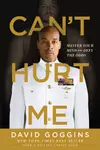


Goggins, the badass, tells us his fight story. He fought against the world and himself to achieve many things. He is an extreme athlete setting a bar high and overachieves it. What is his driver? He seems to seek pain to overcome his suffering. He made meaning in his life through his constant battles and wars. Endurance sport seems to be the best fit for him.
Overall, the stories were thrilling and entertaining like watching a war drama.
I just want to warn that an obsession with results and performance would make one in a constant fight or flight state like what Goggins shared.


Health from a breathing perspective
In summary, we evolved to have small jaws, using more energy in mental effort, creating cooking, and using less energy in chewing and digesting. The side effect of the anatomical change is breathing difficulties. We would need to make more effort to breathe properly, slowly through the nose. Appropriate breathing can lead to better performance and health.


Weir seemed to use a similar approach as The Martian, continuing problems and solving them. However, I found little I like about the book, even the problem solving parts. Jazz, the main character, is not that careful, has questionable ethics, lacks determination, and had little charm. In a sense, Jazz was the source of the problems and messes around Artemis. Stories on problem solving were dry and exhausting. Teamwork seemed forced.
Overall, an underwelming science fiction.


Death, memento mori, impermanence, and poignancy
Before denying or resisting such pain and suffering, recognizing and accepting helps us recognize the value and beauty of life.
Some might be more sanguine, and some more melancholic. The book seems to target those drawn to gloomy music or the latter.
The movie “Life is Beautiful” by Roberto Benigni is a great reminder of bittersweet. Life is fragile, deaths can be casual and seemingly meaningless, yet shows the power of love and the meaning of life.


I see many movies without showing a title only at the end, or showing a seemingly climactic scene during the first minute and then rewinding back to the earlier time to develop characters and plot.
Would these movies fit the Save the Cat framework?
I think so.
You need a hook to grab the attention of the audience. The audience in the past was relatively more patient since they had to sit at a theater or sit in front of programmed/scheduled tv or watch through VHS video tape (changing a tape is another work, let alone rewinding one). Now, you can always switch movies or streaming services using a remote. Now, I would not sit to watch a list of the cast during the first five minutes. Also, since you can control what movie you will watch and you already know what you are choosing, who would care to see the title of the movie unless it is another form of art and attention grabber?
Anyway, Save the Cat was an entertaining book on its own!


Let's have a new fresh start in New Year!
Well, it does not work well like that since our feeling system is attached to what we have gone through in the past. Why do we feel the way it is? The book offers insights into why we are what we are and how we respond.
We are not stuck in the past, however. It just implies the future self can change depending on what we go through in the future. It just requires more time and effort to change what we are now. It provides optimism based on action and possibilities.


Molnar provides a good entry book for those who want to become a photographer. He shares his life story candidly.
However, this is not for those who want to learn about composition and art in depth. It is only 101 on exposure, composition, and development. He goes beyond to share how to start a business and sell your brand.
It was a good one-time read photography intro book.

How Not to Die: Discover the Foods Scientifically Proven to Prevent and Reverse Disease
 Michael Greger,Gene Stone,+2 more
Whole plant foods are good for you, especially if you live in the US following SAD (Standard American Diet).
Nutrition, diet, and impact on health are tough topics to study due to their complexity and interdependencies. Greger does a decent job sharing studies, especially about whole plant-based foods. However, he does not share enough that certain meat at the right portion with good quality can benefit. Risks and benefits may appear imbalanced depending on where you live and how you get your food.
Applying in real life requires a nuanced approach since everyone has different genes and circumstances. Like any other diet books, it is same that readers will need to take with a grain of salt.


Tao is flowing like water, non resisting to nature, emptying rather than filling, acting effortlessly with wisdom rather than from knowledge.
It is a charming story, but it is not clear how to get there. Would a simple mindset change lead to the flow state? Do you need to be born Pooh? What about Piglet, Tigger, Eeyore?


Growing and eating are viewed from a holistic approach. The sum of pieces does not equal the total.
Environment, ecology, and soil contribute to growing and eating healthy. The intricacy of interdependence makes it a challenging science. Yet, “farmacology” is a framework that is suitable to explain the complexity that we face.


I listened to this as an audiobook. Unfortunately, an audiobook version has disturbingly low sound quality.
There are curse words in every other fcking sentence. I learned that fck could be used for all sorts of adjectives, whether good, bad, or extreme.
You will need extra focus and effort to listen to the content.
Harper earned my attention as reactance. She challenged me to pay more attention with poor recording quality as I could hear someone speaking in the background from time to time.
Ok, for the contents:
Emotion lasts 90 seconds. After that, you are bootstrapping thoughts and feeling emotions that seem to last. Physical nowness stops storytelling. Practice staying grounded and minimizing the impact of the amygdala that causes emotional memories and anxiety.
Practice breathing, mindfulness, self-compassion, and forgiveness.


