
Jessica


It's easy to feel like this book is a guilty pleasure, especially in the first third where the narrator, Isabel, simply describes half a dozen or so times she had sex with complete strangers. Still, I don't think a book is necessarily frivolous just because it's all about sex, and so with this. Najat El Hachmi isn't afraid to describe sex that's really bad, just as she criticises the dominant Western sexual culture and discusses alienation quite powerfully.
The book does have a somewhat weird format; most of the book takes the form of Isabel talking to the middle-aged, male writer for whom she cleans. He advises her about what he thinks she should do, but that actual advice – anything he says to her between these monologues – isn't in the book. However, the second part is a bit different because there are sections in the third-person describing the writer's daily routines alongside Isabel's monologue, which are italicised for this part. It comes across a bit experimental and I'm not sure what the reasoning is behind it, but I didn't exactly mind, either.
Mostly, though, I love the audacity of, having already written the requisite “migrant experience story”, deciding that the haters can go fuck themselves because you want to write about sex in Catalonia now. I mean, why not? But you still can't say it's that common! I'm excited for any further books El Hachmi puts out.
PS: here's The Independent's review of The Body Hunter. It's not bad, and for the most part I agree with it, but I do disagree with the idea that in the end it's a “conventional morality tale” (even if only “to some degree”), because in it “promiscuous sex does not bring happiness”. It's not moralising to admit that for the majority of people it does not, and especially for the majority of heterosexual women, who have to deal with men who don't bother to make sex enjoyable for them and don't have much respect for them, either. I just found it realistic and logical that meaningless sex with strangers just didn't have much effect on Isabel's loneliness or alienation. But hey...


I have to give this two stars and no more because, ultimately, I don't think it held together very well. Making Aurora Del Valle the narrator, rather than opting for a third-person narration like in [b:Daughter of Fortune|16527|Daughter of Fortune|Isabel Allende|https://d202m5krfqbpi5.cloudfront.net/books/1299666780s/16527.jpg|3471915], left Aurora narrating lots of things she wasn't present for and has no realistic way of knowing the details of. It didn't work.
And furthermore, Aurora Del Valle just isn't that interesting. She's surrounded by interesting people, but she doesn't have much going for her herself – only her love of photography which didn't interest me at all. She's no Eliza Sommers.
I liked some things about this book. I liked that we finally got to see Eliza Sommers and Tao Chi'en consummate their love, although it would have been nice to see at the end of the last book. I got invested in hating Matías Del Valle (Aurora's biological father), was pleased to see him meet his doom, and I liked Severo and Nivea. I don't remember [b:The House of the Spirits|9328|The House of the Spirits|Isabel Allende|https://d202m5krfqbpi5.cloudfront.net/books/1358615501s/9328.jpg|3374404] very well, so it took a long time before I remembered what role they played in that book, but I was almost tempted to put it on the “to reread” list to see what happened to them. Maybe one day.
I have to say that this book was better as a sequel to Daughter of Fortune than as a prequel to House of the Spirits. The latter draws on the magical realism tradition, unlike the other two, which are straight historical fiction. This leaves Aurora, in this book, having to say things like, “and then the strangest thing happened, wouldn't you believe it, and this child had green skin! if only I'd had my camera...” It stood out and bothered me, I guess.
I did read this in Spanish, but I was too lazy to review it in that language (mostly I got stuck on how to translate “held together” from the first sentence of this review, so I gave up). The Spanish wasn't too tricky, although as always, it slowed down my reading. Overall, you might as well read it if you finished Daughter of Fortune and feel cheated by the ending, but otherwise it's not that great.


I really want to give this two and a half... I liked it, but it felt like a guilty pleasure. It's a novel about alienation, about Ari, an unemployed nineteen-year-old boy who takes drugs and has unhealthy, anonymous, vicious sex as a way of life. Tsiolkas injects some politics into the tale – it reminded me a bit of a better, Melburnian version of [b:Less Than Zero 9915 Less Than Zero Bret Easton Ellis https://d202m5krfqbpi5.cloudfront.net/books/1282271923s/9915.jpg 1146200] – but Ari himself hates the world, states at one point that he wants to destroy it all in a nuclear holocaust.So I don't know. On one level it was a fun read, but on the other... I felt that the political tangents didn't really “fit” with the rest of Ari's drug-fuelled evening, like it was too heavy-handed. There's a lot of “Melburnia”, but unlike with [b:The Slap 5396496 The Slap Christos Tsiolkas https://d202m5krfqbpi5.cloudfront.net/books/1330062364s/5396496.jpg 5464024] I don't think Tsiolkas got all his facts right; for example, he had Ari insist that Greek migrants settled here only north of the river, even though Oakleigh in the south-eastern suburbs is the hub of the Greek community. He also listed Bentleigh as a leafy eastern suburb, up there with Balwyn and Boronia, when it's actually just west of Oakleigh and was for a long time a working-class area... populated by people who worked in the factories in Oakleigh (and a little further afield, like in Moorabbin and such).I guess it kind of bugged me that this was a city I almost recognised, but not quite. Its setting in time had a similar effect – having been published in 1995, it's stuck in that limbo where it's not quite old enough to be considered a representation of a historical period, but old enough that it's quite dated. Ari buys two drinks at a club and pays $5 for them. He has to call people at their homes on Saturday afternoon to plan where he'll bump into them at 1:30am. That kind of thing!But like I said, overall, it was fun. Since I can't give it two and a half, I'll round up to three for that.


It's easy to see how and why this has become one of the most influential novels in English-language African literature. It's been referenced so much in so many novels I've read set afterwards, in the post-colonial era, and I can see why even if the overuse of the phrase “things fell apart” in [b:We Need New Names 15852479 We Need New Names NoViolet Bulawayo https://d202m5krfqbpi5.cloudfront.net/books/1352225506s/15852479.jpg 21600154] was a bit irritating. It's a brilliant precursor to all of those novels, honest and sombre. I feel that a lot of people who didn't like it have oversimplified it; it makes them angry that he acknowledges the problems (in particular, the intensely patriarchal structures) in Igbo society before colonisation, and some of them have gone so far as to say doing so glorifies the colonists. I didn't see this at all. The colonists are arrogant and brutal, but at the same time there were reasons why people gravitated towards their ideological servants, the missionaries... people like Nwoye, who is furious that his father killed his best friend, and a woman who keeps giving birth to twins that tradition dictates she must leave to die. It's simultaneously mournful for what was lost and truthful enough to say that what existed was no utopia. Highly recommended.


The shortest way for me to describe this book is that it's the spiritual predecessor to [b:We Need to Talk About Kevin 80660 We Need to Talk About Kevin Lionel Shriver https://d202m5krfqbpi5.cloudfront.net/books/1327865017s/80660.jpg 3106720]. Where that book asks, “Why do we even have children?” this one asks, “Why do we ever abandon our dreams of glamorous, cultured inner-city lifestyles, move to the suburbs and then have children?” Of course part of the answer for this book is that abortions are more condemned and harder to access in 1950s America than they are today, but still, you know.So this is the story of April and Frank Wheeler, who were happily sharing a cultured if impoverished life in New York City when, against all their plans, April fell pregnant. She wanted to abort it, but Frank didn't – not because he actually wanted a child, mind you, but because he felt it was an affront to his masculinity for a woman to not want to bear his child. So they move to the suburbs into a dull, mind-numbing existence – she as a housewife, he with an unimaginably boring office job in the city – and years later, with their marriage dysfunctional as hell, they decide to move to Paris, as they'd dreamed so long ago.The plot as it unfolds from there is not exactly unpredictable, but it's compelling and tragic (an easier read than We Need to Talk About Kevin). It's a condemnation of the nuclear family, of the way the pursuit of this ideal demands conformity and abandonment of one's dreams. Of course it takes the madman, John Givings, to voice all of this and point out to people what they're doing, even as his mother tries to shut him up – not particularly subtle, this book, but great all the same.


Latin American literature is famous for the genre of magical realism, but this was really only “magical” (and how I wish I meant that as a euphemism for “good”). It blends myths and concepts of magic from the Spanish, African and Chinese cultures that contributed to making Cuba, placing this hybridised concept of magic even in present-day Miami, which could potentially be interesting, but in this book it's not.
To be honest, most of this book is not interesting. As the blurb will tell you, the novel begins when reclusive Cuban emigrant Cecilia is dragged out of the house by two male friends who she ditches to meet an old woman, Amalia, at a Miami bar. The book is made up of short chapters that alternate between telling Amalia's entire family history and Cecilia's very boring, mundane existence.
Basically, Cecilia is a journalist and she is investigating some ghost house, since apparently she works for the kind of publication where a ghost house is a valid idea for a story. She gets involved in a lot of kooky New Age stuff and she also, at some point, meets a guy (Roberto) who is a rich businessman who just can't stop talking about his successful business and also, all the businesses he will open in Cuba once his profit-minded family can return. Cecilia doesn't even like him that much but she's devastated when he dumps her, to the point that she develops a psychosomatic illness that she is able to banish just by willing her blood pressure to go down. Hmmm...
Amalia's family history is more interesting, but still not that great. The characters aren't very well realised; they mostly just kind of blur together and I had to keep referring to the family trees in the first few pages because I just could not remember who had done what, or even who was who. Also, guess what, (almost) everyone was a successful small business owner. It was very unrealistic.
So we come to the other reason I didn't like this book – in addition to the badly realised characters, the awkward pacing, and so on, it was kind of right-wing. When early on it talks about shortages (Cecilia's musing that she'd never had hot chocolate in Cuba), the US embargo goes unmentioned. Later, you have the clairvoyant Delfina claiming that the failure of the US-backed Bay of Pigs invasion will be the greatest tragedy ever to befall Cuba, you have one of the small-business-owning (actually by this time, franchise-chain-owning) characters whingeing that he supported the rebels and don't they understand that private property is sacrosanct... blah blah blah blah blah. Over the entire book, Cecilia alternately conceives of Cuba as hell or else a once-beautiful country trashed and burned by criminals. This is frustrating. Mostly, it's just so damned shallow. I'm not trying to say it shouldn't have criticised Castro's regime at all – the pettiness making emigrants wait years for their exit permits, the stifling of dissent, persecution and harassment of dissidents etc. are all important – but any analysis of Cuba that states that the failure of the Bay of Pigs invasion was the greatest tragedy ever to befall Cuba is just trash. I mean, it's also a book largely set among the Cuban emigrant milieu in Miami written by a Cuban emigrant, so maybe I'm expecting a bit much from this politically. But like, there is left-wing criticism of the Castro regime and there is right-wing criticism, and I wasn't expecting this book to be so far to the right (the blurb makes it seem pretty apolitical).
So. Ultimately this is a kind of boring book that serves as a lament to the losses of the old Cuban bourgeoisie, and I did not like it. Unless you have no choice (like you find yourself in an airport where the bookstore has nothing except copies of this?), avoid.


As a book, this was exactly like playing a video game where you die constantly and have to keep going back to the last save point until you can do it right. For the first fifth of the book or so, the “save point” was actually just the start of the story, so I think I must have read about Ursula's birth an odd dozen times (plus a couple of extra times later in the book). In video games this usually leads to a sense of frustration (to say the least) and so it was at the beginning here, too. Especially when the child Ursula managed to get herself killed in some particularly stupid way, and forced another start over...
Once Ursula made it to adulthood though, the book got interesting. At this point the book really started to speculate about the question, “If there was something in your life that hadn't happened, or been different from what it was, how would it have changed the rest of your life?” I liked the way that, after being murdered by an abusive husband in one timeline, the "save point" wasn't the moment she met that man but the moment she was raped by her brother's friend years earlier – that rape having destroyed her self-confidence and, ultimately, leading her to allow herself to be seduced by this abuser. These timelines see her living through the London Blitz, the weeks in Berlin before the Soviets march through, again and again leading to her deaths. Once she manages to survive through to retirement age (interestingly, in a timeline that sees her spouseless and childless), it's like she's “won the game” and is able to start again with a better recollection of all the lives that have gone before.
That's the point where things get weird though, because she uses all that experience from her past lives to decide she should kill Hitler, which is a bit kitsch and a concept probably ruined for me by the Doctor Who episode “Let's Kill Hitler”. And many other time-travel-themed works of fiction that have come up with the same idea. Anyway, she also decides she has to kill herself in the life she decides to do this, even though she was totally young enough to start studying German IN THAT LIFETIME. It irked me that the result of finishing a life “successfully” is that she starts to regard all the people around her as less real, I suppose.
I don't want to completely ruin the ending, but it was a bit disappointing, I thought.
Anyway. Evidently, it was a kind of experimental and strange book and I liked it – I was always motivated to keep reading it – even if I couldn't love it. I must say I wouldn't have read a straight historical novel that went through just one of those timelines, because I have read enough novels about bourgeois English people for the duration of my entire life and I usually find them pretty snoozeworthy, but this had enough of an original spin that I got into it. So all in all... good and readable but not brilliant.


This is an incredibly frustrating book; it has so much it wants to say, and even some moving sections, and yet so much of it is so boring and so laborious and it never devotes enough time to the myriad topics it brings up so you end up thinking to yourself, “What the fuck, all of this at the same school?! What is this, Degrassi High???” which is not really a good comparison because that's a Canadian show and this is all about ~~America~~. Still, it's like Bulawayo made a list of every single social issue in Zimbabwe and the United States and decided to cram them all into one book, narrated by one young character, Darling. It comes across as implausible, so much so that it really ends up just as eye-rolling as Degrassi.
And it's so infuriating because as I said this novel has some really good parts, parts that make you know it could have been so much better. The good news is that the best parts have nothing to do with the plot of the novel, not referencing the characters at all, so they can be (and should be) read in isolation: chapters 10 and 16 are beautiful and poetic, on the theme of the exodus from Zimbabwe and the hardships of life abroad. There's also some good stuff in the other chapters, but they're all mixed up with less good stuff, so you can't look at them in isolation the same way.
The other aspect to this book I liked was the way Darling's voice changed over time. At the beginning of the novel she's a ten-year-old kid living in a Zimbabwean slum after the demolition of her “real home”; by the end she's a teenage indocumentada in Michigan, and has lost all the vibrancy and enthusiasm with which she began her story. It's a subtle progression, and very well done.
It's too bad these things were let down by other aspects of the book. Each chapter is more or less a self-contained story, so you have bizarre things like Darling's father returning from South Africa, dying of AIDS, then never getting mentioned again once his chapter is over. The first half of the book (before chapter 10, the brilliant bridge) follows her life in Zimbabwe, the second half her life in America. Each is characterised by spending long periods of time describing very mundane, boring things in agonising detail, bringing up a very weighty issue and not giving anywhere near enough time to developing it, then returning to mundanity, over and over again. In the “America” half, there is also a kind of revolting chapter where Darling and her friends watch porn including a snuff film and that has to be described, but then in the middle of this revolting chapter is an important and powerful section where Darling ruminates on how hard she finds it to keep in touch with her friends back home... I really liked that section, but why did it have to be bookended with the gross porn descriptions?
Hopefully I've conveyed my frustration enough. This has potential, but it's squandered and I came away disappointed. Some of the reviews of this book, where people have taken the ideas presented here and run with them, I liked much better than the book itself. It has at least increased the urgency in my mind of reading Chinua Achebe's Things Fall Apart, as it's yet another book that makes extensive reference to that.


This is basically a book about vapid rich people being rich and vapid. I actually ended up quite liking it; I think it showed well the upper classes' self-absorption and complete dissociation from everyday life, which means they have nothing better to do than organise their own sordid love lives. There are beautiful descriptions here, like that Daisy's voice is “full of money”; she can be so happy and carefree and delightful because she has too much money to have to care about anything important. I found it a neat skewering of the rich and powerful.
I had intended to read this before going to see the movie when it came out last summer, but then I never made plans to see the movie and thus had no incentive to read the book. It stayed on my “to-read” shelf for so long that eventually I deleted it, but then I found myself on a plane home from Hobart with no other novels on my Kindle that I hadn't read already, so I started with this one.
I guess one of the reasons I hesitated so long is I knew it was one of those books that lots of people study at school (although not me evidently), and most of the books I studied at school were kind of boring, so I thought this was going to be one of those. I am happy to say that it wasn't. It probably would've been if it had gone on any longer, but it didn't, so it wasn't. I'd definitely recommend it.


És difícil saber què dir d'aquest llibre, però haig d'escriure una tesi sobre això aquest any, i per això espero que em vinguin algunes idees!
Aquest és descrit com el dietari de “l'Anna Frank catalana”, i és també un dietari d'una adolescent que vivia per una guerra. Però crec que tenien experiències molt diferents, perquè (encara que no he llegit mai el dietari de l'Anna Frank) ella havia d'amagar, però l'Encarnació no. En aquest dietari, l'Encarnació parla més de l'escassejat del menjar, les interminables cues, el terror dels bombardeigs, les malalties i la dificultat tractar-les, i la tristesa per la pèrdua d'amics i parents. El dietari acaba de sobte, i per un epíleg commovedor, l'Encarnació explica que havia de deixar d'escriure per els seus sentiments complicats per un amic que va morir – sentiments que ella no volia contar a ningú i que feien que tota la resta li semblava inútil. Va deixar d'escriure unes poques setmanes abans de que els feixistes van conquerir Barcelona, però va sobreviure la guerra i encara viu a Barcelona (o hi vivia quan va publicar aquest llibre).
A mi m'era interessant llegir els seus comentaris sobre diversos temes polítics; descriu una festa al carrer pel aniversari de la revolució russa, per exemple. Cap al final, ensenya a un nen que si odia la guerra, deu odiar jugar a la guerra també, perquè la “imitació” de la cosa odiada deu causar la mateixa revulsió com la cosa en si. Aquest em va recordar de moltes coses, molts temes, on em sembla que aquest argument és també aplicable. Però això és una digressió.
Al final, aquest és un llibre interessant i un document històric important, però encara és veritat que una gran part del dietari descriu en longitud els preus i l'escassejat del menjar, del qual només és possible llegir tant abans d'avorrir-se. Encara, deu ser possible desentranyar bastant d'això per escriure una tesi!
(PS: Si us plau, perdoneu el meu català imperfecte; he estat aprenent-ho només un any i sé que faig errors. Estic intentant!)


This is a wickedly funny novella; not laugh-out-loud humour, but a drier kind that had me smirking most of the way throughout the book. It reminded me a lot of the lecturer I had for my first two years studying Spanish, though – the main character here is a paranoiac of an academic who's supposed to be editing a 1,100-page report into massacres of indigenous people, but actually spends most of his time boozing and womanising. So you know, they seemed to have a lot in common. This probably enhanced my enjoyment of the book though, the sense that all of these misfortunes were befalling his Central American alter ego.
One thing I would say about this book, though, is that going in I really thought it was going to talk about the ways indigenous narratives get rewritten and thus reinterpreted by the exact kinds of forces like the Catholic Church here compiling this 1,100-page report. Considering the number of times that the narrator commented that the testimonies he proofread were so lyrical he thought they had to have been composed by poets, I definitely thought it was going in that direction once I'd started to read it. But... then it didn't? It completely and totally failed to follow that up. Considering what an issue it is in historiography, the way indigenous voices (and really non-bourgeois voices in general) get sanitised and spoken over and reinterpreted in accordance with the ideology of the ruling class... I thought that raising the issue and then discarding it completely was such a missed opportunity. But oh well.
I'm giving this four stars, even though I had no real issues with it aside from that! It's a really entertaining, quick read.


This is very hard to get into. For the first third or so of the book, I found it mind-bogglingly boring – so boring that trying to read it on the train, I would periodically decide that my own thoughts were more attention-grabbing and my eyes would glaze over and I'd stop reading. If you're not very patient, the book starts out as a hard slog.
But I persevered, partly because the last China Miéville I'd read was brilliant and partly because I feel like a failure if I can't finish a novel. Eventually, I got sucked in.
The thing that sucked me in was the impressive world-building, of course. Miéville has constructed an intricately detailed city, New Crobuzon, partly based on industrial revolution-era Europe but with a lot of fantastical twists. This is a city where humans are not the only sentient species, and the specific part of the book that really set me to begrudgingly liking it was where Lin ponders the history of her own migrant community, the khepri, which we would consider a hybrid of beetles and humans, probably. New Crobuzon has dozens of neighbourhoods whose histories and characters get fleetingly described in the novel – too many to actually remember, which is frustrating, especially when the description goes on too long and you're impatient to get back to some action, but fascinating nonetheless.
I will say that some of the other description, not devoted to telling the history or social situation of the city, got really boring. Actual events in the plot seemed to take forever to unfold, which sapped the narrative of a lot of the urgency I think it was supposed to have. Some of the plot didn't sit well with me, either; in particular, I was really disappointed with how Miéville dealt with Lin (seeming to kill her off to fuel the male protagonist's growth, then suddenly reintroduce her at the end of the story – only to immediately have her brain half sucked out by those slake-moths leaving her permanently retarded!). Considering how male-dominated the narrative was otherwise (there were only two women!), it was a pretty poor way to treat her.
So... as you can see, I've given this three stars. The world-building is fantastic, but the description is excessive and I disliked elements of the plot. It's interesting to note that out of everyone who's rated this book in Goodreads, only half have gone on to rate the sequel...


This book should really be divided into two parts, as the blurb suggests – the first two chapters provide a concise history of various workers' struggles (and revolutions) and their relationships to women's movements; the latter two (which are much shorter) provide an equally concise overview of various schools of feminist theory and Arruzza's opinions on the merits of each. I was mostly in agreement with those opinions – I found her takedown of Luce bloody Irigaray's “difference theory” particularly satisfying – and so I would certainly recommend this.
I did have a couple of points of scepticism, mostly in that Arruzza seems to feel that “patriarchal structures” or “male structures” have a more solid existence than I would argue. It's hard to say this for sure because given the nature of the book, she tended to describe trains of thought that weren't her own and wasn't always that hard on them, so perhaps this exaggerated the impression I got. Nonetheless... I felt she gave too much credence to the idea that there are these parallel structures of capitalism and patriarchy, when “patriarchy” is really more of an ideology that justifies the oppression of women that's been going on since the rise of class society. “Patriarchy” in that sense is not a structure in and of itself, but an ideology borne of structures that is used to reinforce those (and other) structures. They're not “dual systems” but different things – different types of thing – that interact with one another.
One thing that Arruzza said again and again was that she didn't feel it was “useful” to argue for a hierarchy of oppressions, although class is not an oppression. I still agree that trying to subsume class into gender or gender into class is undesirable and unhelpful, but there were these kinds of theoretical statements I disagreed with, I guess.
Even so... this was an excellent overview of history and theory surrounding the question of how these two movements intersect, regardless of how Arruzza's theory ever so subtly differed from my own. It's very readable, concise and well-structured too, so no impenetrable academic language to struggle through and give you a headache. I knocked it off in an afternoon! Good stuff.


It would be such a stretch to say I liked this book, but it's thought-provoking and reasonably left-wing. Set in Thatcher-era London, it follows 36-year-old Alice, a member of a kind of cultish, dubiously left-wing sect who lives a really miserable life, even though she won't recognise it herself.
So this is a very depressing book to read – it's mind-bogglingly slow, and I spent most of the book frustrated with Alice for refusing to make use of any opportunities that arose to make her life better. For one thing, she's stuck in a horrible relationship, a sexless one designed just to give cover to her secretly-gay partner, who twists her wrists any time he doesn't get his way and takes all her money, by stealth or by force, and blows it all on pointless shit until they have no money for like, any bills. (Ah, but as we will get to, paying bills is bourgeois!) She's stolen so much money from her parents to fund his lifestyle that by the beginning of the novel, her parents are sick of her and want nothing to do with her any more. It is just unbelievably frustrating to read about someone who screws her life up like that.
Secondly, the politics of this sect (and, by extension, Alice) are really terrible, which kind of contributes to the terribleness of her life. She condemns basically anyone with a white-collar job as “bourgeois” and “middle-class” (which, to her, are the same thing) and it gets to the point that she condemns people as bourgeois for like, owning furniture, or wanting to not live in a squat. She herself gets condemned as bourgeois by other members of the sect for wanting to live in a squat with hot water and electricity. At one point, she turns down a white-collar job offered to her because she doesn't want to live in a flat she actually pays rent on, which according to her only bourgeois people do. In her mind, the true representatives of the working class are people like the members of her sect, none of which have seemingly ever tried to get a job, and instead live on welfare as a point of principle. Their complete and utter lack of a genuine class analysis leads to the kind of political activity you might be able to guess: unable to work within the working class, organising and strengthening it, they resort to “propaganda of the deed”-style terrorism which kills and injures working-class people and cements them as eternally irrelevant.
I feel like this is a book that would be very easy for right-wing people (or even, say, feminists who are hostile to genuine left-wing politics) to take and say, “hey, look! this PROVES that communism is a terrible idea and communists are terrible people!”, similar to 1984. In this sect, the women make the tea and the men do all the “real work”; many of them (including Alice) are anti-intellectual and think it's bourgeois to read, especially to read anything you might disagree with; they dismiss any idea that “the personal is political”; then there's all the “propaganda of the deed” stuff. Like 1984 though, I don't think this book is really hostile to genuine revolutionary politics, but rather to various badnesses that “Marxism” has been used to justify. The Good Terrorist is hostile to terrorism, isolating oneself from ordinary people, being wilfully blind to sexism in the name of “class struggle”, and so it goes. But it never tries to defend Thatcherism, the cops are mostly thuggish, bureaucracy unfeeling, and the IRA are depicted positively. If anything, I would call it a book of despair. Which I guess is what Orwell wrote too.
Rating this book is hard, since as I'm sure I've made clear I didn't particularly enjoy reading it, even if I think it has merit. Since I can't give it two and a half, I'll give it two. It wasn't a bad book, just slow and frustrating to read.


I know I cheated with this one; I read it in English, when I really should have tried it in Spanish. It's just I usually read on the train and it's really frustrating to only get through 10 pages per journey. Plus, Maya's Notebook, written from the perspective of a nineteen-year-old American girl, is the kind of thing that would “really” be written in English anyway, at least if it were real and not a novel by Isabel Allende. Which it obviously isn't, with a tone less lyrical but otherwise similar to Allende's other novels; not really the style an American teenager would go for in their personal journal. So, I don't know which language would have been better, but I did read it in English, so there we are.
Overall I liked this novel, but I agree with some of the criticisms others gave made of it — the plot is chaotic, unbelievable. The novel begins when Maya has to flee powerful enemies in the United States and ends up hiding out on an isolated island of Chiloé with an old friend of her grandma's. From that point on, there are two timelines — Maya writes about her experiences in Chiloé, and intersperses them with sections on her life in the US, all the events that culminated in her fleeing.
Dividing the book into quarters, they all have different vibes, and there are different things to say about them. The first quarter, like those of a lot of Allende books, is pretty slow. In the second, things get pretty intense and exciting, aside from the Chiloé parts which continue not to be. In the third quarter, the US timeline gets seriously depressing, which Allende counterbalances (or tries to) by introducing a romance subplot in Chiloé, but this doesn't work that well. Then in the last quarter, everything is chaotic and so many different scattered subplots get resolved and then there are some random tangents that don't seem to advance any subplots and it's all a mess. I suppose it did resolve anything (I can't think of any open ends, although I'm not really the best at that anyway)... but it was just very messy. Suddenly revealing that Manuel Arias was Maya's real grandfather, not Felipe Vidal, was completely out of the blue – I don't believe this had been hinted at, or set up in any real way. The extended flashback to Maya's aborted stay in Denmark with her mother also seemed out-of-place, considering this mother barely figured into the story at all. Things like that gave it its chaotic feel.
In some ways I feel like this novel tried to cover too much. Or maybe not so much that, but it didn't blend everything it was trying to discuss very well. Primarily, it's about an American teenager who felt lost after her (step-)grandfather's death, got mixed up in drugs and eventually organised crime, and has to go into hiding and recover. The subplot about Manuel being persecuted by the Pinochet regime felt tacked on. Mostly because that entire subplot, minus Manuel having some nightmares that I didn't necessarily expect to be explained – thinking “trauma from the dictatorship” explained it enough – happened in the last quarter of the book. It just didn't feel that well incorporated.
The other thing about this novel is that parts of it are very brutal. It's graphic in its depictions of drug-related violence and addiction, and the way Pinochet's regime tortured people, but there's also a very brutal rape scene at one point (although on that note, kudos to Allende for depicting it purely as violence without trying to make it “sexy” or “scintillating” at all). So if you have a low tolerance for these kinds of scenes or topics, this is not a great book for you.
In retrospect, another thing this book did well was describing some of the social problems of small-town southern Chile – the legacy of the dictatorship, lack of employment, domestic violence, molestation even. But it did this while retaining a real affection for the society and people it talked about. (Well I mean, most of the people...) It was sort of hard to notice this while I was reading because the parts of the book set in the US were always more action-packed than the parts set in Chile, so they captured more of my attention, but that element is there.
Overall I liked it, and it's getting three stars, but man it was chaotic.


This is a brilliant, if imperfect, book. It's probably the first time I've come across any work of fiction that depicts an Australia I actually recognise – modern-day Melbourne, a city of migrants and vast, sprawling suburbs, and not the usual rural bush society populated almost entirely by Anglo-Celtic stock. A novel that doesn't pander to nationalist mythologies about this country? Hell yes.
And as a Melburnian, it was refreshing to read a novel where characters catch up for a drink at Federation Square, catch the tram along Smith Street, or grimace at the industrial wasteland that is large parts of Altona, all described as casually as New York writers make reference to the urban geography of New York. I'm not so parochial that I'd like to just read novels about my home city all the time, but it's really nice to see it depicted for once, and so thoroughly and honestly. If anyone ever asked me what the best novel is for getting a sense of Melbourne, until further notice I would say this one.
The story is told through eight chapters, each from the point of view of a different character. It begins with a suburban barbecue in which a man hits someone else's child, but this is only the source of some of the conflict in the book. Every marriage is unhappy, every character is flawed and has their own problems from before the barbecue even happened. The novel is character-driven and intensely focused on relationships and work – i.e., the exact things that people spend the majority of their time focused on – and a lot of people hate it for these reasons. It tells the story of people who, many of them, are not likeable. Even for those who are likeable, they make really bad mistakes; they're not perfect. Basically, this is a novel about the real world, unfair and cruel, where almost everyone is prejudiced and does bad things.
After the first few pages I found it very readable and engrossing, but it's not perfect and the first few pages are some of the worst offenders; if I'd just picked it up idly at a bookstore I would not have bought it, and then I would've missed out on so much. The first pages just describe Hector shitting in great detail, which is a bizarre way to start a book. I don't usually complain about “crudeness”, but the first few (I'd guess three) chapters of this book just seem gratuitously so. After that, they either got better or I stopped noticing. Either way... be warned, but don't let that deter you.
The other thing that can make the book hard to get through at times is the uncompromising, unrelenting depictions of sexism. Most of the men in this book are so sexist that a lot of the other reviewers on this site have whinged it's not believable, which I can only wish was true. Still, Hector's and Harry's chapters are both hard to read on this front, especially Harry's (who in addition to being incredibly sexist, seems to be a fascist who hasn't yet discovered his true self). Connie's chapter is, I think, also powerful as it takes the opposite side, that of the vulnerable eighteen-year-old girl. The scene in which she loses her virginity is perfect, and painful reading in all the right ways (also, amazingly aware considering it was written by a man). The novel depicts domestic violence, emotional abuse within relationships, and just so much, really.
Even if most of the men are hard to like, I was moved by Manolis' chapter, which begins when he reads an obituary in the paper for a friend he had, but fell out of touch with long ago. The chapter is about the ravages of time, the tragedy of losing contact with people who were once your closest friends, and perhaps even about the lack of belonging anywhere – living in Australia with imperfect English, but knowing that the Greece you left no longer exists. It was quite removed from the rest of the novel, but I liked it a lot.
I thought the ending to the novel was jarring and unsatisfactory; mostly, I did not believe that Ritchie was in a frame of mind to attempt suicide, regardless of how much Connie humiliated him, and it seemed mostly a narrative device to get Connie and Ritchie to reconcile after she'd lied to him and he'd betrayed her trust. Relying on what seemed to be a very out-of-character act seemed like a cheat, especially disappointing in a novel where the characterisation was otherwise excellent. For certain characters, the ending seemed too neat and easy, and I was saddened by the endings for others (mostly Rosie, left friendless and moving to a small country town with her drunken, abusive husband when her only crime was being too underconfident to stand up for herself). Not that it's really a bad thing to have a novel where not everyone gets a happy ending... but still, that last chapter was the weakest of them all.
So I'm giving this four stars, because of the flaws I mentioned. This is still a brilliant portrait of modern-day Melbourne though, highly recommended to anyone who hasn't read it already.


So here is what I knew about this book before I went in – it's confronting, it's a major work of Black feminist (or womanist) literature, it's been banned in a lot of times and places, and Alice Walker refused to allow it to be published in Israel out of support for the BDS movement.
So there's our starting point. It's also probably useful to know that it's set in rural Georgia over the first half of the twentieth century, spanning a period of 30 years, because I didn't know this when I started out I was guessing a much earlier setting. It is a confronting book, especially the beginning, which is a seriously brutal way to start a book. It actually squicked me quite a lot so it took a long time for the book to grow on me, but by the end, I really liked it. Probably what turned things around for me was Celie's pursuit of happiness – with the help (and love!) of her friend Shug, she's able to stop being someone who horrible things happen to all the time and start to be her own person, which I appreciated.
There's a lot in here, and a large cast of characters; I hadn't actually expected that the narrative would make it to Africa and comment on female genital mutilation practices (as well as the relationship between Africans and African-Americans). But it did. I hadn't really expected it to be so spiritual either, but it was that too (and that's where the title comes from, too – reflecting on the wonder of the colour purple). Indeed I would say spirituality is the thing this novel seeks to impart most of all; the need to accept God is no white man, but inside and a part of everything. I'm not really sure about that, honestly, but taking wonder in the natural world is something I can understand. I was less keen on Celie forgiving her long-time abusive husband. Sure, I guess it shows there are reasons why lower-class or marginalised men abuse – alienation, feelings of powerlessness – but just on an emotional level, I did not like it.
The novel also attracts some comment for its “subversion of gender roles”, but honestly it just depicts people as they are (or were), which often is not totally in line with gender roles, even when that pressure is there. For instance, Harpo tries to be a violent, domineering husband because that's what he's been taught, but every time he tries to beat his wife Sofia, she bashes him nastily and he can't manage it. He clearly feels insecure about this failing, which just makes him even more anxious to be violent, and so it goes. But I think Walker is good about not just vilifying men on an individual level, but showing what pressure these alienated, downtrodden men are under to conform to this model. Even so, I don't think forgiving them is necessary! And while some women “subvert gender roles” by being confident and assertive, it's not like they're living without the context of an extremely patriarchal society, and they're often punished for it. So I would describe the characterisation as realistic, rather than “subversive”. Although I guess those are the same thing sometimes.
Overall, I'd highly recommend this. It was political but never forced, dealing with racism, women's oppression, abuse, lesbianism, and ended on a positive note in spite of the horrifying beginning. Well worth persevering.


Even though there's only six years' age difference between my boyfriend and I, somehow there's a bit of a generation gap. He's always going on about video games and movies that were quite a bit before my time, and in return, he somehow missed out on almost everything that shaped “my” generation – most notably, for this review, Harry Potter.I'm not sure when I first read this book. I think I first got it as a Christmas present when I was eight, read the first chapter, dismissed it as boring (which that first chapter kind of is – crotchety, snobby English people living insular village lives, really?) and put it down for several months, after which I gave it another chance and this time was absorbed. Harry Potter captured the imaginations of me and all the other kids at my school. I remember how some of us tried to fake Hogwarts invitation letters to make all the other kids jealous, only to be immediately denounced as the vile fraudsters they were (knowing myself, I was probably doing the forgery and the denouncing). Hogwarts seemed infinitely more exciting than the boring primary school we went to; we constructed elaborate stories about our imaginary lives there (or at least I did...) and, for that reason I think, Harry Potter occupies a central place in the hearts of many people my age.Over the years, of course, my interest waned in Harry Potter, but when Mark Was Reading Harry Potter I reread the third book and #5 through #7, and was amazed at how well they stood up (especially #7, [b:Harry Potter and the Deathly Hallows 818056 Harry Potter and the Deathly Hallows (Harry Potter, #7) J.K. Rowling https://images.gr-assets.com/books/1351958236s/818056.jpg 2963218], which I hadn't even liked the first time). My love for Harry Potter was renewed.Fast-forward a couple of years to when my boyfriend revealed he'd never read the books, nor even watched the movies, and what's more he hated the lot of them on principle (that principle being, “anything other people love that I've never read must suck”, which apparently makes sense to him). I was appalled. He was equally appalled that I'd never watched Star Wars though, so we struck a deal – for each Harry Potter book he read, I would watch one Star Wars movie.This was a terrible deal to strike.This is mainly because he refused to read the books at home in his own time like I'd envisaged, but insisted on reading this book aloud to me, “so I would know he'd really done it”. What this actually meant was that I had to spend 6–7 months listening to him read aloud, laboriously, painstakingly, torturingly, a book that he obviously absolutely hated. By the end of it all, I fucking hated it too. Hated it for being so simplistic and childish, when I know that from [b:Harry Potter and the Prisoner of Azkaban 464164 Harry Potter and the Prisoner of Azkaban (Harry Potter, #3) J.K. Rowling https://images.gr-assets.com/books/1310384602s/464164.jpg 2402163] (#3) onwards they're immensely detailed and complex. Hated it for offering absolutely nothing to an adult raised on shallow, vapid action movies starring Arnold Schwarzenegger who is absolutely determined to hate it. Hating it because I know the later books have plenty to offer adult readers (or I mean, those whose preferred genre is not action movies), but unless they're willing to have faith in that, these first couple of books are really not going to appeal to anyone who has a low tolerance for children's book. They're just not.The book isn't terrible, especially if you love immensely detailed world-building. But that's really the main thing about this book – the central plot, the mystery of the philosopher's stone, is actually very thin, and almost the whole book is given over to setting the scene for the six books to come (which is sort of incredible when you consider there was no guarantee that any of the other books would ever see publication). It just lacks almost all of the depth of the later books, like the first season of Buffy the Vampire Slayer, shall we say.I was reading a little bit about how Harry Potter and the Philosopher's Stone has been translated for overseas audiences – for instance, that the French translator attempted to sanitise it of any reference to class, particularly watering down Malfoy's bigoted comments into something completely neutral, changing his dialogue in the robe shop so rather than asking Harry his surname, so he can place him in the wizarding world's class hierarchy, he asks, “Comment tu t'appelles ?” – something completely different. The regionalisms and colloquial language of the English is gone; instead, everyone speaks in stuffy, academic French, even Irish Seamus Finnigan and West Country Hagrid. (In the Japanese version, Hagrid's dialogue was apparently written in a Japanese dialect with similar sociolinguistic connotations to what West Country accents have in English.) In the US version they made a huge number of changes just in changing individual words, resulting in this ghastly scenario where Ron's first line is “Mom, geroff!” – where these quintessentially British characters are caught with jarring Americanisms in their mouths, just because US publishers have so little faith in their country's children that they don't think they'll be able to understand what the word “mum” means. In a comparison probably no one will get, the little of the US text I've read was as jarring to me as Peter Bush's translation of [b:In Diamond Square 17356826 In Diamond Square Mercè Rodoreda https://images.gr-assets.com/books/1362917783s/17356826.jpg 225621] where there were these vividly Catalan characters running around named “Joe” and “Ernie”. Just what? The only reason any American child would be as ignorant as this (and I don't believe any more than a tiny minority could be) is because their entertainment industry insists on Americanising and homogenising everything, in a way no other English-speaking society does. It is interesting to note that both French and US publishers insisted on changing the title, on the grounds that children don't know or care what “philosophers” are – so you have US Harry Potter and the Sorcerer's Stone, French Harry Potter à l'école des sorciers.So overall I'm giving this three stars... it's an amazing children's book, one I hope I can introduce to my future children if I ever have any (otherwise I'll just target nieces, nephews, cousins... whatever it takes). It's an annoyingly childish introduction to the series if you're trying to get someone into it as an adult, though. Admittedly, you will probably enjoy it more if you're not determined to hate it from the beginning, you read it in a more reasonable timeframe than 6–7 months, and you don't insist on reading the entire damn thing aloud. The only bright side of that bet was that Star Wars IV wasn't too bad.


Perhaps the tragedy of Adichie's writing is that [b:Half of a Yellow Sun|18749|Half of a Yellow Sun|Chimamanda Ngozi Adichie|https://d202m5krfqbpi5.cloudfront.net/books/1327934717s/18749.jpg|1651408] is so brilliant that if that's the first of her works you read, everything else ends up disappointing. And doubly disappointing because I really like Adichie, the political comments she makes and such, and I really wanted to like this book... but it fell flat for me.
I've mentioned in a number of previous reviews that I get uncomfortable when a novel is a thinly veiled political polemic. Mostly, I get uncomfortable when the narrative gets twisted and contorted to fit an agenda (even if I agree with that agenda!!) because I appreciate good story-telling too much. Anyway, I don't think Americanah is as bad on that front as some other people have made out, but it has some issues. At least half the book is random characters (many of which appear once or twice) discussing issues of race, which isn't really a problem, until the climax of the book is derailed by a group of random, never-before-seen businessmen discussing the problems of the Nigerian economy. Or I mean, I guess it's a slight problem in that the plot of the book ends up feeling very thin, even though it isn't really, just because the plot gets dealt with so fleetingly and sparingly just so more space can be given over to these observations. And it's not that the observations aren't interesting, or even uninterestingly written. They just get in the way of the telling of the story.
Then some of the characterisation is very weird. There are some characters (ahem, Shan) who are just bizarre – superficial reproductions of an archetype, I guess (in this case, the self-absorbed academic), and in Shan's case she has some weird magnetic pull that makes everyone in her presence worship her, so not only is she annoying herself, but she makes every single character who shares a scene with her annoying too! Magic.
As for the star-crossed lovers of the blurb, they bothered me for different reasons too. I agree with someone else who's reviewed this book who said that Obinze just does not have the personality of a wealthy businessmen. No one in the real world would “make it” having a conscience like that. Ifemelu on the other hand might (if only she weren't a woman...!); I started to intensely dislike her when, from the moment she returned to Nigeria, she revelled in her upper-class status and started to treat every service worker she met like shit. I would like to think that Adichie's politics are good enough that Ifemelu's characterisation was deliberate – that she was including some subtle commentary on class in a very unsubtle treatise on race. (Lack of subtlety not necessarily being a bad thing – I agree with one of her characters (even though it was probably Shan, ugh) who thought the insistence on “nuance” was usually a way of pandering to the fragile feelings of the privileged.) Anyway, hopefully that was indeed the intention, rather than a weird blindspot when it comes to the reality of class society.
It is a mystery to me why the blurb is what it is (i.e. misleading); Ifemelu and Obinze rekindle their romance 88% of the way through the book, and it's safe to say that the so-called “toughest decisions of their lives” are not the crux of the story. Nor existent, in Ifemelu's case. It looks like the paperback's blurb is better. Still, this isn't really a story about love; it's a story about globalisation and race. There are some lovely quotes about how those things intersect. At one point late in the book, Ifemelu comments that if her American boyfriends had come from the same cultural background as her, she's not sure they'd have had anything to say to each other. That had some resonance with me, although not fully.
Hmm, I got really distracted from this and I'm not sure how to wrap it up. I would still say it's worth reading, especially if you don't have a Tumblr and don't read similar observations on race all day every day. (Speaking of which, I'm surprised I haven't seen Americanah quotes floating around on there!) Just don't get your hopes up, because if you're not expecting brilliance like I was, you'll probably enjoy this much better.


I can't fairly rate this, so I won't try. I'm not going to try reviewing it in Spanish either, even though I read it in that language. Or, you know, tried to. This novel is written in very idiosyncratic language, full of archaisms and (I assume) indigenous words. At the back of my Kindle edition was a glossary taking up 6% of the book (i.e. 26 pages), which gives me the impression that the language isn't easy for the majority of native Spanish speakers, either. Unfortunately, there are no actual links to the glossary from where these words appear in the text, making it a massive ordeal to check them – and if I had, it'd have taken me way longer to read this than two months, I can tell you. It seems that Amazon's pulled the book from sale since I bought it two years ago (although not from my library, evidently). I really hope they pulled it to fix this.
I am really not sure how this vibrantly non-standard Spanish was translated into English, but I guess I'd like to see. My university library theoretically has an English translation of this, and I went looking for it when I was about one-tenth of the way through this and realising I just could not understand it. Evidently the uni lost it because it wasn't on the shelf. So, I struggled through... and while I guess my Spanish got some good practice, I can barely tell you anything about this book that isn't in the Wikipedia summary of it. I can tell you about some of the language use, I guess...? Like once it used the verb “parlar” and I went on a great bout of research to discover what this word was doing in Castilian (the answer: it's a borrowing from Occitan, but in Castilian refers specifically to speaking indiscreetly, or in an otherwise mischievous manner. but it's very uncommon). I don't really remember quién parlaba o porqué, though. You see? I didn't absorb much of anything.
So... while this seems like a very interesting book to me... I did not gain anything by actually reading it and I really wish the English edition hadn't been out of print for decades. If I ever get my hands on one...
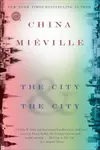

So this is the first of Miéville I've read, and I have to say it's made me keen to read more. This even though the book is very complicated, and the denouement had me frowning in confusion – I feel like the last quarter all unfolded too fast, or else that I wasn't taking enough time to read it.
But regardless. This is more than a crime novel; it's an illustration of this weird concept Miéville has come up with, the uneasy coexistence of the cities of Besźel and Ul Qoma. These cities don't just intersect, but parts of them (the “crosshatched” areas) are parts of both, and citizens of each city go out of their way to “unsee” or “unsense” whatever's taking place in the other, lest they “breach” – the most grievous crime that exists in this society. It's really complicated, but as you read the novel it becomes clear how things work. It also becomes clear that the cities are kept apart as much by nationalism, capitalist ideology, as by geographical quirk; the fact that this setting is not quite divorced from our own world, and comments on social issues affecting our Eastern Europe as well as the one here, appealed to me.
So for fans of fantasy or crime fiction (but preferably both) I really recommend this. Just to comment on the quality of the Kindle edition though, for some reason it always shows the name of Besźel as “Besel” (sometimes broken between the ‘s' and the ‘e' over a line break), and the font had me thinking Ul Qoma was UI Qoma until about halfway through the novel. I can't really blame the publisher or the Kindle platform for my inability to decipher ‘Ul Qoma', but misspelling ‘Besźel'? Seriously? I guess Miéville depicted a place just too foreign for my Kindle, hey...


This was a truly devastating, powerful book, set in Buenos Aires at the dawn of the twenty-first century. It's also, at times, a little too pretentious; I had to roll my eyes more than once at some excessively florid piece of description. But when you sweep aside the pseudo-philosophical cruft, what's left is brilliant. It has elements of a horror story, with a ghostly visitor arriving at Perla's home and showing her (or the reader at least) something of the nightmare of the torture chambers of the military regime. I honestly cried about the fate of this ghost and his love, Gloria; I was also relieved that Perla's own ending was what it was, because I don't think I could have taken much more tragedy.
So. This is clearly a novel that deals with the aftermath of Argentina's military dictatorship, and in particular with those people who were taken from their “subversive” parents (who, of course, were killed) as babies and awarded to various members of the regime. Reaching adulthood, though, she gravitates to the “subversive” type, with her boyfriend of four years (Gabriel) being a researcher into the desaparecidos seven years her senior. The inequality of this relationship made me suspicious that he might only be with her because he thinks she'll be useful for his research (especially once it was revealed what their fight on that Uruguayan beach was about), but happily he turned out to be genuine, because like I said, I couldn't have taken much more tragedy. Everything in Perla's life was already so miserable that I really wanted him to be a good guy. The “big question” in the novel is about identity, and what it is that makes you who you are. At times the author pushes this idea that it's something genetic or inborn; at other times she acknowledges that your life experiences make you. In the end, the novel doesn't really answer its own question, just leaving it open.
The other thing about this novel is how beautifully it evokes Buenos Aires. I fell asleep on Friday night after reading the first four chapters and I dreamed about Buenos Aires. I remember commenting on Carolina de Robertis's wonderful depictions of place in [b:The Invisible Mountain|5981625|The Invisible Mountain|Carolina De Robertis|http://d202m5krfqbpi5.cloudfront.net/books/1320552093s/5981625.jpg|6155001], and it's the same here. Of course there's a kind of contradiction between the romanticised modern city and the dark past whose presence still lingers, but I still really liked it.
Four stars then, because much as I loved this book, I can't bring myself to give five stars to something with such pretentious tangents. I do think her previous book was just a bit better; more happened, for a start, so there was less space for pretension. Still, once you've read that (and I found it way easier to get access to, anyway – I had to resort to buying Perla in paperback!), this is an adequate follow-up. Here's hoping Carolina de Robertis has a third book out before too long.


Like [b:Coonardoo|1486543|Coonardoo|Katharine Susannah Prichard|http://d202m5krfqbpi5.cloudfront.net/books/1273797925s/1486543.jpg|1964276], this is a novel I read because I was trying to get more familiar with my own country's literature. Like that book, Letty Fox was written in the first half of the twentieth century by an Australian, Marxist, female writer, and it was also met with outrage in Australia upon publication – Letty Fox was actually banned here for many years for being too frank in its depictions of sex.
Aside from that, the books couldn't be any less similar. This book is set in the glitzy cities of New York, Paris and London, not a remote cattle station in northern WA. Some of the other reviews of this book have described it as a type of chick-lit from before chick-lit existed, and perhaps to some extent it is, but it's also deeper than that. The book is very much situated in time and place – it shows Letty growing up during the Roaring Twenties, then the Depression, then finally being a young adult in World War Two; it's reasonably political too, even openly political, seeing as (maybe not actually) every second character in this book is a socialist.
I'm inclined to see this book as drawing heavily on Christina Stead's own experiences, particularly of the milieu she moved in. As I said, tons of the characters here are socialists – they're also largely filthy rich. Letty moves in circles of aristocrats, writers, publishers; her grandmothers are both rich and one leaves her a large inheritance; she's enormously pretentious and insists on discussing philosophy in French (and by this I am referring to a page describing a conversation she had with one of her boyfriends, all about pretentious philosophy, in French, with no translations provided. This book is profoundly self-indulgent.). Essentially, Letty Fox moves in that Transatlantic intellectual elite which may profess to be Marxist, but only insofar as it doesn't jeopardise their careers and God forbid they should ever associate with poor people.
This may, of course, be one of the times where reading the introduction has influenced my opinion when subsequently reading the book; the introduction is written by a feminist publisher who chose to reprint this in the seventies or eighties because of its compelling depiction of heterosexual relationships, in all their dysfunctional glory. However, they found that Christina Stead herself was not too keen to be associated with a feminist publishing house, proudly declaring her love for men and insisting it's actually women who are the true parasites in society (even more than the bourgeoisie, apparently...) because so many of them “refuse” to do paid work after marriage. This grossly undervalues the huge amount of unpaid work that women, largely, did and still do; it also ignores the huge institutional obstacles unmarried women faced in landing a job. But no, they're all parasites! Okay.
And the novel does, to a large extent, portray many of its female characters as parasites. Letty, as narrator, is constantly describing her female relatives and their acquaintances as “scheming” – how to snag a rich man, how to divorce him so as to claim alimony, how to jail them for not paying alimony. More than one male character goes to jail for falling behind on alimony payments.
But honestly, the novel portrays its male characters as universally flawed too, and I'd prefer to look at this novel as an examination of how women's oppression under capitalism royally fucks up heterosexual relationships. Marriage is primarily depicted as the way women ensured their economic security, and only secondarily about love. Men are depicted as, generally, womanisers, while women (and especially young women!) fall way too hard for men who don't deserve it. While the circle Letty moves in is quite upper-class, she herself is constantly short on money, and I think her constant pursuit of “the right man” reflects this shortage. Her parents' marriage is disastrously bad. If this novel is anything, it's a depiction of some of (lots of) the myriad ways in which heterosexual relationships go bad.
So despite its self-indulgence, the pretentious French, and the fact that for all my “trying to understand my own country's literature” the novel doesn't even mention Australia once, I did enjoy this. I'm even keen to read more Christina Stead, although I hope she wrote some books that are less than 662 pages long, because that got tiresome and I'm sure there are some unnecessary detours she could have skipped. It's an interesting work.


This book is brilliant, but not as compelling as I thought it might be when it started. The reason for this might be the structure – it's divided into two parts, each with around three dozen extremely short chapters, each of which tells a story that is, for the most part, self-contained. So, it's great for burning through a few chapters while on the bus or train to somewhere, but it's also too easy to get distracted from if you're trying to actually read a solid chunk.As for the plot, the blurb summarises it pretty well, except that I don't think the family ever made it to Barcelona. It's hard to know though, because the book makes reference to so many “local capitals” and “regional capitals” and such that are never given names. Given [a:Peter Bush 100417 Peter Bush http://www.goodreads.com/assets/nophoto/nophoto-U-50x66-251a730d696018971ef4a443cdeaae05.jpg]'s idiosyncratic translation of [b:La plaça del diamant 75515 La plaça del diamant Mercè Rodoreda http://d202m5krfqbpi5.cloudfront.net/books/1211789946s/75515.jpg 225621], I'm not sure if this vagueness was in the original text or if it was his idea of being “helpful”. Either way, the city where the family lives sounds smaller and more rural than Barcelona.The story follows Mimoun, possibly the most contemptuous man alive, and the “patriarch” of the title. Honestly, he's a caricature, the personification of the patriarchy. It's also interesting to note that the narrator, Mimoun's daughter, never reveals her name (at least that I can recall!), which I would think is to make her the personification of the patriarchy's counterweight – a woman, and a migrant woman of colour at that, in Europe. But rather than trying to tell the story of just one person, this novel tries to tell a story common to many people, and so the narrator goes nameless so as to represent all of them.Representing the patriarchy, Mimoun is a terrible human being in pretty much every way. He has sex with every woman he can get his hands on, then denounces them all as “whores”. He's incredibly controlling of his wife and daughter, telling them how they may dress, who they may meet, whether or not they may even leave the house in the first place, etc., with the slightest refusal clearly indicating she's a “whore”. He's violent and abusive, with his (female-dominated) family making excuses for him, lying for him, covering up for him constantly, and he refuses to do any housework except in very unusual circumstances, which prove he's capable of it, he just won't. At one point, the novel explicitly states that Mimoun would fall apart if women weren't constantly looking after him.And yet, while their labour is exploited for Mimoun's gain and still they get treated like shit, most of the women in this story just accept that this is their lot. His wife polices their daughter's behaviour almost as thoroughly as Mimoun himself. The narrator, however, is rebellious. In part, this is because her parents become so oppressive that trying to live a normal life becomes an act of rebellion. It also means that her rebellions aren't always good ideas. But it is satisfying to see a young woman determined to live her life the way she wants, and not be dominated by anyone.The novel is very frank about sexuality – about men's womanising, of course, but also about young women's sexuality. The narrator describes her first orgasm; she describes how she enjoys ‘touching' her female friends; she expresses all the insecurity and self-doubt that led her to persist with her disastrous first relationship. She talks about sex that's really bad because her partner can't be bothered turning her on or getting her off. It's the kind of openness about women's sexuality that I think Western culture needs more of.The ending of the book is pretty fucking weird though, even though every Goodreads reviewer who commented on it loves it (?!). Basically, I cannot get over the fact that her big "fuck-you" to the patriarchy was FUCKING HER UNCLE. The fact that her rebellion leads to some powerful orgasms was symbolic and fine, but HER UNCLE?!? That just crossed a line of squick for me.Anyway... I have thus far only commented on the women's-oppression-related aspects of this book, but I find that easier to talk about than the cultural side. One of the Catalan-language reviews of this book here on Goodreads commented that, if this novel had been written by someone of another race, it would be condemned as racist (as it seems to contrast the oppression women face in Morocco to the liberty of Spain), and while this is something to consider, it's also a counterfactual. It wasn't written by a white person, but by Najat El Hachmi, based in part on her own experiences. And at any rate, it's not intrinsically racist for white people to discuss the way women experience oppression in other cultures, but it is racist to use this to demonstrate how Western culture is “superior” or justify imperialism. While the novel is light on criticisms of Catalan society, I don't think it justifies imperialism, as it makes this young Moroccan woman agent of her own destiny. No one “saves” her, much less any Westerner. And she doesn't abandon her roots, although she fuses her cultures in her own way.And that's it, I think! All in all, this was a great book, and particularly well-structured for anyone who only has a little time to read at a time. Recommended.


This is an intensely unpleasant book to read, but there's lots to talk about regarding it, so bare with me.
So, I came across this book because I realised I knew almost nothing about Australian literature, and my mum agreed that it was pretty obscure before crying, “Oh! But you know, at the start of the twentieth century there was a whole bunch of socialist women writers, Marxists, feminists, I think you'd really like them.” She gave me an old textbook of hers that outlined some of these writers, and Katharine Susannah Prichard was one. The critic writing the textbook really didn't like her work, describing it as ruined by her “crude Marxism” (in later years she actually supported the Soviet Union's repression of artists and writers, so I could see how her crude Stalinism might sully her work), but he conceded that Coonardoo was a classic.
It was first published as a serial in The Bulletin in 1928, and was extremely controversial because (by the standards of the day) it humanised Aboriginal people, rather than conforming to the prevailing idea that they were pests to be more or less exterminated. As a result, Prichard (who was white, I should make clear) had trouble getting the book published with publishers recognising that while such a controversial book would make them a tidy profit, it'd offend so many comfortably racist white people that they were uneasy about it. Evidently the book was published, though.
This is more or less what I gleaned before reading the novel, and since I was coming it at with that background, it was really disappointing.
Perhaps it was anti-racist for 1928, but by modern standards it really isn't. In Prichard's own introduction to the book, she echoes Engels in probably the most problematic things he ever said, describing Aboriginal people as primitive, unevolved versions of Europeans. She's clearly sympathetic to them, but that doesn't excuse the way she writes them, as “noble savages”. At some points, she even outright refers to them as animals, for instance describing Coonardoo's eyes as “the bright beautiful eyes of a wild animal in their thick yellowy whites”. It's not exactly that she's ignorant, either – the book demonstrates that she was familiar with the language Aboriginal people in the area spoke, as well as with their traditions, spiritual beliefs and so on (I can't vouch for how complete her understanding is though, only that she knew a lot and made use of it). It's that she's more of an ethnographer, trying to show off this “exotic” type of human – objectifying them, not treating them as subjects. This made me uncomfortable throughout the book.
Despite being the titular character, Coonardoo isn't really the main character of the book; that would be Hugh Watt, the white man who owns this cattle station, Wytaliba. And despite the blurb describing their relationship as one of “love”, it isn't. For Hugh, he (and his mother before him) are disgusted by the sexual exploitation of black women by white men, and he's determined not to be like that, but he becomes so fucking possessive over Coonardoo anyway that he does something far worse. Even if he didn't, possessiveness is not love. As for Coonardoo, her characterisation is so awkward it's hard to know what to say. She seems to objectify herself; she's been raised from childhood to be a faithful, unpaid servant, and she is. She looks after Hugh, dotes on him, allows him to have sex with her when his mother's death leaves him deeply depressed. Later in the novel, he “claims her as his woman” (i.e. asks her to sleep in the house) so that Sam Geary (owner of a neighbouring cattle station, who represents the sexually exploitative white man the Watts despise) won't get her, and she's bewildered – and, it's later revealed, hurt – that he won't have sex with her the way that men do with “their” women. This is awkwardly written, though; she spends more time “confused” than she does visibly upset about it. From the little we get her thoughts, her concerns are always how best to serve Hugh, and I don't see this as “being in love”; this is submitting to her servitude.
To the extent that they have a relationship, it is totally that of dominator and dominated. I don't think a relationship between a white cattle station owner and his Aboriginal domestic servant could be anything else. They're so unequal (and don't even speak to each other all that much) that you could never call this a love story; a story of a dark and twisted one-time sexual relationship, perhaps.
The ending of the novel is the worst part of it. Sam Geary, who's been lusting after Coonardoo all novel long, turns up at Wytaliba unannounced and rapes her. Once Hugh finds out, he beats Coonardoo to a pulp and throws her into the campfire, because apparently she betrayed him by getting raped. He then expels her from "his property", and she stays away – not because she thinks it's a good idea to avoid Hugh if this is how he'll treat her, but because she wants to follow his wishes, as she's always done. This part of the book talks about how she doesn't understand how she displeased him, and that kind of thing – she blames herself, just as he blames her. It's distressing.
I do think that Prichard did a good job with the characterisation of the white people, particularly the white women. Some of them were extremely unlikeable, but their characters made sense (with the possible exception of Hugh). They were also, for the most part, very different from one another (which, for instance, the Aboriginal characters were not, although they did at least have proper names). The novel depicts a whole range of different types of racism that white Australians in the early twentieth century could be instilled with. It also depicts a lot of different kinds of women, from working-class women who betray their roots and become obnoxious wealthy socialites, to women who want to escape being stifled by bourgeois expectations and be free. The parts of the book that focus on these themes are much less uncomfortable.
So, to wrap up this lengthy review... this book is very much a product of the time and place it was written in. Prichard may have been progressive for that context, but for ours, this book is a painful read. I couldn't say I recommend it, but if you have particular interests that this aligns with, then go for it.