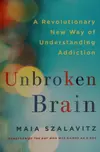

I'd had this book on my shelf for quite a while and was putting it off for fear that it would trigger some sort of emotional response – family trauma stuff, you know – that I wasn't ready for. I'm somehow both delighted and disappointed to report: that was not the case.
As with many research-oriented books, I found that this one in particular was repetitive to the point of becoming unreadable in parts. There was plenty of anecdotal research and no lack of pithy autobiographical stories, but ultimately I thought the scientific backing of the “revolutionary” approach to addiction was lacking. I'm not saying I disagree with most of the arguments in this book (particularly with regard to drug-related policy reform), but if I'm going to read 300 pages about it, I'd hope for a more well-rounded approach that combines both neurological and social evidence.
I'd had this book on my shelf for quite a while and was putting it off for fear that it would trigger some sort of emotional response – family trauma stuff, you know – that I wasn't ready for. I'm somehow both delighted and disappointed to report: that was not the case.
As with many research-oriented books, I found that this one in particular was repetitive to the point of becoming unreadable in parts. There was plenty of anecdotal research and no lack of pithy autobiographical stories, but ultimately I thought the scientific backing of the “revolutionary” approach to addiction was lacking. I'm not saying I disagree with most of the arguments in this book (particularly with regard to drug-related policy reform), but if I'm going to read 300 pages about it, I'd hope for a more well-rounded approach that combines both neurological and social evidence.

I'm biased toward Nabokov as he's one of the authors that taught me to love reading in the first place, so take this review with a grain of salt.
I thought King, Queen, Knave was an absolute delight. I'm not giving it 5 stars only because I don't think it holds a flame to the likes of Lolita or Despair. But, in my opinion, Nabokov can do no wrong. He writes some of the most hatable characters I've ever read, including Martha (the titular Queen). She's awful! Don't get me started on spineless Franz either... God, I love him. The best part for me was the fact that the only character worthy of any admiration is Dreyer. Typically the butt of the love triangle in these stories is portrayed as a fool, but Nabokov turns the trope on its head and gives us two cheating idiots who ultimately (it could be argued, anyway) get what they deserve.
Love it.
I'm biased toward Nabokov as he's one of the authors that taught me to love reading in the first place, so take this review with a grain of salt.
I thought King, Queen, Knave was an absolute delight. I'm not giving it 5 stars only because I don't think it holds a flame to the likes of Lolita or Despair. But, in my opinion, Nabokov can do no wrong. He writes some of the most hatable characters I've ever read, including Martha (the titular Queen). She's awful! Don't get me started on spineless Franz either... God, I love him. The best part for me was the fact that the only character worthy of any admiration is Dreyer. Typically the butt of the love triangle in these stories is portrayed as a fool, but Nabokov turns the trope on its head and gives us two cheating idiots who ultimately (it could be argued, anyway) get what they deserve.
Love it.

From pages ~150-300, I had the recurring thought that I should not have read this book.
For one thing, I'm not the appropriate audience for it; I missed 8th grade U.S. history due to relocating from Florida to Georgia (a little besides the point, I know, but still relevant considering how much U.S. history knowledge Mallon expects the reader to have). One might consider me to be quite the idiot when it comes to ‘50s history in particular, and one could certainly say that I know nothing about what it's like to be a gay man in the ‘50s. Or at any point in time for that matter. For a second thing, I think I just found it boring (likely as a result of the aforementioned incompetence).
So having said that, I'll do my best to judge what I was able to understand. Starting with the writing. I thought the writing was quite good, especially when it came to the abundance of dialogue (which, to me, explains why this was turned into a Showtime series despite its dull, slow plot that to any normal person would not warrant 8 episodes). I'd consider reading another book by Mallon if it was based in a different time period and consisted of entirely different thematic elements. Honestly, if I wasn't so busy getting turned around by all the characters being referred to by both their first and last names interchangeably and at varying times, I might have even enjoyed the plot. Thematically, however, I'm hesitant to admit that it wasn't very appealing. Granted, like I said, I'm not the ideal audience for it... but all things considered, your two main characters are still white men in the ‘50s. Despite their quasi-secretive sexual orientation, they still had it pretty good compared to every other character in the book. All the women were secretaries looking to get married, and any mention of any people of color was derogatory and dismissive (as expected of the ‘50s, so I'm not blaming the author for accurately portraying character dynamics... jfyi). I just found it a little hard to sympathize with their plight. But, hey, at least it's self aware! A great line from Mary when responding to a white man asking her to keep him in the loop: “It amazes me that you believe somebody is going to come down the hall to tell me anything other than that the new file boxes I've ordered have come in.”
Great. Now, speaking of Mary... I am delighted to say that she was my favorite part about this whole book. All things considered, she could in some ways be considered the main character (many who have read the book may scoff at that, but I don't care what you think!). Toward the end, she has a revelation that in many ways sums up the whole conflict of the book (non-political conflict anyway): “She was an engine that couldn't turn over; the only state of mind she could fully embrace was hesitation, a conviction that to accept one man or life was to forfeit another.” I guess that takes me back to the good writing. The characters were lovely despite most of them being unlikable. And Mary, most of all, was an excellent character and acted as the glue that brought everything together - she also vocalized what it seemed like all the other men in the book couldn't: I'm unsure, and I'm scared.
Without Mary, the book is unreadable.
Anyways, I guess what I'm trying to say is... meh.
From pages ~150-300, I had the recurring thought that I should not have read this book.
For one thing, I'm not the appropriate audience for it; I missed 8th grade U.S. history due to relocating from Florida to Georgia (a little besides the point, I know, but still relevant considering how much U.S. history knowledge Mallon expects the reader to have). One might consider me to be quite the idiot when it comes to ‘50s history in particular, and one could certainly say that I know nothing about what it's like to be a gay man in the ‘50s. Or at any point in time for that matter. For a second thing, I think I just found it boring (likely as a result of the aforementioned incompetence).
So having said that, I'll do my best to judge what I was able to understand. Starting with the writing. I thought the writing was quite good, especially when it came to the abundance of dialogue (which, to me, explains why this was turned into a Showtime series despite its dull, slow plot that to any normal person would not warrant 8 episodes). I'd consider reading another book by Mallon if it was based in a different time period and consisted of entirely different thematic elements. Honestly, if I wasn't so busy getting turned around by all the characters being referred to by both their first and last names interchangeably and at varying times, I might have even enjoyed the plot. Thematically, however, I'm hesitant to admit that it wasn't very appealing. Granted, like I said, I'm not the ideal audience for it... but all things considered, your two main characters are still white men in the ‘50s. Despite their quasi-secretive sexual orientation, they still had it pretty good compared to every other character in the book. All the women were secretaries looking to get married, and any mention of any people of color was derogatory and dismissive (as expected of the ‘50s, so I'm not blaming the author for accurately portraying character dynamics... jfyi). I just found it a little hard to sympathize with their plight. But, hey, at least it's self aware! A great line from Mary when responding to a white man asking her to keep him in the loop: “It amazes me that you believe somebody is going to come down the hall to tell me anything other than that the new file boxes I've ordered have come in.”
Great. Now, speaking of Mary... I am delighted to say that she was my favorite part about this whole book. All things considered, she could in some ways be considered the main character (many who have read the book may scoff at that, but I don't care what you think!). Toward the end, she has a revelation that in many ways sums up the whole conflict of the book (non-political conflict anyway): “She was an engine that couldn't turn over; the only state of mind she could fully embrace was hesitation, a conviction that to accept one man or life was to forfeit another.” I guess that takes me back to the good writing. The characters were lovely despite most of them being unlikable. And Mary, most of all, was an excellent character and acted as the glue that brought everything together - she also vocalized what it seemed like all the other men in the book couldn't: I'm unsure, and I'm scared.
Without Mary, the book is unreadable.
Anyways, I guess what I'm trying to say is... meh.

Immediately orders sequel upon completion
I'm usually that annoying type of person who struggles to suspend my disbelief when it comes to fantasy novels. But I was emotionally desperate for this book – after A Little Life followed by a nonfiction about addiction, I told myself it was time for something breezy. City of Brass did not disappoint. I have my qualms (of course, as one must), but they didn't hamper the book's ability to transport me out of my anxiety brain. For that, I am very grateful.
All I wish is that Chakraborty would brainstorm some new ways of expressing “his smile did not reach his eyes”. Might I recommend the following:
“His smile was not compelling”
“He smiled unconvincingly”
“She noticed his smile appeared fake”
Etc, etc, etc.
Immediately orders sequel upon completion
I'm usually that annoying type of person who struggles to suspend my disbelief when it comes to fantasy novels. But I was emotionally desperate for this book – after A Little Life followed by a nonfiction about addiction, I told myself it was time for something breezy. City of Brass did not disappoint. I have my qualms (of course, as one must), but they didn't hamper the book's ability to transport me out of my anxiety brain. For that, I am very grateful.
All I wish is that Chakraborty would brainstorm some new ways of expressing “his smile did not reach his eyes”. Might I recommend the following:
“His smile was not compelling”
“He smiled unconvincingly”
“She noticed his smile appeared fake”
Etc, etc, etc.

An engaging read covering some subject matter that was both informative and challenging.
It did, however, leave me wondering... what was the point? I don't always ask that question after reading novels because in many cases I don't know that there was meant to be a big philosophical takeaway. But with this one, it was clear that the author had something in mind when he set out writing this book – something more than an exploration of racism in the 30s, I think. And I only say this because of the two seemingly random tangents about present-day issues with phone obsession, gun violence, and distribution of wealth. A friend pointed out to me that maybe this was the result of some editing? Maybe the publishers wanted him to tone down the comparisons to present-day but allowed him to keep just a little bit of it? If that's the case, then it's a shame. Because upon reflection, I think I would've liked to see more of that.
An engaging read covering some subject matter that was both informative and challenging.
It did, however, leave me wondering... what was the point? I don't always ask that question after reading novels because in many cases I don't know that there was meant to be a big philosophical takeaway. But with this one, it was clear that the author had something in mind when he set out writing this book – something more than an exploration of racism in the 30s, I think. And I only say this because of the two seemingly random tangents about present-day issues with phone obsession, gun violence, and distribution of wealth. A friend pointed out to me that maybe this was the result of some editing? Maybe the publishers wanted him to tone down the comparisons to present-day but allowed him to keep just a little bit of it? If that's the case, then it's a shame. Because upon reflection, I think I would've liked to see more of that.

There's no great way to say this, but... I had absolutely 0 expectations for this book. Not that I expected it to be bad; I just hadn't heard anything about it, and I received it in a quarterly shipment of books that were chosen for me (and, historically, I've only liked about half of them).
So I was surprised at how much I loved it. The internal dialogue was so poignant and interesting that the story itself could meander somewhat aimlessly (and it did) without notice or care. There's so much I appreciated about the narrator that I hardly know where to start... She put words to things that I have only ever felt but not been able to describe. She told anecdotes without over-describing the characters with anything but their actions. She was self-reflective and self-aware in a way that I long to be but have never achieved. To me, this halfway memoir was basically a master class in journaling.
Would recommend to everyone I know. It's a quick 200-pager that provided more insights and challenging ideas than most 400+-page books I've ever read.
There's no great way to say this, but... I had absolutely 0 expectations for this book. Not that I expected it to be bad; I just hadn't heard anything about it, and I received it in a quarterly shipment of books that were chosen for me (and, historically, I've only liked about half of them).
So I was surprised at how much I loved it. The internal dialogue was so poignant and interesting that the story itself could meander somewhat aimlessly (and it did) without notice or care. There's so much I appreciated about the narrator that I hardly know where to start... She put words to things that I have only ever felt but not been able to describe. She told anecdotes without over-describing the characters with anything but their actions. She was self-reflective and self-aware in a way that I long to be but have never achieved. To me, this halfway memoir was basically a master class in journaling.
Would recommend to everyone I know. It's a quick 200-pager that provided more insights and challenging ideas than most 400+-page books I've ever read.

I preferred the first book. And I ordered the third (and final book) after finishing this one (though I wish it was less than the daunting 850 pages that landed in my mailbox). Take what you want from that.

I went into this book wanting to be told what to think. I wanted to be told what to do about my internal conflict over whether or not it's okay to still (inadvertently nowadays) laugh at Louis CK jokes or sing along to I Believe I Can Fly or read [insert whatever Hemingway book people like] (spoiler alert: I won't ever be finishing a book by Hemingway, but that has nothing to do with him being a shithead — I just think he's bad).
But, as it turns out, that was not the purpose of the book. And, as it also turns out, I'm grateful for that. Though it was at times meandering, I thought Monsters was an excellent exploration of ideas that weren't just limited to monstrous artists (men, mainly) — we also get a taste of film history, flavors of motherhood, theories of beauty, and an innovative look into our role as consumers of art.
Aside from its captivating subject matter, I really just enjoyed the feeling of hanging out with Claire Dederer for 250 pages. As one would expect, she is brilliant. But she's also pretty damn funny, and I found myself laughing out loud several times even during some really dark shit. Plus, Monsters could have been a huge bummer, but it mostly wasn't. What could've easily been a tirade about an unfair world full of disgusting men who fuck young girls, Monsters was a surprisingly objective (“objective” might be gracious, but I don't have a better word for “somewhere-between-subjective-and-objective”) and thoughtful internal dialogue that we've likely all had before: What standard am I supposed to hold these public figures to? Do they deserve my empathy and adoration or my hatred? Why is it that I, as the consumer, am left responsible for deciding how to handle my idol's biography? Can I forgive them? Does it matter? Am I also monstrous? Where do we draw the line between human and monster?
Would recommend. Would read again. Hope someone I know reads it soon so that I can discuss.
I went into this book wanting to be told what to think. I wanted to be told what to do about my internal conflict over whether or not it's okay to still (inadvertently nowadays) laugh at Louis CK jokes or sing along to I Believe I Can Fly or read [insert whatever Hemingway book people like] (spoiler alert: I won't ever be finishing a book by Hemingway, but that has nothing to do with him being a shithead — I just think he's bad).
But, as it turns out, that was not the purpose of the book. And, as it also turns out, I'm grateful for that. Though it was at times meandering, I thought Monsters was an excellent exploration of ideas that weren't just limited to monstrous artists (men, mainly) — we also get a taste of film history, flavors of motherhood, theories of beauty, and an innovative look into our role as consumers of art.
Aside from its captivating subject matter, I really just enjoyed the feeling of hanging out with Claire Dederer for 250 pages. As one would expect, she is brilliant. But she's also pretty damn funny, and I found myself laughing out loud several times even during some really dark shit. Plus, Monsters could have been a huge bummer, but it mostly wasn't. What could've easily been a tirade about an unfair world full of disgusting men who fuck young girls, Monsters was a surprisingly objective (“objective” might be gracious, but I don't have a better word for “somewhere-between-subjective-and-objective”) and thoughtful internal dialogue that we've likely all had before: What standard am I supposed to hold these public figures to? Do they deserve my empathy and adoration or my hatred? Why is it that I, as the consumer, am left responsible for deciding how to handle my idol's biography? Can I forgive them? Does it matter? Am I also monstrous? Where do we draw the line between human and monster?
Would recommend. Would read again. Hope someone I know reads it soon so that I can discuss.
Wow.
I may have to revisit this pathetic “review” after I manage to pick my jaw up off the floor. Maybe then I can add a handful of concrete reasons why There's Always This Year has been my favorite book in the last decade.
This book is art at its finest.
It's been a VERY long time since a book made me feel the way that There's Always This Year did; it was the most beautiful thing I've read/experienced/felt since (probably) adolescence (a time when my brain was ripe for feeling everything deeply). My brain is no longer ripe for feeling so deeply, and yet... something was triggered. I can't even comprehend how this was possible.
For the sake of whoever is reading this, I cannot emphasize this point enough: There's Always This Year is not only for people who have played or who love basketball. Sure, it helps to be familiar with some of the players (caveat: if you haven't heard of LeBron James, then... fine, this book isn't for you), but it's not a prerequisite to appreciating this masterpiece. Sure, it would maaaaaybe help to understand the feeling of playing pickup with your childhood friends on the blacktop with shitty nets (or, if you're lucky, chain nets) or the feeling of tuning out the entire world while shooting around in a gym that's all your own at 9pm because the janitor didn't mind staying late... But the great thing about this book is that you really don't have to have experienced any of those things in order to feel what you're meant to feel.
I'm saying “feel” a lot. It's probably because I struggle with poetry. I struggle with poetry because I don't know if I'm smart enough to identify what it's doing to me or why (frustrating), but I know that it's doing something big (equally frustrating). And this entire book was pure poetry to the point of disbelief. I re-read nearly every sentence at least once, and I found myself scratching my head, wondering, “How the fuck did someone think to do this? What makes this string of words the most perfect string of words that have ever been composed? How are these words communicating something to me that doesn't even line up with the words themselves?”
Now this section is more for my benefit than anyone else's (as is the rest of this review, let's not kid ourselves [ourselves being the multiple versions of myself, of course]): I'll forever be disappointed by whatever writeup I manage to produce here. My only real thought after finishing this book is that everyone I know needs to read it as a way of vastly improving their lives. My only real regret is that I read it too quickly (to be amended next time). And my only identifiable feeling is that I'm equal parts devastated and inspired.
What am I supposed to do with that? How do I move on?
Wow.
I may have to revisit this pathetic “review” after I manage to pick my jaw up off the floor. Maybe then I can add a handful of concrete reasons why There's Always This Year has been my favorite book in the last decade.
This book is art at its finest.
It's been a VERY long time since a book made me feel the way that There's Always This Year did; it was the most beautiful thing I've read/experienced/felt since (probably) adolescence (a time when my brain was ripe for feeling everything deeply). My brain is no longer ripe for feeling so deeply, and yet... something was triggered. I can't even comprehend how this was possible.
For the sake of whoever is reading this, I cannot emphasize this point enough: There's Always This Year is not only for people who have played or who love basketball. Sure, it helps to be familiar with some of the players (caveat: if you haven't heard of LeBron James, then... fine, this book isn't for you), but it's not a prerequisite to appreciating this masterpiece. Sure, it would maaaaaybe help to understand the feeling of playing pickup with your childhood friends on the blacktop with shitty nets (or, if you're lucky, chain nets) or the feeling of tuning out the entire world while shooting around in a gym that's all your own at 9pm because the janitor didn't mind staying late... But the great thing about this book is that you really don't have to have experienced any of those things in order to feel what you're meant to feel.
I'm saying “feel” a lot. It's probably because I struggle with poetry. I struggle with poetry because I don't know if I'm smart enough to identify what it's doing to me or why (frustrating), but I know that it's doing something big (equally frustrating). And this entire book was pure poetry to the point of disbelief. I re-read nearly every sentence at least once, and I found myself scratching my head, wondering, “How the fuck did someone think to do this? What makes this string of words the most perfect string of words that have ever been composed? How are these words communicating something to me that doesn't even line up with the words themselves?”
Now this section is more for my benefit than anyone else's (as is the rest of this review, let's not kid ourselves [ourselves being the multiple versions of myself, of course]): I'll forever be disappointed by whatever writeup I manage to produce here. My only real thought after finishing this book is that everyone I know needs to read it as a way of vastly improving their lives. My only real regret is that I read it too quickly (to be amended next time). And my only identifiable feeling is that I'm equal parts devastated and inspired.
What am I supposed to do with that? How do I move on?

A fulfilling (in some ways, at least) end to the series. I'm not a huge fantasy person, but I did enjoy the escape that these books offered. Makes for great bedtime or airplane reading.
Now time for me to say what everyone who's read this book is already thinking:
There should have been more sex scenes. The final saga had disappointingly few (and by that, I mean... 0 gasp). This, of course, was on purpose because Nahri is her own damn woman who don't need no man and all that, but... sometimes you gotta give the people what they want. We get a spicy, 1-page kissing scene (of the whopping 752 pages), and it's just got me wondering... oh, what could have been?!
I guess I'll have to consult A Court of Mist and Fury soon to scratch that itch.
A fulfilling (in some ways, at least) end to the series. I'm not a huge fantasy person, but I did enjoy the escape that these books offered. Makes for great bedtime or airplane reading.
Now time for me to say what everyone who's read this book is already thinking:
There should have been more sex scenes. The final saga had disappointingly few (and by that, I mean... 0 gasp). This, of course, was on purpose because Nahri is her own damn woman who don't need no man and all that, but... sometimes you gotta give the people what they want. We get a spicy, 1-page kissing scene (of the whopping 752 pages), and it's just got me wondering... oh, what could have been?!
I guess I'll have to consult A Court of Mist and Fury soon to scratch that itch.

As expected after reading There's Always This Year, I adored this book. As someone who grew up in the bubble of Savannah private schools, I'm deeply embarrassed (but certainly not surprised) by how little I knew of the story of A Tribe Called Quest (and all the related 90s rap-related tales I learned in this book). So, while I should have educated myself sooner, I'm thankful that I got to hear the story for the first time from one of my new favorite writers. An added bonus is that I was turned on to a shit ton of albums that I'd never listened to (or heard of) before.
Would recommend for anyone interested in: 90s rap, the music industry, poetry/lyricism, or great writing – i.e. everyone on Goodreads.
As expected after reading There's Always This Year, I adored this book. As someone who grew up in the bubble of Savannah private schools, I'm deeply embarrassed (but certainly not surprised) by how little I knew of the story of A Tribe Called Quest (and all the related 90s rap-related tales I learned in this book). So, while I should have educated myself sooner, I'm thankful that I got to hear the story for the first time from one of my new favorite writers. An added bonus is that I was turned on to a shit ton of albums that I'd never listened to (or heard of) before.
Would recommend for anyone interested in: 90s rap, the music industry, poetry/lyricism, or great writing – i.e. everyone on Goodreads.

I'm a huge Michael Chabon fan, so when I saw this little snack in a used book store, I figured I owed it to myself to give it a go. I skimmed through a few other reviews after I finished the book (a whopping 131 pages, by the way – it takes 2 hours, just read it), and folks are throwing a lot of shade at the storyline itself. Haters always gonna hate, aren't they?
Forget about the story! Is it memorable? Not really. Is it going to keep ya on the edge of your seat? Only if you're working on your posture. But if you love Chabon as I do, then you'll relish this book for its humor and creative style. I'm always here for a crotchety old man, particularly with Chabon's linguistic flair. Best part: the penultimate chapter is from the parrot's perspective, and it is pure delight.
My sole complaint: I wanted more. Another 75 pages, and we're in 5-star territory.
I'm a huge Michael Chabon fan, so when I saw this little snack in a used book store, I figured I owed it to myself to give it a go. I skimmed through a few other reviews after I finished the book (a whopping 131 pages, by the way – it takes 2 hours, just read it), and folks are throwing a lot of shade at the storyline itself. Haters always gonna hate, aren't they?
Forget about the story! Is it memorable? Not really. Is it going to keep ya on the edge of your seat? Only if you're working on your posture. But if you love Chabon as I do, then you'll relish this book for its humor and creative style. I'm always here for a crotchety old man, particularly with Chabon's linguistic flair. Best part: the penultimate chapter is from the parrot's perspective, and it is pure delight.
My sole complaint: I wanted more. Another 75 pages, and we're in 5-star territory.

My skin crawls to give any work of Márquez less than 4 stars, but... they shouldn't have done this. And I shouldn't have read it, but the temptation was overwhelming. It read almost as if someone else was mimicking his style (as many have tried and failed to do). I guess that's what happens when you publish a book that wasn't finished by a man that wasn't wanting it published in the first place.

I read this book on a day when I was already feeling pretty depressed. And after the first 75ish pages, I thought, “today probably isn't the day for this...” But after giving it a little more time (and after taking a little break), I decided that it was actually the perfect day for it. Didion puts words to the apathetic and reckless nature of depression that I've never considered before; sometimes leaning into that type of day is better than trying to rage against it with manufactured energy or enthusiasm.
So I deeply appreciated this “depression incarnate” (quoting another review I skimmed) on a day when I could relate to the dreamlike, sometimes incomprehensible inner monologue of Maria. If I'd read this on a day when I was happy, I think it would've ruined my week. But now? I feel refreshed.
I read this book on a day when I was already feeling pretty depressed. And after the first 75ish pages, I thought, “today probably isn't the day for this...” But after giving it a little more time (and after taking a little break), I decided that it was actually the perfect day for it. Didion puts words to the apathetic and reckless nature of depression that I've never considered before; sometimes leaning into that type of day is better than trying to rage against it with manufactured energy or enthusiasm.
So I deeply appreciated this “depression incarnate” (quoting another review I skimmed) on a day when I could relate to the dreamlike, sometimes incomprehensible inner monologue of Maria. If I'd read this on a day when I was happy, I think it would've ruined my week. But now? I feel refreshed.

Of all the devastating books I've read so far this year (and there have been arguably too many), this one might have topped the list. I'm happy I read it; I learned a lot, and it was probably a necessary read for me as I tend to intentionally avoid the darker realities of our world; I appreciated how the story was wrapped around one central event rather than trying to encapsulate the entire history of conflict (the book was only 217 pages and could've easily been 500+).
That being said, I do wish Thrall would've gone a little deeper; I wish he'd offered a more critical take on the events. He intentionally didn't try to tackle the “why” – likely to avoid bias, which I guess I appreciate – and only gave us the “what”. But in some ways, that makes the whole thing even harder to understand. Given all the interviews he conducted to make this book happen, I would've been really interested to hear more about each person's motivations.
Of all the devastating books I've read so far this year (and there have been arguably too many), this one might have topped the list. I'm happy I read it; I learned a lot, and it was probably a necessary read for me as I tend to intentionally avoid the darker realities of our world; I appreciated how the story was wrapped around one central event rather than trying to encapsulate the entire history of conflict (the book was only 217 pages and could've easily been 500+).
That being said, I do wish Thrall would've gone a little deeper; I wish he'd offered a more critical take on the events. He intentionally didn't try to tackle the “why” – likely to avoid bias, which I guess I appreciate – and only gave us the “what”. But in some ways, that makes the whole thing even harder to understand. Given all the interviews he conducted to make this book happen, I would've been really interested to hear more about each person's motivations.

If this had been written by anyone else, I doubt I ever would've picked it up. But as much as I loved Kitchen Confidential, it felt like a no-brainer to make this a quick vacation read. It's... fine. But it's just that: a vacation (or even a bathroom) read.
It got a few giggles out of me, but definitely nothing to call home about. If you're looking for a palette cleanser after a tough book or a break from one of your longer reads, then go for this one.
If this had been written by anyone else, I doubt I ever would've picked it up. But as much as I loved Kitchen Confidential, it felt like a no-brainer to make this a quick vacation read. It's... fine. But it's just that: a vacation (or even a bathroom) read.
It got a few giggles out of me, but definitely nothing to call home about. If you're looking for a palette cleanser after a tough book or a break from one of your longer reads, then go for this one.