
Laith


This a review for the complete series (Vol 1-7, and the remaining unpublished content). _______
I remember picking this webnovel series up in 2018 when the webtoon/manhwa first began its serialization and I was obsessed immediately. This series was thankfully among the first few webnovels that I completed and it really is some of the best writing that the medium has to offer. Since this story is finally getting an anime adaptation I thought I would do a reread and Solo Leveling is just as good as I remember.
As a primer: Webnovels are different from your standard novel in that they are principally published online, on a chapter by chapter basis. Webnovels are hugely popular in Asia and they differ massively in style and genre depending on their origin. This means that it can take years for a story to unravel, and depending on how disciplined and inspired the author is, you might end up with a story that's mostly filler or thousands of chapters of pure gold. In my experience with this medium I've found that the best novels tend to come out of Korea. Typically a Korean web novel is short (by comparison to seemingly infinite chinese web novels) and structured; most notably Korean webnovels have an ending and do not go on forever.
Solo Leveling is an urban-fantasy novel with video game elements: In a modern world where mystical gates full of monsters begin to appear, a weakling gate hunter undergoes a reawakening and gains a unique ability that sets him on the path to be the world's strongest. SL is the exemplar of what I would call the Gate Genre, a mix of asian fantasy and diablo, and it has spawned its own hoard of copycats and remixes.
I can safely say that SL sold me on a medium that I was skeptical about; could there really be quality reading in a space that seemed to be full of copycats? The problem persists to this day, if you go to Webnovel or KakaoPage today you’ll see thousands of variations of basically the same story. Solo Leveling was unique. Webnovels were and remain to be the driving force behind the Isekai genre boom and SL was a twist on the idea. Unlike those stories with a re-incarnated/transmigrated/transported protagonist, SL broke from the norm while still riding the video game system trend.
There are problems with the series, namely the over reliance on trope, an uncompelling protagonist, and weak dialogue. As the story progresses it falls into familiar beats, and the ending is a more of a set-piece/showcase of our protagonists final form (zero tension) than it is a struggle for survival. This novel also suffers from superman syndrome, and it only gets worse as the protagonist gets more powerful and further removed from the principal cast. His motivations are distant and vague and there is very little done to humanize him, as the story goes on and he accumulates more power it becomes less and less clear why he continues on (his personal motivations). There is a balancing act going on in the narrative sense, this book wants to be a popcorn read but is so heavy and serious at times, that it makes you wish for more deliberate characterization and a standard format. This story begs for a novelization with a talented editor, and I wish that's what these published volumes would have been.
I won't knock this story for having the same core weakness as all the other webnovels, in fact I want to be clear that I am rating this on its own special little webnovel scale. It is being compared to its peers. As a piece of literature, to be judged alongside the Blood Meridians and Slaughterhouse Vs, I think that this is a middling effort, 2.5/3 stars max. As a webnovel and a piece of entertainment this is a 5 star product; it stands head and shoulders above other stories in the medium and it is such an addictive read.
If you liked this novel and want more, or you found this series lacking I would recommend two other Korean Webnovels that I personally enjoyed just as much if not more than SL: The Novel's Extra and The Second Coming of Gluttony
TL;DR: It has its flaws but this is a fun and addictive series, and unlike some other popular webnovels it is complete and has many adaptations to choose from.
This a review for the complete series (Vol 1-7, and the remaining unpublished content). _______
I remember picking this webnovel series up in 2018 when the webtoon/manhwa first began its serialization and I was obsessed immediately. This series was thankfully among the first few webnovels that I completed and it really is some of the best writing that the medium has to offer. Since this story is finally getting an anime adaptation I thought I would do a reread and Solo Leveling is just as good as I remember.
As a primer: Webnovels are different from your standard novel in that they are principally published online, on a chapter by chapter basis. Webnovels are hugely popular in Asia and they differ massively in style and genre depending on their origin. This means that it can take years for a story to unravel, and depending on how disciplined and inspired the author is, you might end up with a story that's mostly filler or thousands of chapters of pure gold. In my experience with this medium I've found that the best novels tend to come out of Korea. Typically a Korean web novel is short (by comparison to seemingly infinite chinese web novels) and structured; most notably Korean webnovels have an ending and do not go on forever.
Solo Leveling is an urban-fantasy novel with video game elements: In a modern world where mystical gates full of monsters begin to appear, a weakling gate hunter undergoes a reawakening and gains a unique ability that sets him on the path to be the world's strongest. SL is the exemplar of what I would call the Gate Genre, a mix of asian fantasy and diablo, and it has spawned its own hoard of copycats and remixes.
I can safely say that SL sold me on a medium that I was skeptical about; could there really be quality reading in a space that seemed to be full of copycats? The problem persists to this day, if you go to Webnovel or KakaoPage today you’ll see thousands of variations of basically the same story. Solo Leveling was unique. Webnovels were and remain to be the driving force behind the Isekai genre boom and SL was a twist on the idea. Unlike those stories with a re-incarnated/transmigrated/transported protagonist, SL broke from the norm while still riding the video game system trend.
There are problems with the series, namely the over reliance on trope, an uncompelling protagonist, and weak dialogue. As the story progresses it falls into familiar beats, and the ending is a more of a set-piece/showcase of our protagonists final form (zero tension) than it is a struggle for survival. This novel also suffers from superman syndrome, and it only gets worse as the protagonist gets more powerful and further removed from the principal cast. His motivations are distant and vague and there is very little done to humanize him, as the story goes on and he accumulates more power it becomes less and less clear why he continues on (his personal motivations). There is a balancing act going on in the narrative sense, this book wants to be a popcorn read but is so heavy and serious at times, that it makes you wish for more deliberate characterization and a standard format. This story begs for a novelization with a talented editor, and I wish that's what these published volumes would have been.
I won't knock this story for having the same core weakness as all the other webnovels, in fact I want to be clear that I am rating this on its own special little webnovel scale. It is being compared to its peers. As a piece of literature, to be judged alongside the Blood Meridians and Slaughterhouse Vs, I think that this is a middling effort, 2.5/3 stars max. As a webnovel and a piece of entertainment this is a 5 star product; it stands head and shoulders above other stories in the medium and it is such an addictive read.
If you liked this novel and want more, or you found this series lacking I would recommend two other Korean Webnovels that I personally enjoyed just as much if not more than SL: The Novel's Extra and The Second Coming of Gluttony
TL;DR: It has its flaws but this is a fun and addictive series, and unlike some other popular webnovels it is complete and has many adaptations to choose from.

Here's the book club pick for August, and I found it to be much better than the last two picks (Planetfall, Fourth Wing). Ninth House is a masterfully written piece of Dark Academia/Urban Fantasy, it's also a multilayered ode or dirge to Yale- I'm not sure exactly how to take it. If you like that spooky girl shit this will be right up your alley, and if you like the Dresden Files well congrats because this is very similar (with less misogyny and a tighter plot to boot).
Also right at the top here's your mature content warning: This book has some pretty visceral scenes of sexual violence/rape/date rape, it's not in there for no reason but it will make your skin crawl.
Ninth House is set in the modern day and is about Galaxy "Alex" Stern, a girl who possesses the ability to see ghosts and is granted a full scholarship to attend Yale and become the Dante of Lethe. her job? To monitor the activities of its secret societies. You heard it right, Yale is Hogwarts, the secret societies that pump out modern-day elites? Magic. Definitely not nepotism or the hidden mechanisms of an Oligarchy.
I found the pacing to be excellent, there's a good mix of suspenseful fast-paced sections and slower contemplative passages that Bardugo uses to fill us in on the workings of Lethe and Yale. I loved those quick sections they have that "just one more page" quality that all the best books have. On the other hand, the slow sections do kind of drag as we get the intricate details of the magical world and secret societies. While these moments might slow down the overall narrative pace, they contribute to a richer understanding of the characters and the complex dynamics at play. I can see other readers disagreeing on pacing, particularly if they are more invested in the action and suspense.
I didn't get a ton out of the prose or the writing for this one, it read neutral to me. I guess atmospheric is a good word to describe the vibe here, Bardugo pays careful attention to the world-building and tries her best to fill the air with mystery. I think I'd have been more impressed if I'd read this before I read The Dresden Files.
I think I would have put this book down if it had just been a 1:1 Yale is Hogwarts kind of a story, but thankfully it isn't. Ninth House is a very complex, very aware kind of story; it trades in magic and mystery but it's careful to include a particular focus on power, privilege, and the weight of one's actions. The best books reflect the real world in their subject matter and Ninth House does a great job on that front. The world of secret societies serves as a metaphor for the unchecked privilege and entitlement that can permeate certain (*cough* Elite *cough*) spheres of society. The members of these societies often come from privileged backgrounds, and their actions are shielded from consequences due to their status.
In the real world, the secret societies at Yale wield immense influence and authority, creating a microcosm where power struggles are often concealed beneath a veneer of tradition and exclusivity. I don't think the layman knows just how much power originates from Yale, take a look at how many Yale grads wind up running the country. This dynamic is paralleled in the magical world, where different characters possess varying degrees of supernatural power, leading to questions about control, exploitation, and responsibility. I really resonated with this lens that the Ninth House views its world through, it asks all the right questions and it's enormously satisfying to see someone holding the elites responsible (even if it's just fiction). The story serves as a cautionary tale about the consequences of unchecked ambition and the importance of critically examining the systems and structures that govern society.
I can't pinpoint exactly what kept this from earning 5 stars for me. I found myself reading this book and enjoying it but constantly waiting for it to lock me in the way Babel: An Arcane History did, but I made it to the back cover without ever fully connecting with this story. From my perspective Dark Academia is a touchy subject, it's been done to perfection so many times that a new entry in the genre has a very hard time distinguishing itself. As much as I loved Alex taking the privileged students of Yale to task, the college setting didn't do much for me; I think that the unique elements of this book would resonate with a slightly younger audience.
TL;DR: Yale is Hogwarts, and Harry is an ex-junkie who sees ghosts. If you've ever wanted to cave Jared Kushner's skull in with a marble bust and you liked the Dresden Files this might be exactly what you are looking for.
Here's the book club pick for August, and I found it to be much better than the last two picks (Planetfall, Fourth Wing). Ninth House is a masterfully written piece of Dark Academia/Urban Fantasy, it's also a multilayered ode or dirge to Yale- I'm not sure exactly how to take it. If you like that spooky girl shit this will be right up your alley, and if you like the Dresden Files well congrats because this is very similar (with less misogyny and a tighter plot to boot).
Also right at the top here's your mature content warning: This book has some pretty visceral scenes of sexual violence/rape/date rape, it's not in there for no reason but it will make your skin crawl.
Ninth House is set in the modern day and is about Galaxy "Alex" Stern, a girl who possesses the ability to see ghosts and is granted a full scholarship to attend Yale and become the Dante of Lethe. her job? To monitor the activities of its secret societies. You heard it right, Yale is Hogwarts, the secret societies that pump out modern-day elites? Magic. Definitely not nepotism or the hidden mechanisms of an Oligarchy.
I found the pacing to be excellent, there's a good mix of suspenseful fast-paced sections and slower contemplative passages that Bardugo uses to fill us in on the workings of Lethe and Yale. I loved those quick sections they have that "just one more page" quality that all the best books have. On the other hand, the slow sections do kind of drag as we get the intricate details of the magical world and secret societies. While these moments might slow down the overall narrative pace, they contribute to a richer understanding of the characters and the complex dynamics at play. I can see other readers disagreeing on pacing, particularly if they are more invested in the action and suspense.
I didn't get a ton out of the prose or the writing for this one, it read neutral to me. I guess atmospheric is a good word to describe the vibe here, Bardugo pays careful attention to the world-building and tries her best to fill the air with mystery. I think I'd have been more impressed if I'd read this before I read The Dresden Files.
I think I would have put this book down if it had just been a 1:1 Yale is Hogwarts kind of a story, but thankfully it isn't. Ninth House is a very complex, very aware kind of story; it trades in magic and mystery but it's careful to include a particular focus on power, privilege, and the weight of one's actions. The best books reflect the real world in their subject matter and Ninth House does a great job on that front. The world of secret societies serves as a metaphor for the unchecked privilege and entitlement that can permeate certain (*cough* Elite *cough*) spheres of society. The members of these societies often come from privileged backgrounds, and their actions are shielded from consequences due to their status.
In the real world, the secret societies at Yale wield immense influence and authority, creating a microcosm where power struggles are often concealed beneath a veneer of tradition and exclusivity. I don't think the layman knows just how much power originates from Yale, take a look at how many Yale grads wind up running the country. This dynamic is paralleled in the magical world, where different characters possess varying degrees of supernatural power, leading to questions about control, exploitation, and responsibility. I really resonated with this lens that the Ninth House views its world through, it asks all the right questions and it's enormously satisfying to see someone holding the elites responsible (even if it's just fiction). The story serves as a cautionary tale about the consequences of unchecked ambition and the importance of critically examining the systems and structures that govern society.
I can't pinpoint exactly what kept this from earning 5 stars for me. I found myself reading this book and enjoying it but constantly waiting for it to lock me in the way Babel: An Arcane History did, but I made it to the back cover without ever fully connecting with this story. From my perspective Dark Academia is a touchy subject, it's been done to perfection so many times that a new entry in the genre has a very hard time distinguishing itself. As much as I loved Alex taking the privileged students of Yale to task, the college setting didn't do much for me; I think that the unique elements of this book would resonate with a slightly younger audience.
TL;DR: Yale is Hogwarts, and Harry is an ex-junkie who sees ghosts. If you've ever wanted to cave Jared Kushner's skull in with a marble bust and you liked the Dresden Files this might be exactly what you are looking for.

I bumped this to the top of my list based on the premise alone, and hey Brandon Sanderson loves this series so why not? I wasn't in love with it immediately but I have to say that the last third of this book is a whirlwind that excites and delights. For something that seemed to be tailored to my tastes, I wound up liking it less than I'd hoped but it is competing with much heavier hitters and this is a Debut novel. This was a competent story, an excellent opening to a series, and one of the best author debuts I've read, I will definitely be picking up the sequel, The Crimson Campaign.
Promise of Blood kicks off the Powder Mage series with a bang (get it?). This is a gunpowder fantasy book with a strong emphasis on world-building, its magic system, and the politics of its universe. This is a fairly unique blend of fantasy and the Second Industrial Revolution, and the plot hinges on a populist/military coup in the country of Adro. The story follows the perspective of three characters, Field Marshal Tamas, his son Taniel, and the investigator Adamat in the immediate aftermath of Tamas taking power in Adro. The focus shifts from politics to magic and back as more of the world and its structure are revealed. This is a fast-paced book with tons of twists and turns. The pacing works for me, but in addition to the pace we have to contend with a sizable cast and it can be a little disorienting to keep track of everyone.
I found the writing to be clear and concise, I would consider this one of the more accessible mil-fic style books I've ever read. McClellan has a talent for writing dialogue as well as action scenes, and with such an imaginative premise and complicated plot, he really gets to flex those skills. I found the dialogue to be charming, humorous, and alive. A lot of the character development is done in the dialogue and you get a very clear sense of everyone's personalities and quirks. My eyes usually glaze over when it comes to poorly written action, and while not every action scene in this book is gripping or interesting he's done it well where it counts, the last 10% has one of the most engaging action scenes I've read in a long time (the battle at the manor).
I think the real draw here is the magic system and the world-building. I've never read anything that had this unique blend of gunpowder and magic, Fantasy typically grounds gunpowder in science/tech so it was really interesting to read about the powder mages. I would also like to shout out the world-building here, the universe is interesting, and the politics are complicated the whole package evokes a "real" feel. The world felt alive and complex, and the further you get in the novel the more mystery gets added into the package.
This is a Debut so there are a few issues/quirks that the book has. I think first and foremost the themes we've got kicking around are pretty tired and uninteresting. Questions of loyalty and the burden of authority are nothing new, and whatever exploration of those themes there is in this book is trite and uninspired. This is a fairly big oversight since it robs the story of any additional depth, and it's not like there wasn't room for a little political discourse or the introduction of a powder mage named Joeseph Stallin or Lyon Trutski or something. This is a book set in a facsimile of 1860's Europe and there is no mention/reference to the revolutions of 1848 or the labor movement, it's borderline unforgivable. I can understand if this stuff got cut out in editing since this is a pretty complex story already, but the book is worse off without its inclusion.
There is a workers union in this book, the Warriors of Labor, but they do not feature outside of a handful of paragraphs. This is indicative of the second major weakness of this book, and the issue that kept it from earning an otherwise well-deserved 5 stars. There is a serious lack of secondary character development. There are enormously interesting side characters and factions in this book that operate with little to no backstory whatsoever. I would have preferred turning the pace down just a touch so characters like Ka-Poel, Bo, and the Prime Lector could have had more to them in addition to being a bigger influence on the story.
This book and series seem tailored to my interests but it might not be for everyone. The book is definitely leaning hard on tropes found in Mil-Fic, the emphasis on action and battle is obvious and there's an imbalance when it comes to action v. exposition. Strong female characters are few and far between, and of the two that feature most prominently one is mute. I guess I'm trying to say that this might be "boy-fic" as opposed to "chick-lit".
TL;DR: This is a strong Debut, a fast-paced action-packed romp with both magic and gunpowder. It's a little weak when it comes to anything not action or magic-related, but it's good enough to get me to read the sequel.
I bumped this to the top of my list based on the premise alone, and hey Brandon Sanderson loves this series so why not? I wasn't in love with it immediately but I have to say that the last third of this book is a whirlwind that excites and delights. For something that seemed to be tailored to my tastes, I wound up liking it less than I'd hoped but it is competing with much heavier hitters and this is a Debut novel. This was a competent story, an excellent opening to a series, and one of the best author debuts I've read, I will definitely be picking up the sequel, The Crimson Campaign.
Promise of Blood kicks off the Powder Mage series with a bang (get it?). This is a gunpowder fantasy book with a strong emphasis on world-building, its magic system, and the politics of its universe. This is a fairly unique blend of fantasy and the Second Industrial Revolution, and the plot hinges on a populist/military coup in the country of Adro. The story follows the perspective of three characters, Field Marshal Tamas, his son Taniel, and the investigator Adamat in the immediate aftermath of Tamas taking power in Adro. The focus shifts from politics to magic and back as more of the world and its structure are revealed. This is a fast-paced book with tons of twists and turns. The pacing works for me, but in addition to the pace we have to contend with a sizable cast and it can be a little disorienting to keep track of everyone.
I found the writing to be clear and concise, I would consider this one of the more accessible mil-fic style books I've ever read. McClellan has a talent for writing dialogue as well as action scenes, and with such an imaginative premise and complicated plot, he really gets to flex those skills. I found the dialogue to be charming, humorous, and alive. A lot of the character development is done in the dialogue and you get a very clear sense of everyone's personalities and quirks. My eyes usually glaze over when it comes to poorly written action, and while not every action scene in this book is gripping or interesting he's done it well where it counts, the last 10% has one of the most engaging action scenes I've read in a long time (the battle at the manor).
I think the real draw here is the magic system and the world-building. I've never read anything that had this unique blend of gunpowder and magic, Fantasy typically grounds gunpowder in science/tech so it was really interesting to read about the powder mages. I would also like to shout out the world-building here, the universe is interesting, and the politics are complicated the whole package evokes a "real" feel. The world felt alive and complex, and the further you get in the novel the more mystery gets added into the package.
This is a Debut so there are a few issues/quirks that the book has. I think first and foremost the themes we've got kicking around are pretty tired and uninteresting. Questions of loyalty and the burden of authority are nothing new, and whatever exploration of those themes there is in this book is trite and uninspired. This is a fairly big oversight since it robs the story of any additional depth, and it's not like there wasn't room for a little political discourse or the introduction of a powder mage named Joeseph Stallin or Lyon Trutski or something. This is a book set in a facsimile of 1860's Europe and there is no mention/reference to the revolutions of 1848 or the labor movement, it's borderline unforgivable. I can understand if this stuff got cut out in editing since this is a pretty complex story already, but the book is worse off without its inclusion.
There is a workers union in this book, the Warriors of Labor, but they do not feature outside of a handful of paragraphs. This is indicative of the second major weakness of this book, and the issue that kept it from earning an otherwise well-deserved 5 stars. There is a serious lack of secondary character development. There are enormously interesting side characters and factions in this book that operate with little to no backstory whatsoever. I would have preferred turning the pace down just a touch so characters like Ka-Poel, Bo, and the Prime Lector could have had more to them in addition to being a bigger influence on the story.
This book and series seem tailored to my interests but it might not be for everyone. The book is definitely leaning hard on tropes found in Mil-Fic, the emphasis on action and battle is obvious and there's an imbalance when it comes to action v. exposition. Strong female characters are few and far between, and of the two that feature most prominently one is mute. I guess I'm trying to say that this might be "boy-fic" as opposed to "chick-lit".
TL;DR: This is a strong Debut, a fast-paced action-packed romp with both magic and gunpowder. It's a little weak when it comes to anything not action or magic-related, but it's good enough to get me to read the sequel.

So usually I break a book down in my reviews and comment on the style, but this is Stephen King. I think anyone who came to literacy in the last 50 years knows what they're in for. He is a master, and this story is one of his masterpieces, that's all I need to say. If you like time travel stories, or you're interested in JFK, hell even if you don't like those topics, this book is still worth the read.
I had a big Stephen King phase in high school. I totally overdid it. In fact, I read so much of him in such a short time that all the books sort of blended together and I managed to get turned off of his stuff. In my experience, Stephen King is a master at getting readers to binge the first half of a story like it's crack and then letting his stories slowly fizzle out. I pretty much swore off of King by the time this novel was published, and shortly thereafter I was firmly off of the reading wagon altogether.
What's that got to do with 11/22/63? Well aside from having the most engaging premise mankind's ever seen fit to imagine, 11/22/63 also happens to have an ending that wasn't entirely composed by Stephen King. It is his son, Joe Hill, to whom we have to thank for a Stephen King book with a proper ending. I can't stress this point enough because it was this little tidbit that got me to read this book to begin with, can you imagine it? A Stephen King book without the drawback of a shitty pissy little half-assed ending!
There are a few things about 11/22/63 that are special, these are small touches that elevate it beyond standard SK fare in my eyes:
The first is that it takes place in the same universe as many of King's other popular works, most notably It and the town of Derry features prominently. This is a book aimed squarely at the fans, there are more small nods than I could try to list, and as I worked my way through the book I was constantly finding them (to my delight).
The second is that this book is not a reference for reference's sake kind of story. I think it would have been all too easy to get lost in the nostalgia sauce/exploration of the late 50s/early 60s; this book does have a ton of 60's material to get lost in but it's doled out with a measured hand. This could have easily read like a 60's Highlights/SK bibliography highlight reel, but everything that Stephen King has added to the pot is in there for a reason.
The final touch is one that ties it all together; the theme and tone of the book are just perfect. This is a story of echoes, and the focus is on harmonics and repeating patterns. With every little detail, the story is meant to evoke a sense of Deja Vu, and there's plenty of that to be had between the nostalgic 60's callbacks (a decade which thanks to TV and film we are all nostalgic for, even if we never lived it) and in-universe references. Everything the main character sees and does is mirrored bizarrely in another section of the book, and the story itself reads more like a collection of stories set in the lead-up to, and aftermath of, the Kennedy assassination. There's a lot of interplay is the point, and the more you pick up on it, the more it amplifies the feelings that King wants you to feel as you read the story. I am a sucker for this kind of attention to detail, it's rare and hard to pull off but like I said before, we are in the hands of a master for this one.
TL;DR: Finally an SK novel with a proper ending. For my money, this is the best thing he's ever written. It's definitely aimed at SK and JFK fans, but I wouldn't consider it necessary to care about either to enjoy this book.
So usually I break a book down in my reviews and comment on the style, but this is Stephen King. I think anyone who came to literacy in the last 50 years knows what they're in for. He is a master, and this story is one of his masterpieces, that's all I need to say. If you like time travel stories, or you're interested in JFK, hell even if you don't like those topics, this book is still worth the read.
I had a big Stephen King phase in high school. I totally overdid it. In fact, I read so much of him in such a short time that all the books sort of blended together and I managed to get turned off of his stuff. In my experience, Stephen King is a master at getting readers to binge the first half of a story like it's crack and then letting his stories slowly fizzle out. I pretty much swore off of King by the time this novel was published, and shortly thereafter I was firmly off of the reading wagon altogether.
What's that got to do with 11/22/63? Well aside from having the most engaging premise mankind's ever seen fit to imagine, 11/22/63 also happens to have an ending that wasn't entirely composed by Stephen King. It is his son, Joe Hill, to whom we have to thank for a Stephen King book with a proper ending. I can't stress this point enough because it was this little tidbit that got me to read this book to begin with, can you imagine it? A Stephen King book without the drawback of a shitty pissy little half-assed ending!
There are a few things about 11/22/63 that are special, these are small touches that elevate it beyond standard SK fare in my eyes:
The first is that it takes place in the same universe as many of King's other popular works, most notably It and the town of Derry features prominently. This is a book aimed squarely at the fans, there are more small nods than I could try to list, and as I worked my way through the book I was constantly finding them (to my delight).
The second is that this book is not a reference for reference's sake kind of story. I think it would have been all too easy to get lost in the nostalgia sauce/exploration of the late 50s/early 60s; this book does have a ton of 60's material to get lost in but it's doled out with a measured hand. This could have easily read like a 60's Highlights/SK bibliography highlight reel, but everything that Stephen King has added to the pot is in there for a reason.
The final touch is one that ties it all together; the theme and tone of the book are just perfect. This is a story of echoes, and the focus is on harmonics and repeating patterns. With every little detail, the story is meant to evoke a sense of Deja Vu, and there's plenty of that to be had between the nostalgic 60's callbacks (a decade which thanks to TV and film we are all nostalgic for, even if we never lived it) and in-universe references. Everything the main character sees and does is mirrored bizarrely in another section of the book, and the story itself reads more like a collection of stories set in the lead-up to, and aftermath of, the Kennedy assassination. There's a lot of interplay is the point, and the more you pick up on it, the more it amplifies the feelings that King wants you to feel as you read the story. I am a sucker for this kind of attention to detail, it's rare and hard to pull off but like I said before, we are in the hands of a master for this one.
TL;DR: Finally an SK novel with a proper ending. For my money, this is the best thing he's ever written. It's definitely aimed at SK and JFK fans, but I wouldn't consider it necessary to care about either to enjoy this book.
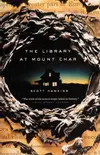
This was the book club pick for October and I loved it. That might be an understatement, this book alone justifies an entire year of meh picks and really highlights the value of reading books that are off of your radar. To my eye this is nearly a perfect book, it's got rollercoaster pacing, true-to-life dialogue, humor in spades, and the most cohesive/tight plotting of anything that I've read this year (and I finished The Culture this year). I cannot believe that outside of some technical manuals, this is Scott Hawkins' debut; this is a first try that has left me in awe.
Before I dive in I usually do this for books that need one: Here is your mature content warning, this book has basically every possible trigger under the sun, there's graphic murder and gore, rape and sexual assault, there's mass murder and violence to animals.
The story revolves around Carolyn, one of several orphans taken in by a mysterious and god-like figure known as Father. Each child is assigned a specific catalog of knowledge to master, and Carolyn's domain is the Library, a place that houses unimaginable secrets and powers. When Father goes missing, the children, now adults with god-like abilities, must confront the mysteries of the library and the past. If the summary left you glossy-eyed and uninterested I can't blame you, but this is one of those books that the blurb on the jacket won't ever be able to do justice to.
As I draft this review I think I've written the phrase "unlike anything i've ever read" at least a hundred times only to delete and rephrase as I think about it a little more. The thing is that there are works that are similar to this in premise, atmosphere, or tone; examples from my list are The Umbrella Academy, Vol. 1: Apocalypse Suite, The Wasp Factory, The Book of the New Sun, and American Gods. But from a writing standpoint, this book is wholly unique, I saw it written in another review and I cannot help but agree, that reading this book is an exercise in trusting the author.
So let's talk about the writing for a second. This is a complex and challenging book, it is non-linear in structure and the story is fragmented, with flashbacks interspersed every few chapters to drip-feed the reader the backstory and context. There is a distinct feeling of unreliability in the narration, reading this gave me the sense that I never once had the complete picture and that there was something truly horrible looming just over the horizon. If you're someone who reads a lot of fiction that sense of mystery and unease usually dissolves as you get a sense of what type of story is being told, but that moment is never within reach in this novel. Just when you think you've figured out the rules of the world, Hawkins throws in a curveball that leaves you questioning everything.
Part of that unpredictability is rooted in the characters, and we have a whole host of eccentric and terrifying characters, not least of all the main character, Carolyn. All I can really say is that she is one scary-ass lady. As more of her is revealed in each increasingly horrible flashback the tension of this book ratchets up another notch as you piece together the plot and Carolyn's role in the story. It's not just Carolyn, this book reveals more and more facets of each of its characters; the more we know the more we have to take into account. Characters that you thought you knew can change completely with a simple revelation, all of their actions and your reckoning of them completely upended and leaving you blown away in the chaotic swirl.
I don't want to paint this book as overly serious and dark, Hawkins is a master at pairing levity with horror. As much as this book made me wince and shift uncomfortably it made me laugh out loud at just how fun all this madness can be. This story jumps from one horror to another but he never fails to use humor expertly as a relief valve; the president could be beheaded in one paragraph and his head would blow raspberries and kisses in the next. Much of the humor is in the banter and dialogue which I also loved, Hawkins writes these absolutely wacky characters but gives them frank and believable dialogue with much of the humor being couched in absurdity and wit.
I've got two closing notes and that's a wrap. The first is that I loved how direct the prose was in this book. This isn't to say there is an absence of beautiful and flowery language, because there is, but it's only used when appropriate. The majority of this book is direct and brutal, people don't get shot or pierced through, people get "Half their guts blown out" or get their "heart and lungs obliterated, sending a good bit of tissue out a fist-sized hole in his back". The second note is that I loved the ending, it felt like every little puzzle piece fell into place and the things I took note of were addressed in a complete and satisfying way.
TL;DR: The best description I can give is that there's a team of super kids with an unfathomable and terrifying father, intense flashes of violence and mayhem paired with dark humor, and non-linear dream-ish storytelling.
This was the book club pick for October and I loved it. That might be an understatement, this book alone justifies an entire year of meh picks and really highlights the value of reading books that are off of your radar. To my eye this is nearly a perfect book, it's got rollercoaster pacing, true-to-life dialogue, humor in spades, and the most cohesive/tight plotting of anything that I've read this year (and I finished The Culture this year). I cannot believe that outside of some technical manuals, this is Scott Hawkins' debut; this is a first try that has left me in awe.
Before I dive in I usually do this for books that need one: Here is your mature content warning, this book has basically every possible trigger under the sun, there's graphic murder and gore, rape and sexual assault, there's mass murder and violence to animals.
The story revolves around Carolyn, one of several orphans taken in by a mysterious and god-like figure known as Father. Each child is assigned a specific catalog of knowledge to master, and Carolyn's domain is the Library, a place that houses unimaginable secrets and powers. When Father goes missing, the children, now adults with god-like abilities, must confront the mysteries of the library and the past. If the summary left you glossy-eyed and uninterested I can't blame you, but this is one of those books that the blurb on the jacket won't ever be able to do justice to.
As I draft this review I think I've written the phrase "unlike anything i've ever read" at least a hundred times only to delete and rephrase as I think about it a little more. The thing is that there are works that are similar to this in premise, atmosphere, or tone; examples from my list are The Umbrella Academy, Vol. 1: Apocalypse Suite, The Wasp Factory, The Book of the New Sun, and American Gods. But from a writing standpoint, this book is wholly unique, I saw it written in another review and I cannot help but agree, that reading this book is an exercise in trusting the author.
So let's talk about the writing for a second. This is a complex and challenging book, it is non-linear in structure and the story is fragmented, with flashbacks interspersed every few chapters to drip-feed the reader the backstory and context. There is a distinct feeling of unreliability in the narration, reading this gave me the sense that I never once had the complete picture and that there was something truly horrible looming just over the horizon. If you're someone who reads a lot of fiction that sense of mystery and unease usually dissolves as you get a sense of what type of story is being told, but that moment is never within reach in this novel. Just when you think you've figured out the rules of the world, Hawkins throws in a curveball that leaves you questioning everything.
Part of that unpredictability is rooted in the characters, and we have a whole host of eccentric and terrifying characters, not least of all the main character, Carolyn. All I can really say is that she is one scary-ass lady. As more of her is revealed in each increasingly horrible flashback the tension of this book ratchets up another notch as you piece together the plot and Carolyn's role in the story. It's not just Carolyn, this book reveals more and more facets of each of its characters; the more we know the more we have to take into account. Characters that you thought you knew can change completely with a simple revelation, all of their actions and your reckoning of them completely upended and leaving you blown away in the chaotic swirl.
I don't want to paint this book as overly serious and dark, Hawkins is a master at pairing levity with horror. As much as this book made me wince and shift uncomfortably it made me laugh out loud at just how fun all this madness can be. This story jumps from one horror to another but he never fails to use humor expertly as a relief valve; the president could be beheaded in one paragraph and his head would blow raspberries and kisses in the next. Much of the humor is in the banter and dialogue which I also loved, Hawkins writes these absolutely wacky characters but gives them frank and believable dialogue with much of the humor being couched in absurdity and wit.
I've got two closing notes and that's a wrap. The first is that I loved how direct the prose was in this book. This isn't to say there is an absence of beautiful and flowery language, because there is, but it's only used when appropriate. The majority of this book is direct and brutal, people don't get shot or pierced through, people get "Half their guts blown out" or get their "heart and lungs obliterated, sending a good bit of tissue out a fist-sized hole in his back". The second note is that I loved the ending, it felt like every little puzzle piece fell into place and the things I took note of were addressed in a complete and satisfying way.
TL;DR: The best description I can give is that there's a team of super kids with an unfathomable and terrifying father, intense flashes of violence and mayhem paired with dark humor, and non-linear dream-ish storytelling.

I think I'm a Becky Chambers fan. I've only read The Long Way to a Small, Angry Planet so maybe that's premature but I really liked that book, and spoiler: I loved this book. This is a spoonful of sugar, a warm cup of something on a perfect fall day; and I read this at the perfect time, peak spooky season, the leaves have turned and it is nice and cool and rainy. What a cozy and comfy vibe.
I feel like expounding on how cozy this is might actually undercut some of the coziness and I would hate to take the full blast away from anyone. Just trust me when I say the cozy element of this book is there and it is perfectly done, and if that's what you want to key in on: it's in there go read it.
I also don't want to give too much of the actual plot away so I'll be extremely reductive. A Tea Monk named Dex and a robot named Mosscap go on a hike and have a cup of tea in the woods. What really stands out about this book is the world-building. This world has lore and it rocks, it's a utopia where humanity frees the sentient robots and gives them half their world. It's like Terminator but with tea-1000s. The joy is in exploring a world and culture so foreign as to allow that kind of outcome, what the people are like, what the robots are like. It's hopeful.
It's actually more than hopeful, this book is an optimistic supernova ball of sunshine of a science fiction story. If it were just perfectly executed cozy it might not rate super high with me, but it's such a breath of fresh air. Not only for me as a reader but for the SF genre. It could just be the books that I have been choosing to read - not to complain about some excellent books- but it seems like anything that is popular and well-reviewed tends to be dark/hard/violent. I love it when I run across a book that scratches that SF itch in a different way.
I have caught myself thinking about TLWSA a fair few times and for much the same reasons. I think this book will stick with me in much the same way. While these are two very different stories, I think it's proved that Becky Chambers can write some absolutely lovable characters. Dex and Mosscap are kind and thoughtful and are so good to each other in a way that not only subverts SF convention but fills you with warmth.
I did have one gripe, and I did debate docking a point for it. This book is a little short, and the way it ends absolutely demands a continuation. While there is a complete story told here, I feel like maybe this didn't need to get split into two books. Part 1 and Part 2 as a thing of economy. But then again, this did come out in a pandemic year so the content demand probably had something to do with it.
This won't crack my favorites list on its own, so the sequel better rip.
TL;DR: A Tea Monk named Dex and a robot named Mosscap go on a hike and have a cup of tea in the woods.
PS: 2021 really had some great books
I think I'm a Becky Chambers fan. I've only read The Long Way to a Small, Angry Planet so maybe that's premature but I really liked that book, and spoiler: I loved this book. This is a spoonful of sugar, a warm cup of something on a perfect fall day; and I read this at the perfect time, peak spooky season, the leaves have turned and it is nice and cool and rainy. What a cozy and comfy vibe.
I feel like expounding on how cozy this is might actually undercut some of the coziness and I would hate to take the full blast away from anyone. Just trust me when I say the cozy element of this book is there and it is perfectly done, and if that's what you want to key in on: it's in there go read it.
I also don't want to give too much of the actual plot away so I'll be extremely reductive. A Tea Monk named Dex and a robot named Mosscap go on a hike and have a cup of tea in the woods. What really stands out about this book is the world-building. This world has lore and it rocks, it's a utopia where humanity frees the sentient robots and gives them half their world. It's like Terminator but with tea-1000s. The joy is in exploring a world and culture so foreign as to allow that kind of outcome, what the people are like, what the robots are like. It's hopeful.
It's actually more than hopeful, this book is an optimistic supernova ball of sunshine of a science fiction story. If it were just perfectly executed cozy it might not rate super high with me, but it's such a breath of fresh air. Not only for me as a reader but for the SF genre. It could just be the books that I have been choosing to read - not to complain about some excellent books- but it seems like anything that is popular and well-reviewed tends to be dark/hard/violent. I love it when I run across a book that scratches that SF itch in a different way.
I have caught myself thinking about TLWSA a fair few times and for much the same reasons. I think this book will stick with me in much the same way. While these are two very different stories, I think it's proved that Becky Chambers can write some absolutely lovable characters. Dex and Mosscap are kind and thoughtful and are so good to each other in a way that not only subverts SF convention but fills you with warmth.
I did have one gripe, and I did debate docking a point for it. This book is a little short, and the way it ends absolutely demands a continuation. While there is a complete story told here, I feel like maybe this didn't need to get split into two books. Part 1 and Part 2 as a thing of economy. But then again, this did come out in a pandemic year so the content demand probably had something to do with it.
This won't crack my favorites list on its own, so the sequel better rip.
TL;DR: A Tea Monk named Dex and a robot named Mosscap go on a hike and have a cup of tea in the woods.
PS: 2021 really had some great books

Please buckle in and brew a cup of coffee because this is a long one. I rarely finish a book and think to myself, "I should probably read this again," but that's the first thing I thought once I got to the back cover. I don't think that my experience is unique to A Scanner Darkly (ASD) either. I think it's going to be the case for every Philip K. Dick (PKD) novel I wind up reading, Ubik was also a trip and a half. This book is really similar to Ubik with its trippy prose and dreamy atmosphere, and it is just as good here if not better. PKD is a polarizing author, his stuff is a little dense and surreal; but if it works for you as it does for me, I think you'll find ASD is an achievement. This is haunting and brilliant, with an empathy for its characters that is as rare as it is gut-twisting and thought-provoking.
These were my comrades whom I had; there are no better. They remain in my mind, and the enemy will never be forgiven. The "enemy" was their mistake in playing. Let them all play again, in some other way, and let them be happy.
Before we go any further, I think it's important to give a few tidbits of context to the genesis of this story. PKD is someone whose stature borders on the mythical, he is about as close to a folk hero as we got in the 20th century. ASD is in part autobiographical; PKD was a heavy user of amphetamines in the earlier years of his career and this story relates much of his experience in the "drug scene" of the late 60s and early 70's, particularly of his life in 1970. This story was written and edited after he got clean, between '73 and '77. ASD is further influenced by his experiences during that time, most notably his experiences of hallucinations and a parallel life which happened in 1974 (See “2-3-74” for more; Dick claimed he began to live two parallel lives—one as himself, "Philip K. Dick", and one as "Thomas", a Christian persecuted by Romans in the first century AD.). If you know all of these details this story reads in part like a post-mortem (or therapy) concerning those events in his life, and it explains the stylistic and narrative choices contained within.
ASD is about Fred/Bob Arctor, an undercover police officer tasked with infiltrating society's underbelly and uncovering the source of a dangerously addictive and powerful psychoactive drug called Substance D. Fred goes about as deep undercover as one can go, regularly taking substance D and opening his house to other addicts. Much of this book concerns itself with all of the addicts who live with Bob, their stories, and their connection to Bob. Bob Arctor eventually comes onto the radar of the police, and Fred is assigned to surveil him. Caused in part by his consumption of the drug, his identity as Fred is subsumed by that of Bob Arctor and his personalities split, he becomes two different men who share the same body and mind.
In wretched little lives like that, someone must intervene. Or at least mark their sad comings and going. Mark and if possible permanently record, so they'll be remembered. For a better day, later on, when people will understand.
I think the magic of ASD is that you can watch the movie, and read the plot summaries and the reviews but still have no idea what you are in for until you read the novel. If you ask me that's because this book is less about the plot and rather about the experience of reading it- and I can't say that about most of the books I've read. The experience of reading ASD is to step into the shattered and burnt-out mind of an addict, to see and feel in a way that I cannot adequately describe, the rhythm of that life. The characters that inhabit this world are pulled right from his time on the streets in 1970, each one an echo of someone or some experience from that time. Through these lived-in memories, each character is used to explore identity, paranoia, and the human cost of societal decay. This book is a portrait of a time, of a place, of a person and his associates whose existence was scrubbed from the record, of a mode of existence that is alien while simultaneously commonplace.
"I, unfortunate Atlas! A whole world,
A monstrous world of sorrows I must carry.
I bear a weight unbearable; a burden
That breaks the heart within me”
The prose is probably going to be the dividing line on whether or not you like this book. This is a first-person narrative that delves into the inner thoughts and struggles of Fred/Bob Arctor. In so doing the prose mirrors Bob’s ever-worsening state; much of Bob’s thoughts and so the narrative structure are fractured and disorienting. Dick masterfully blends the mundane and the surreal, creating a narrative that blurs the line between reality and hallucination- marked by a sense of paranoia and confusion.
In plain English, it’s confusing and weird to read. Characters just keep going down insane thought experiment rabbit holes, there are large pauses between developments while Bob and his friends go about performing one scam or another, and there's a distinct change in perspective depending on whether Bob or Frank are the subjects of a chapter. At its worst, it is literally throwing German at you (excerpts from Faust, the Fidelio libretto, and Heine). I can’t blame anyone who gets lost in this book because it is trying its best to throw you.
All of those negative things said it’s still incredible; this is immersive to a fault! It invites us to navigate the intricate web of deception and self-destruction woven throughout the narrative. Yes, even the German eventually ties in (and once you pull up the translations, they are incredibly appropriate selections). It's a stylistic choice that adds depth to the exploration of identity, addiction, and the consequences of a society under constant surveillance. *Chefs kiss*
"I prayed a long time ago, a lot, but not any more. We wouldn't have to do this, what we're doing, if prayer worked. It's another shuck." "Most things are."
Reading this in 2023 means that a lot of the opinions and discussions surrounding drug culture have shifted somewhat. I think that I read this with a much more sympathetic eye than its contemporaries, but I'm not sure if we are the generation of people who embody the sentiment of "a better day, later on, when people will understand." As I type this review the drug war continues to rage on, and the mechanism of the state is still set against drug producers and dealers and users almost exactly as it was in the 1970s. We may declare the drug war a failure in left-wing circles but the war on drugs has cemented itself as something more than an effort of the state, it has become an industry in and of itself. PKD's portrayal of that industry rings true nearly 50 years later, burgeoning and lucrative. If anything his “dystopia” has been outdone by reality; we’ve built a mechanism of suffering on the backs of those piteous souls who made the error of drug use.
Closing Notes. I liked this more than Ubik and the themes and ideas in this book are probably going to be bouncing around in here for a long time to come. I would also be completely remiss if I didn’t plug the FANTASTIC audiobook that’s available for this, it’s read by Paul Giamatti and he absolutely kills it. I read along with him whenever the narrative got confusing and hard to follow and that did the trick. 1 like
Please buckle in and brew a cup of coffee because this is a long one. I rarely finish a book and think to myself, "I should probably read this again," but that's the first thing I thought once I got to the back cover. I don't think that my experience is unique to A Scanner Darkly (ASD) either. I think it's going to be the case for every Philip K. Dick (PKD) novel I wind up reading, Ubik was also a trip and a half. This book is really similar to Ubik with its trippy prose and dreamy atmosphere, and it is just as good here if not better. PKD is a polarizing author, his stuff is a little dense and surreal; but if it works for you as it does for me, I think you'll find ASD is an achievement. This is haunting and brilliant, with an empathy for its characters that is as rare as it is gut-twisting and thought-provoking.
These were my comrades whom I had; there are no better. They remain in my mind, and the enemy will never be forgiven. The "enemy" was their mistake in playing. Let them all play again, in some other way, and let them be happy.
Before we go any further, I think it's important to give a few tidbits of context to the genesis of this story. PKD is someone whose stature borders on the mythical, he is about as close to a folk hero as we got in the 20th century. ASD is in part autobiographical; PKD was a heavy user of amphetamines in the earlier years of his career and this story relates much of his experience in the "drug scene" of the late 60s and early 70's, particularly of his life in 1970. This story was written and edited after he got clean, between '73 and '77. ASD is further influenced by his experiences during that time, most notably his experiences of hallucinations and a parallel life which happened in 1974 (See “2-3-74” for more; Dick claimed he began to live two parallel lives—one as himself, "Philip K. Dick", and one as "Thomas", a Christian persecuted by Romans in the first century AD.). If you know all of these details this story reads in part like a post-mortem (or therapy) concerning those events in his life, and it explains the stylistic and narrative choices contained within.
ASD is about Fred/Bob Arctor, an undercover police officer tasked with infiltrating society's underbelly and uncovering the source of a dangerously addictive and powerful psychoactive drug called Substance D. Fred goes about as deep undercover as one can go, regularly taking substance D and opening his house to other addicts. Much of this book concerns itself with all of the addicts who live with Bob, their stories, and their connection to Bob. Bob Arctor eventually comes onto the radar of the police, and Fred is assigned to surveil him. Caused in part by his consumption of the drug, his identity as Fred is subsumed by that of Bob Arctor and his personalities split, he becomes two different men who share the same body and mind.
In wretched little lives like that, someone must intervene. Or at least mark their sad comings and going. Mark and if possible permanently record, so they'll be remembered. For a better day, later on, when people will understand.
I think the magic of ASD is that you can watch the movie, and read the plot summaries and the reviews but still have no idea what you are in for until you read the novel. If you ask me that's because this book is less about the plot and rather about the experience of reading it- and I can't say that about most of the books I've read. The experience of reading ASD is to step into the shattered and burnt-out mind of an addict, to see and feel in a way that I cannot adequately describe, the rhythm of that life. The characters that inhabit this world are pulled right from his time on the streets in 1970, each one an echo of someone or some experience from that time. Through these lived-in memories, each character is used to explore identity, paranoia, and the human cost of societal decay. This book is a portrait of a time, of a place, of a person and his associates whose existence was scrubbed from the record, of a mode of existence that is alien while simultaneously commonplace.
"I, unfortunate Atlas! A whole world,
A monstrous world of sorrows I must carry.
I bear a weight unbearable; a burden
That breaks the heart within me”
The prose is probably going to be the dividing line on whether or not you like this book. This is a first-person narrative that delves into the inner thoughts and struggles of Fred/Bob Arctor. In so doing the prose mirrors Bob’s ever-worsening state; much of Bob’s thoughts and so the narrative structure are fractured and disorienting. Dick masterfully blends the mundane and the surreal, creating a narrative that blurs the line between reality and hallucination- marked by a sense of paranoia and confusion.
In plain English, it’s confusing and weird to read. Characters just keep going down insane thought experiment rabbit holes, there are large pauses between developments while Bob and his friends go about performing one scam or another, and there's a distinct change in perspective depending on whether Bob or Frank are the subjects of a chapter. At its worst, it is literally throwing German at you (excerpts from Faust, the Fidelio libretto, and Heine). I can’t blame anyone who gets lost in this book because it is trying its best to throw you.
All of those negative things said it’s still incredible; this is immersive to a fault! It invites us to navigate the intricate web of deception and self-destruction woven throughout the narrative. Yes, even the German eventually ties in (and once you pull up the translations, they are incredibly appropriate selections). It's a stylistic choice that adds depth to the exploration of identity, addiction, and the consequences of a society under constant surveillance. *Chefs kiss*
"I prayed a long time ago, a lot, but not any more. We wouldn't have to do this, what we're doing, if prayer worked. It's another shuck." "Most things are."
Reading this in 2023 means that a lot of the opinions and discussions surrounding drug culture have shifted somewhat. I think that I read this with a much more sympathetic eye than its contemporaries, but I'm not sure if we are the generation of people who embody the sentiment of "a better day, later on, when people will understand." As I type this review the drug war continues to rage on, and the mechanism of the state is still set against drug producers and dealers and users almost exactly as it was in the 1970s. We may declare the drug war a failure in left-wing circles but the war on drugs has cemented itself as something more than an effort of the state, it has become an industry in and of itself. PKD's portrayal of that industry rings true nearly 50 years later, burgeoning and lucrative. If anything his “dystopia” has been outdone by reality; we’ve built a mechanism of suffering on the backs of those piteous souls who made the error of drug use.
Closing Notes. I liked this more than Ubik and the themes and ideas in this book are probably going to be bouncing around in here for a long time to come. I would also be completely remiss if I didn’t plug the FANTASTIC audiobook that’s available for this, it’s read by Paul Giamatti and he absolutely kills it. I read along with him whenever the narrative got confusing and hard to follow and that did the trick. 1 like

This book was highly recommended to me and I have to say that I loved it. It kind of came as a surprise despite the high praise because I don't read a lot of horror; outside of the classics I've found a lot of horror books to be pulpy and one-dimensional, often they're so focused on the blood-and-guts that they ignore important narrative elements and come out formulaic. That is not the case for Bad Brains and I am going to gush about this book. I don't want people to think I am an easy grader either, my October TBR just happened to be stacked with killer books and this was the pièce de résistance. If I am guilty of anything it's loving books with unreliable narrators and maybe I am criminally attracted to anything with a beat or post-beat influence (maybe that's all a fancy English education is good for).
Bad Brains is about Austen, an artist in the middle of a depressed slump. His art won't sell and his wife has left him. Instead of painting, he's working at a T-shirt shop and drinking himself into a stupor. One day his friend who curates an art gallery invites him to a party and tells him to grab some beers. On his way out of a 7-11, as he apes at the cashier, he takes a serious fall and wakes up in the hospital. Austen suffers from extreme chain seizures during his extended stay at the hospital and begins to see a horrible liquid silver monster thing on the edges of his vision. He is eventually released from the hospital with a clean bill of health, there is nothing physically wrong with him but he is still suffering from hallucinations and seizures. He seeks out help from a number of doctors but is too scared to tell them about the silver for fear of being labeled crazy. Turned away by all, he seeks out his mother who lives states away. While visiting meets a man named Russel who claims to know what's wrong with him as his father also had epileptic visions; the two of them seek out the answer as they travel across the country.
The silver thing, itself a whorl, did not seem to care or notice; but that was because it was a creature of dream, an insubstantiality. Occasionally, in his less epileptic moments, Austen wondered if he should be frightened by it, frightened at least by the sheer number of its visitations; only his brain understood the secret omnipresence of that scaly mercury dance, and his brain was no true witness anymore. Which was maybe the most frightening thing of all.
Clench. That's what it's like to read Bad Brains; you are physically clenched for the entirety of this book as you try to piece together what is going on. From the moment that Austen wakes up in the hospital you as the reader are right there with him, experiencing viscerally his struggle with his situation. I'm not doing it justice just by describing it, but watching Austen as he is consumed in an abyss of despair and fear of his condition, reading the descriptions of his pain and his longing for his ex-wife as he lays bound and alone in a hospital bed are some of the most moving things I've ever read in fiction, let alone in horror. This book is unique in its use of horror elements to progress the story, it delivers these powerfully moving, empathetic, and visceral passages that couldn't really exist outside of the genre. It's tempting to say that this book is good in spite of its genre, but that's not true, it uses its horror elements as unique tools to tell a story that couldn't really be told otherwise.
I am standing here seeing this, I am seeing it and took off the top of its skull where the brain is and inside, the most delicate writhe, each lobe filigreed, threaded and girdled with silvery death in all its masques and manifestations, in all its irrevocable forms: the elegant pulse of an aneurysm, an extravagant clutch of tumors concealed like an oyster’s pearl, clots like molded caviar and each molecule burning, shining silver light on the bone chips ragged and blood like the swirled center of a dubious treat; and nestled in the rich middle like eggs in a nest, eyes. Exquisite and long and barely there.
I think that this book has some of the best prose that I have ever read, I am in no way understating it when I call Koja a master of the craft. There is a unique and intoxicating blend of lyricism and gritty realism that pervades this whole book. This is a stark and grimy read. Much of this book takes place in parking lots, gas station bathrooms, and seedy motels; we spend our time floating across this dark and desolate world locked behind Austen's eyes, seeing this disjointed world as he sees it. Koja perfectly describes an intensely claustrophobic, visceral, and emotionally charged journey across the urban wastes. Her descriptions are desolate and empathetic, beautiful in their grotesquery and dissymmetry. This book pushes the boundaries of conventional narrative structure and the prose is a powerful force, drawing readers into the gritty and tumultuous world she has created.
I can safely shelve this as a favorite, and I already picked up a copy of her first book The Cipher. I wish more horror was like this, where the "horror" is used in some way to progress a larger narrative. Part of what made it work has to be how relatable the entire scenario is, we could all just as easily take a fall and see devils in the shadows. Maybe it's the unique appeal of internal horror, the "it's coming from inside the house" type of dread that really made this click for me. Another thought I kept having was how nice it would have been if this were given an illustrated edition, A big part of this book is Austen's art and I would love to see a rendition of the amazing visual descriptions that litter this thing. All in all, I am glad that dipping my toe back into the genre turned out so spectacular.
TL;DR: Imagine getting sick and being told that the way you are is the way you're going to be forever. That's the most horrible thing of all.
This book was highly recommended to me and I have to say that I loved it. It kind of came as a surprise despite the high praise because I don't read a lot of horror; outside of the classics I've found a lot of horror books to be pulpy and one-dimensional, often they're so focused on the blood-and-guts that they ignore important narrative elements and come out formulaic. That is not the case for Bad Brains and I am going to gush about this book. I don't want people to think I am an easy grader either, my October TBR just happened to be stacked with killer books and this was the pièce de résistance. If I am guilty of anything it's loving books with unreliable narrators and maybe I am criminally attracted to anything with a beat or post-beat influence (maybe that's all a fancy English education is good for).
Bad Brains is about Austen, an artist in the middle of a depressed slump. His art won't sell and his wife has left him. Instead of painting, he's working at a T-shirt shop and drinking himself into a stupor. One day his friend who curates an art gallery invites him to a party and tells him to grab some beers. On his way out of a 7-11, as he apes at the cashier, he takes a serious fall and wakes up in the hospital. Austen suffers from extreme chain seizures during his extended stay at the hospital and begins to see a horrible liquid silver monster thing on the edges of his vision. He is eventually released from the hospital with a clean bill of health, there is nothing physically wrong with him but he is still suffering from hallucinations and seizures. He seeks out help from a number of doctors but is too scared to tell them about the silver for fear of being labeled crazy. Turned away by all, he seeks out his mother who lives states away. While visiting meets a man named Russel who claims to know what's wrong with him as his father also had epileptic visions; the two of them seek out the answer as they travel across the country.
The silver thing, itself a whorl, did not seem to care or notice; but that was because it was a creature of dream, an insubstantiality. Occasionally, in his less epileptic moments, Austen wondered if he should be frightened by it, frightened at least by the sheer number of its visitations; only his brain understood the secret omnipresence of that scaly mercury dance, and his brain was no true witness anymore. Which was maybe the most frightening thing of all.
Clench. That's what it's like to read Bad Brains; you are physically clenched for the entirety of this book as you try to piece together what is going on. From the moment that Austen wakes up in the hospital you as the reader are right there with him, experiencing viscerally his struggle with his situation. I'm not doing it justice just by describing it, but watching Austen as he is consumed in an abyss of despair and fear of his condition, reading the descriptions of his pain and his longing for his ex-wife as he lays bound and alone in a hospital bed are some of the most moving things I've ever read in fiction, let alone in horror. This book is unique in its use of horror elements to progress the story, it delivers these powerfully moving, empathetic, and visceral passages that couldn't really exist outside of the genre. It's tempting to say that this book is good in spite of its genre, but that's not true, it uses its horror elements as unique tools to tell a story that couldn't really be told otherwise.
I am standing here seeing this, I am seeing it and took off the top of its skull where the brain is and inside, the most delicate writhe, each lobe filigreed, threaded and girdled with silvery death in all its masques and manifestations, in all its irrevocable forms: the elegant pulse of an aneurysm, an extravagant clutch of tumors concealed like an oyster’s pearl, clots like molded caviar and each molecule burning, shining silver light on the bone chips ragged and blood like the swirled center of a dubious treat; and nestled in the rich middle like eggs in a nest, eyes. Exquisite and long and barely there.
I think that this book has some of the best prose that I have ever read, I am in no way understating it when I call Koja a master of the craft. There is a unique and intoxicating blend of lyricism and gritty realism that pervades this whole book. This is a stark and grimy read. Much of this book takes place in parking lots, gas station bathrooms, and seedy motels; we spend our time floating across this dark and desolate world locked behind Austen's eyes, seeing this disjointed world as he sees it. Koja perfectly describes an intensely claustrophobic, visceral, and emotionally charged journey across the urban wastes. Her descriptions are desolate and empathetic, beautiful in their grotesquery and dissymmetry. This book pushes the boundaries of conventional narrative structure and the prose is a powerful force, drawing readers into the gritty and tumultuous world she has created.
I can safely shelve this as a favorite, and I already picked up a copy of her first book The Cipher. I wish more horror was like this, where the "horror" is used in some way to progress a larger narrative. Part of what made it work has to be how relatable the entire scenario is, we could all just as easily take a fall and see devils in the shadows. Maybe it's the unique appeal of internal horror, the "it's coming from inside the house" type of dread that really made this click for me. Another thought I kept having was how nice it would have been if this were given an illustrated edition, A big part of this book is Austen's art and I would love to see a rendition of the amazing visual descriptions that litter this thing. All in all, I am glad that dipping my toe back into the genre turned out so spectacular.
TL;DR: Imagine getting sick and being told that the way you are is the way you're going to be forever. That's the most horrible thing of all.

I read this when I was still unsure about the title choice for Tomorrow, and Tomorrow, and Tomorrow by Zavin. Having finished both, I can safely say that they are unrelated but this was a cool little story.
This has got that trademark Vonnegut pessimism in spades, and it's about a world where the old folks never die and there's nothing left for the next generation to do but crash at grandpas and pay into social security. Reminded me of Scythe.
I recommend reading this in Welcome to the Monkey House because for whatever reason Project Guttenberg is missing the opening dialogue between Em and Lou.
I read this when I was still unsure about the title choice for Tomorrow, and Tomorrow, and Tomorrow by Zavin. Having finished both, I can safely say that they are unrelated but this was a cool little story.
This has got that trademark Vonnegut pessimism in spades, and it's about a world where the old folks never die and there's nothing left for the next generation to do but crash at grandpas and pay into social security. Reminded me of Scythe.
I recommend reading this in Welcome to the Monkey House because for whatever reason Project Guttenberg is missing the opening dialogue between Em and Lou.

Oh man, this book came really close to perfection, it's as if Hurley added Starship Troopers, 1984, All You Need Is Kill, 3oz of grain alcohol, and Slaughterhouse-Five into a Nutribullet. Delicious, but you know, for a book not a smoothie.
Before I outline the story, I have to shout out some really ambitious and successful world building. This book is set on a far future Earth that we (as in modern day people) have predictably devastated. The states of the modern day have collapsed, and in their place rise the corporations. Much of corporate controlled earth was left an infertile irradiated mess and the people of earth were slowly starving their way to extinction. In come the Martians. I'll try not to elaborate here lest I spoil anything, but the Martians offer to fix the ruined Earth in return for the right to settle. The corporations are in disbelief and agree to those terms; a conflict quickly arises as avarice for the reclaimed territories sparks a war between the Corporations and Mars. At least that's what the war appears to be on the surface.
The story follows Dietz, a new recruit to the Corporate forces. Dietz is inspired to join the war after a catastrophe called the Blink hits their birthplace of São Paulo, evaporating millions of people. The Corporations blame the Martians, and unveil a new light based technology that will allow them to prosecute the war in every corner of the solar system. Dietz trains as one of these light soldiers, genetically modified to be able to disassemble their atomic structure and travel along beams of light to "drop" into combat. But the tech isn't all that safe, some soldiers jump and come back with their heads literally up their asses, and others return whole but forever changed. In Dietz' case, their jumps don't just carry them across space but across time.
Yep, you guessed it, we've got another non-linear narrative here! The plot is non-linear, and Dietz experiences time in a fragmented and disorienting way, and it works exceptionally well here as that experience is mapped onto the experience of a soldier. I know that I'm a sucker for non-linear anything, but this mechanic adds a level of much-needed complexity to the story in this case. I was really engaged with trying to piece together the puzzle of Dietz's experiences, so hey yet another win for non-linear stories.
There is so much more about this book that I want to gush about, but I don't think I can without spoiling it. Hurley skillfully explores profound themes such as the dehumanizing effects of war, the manipulation of truth, and the consequences of conflict. There is an entire psychological aspect to this book that addresses war's toll on individuals, it's a raw and honest portrayal of the harsh realities of war. It's extremely compelling and offers a lot of the same style of commentary as is present in 1984 and Slaughterhouse V.
What kept this from perfection for me was just how broad the commentary is. This might be a non-issue for other readers, but I get really put off when authors offer up passage after passage of social commentary on issues that are at best in the periphery of the story. This book takes a really loud and wide stance when it comes to its political philosophy, there's a line for everything. Yes, this book is clear about what it wants to say, but my issue is that it says too much and doesn't let the reader mull the thing over. As a direct comparison to Starship Troopers, this is the one aspect in which this book falls a little flat for me; I felt like this was holding my hand, whereas Starship Troopers just trusted me to get the message and to make up my own mind.
This was up for the Hugo in 2020, I think it totally deserves the nod. This was fun and engaging, and you know what? It might be saying a lot, but it's saying some good stuff.
Oh man, this book came really close to perfection, it's as if Hurley added Starship Troopers, 1984, All You Need Is Kill, 3oz of grain alcohol, and Slaughterhouse-Five into a Nutribullet. Delicious, but you know, for a book not a smoothie.
Before I outline the story, I have to shout out some really ambitious and successful world building. This book is set on a far future Earth that we (as in modern day people) have predictably devastated. The states of the modern day have collapsed, and in their place rise the corporations. Much of corporate controlled earth was left an infertile irradiated mess and the people of earth were slowly starving their way to extinction. In come the Martians. I'll try not to elaborate here lest I spoil anything, but the Martians offer to fix the ruined Earth in return for the right to settle. The corporations are in disbelief and agree to those terms; a conflict quickly arises as avarice for the reclaimed territories sparks a war between the Corporations and Mars. At least that's what the war appears to be on the surface.
The story follows Dietz, a new recruit to the Corporate forces. Dietz is inspired to join the war after a catastrophe called the Blink hits their birthplace of São Paulo, evaporating millions of people. The Corporations blame the Martians, and unveil a new light based technology that will allow them to prosecute the war in every corner of the solar system. Dietz trains as one of these light soldiers, genetically modified to be able to disassemble their atomic structure and travel along beams of light to "drop" into combat. But the tech isn't all that safe, some soldiers jump and come back with their heads literally up their asses, and others return whole but forever changed. In Dietz' case, their jumps don't just carry them across space but across time.
Yep, you guessed it, we've got another non-linear narrative here! The plot is non-linear, and Dietz experiences time in a fragmented and disorienting way, and it works exceptionally well here as that experience is mapped onto the experience of a soldier. I know that I'm a sucker for non-linear anything, but this mechanic adds a level of much-needed complexity to the story in this case. I was really engaged with trying to piece together the puzzle of Dietz's experiences, so hey yet another win for non-linear stories.
There is so much more about this book that I want to gush about, but I don't think I can without spoiling it. Hurley skillfully explores profound themes such as the dehumanizing effects of war, the manipulation of truth, and the consequences of conflict. There is an entire psychological aspect to this book that addresses war's toll on individuals, it's a raw and honest portrayal of the harsh realities of war. It's extremely compelling and offers a lot of the same style of commentary as is present in 1984 and Slaughterhouse V.
What kept this from perfection for me was just how broad the commentary is. This might be a non-issue for other readers, but I get really put off when authors offer up passage after passage of social commentary on issues that are at best in the periphery of the story. This book takes a really loud and wide stance when it comes to its political philosophy, there's a line for everything. Yes, this book is clear about what it wants to say, but my issue is that it says too much and doesn't let the reader mull the thing over. As a direct comparison to Starship Troopers, this is the one aspect in which this book falls a little flat for me; I felt like this was holding my hand, whereas Starship Troopers just trusted me to get the message and to make up my own mind.
This was up for the Hugo in 2020, I think it totally deserves the nod. This was fun and engaging, and you know what? It might be saying a lot, but it's saying some good stuff.
This was great! Crouch is 2 for 2 when it comes to a gripping premise, and I have to say I am enjoying contemporary SF that includes modern scientific advances instead of re-hashing warp drives and ring worlds. It is a shame then that this book takes a killer premise and kind of goes no-where with it. Maybe it's more accurate to say that it doesn't go anywhere new; this was one of those books with a super strong first half that just fizzles out by the end. Overall, this was a very entertaining and pleasant read, even if I didn't love the direction the latter half took. I bet this will make a fairly gripping Netflix movie/series some day.
If you've heard of CRISPR, then you'll be pretty familiar with what's going on here. This story follows Logan, a former geneticist who is walking the path of atonement after he and his mother accidentally cause a global catastrophe. Logan's mother was the world's foremost geneticist, and her major advancements in gene editing technology made it possible to make large-scale changes to any genome. Her scientific advancements are overshadowed by her mistakes and as a result of her actions genetic engineering is highly regulated and a specialized police force called the GPA is established to enforce those regulations. Logan now works for the GPA and while working his latest case he is exposed to a mysterious virus that begins to re-write his DNA. Shenanigans ensue.
This book was interesting for more reasons than just the killer premise. This is an SF Thriller, which in my experience so far is a surprisingly uncommon subgenre within SF. The combo really works here, it takes the best parts of both genres and plays to their strengths; the intrigue and “just one more page” elements of a thriller meshes perfectly with the rich lore and philosophical edge of Sci-Fi. It's a unique blend, and it works exceptionally well here, you get the driving and insistent pace of a Thriller and when the story takes a breath or two it comes in the form of philosophical and moral exploration. In practice, this made the latter half of the story really focus on its themes and framing, which is extremely fresh in the context of a Thriller.
My issue with this book comes in the form of its antagonist and the false dichotomy that exists between them and the MC. Trying not to spoil anything here, but there is a point in this story when it becomes clear who the ultimate antagonist is and what their plan is. That person has a close relationship to the MC, and their change of heart and their master plan as the antagonist felt rushed/thematically forced. I spent the entire second half of this story thinking two things: “Wow, they couldn't have even tried to talk it over?” and “if they're so smart, how is it possible that they just ran with literally the first thing they thought of.” It speaks to my biggest problem with the book, which is that things are “bad” because the author says they are and not because he's shown them to be so. This is a very personal take, the Author does take their time to rationalize these story choices- I just happen to disagree with them; to me, it all felt extremely elementary.
I think I would have more to say about this book if I hadn't read Blood Music first. These stories are very similar, they both deal with a man-made disaster of genetic origin. These are both telling a cautionary tale that concerns itself with man's hubris and the function of wisdom in a scientific context. Blood Music is kind of like the weird/wacky older brother of Upgrade, you know the kind? He grows and eats his own mushrooms and collects minerals in his free time, but he also went to MIT? What separates these books for me is the strength of that thematic discourse. Where Blood Music is timeless and to some degree impenetrable, Upgrade came off as simplistic and a little patronizing. The overall message is the same: Genetic manipulation is a Pandora's box, but I felt that Blood Music did a fantastic job of SHOWING that it is, whereas Upgrade spends most of its time TELLING us that it is. Of the two, I would recommend Blood Music every time, but if you can't find a copy, Upgrade is a fine substitute that scratches the same itch.
TL;DR: Gene Manipulation focused thriller. Strong start with a weak finish. Cool ideas and easy to read.
This was great! Crouch is 2 for 2 when it comes to a gripping premise, and I have to say I am enjoying contemporary SF that includes modern scientific advances instead of re-hashing warp drives and ring worlds. It is a shame then that this book takes a killer premise and kind of goes no-where with it. Maybe it's more accurate to say that it doesn't go anywhere new; this was one of those books with a super strong first half that just fizzles out by the end. Overall, this was a very entertaining and pleasant read, even if I didn't love the direction the latter half took. I bet this will make a fairly gripping Netflix movie/series some day.
If you've heard of CRISPR, then you'll be pretty familiar with what's going on here. This story follows Logan, a former geneticist who is walking the path of atonement after he and his mother accidentally cause a global catastrophe. Logan's mother was the world's foremost geneticist, and her major advancements in gene editing technology made it possible to make large-scale changes to any genome. Her scientific advancements are overshadowed by her mistakes and as a result of her actions genetic engineering is highly regulated and a specialized police force called the GPA is established to enforce those regulations. Logan now works for the GPA and while working his latest case he is exposed to a mysterious virus that begins to re-write his DNA. Shenanigans ensue.
This book was interesting for more reasons than just the killer premise. This is an SF Thriller, which in my experience so far is a surprisingly uncommon subgenre within SF. The combo really works here, it takes the best parts of both genres and plays to their strengths; the intrigue and “just one more page” elements of a thriller meshes perfectly with the rich lore and philosophical edge of Sci-Fi. It's a unique blend, and it works exceptionally well here, you get the driving and insistent pace of a Thriller and when the story takes a breath or two it comes in the form of philosophical and moral exploration. In practice, this made the latter half of the story really focus on its themes and framing, which is extremely fresh in the context of a Thriller.
My issue with this book comes in the form of its antagonist and the false dichotomy that exists between them and the MC. Trying not to spoil anything here, but there is a point in this story when it becomes clear who the ultimate antagonist is and what their plan is. That person has a close relationship to the MC, and their change of heart and their master plan as the antagonist felt rushed/thematically forced. I spent the entire second half of this story thinking two things: “Wow, they couldn't have even tried to talk it over?” and “if they're so smart, how is it possible that they just ran with literally the first thing they thought of.” It speaks to my biggest problem with the book, which is that things are “bad” because the author says they are and not because he's shown them to be so. This is a very personal take, the Author does take their time to rationalize these story choices- I just happen to disagree with them; to me, it all felt extremely elementary.
I think I would have more to say about this book if I hadn't read Blood Music first. These stories are very similar, they both deal with a man-made disaster of genetic origin. These are both telling a cautionary tale that concerns itself with man's hubris and the function of wisdom in a scientific context. Blood Music is kind of like the weird/wacky older brother of Upgrade, you know the kind? He grows and eats his own mushrooms and collects minerals in his free time, but he also went to MIT? What separates these books for me is the strength of that thematic discourse. Where Blood Music is timeless and to some degree impenetrable, Upgrade came off as simplistic and a little patronizing. The overall message is the same: Genetic manipulation is a Pandora's box, but I felt that Blood Music did a fantastic job of SHOWING that it is, whereas Upgrade spends most of its time TELLING us that it is. Of the two, I would recommend Blood Music every time, but if you can't find a copy, Upgrade is a fine substitute that scratches the same itch.
TL;DR: Gene Manipulation focused thriller. Strong start with a weak finish. Cool ideas and easy to read.

I've heard good things about Blake Crouch, this is the first novel I've read by this author, and I am impressed. I recognized this name from thriller shelves, but I have to say his Sci-Fi is fantastic. This is a time travel loop story, always a favorite with me. It's very specific about what kind of time travel it is, which I always appreciate. What really impressed me was just how much story is crammed into 326 pages, I think there are longer books with less plot development than this book has by its halfway point.
The premise of this book is really cool to me, part of it is how unique the science aspect of this book is. Most time travel stories have physics come up with the time portal/chair/chamber, but in Recursion time travel is a function of memory. This is a dual perspective narrative: The story follows a New York detective who gets sucked into some time travel shenanigans while investigating the outbreak of FMS in NYC. False Memory Syndrome is afflicting people seemingly at random, with the victims waking up to find complete sets of alternative memories from a different life. Our second MC is Helen, the scientist who's misused Alzheimer research into memory is twisted to create an invention that is wreaking havoc across the timeline. I don't want to give away any more of the time travel stuff
As far as logically sound time travel goes, I think this qualifies, as for its level of complexity: this is a better thought out Tenet (2020). Not only that, but I wasn't super focused on figuring out the minutiae of the time traveling in this book, the way the time travel works enables the narrative to jump tracks without confusing the reader. This quirk of the story reminded me of old fix up novels. I will note that unlike fix up novels, there is a distinct plan that the narrative is following. Reading through this felt like being attached to a rope at the bottom of a well, and with each leap the story takes it tugs you towards its ending. Very Nice. A+
This is totally spoiler territory, but I did not like the romance that develops between Barry and Helena. I understand that given the time loop in the story, there needed to be a second person to break the loop. I can also see that it's super convent if they're married and soul bonded. That kind of sucks, fine; they're soul bonded, that's got to be pretty cool and intense and beautiful, right? It really wasn't, it sounded excruciating and didn't at all focus on the romance as a factor in what is effectively a hundred-year time skip. Just one smooch in all that time, that's all we get. Maybe I'm just a little freak but like if you're going to have your characters spend like 133 years married to each other, maybe let us know how that sex life is going. I think that instinctively I know that what would have made this story perfect was a more intense connection between Helena and Barry.
This is a great time travel story, someone should sell this to Nolan. The science/sci-fi speculation is also top-notch; it's cool to know that even as we learn more about the surrounding universe, that we are still able to find fields of study where much is unknown and imagine the possibilities. I am giving it monster bonus points for being a good time travel story and having a type of speculation that's unique. This came out the same year as This is How You Lose the Time War and it surprised me that of the two time travel stories that year, this isn't the one getting the buzz because this book is a much more entertaining and interesting read.
This is on the border between 4 and 5. A little romance would have gone a long way, so I'm going to be a conservative on this one just as a matter of personal taste.
I've heard good things about Blake Crouch, this is the first novel I've read by this author, and I am impressed. I recognized this name from thriller shelves, but I have to say his Sci-Fi is fantastic. This is a time travel loop story, always a favorite with me. It's very specific about what kind of time travel it is, which I always appreciate. What really impressed me was just how much story is crammed into 326 pages, I think there are longer books with less plot development than this book has by its halfway point.
The premise of this book is really cool to me, part of it is how unique the science aspect of this book is. Most time travel stories have physics come up with the time portal/chair/chamber, but in Recursion time travel is a function of memory. This is a dual perspective narrative: The story follows a New York detective who gets sucked into some time travel shenanigans while investigating the outbreak of FMS in NYC. False Memory Syndrome is afflicting people seemingly at random, with the victims waking up to find complete sets of alternative memories from a different life. Our second MC is Helen, the scientist who's misused Alzheimer research into memory is twisted to create an invention that is wreaking havoc across the timeline. I don't want to give away any more of the time travel stuff
As far as logically sound time travel goes, I think this qualifies, as for its level of complexity: this is a better thought out Tenet (2020). Not only that, but I wasn't super focused on figuring out the minutiae of the time traveling in this book, the way the time travel works enables the narrative to jump tracks without confusing the reader. This quirk of the story reminded me of old fix up novels. I will note that unlike fix up novels, there is a distinct plan that the narrative is following. Reading through this felt like being attached to a rope at the bottom of a well, and with each leap the story takes it tugs you towards its ending. Very Nice. A+
This is totally spoiler territory, but I did not like the romance that develops between Barry and Helena. I understand that given the time loop in the story, there needed to be a second person to break the loop. I can also see that it's super convent if they're married and soul bonded. That kind of sucks, fine; they're soul bonded, that's got to be pretty cool and intense and beautiful, right? It really wasn't, it sounded excruciating and didn't at all focus on the romance as a factor in what is effectively a hundred-year time skip. Just one smooch in all that time, that's all we get. Maybe I'm just a little freak but like if you're going to have your characters spend like 133 years married to each other, maybe let us know how that sex life is going. I think that instinctively I know that what would have made this story perfect was a more intense connection between Helena and Barry.
This is a great time travel story, someone should sell this to Nolan. The science/sci-fi speculation is also top-notch; it's cool to know that even as we learn more about the surrounding universe, that we are still able to find fields of study where much is unknown and imagine the possibilities. I am giving it monster bonus points for being a good time travel story and having a type of speculation that's unique. This came out the same year as This is How You Lose the Time War and it surprised me that of the two time travel stories that year, this isn't the one getting the buzz because this book is a much more entertaining and interesting read.
This is on the border between 4 and 5. A little romance would have gone a long way, so I'm going to be a conservative on this one just as a matter of personal taste.

And here I was worried that January would open with 3 duds. Not the case. Not the case at all. What I got is one of the best fantasy novels I've ever read. Night's Master is a unique blending of different traditional mythos, a little Abrahamic religion, a dash of Greek gods, and for added spice it's written in the style of Arabian Nights. It's high fantasy and weird, it's also progressive as fuck for 1978; I loved it.
This book is a lot of firsts. This is the first book in the Flat Earth series, it is also my first Tanith Lee novel. Oh, and I almost forgot: this is my first 5-Star read of 2024 (meaning it's also the first book I have bought in physical print this year).
Well, shucks, I guess I spoiled the review. Just pretend I didn't say anything.
Night's Master is high fantasy, it's about as high as fantasy can get if you ask me. I've only read one other series that comes close to taking such a lofty approach to its story telling, and that's The Shadow of the Torturer, which I'll come back to later. This is the first book in a sequence of stories that chronicle the Flat Earth, a mystical time when the Earth was flat and sandwiched between the demonic under-earth and the mysteriously silent heavens. This entry follows the master of the under-earth, the prince of demons, Azhrarn.
What Night's Master is, is a series of interwoven stories that connect in some way to the deeds/misdeeds of Azhrarn. This book is NOT a protagonist-centered narrative. What we get is the mythology of an entirely imagined world, something similar to the Homeric Hymns and the Epics of the Epic Cycle. It's more accurate to say that those themes are mixed into the delivery of Arabian Nights, with each story leading into the next across the ages. This is written in a style similar to the epics, not really in terms of morality or density and inscrutability, but rather it captures the episodic and dreamy vibe of stories of the oral tradition. You could easily imagine the contents of this book being read out by a bard or crier to the illiterate inhabitants of some nameless tavern. It's Lore, and it's good Lore.
I mentioned Gene Wolfe's Book of the New Sun earlier. I don't want this whole review to be compare and contrast between these works, but Wolfe is the only other person who writes like this. BTNS is a reimagining of the (far future) worlds' mythos in the style of the Testaments. It's wacky and weird, but also ingenious and anachronistic to a time that does not exist. Wolfe's work is a bit of a Christ allegory, and the prose carries a lot of that trademark biblical density. Those characteristics mean the narrative adopts a more traditional story structure to offset just how alien its prose and story beats can be.
But we're talking about Night's Master here, right? Well, this book is similar to Gene Wolfe's work, it assumes the character and style of Arabian Nights and old fairy tales and curates a careful mix of uncaring gods and vicious demons playing the games of Greek tragedy upon humanity. This book is taking the grandeur and imagery that Greek and Christian myths have, and it weaves this flowing tale that borrows from those tropes and stories but without any of the moralism, none of the preaching. I really dug Night's Master, this book has politics that I agree with and prose that's 5/5 for depth and clarity. I actually preferred this to TBNS because of how fantastic the prose was. Not to leave it at that-I understood this book cover to cover on my first read, it seems to me that Lee went for clarity in prose given the winding nature of the narrative, and that's never been the case for Wolfe's work. I've to say that if this is just how Lee writes, I need to read more Lee.
This book is nearly 50 years old, so I won't say much more. If you're interested, but I haven't sold you, feel free to check out some other reviews by much better critics (I think you'll end up adding this to your TBR). If you are a fan of Romantasy/faerie courts books, I would highly recommend this, especially if your main draw to those books is the lore and world building.
And here I was worried that January would open with 3 duds. Not the case. Not the case at all. What I got is one of the best fantasy novels I've ever read. Night's Master is a unique blending of different traditional mythos, a little Abrahamic religion, a dash of Greek gods, and for added spice it's written in the style of Arabian Nights. It's high fantasy and weird, it's also progressive as fuck for 1978; I loved it.
This book is a lot of firsts. This is the first book in the Flat Earth series, it is also my first Tanith Lee novel. Oh, and I almost forgot: this is my first 5-Star read of 2024 (meaning it's also the first book I have bought in physical print this year).
Well, shucks, I guess I spoiled the review. Just pretend I didn't say anything.
Night's Master is high fantasy, it's about as high as fantasy can get if you ask me. I've only read one other series that comes close to taking such a lofty approach to its story telling, and that's The Shadow of the Torturer, which I'll come back to later. This is the first book in a sequence of stories that chronicle the Flat Earth, a mystical time when the Earth was flat and sandwiched between the demonic under-earth and the mysteriously silent heavens. This entry follows the master of the under-earth, the prince of demons, Azhrarn.
What Night's Master is, is a series of interwoven stories that connect in some way to the deeds/misdeeds of Azhrarn. This book is NOT a protagonist-centered narrative. What we get is the mythology of an entirely imagined world, something similar to the Homeric Hymns and the Epics of the Epic Cycle. It's more accurate to say that those themes are mixed into the delivery of Arabian Nights, with each story leading into the next across the ages. This is written in a style similar to the epics, not really in terms of morality or density and inscrutability, but rather it captures the episodic and dreamy vibe of stories of the oral tradition. You could easily imagine the contents of this book being read out by a bard or crier to the illiterate inhabitants of some nameless tavern. It's Lore, and it's good Lore.
I mentioned Gene Wolfe's Book of the New Sun earlier. I don't want this whole review to be compare and contrast between these works, but Wolfe is the only other person who writes like this. BTNS is a reimagining of the (far future) worlds' mythos in the style of the Testaments. It's wacky and weird, but also ingenious and anachronistic to a time that does not exist. Wolfe's work is a bit of a Christ allegory, and the prose carries a lot of that trademark biblical density. Those characteristics mean the narrative adopts a more traditional story structure to offset just how alien its prose and story beats can be.
But we're talking about Night's Master here, right? Well, this book is similar to Gene Wolfe's work, it assumes the character and style of Arabian Nights and old fairy tales and curates a careful mix of uncaring gods and vicious demons playing the games of Greek tragedy upon humanity. This book is taking the grandeur and imagery that Greek and Christian myths have, and it weaves this flowing tale that borrows from those tropes and stories but without any of the moralism, none of the preaching. I really dug Night's Master, this book has politics that I agree with and prose that's 5/5 for depth and clarity. I actually preferred this to TBNS because of how fantastic the prose was. Not to leave it at that-I understood this book cover to cover on my first read, it seems to me that Lee went for clarity in prose given the winding nature of the narrative, and that's never been the case for Wolfe's work. I've to say that if this is just how Lee writes, I need to read more Lee.
This book is nearly 50 years old, so I won't say much more. If you're interested, but I haven't sold you, feel free to check out some other reviews by much better critics (I think you'll end up adding this to your TBR). If you are a fan of Romantasy/faerie courts books, I would highly recommend this, especially if your main draw to those books is the lore and world building.

This is my third dalliance with fanfic, and my second go at a piece of rationalist fiction. In my experience, reading these stories has been something of a Sisyphean task - they've been too long, they're too dense, and it feels like pacing is an afterthought. Thankfully, this story is reasonably sized, it's well paced, and mercifully absent is the long-form philosophical exposition. I have to say that I enjoyed this fic way more than Harry Potter and the Methods of Rationality. This story is somewhat related to HPMOR, as the fan made audiobook is produced by the same fan group that did the HPMOR audiobook. It's actually very well produced for something that's completely free.
This is an extremely divergent re-imagining of the Superman origin story. Set in the thirties, this story works from the framework of the golden age comics to re-imagine the world of Superman as it would be in reality. The story follows Lex Luthor after the sudden arrival of Superman to Metropolis; rather than simply being cartoonishly evil, the Lex of this world recognizes Superman as a walking Doomsday, and he works to free humanity from the threat of possible extinction should Superman ever go rogue. I will note that this story is still true to the original; I've never been so fortunate as to read any of the golden age Superman comics, but I have seen enough pages and stills to recognize iconic scenes and characters that are faithfully reproduced, albeit somewhat twisted from the original.
If we have any Kill Bill fans reading this, you may remember the Superman monologue.; this story is an extension of that idea. The Superman of the comics is a force for absolute good, an incorruptible paragon whose humanity is his defining trait. But for those of us living in reality, to be human is to be imperfect, and since Superman is in some respect human he must be also be imperfect. Lex realizes the danger of an unstoppable semi-omniscient god with human emotions and sets the comic book morality aside in order to stop him, regardless of the cost. I would say that reading this requires you keep an open mind to the developments because they will diverge, and diverge HEAVILY from what you know.
For my money, this is the most interesting exploration of Superman's character that exists. This book manages to explore all the fun theory craft topics: Is Superman a disguise for Clark Kent, or is it vice versa? Why doesn't Superman kill, what is his personal philosophy? Surely there's some better way in which he could use his powers? What if Superman gets it wrong? What would it take to break Superman? How about Lois Lane, what would she really think about Superman/Clark Kent? It's a weakness of the book that not every avenue is explored in depth, but it manages to at least acknowledge these popular subjects whenever they are tangentially related to the narrative. If you come to this book looking for answers to questions like that, I think you'll seriously enjoy this story.
If you're like me and are tired of superheros, these "rational" stories are the perfect way to interact with these characters. I don't actually need another story where Superman fights some previously unknown foe who somehow has a new variety of Kryptonite (I think at this point in the comics there's a type of Kryptonite that just makes Superman gay, to which I shrug say why not, but the formula sure is getting stale). What I want, and what this book delivers, is a willful and direct exploration of the character and the consequences of his existence. These rational stories are purposefully heady and anticlimactic, they have a tendency to destroy the story beats that underpin whatever subject they're about, but unlike Harry Potter here is a character/IP that needs a little deconstruction.
I think that the ending is where this book is going to lose a lot of people. We experience Superman from behind suspicious eyes, and that carries through the whole book. I don't want to give anything away, but let's just say that there's a less than pleasant ending for Superman. What that means for the story is that the conclusion rings exceptionally hollow, you could even consider it nihilistic. Personally, I can see how and why we get there, but it must speak to decades of conditioning by the comics because I despised the last chapter of this story. But hey, that's the emotion that I think this story was trying to evoke in me, so I wouldn't call it a wash.
All in all this is much better written than HPMOR, way better paced, and it deals with a much more interesting subject. Oh, and it's actually short enough for sane people to read. That said, you may not like how some of the characters are portrayed, and the ending is polarizing. I thought this was pretty good, but your mileage may vary.
This is my third dalliance with fanfic, and my second go at a piece of rationalist fiction. In my experience, reading these stories has been something of a Sisyphean task - they've been too long, they're too dense, and it feels like pacing is an afterthought. Thankfully, this story is reasonably sized, it's well paced, and mercifully absent is the long-form philosophical exposition. I have to say that I enjoyed this fic way more than Harry Potter and the Methods of Rationality. This story is somewhat related to HPMOR, as the fan made audiobook is produced by the same fan group that did the HPMOR audiobook. It's actually very well produced for something that's completely free.
This is an extremely divergent re-imagining of the Superman origin story. Set in the thirties, this story works from the framework of the golden age comics to re-imagine the world of Superman as it would be in reality. The story follows Lex Luthor after the sudden arrival of Superman to Metropolis; rather than simply being cartoonishly evil, the Lex of this world recognizes Superman as a walking Doomsday, and he works to free humanity from the threat of possible extinction should Superman ever go rogue. I will note that this story is still true to the original; I've never been so fortunate as to read any of the golden age Superman comics, but I have seen enough pages and stills to recognize iconic scenes and characters that are faithfully reproduced, albeit somewhat twisted from the original.
If we have any Kill Bill fans reading this, you may remember the Superman monologue.; this story is an extension of that idea. The Superman of the comics is a force for absolute good, an incorruptible paragon whose humanity is his defining trait. But for those of us living in reality, to be human is to be imperfect, and since Superman is in some respect human he must be also be imperfect. Lex realizes the danger of an unstoppable semi-omniscient god with human emotions and sets the comic book morality aside in order to stop him, regardless of the cost. I would say that reading this requires you keep an open mind to the developments because they will diverge, and diverge HEAVILY from what you know.
For my money, this is the most interesting exploration of Superman's character that exists. This book manages to explore all the fun theory craft topics: Is Superman a disguise for Clark Kent, or is it vice versa? Why doesn't Superman kill, what is his personal philosophy? Surely there's some better way in which he could use his powers? What if Superman gets it wrong? What would it take to break Superman? How about Lois Lane, what would she really think about Superman/Clark Kent? It's a weakness of the book that not every avenue is explored in depth, but it manages to at least acknowledge these popular subjects whenever they are tangentially related to the narrative. If you come to this book looking for answers to questions like that, I think you'll seriously enjoy this story.
If you're like me and are tired of superheros, these "rational" stories are the perfect way to interact with these characters. I don't actually need another story where Superman fights some previously unknown foe who somehow has a new variety of Kryptonite (I think at this point in the comics there's a type of Kryptonite that just makes Superman gay, to which I shrug say why not, but the formula sure is getting stale). What I want, and what this book delivers, is a willful and direct exploration of the character and the consequences of his existence. These rational stories are purposefully heady and anticlimactic, they have a tendency to destroy the story beats that underpin whatever subject they're about, but unlike Harry Potter here is a character/IP that needs a little deconstruction.
I think that the ending is where this book is going to lose a lot of people. We experience Superman from behind suspicious eyes, and that carries through the whole book. I don't want to give anything away, but let's just say that there's a less than pleasant ending for Superman. What that means for the story is that the conclusion rings exceptionally hollow, you could even consider it nihilistic. Personally, I can see how and why we get there, but it must speak to decades of conditioning by the comics because I despised the last chapter of this story. But hey, that's the emotion that I think this story was trying to evoke in me, so I wouldn't call it a wash.
All in all this is much better written than HPMOR, way better paced, and it deals with a much more interesting subject. Oh, and it's actually short enough for sane people to read. That said, you may not like how some of the characters are portrayed, and the ending is polarizing. I thought this was pretty good, but your mileage may vary.

Color me a little surprised, I am mixed on this book. This is a macro look at the group's history, but please disabuse yourself of the notion that this contains tales of Wu escapades and secret projects. You would think that a book about musical legends written by an author who was not only embedded with the Wu at the height of their fame, but was also one of the first columnists to write for The Source would have had a lot more stories about the group to relate. That's not what this book is, this is a music focused retrospective of the "core" Wu-Tang discography.
I want to establish some bona fides: I can't track my listening across iTunes, Spotify, and the playback on my local PC, but I can confidently say that Enter the 36 Chambers is the album that I've listened to most in life. I've put it on when I'm sick, when I'm sad, when I'm happy, when I'm traveling, and when I'm home. It's been this way since I was put onto them by some truly enlightened 8th graders back in middle school. I've since gone on to listen to the entire Wu catalog, I love Tical and OB4CL and when I'm feeling a little saucy you know I am listening to Return to the 36 Chambers and belting along with ODB. All of that is to say that if someone was going to fall in love with this book and its approach to telling the Wu-Tang saga, it would be me.
We get a complete accounting of the creation of the first 6 Wu-Tang albums. This book takes us from the genesis of the group and the creation of Enter the 36 Chambers, through the first 4 Solo projects, and culminates with the release of Wu-Tang Forever. There is a sizable introduction that focuses on the backstories of the clan members and a fascinating explanation of the five-percenter ideology and its impacts on the Wu and the NY projects of the 1980s. But get one thing straight, we are going verse by verse, song by song, and album by album until we get to Wu-Tang forever and that content is the bulk of the book.
I think that the first third of this book is solid gold, I'd always known that a lot of the Wu lingo was coming from some street level nation of Islam stuff, but I felt like a total fake fan learning about the Five-percenters for the first time. Fernando builds this vivid image of the slums of New York and fills it with the backstory and character of the various clan members. It feels like all the interesting stuff got front-loaded into this first section: RZA and GZA's early music careers, the inception of Gravediggaz, and the group's early connection with criminal activities. Fernando has to paint with a broad brush given just how much stuff he has to cover, but there's enough information in the first chunk to validate reading this book.
What follows is what I described above, a breakdown of most of the tracks on each album from 1993-2000. I was pretty into it at first, the level of depth we get for 36 Chambers is exactly what I wanted (because it's my favorite) but once I got past Tical and Return to the 36 Chambers (my other favorite) I really started to get fatigued. It's pretty cool stuff, don't get me wrong, but l don't need 25 pages about the B-sides on OB4CL or any of the subsequent albums. I had the distinct impression as I read through the bulk of this book that most of the information was something I could have found out on my own had I the desire to seek that info out. It's really hard to account for what's "new" information and what is repackaged public information.
This book is dreadfully light on details when it comes to things that are definitely not public knowledge. There's the most anemic description of the production of Once Upon a Time in Shaolin, and that album was a big motivator behind me wanting to read this book (If I can't listen to it, reading about it is the next best thing). I think that as a Wu-Approved publication this part of the book was purposefully light so as not to undercut Once Upon a Time in Shaolin: The Untold Story of Wu-Tang Clan's Million-Dollar Secret Album, the Devaluation of Music, and America's New Public Enemy No. 1 and whatever pending movie deal there is surrounding that story.
I wanted more Wu stories, but what I got was something close to the RZA's songwriting journal with some added context and framing. If that gets you going, then you should totally read this book. But, if you wanted to know more about the interpersonal side of the group or hear tales of some of their more wacky publicity stunts, I don't think this delivers. There IS mention of all of this stuff in the book, but it's a mention for completion’s sake and doesn't deliver the same depth as the musical portions of this book.
TL;DR: An in-depth accounting of the MUSIC of the Wu-Tang Clan. There's some cool stuff that bookends that information.
Color me a little surprised, I am mixed on this book. This is a macro look at the group's history, but please disabuse yourself of the notion that this contains tales of Wu escapades and secret projects. You would think that a book about musical legends written by an author who was not only embedded with the Wu at the height of their fame, but was also one of the first columnists to write for The Source would have had a lot more stories about the group to relate. That's not what this book is, this is a music focused retrospective of the "core" Wu-Tang discography.
I want to establish some bona fides: I can't track my listening across iTunes, Spotify, and the playback on my local PC, but I can confidently say that Enter the 36 Chambers is the album that I've listened to most in life. I've put it on when I'm sick, when I'm sad, when I'm happy, when I'm traveling, and when I'm home. It's been this way since I was put onto them by some truly enlightened 8th graders back in middle school. I've since gone on to listen to the entire Wu catalog, I love Tical and OB4CL and when I'm feeling a little saucy you know I am listening to Return to the 36 Chambers and belting along with ODB. All of that is to say that if someone was going to fall in love with this book and its approach to telling the Wu-Tang saga, it would be me.
We get a complete accounting of the creation of the first 6 Wu-Tang albums. This book takes us from the genesis of the group and the creation of Enter the 36 Chambers, through the first 4 Solo projects, and culminates with the release of Wu-Tang Forever. There is a sizable introduction that focuses on the backstories of the clan members and a fascinating explanation of the five-percenter ideology and its impacts on the Wu and the NY projects of the 1980s. But get one thing straight, we are going verse by verse, song by song, and album by album until we get to Wu-Tang forever and that content is the bulk of the book.
I think that the first third of this book is solid gold, I'd always known that a lot of the Wu lingo was coming from some street level nation of Islam stuff, but I felt like a total fake fan learning about the Five-percenters for the first time. Fernando builds this vivid image of the slums of New York and fills it with the backstory and character of the various clan members. It feels like all the interesting stuff got front-loaded into this first section: RZA and GZA's early music careers, the inception of Gravediggaz, and the group's early connection with criminal activities. Fernando has to paint with a broad brush given just how much stuff he has to cover, but there's enough information in the first chunk to validate reading this book.
What follows is what I described above, a breakdown of most of the tracks on each album from 1993-2000. I was pretty into it at first, the level of depth we get for 36 Chambers is exactly what I wanted (because it's my favorite) but once I got past Tical and Return to the 36 Chambers (my other favorite) I really started to get fatigued. It's pretty cool stuff, don't get me wrong, but l don't need 25 pages about the B-sides on OB4CL or any of the subsequent albums. I had the distinct impression as I read through the bulk of this book that most of the information was something I could have found out on my own had I the desire to seek that info out. It's really hard to account for what's "new" information and what is repackaged public information.
This book is dreadfully light on details when it comes to things that are definitely not public knowledge. There's the most anemic description of the production of Once Upon a Time in Shaolin, and that album was a big motivator behind me wanting to read this book (If I can't listen to it, reading about it is the next best thing). I think that as a Wu-Approved publication this part of the book was purposefully light so as not to undercut Once Upon a Time in Shaolin: The Untold Story of Wu-Tang Clan's Million-Dollar Secret Album, the Devaluation of Music, and America's New Public Enemy No. 1 and whatever pending movie deal there is surrounding that story.
I wanted more Wu stories, but what I got was something close to the RZA's songwriting journal with some added context and framing. If that gets you going, then you should totally read this book. But, if you wanted to know more about the interpersonal side of the group or hear tales of some of their more wacky publicity stunts, I don't think this delivers. There IS mention of all of this stuff in the book, but it's a mention for completion’s sake and doesn't deliver the same depth as the musical portions of this book.
TL;DR: An in-depth accounting of the MUSIC of the Wu-Tang Clan. There's some cool stuff that bookends that information.

I'm having a blast with Tanith Lee so far, I loved Night's Master and this book was more of that Flat Earth goodness. I was very curious to see how the series would continue on from such a non-standard first entry, would this book turn away from the decentralized story telling style of the first, or would this book build on the mythos with more interwoven fairy tales. The answer is a little of both: This book DOES have a main character, and we follow ONE story the whole way through. Likewise, this one story is a Matryoshka doll with diverting, detailed, and interwoven backstory provided for the entire cast. The further we get into the main story, the more of these secondary stories get woven in. Some people liken this to a long form epic poem, I can see that, personally I got the feeling that I was reading a novelized tapestry (but hey usually those tapestries are of the epic variety).
Where Night's Master was titled after Azhrarn, Death's Master similarly is titled after Uhlume, the Lord of Death, another of the Lords of Darkness. Uhlume's presence is much more subdued and looming as compared to that of Azhrarn, he's this silent, morose and ever-present force in the story. The novel concerns a fated pair, Simmu and Zhirem, two characters who in some way meddle in the forces of life and death. There are many of the same story beats as Night's Master; boons with gods and demons, themes of love and betrayal, and more of that sort of stuff. I will note that Azhrarn also features in this book, I'm guessing he will in all of them, because he's the drama (he's kind of the malicious engine that drives the story).
I found it nice to see Lee changing up the formula a touch for this second entry in the series. Most readers will appreciate the character focused narrative, this is a much more conventional story as compared to Book 1. Personally, the conventional format was a bit of a let-down, one of the things I dug most about Night's Master was just how unique that style of storytelling was in the Adult fantasy landscape. This book is also fantastic, but I felt the story dragging when it switched threads or delivered backstory late into the book. I think the key difference here is that the interwoven story was distracting from a larger narrative, whereas in NM the story was free to jump around. Pacing is definitely my chief complaint here, this book was twice as long as NM, and I was really feeling the increased page count whenever the story shifted gears later into the book.
"Damn, this is really from the 80s?" That's a question I couldn't stop asking myself as I read this. I didn't note this explicitly for the first novel, but so far both entries have had some gay sex right off the rip, and the functional main character of this novel is gender-fluid. Gender and sex play into the story in a big and nonjudgmental way. In the 80s! And these books were popular! It's mind-blowing to me just how "modern" the sensibilities of these books are, and I love that I can get some vintage 80s fantasy without any of the cringe worthy chauvinism or poorly conceived romantic plots. I think of this series' contemporaries, series like Dragons of Autumn Twilight and The Sword of Shannara that, while fantastic in their own ways, are bland and silent when it comes to such a popular contemporary subject. Obviously, not every book has to have an inclusive cast of characters or even LGBTQ themes (I will even chide authors who include those themes in a publishing/tick the boxes kind of way), but this book is the perfect example of how, when, and why to include those themes in a fantasy story; this book is just that much more interesting because of it.
TL;DR: A more conventional fantasy story compared to book 1; a modern-vintage type of read.
I'm having a blast with Tanith Lee so far, I loved Night's Master and this book was more of that Flat Earth goodness. I was very curious to see how the series would continue on from such a non-standard first entry, would this book turn away from the decentralized story telling style of the first, or would this book build on the mythos with more interwoven fairy tales. The answer is a little of both: This book DOES have a main character, and we follow ONE story the whole way through. Likewise, this one story is a Matryoshka doll with diverting, detailed, and interwoven backstory provided for the entire cast. The further we get into the main story, the more of these secondary stories get woven in. Some people liken this to a long form epic poem, I can see that, personally I got the feeling that I was reading a novelized tapestry (but hey usually those tapestries are of the epic variety).
Where Night's Master was titled after Azhrarn, Death's Master similarly is titled after Uhlume, the Lord of Death, another of the Lords of Darkness. Uhlume's presence is much more subdued and looming as compared to that of Azhrarn, he's this silent, morose and ever-present force in the story. The novel concerns a fated pair, Simmu and Zhirem, two characters who in some way meddle in the forces of life and death. There are many of the same story beats as Night's Master; boons with gods and demons, themes of love and betrayal, and more of that sort of stuff. I will note that Azhrarn also features in this book, I'm guessing he will in all of them, because he's the drama (he's kind of the malicious engine that drives the story).
I found it nice to see Lee changing up the formula a touch for this second entry in the series. Most readers will appreciate the character focused narrative, this is a much more conventional story as compared to Book 1. Personally, the conventional format was a bit of a let-down, one of the things I dug most about Night's Master was just how unique that style of storytelling was in the Adult fantasy landscape. This book is also fantastic, but I felt the story dragging when it switched threads or delivered backstory late into the book. I think the key difference here is that the interwoven story was distracting from a larger narrative, whereas in NM the story was free to jump around. Pacing is definitely my chief complaint here, this book was twice as long as NM, and I was really feeling the increased page count whenever the story shifted gears later into the book.
"Damn, this is really from the 80s?" That's a question I couldn't stop asking myself as I read this. I didn't note this explicitly for the first novel, but so far both entries have had some gay sex right off the rip, and the functional main character of this novel is gender-fluid. Gender and sex play into the story in a big and nonjudgmental way. In the 80s! And these books were popular! It's mind-blowing to me just how "modern" the sensibilities of these books are, and I love that I can get some vintage 80s fantasy without any of the cringe worthy chauvinism or poorly conceived romantic plots. I think of this series' contemporaries, series like Dragons of Autumn Twilight and The Sword of Shannara that, while fantastic in their own ways, are bland and silent when it comes to such a popular contemporary subject. Obviously, not every book has to have an inclusive cast of characters or even LGBTQ themes (I will even chide authors who include those themes in a publishing/tick the boxes kind of way), but this book is the perfect example of how, when, and why to include those themes in a fantasy story; this book is just that much more interesting because of it.
TL;DR: A more conventional fantasy story compared to book 1; a modern-vintage type of read.

An absolutely stunning read, this is a classic in the SF canon for a reason. I continue to be shocked by how much I love these old SF masterpieces, I know that they're considered all-time-greats for a reason but for me reading is believing, and I am really glad to have read this!
For anyone that's unaware of the Hanish Cycle, this is one of Le Guin's most famous collections of stories. The Hanish Cycle stories focus on various types/species of humans (including our Terran variety) who have established unique civilizations on planets scattered around neighboring stars. In this universe, the origins of man are tied to the Hanish, an ancient species of humans who seeded these planets with life far in the past (take that, Genesis!). As these civilizations evolve, they begin to explore the stars and interact with their new-found neighbors. Each of these books is simultaneously an SF romp and a sociological/anthropological reflection of our social issues here on earth.
This Novella (and I hesitate to call this a Novella because it's right at the cusp of being a full length novel) takes us to the planet of Athshe and the Terran military logging colony of New Tahiti. Athshe is a planet of forests and oceans, home to the Athsheans, a race of short green-furred people who populate the forests and live in a fairly primitive society. Now I'm sure you're thinking to yourself: "oh, a Terran military colony and a population of "primitive" locals? I know where this is going." Yeah, this is not a happy story, the Terran colonists have nothing nice planned for the Athsheans, and almost as soon as they land they conscript the locals as slave labor.
Forest was an important read for me this year. I really didn't expect this story to hit me so strongly, but given the course of recent world events, I could not help establishing such a deep connection with the Athshean plight. As a Palestinian, the current height of the conflict in Gaza is something that's been pressing on me whether I am conscious of it or not, and the portrayal of the coke-classic form of colonialism in this book managed to tap into that angst. As I read this, the news blared loud about the man-made famine that has begun in Gaza, about Israeli protestors stopping the flow of aid trucks while chanting for the extermination of the Palestinian people. Within that context, the descriptions of the colonialist mindset, the purposeful dehumanization of the Athsheans, the ineffective intervention by outside parties, and the chapters from Davidson's (Read: Cl. Kurtz) perspective, truly disgusted me and took my personal connection with this work to the next level.
This book was originally written for a 1972 SF anthology. History buffs will no doubt note that this is around the time of peak anti-Vietnam sentiment here in the states, the year of George McGovern's campaign which promised "immediate-withdrawal from Vietnam" and a year in advance of the Paris Peace accords. This was written post Kent State shooting, post Mai Lai massacre, and the content of the book is telling of that fact. If you've read Heart of Darkness or have seen Apocalypse Now (1979) then you know exactly what kind of statement this book is trying to make.
I think an issue that crops up for modern readers of this novella is just how similar it is to many other popular stories that were published afterward. This precedes Apocalypse Now by 7 years, but the thematic overlap is startling when you consider that Heart of Darkness is not credited as an influence by Le Guin. I think the main comparison that gets thrown around is the Avatar (2009) one, and yeah, Avatar is nearly a carbon copy of this book, just with tall and blue aliens. I'd throw an accusation of plagiarism James Cameron's way, but honestly I thought he ripped off Dances with Wolves before I even read this book, so maybe there was some parallel thinking at work. There's one key difference between this and Avatar (not counting the color of the locals) and that's that as a textual work Forest is not neutered by censors and studio influence and that unfiltered edge made a huge difference on just how impactful this was to me (and likely to other readers).
All-in-all, this is a classic for a reason. If you liked Avatar, well good news: This is like Rated-R Avatar, without the CGI, or platitudes, or the bloated runtime.
An absolutely stunning read, this is a classic in the SF canon for a reason. I continue to be shocked by how much I love these old SF masterpieces, I know that they're considered all-time-greats for a reason but for me reading is believing, and I am really glad to have read this!
For anyone that's unaware of the Hanish Cycle, this is one of Le Guin's most famous collections of stories. The Hanish Cycle stories focus on various types/species of humans (including our Terran variety) who have established unique civilizations on planets scattered around neighboring stars. In this universe, the origins of man are tied to the Hanish, an ancient species of humans who seeded these planets with life far in the past (take that, Genesis!). As these civilizations evolve, they begin to explore the stars and interact with their new-found neighbors. Each of these books is simultaneously an SF romp and a sociological/anthropological reflection of our social issues here on earth.
This Novella (and I hesitate to call this a Novella because it's right at the cusp of being a full length novel) takes us to the planet of Athshe and the Terran military logging colony of New Tahiti. Athshe is a planet of forests and oceans, home to the Athsheans, a race of short green-furred people who populate the forests and live in a fairly primitive society. Now I'm sure you're thinking to yourself: "oh, a Terran military colony and a population of "primitive" locals? I know where this is going." Yeah, this is not a happy story, the Terran colonists have nothing nice planned for the Athsheans, and almost as soon as they land they conscript the locals as slave labor.
Forest was an important read for me this year. I really didn't expect this story to hit me so strongly, but given the course of recent world events, I could not help establishing such a deep connection with the Athshean plight. As a Palestinian, the current height of the conflict in Gaza is something that's been pressing on me whether I am conscious of it or not, and the portrayal of the coke-classic form of colonialism in this book managed to tap into that angst. As I read this, the news blared loud about the man-made famine that has begun in Gaza, about Israeli protestors stopping the flow of aid trucks while chanting for the extermination of the Palestinian people. Within that context, the descriptions of the colonialist mindset, the purposeful dehumanization of the Athsheans, the ineffective intervention by outside parties, and the chapters from Davidson's (Read: Cl. Kurtz) perspective, truly disgusted me and took my personal connection with this work to the next level.
This book was originally written for a 1972 SF anthology. History buffs will no doubt note that this is around the time of peak anti-Vietnam sentiment here in the states, the year of George McGovern's campaign which promised "immediate-withdrawal from Vietnam" and a year in advance of the Paris Peace accords. This was written post Kent State shooting, post Mai Lai massacre, and the content of the book is telling of that fact. If you've read Heart of Darkness or have seen Apocalypse Now (1979) then you know exactly what kind of statement this book is trying to make.
I think an issue that crops up for modern readers of this novella is just how similar it is to many other popular stories that were published afterward. This precedes Apocalypse Now by 7 years, but the thematic overlap is startling when you consider that Heart of Darkness is not credited as an influence by Le Guin. I think the main comparison that gets thrown around is the Avatar (2009) one, and yeah, Avatar is nearly a carbon copy of this book, just with tall and blue aliens. I'd throw an accusation of plagiarism James Cameron's way, but honestly I thought he ripped off Dances with Wolves before I even read this book, so maybe there was some parallel thinking at work. There's one key difference between this and Avatar (not counting the color of the locals) and that's that as a textual work Forest is not neutered by censors and studio influence and that unfiltered edge made a huge difference on just how impactful this was to me (and likely to other readers).
All-in-all, this is a classic for a reason. If you liked Avatar, well good news: This is like Rated-R Avatar, without the CGI, or platitudes, or the bloated runtime.

Now listen carefully, George, and remember what I say.
You are deeply hypnotized and will follow explicitly all instructions I give to you. You are enamored by the writing of Ursula Le Guin and Philip K. Dick, and you will read all the recommendations I give to you. You're going to go to thriftbooks when I tell you to, and you'll purchase a copy of Lathe of Heaven for your bookshelf. Now lie back. Get comfortable. You're going online. You're online. Antwerp!
Yet another nugget of gold from Le Guin and another great book from the 70s. This is a (fantastic) piece of speculative fiction about George Orr, a character whose dreams alter reality. Orr lives in 2002 Portland and is terrified of his dreams. He is eventually forced into therapy after his self-medication to avoid REM sleep is discovered by the authorities. Orr begins a round of mandatory sleep therapy with Dr. Haber and his specialized dream machine, The Augmenter. Haber initially believes Orr to be a psychotic, but he quickly realizes that Orr's dreams are exactly as described on the tin. Using his dream machine and the power of hypnotic suggestion, Haber begins to use Orr's dreams to change their world for the better.
There are a lot of moving parts to this book, it's not just the landscape that changes along with Orr's dreams but the entire makeup of his reality. When Orr wakes up from his effective dreams, neither Orr nor Haber, not even the reader, knows just how his dreams have reshaped the world this time. Le Guin uses this framework to talk philosophically about man's desire to control the world around him, coupled with an exploration of mentally derived alternate realities. I would call this book an example of speculative fiction at its best, using this improbable set up to highlight inconsistencies with established philosophies and theories. There's no shortage of problems that arise due to Orr's dreams, and they challenge our modern understanding of psychology and behavior, as well as traditional ethical philosophies. The core conceit of the book being, "If you had the ability to change the world for the greater good, should you change it? How should you change it? What even is the greater good?"
I can't write another sentence without calling out the strong PKD influence. Le Guin was one of the earliest writers to publicly acknowledge PKD's talent, and she has gone on the record that this work was a tribute to PKD. Not that she needed to say anything because this read like a cleaned up copy of Ubik; PKD's fingerprints are all over this. Just because the influences of this work are obvious does not mean that it's an inferior or derivative work. This is wholly a Le Guin original, just with flourishes and subject-matter that evokes Dick's contributions to the genre in the 60s; it's psychological and dreamy. Allow me to re-iterate that this is Le Guin's take on Dick, as a reading experience this book is much more straightforward than a lot of 60s PKD so don't let his influence put you off reading this book (if you find PKD confusing or incoherent).
If you majored or minored in psychology in college, I think I'll have to assign this as mandatory reading. I took a few general surveys of the subject, and despite being a layman, I found this book thought-provoking (in addition to entertaining). It surprises me that, given how much Le Guin was fascinated with dreams and the study of psychology, her work was never introduced to me in an academic setting. Obviously this isn't hard science, but a lot of college courses are about dissecting theories and approaches, which this book does brilliantly. I actually feel this way about every Le Guin book I've read so far, there's more than just entertainment value in most of her work.
PS: I didn't know where to add this comment, but this book is almost exactly as long as The Word for World Is Forest and is considered a Novel and not a Novella. I guess the rules must have changed between '71 and '72/'76.
Now listen carefully, George, and remember what I say.
You are deeply hypnotized and will follow explicitly all instructions I give to you. You are enamored by the writing of Ursula Le Guin and Philip K. Dick, and you will read all the recommendations I give to you. You're going to go to thriftbooks when I tell you to, and you'll purchase a copy of Lathe of Heaven for your bookshelf. Now lie back. Get comfortable. You're going online. You're online. Antwerp!
Yet another nugget of gold from Le Guin and another great book from the 70s. This is a (fantastic) piece of speculative fiction about George Orr, a character whose dreams alter reality. Orr lives in 2002 Portland and is terrified of his dreams. He is eventually forced into therapy after his self-medication to avoid REM sleep is discovered by the authorities. Orr begins a round of mandatory sleep therapy with Dr. Haber and his specialized dream machine, The Augmenter. Haber initially believes Orr to be a psychotic, but he quickly realizes that Orr's dreams are exactly as described on the tin. Using his dream machine and the power of hypnotic suggestion, Haber begins to use Orr's dreams to change their world for the better.
There are a lot of moving parts to this book, it's not just the landscape that changes along with Orr's dreams but the entire makeup of his reality. When Orr wakes up from his effective dreams, neither Orr nor Haber, not even the reader, knows just how his dreams have reshaped the world this time. Le Guin uses this framework to talk philosophically about man's desire to control the world around him, coupled with an exploration of mentally derived alternate realities. I would call this book an example of speculative fiction at its best, using this improbable set up to highlight inconsistencies with established philosophies and theories. There's no shortage of problems that arise due to Orr's dreams, and they challenge our modern understanding of psychology and behavior, as well as traditional ethical philosophies. The core conceit of the book being, "If you had the ability to change the world for the greater good, should you change it? How should you change it? What even is the greater good?"
I can't write another sentence without calling out the strong PKD influence. Le Guin was one of the earliest writers to publicly acknowledge PKD's talent, and she has gone on the record that this work was a tribute to PKD. Not that she needed to say anything because this read like a cleaned up copy of Ubik; PKD's fingerprints are all over this. Just because the influences of this work are obvious does not mean that it's an inferior or derivative work. This is wholly a Le Guin original, just with flourishes and subject-matter that evokes Dick's contributions to the genre in the 60s; it's psychological and dreamy. Allow me to re-iterate that this is Le Guin's take on Dick, as a reading experience this book is much more straightforward than a lot of 60s PKD so don't let his influence put you off reading this book (if you find PKD confusing or incoherent).
If you majored or minored in psychology in college, I think I'll have to assign this as mandatory reading. I took a few general surveys of the subject, and despite being a layman, I found this book thought-provoking (in addition to entertaining). It surprises me that, given how much Le Guin was fascinated with dreams and the study of psychology, her work was never introduced to me in an academic setting. Obviously this isn't hard science, but a lot of college courses are about dissecting theories and approaches, which this book does brilliantly. I actually feel this way about every Le Guin book I've read so far, there's more than just entertainment value in most of her work.
PS: I didn't know where to add this comment, but this book is almost exactly as long as The Word for World Is Forest and is considered a Novel and not a Novella. I guess the rules must have changed between '71 and '72/'76.

I'll say this right at the top, it is perfectly normal to read this book and understand next to nothing about it. There's some science fiction that seems to exist just to hit you with serious brain busters. Like sure there's a story, a premise and characters-all that stuff, but really that's just there to get the point across. Because you're reading a mathematical proof, it's just disguised as a narrative, and it's making some assumptions instead of showing the work. Blindsight was like this, Anathem was like this (but what was the point of this book again?), and Permutation City just might be the best of the bunch.
I normally keep these reviews relatively spoiler free, but it's tough to do that for a book like this. In my review of Anathem I called that book an idea salad, Permutation City is also an idea salad. The plot is tied up around the questions that the book is asking, the developments of the plot are how the book explores the general subject. I think I can give the premise up without spoiling much because I don't think I can get anywhere without outlining what this book is about, but you know, reader be warned.
This book is about the far future Earth of 2050, ravaged by climate change and apparently sporting a nifty one world government. Egan envisions a global network of linked supercomputers providing on demand computing through something called the QIPS exchange (Dude that's cloud computing, in 1994! I love how this idea went from novel to commonplace in my lifetime). This future earth has enough computing horsepower and future tech to make "copies", scans of the human mind, with molecular fidelity. These copies can then be run as programs, the human mind operating on bare silicon living inside lossy virtual environments. This story explores all the implications , complications, and *cough* permutations that arise out of this new tech.
This was written in 1994, it's a contemporary of Ghost in the Shell (1995), ReBoot (1994), and The Matrix (1999, but written in 1994). They all deal in the same techno-spiritual-cyberpunk themes, but where those ideas are expressed at their simplest on the screen, Permutation City evolves the speculation relative to Moore's Law (the power and speed of computers should increase every two years while their cost decreases over time). In a way it's mirroring the genesis of the genre, from Tron (1982), Cyberpunk (1983), and Neuromancer (1984), Permutation city conceptualizes the virtual world but takes it past those roots, past its implications on human nature, and directly questions the fabric of our reality.
That's the strength of Permutation City, this book takes the speculation farther and further than any other Hard SF I've read. Anathem was thoughtful, but ultimately I felt the point was buried; and Blindsight was a much stronger narrative, but that necessarily limited some of the conceptual exploration. In PC the concepts and delivery are rock solid, Egan the mathematician is right there piecing the logical progression together bit by bit until bam, you're suddenly reading about an imaginary simulation that exists as self-assembling infinite hardware. This is a book that gives you as much as you care to take, you can spend hours diving deeper into the ideas, the theories, the real life science that lends big time credence to the speculation.
As soon as I put this book down, it felt like a 3 or a 4 to me. I wouldn't call this the easiest read, it comes on a lot like Anathem in that it throws you right into a world that you don't fully understand. This book is also highly technical, and unless you deal in cybersecurity or theoretical physics, this is going to send you down a Google rabbit hole. Around the halfway point, I had to put this down and read about 40 Wikipedia entries myself. Does this book go on tangents? Yes. Does this book have entire chapters that deviate from the core plot? Yes. But, each time I sat to do this review, I just kept finding more and more elements to comment on, ideas I didn't fully understand that I just had to explore. Unlike Anathem where the constant flood of ideas choked an already austere and monastic story, the philosophical diversions in PC have that cutting-edge charge that accompanies the cyberpunk genre. Obviously, this is subjective, but I didn't feel anywhere near as bored reading this as I did with Anathem.
Like a fine wine opened to breathe, the best part of reading this book is how long on the tongue it can be, how much there is to think about afterward. I fully recommend this to anyone who likes to get lost in big ideas, and this is totally the kind of book I'd love to talk about for hours.
4.5/5, it can't be perfect because it is a chore to read. It's going to wind up on my bookshelf.
I'll say this right at the top, it is perfectly normal to read this book and understand next to nothing about it. There's some science fiction that seems to exist just to hit you with serious brain busters. Like sure there's a story, a premise and characters-all that stuff, but really that's just there to get the point across. Because you're reading a mathematical proof, it's just disguised as a narrative, and it's making some assumptions instead of showing the work. Blindsight was like this, Anathem was like this (but what was the point of this book again?), and Permutation City just might be the best of the bunch.
I normally keep these reviews relatively spoiler free, but it's tough to do that for a book like this. In my review of Anathem I called that book an idea salad, Permutation City is also an idea salad. The plot is tied up around the questions that the book is asking, the developments of the plot are how the book explores the general subject. I think I can give the premise up without spoiling much because I don't think I can get anywhere without outlining what this book is about, but you know, reader be warned.
This book is about the far future Earth of 2050, ravaged by climate change and apparently sporting a nifty one world government. Egan envisions a global network of linked supercomputers providing on demand computing through something called the QIPS exchange (Dude that's cloud computing, in 1994! I love how this idea went from novel to commonplace in my lifetime). This future earth has enough computing horsepower and future tech to make "copies", scans of the human mind, with molecular fidelity. These copies can then be run as programs, the human mind operating on bare silicon living inside lossy virtual environments. This story explores all the implications , complications, and *cough* permutations that arise out of this new tech.
This was written in 1994, it's a contemporary of Ghost in the Shell (1995), ReBoot (1994), and The Matrix (1999, but written in 1994). They all deal in the same techno-spiritual-cyberpunk themes, but where those ideas are expressed at their simplest on the screen, Permutation City evolves the speculation relative to Moore's Law (the power and speed of computers should increase every two years while their cost decreases over time). In a way it's mirroring the genesis of the genre, from Tron (1982), Cyberpunk (1983), and Neuromancer (1984), Permutation city conceptualizes the virtual world but takes it past those roots, past its implications on human nature, and directly questions the fabric of our reality.
That's the strength of Permutation City, this book takes the speculation farther and further than any other Hard SF I've read. Anathem was thoughtful, but ultimately I felt the point was buried; and Blindsight was a much stronger narrative, but that necessarily limited some of the conceptual exploration. In PC the concepts and delivery are rock solid, Egan the mathematician is right there piecing the logical progression together bit by bit until bam, you're suddenly reading about an imaginary simulation that exists as self-assembling infinite hardware. This is a book that gives you as much as you care to take, you can spend hours diving deeper into the ideas, the theories, the real life science that lends big time credence to the speculation.
As soon as I put this book down, it felt like a 3 or a 4 to me. I wouldn't call this the easiest read, it comes on a lot like Anathem in that it throws you right into a world that you don't fully understand. This book is also highly technical, and unless you deal in cybersecurity or theoretical physics, this is going to send you down a Google rabbit hole. Around the halfway point, I had to put this down and read about 40 Wikipedia entries myself. Does this book go on tangents? Yes. Does this book have entire chapters that deviate from the core plot? Yes. But, each time I sat to do this review, I just kept finding more and more elements to comment on, ideas I didn't fully understand that I just had to explore. Unlike Anathem where the constant flood of ideas choked an already austere and monastic story, the philosophical diversions in PC have that cutting-edge charge that accompanies the cyberpunk genre. Obviously, this is subjective, but I didn't feel anywhere near as bored reading this as I did with Anathem.
Like a fine wine opened to breathe, the best part of reading this book is how long on the tongue it can be, how much there is to think about afterward. I fully recommend this to anyone who likes to get lost in big ideas, and this is totally the kind of book I'd love to talk about for hours.
4.5/5, it can't be perfect because it is a chore to read. It's going to wind up on my bookshelf.

What an insane little book this is. I usually have to take my time with McCarthy, but I finished this much faster than I expected to; which is great because I spent at least triple my reading time just thinking about it. Count me a McCarthy fan, but I will admit that I haven't read the whole back catalog. I'm not sure how this rates among all of his works; but when it comes to complexity, density, and sheer reader confusion, this definitely has to be near the very top. At the minimum is this among one of the most confusing books I have personally read. This is one of those books where the author is doing some sleight of hand with the plot, using the story to lead us down an alley of thought that wasn't clear or foreseeable at the outset.
On its face, this book is about a mysterious/clandestine plane crash and the life of the diver tasked with the salvage. But Bobby Western is so much more than the protagonist of a spy thriller, more than just a diver. Bobby is a genius in his own right, and among his siblings he can count his ever more intelligent but mentally ill sister Alicia, and the atom bomb (his father built the ones we dropped on Japan). This story is about the end of their lives (Bobby and Alicia), and an exercise in the processing of grief. For Bobby, this book is about moving through his life in the aftermath of his sister's suicide. The strange happenings surrounding the plane serve as the vehicle for numerous interesting conversations with Bobby's colorful host of friends, we the reader acting as passenger and witness.
Bobby is very much a self insert type of character, he's a hyper intelligent guy who lives his life as though it has already ended (or is in the processes of ending, but I guess we are all doing that to one degree or another). Bobby has an inner gaze that's only looking backwards, and his contemplations have that somber, fatalist ring to them. This book is like reading the sunset, and it's appropriate given that McCarthy has likely published his last set of stories with this series. In fact, as you read this you are actively coming to terms with the fact that McCarthy likely wrote this fully expecting it to be his last published work (or at least something close to it, who knows maybe we will be blessed with a secret project or something). I tasted that same bite of mortality and contemplation in The Hydrogen Sonata, but this was much more direct and purposeful given the realities at play.
There is no shortage of weird stuff in this book, lots and lots of eyebrow raising developments that are almost immediately glossed over or left purposefully ambiguous. Between all the road tripping and psychological horror, I found this book reminiscent of Bad Brains, especially since it evokes that same flavor of middle American decay and desolation (as if the world were one giant abandoned K-mart parking lot). What stole the show for me was the cast, particularly the characters of John Sheddan, Kline, and Debussy. Whether it's Sheddan's eccentric worldview, Kline's not-so-crazy conspiracies, or Debussy's pure hearted and raw dialogue, you can't help but highlight everything these character say.
This is more directed at Stella Marris than The Passenger, but there is a major focus on math and science in both books. If I hadn't read Scholar’s Advanced Technological System (A hilariously pro-CCP webnovel, with a surprising depth of scientific information) I wouldn't have been able to follow at least half of the conversations. There's a fair bit of required reading here, and you won't get the same depth out of this book if you can't tell Von Neumann apart from Grothendieck. At the bare minimum you need to understand the observer effect and its metaphysical implications on the nature of reality, the understanding that human understanding is based on human observation. The discussion on science meanders but this is McCarthy being critical of the scientific legacy. Not only the horror and shame brought by the bomb, but the cold reality that our understanding of the universe may ultimately amount to what we can glean from our limited ability to observe. There is a dying man's fear of the unknown, but also the horrible possibility of never knowing, of never being able to truly grasp at the answers to the great questions. Ultimately, that's what stuck with me the most, the pessimism that the universal truths may be forever beyond us.
So I guess my general impression of this book is that it's both insanely smart and well composed but also strange and enormously sad. If you salivate at the thought of challenging, meandering, and pessimistic stories, this will hit the spot with relish. I have to admit that the difficulty level of this material approaches the heights of what literature can offer, couple that with McCarthy's trademark stripped-down but vivid and poetic prose, and you have something that's incredibly rewarding to read but not necessarily entertaining or enchanting.
What an insane little book this is. I usually have to take my time with McCarthy, but I finished this much faster than I expected to; which is great because I spent at least triple my reading time just thinking about it. Count me a McCarthy fan, but I will admit that I haven't read the whole back catalog. I'm not sure how this rates among all of his works; but when it comes to complexity, density, and sheer reader confusion, this definitely has to be near the very top. At the minimum is this among one of the most confusing books I have personally read. This is one of those books where the author is doing some sleight of hand with the plot, using the story to lead us down an alley of thought that wasn't clear or foreseeable at the outset.
On its face, this book is about a mysterious/clandestine plane crash and the life of the diver tasked with the salvage. But Bobby Western is so much more than the protagonist of a spy thriller, more than just a diver. Bobby is a genius in his own right, and among his siblings he can count his ever more intelligent but mentally ill sister Alicia, and the atom bomb (his father built the ones we dropped on Japan). This story is about the end of their lives (Bobby and Alicia), and an exercise in the processing of grief. For Bobby, this book is about moving through his life in the aftermath of his sister's suicide. The strange happenings surrounding the plane serve as the vehicle for numerous interesting conversations with Bobby's colorful host of friends, we the reader acting as passenger and witness.
Bobby is very much a self insert type of character, he's a hyper intelligent guy who lives his life as though it has already ended (or is in the processes of ending, but I guess we are all doing that to one degree or another). Bobby has an inner gaze that's only looking backwards, and his contemplations have that somber, fatalist ring to them. This book is like reading the sunset, and it's appropriate given that McCarthy has likely published his last set of stories with this series. In fact, as you read this you are actively coming to terms with the fact that McCarthy likely wrote this fully expecting it to be his last published work (or at least something close to it, who knows maybe we will be blessed with a secret project or something). I tasted that same bite of mortality and contemplation in The Hydrogen Sonata, but this was much more direct and purposeful given the realities at play.
There is no shortage of weird stuff in this book, lots and lots of eyebrow raising developments that are almost immediately glossed over or left purposefully ambiguous. Between all the road tripping and psychological horror, I found this book reminiscent of Bad Brains, especially since it evokes that same flavor of middle American decay and desolation (as if the world were one giant abandoned K-mart parking lot). What stole the show for me was the cast, particularly the characters of John Sheddan, Kline, and Debussy. Whether it's Sheddan's eccentric worldview, Kline's not-so-crazy conspiracies, or Debussy's pure hearted and raw dialogue, you can't help but highlight everything these character say.
This is more directed at Stella Marris than The Passenger, but there is a major focus on math and science in both books. If I hadn't read Scholar’s Advanced Technological System (A hilariously pro-CCP webnovel, with a surprising depth of scientific information) I wouldn't have been able to follow at least half of the conversations. There's a fair bit of required reading here, and you won't get the same depth out of this book if you can't tell Von Neumann apart from Grothendieck. At the bare minimum you need to understand the observer effect and its metaphysical implications on the nature of reality, the understanding that human understanding is based on human observation. The discussion on science meanders but this is McCarthy being critical of the scientific legacy. Not only the horror and shame brought by the bomb, but the cold reality that our understanding of the universe may ultimately amount to what we can glean from our limited ability to observe. There is a dying man's fear of the unknown, but also the horrible possibility of never knowing, of never being able to truly grasp at the answers to the great questions. Ultimately, that's what stuck with me the most, the pessimism that the universal truths may be forever beyond us.
So I guess my general impression of this book is that it's both insanely smart and well composed but also strange and enormously sad. If you salivate at the thought of challenging, meandering, and pessimistic stories, this will hit the spot with relish. I have to admit that the difficulty level of this material approaches the heights of what literature can offer, couple that with McCarthy's trademark stripped-down but vivid and poetic prose, and you have something that's incredibly rewarding to read but not necessarily entertaining or enchanting.

I don't want to review the 6th book in a killer series; if you're planning to read this, then you're obviously not new to DCC and you don't need my opinion to get you to read it. Seeing as how this is the latest entry, this review seems like a good place to comment on the series to this point. I have had such a blast with Carl, I don't think I've read anything as consistently fun (and funny) as this is since Hitchhiker's Guide.
Maybe I'm just a sucker for the absurd and the insane, I loved The Library at Mount Char and I might be the only person I know that has seen (and loved) HBO's Doom Patrol. I cannot seem to help myself when a plot is nonsensical enough to turn everything on its head at a moments notice; I can't help but to watch with rapt attention and laugh myself hoarse.
The longer the series has gone on, the further the developments have tacked towards outright insanity. It's a tough line to toe, you want it lighthearted and insane, but you also don't want that stuff to undercut the character work and the serious moments. Carl is perfection when it comes to that balance. There's never a moment in these books where something crazy isn't happening or just about to happen, and despite the terrible consequences that tend to follow each event, Dinniman manages to keep it light without deflating the tension. A huge part of the fun is seeing how the latest arrangement of the dominoes will collapse, whether it's a 20-story tall pair of butt cheeks or a Hydra formed out of everyone you ever loved.
All of that said, this latest entry is shaking up the formula. The further into the dungeon Carl and Co. venture, the more "galactic" the story gets, the stronger the overworld's plot begins to factor into the core story. The story telling has evolved past "Carl fights a giant ball of pigs mid-orgy and celebrates his survival" to "Carl dissects the alien statute governing child actors with his lawyer while smushing the feral slugs that are growing out of his elbow." The serious content that's hiding behind the game show facade is starting to become more and more prominent. If this book is any indication, I think that we are due to see Carl escape the confines of the crawl sometime soon.
Despite the increasing volume of serious content that is making its way to the fore, this is a comedy, and it'll always be important to keep your funny bone engaged as you read. Even with the multitude of lives on the line, it bears repeating that the fates are balanced on the shoulders of a barefoot dude in his underwear, a talking cat, and their magically sentient sex doll head. On the subject, Samantha is far and away my favorite character to be introduced so far. She's the embodiment of the kind of work that this story is; absurd but undeniably charming.
I challenge you to find another title that comes remotely close to the absurdity of this without immediately reducing itself to mere parody. I'll wait.
I don't want to review the 6th book in a killer series; if you're planning to read this, then you're obviously not new to DCC and you don't need my opinion to get you to read it. Seeing as how this is the latest entry, this review seems like a good place to comment on the series to this point. I have had such a blast with Carl, I don't think I've read anything as consistently fun (and funny) as this is since Hitchhiker's Guide.
Maybe I'm just a sucker for the absurd and the insane, I loved The Library at Mount Char and I might be the only person I know that has seen (and loved) HBO's Doom Patrol. I cannot seem to help myself when a plot is nonsensical enough to turn everything on its head at a moments notice; I can't help but to watch with rapt attention and laugh myself hoarse.
The longer the series has gone on, the further the developments have tacked towards outright insanity. It's a tough line to toe, you want it lighthearted and insane, but you also don't want that stuff to undercut the character work and the serious moments. Carl is perfection when it comes to that balance. There's never a moment in these books where something crazy isn't happening or just about to happen, and despite the terrible consequences that tend to follow each event, Dinniman manages to keep it light without deflating the tension. A huge part of the fun is seeing how the latest arrangement of the dominoes will collapse, whether it's a 20-story tall pair of butt cheeks or a Hydra formed out of everyone you ever loved.
All of that said, this latest entry is shaking up the formula. The further into the dungeon Carl and Co. venture, the more "galactic" the story gets, the stronger the overworld's plot begins to factor into the core story. The story telling has evolved past "Carl fights a giant ball of pigs mid-orgy and celebrates his survival" to "Carl dissects the alien statute governing child actors with his lawyer while smushing the feral slugs that are growing out of his elbow." The serious content that's hiding behind the game show facade is starting to become more and more prominent. If this book is any indication, I think that we are due to see Carl escape the confines of the crawl sometime soon.
Despite the increasing volume of serious content that is making its way to the fore, this is a comedy, and it'll always be important to keep your funny bone engaged as you read. Even with the multitude of lives on the line, it bears repeating that the fates are balanced on the shoulders of a barefoot dude in his underwear, a talking cat, and their magically sentient sex doll head. On the subject, Samantha is far and away my favorite character to be introduced so far. She's the embodiment of the kind of work that this story is; absurd but undeniably charming.
I challenge you to find another title that comes remotely close to the absurdity of this without immediately reducing itself to mere parody. I'll wait.

Thanks to Zack for the recommendation. _____
"None of it could be reduced to something as simple as invader and invaded. Baru saw in the city what she felt in herself. The two-faced allegiances, the fearful monitoring of self and surroundings, the whimpering need to please somehow kneeling alongside marrow-deep defiance. One eye set on a future of glittering wealthy subservience, the other turned to a receding and irretrievable freedom. The liquor of empire, alluring and corrosive at once, saturating everything, every old division of sex and race and history, remaking it all with the promise and the threat of power."
This is probably the hardest review I've tried to write so far; this book is undoubtedly one of the best that I've read this year, but it's such a complex and all-encompassing type of story that all I want to do is to give the play-by-play. This book defied my expectations, offering a profound exploration of colonization and empire disguised as fantasy. Baru, our protagonist, navigates a world of power politics and cultural clashes. Her journey takes her from her island home to a position within the very empire she initially resisted. Themes of duality pervade the narrative as Baru grapples with her identity and ambitions. The depth of the world-building and the complexity of its characters elevate this story, delving into the mechanisms of power and economics with captivating detail.
Baru, born into the multi-parented culture of Taranoke, is a bright and curious child whose fascination with the Empire of Masks/Falcrest leads her into its folds. Despite her parents' reservations about the Empire's oppressive practices, Baru's talent for numbers catches the attention of local authorities, propelling her into the imperial education system. Driven by a desire to save her home, Baru resolves to infiltrate the Empire, embracing its ways to dismantle it from within. Rising through the ranks, she becomes the Imperial accountant of Aurdwyn, facing moral dilemmas and personal sacrifices as she navigates the empire's oppressive grip on her identity and values.
The level of depth and complexity built into this world and its characters are so far beyond the norm, what first appeared to be a puddle was actually a pit. Where other fantasy stories color their worlds with picturesque settings and a deep magical lore, Dickinson injects reality. The characters are diverse and multifaceted, the world is rendered in brilliant detail, but it's the mechanisms and levers of power upon which this world operates that are the real bread and butter. Pages and pages are devoted to mercantile trade, political structure, and the economics of this fantasy world, and they are gripping. I did not realize that I would have my heart in my throat reading the fantastical equivalent of Thomas Mun meets Edward Gibbons, but here we are.
I picked this up imagining palace intrigue and power politics, instead I found a reflection of reality that is unflinchingly honest. This book cuts right to the heart of the human condition, and it's as intelligent and nuanced as it is brutal and exacting. I can compare this to a lot of other "Hard Fantasy" about Empire, but those books are often about the Emperor or the empire, whereas this book is about the mechanism of power and empire. What does that mean exactly? Well, empire comes horror included. In exchange for roads, laws, and trade, you also get social reconditioning, eugenics, exploitation, and plague. Whether by trade and assimilation or outright extermination, the Empire always sees its will executed, and this book does not hesitate to show us those mechanisms in action.
Of course, nothing is perfect and many of the choices that Dickinson makes about his prose, his story structure, and his characters are double-edged. I start with prose because that's the most consistent complaint I've heard about the book. This book can be dry and mechanical; it does read a bit like the love child of a history text, autobiography, and The Protestant Ethic and the Spirit of Capitalism. If you're not into political theory and monetary policy, then you might find yourself wishing that there were more fantasy elements in this fantasy story. There's so much mechanical/expository detail in this book that it chokes the life out of many of those elements. Notably, the majority of the supporting cast and moments that are important later in the story were lacking in necessary characterization and detail. The "magic" of this world (it's very Clarke's Third law) doesn't even feature in this first book!
One final Note: This book is coming from a very forward-thinking, liberal-minded type of place, and it makes sexuality one of its core topics. That means this won't be everyone's ideological cup of tea, but I felt that the book handled the issue of sexuality and gender in an extremely mature - almost indirect - way. The book doesn't necessarily make any judgement calls, but it frames the issue with substantive in-universe quandaries and situations that leave the (obvious) moral calls up to the reader. I don't think that you'll see many of your right leaning friends adding this to their TBR, which is a shame because this is exactly the type of book they probably should read.
All in All, this was a fantastic debut novel from Seth Dickinson; it's intelligent, complex, and brutal. If you like grimdark or Hard Fantasy/SF, this will absolutely scratch the itch and leave you thinking well after you've turned the last page.
Thanks to Zack for the recommendation. _____
"None of it could be reduced to something as simple as invader and invaded. Baru saw in the city what she felt in herself. The two-faced allegiances, the fearful monitoring of self and surroundings, the whimpering need to please somehow kneeling alongside marrow-deep defiance. One eye set on a future of glittering wealthy subservience, the other turned to a receding and irretrievable freedom. The liquor of empire, alluring and corrosive at once, saturating everything, every old division of sex and race and history, remaking it all with the promise and the threat of power."
This is probably the hardest review I've tried to write so far; this book is undoubtedly one of the best that I've read this year, but it's such a complex and all-encompassing type of story that all I want to do is to give the play-by-play. This book defied my expectations, offering a profound exploration of colonization and empire disguised as fantasy. Baru, our protagonist, navigates a world of power politics and cultural clashes. Her journey takes her from her island home to a position within the very empire she initially resisted. Themes of duality pervade the narrative as Baru grapples with her identity and ambitions. The depth of the world-building and the complexity of its characters elevate this story, delving into the mechanisms of power and economics with captivating detail.
Baru, born into the multi-parented culture of Taranoke, is a bright and curious child whose fascination with the Empire of Masks/Falcrest leads her into its folds. Despite her parents' reservations about the Empire's oppressive practices, Baru's talent for numbers catches the attention of local authorities, propelling her into the imperial education system. Driven by a desire to save her home, Baru resolves to infiltrate the Empire, embracing its ways to dismantle it from within. Rising through the ranks, she becomes the Imperial accountant of Aurdwyn, facing moral dilemmas and personal sacrifices as she navigates the empire's oppressive grip on her identity and values.
The level of depth and complexity built into this world and its characters are so far beyond the norm, what first appeared to be a puddle was actually a pit. Where other fantasy stories color their worlds with picturesque settings and a deep magical lore, Dickinson injects reality. The characters are diverse and multifaceted, the world is rendered in brilliant detail, but it's the mechanisms and levers of power upon which this world operates that are the real bread and butter. Pages and pages are devoted to mercantile trade, political structure, and the economics of this fantasy world, and they are gripping. I did not realize that I would have my heart in my throat reading the fantastical equivalent of Thomas Mun meets Edward Gibbons, but here we are.
I picked this up imagining palace intrigue and power politics, instead I found a reflection of reality that is unflinchingly honest. This book cuts right to the heart of the human condition, and it's as intelligent and nuanced as it is brutal and exacting. I can compare this to a lot of other "Hard Fantasy" about Empire, but those books are often about the Emperor or the empire, whereas this book is about the mechanism of power and empire. What does that mean exactly? Well, empire comes horror included. In exchange for roads, laws, and trade, you also get social reconditioning, eugenics, exploitation, and plague. Whether by trade and assimilation or outright extermination, the Empire always sees its will executed, and this book does not hesitate to show us those mechanisms in action.
Of course, nothing is perfect and many of the choices that Dickinson makes about his prose, his story structure, and his characters are double-edged. I start with prose because that's the most consistent complaint I've heard about the book. This book can be dry and mechanical; it does read a bit like the love child of a history text, autobiography, and The Protestant Ethic and the Spirit of Capitalism. If you're not into political theory and monetary policy, then you might find yourself wishing that there were more fantasy elements in this fantasy story. There's so much mechanical/expository detail in this book that it chokes the life out of many of those elements. Notably, the majority of the supporting cast and moments that are important later in the story were lacking in necessary characterization and detail. The "magic" of this world (it's very Clarke's Third law) doesn't even feature in this first book!
One final Note: This book is coming from a very forward-thinking, liberal-minded type of place, and it makes sexuality one of its core topics. That means this won't be everyone's ideological cup of tea, but I felt that the book handled the issue of sexuality and gender in an extremely mature - almost indirect - way. The book doesn't necessarily make any judgement calls, but it frames the issue with substantive in-universe quandaries and situations that leave the (obvious) moral calls up to the reader. I don't think that you'll see many of your right leaning friends adding this to their TBR, which is a shame because this is exactly the type of book they probably should read.
All in All, this was a fantastic debut novel from Seth Dickinson; it's intelligent, complex, and brutal. If you like grimdark or Hard Fantasy/SF, this will absolutely scratch the itch and leave you thinking well after you've turned the last page.

I didn't fully appreciate this entry in the series as I read it, but I've come around to this book. Out of all the Factory novels, this is the only one that came across as half-baked and felt the most procedural. But it's also the book that truly introduces us to the Unnamed Detective, chocked full of deep glimpses into his past, his motivations bleeding into the narrative whenever there's a quiet moment. The brutality and grime are also present, the case revolving around 5 stapled shopping bags worth of butchery left for our investigator to discover.
Something I like about this series is how these books are written for the secondhand buyer. It doesn't matter which one you pick up because each story is self-contained, with a few references to the other books being there to help order the books chronologically. That said, this is a checkpoint within the continuity because of the focus on the detective's tragic past; we meet his murdered daughter and his institutionalized wife. The focus on the detective is really the star of the show here, in addition to his backstory, there's his persistent internal monologue concerning the case that nearly matched the obsession and insanity of the villains themselves.
Once your youth has raced away from you, you can see it better when you look back, closing your eyes at night; I still smell the warm summer chestnut leaves in the parks, the hot dust of the pavements on my beat, and the fumes of traffic halted at the top of Sloane Street or Hyde Park
What has hooked me for the entirety of the series has been the prose. It's just as brilliant here as it was in He Died With His Eyes Open; harrowing but hauntingly beautiful, and quintessentially British. That said, the difference here is in the depth of language the detective's commentary takes on. It is made clear that there's a brain behind his brutish demeanor. His rough and tumble manner drips philosophy at its edge, his own thoughts matching the lyrical brilliance we found in Staniland's memos and notes in Book 1.
I haven't outlined the premise of the book yet, and that's because I didn't like it. This is the series at its most procedural, and Raymond makes the mistake of identifying the killer nearly at the stories' outset. Our detective finds 5 shopping bags stapled shut and set out in a display, which he preternaturally deduces as professional work. The details of the crime inform of precision; the profile of the killer leads to only one man. The detective work is basically done right off of the rip, and what remains is a spy-thriller B plot about the motivations behind the killing; think microchips and Soviets. That high-level stuff doesn't belong in the series, and it's a shame because literally every other element of this book is superb.
It's not often that I can say this, but despite the bad premise, I really liked this book. While I wouldn't suggest skipping any of these books, I would highly recommend sticking with this one if you also find yourself disliking the plot development. It's just as charming as the first, a bizarre mix of literary achievement and coarse grime that I can't get enough of. All of these books are gems, this just happens to be the least lustrous.
I didn't fully appreciate this entry in the series as I read it, but I've come around to this book. Out of all the Factory novels, this is the only one that came across as half-baked and felt the most procedural. But it's also the book that truly introduces us to the Unnamed Detective, chocked full of deep glimpses into his past, his motivations bleeding into the narrative whenever there's a quiet moment. The brutality and grime are also present, the case revolving around 5 stapled shopping bags worth of butchery left for our investigator to discover.
Something I like about this series is how these books are written for the secondhand buyer. It doesn't matter which one you pick up because each story is self-contained, with a few references to the other books being there to help order the books chronologically. That said, this is a checkpoint within the continuity because of the focus on the detective's tragic past; we meet his murdered daughter and his institutionalized wife. The focus on the detective is really the star of the show here, in addition to his backstory, there's his persistent internal monologue concerning the case that nearly matched the obsession and insanity of the villains themselves.
Once your youth has raced away from you, you can see it better when you look back, closing your eyes at night; I still smell the warm summer chestnut leaves in the parks, the hot dust of the pavements on my beat, and the fumes of traffic halted at the top of Sloane Street or Hyde Park
What has hooked me for the entirety of the series has been the prose. It's just as brilliant here as it was in He Died With His Eyes Open; harrowing but hauntingly beautiful, and quintessentially British. That said, the difference here is in the depth of language the detective's commentary takes on. It is made clear that there's a brain behind his brutish demeanor. His rough and tumble manner drips philosophy at its edge, his own thoughts matching the lyrical brilliance we found in Staniland's memos and notes in Book 1.
I haven't outlined the premise of the book yet, and that's because I didn't like it. This is the series at its most procedural, and Raymond makes the mistake of identifying the killer nearly at the stories' outset. Our detective finds 5 shopping bags stapled shut and set out in a display, which he preternaturally deduces as professional work. The details of the crime inform of precision; the profile of the killer leads to only one man. The detective work is basically done right off of the rip, and what remains is a spy-thriller B plot about the motivations behind the killing; think microchips and Soviets. That high-level stuff doesn't belong in the series, and it's a shame because literally every other element of this book is superb.
It's not often that I can say this, but despite the bad premise, I really liked this book. While I wouldn't suggest skipping any of these books, I would highly recommend sticking with this one if you also find yourself disliking the plot development. It's just as charming as the first, a bizarre mix of literary achievement and coarse grime that I can't get enough of. All of these books are gems, this just happens to be the least lustrous.

I don't generally read comics. Graphic Novels and popular Manga? I can make time for those; a few volumes of a self-contained story really beats having to dissect a back catalog. Who has time to dive into dusty old piles of serials looking for something that isn't corny or played out anyway? That just doesn't appeal to me in the slightest. That's why I am a fan of these collected anthologies, I love it when a comics' publisher aggregates the best issues and story arcs into a series of volumes and saves us the trouble. That said, I still know my way around the comics shop, and I'm not keen to read another Superman v Lex story even if it is part of an anthology; there needs to be more going on.
That's the case with Judge Dredd for sure. Whether it's the character who first appeared in 2000 A.D. or the Dredd of the comics which his popularity spawned in 1983. He's an extreme take on the tough-cop stereotype, the faceless embodiment of a justice that he defines. Perhaps it's due to Dredd never fully rising above its cult status (thank you Stallone) or the influence of the alternative UK publisher, or maybe it's just the subject itself, but this comic has stayed true to its artistic vision. In fact, this comic has run for nearly 50 years while telling one continuing story, and Essential Dredd: America is a story pulled right from the center of that run.
Despite only featuring in maybe half of the selected issues, this story was the perfect introduction to the character of Judge Dredd. America tells the tale of a popular movement towards re-establishing democracy within the ultra-dense future metropolis of Megacity 1. This movement is met by resistance from Dredd and the Justice department, the de facto rulers of Megacity 1, who see democracy as a source of chaos and disorder. Dredd takes on the role of the villain as he attempts to dismantle the democratic movement by any means necessary. The America storyline is iconic among fans of the series, despite being billed as an anti-hero, audiences had never seen Dredd operate outside the confines of his narrow definition of justice. In fact, my research indicates that this entire story was conceived as a way to drive the point home to readers who were vocally supportive of Dredd’s philosophy that Dredd is NOT the hero.
I really liked the composition of the story, the choice not to include Dredd in every issue save for his looming presence and instead focus on the city and the democrats is a bold choice that pays dividends. This is another aspect of this volume that carries more generally to the series; Judge Dredd may be the titular character, but these comics are about the people and the city itself just as much as they are about him. Atmospheric is the word that best describes the world, so much of the flavor of the series is coming from background characters and the functions of this future society. It's so much more interesting to observe the force and presence of the character, to watch him imprint onto the city and its people, and likewise to watch the city and the people imprint upon Dredd himself.
I'll be up front about how narrow my frame of reference is for the character of Dredd, which is mainly the 2012 Dredd 3D film (which is an action masterpiece worth watching even divorced from the Dredd IP). What makes this Volume a standout is that even with my limited familiarity, I was able to pick up on the granularity of change to his character that so many other readers find compelling. Like I said, it's been a nearly 50 year run, and to have this personification of the system remain unchanging and stone-faced while balancing the need for a character to grow along their arc, is a needle that you can tell has been threaded with care and precision. Dredd changes his mind over the course of this Volume, and it's this gradual erosion to his faceless facade of justice that has fans hooked on his continuing story.
In closing, this is an exceptional comics series and this anthology run has picked a perfect storyline to establish the character of Dredd for new fans of the comics. It's rare to find a series that trades in nuance like Dredd does within the comics medium, and despite the pulpy feel of this series, I think it's cerebral enough to keep even the pickiest readers engaged. I didn't get a chance to comment at length on the art of the series, I'll just say that it's exceptional and retro-futuristic; if you love those vintage DAW SF paperback covers, you'll love the visual style here.
_________
Thank you for reading! This review is marginally significant, and I thought I'd mark the occasion. This is my hundredth long-form review since I started with The Urth of the New Sun; what started as a way to keep all these stories straight morphed into something I look forward to doing every time I finish a book.
I write these reviews mainly for myself, but thank you to anyone who takes the time to read these. Who knows, by the time I get to 200 reviews, I might need more than two hands to count my readers.
I don't generally read comics. Graphic Novels and popular Manga? I can make time for those; a few volumes of a self-contained story really beats having to dissect a back catalog. Who has time to dive into dusty old piles of serials looking for something that isn't corny or played out anyway? That just doesn't appeal to me in the slightest. That's why I am a fan of these collected anthologies, I love it when a comics' publisher aggregates the best issues and story arcs into a series of volumes and saves us the trouble. That said, I still know my way around the comics shop, and I'm not keen to read another Superman v Lex story even if it is part of an anthology; there needs to be more going on.
That's the case with Judge Dredd for sure. Whether it's the character who first appeared in 2000 A.D. or the Dredd of the comics which his popularity spawned in 1983. He's an extreme take on the tough-cop stereotype, the faceless embodiment of a justice that he defines. Perhaps it's due to Dredd never fully rising above its cult status (thank you Stallone) or the influence of the alternative UK publisher, or maybe it's just the subject itself, but this comic has stayed true to its artistic vision. In fact, this comic has run for nearly 50 years while telling one continuing story, and Essential Dredd: America is a story pulled right from the center of that run.
Despite only featuring in maybe half of the selected issues, this story was the perfect introduction to the character of Judge Dredd. America tells the tale of a popular movement towards re-establishing democracy within the ultra-dense future metropolis of Megacity 1. This movement is met by resistance from Dredd and the Justice department, the de facto rulers of Megacity 1, who see democracy as a source of chaos and disorder. Dredd takes on the role of the villain as he attempts to dismantle the democratic movement by any means necessary. The America storyline is iconic among fans of the series, despite being billed as an anti-hero, audiences had never seen Dredd operate outside the confines of his narrow definition of justice. In fact, my research indicates that this entire story was conceived as a way to drive the point home to readers who were vocally supportive of Dredd’s philosophy that Dredd is NOT the hero.
I really liked the composition of the story, the choice not to include Dredd in every issue save for his looming presence and instead focus on the city and the democrats is a bold choice that pays dividends. This is another aspect of this volume that carries more generally to the series; Judge Dredd may be the titular character, but these comics are about the people and the city itself just as much as they are about him. Atmospheric is the word that best describes the world, so much of the flavor of the series is coming from background characters and the functions of this future society. It's so much more interesting to observe the force and presence of the character, to watch him imprint onto the city and its people, and likewise to watch the city and the people imprint upon Dredd himself.
I'll be up front about how narrow my frame of reference is for the character of Dredd, which is mainly the 2012 Dredd 3D film (which is an action masterpiece worth watching even divorced from the Dredd IP). What makes this Volume a standout is that even with my limited familiarity, I was able to pick up on the granularity of change to his character that so many other readers find compelling. Like I said, it's been a nearly 50 year run, and to have this personification of the system remain unchanging and stone-faced while balancing the need for a character to grow along their arc, is a needle that you can tell has been threaded with care and precision. Dredd changes his mind over the course of this Volume, and it's this gradual erosion to his faceless facade of justice that has fans hooked on his continuing story.
In closing, this is an exceptional comics series and this anthology run has picked a perfect storyline to establish the character of Dredd for new fans of the comics. It's rare to find a series that trades in nuance like Dredd does within the comics medium, and despite the pulpy feel of this series, I think it's cerebral enough to keep even the pickiest readers engaged. I didn't get a chance to comment at length on the art of the series, I'll just say that it's exceptional and retro-futuristic; if you love those vintage DAW SF paperback covers, you'll love the visual style here.
_________
Thank you for reading! This review is marginally significant, and I thought I'd mark the occasion. This is my hundredth long-form review since I started with The Urth of the New Sun; what started as a way to keep all these stories straight morphed into something I look forward to doing every time I finish a book.
I write these reviews mainly for myself, but thank you to anyone who takes the time to read these. Who knows, by the time I get to 200 reviews, I might need more than two hands to count my readers.

Crime has never been my favorite genre. I find most of these types of novels to be so cliché that even the common criticisms, like "crime is the fast food of books," have become clichés to me. I say that to underscore just how hard of a sell this book was—I didn't want it! But if you take a glance at my reading list, you'll see that this series has consumed me. There is something so charming about the blend of low-noir grit and grime and the masterful literary prose and high-minded theming. He Died With His Eyes Open is most certainly a crime novel, but like no other I've ever read; bleak and visceral and mind-bendingly authentic, this is a book that engages your entirety, wrapping the reader in a death grip till the very last page.
This is the first entry in the Factory series, in which we follow an unnamed detective sergeant working in London for section A14, Unexplained Deaths. A14 is the department thanklessly charged with investigating the kind of crimes that don't grab headlines and don't advance careers. That's the case here as our detective tries to uncover who-dun-it to Staniland, the murdered victim of a brutal beating. Staniland was a writer, and our detective soon discovers a hoard of cassette tapes that contain his musings and memos. These tapes lead our detective to a woman Staniland was obsessed with named Barbara and a man he calls the Laughing Cavalier.
This rang with authenticity throughout, and a lot of that has to do with the lived experience of the author Robin Cook (Derek Raymond was his pen name), the Eton-educated son of a magnate who turned his back on a life of privilege for one of adventure. Cook bounced all over Europe, principally living in France and Spain, before settling back down in London's East End and working as a money launderer for the Kray crime syndicate. He started writing pornography before ultimately settling down as a serious author and gracing us with the Factory series.
So much of Cook's lived experience is painted right onto the character of Staniland: his time in France, the urban decay of Thatcher-era London, the difficult life of the author/artist. Many authors tend to transpose themselves into the shoes of their protagonist, but I found the substitution to work so much better here. The depth of humanity in this novel is wrapped up in Staniland's identity and the detective's need to understand him. Having such a rich life from which to draw elevates this novel significantly in my eyes.
This fragile sweetness at the core of people—if we allowed that to be kicked, smashed and splintered, then we had no society at all of the kind I felt I had to uphold.
That's the general theme of this book, really. It's your basic who-dun-it police procedural, but elevated by its lifelike characters, the exceptional prose, and the high-minded literary/existentialist quality of the writing. This is a dark, violent, gritty story about horrible people in an awful place; even our upright detective isn't immune from using unscrupulous methods in the pursuit of justice. Where most books would wallow in that darkness, Cook manages to make it beautiful and clear-hearted.
Before I call this a perfect read and move on, I do want to shine a light on a couple of things that I have noticed while reading through the series that will make or break this for most readers. The first is the darkness and violence; this is a brutal book and series, it's ultraviolent where it counts, and the places that these novels go are not for the faint-hearted. That ties into my second caveat: these books end the way that Cook thinks they need to end, the way that he thinks they would end in reality. Half of He Died With His Eyes Open is about solving the mystery, but the other half is about justice in an unjust world, and that means outside the legality involved, the bulk of the material is left to the reader to interpret. That's a nice way of saying the endings are abrupt, and oftentimes they come without a sense of closure.
Although I'm no genre expert, He Died With His Eyes Open is a remarkable entry in the crime genre, elevating the typical police procedural to a work of literary merit. Cook's lived experiences and exceptional prose create a visceral, authentic world that will captivate readers willing to embrace its darkness. While not for everyone due to its violence and unconventional endings, this novel offers a unique and compelling experience for those seeking a crime story that goes beyond the usual tropes and delves into deeper existential themes.
PS: This is the second out of the park recommendation from the same source, Bad Brains being the first. I figure that two lights out suggestions deserves a shout-out so check out Bookpilled on YouTube; when it comes to SF our tastes tend to diverge, but I find his outside the genre recommendations to be pure gold.
Crime has never been my favorite genre. I find most of these types of novels to be so cliché that even the common criticisms, like "crime is the fast food of books," have become clichés to me. I say that to underscore just how hard of a sell this book was—I didn't want it! But if you take a glance at my reading list, you'll see that this series has consumed me. There is something so charming about the blend of low-noir grit and grime and the masterful literary prose and high-minded theming. He Died With His Eyes Open is most certainly a crime novel, but like no other I've ever read; bleak and visceral and mind-bendingly authentic, this is a book that engages your entirety, wrapping the reader in a death grip till the very last page.
This is the first entry in the Factory series, in which we follow an unnamed detective sergeant working in London for section A14, Unexplained Deaths. A14 is the department thanklessly charged with investigating the kind of crimes that don't grab headlines and don't advance careers. That's the case here as our detective tries to uncover who-dun-it to Staniland, the murdered victim of a brutal beating. Staniland was a writer, and our detective soon discovers a hoard of cassette tapes that contain his musings and memos. These tapes lead our detective to a woman Staniland was obsessed with named Barbara and a man he calls the Laughing Cavalier.
This rang with authenticity throughout, and a lot of that has to do with the lived experience of the author Robin Cook (Derek Raymond was his pen name), the Eton-educated son of a magnate who turned his back on a life of privilege for one of adventure. Cook bounced all over Europe, principally living in France and Spain, before settling back down in London's East End and working as a money launderer for the Kray crime syndicate. He started writing pornography before ultimately settling down as a serious author and gracing us with the Factory series.
So much of Cook's lived experience is painted right onto the character of Staniland: his time in France, the urban decay of Thatcher-era London, the difficult life of the author/artist. Many authors tend to transpose themselves into the shoes of their protagonist, but I found the substitution to work so much better here. The depth of humanity in this novel is wrapped up in Staniland's identity and the detective's need to understand him. Having such a rich life from which to draw elevates this novel significantly in my eyes.
This fragile sweetness at the core of people—if we allowed that to be kicked, smashed and splintered, then we had no society at all of the kind I felt I had to uphold.
That's the general theme of this book, really. It's your basic who-dun-it police procedural, but elevated by its lifelike characters, the exceptional prose, and the high-minded literary/existentialist quality of the writing. This is a dark, violent, gritty story about horrible people in an awful place; even our upright detective isn't immune from using unscrupulous methods in the pursuit of justice. Where most books would wallow in that darkness, Cook manages to make it beautiful and clear-hearted.
Before I call this a perfect read and move on, I do want to shine a light on a couple of things that I have noticed while reading through the series that will make or break this for most readers. The first is the darkness and violence; this is a brutal book and series, it's ultraviolent where it counts, and the places that these novels go are not for the faint-hearted. That ties into my second caveat: these books end the way that Cook thinks they need to end, the way that he thinks they would end in reality. Half of He Died With His Eyes Open is about solving the mystery, but the other half is about justice in an unjust world, and that means outside the legality involved, the bulk of the material is left to the reader to interpret. That's a nice way of saying the endings are abrupt, and oftentimes they come without a sense of closure.
Although I'm no genre expert, He Died With His Eyes Open is a remarkable entry in the crime genre, elevating the typical police procedural to a work of literary merit. Cook's lived experiences and exceptional prose create a visceral, authentic world that will captivate readers willing to embrace its darkness. While not for everyone due to its violence and unconventional endings, this novel offers a unique and compelling experience for those seeking a crime story that goes beyond the usual tropes and delves into deeper existential themes.
PS: This is the second out of the park recommendation from the same source, Bad Brains being the first. I figure that two lights out suggestions deserves a shout-out so check out Bookpilled on YouTube; when it comes to SF our tastes tend to diverge, but I find his outside the genre recommendations to be pure gold.