
Laith

Noir is a fickle genre. Finding a good story can be like searching for a needle in a haystack, but when you discover that perfect story, you find yourself inexplicably drawn into its world—taking your coffee black, dressing in wool, and packing heat. Maybe not literally, but you'll inevitably find yourself hunting for the next great noir narrative. That's precisely what happened to me with Jean-Patrick Manchette's work, which revealed an entire movement of European crime fiction from the 1980s that never fully crossed the Atlantic outside of cinema.
I stumbled across this author while doing research for my reviews of Robin Cook's crime series, He Died With His Eyes Open. Manchette, credited with reinvigorating the French crime novel, stands to France much like Robin Cook does to England. In fact, I'd wager Manchette may have influenced Cook, who spent considerable time in France before publishing his thematically similar works. Their works share in traditional noir premises and structures, but both authors treat the genre as a vehicle for their social commentary and world views.
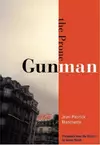
The Prone Gunman is a classic noir/thriller story: Martin Terrier, a successful hitman, is ready to leave the life and seeks to conclude his tenure with his shady employers. They "ask" him to do one last job to earn his freedom, and they turn the screws until he does it before attempting to permanently retire him.
When your first name ends in -Jean I expect your work to have a little French color, but this book might be the most "French" thing I've ever experienced—and I don't mean in the stereotypical "berets, bicycles, and baguettes" sense. Obviously, those types of things are present: from the make of the cars and weapons to the cigarettes and the alcohol, Martin Terrier's life is a vortex of Gauloises smoke, spilled Hennessy, and violence. I'm more referring to the thematic depth, atmospheric richness, and intrinsic *vibe* that accompanies your iconic French Literature. The closest comparison I can draw is ironically from an unexpected source: Frenchie's autobiographical issue in The Boys comic, though that leans more into broad cultural stereotypes. So many of the parody beats present in that issue of The Boys seemed aimed exactly at the character/archetype that this book embodies.
If you've watched a New Wave film by Truffaut or Goddard, this whole review will make a lot more sense, you will immediately recognize the narrative's spirit. For the uninitiated, the New Wave was an artistic movement in the 1960s French film scene with far-reaching cultural implications. Essentially, it was a push towards the auteur spirit—existentialist, ironic works that sought to iterate and innovate by deliberately challenging preceding artistic conventions. In film, that meant smoking slim cigarettes and holding the camera with your hands; making entirely new things. Manchette captures that spirit and imbues it into his version of the Contract on the Hitman, putting the emphasis on character interactions and dialogue while using the third person limited narration to imitate the up-close spontaneous feel of the handheld camera.
I got the same buzz off of this as I did when I first watched Breathless (1960). Clearly, those New Wave themes permeated French literature as well. There's surprising depth buried in an otherwise unassuming thriller, and it is one of the great joys of reading to discover books like this. I wouldn't call this the greatest thriller I've ever read, but it was interesting and well written, with just enough unique things about it to make it worth picking up despite the tired premise.
I'm sure that a lot of the subtle commentary on French society was totally lost on me as an American, and I'm sure that the prose is probably much better in the native French. But we work with what we get, and this was a solid 3.5 but closer to a 3 than a 4.
PS: I can’t believe I forgot to comment on this but damn the misogyny at work here is diabolical. Obviously that’s one of the drawbacks of the hard boiled noir genre, it is very much a relic of its age, but this possessory yet indifferent attitude the book has about women seems a step beyond what I consider the genre’s baseline. It’s offensive to the point where my hunch is its inclusion is some sort of social commentary that was lost in translation .
Noir is a fickle genre. Finding a good story can be like searching for a needle in a haystack, but when you discover that perfect story, you find yourself inexplicably drawn into its world—taking your coffee black, dressing in wool, and packing heat. Maybe not literally, but you'll inevitably find yourself hunting for the next great noir narrative. That's precisely what happened to me with Jean-Patrick Manchette's work, which revealed an entire movement of European crime fiction from the 1980s that never fully crossed the Atlantic outside of cinema.
I stumbled across this author while doing research for my reviews of Robin Cook's crime series, He Died With His Eyes Open. Manchette, credited with reinvigorating the French crime novel, stands to France much like Robin Cook does to England. In fact, I'd wager Manchette may have influenced Cook, who spent considerable time in France before publishing his thematically similar works. Their works share in traditional noir premises and structures, but both authors treat the genre as a vehicle for their social commentary and world views.
The Prone Gunman is a classic noir/thriller story: Martin Terrier, a successful hitman, is ready to leave the life and seeks to conclude his tenure with his shady employers. They "ask" him to do one last job to earn his freedom, and they turn the screws until he does it before attempting to permanently retire him.
When your first name ends in -Jean I expect your work to have a little French color, but this book might be the most "French" thing I've ever experienced—and I don't mean in the stereotypical "berets, bicycles, and baguettes" sense. Obviously, those types of things are present: from the make of the cars and weapons to the cigarettes and the alcohol, Martin Terrier's life is a vortex of Gauloises smoke, spilled Hennessy, and violence. I'm more referring to the thematic depth, atmospheric richness, and intrinsic *vibe* that accompanies your iconic French Literature. The closest comparison I can draw is ironically from an unexpected source: Frenchie's autobiographical issue in The Boys comic, though that leans more into broad cultural stereotypes. So many of the parody beats present in that issue of The Boys seemed aimed exactly at the character/archetype that this book embodies.
If you've watched a New Wave film by Truffaut or Goddard, this whole review will make a lot more sense, you will immediately recognize the narrative's spirit. For the uninitiated, the New Wave was an artistic movement in the 1960s French film scene with far-reaching cultural implications. Essentially, it was a push towards the auteur spirit—existentialist, ironic works that sought to iterate and innovate by deliberately challenging preceding artistic conventions. In film, that meant smoking slim cigarettes and holding the camera with your hands; making entirely new things. Manchette captures that spirit and imbues it into his version of the Contract on the Hitman, putting the emphasis on character interactions and dialogue while using the third person limited narration to imitate the up-close spontaneous feel of the handheld camera.
I got the same buzz off of this as I did when I first watched Breathless (1960). Clearly, those New Wave themes permeated French literature as well. There's surprising depth buried in an otherwise unassuming thriller, and it is one of the great joys of reading to discover books like this. I wouldn't call this the greatest thriller I've ever read, but it was interesting and well written, with just enough unique things about it to make it worth picking up despite the tired premise.
I'm sure that a lot of the subtle commentary on French society was totally lost on me as an American, and I'm sure that the prose is probably much better in the native French. But we work with what we get, and this was a solid 3.5 but closer to a 3 than a 4.
PS: I can’t believe I forgot to comment on this but damn the misogyny at work here is diabolical. Obviously that’s one of the drawbacks of the hard boiled noir genre, it is very much a relic of its age, but this possessory yet indifferent attitude the book has about women seems a step beyond what I consider the genre’s baseline. It’s offensive to the point where my hunch is its inclusion is some sort of social commentary that was lost in translation .

I absolutely loved this, I can always appreciate a quality all-ages story, and this is right up there with some of my favorites. I was transported back to the fugue of early childhood, an age where everything seems plausible, and your mom still reads you bedtime stories. As I get older, I find myself valuing stories with young protagonists that I can relate to, and Gaiman has created a story that delivers that in spades. Of course, that's not all we get, there's some strong horror delivery that really captures the feeling of childhood imagination running wild and a brilliant conclusion that wrapped that nostalgic feeling in a bow.
If anyone ever asks me what I think of magic realism, I will refer them to this book because it is one of the best examples of the concept. We join our narrator as he returns to his hometown for a funeral, struck by a whim, he chooses to visit the location of his childhood home. The protagonist is drawn to the end of his old lane way and begins to remember his young friend Letty Hempstock. He finds himself calling on the Hempstock farm, drawn into conversation with an old woman whom he presumes is Letty's mother, the protagonist begins to remember with renewed clarity his friendship and adventures with young Letty, and the pond out behind her farm, which she once convinced him was an ocean.
No, I won't say what else this is about, suffice to say that this is a story cut from that same mythopoeia/liminal tradition as the Chronicles of Narnia. It plays with the idea that children occupy a space between the mundane and the magical, serving as bridges between the two worlds they become a part of their own unique mythos. I would say that this reminded me most of Narnia, but of my recent reads this recalled The Spear Cuts Through Water and Cursed Bunny. Both of those books were blending folk tales with modern and personal sensibilities, but I found Gaiman's work much more complete and approachable in comparison.
I'm going to grab a physical copy of this for sure, and it definitely has made the "read to future kids" pile. That said, there are some pretty adult themes that find their way into the book. Much of the story revolves around what happens after the suicide of one of the boarders living in the protagonist's home. This suicide along with horror elements and a later scene featuring sex and infidelity does warrant a disclaimer, this is PG not G. It's nothing gory or horrifying or in the least bit explicit, much of this stuff is broached in the same "are-they-or-aren't-they" fashion as the meant-for-adult jokes slipped into children's programming.
So yeah, this is just a solid gold fun for all ages Narnia type of story. It's short and sweet and doesn't overstay its welcome. You could read this to younger children, and while it's not 100% Astroturfed (nothing that I grew up with really was) don't let that stop you. I am aware that Gaiman is the subject of recent controversy, so I would ask people not to take this review as an endorsement of the author, this is very much a case of separating the art from the artist.
I absolutely loved this, I can always appreciate a quality all-ages story, and this is right up there with some of my favorites. I was transported back to the fugue of early childhood, an age where everything seems plausible, and your mom still reads you bedtime stories. As I get older, I find myself valuing stories with young protagonists that I can relate to, and Gaiman has created a story that delivers that in spades. Of course, that's not all we get, there's some strong horror delivery that really captures the feeling of childhood imagination running wild and a brilliant conclusion that wrapped that nostalgic feeling in a bow.
If anyone ever asks me what I think of magic realism, I will refer them to this book because it is one of the best examples of the concept. We join our narrator as he returns to his hometown for a funeral, struck by a whim, he chooses to visit the location of his childhood home. The protagonist is drawn to the end of his old lane way and begins to remember his young friend Letty Hempstock. He finds himself calling on the Hempstock farm, drawn into conversation with an old woman whom he presumes is Letty's mother, the protagonist begins to remember with renewed clarity his friendship and adventures with young Letty, and the pond out behind her farm, which she once convinced him was an ocean.
No, I won't say what else this is about, suffice to say that this is a story cut from that same mythopoeia/liminal tradition as the Chronicles of Narnia. It plays with the idea that children occupy a space between the mundane and the magical, serving as bridges between the two worlds they become a part of their own unique mythos. I would say that this reminded me most of Narnia, but of my recent reads this recalled The Spear Cuts Through Water and Cursed Bunny. Both of those books were blending folk tales with modern and personal sensibilities, but I found Gaiman's work much more complete and approachable in comparison.
I'm going to grab a physical copy of this for sure, and it definitely has made the "read to future kids" pile. That said, there are some pretty adult themes that find their way into the book. Much of the story revolves around what happens after the suicide of one of the boarders living in the protagonist's home. This suicide along with horror elements and a later scene featuring sex and infidelity does warrant a disclaimer, this is PG not G. It's nothing gory or horrifying or in the least bit explicit, much of this stuff is broached in the same "are-they-or-aren't-they" fashion as the meant-for-adult jokes slipped into children's programming.
So yeah, this is just a solid gold fun for all ages Narnia type of story. It's short and sweet and doesn't overstay its welcome. You could read this to younger children, and while it's not 100% Astroturfed (nothing that I grew up with really was) don't let that stop you. I am aware that Gaiman is the subject of recent controversy, so I would ask people not to take this review as an endorsement of the author, this is very much a case of separating the art from the artist.

I call a lot of things "classics" around here, particularly for anything by Le Guin, but Earthsea truly fits the bill. If you only accept perfection from your fantasy, look no further. I say that with the small caveat that this is an all-ages read, if you need a gritty, action-packed, thrill ride with a formula defined magic system this is not for you.
I read this because half-way through Akata Witch (which I just reviewed) I started to self-doubt, had I turned into a YA hater? Reading through Earthsea helped to confirm that I wasn't losing touch, and it reinforced for me the things that I like in YA. This story is lovely, a fanciful and touching voyage across the world of Earthsea. I found Earthsea itself every bit as enchanting and detail rich as Middle Earth but without all the exposition. As a piece of genre writing, this book is technical perfection, capturing the raw essence of fantasy without aping LOTR, in fact, while innovating with concepts like cosmic balance and the magic of True Names. Beyond genre, the themes of adolescence and self-identity are woven into the narrative with care and precision. Le Guin is a master of using story to drive a point home, and adapting a coming of age story is no sweat for her.
My take seems to run with the majority, because the Earthsea Cycle is considered as one of the tent poles of the Tolkien-era fantasy genre. A Wizard of Earthsea introduces us to the clustered islands of Earthsea through the eyes of Sparrowhawk, a young boy born with an incredible talent for magic. Sparrowhawk is taken in as an apprentice by the powerful mage Ogion and given his true name, "Ged". Ogion teaches Ged only the basics of mage craft, and endeavors instead to teach him of balance and the natural order, which magic can easily upset. It comes to naught as Ged rifles through Ogion's tomes, looking for a spell to impress a girl, and accidentally summons a shadow that Ogion must banish. Frustrated with Ogion's slow and steady teaching method, Ged reluctantly accepts his master's suggestion that he set out for the Wizards school on Roke Island. Once on Roke, he gains power quickly, making friends and enemies before being baited into a magical duel in which he casts the spell secretly taught to him by the shadow. Rather than summoning the spirit of a mythical beauty from the dead, he instead summons a shadow creature which attacks him, drawing him into a world-spanning battle for survival as Ged struggles to right his wrongs and return balance to Earthsea.
I have no notes on this one, as is the case with much of Le Guin's work, there's very little room for improvement. This is an adolescent fantasy, it's what she sought out to do with this book, and it's what she achieved. To have the book be so richly imaginative on top of basically establishing the modern template for the fantasy Bildungsroman is probably what elevated Earthsea to its contemporary success. I have friends who hate to read old books or watch old movies because these things tend to date themselves, thankfully this is not one of those books- I could not tell this was published in 1968. So to any prospective reader looking for an excellent all-ages fantasy series to get into, something rich in imagination and message, look no further than Wizard of Earthsea. Glad to have crossed this off my TBR.
PS: Among the other reasons, I also picked this up because I realized I couldn't remember if I had in fact read it before. This realization came after a very confused viewing of the animated Tales of Earthsea by Goro Miyazaki, sparrowhawk seemed familiar but nothing else. Turns out that aside from borrowing the settings and characters of Earthsea, the rest of the Miyazaki project is OC- and my familiarity with the series? From the Sci-Fi channel miniseries
I call a lot of things "classics" around here, particularly for anything by Le Guin, but Earthsea truly fits the bill. If you only accept perfection from your fantasy, look no further. I say that with the small caveat that this is an all-ages read, if you need a gritty, action-packed, thrill ride with a formula defined magic system this is not for you.
I read this because half-way through Akata Witch (which I just reviewed) I started to self-doubt, had I turned into a YA hater? Reading through Earthsea helped to confirm that I wasn't losing touch, and it reinforced for me the things that I like in YA. This story is lovely, a fanciful and touching voyage across the world of Earthsea. I found Earthsea itself every bit as enchanting and detail rich as Middle Earth but without all the exposition. As a piece of genre writing, this book is technical perfection, capturing the raw essence of fantasy without aping LOTR, in fact, while innovating with concepts like cosmic balance and the magic of True Names. Beyond genre, the themes of adolescence and self-identity are woven into the narrative with care and precision. Le Guin is a master of using story to drive a point home, and adapting a coming of age story is no sweat for her.
My take seems to run with the majority, because the Earthsea Cycle is considered as one of the tent poles of the Tolkien-era fantasy genre. A Wizard of Earthsea introduces us to the clustered islands of Earthsea through the eyes of Sparrowhawk, a young boy born with an incredible talent for magic. Sparrowhawk is taken in as an apprentice by the powerful mage Ogion and given his true name, "Ged". Ogion teaches Ged only the basics of mage craft, and endeavors instead to teach him of balance and the natural order, which magic can easily upset. It comes to naught as Ged rifles through Ogion's tomes, looking for a spell to impress a girl, and accidentally summons a shadow that Ogion must banish. Frustrated with Ogion's slow and steady teaching method, Ged reluctantly accepts his master's suggestion that he set out for the Wizards school on Roke Island. Once on Roke, he gains power quickly, making friends and enemies before being baited into a magical duel in which he casts the spell secretly taught to him by the shadow. Rather than summoning the spirit of a mythical beauty from the dead, he instead summons a shadow creature which attacks him, drawing him into a world-spanning battle for survival as Ged struggles to right his wrongs and return balance to Earthsea.
I have no notes on this one, as is the case with much of Le Guin's work, there's very little room for improvement. This is an adolescent fantasy, it's what she sought out to do with this book, and it's what she achieved. To have the book be so richly imaginative on top of basically establishing the modern template for the fantasy Bildungsroman is probably what elevated Earthsea to its contemporary success. I have friends who hate to read old books or watch old movies because these things tend to date themselves, thankfully this is not one of those books- I could not tell this was published in 1968. So to any prospective reader looking for an excellent all-ages fantasy series to get into, something rich in imagination and message, look no further than Wizard of Earthsea. Glad to have crossed this off my TBR.
PS: Among the other reasons, I also picked this up because I realized I couldn't remember if I had in fact read it before. This realization came after a very confused viewing of the animated Tales of Earthsea by Goro Miyazaki, sparrowhawk seemed familiar but nothing else. Turns out that aside from borrowing the settings and characters of Earthsea, the rest of the Miyazaki project is OC- and my familiarity with the series? From the Sci-Fi channel miniseries

"[This] is one of those books that radicalizes you", was the most common response I got when I told friends what I was reading. Obviously, I'm quoting them because I can't put it any better. If the extent of your US History knowledge begins and ends with your AP/HS US class, reading this book will drop your jaw. There really are so many omissions that our textbooks have made that, once revealed, force you to reconsider your impression of the country and its decision makers.
Lies My Teacher Told Me might be too strong a title, since technically there aren't all that many outright lies in the texts themselves. Lies mainly deals in filling in the egregious omissions that almost all the texts have retained to this day. These omissions primarily concern things like who discovered America, the Columbian exchange, the Civil War, and Woodrow Wilson being a massive racist piece of shit. More than just backfilling Loewen reveals the pattern, the bias in the types of facts that get pulled from the text. This is half correction of US History-half correction of the education system, and it means that Loewen opines broadly and with little discretion as to what the problems in education are and how to solve them.
I read the 3rd edition, and as the author takes great pains to note, he's changed almost none of the core material between each re-issue. That might seem like a pointless detail but think about it, this was originally published in 1995 and in 30 years all Loewen ever needed to change was his introduction. It speaks to the nature of the facts, namely that they are facts. This book has been right about US History since its inception, and despite critics crying "lib!" for over 30 years, the facts have not changed.
Of course, the political discourse in this country has changed, drastically. If you look at the top reviews for this book on Goodreads, they're extremely critical of the obvious liberal slant to Loewen's commentary, of the abundant "white guilt" that drowns out the discourse on education. Those reviews are from 2008, and within the context of the last decade those complaints seem quaint and bygone. If you still believe the news, here in 2025 we're about to cut the Dept. of Education by executive order, with the soon-to-be unemployed Secretary slated to be Linda McMahon of WWE fame. No, I think a centrist position on education policy has been shown to be one of the appeaser, in the Churchill sense of the word. No, in 2025 Loewen reads like a prophet, his "overtly socialist and liberal leanings" could now be mistaken for wide-eyed sobriety if not outright prescience.
Speaking as someone with a single family home's worth of debt thanks to higher education, I still found some of the things that Loewen teaches to be completely brand new to me. I kind of gave it away at the top, but the fact that we continue to rehabilitate Woodrow Wilson's image completely shook me. I've taken collegiate courses on WW1 with significant focus on Wilson; he'd even made my top 5 presidents list in the past- but I had never been taught about him single-handedly re-invigorating the KKK, or about him re-segregating the government. Despite taking multiple film studies courses, I had no idea that Wilson showed Birth of a Nation as the first film in the White House. Or what about John Brown, my teacher blew completely past him, and this was the same guy who said "I John Brown am now quite certain that the crimes of this guilty land will never be purged away, but with blood," literally calling out the civil war in advance. This was the first time that I ever read his words:
"Now, if it is deemed necessary that I should forfeit my life for the furtherance of the ends of justice, and mingle my blood further with the blood of my children and with the blood of millions in this slave country whose rights are disregarded by wicked, cruel and unjust enactments, I say, Let it be done"
Is this the most balanced treatment of US History? Not by a mile. But there's not one word of untruth in this book. The rhetoric can be overly persuasive, if not completely bleeding heart at times, but that doesn't discount Loewen's point to me. Especially when it looks like we'll soon be funding religious private schools with public money. No, this is a book that sets the record straight, a book that has been proven correct at every turn. It could ostensibly radicalize you.
"[This] is one of those books that radicalizes you", was the most common response I got when I told friends what I was reading. Obviously, I'm quoting them because I can't put it any better. If the extent of your US History knowledge begins and ends with your AP/HS US class, reading this book will drop your jaw. There really are so many omissions that our textbooks have made that, once revealed, force you to reconsider your impression of the country and its decision makers.
Lies My Teacher Told Me might be too strong a title, since technically there aren't all that many outright lies in the texts themselves. Lies mainly deals in filling in the egregious omissions that almost all the texts have retained to this day. These omissions primarily concern things like who discovered America, the Columbian exchange, the Civil War, and Woodrow Wilson being a massive racist piece of shit. More than just backfilling Loewen reveals the pattern, the bias in the types of facts that get pulled from the text. This is half correction of US History-half correction of the education system, and it means that Loewen opines broadly and with little discretion as to what the problems in education are and how to solve them.
I read the 3rd edition, and as the author takes great pains to note, he's changed almost none of the core material between each re-issue. That might seem like a pointless detail but think about it, this was originally published in 1995 and in 30 years all Loewen ever needed to change was his introduction. It speaks to the nature of the facts, namely that they are facts. This book has been right about US History since its inception, and despite critics crying "lib!" for over 30 years, the facts have not changed.
Of course, the political discourse in this country has changed, drastically. If you look at the top reviews for this book on Goodreads, they're extremely critical of the obvious liberal slant to Loewen's commentary, of the abundant "white guilt" that drowns out the discourse on education. Those reviews are from 2008, and within the context of the last decade those complaints seem quaint and bygone. If you still believe the news, here in 2025 we're about to cut the Dept. of Education by executive order, with the soon-to-be unemployed Secretary slated to be Linda McMahon of WWE fame. No, I think a centrist position on education policy has been shown to be one of the appeaser, in the Churchill sense of the word. No, in 2025 Loewen reads like a prophet, his "overtly socialist and liberal leanings" could now be mistaken for wide-eyed sobriety if not outright prescience.
Speaking as someone with a single family home's worth of debt thanks to higher education, I still found some of the things that Loewen teaches to be completely brand new to me. I kind of gave it away at the top, but the fact that we continue to rehabilitate Woodrow Wilson's image completely shook me. I've taken collegiate courses on WW1 with significant focus on Wilson; he'd even made my top 5 presidents list in the past- but I had never been taught about him single-handedly re-invigorating the KKK, or about him re-segregating the government. Despite taking multiple film studies courses, I had no idea that Wilson showed Birth of a Nation as the first film in the White House. Or what about John Brown, my teacher blew completely past him, and this was the same guy who said "I John Brown am now quite certain that the crimes of this guilty land will never be purged away, but with blood," literally calling out the civil war in advance. This was the first time that I ever read his words:
"Now, if it is deemed necessary that I should forfeit my life for the furtherance of the ends of justice, and mingle my blood further with the blood of my children and with the blood of millions in this slave country whose rights are disregarded by wicked, cruel and unjust enactments, I say, Let it be done"
Is this the most balanced treatment of US History? Not by a mile. But there's not one word of untruth in this book. The rhetoric can be overly persuasive, if not completely bleeding heart at times, but that doesn't discount Loewen's point to me. Especially when it looks like we'll soon be funding religious private schools with public money. No, this is a book that sets the record straight, a book that has been proven correct at every turn. It could ostensibly radicalize you.

Book Club for May _____
I have a problem in assuming that a book will be YA whenever I see that reader's choice award. In fact, seeing the tag has almost the exact opposite of the intended effect on me-I tend to stay away. This approach has yet to fail me, because seeing that reader's choice just means the book is popular. Popularity doesn't indicate quality, in fact it only guarantees two things: First, the book is simple enough to be understood by the majority of people and second, the book is probably getting a movie deal-when all's said and done you'll have consumed the story without ever once trying to. This is absolutely true of Mickey 7, this book is funny, with a fantastic premise and a casual first person narration. It's an incredibly easy read, knocked out in a weekend with time left Sunday night to watch the movie. It's good, I liked it.
Mickey 7 is told from the perspective of Mickey Barnes, the titular protagonist. Well, really, it's the seventh iteration of Mickey that's the protagonist. You see, Mickey has found himself in quite the pickle; he was so desperate to join in on the colonization mission to planet Niflheim that he was willing to sign up for any position available. Fortunately for Mickey, he gets a job, and that job comes with the added perk of immortality. Unfortunately for Mickey, he's volunteered as the colony's "expendable," narrowly beating out a death-row conscript for the job. Got a gaping hole in your ship's radiation shield or a pesky alien virus that liquifies internal organs? No problem, send in your Mickey, he'll plug that hole, test that vaccine, and Mickey2 will be printed before the first one's finished vomiting up his irradiated kidneys. Oh, and let's make sure to back up the precious memories he made along the way.
The humor comes in Mickey's delivery-he's not exactly the sharpest tool in the shed, but that doesn't mean he can't crack wise. There's a delightful combination of unintended pratfalls and lunchroom quality backtalk that makes Mickey come off exactly as he's meant to- an overgrown class clown. Given that this story is told from Mickey's perspective, it's worth pointing out how excellent the character work is because it is the real meat of the book. Beyond making Mickey likable, his specific character traits lend the narration a dubious, unreliable quality. Unfortunately, Ashton doesn't play with this idea nearly to the degree that he could have, favoring simple story beats and a conventional plot structure that children could follow.
My general criticism with the book follows along the same lines, everything is much too simplistic and doesn't go anywhere interesting. Ashton takes a fantastic premise and rolls it along a linear plot in which our characters do very little; this is a book that promises the world with each development just to push you along from one hallway to the next. I spent the second half of the book waiting for Mickey to do something, for anyone to do anything, but the story just goes nowhere until it's time for the plot to happen. I don't want to spoil the plot at all, but I will say that if your interest was in seeing the whole "expendable/replicant" concept explored, this will not fully scratch the itch.
I delayed this review a little so that I could watch Mickey 17 (I did not in fact watch it the same weekend I read it) and see if it changed my appreciation of the book at all, which it did. The movie is pretty different from the book, changing some of the setting details and Mickey's own backstory; it considerably plays up how stupid Mickey seems. From those changes there are two major improvements that the movie makes to the story, the first is obvious: instead of 7 lives, movie Mickey has lived 17. The second was the overhauling of the character of Mickey 8 / Mickey 18; 18 has a completely different personality to 17, and it opens such an interesting can of worms.
First, adding 10 deaths improves the story twice fold. What the movie does so much better than the book is in showing Mickey's suffering, that's because there's just more of it. The book had a razor-thin philosophical premise that followed along the lines of Sisyphus' ship, but I couldn't put my finger on what was missing until I watched a 3-minute montage of Robert Pattinson vomiting blood. The Mickey of the book doesn't like to linger on unpleasant memories, and so the renderings of his deaths are more than a bit cloudy. Sure, he recounts his previous lives as the story goes on, but the Mickey of the book isn't able to show us what we need to see, to demonstrate the horror of his existence to such a moving degree.
The second change stole the show for me. To quote the movie, "Mickey 18 is 'spicy' Mickey, and Mickey 17 is 'mild' Mickey". This was such an obvious change to make, and it completely addresses the problem of "no one does anything all book long" by forcing 17 and 18 into conflict. In the book, 7 and 8 generically agree on everything, there is no question of identity or anything disharmonious between them (to the point where the movie interrupts the weird threesome and the book lets it play out). BORING. Mickey 18 on the other hand? He'll murder 17 in a heart beat, drink his blood out of a Marshall skull cup while he rides on a creeper; his changed personality raises so many interesting questions about expendables that the original just doesn't.
This book was good. It's an easy read and I can totally see why this was 2022's darling. Unfortunately, to my spoiled SF palate, the book is just a little too plain and generic - discarding its most interesting and heady elements in favor of a straightforward and linear story. The movie is an improvement by a large margin, but it's not the next Interstellar or Alien.
Book Club for May _____
I have a problem in assuming that a book will be YA whenever I see that reader's choice award. In fact, seeing the tag has almost the exact opposite of the intended effect on me-I tend to stay away. This approach has yet to fail me, because seeing that reader's choice just means the book is popular. Popularity doesn't indicate quality, in fact it only guarantees two things: First, the book is simple enough to be understood by the majority of people and second, the book is probably getting a movie deal-when all's said and done you'll have consumed the story without ever once trying to. This is absolutely true of Mickey 7, this book is funny, with a fantastic premise and a casual first person narration. It's an incredibly easy read, knocked out in a weekend with time left Sunday night to watch the movie. It's good, I liked it.
Mickey 7 is told from the perspective of Mickey Barnes, the titular protagonist. Well, really, it's the seventh iteration of Mickey that's the protagonist. You see, Mickey has found himself in quite the pickle; he was so desperate to join in on the colonization mission to planet Niflheim that he was willing to sign up for any position available. Fortunately for Mickey, he gets a job, and that job comes with the added perk of immortality. Unfortunately for Mickey, he's volunteered as the colony's "expendable," narrowly beating out a death-row conscript for the job. Got a gaping hole in your ship's radiation shield or a pesky alien virus that liquifies internal organs? No problem, send in your Mickey, he'll plug that hole, test that vaccine, and Mickey2 will be printed before the first one's finished vomiting up his irradiated kidneys. Oh, and let's make sure to back up the precious memories he made along the way.
The humor comes in Mickey's delivery-he's not exactly the sharpest tool in the shed, but that doesn't mean he can't crack wise. There's a delightful combination of unintended pratfalls and lunchroom quality backtalk that makes Mickey come off exactly as he's meant to- an overgrown class clown. Given that this story is told from Mickey's perspective, it's worth pointing out how excellent the character work is because it is the real meat of the book. Beyond making Mickey likable, his specific character traits lend the narration a dubious, unreliable quality. Unfortunately, Ashton doesn't play with this idea nearly to the degree that he could have, favoring simple story beats and a conventional plot structure that children could follow.
My general criticism with the book follows along the same lines, everything is much too simplistic and doesn't go anywhere interesting. Ashton takes a fantastic premise and rolls it along a linear plot in which our characters do very little; this is a book that promises the world with each development just to push you along from one hallway to the next. I spent the second half of the book waiting for Mickey to do something, for anyone to do anything, but the story just goes nowhere until it's time for the plot to happen. I don't want to spoil the plot at all, but I will say that if your interest was in seeing the whole "expendable/replicant" concept explored, this will not fully scratch the itch.
I delayed this review a little so that I could watch Mickey 17 (I did not in fact watch it the same weekend I read it) and see if it changed my appreciation of the book at all, which it did. The movie is pretty different from the book, changing some of the setting details and Mickey's own backstory; it considerably plays up how stupid Mickey seems. From those changes there are two major improvements that the movie makes to the story, the first is obvious: instead of 7 lives, movie Mickey has lived 17. The second was the overhauling of the character of Mickey 8 / Mickey 18; 18 has a completely different personality to 17, and it opens such an interesting can of worms.
First, adding 10 deaths improves the story twice fold. What the movie does so much better than the book is in showing Mickey's suffering, that's because there's just more of it. The book had a razor-thin philosophical premise that followed along the lines of Sisyphus' ship, but I couldn't put my finger on what was missing until I watched a 3-minute montage of Robert Pattinson vomiting blood. The Mickey of the book doesn't like to linger on unpleasant memories, and so the renderings of his deaths are more than a bit cloudy. Sure, he recounts his previous lives as the story goes on, but the Mickey of the book isn't able to show us what we need to see, to demonstrate the horror of his existence to such a moving degree.
The second change stole the show for me. To quote the movie, "Mickey 18 is 'spicy' Mickey, and Mickey 17 is 'mild' Mickey". This was such an obvious change to make, and it completely addresses the problem of "no one does anything all book long" by forcing 17 and 18 into conflict. In the book, 7 and 8 generically agree on everything, there is no question of identity or anything disharmonious between them (to the point where the movie interrupts the weird threesome and the book lets it play out). BORING. Mickey 18 on the other hand? He'll murder 17 in a heart beat, drink his blood out of a Marshall skull cup while he rides on a creeper; his changed personality raises so many interesting questions about expendables that the original just doesn't.
This book was good. It's an easy read and I can totally see why this was 2022's darling. Unfortunately, to my spoiled SF palate, the book is just a little too plain and generic - discarding its most interesting and heady elements in favor of a straightforward and linear story. The movie is an improvement by a large margin, but it's not the next Interstellar or Alien.

Book club for June
I didn't think I had this much to say, but damn, I guess I cooked. _________________
I was really excited about this pick, it’s rare that the book club selects something that I was already interested in reading. Maybe it was having expectations that made this a gut punch for me. I don’t want to call this a bad book, it’s not bad at all, it’s fairly interesting and relatively solid when you consider it’s also an author debut, but I was let down.
Do you remember that episode of Futurama where Fry eats an egg sandwich and gets those parasitic worms that make him smart? Not necessarily the part where the crew shrinks down to fight the worms, but the part where Fry has to decide between being the “new” him and being his natural self.
What about Animorphs- do you remember the evil slug guys that would crawl into someone’s ear at the start of every book, the Yeerks?
The Lives of Tao remembers.
In fact, The Lives of Tao is a mashup of those two ideas. What if the Yeerks had a civil war, one fought right here on Earth—one which altered the course of human evolution, and now the war hinges on a new, Fry-esque, host. I am oversimplifying it, but not by much—the aliens aren’t slugs (not really sure what they are? A type of gas?) and they aren’t necessarily evil either, rather they’re just trying to get home.
The setup: Roen Tan is an out-of-shape IT guy whose life gets turned upside down when an ancient alien entity called Tao takes up residence in his body. These aliens, the Quasing, have been inhabiting humans for millennia, secretly influencing history and evolution. They’re split into two factions: the Prophus (the “good” aliens who want to help humanity develop so they can eventually build ships to get home) and the Genjix (the “bad” aliens who want to strip-mine Earth’s resources and leave). Tao, a Prophus agent, needs to train the hapless Roen into a competent operative to continue their shadow war against the Genjix
That premise had me hooked. Body-snatchers stories are criminally underused, and when they’re done right, they deliver a specific kind of psychological thriller: the creeping paranoia of never knowing which characters are threats, the mounting tension of whether you can trust the voice in your head. The best part of having an alien passenger should be that constant question mark—is this thing actually helping me, or am I being manipulated? Are the “good aliens” really good?
But I never felt that sense of unease with the Prophus. They pass every moral litmus test because they’re simply “the good aliens.” The book does flirt with this tension—there’s a moment where Roen questions his own sanity, and Tao “proves” he’s real by rattling off the capital of ancient Assyria. Roen takes this completely at face value and never bothers to verify it himself. There’s even a callback to this moment later, as if it settled the matter! The story plays with the idea of making us doubt Tao, but it’s Roen and his apparent 17 IQ points that prevent this from going anywhere meaningful.
Which brings me to my biggest issue with the book: Roen’s transformation from couch potato to combat-effective secret agent. We’re told repeatedly that he’s this lazy, out-of-shape guy who can’t get a grip on his own life, but somehow he becomes a willing participant in an ancient alien war without any convincing psychological journey to get him there.
The most glaring example comes when Roen, who’s been getting flattened in combat training, somehow manages to repel a gang of trained attackers by himself. What makes this particularly frustrating is that it happens during a moment when he’s regressing into his old habits—his victory feels completely unearned because of it. After this scene, you’d expect Roen to have some kind of reckoning about the danger he’s putting his friends and family in, right? He does eventually think about it, but only after the metaphorical gun is put into his hand at the conclusion, when he's forced to kill Tao's old host's brain-dead brother to free their Prophus. It's this moment, coupled with his girlfriend and trainer being kidnapped, that finally spurs Roen's half-hearted attempt to address the danger at the very end of the book. But it comes much too late to be anything but hindsight.
Instead, Roen just goes along with Tao despite his reservations, seemingly for no other reason than it’s his character trait to obey orders. He never tries to back out of the arrangement, never really pushes back in any meaningful way. The story frames this as ultimately Roen’s choice, but it never feels like he needed any convincing—or if he did, it all happened off-screen while we weren’t looking.
This points to a bigger structural problem throughout the book: important developments keep happening off-screen or between chapters, leaving you feeling like you missed crucial scenes. Roen’s training progresses in time jumps, but we never see the changes reflected in any meaningful way other than these weird action sequences where the “non-combatant in a combat zone” is somehow demolishing special forces operatives (or at least holding his own). His lethality and competence appear and disappear as the plot demands, with no visible progression to justify it.
It’s frustrating because there are genuinely good ideas and cool concepts scattered throughout - the problem is they’re never fully explored or properly integrated with one another. The book feels under-cooked, like it needed another draft or two to really develop these elements. Maybe those glimpses of Tao’s past lives at the beginning of each chapter could have been used as a mechanism to show Roen maturing through dreams or visions. Maybe we needed more scenes of him actually grappling with the moral weight of what he’s doing. Instead, we get told about character growth rather than shown it, and concepts that should connect meaningfully just exist in parallel.
I chalk a lot of this up to it being a debut novel, but that doesn’t make it less immersion-breaking when you’re reading it.
That said, the book isn’t without its strengths. The world building around the aliens secretly influencing human history is genuinely compelling, though I suspect if there had been more of it I probably wouldn't have liked it as much. There's a cheapening effect when all of history's mysteries suddenly have "Quasing" as the answer. What killed the dinosaurs? The Quasing. The Black Plague? The Quasing. The goddamn Han Dynasty? Also Quasing! Literally any more and i'd have rolled my eyes out of my skull, but the book avoids this trap and peppers in more historical flavor with Tao's past. Those little blurbs of Tao’s past lives at the start of each chapter were some of my favorite parts of the book, and honestly, I wish there had been more of that material. It’s exactly the kind of deep historical integration that makes the world feel lived-in and believable.
The dialogue is also pretty solid, especially the human to human conversations. When characters are just talking to each other without the alien plot overshadowing everything, the interactions feel organic and charming. There’s a natural flow to how people speak that suggests the author has a good ear for realistic conversation - it’s just that these moments tend to get buried under all the alien warfare stuff.
The core premise remains strong too. Body-snatchers plots are genuinely underused in fiction, and there’s real potential in this take on it. The foundation is there for something really engaging, and I am sure the sequels will improve on it. But being a first novel doesn’t excuse the fundamental issues with character development and story structure that kept pulling me out of the experience. When your protagonist’s entire arc happens off-screen and his victories feel unearned, it’s hard to stay invested, no matter how cool your aliens are.
Ultimately, The Lives of Tao feels like a missed opportunity. The ingredients are all there - an intriguing premise, solid worldbuilding, decent dialogue - but they never quite come together into something greater than the sum of their parts. I keep coming back to that word: under-cooked. There’s a good book lurking in here somewhere, but it needed more time in the oven.
Maybe if I hadn’t gone in with expectations, this would have landed differently. But when a book promises you Futurama’s identity crisis meets Animorphs’ paranoia and delivers neither the psychological depth nor the creeping tension, it’s hard not to feel let down. The Lives of Tao remembers those stories, but it doesn’t quite understand what made them work.
PS: Totally forgot but this is a Chicago book as well, and you couldn't miss it, there's a whole chapter about eating Lou's deep dish. Not my favorite Chicago portrayal; it nails some details, Wabash does indeed look dark and shitty under the L, but-and I think I've said this before- there's more to the city than deep dish and crime.
Book club for June
I didn't think I had this much to say, but damn, I guess I cooked. _________________
I was really excited about this pick, it’s rare that the book club selects something that I was already interested in reading. Maybe it was having expectations that made this a gut punch for me. I don’t want to call this a bad book, it’s not bad at all, it’s fairly interesting and relatively solid when you consider it’s also an author debut, but I was let down.
Do you remember that episode of Futurama where Fry eats an egg sandwich and gets those parasitic worms that make him smart? Not necessarily the part where the crew shrinks down to fight the worms, but the part where Fry has to decide between being the “new” him and being his natural self.
What about Animorphs- do you remember the evil slug guys that would crawl into someone’s ear at the start of every book, the Yeerks?
The Lives of Tao remembers.
In fact, The Lives of Tao is a mashup of those two ideas. What if the Yeerks had a civil war, one fought right here on Earth—one which altered the course of human evolution, and now the war hinges on a new, Fry-esque, host. I am oversimplifying it, but not by much—the aliens aren’t slugs (not really sure what they are? A type of gas?) and they aren’t necessarily evil either, rather they’re just trying to get home.
The setup: Roen Tan is an out-of-shape IT guy whose life gets turned upside down when an ancient alien entity called Tao takes up residence in his body. These aliens, the Quasing, have been inhabiting humans for millennia, secretly influencing history and evolution. They’re split into two factions: the Prophus (the “good” aliens who want to help humanity develop so they can eventually build ships to get home) and the Genjix (the “bad” aliens who want to strip-mine Earth’s resources and leave). Tao, a Prophus agent, needs to train the hapless Roen into a competent operative to continue their shadow war against the Genjix
That premise had me hooked. Body-snatchers stories are criminally underused, and when they’re done right, they deliver a specific kind of psychological thriller: the creeping paranoia of never knowing which characters are threats, the mounting tension of whether you can trust the voice in your head. The best part of having an alien passenger should be that constant question mark—is this thing actually helping me, or am I being manipulated? Are the “good aliens” really good?
But I never felt that sense of unease with the Prophus. They pass every moral litmus test because they’re simply “the good aliens.” The book does flirt with this tension—there’s a moment where Roen questions his own sanity, and Tao “proves” he’s real by rattling off the capital of ancient Assyria. Roen takes this completely at face value and never bothers to verify it himself. There’s even a callback to this moment later, as if it settled the matter! The story plays with the idea of making us doubt Tao, but it’s Roen and his apparent 17 IQ points that prevent this from going anywhere meaningful.
Which brings me to my biggest issue with the book: Roen’s transformation from couch potato to combat-effective secret agent. We’re told repeatedly that he’s this lazy, out-of-shape guy who can’t get a grip on his own life, but somehow he becomes a willing participant in an ancient alien war without any convincing psychological journey to get him there.
The most glaring example comes when Roen, who’s been getting flattened in combat training, somehow manages to repel a gang of trained attackers by himself. What makes this particularly frustrating is that it happens during a moment when he’s regressing into his old habits—his victory feels completely unearned because of it. After this scene, you’d expect Roen to have some kind of reckoning about the danger he’s putting his friends and family in, right? He does eventually think about it, but only after the metaphorical gun is put into his hand at the conclusion, when he's forced to kill Tao's old host's brain-dead brother to free their Prophus. It's this moment, coupled with his girlfriend and trainer being kidnapped, that finally spurs Roen's half-hearted attempt to address the danger at the very end of the book. But it comes much too late to be anything but hindsight.
Instead, Roen just goes along with Tao despite his reservations, seemingly for no other reason than it’s his character trait to obey orders. He never tries to back out of the arrangement, never really pushes back in any meaningful way. The story frames this as ultimately Roen’s choice, but it never feels like he needed any convincing—or if he did, it all happened off-screen while we weren’t looking.
This points to a bigger structural problem throughout the book: important developments keep happening off-screen or between chapters, leaving you feeling like you missed crucial scenes. Roen’s training progresses in time jumps, but we never see the changes reflected in any meaningful way other than these weird action sequences where the “non-combatant in a combat zone” is somehow demolishing special forces operatives (or at least holding his own). His lethality and competence appear and disappear as the plot demands, with no visible progression to justify it.
It’s frustrating because there are genuinely good ideas and cool concepts scattered throughout - the problem is they’re never fully explored or properly integrated with one another. The book feels under-cooked, like it needed another draft or two to really develop these elements. Maybe those glimpses of Tao’s past lives at the beginning of each chapter could have been used as a mechanism to show Roen maturing through dreams or visions. Maybe we needed more scenes of him actually grappling with the moral weight of what he’s doing. Instead, we get told about character growth rather than shown it, and concepts that should connect meaningfully just exist in parallel.
I chalk a lot of this up to it being a debut novel, but that doesn’t make it less immersion-breaking when you’re reading it.
That said, the book isn’t without its strengths. The world building around the aliens secretly influencing human history is genuinely compelling, though I suspect if there had been more of it I probably wouldn't have liked it as much. There's a cheapening effect when all of history's mysteries suddenly have "Quasing" as the answer. What killed the dinosaurs? The Quasing. The Black Plague? The Quasing. The goddamn Han Dynasty? Also Quasing! Literally any more and i'd have rolled my eyes out of my skull, but the book avoids this trap and peppers in more historical flavor with Tao's past. Those little blurbs of Tao’s past lives at the start of each chapter were some of my favorite parts of the book, and honestly, I wish there had been more of that material. It’s exactly the kind of deep historical integration that makes the world feel lived-in and believable.
The dialogue is also pretty solid, especially the human to human conversations. When characters are just talking to each other without the alien plot overshadowing everything, the interactions feel organic and charming. There’s a natural flow to how people speak that suggests the author has a good ear for realistic conversation - it’s just that these moments tend to get buried under all the alien warfare stuff.
The core premise remains strong too. Body-snatchers plots are genuinely underused in fiction, and there’s real potential in this take on it. The foundation is there for something really engaging, and I am sure the sequels will improve on it. But being a first novel doesn’t excuse the fundamental issues with character development and story structure that kept pulling me out of the experience. When your protagonist’s entire arc happens off-screen and his victories feel unearned, it’s hard to stay invested, no matter how cool your aliens are.
Ultimately, The Lives of Tao feels like a missed opportunity. The ingredients are all there - an intriguing premise, solid worldbuilding, decent dialogue - but they never quite come together into something greater than the sum of their parts. I keep coming back to that word: under-cooked. There’s a good book lurking in here somewhere, but it needed more time in the oven.
Maybe if I hadn’t gone in with expectations, this would have landed differently. But when a book promises you Futurama’s identity crisis meets Animorphs’ paranoia and delivers neither the psychological depth nor the creeping tension, it’s hard not to feel let down. The Lives of Tao remembers those stories, but it doesn’t quite understand what made them work.
PS: Totally forgot but this is a Chicago book as well, and you couldn't miss it, there's a whole chapter about eating Lou's deep dish. Not my favorite Chicago portrayal; it nails some details, Wabash does indeed look dark and shitty under the L, but-and I think I've said this before- there's more to the city than deep dish and crime.

Then the Lord spoke to Job out of the storm. He said: “Who is this that obscures my plans with words without knowledge? Brace yourself like a man; I will question you, and you shall answer me. Where were you when I laid the earth’s foundation? Tell me, if you understand. Who marked off its dimensions? Surely you know! Who stretched a measuring line across it? On what were its footings set, or who laid its cornerstone— while the morning stars sang together and all the angels shouted for joy?"
It's not Gene Wolfe, it's Job, the whole damn thing is Job. But Job had his fortunes returned twofold, and Hadrian's story ends in a significant reversal of the old parable. It's tough to complain or criticize this ending, largely because the events of this last entry have been foreshadowed across the entire series, but it still managed to leave a nasty aftertaste in my mouth.
I think maybe I pinned my hopes a little too high, I really thought this final arc would mirror Gene Wolfe's influence, one where salvation is not guaranteed but earned-instead we get a repetition of classic Dogma. I hate to say it, but all this series amounts to is bible stories in space, half a retelling of the resurrection and half a surface level examination of Theological Determinism vs. Free Will- particularly the interpretation of Aquinas. At least the battles across hyperspace were cool.
Notably absent from this christian hotpot is any discussion of Hell and eternity. I thought we'd get there, but we didn't. This really put me in mind of Borges, who wrote of the four cycles, the four archetypes of story: The siege, The return, The quest and The sacrifice and that all versions amount to just one story- a destiny fulfilled through repetition and variation.
I'll still buy the box set.
Then the Lord spoke to Job out of the storm. He said: “Who is this that obscures my plans with words without knowledge? Brace yourself like a man; I will question you, and you shall answer me. Where were you when I laid the earth’s foundation? Tell me, if you understand. Who marked off its dimensions? Surely you know! Who stretched a measuring line across it? On what were its footings set, or who laid its cornerstone— while the morning stars sang together and all the angels shouted for joy?"
It's not Gene Wolfe, it's Job, the whole damn thing is Job. But Job had his fortunes returned twofold, and Hadrian's story ends in a significant reversal of the old parable. It's tough to complain or criticize this ending, largely because the events of this last entry have been foreshadowed across the entire series, but it still managed to leave a nasty aftertaste in my mouth.
I think maybe I pinned my hopes a little too high, I really thought this final arc would mirror Gene Wolfe's influence, one where salvation is not guaranteed but earned-instead we get a repetition of classic Dogma. I hate to say it, but all this series amounts to is bible stories in space, half a retelling of the resurrection and half a surface level examination of Theological Determinism vs. Free Will- particularly the interpretation of Aquinas. At least the battles across hyperspace were cool.
Notably absent from this christian hotpot is any discussion of Hell and eternity. I thought we'd get there, but we didn't. This really put me in mind of Borges, who wrote of the four cycles, the four archetypes of story: The siege, The return, The quest and The sacrifice and that all versions amount to just one story- a destiny fulfilled through repetition and variation.
I'll still buy the box set.

Book Club for Jan
_______
I'm just going to admit right off the top that this one lost me. I feel stupid for not getting it. Maybe this was too smart for me, too deconstructed. But it isn't deconstructed, and maybe I am wrong and simply doubling down in my ignorance, but this isn't all that smart either.
The Shining Girls seemed extremely promising at the outset, here's this very well researched glimpse into 1930s Chicago that leads into a time travel murder-thriller-mystery. This is a book about Harper, a psycho vagrant from the 1930s who stumbles upon a magic time traveling house. After murdering its owner, he explores the house only to feel like he's been in there before. He discovers a trademark psycho-killer room upstairs, there he finds photos of young women and shining pieces of memorabilia connected by lines carved, drawn, and stained into the walls. The house is his vehicle, his mission is to murder all the shining girls across time while sprinkling collectibles at the crime scene. It all goes pretty good at first, he taunts the young versions of the women, giving them each a gift he'll come back for. But he messes up, he doesn't kill Kirby. She survives his attack and begins investigating him at her Chicago Sun internship.
I can tell that Lauren Beukes is a talented author, I shouldn't write this entire book off. This seems to be pretty well researched from the Chicago perspective, Mayor Donovan (Read Klayton) was a nice touch to the Randolph street Hooverville. There's actually a surprising amount of visual detail in here, particularly where it concerns the descriptions of the shining girls as Harper sees them. But that's about all the praise I can muster; there is a breakdown in the story the closer we approach the core of the narrative. I wish that I knew how every detail connected up, the fact that I can't even try has me questioning myself. Maybe it's in here, an explanation? A satisfying conclusion? Something that can justify an ending that reeks of toast.
I couldn't tell you what happens at the end of this story. I mean, I can, Kirby gets tipped off that some menacing guy is asking after her. Showcasing some uncharacteristic wile, she stalks Harper back to the time travel house and sneaks in with enabler/mentor/admirer Dan after the police search and find nothing but a crack house. This time the house is magical, it transports them back in time and Dan fights Harper in 1929 while Kirby burns all the shining memorabilia and splatters Harper's brains on the carpet when he returns to the house to stop her.. But the ending explains nothing. Why do the girls shine? Why is house magic? Who is Harper? Nothing. This book ends like oh-so-many thrillers, with the protagonist defeating the villain, just without any of the catharsis or satisfaction of unraveling the mystery. Most time travel books really work their asses off to explain the function of time travel in their universe, or at least they try to get the reader to understand the role that time travel will play in the larger narrative beyond simply existing. We have time travel here, and for the first third it's just a big whatever! So much of the early parts of this book are just like “here's a thing” or “here's a brutal murder” and then the page turns, and it means nothing because now we're in 1989 and following a completely different character and narrative thread. I'm all for a puzzling read, but it has to unravel eventually!
I read this right after reading Recursion by Blake Crouch so it's very apparent to me that there is some genre confusion going on here. The balance in the SF-Thriller formula is not being respected, this is a thriller that just glosses over its SF elements and not a complete melding of concepts. I'm not saying that the formula is fixed and that you can't alter the ratio, movies the like the Lake house prove that you can designate your non-SF elements as the focus and still tell a compelling story. The problem in The Shining Girls is that there is just too much of the story wrapped up in the non-mystery/thriller aspects. To end the book without resolving those threads is to present us with a book that is under-cooked.
I know that I said I can't write the whole book off, but I am close. Those Chicago history moments? They read like they came out of a history book, honestly, for as accurate as the portrayal of Chicago was, it rang inauthentic and scripted (As the acknowledgements illuminate: the setting comes from some haunted city tours). I haven't even touched on the characters: Dan, her journalist mentor with a big time crush that just robs him of agency (Please Dan, can I investigate these 80-year-old murders on company time? I know we're supposed to cover the cubs, but they'll be irrelevant until 2016 fluttering lashes). Kirby herself is mostly an impression in my mind, a collection of scars and crazy ideas that the story describes as charming; she's an extremely jaded individual. The problem is that all of her life experience is being back-filled as a way to excuse or explain her poor social skills. I am not a fan, the formula seems to be: Kirby talks to someone, Kirby feels awkward, or the conversation sucks, Kirby does or says something out of pocket or awkward, and then we get a page or two about how much it sucked to have her throat slit. I'm sure that experience scars you (in more ways than one) but we're with her after a multi-year time skip and there's not enough context for the reader to excuse these quirks of her character. That applies to everyone in this book; It felt like a lot of the initial development/establishing of the cast was covered with a coat of gloss. Avery, our limping time traveling psycho, is just that, a collection of keywords and phrases. He does stuff all book long without any rhyme or reason, he has major character moments only for them to read like filler because of how little we know about his inner machinations.
I did not like this book, and I feel a little short-changed. The entire book is saying, “Read me! I'm smart and complex and mysterious! It'll all pay off, just keep going!” only to not pay off and not be anything but complicated for the sake of complication. This was extremely well received in 2013, and those media rights went straight to DiCaprio. Did other people get this? Am I wrong here? They made a show out of this! Where is the appeal!
Book Club for Jan
_______
I'm just going to admit right off the top that this one lost me. I feel stupid for not getting it. Maybe this was too smart for me, too deconstructed. But it isn't deconstructed, and maybe I am wrong and simply doubling down in my ignorance, but this isn't all that smart either.
The Shining Girls seemed extremely promising at the outset, here's this very well researched glimpse into 1930s Chicago that leads into a time travel murder-thriller-mystery. This is a book about Harper, a psycho vagrant from the 1930s who stumbles upon a magic time traveling house. After murdering its owner, he explores the house only to feel like he's been in there before. He discovers a trademark psycho-killer room upstairs, there he finds photos of young women and shining pieces of memorabilia connected by lines carved, drawn, and stained into the walls. The house is his vehicle, his mission is to murder all the shining girls across time while sprinkling collectibles at the crime scene. It all goes pretty good at first, he taunts the young versions of the women, giving them each a gift he'll come back for. But he messes up, he doesn't kill Kirby. She survives his attack and begins investigating him at her Chicago Sun internship.
I can tell that Lauren Beukes is a talented author, I shouldn't write this entire book off. This seems to be pretty well researched from the Chicago perspective, Mayor Donovan (Read Klayton) was a nice touch to the Randolph street Hooverville. There's actually a surprising amount of visual detail in here, particularly where it concerns the descriptions of the shining girls as Harper sees them. But that's about all the praise I can muster; there is a breakdown in the story the closer we approach the core of the narrative. I wish that I knew how every detail connected up, the fact that I can't even try has me questioning myself. Maybe it's in here, an explanation? A satisfying conclusion? Something that can justify an ending that reeks of toast.
I couldn't tell you what happens at the end of this story. I mean, I can, Kirby gets tipped off that some menacing guy is asking after her. Showcasing some uncharacteristic wile, she stalks Harper back to the time travel house and sneaks in with enabler/mentor/admirer Dan after the police search and find nothing but a crack house. This time the house is magical, it transports them back in time and Dan fights Harper in 1929 while Kirby burns all the shining memorabilia and splatters Harper's brains on the carpet when he returns to the house to stop her.. But the ending explains nothing. Why do the girls shine? Why is house magic? Who is Harper? Nothing. This book ends like oh-so-many thrillers, with the protagonist defeating the villain, just without any of the catharsis or satisfaction of unraveling the mystery. Most time travel books really work their asses off to explain the function of time travel in their universe, or at least they try to get the reader to understand the role that time travel will play in the larger narrative beyond simply existing. We have time travel here, and for the first third it's just a big whatever! So much of the early parts of this book are just like “here's a thing” or “here's a brutal murder” and then the page turns, and it means nothing because now we're in 1989 and following a completely different character and narrative thread. I'm all for a puzzling read, but it has to unravel eventually!
I read this right after reading Recursion by Blake Crouch so it's very apparent to me that there is some genre confusion going on here. The balance in the SF-Thriller formula is not being respected, this is a thriller that just glosses over its SF elements and not a complete melding of concepts. I'm not saying that the formula is fixed and that you can't alter the ratio, movies the like the Lake house prove that you can designate your non-SF elements as the focus and still tell a compelling story. The problem in The Shining Girls is that there is just too much of the story wrapped up in the non-mystery/thriller aspects. To end the book without resolving those threads is to present us with a book that is under-cooked.
I know that I said I can't write the whole book off, but I am close. Those Chicago history moments? They read like they came out of a history book, honestly, for as accurate as the portrayal of Chicago was, it rang inauthentic and scripted (As the acknowledgements illuminate: the setting comes from some haunted city tours). I haven't even touched on the characters: Dan, her journalist mentor with a big time crush that just robs him of agency (Please Dan, can I investigate these 80-year-old murders on company time? I know we're supposed to cover the cubs, but they'll be irrelevant until 2016 fluttering lashes). Kirby herself is mostly an impression in my mind, a collection of scars and crazy ideas that the story describes as charming; she's an extremely jaded individual. The problem is that all of her life experience is being back-filled as a way to excuse or explain her poor social skills. I am not a fan, the formula seems to be: Kirby talks to someone, Kirby feels awkward, or the conversation sucks, Kirby does or says something out of pocket or awkward, and then we get a page or two about how much it sucked to have her throat slit. I'm sure that experience scars you (in more ways than one) but we're with her after a multi-year time skip and there's not enough context for the reader to excuse these quirks of her character. That applies to everyone in this book; It felt like a lot of the initial development/establishing of the cast was covered with a coat of gloss. Avery, our limping time traveling psycho, is just that, a collection of keywords and phrases. He does stuff all book long without any rhyme or reason, he has major character moments only for them to read like filler because of how little we know about his inner machinations.
I did not like this book, and I feel a little short-changed. The entire book is saying, “Read me! I'm smart and complex and mysterious! It'll all pay off, just keep going!” only to not pay off and not be anything but complicated for the sake of complication. This was extremely well received in 2013, and those media rights went straight to DiCaprio. Did other people get this? Am I wrong here? They made a show out of this! Where is the appeal!
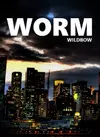
This book took me two months to finish and it would have dragged on for much longer if not for the folks behind the audio.worm project, I regret only finding it after reading volume 30 (90% through). Before I get into this book I want to thank that group of likely insane fans for the hundreds of hours they took to read and record this behemoth. To any potential reader, I highly recommend finding the fan-made audiobook on Apple podcasts because simply finding the time to READ this whole thing was driving me insane.
This has been a constant in my life for the last two months so I'm sorry if this review runs a little long. I think for a book like this I need to change up my review format, so I will frame this as a Q&A for potential readers.
Q: What is Worm?
A: Worm was/is a superhero web serial novel published between Jan 2011 and Nov 2013, It has 30 Volumes/arcs and was published bi-weekly at a pace of around 80 pages a week. If that doesn't drop your jaw consider it like this: Wildbow was basically publishing a complete novel a month, every month, for nearly THREE YEARS. Reading this in 2023 means reading the presumably edited epub edition (though you can read this chapter by chapter for free online) with minor changes to the original story.
Q: Okay maybe I should have been more specific smartass, What is Worm about?
A: Worm is set in a world where people start getting superpowers, usually this process occurs after some type of deeply traumatic incident. The story follows Taylor Hebert, a high school student who has recently lost her mother in a car accident and is facing a targeted campaign of bullying at school. As a result of the bullying Taylor awakens a power to control all of the bugs in her vicinity and her priorities change. With the purest of intentions, Taylor dons the tights of justice only to find out that the distinction between hero and villain isn't as clear cut as she thought.
If this sounds like every other cut-and-dried superhero premise that's because it is. But Worm is something a little more, It's not obvious from the premise or the early chapters but this is the sort of superhero story cut from the same cloth as Watchmen and The Boys. Taylor's early attempts to fit herself into the mold of a hero run into a series of setbacks that erode her faith in the establishment. She opts to cross the line, adopting the monicker “Skitter”, Taylor joins a group of up-and-coming villains called the Undersiders.
But that's just the premise and early plot, what Worm is really about is escalation. This is a story about someone making all the right decisions at the moment, only to have that decision trigger an even larger crisis, rinse, and repeat until the stakes are beyond global.
Q: What makes this special, why should I read something like this?
A: A concise answer would be the intricate world-building, well-defined characters, and intricate power system. The author delves deep into the psychological and emotional aspects of being a superhero, as well as the consequences of their actions on society and themselves. The narrative is both engaging and unpredictable, filled with twists and turns that keep readers hooked.
Worm has a lot in common with traditional superhero stories, but where it excels is where it subverts the trope and convention of the genre. Characters face realistic consequences for their actions, and there is a constant sense of danger and stakes. The story also delves into themes of identity, morality, and the blurry line between good and evil. The author's willingness to explore these themes in a thought-provoking manner sets “Worm” apart from more conventional superhero stories.
There's something to be said for the medium as well, your standard superhero story has almost always existed within the pages and the conventions of comic books. Worm trades the convenience and artistry of illustrated chapters for the depth and nuance that comes with an all-text story. Every character has a backstory that gets explored, details about the world are plainly stated, and as a reader you are made aware of all of those small things that would have traditionally been hidden in panel art.
Q: Okay you've talked pros, give me some cons, what's wrong with it?
A: I want to say clearly before I dive deep and nerdy into this that If I didn't like this series I wouldn't have stuck with it to the conclusion, I wouldn't be masocistically contemplating reading the sequel either. That said there were a number of things that bothered me enough that I almost DID put the book down, and I am not sure how much of me powering through was due to Worm's overall quality and how much it was me trying to complete a challenge I'd taken on.
The early chapters suck and I knew that going in, I am under the impression that Wildbow went back while editing the epub and strengthened some of these early chapters but that doesn't really impact how good/interesting it is at the outset. Every hero and villain needs their origin story, and at this point in the novel, the story reads like most other fan fiction. It takes a while for the narrative engine of escalation to take hold in the universe; I would wager that it's not until the introduction of Coil and Dinah (nearly 4 or 5 Volumes into the series) that the story finds the beats that will continue to run throughout.
This story was published and planned piecemeal. Wildbow has stated that he would often write himself into deadends and then force himself to write back out just to keep the tension of the narrative going; after all, if even the author doesn't know where this is going how can the reader know? I'm sure that this piecemeal approach allowed the story to benefit from reader feedback in real-time, and to his credit, there is a significant amount of tension surrounding key moments in the story so it's a partial success. But not having a planned story really fucks with the flow of this book, the pacing is all over the place, there are time skips and the additions of whole hosts of never before seen heroes, and the backstory has been delivered in donation-driven interludes that breakup this already gasping story even further.
Another consequence of working from a rough or non-existent outline is that your story runs the risk of losing the reader even at the best of times. There are whole volumes in Worm that I cannot riddle the meaning or significance of, some revelations are buried in detail-rich text and leave you scratching your head for hours of storytime. We never get a consistent villain and the world continues to evolve and confound with each twist. When Wildbow is on the ball this is the most exhilarating part of reading the book, but the quality is not consistent chapter by chapter.
Q: Anything else I need to know?
A: Worm is exciting, varied, and endlessly complex. Just reading the wiki could entertain you for hours and hours. The peaks are high and the valleys are low. I thought that reading the edited epub compilation would mean that I would skip over some of those valleys but I was wrong. Do not go into this book expecting to read something that's been run through with a fine tooth comb, expect some ends to remain loose, and for developments to be nonsensical or even cartoonish. All things told though this is a superhero book at its heart and it's okay to be all of those things.
I really wish that Wildbow had sat down and read this whole series over and just went to town with the red pen. I see no reason why the retail publication had to be the same as the web publication, warts, and all. This could have been a 3,000-page, 4 or 5 Volume box set, and I am positive that all of these arcs could have been condensed into 6-800 page books. Portions of the plot could have been reworked, interludes brought into the primary narrative, and foreshadowing could have been added retroactively. There is so much potential in here and this is not the publishing release I would have hoped for.
I want to talk about fanfic for just a second as well. There is such a City of Heroes RP vibe coming off of this book and I don't know if it's intentional or just a consequence of writing a scenario like this to begin with. I don't say that to put anyone off, but if you're thinking of picking this up you should know that there is a whole fanfic universe that surrounds Worm, lots of readers who write in this universe. Obviously, I am not a contemporary reader but some of the unexplained gaps and surprise characters seemed to be Wildbow folding in some of those fanfic stories and heroes. I could be wrong on that point so don't quote me.
I wouldn't pick this up unless you have some time to kill, all the reviews that say this is nectar from the gods are from serious nerds that have probably already read more comics than everyone you know put together and have been dying for more content. Worm is good, even great at times but there are so many better ways to spend your time. If Wildbow ever comes back to this volume I hope he really considers a partial rewrite and some serious consolidation. I enjoyed this book a lot but I would not recommend something like this to 99% of the people that I know, it just isn't in a state that invites someone to read it.
This book took me two months to finish and it would have dragged on for much longer if not for the folks behind the audio.worm project, I regret only finding it after reading volume 30 (90% through). Before I get into this book I want to thank that group of likely insane fans for the hundreds of hours they took to read and record this behemoth. To any potential reader, I highly recommend finding the fan-made audiobook on Apple podcasts because simply finding the time to READ this whole thing was driving me insane.
This has been a constant in my life for the last two months so I'm sorry if this review runs a little long. I think for a book like this I need to change up my review format, so I will frame this as a Q&A for potential readers.
Q: What is Worm?
A: Worm was/is a superhero web serial novel published between Jan 2011 and Nov 2013, It has 30 Volumes/arcs and was published bi-weekly at a pace of around 80 pages a week. If that doesn't drop your jaw consider it like this: Wildbow was basically publishing a complete novel a month, every month, for nearly THREE YEARS. Reading this in 2023 means reading the presumably edited epub edition (though you can read this chapter by chapter for free online) with minor changes to the original story.
Q: Okay maybe I should have been more specific smartass, What is Worm about?
A: Worm is set in a world where people start getting superpowers, usually this process occurs after some type of deeply traumatic incident. The story follows Taylor Hebert, a high school student who has recently lost her mother in a car accident and is facing a targeted campaign of bullying at school. As a result of the bullying Taylor awakens a power to control all of the bugs in her vicinity and her priorities change. With the purest of intentions, Taylor dons the tights of justice only to find out that the distinction between hero and villain isn't as clear cut as she thought.
If this sounds like every other cut-and-dried superhero premise that's because it is. But Worm is something a little more, It's not obvious from the premise or the early chapters but this is the sort of superhero story cut from the same cloth as Watchmen and The Boys. Taylor's early attempts to fit herself into the mold of a hero run into a series of setbacks that erode her faith in the establishment. She opts to cross the line, adopting the monicker “Skitter”, Taylor joins a group of up-and-coming villains called the Undersiders.
But that's just the premise and early plot, what Worm is really about is escalation. This is a story about someone making all the right decisions at the moment, only to have that decision trigger an even larger crisis, rinse, and repeat until the stakes are beyond global.
Q: What makes this special, why should I read something like this?
A: A concise answer would be the intricate world-building, well-defined characters, and intricate power system. The author delves deep into the psychological and emotional aspects of being a superhero, as well as the consequences of their actions on society and themselves. The narrative is both engaging and unpredictable, filled with twists and turns that keep readers hooked.
Worm has a lot in common with traditional superhero stories, but where it excels is where it subverts the trope and convention of the genre. Characters face realistic consequences for their actions, and there is a constant sense of danger and stakes. The story also delves into themes of identity, morality, and the blurry line between good and evil. The author's willingness to explore these themes in a thought-provoking manner sets “Worm” apart from more conventional superhero stories.
There's something to be said for the medium as well, your standard superhero story has almost always existed within the pages and the conventions of comic books. Worm trades the convenience and artistry of illustrated chapters for the depth and nuance that comes with an all-text story. Every character has a backstory that gets explored, details about the world are plainly stated, and as a reader you are made aware of all of those small things that would have traditionally been hidden in panel art.
Q: Okay you've talked pros, give me some cons, what's wrong with it?
A: I want to say clearly before I dive deep and nerdy into this that If I didn't like this series I wouldn't have stuck with it to the conclusion, I wouldn't be masocistically contemplating reading the sequel either. That said there were a number of things that bothered me enough that I almost DID put the book down, and I am not sure how much of me powering through was due to Worm's overall quality and how much it was me trying to complete a challenge I'd taken on.
The early chapters suck and I knew that going in, I am under the impression that Wildbow went back while editing the epub and strengthened some of these early chapters but that doesn't really impact how good/interesting it is at the outset. Every hero and villain needs their origin story, and at this point in the novel, the story reads like most other fan fiction. It takes a while for the narrative engine of escalation to take hold in the universe; I would wager that it's not until the introduction of Coil and Dinah (nearly 4 or 5 Volumes into the series) that the story finds the beats that will continue to run throughout.
This story was published and planned piecemeal. Wildbow has stated that he would often write himself into deadends and then force himself to write back out just to keep the tension of the narrative going; after all, if even the author doesn't know where this is going how can the reader know? I'm sure that this piecemeal approach allowed the story to benefit from reader feedback in real-time, and to his credit, there is a significant amount of tension surrounding key moments in the story so it's a partial success. But not having a planned story really fucks with the flow of this book, the pacing is all over the place, there are time skips and the additions of whole hosts of never before seen heroes, and the backstory has been delivered in donation-driven interludes that breakup this already gasping story even further.
Another consequence of working from a rough or non-existent outline is that your story runs the risk of losing the reader even at the best of times. There are whole volumes in Worm that I cannot riddle the meaning or significance of, some revelations are buried in detail-rich text and leave you scratching your head for hours of storytime. We never get a consistent villain and the world continues to evolve and confound with each twist. When Wildbow is on the ball this is the most exhilarating part of reading the book, but the quality is not consistent chapter by chapter.
Q: Anything else I need to know?
A: Worm is exciting, varied, and endlessly complex. Just reading the wiki could entertain you for hours and hours. The peaks are high and the valleys are low. I thought that reading the edited epub compilation would mean that I would skip over some of those valleys but I was wrong. Do not go into this book expecting to read something that's been run through with a fine tooth comb, expect some ends to remain loose, and for developments to be nonsensical or even cartoonish. All things told though this is a superhero book at its heart and it's okay to be all of those things.
I really wish that Wildbow had sat down and read this whole series over and just went to town with the red pen. I see no reason why the retail publication had to be the same as the web publication, warts, and all. This could have been a 3,000-page, 4 or 5 Volume box set, and I am positive that all of these arcs could have been condensed into 6-800 page books. Portions of the plot could have been reworked, interludes brought into the primary narrative, and foreshadowing could have been added retroactively. There is so much potential in here and this is not the publishing release I would have hoped for.
I want to talk about fanfic for just a second as well. There is such a City of Heroes RP vibe coming off of this book and I don't know if it's intentional or just a consequence of writing a scenario like this to begin with. I don't say that to put anyone off, but if you're thinking of picking this up you should know that there is a whole fanfic universe that surrounds Worm, lots of readers who write in this universe. Obviously, I am not a contemporary reader but some of the unexplained gaps and surprise characters seemed to be Wildbow folding in some of those fanfic stories and heroes. I could be wrong on that point so don't quote me.
I wouldn't pick this up unless you have some time to kill, all the reviews that say this is nectar from the gods are from serious nerds that have probably already read more comics than everyone you know put together and have been dying for more content. Worm is good, even great at times but there are so many better ways to spend your time. If Wildbow ever comes back to this volume I hope he really considers a partial rewrite and some serious consolidation. I enjoyed this book a lot but I would not recommend something like this to 99% of the people that I know, it just isn't in a state that invites someone to read it.


I'm having a hard time writing a review for this book and series. It's clear to me that I am enjoying this series immensely; it has absolutely pushed everything else that I am reading into the periphery. I actually tried to publish a review for this first book as soon as I finished it but couldn't put the sequel down long enough to organize my thoughts, that's how much I like it. But it's equally clear to me just how tailored to my taste this reading experience has been. A look at the tags/keywords were enough to make me blush in anticipation: a story-within-a-story space opera that's riffing on the Roman Empire? That sounds perfect to me, but maybe a little too perfect. In fact, I've spent enough time on Goodreads to have had this on my TBR since its release. Its been recommended to me so often that I think I've waited till now to read it simply out of spite; how dare the algorithm tell me what to read. But here I am three books into the series and I have to admit that the algo read me like a book, and I in turn read this book, and now I can't help but to tell you all to read this book as well.
In the first book of this series, set 15,000 years in the future, we are introduced to Hadrian Marlowe. Born a scion of the Marlowe family, he is raised to one day inherit his family's planet of Delos. As a patrician of the genetically tailored ruling class of the Sollan Empire, Hadrian is tutored extensively in swordsmanship and the classics. His natural talents suit such a curriculum, and he quickly discovers a remarkable capacity for language. After learning many of the languages spoken across the empire, he insists that his tutor, the Scholiast Tor Gibson, teach him the language of the Cielcin - an alien species that has been marauding the colonies at the edge of human space - in hopes of making peace between the two species. When his father names his younger brother as heir, Hadrian, unwilling to be his father's tool, escapes Delos with the help of Gibson and his mother. Buying passage on a smugglers' vessel, Hadrian's plan immediately goes awry when he awakens from suspension fugue on the wrong side of the galaxy. He finds himself abandoned on the planet Emesh with only his family's signet ring in his possession. As Hadrian navigates this unexpected turn of events, he confronts not only the threat of the Cielcin, but also poverty and the complex political and religious undercurrents of the vast Empire he once took for granted.
This first book in the series lays the groundwork for Hadrian's personal journey and the larger conflicts brewing in his future. Having already divulged my bias, I'll remind you all to take what I'm about to say with a grain of salt. I think that this is a brilliant book and series, this first entry does a magnificent job of grounding you in the universe of the Sollan Empire and delivering the in-universe historical context which the remainder of the series will explore. I loved this version of the galaxy spanning human empire, beyond just a nod to Rome it's a facsimile of the Roman Imperial state. Likewise, I loved the delivery, very much in the vein of The Name of the Wind this story is told as a retrospective from Hadrian's point of view. Some people might dislike the minor self-spoilers that this style tends to deliver, but as a fan of King Killer, it didn't bother me a lick. Furthermore, I loved Hadrian from the outset and not only for sharing a name with one of the 5 good emperors, but because his transformation from spoiled whelp to Aurélien figure is something that feels earned.
I'm enthusiastic about this series, largely due to my pre-existing interests, though I can't ignore its faults. The most obvious criticism is how derivative this first book feels. It's essentially a fusion of Red Rising's space opera framework with The Kingkiller Chronicle's narrative style and rich backstory (definitely some Dune mixed in for good measure). While that's an oversimplification, fans of either series will immediately recognize these influences. Having read further in the series, I can assure potential readers that later books forge their own distinct path, but this first entry wears its inspirations quite prominently on its sleeve. Less obvious but equally annoying is the flowery/purple prose; the way Hadrian speaks and describes the world around him is fabulously eloquent and dramatic, but if his character does not grab you, it's probably because of the pomp.
Contrasting with its inspirations, this story is a slow burn, one that takes you to far-flung planets and ancient alien ruins. Less the gallivanting space captain and more the sword fighting archeologist, Hadrian's story is an anachronistic gem that perfectly blends classical sensibilities with far-future space opera. While its derivative elements and flowery prose might not work for everyone, those who share my enthusiasm for historically inspired science fiction will find themselves swept up in this richly crafted universe.
The algorithm may have pushed me towards this book, but the quality of the storytelling, the depth of the world building, and the compelling character journey of Hadrian have made me a willing convert. This is more than just another space opera - it's a thoughtful exploration of power, destiny, and the weight of history, all wrapped in the trappings of classical antiquity projected onto the stars.
PS: This is a big book in a series of big books, it's an ask to get into a series like this. Telling someone staring at a pile of novels that's head high that they should jump in and never mind if they dislike the first entry is not something that can I get behind. That's not the case here, this really is solid gold all the way through (at least to book 3), and one of those long-running series where each sequel is better than the last. PPS: Seeing as how this is one contiguous story across multiple entries, I won't be doing full reviews for each sequel book. I will probably post a complete series review that holds plot details less close to the vest when I reach the conclusion. For the interim entries, I think that anyone who reads this book and likes it will find each subsequent book to be better than the last.
I'm having a hard time writing a review for this book and series. It's clear to me that I am enjoying this series immensely; it has absolutely pushed everything else that I am reading into the periphery. I actually tried to publish a review for this first book as soon as I finished it but couldn't put the sequel down long enough to organize my thoughts, that's how much I like it. But it's equally clear to me just how tailored to my taste this reading experience has been. A look at the tags/keywords were enough to make me blush in anticipation: a story-within-a-story space opera that's riffing on the Roman Empire? That sounds perfect to me, but maybe a little too perfect. In fact, I've spent enough time on Goodreads to have had this on my TBR since its release. Its been recommended to me so often that I think I've waited till now to read it simply out of spite; how dare the algorithm tell me what to read. But here I am three books into the series and I have to admit that the algo read me like a book, and I in turn read this book, and now I can't help but to tell you all to read this book as well.
In the first book of this series, set 15,000 years in the future, we are introduced to Hadrian Marlowe. Born a scion of the Marlowe family, he is raised to one day inherit his family's planet of Delos. As a patrician of the genetically tailored ruling class of the Sollan Empire, Hadrian is tutored extensively in swordsmanship and the classics. His natural talents suit such a curriculum, and he quickly discovers a remarkable capacity for language. After learning many of the languages spoken across the empire, he insists that his tutor, the Scholiast Tor Gibson, teach him the language of the Cielcin - an alien species that has been marauding the colonies at the edge of human space - in hopes of making peace between the two species. When his father names his younger brother as heir, Hadrian, unwilling to be his father's tool, escapes Delos with the help of Gibson and his mother. Buying passage on a smugglers' vessel, Hadrian's plan immediately goes awry when he awakens from suspension fugue on the wrong side of the galaxy. He finds himself abandoned on the planet Emesh with only his family's signet ring in his possession. As Hadrian navigates this unexpected turn of events, he confronts not only the threat of the Cielcin, but also poverty and the complex political and religious undercurrents of the vast Empire he once took for granted.
This first book in the series lays the groundwork for Hadrian's personal journey and the larger conflicts brewing in his future. Having already divulged my bias, I'll remind you all to take what I'm about to say with a grain of salt. I think that this is a brilliant book and series, this first entry does a magnificent job of grounding you in the universe of the Sollan Empire and delivering the in-universe historical context which the remainder of the series will explore. I loved this version of the galaxy spanning human empire, beyond just a nod to Rome it's a facsimile of the Roman Imperial state. Likewise, I loved the delivery, very much in the vein of The Name of the Wind this story is told as a retrospective from Hadrian's point of view. Some people might dislike the minor self-spoilers that this style tends to deliver, but as a fan of King Killer, it didn't bother me a lick. Furthermore, I loved Hadrian from the outset and not only for sharing a name with one of the 5 good emperors, but because his transformation from spoiled whelp to Aurélien figure is something that feels earned.
I'm enthusiastic about this series, largely due to my pre-existing interests, though I can't ignore its faults. The most obvious criticism is how derivative this first book feels. It's essentially a fusion of Red Rising's space opera framework with The Kingkiller Chronicle's narrative style and rich backstory (definitely some Dune mixed in for good measure). While that's an oversimplification, fans of either series will immediately recognize these influences. Having read further in the series, I can assure potential readers that later books forge their own distinct path, but this first entry wears its inspirations quite prominently on its sleeve. Less obvious but equally annoying is the flowery/purple prose; the way Hadrian speaks and describes the world around him is fabulously eloquent and dramatic, but if his character does not grab you, it's probably because of the pomp.
Contrasting with its inspirations, this story is a slow burn, one that takes you to far-flung planets and ancient alien ruins. Less the gallivanting space captain and more the sword fighting archeologist, Hadrian's story is an anachronistic gem that perfectly blends classical sensibilities with far-future space opera. While its derivative elements and flowery prose might not work for everyone, those who share my enthusiasm for historically inspired science fiction will find themselves swept up in this richly crafted universe.
The algorithm may have pushed me towards this book, but the quality of the storytelling, the depth of the world building, and the compelling character journey of Hadrian have made me a willing convert. This is more than just another space opera - it's a thoughtful exploration of power, destiny, and the weight of history, all wrapped in the trappings of classical antiquity projected onto the stars.
PS: This is a big book in a series of big books, it's an ask to get into a series like this. Telling someone staring at a pile of novels that's head high that they should jump in and never mind if they dislike the first entry is not something that can I get behind. That's not the case here, this really is solid gold all the way through (at least to book 3), and one of those long-running series where each sequel is better than the last. PPS: Seeing as how this is one contiguous story across multiple entries, I won't be doing full reviews for each sequel book. I will probably post a complete series review that holds plot details less close to the vest when I reach the conclusion. For the interim entries, I think that anyone who reads this book and likes it will find each subsequent book to be better than the last.


