
nicanical


Excession follows several Minds responding to a strange sphere (the Excession of the title) in Culture space, while tenuous allies—the Affront—also encroach. This is the Culture novel for fans of the AI: Minds are the focus, with humans in the supporting role. There are plenty of ship names sans gravitas, exhibits of obscenely powerful Culture technology, and repartee between Minds (the names sometimes make it difficult to follow along though).
But, because the Minds carry the main story (and the Minds have their omnipotent reputation), from the beginning it feels like whatever happens with respect to the Excession, the Minds and the Culture can't fail. This defuses any tension in the main story and makes the unfolding of the plot feel just okay. This is why, to my surprise, I was more invested in the Genar-Hofoen and Dajeil subplot: their reconciliation is not guaranteed—it might fail.
I wish Banks had cut Ulver Seich out of the story though; she doesn't add anything, and her character is insufferable. Many Culture stories feature immature characters but Ulver is the worst of the worst, being something like a combination trust fund baby-social media influencer.
Excession follows several Minds responding to a strange sphere (the Excession of the title) in Culture space, while tenuous allies—the Affront—also encroach. This is the Culture novel for fans of the AI: Minds are the focus, with humans in the supporting role. There are plenty of ship names sans gravitas, exhibits of obscenely powerful Culture technology, and repartee between Minds (the names sometimes make it difficult to follow along though).
But, because the Minds carry the main story (and the Minds have their omnipotent reputation), from the beginning it feels like whatever happens with respect to the Excession, the Minds and the Culture can't fail. This defuses any tension in the main story and makes the unfolding of the plot feel just okay. This is why, to my surprise, I was more invested in the Genar-Hofoen and Dajeil subplot: their reconciliation is not guaranteed—it might fail.
I wish Banks had cut Ulver Seich out of the story though; she doesn't add anything, and her character is insufferable. Many Culture stories feature immature characters but Ulver is the worst of the worst, being something like a combination trust fund baby-social media influencer.

The stories aren't bad, but they don't linger in the brain after reading either. Except Pearls are a Nuisance—Walter is amusing, and there's a nice twist. And maybe Spanish Blood, with its memorable ending.
Unlike the similar collection, Trouble is my Business, none of the stories here feature Philip Marlowe. All the protags still get up to sleuthing, but there's variety in their backgrounds. For example, the previously-mentioned Walter is a dandy playing an amateur detective, while Delaguerra is a police lieutenant. Unfortunately, the other main characters are forgettable, never developing beyond the basic brooding, hardboiled archetype.
The stories also differ in perspective and tone and other matters of prose. The lyrical similes are few, descriptions and scene-setting are short, and the aggressive brevity gives the stories a quick but tiring pace.
The stories aren't bad, but they don't linger in the brain after reading either. Except Pearls are a Nuisance—Walter is amusing, and there's a nice twist. And maybe Spanish Blood, with its memorable ending.
Unlike the similar collection, Trouble is my Business, none of the stories here feature Philip Marlowe. All the protags still get up to sleuthing, but there's variety in their backgrounds. For example, the previously-mentioned Walter is a dandy playing an amateur detective, while Delaguerra is a police lieutenant. Unfortunately, the other main characters are forgettable, never developing beyond the basic brooding, hardboiled archetype.
The stories also differ in perspective and tone and other matters of prose. The lyrical similes are few, descriptions and scene-setting are short, and the aggressive brevity gives the stories a quick but tiring pace.


Added to listOwnedwith 71 books.


Updated a reading goal:
Read 12 books in 2025
Progress so far: 25 / 12 208%
Updated a reading goal:
Read 30 books by December 30, 2025
Progress so far: 25 / 30 83%




Added to listOwnedwith 69 books.


Updated a reading goal:
Read 12 books in 2025
Progress so far: 24 / 12 200%
Updated a reading goal:
Read 30 books by December 30, 2025
Progress so far: 24 / 30 80%
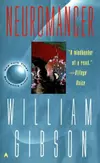
I read Virtual Light recently which was such a slog, that I questioned my fond memories of Neuromancer and had to crack it open again. I'm relieved that my original sentiments remain largely intact, although some elements are showing their age.
The action begins quickly, and the stylized, scene-setting descriptions are all well-balanced. The pacing is smooth, propulsive. At its core, Neuromancer is a heist story, so it keeps moving out of necessity.
The world is futuristic but grounded, and still feels realistic ... mostly. Some stuff is really dated now, like graphical hacking. Films keep getting away with it because of the visual medium, but reading about it nowadays is underwhelming.
The same goes for the lack of technical details for Case's skillset. E.g., he uses microsofts but doesn't code them; the Kuang Eleven virus, also not coded by Case, is instead delivered on a 'one-shot cassette' like it was bought off Amazon. Case even has the Flatline execute some commands and navigate because it's faster.
Actually ... I suppose that makes Case kind of like a 'vibe hacker'. Depending upon how all this real-world AI garbage plays out, Neuromancer's portrayal of hacking might just become prescient yet.
I read Virtual Light recently which was such a slog, that I questioned my fond memories of Neuromancer and had to crack it open again. I'm relieved that my original sentiments remain largely intact, although some elements are showing their age.
The action begins quickly, and the stylized, scene-setting descriptions are all well-balanced. The pacing is smooth, propulsive. At its core, Neuromancer is a heist story, so it keeps moving out of necessity.
The world is futuristic but grounded, and still feels realistic ... mostly. Some stuff is really dated now, like graphical hacking. Films keep getting away with it because of the visual medium, but reading about it nowadays is underwhelming.
The same goes for the lack of technical details for Case's skillset. E.g., he uses microsofts but doesn't code them; the Kuang Eleven virus, also not coded by Case, is instead delivered on a 'one-shot cassette' like it was bought off Amazon. Case even has the Flatline execute some commands and navigate because it's faster.
Actually ... I suppose that makes Case kind of like a 'vibe hacker'. Depending upon how all this real-world AI garbage plays out, Neuromancer's portrayal of hacking might just become prescient yet.

Pacing is slow because most of the book is Major Quilan traveling and Mahrai Ziller playing tourist. Action and intrigue are mostly kept to flashbacks, which lack urgency. Only the end has any true tension ... well, the subplot involving the Culture researcher has some too. But, that subplot turns out to be a feigned plot twist, and a waste of an interesting character and locale.
The ending wraps up everything so neatly that it feels contrived. That said, the reveal of the real twist is satisfying and adds some subtle shades to Masaq Orbital and Admiral Huyler's actions—depends upon how much risk you think they really took with the orbital's population (in exchange for maybe unmasking the conspirators).
Pacing is slow because most of the book is Major Quilan traveling and Mahrai Ziller playing tourist. Action and intrigue are mostly kept to flashbacks, which lack urgency. Only the end has any true tension ... well, the subplot involving the Culture researcher has some too. But, that subplot turns out to be a feigned plot twist, and a waste of an interesting character and locale.
The ending wraps up everything so neatly that it feels contrived. That said, the reveal of the real twist is satisfying and adds some subtle shades to Masaq Orbital and Admiral Huyler's actions—depends upon how much risk you think they really took with the orbital's population (in exchange for maybe unmasking the conspirators).