nicanical

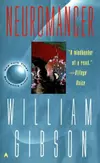
I read Virtual Light recently which was such a slog, that I questioned my fond memories of Neuromancer and had to crack it open again. I'm relieved that my original sentiments remain largely intact, although some elements are showing their age.
The action begins quickly, and the stylized, scene-setting descriptions are all well-balanced. The pacing is smooth, propulsive. At its core, Neuromancer is a heist story, so it keeps moving out of necessity.
The world is futuristic but grounded, and still feels realistic ... mostly. Some stuff is really dated now, like graphical hacking. Films keep getting away with it because of the visual medium, but reading about it nowadays is underwhelming.
The same goes for the lack of technical details for Case's skillset. E.g., he uses microsofts but doesn't code them; the Kuang Eleven virus, also not coded by Case, is instead delivered on a 'one-shot cassette' like it was bought off Amazon. Case even has the Flatline execute some commands and navigate because it's faster.
Actually ... I suppose that makes Case kind of like a 'vibe hacker'. Depending upon how all this real-world AI garbage plays out, Neuromancer's portrayal of hacking might just become prescient yet.
I read Virtual Light recently which was such a slog, that I questioned my fond memories of Neuromancer and had to crack it open again. I'm relieved that my original sentiments remain largely intact, although some elements are showing their age.
The action begins quickly, and the stylized, scene-setting descriptions are all well-balanced. The pacing is smooth, propulsive. At its core, Neuromancer is a heist story, so it keeps moving out of necessity.
The world is futuristic but grounded, and still feels realistic ... mostly. Some stuff is really dated now, like graphical hacking. Films keep getting away with it because of the visual medium, but reading about it nowadays is underwhelming.
The same goes for the lack of technical details for Case's skillset. E.g., he uses microsofts but doesn't code them; the Kuang Eleven virus, also not coded by Case, is instead delivered on a 'one-shot cassette' like it was bought off Amazon. Case even has the Flatline execute some commands and navigate because it's faster.
Actually ... I suppose that makes Case kind of like a 'vibe hacker'. Depending upon how all this real-world AI garbage plays out, Neuromancer's portrayal of hacking might just become prescient yet.

Pacing is slow because most of the book is Major Quilan traveling and Mahrai Ziller playing tourist. Action and intrigue are mostly kept to flashbacks, which lack urgency. Only the end has any true tension ... well, the subplot involving the Culture researcher has some too. But, that subplot turns out to be a feigned plot twist, and a waste of an interesting character and locale.
The ending wraps up everything so neatly that it feels contrived. That said, the reveal of the real twist is satisfying and adds some subtle shades to Masaq Orbital and Admiral Huyler's actions—depends upon how much risk you think they really took with the orbital's population (in exchange for maybe unmasking the conspirators).
Pacing is slow because most of the book is Major Quilan traveling and Mahrai Ziller playing tourist. Action and intrigue are mostly kept to flashbacks, which lack urgency. Only the end has any true tension ... well, the subplot involving the Culture researcher has some too. But, that subplot turns out to be a feigned plot twist, and a waste of an interesting character and locale.
The ending wraps up everything so neatly that it feels contrived. That said, the reveal of the real twist is satisfying and adds some subtle shades to Masaq Orbital and Admiral Huyler's actions—depends upon how much risk you think they really took with the orbital's population (in exchange for maybe unmasking the conspirators).


Too many tangential details and internal thoughts during characterization—I zoned out and had to reread parts many times. Gibson does better with worldbuilding and scene-setting, but he overuses country adjectives: Russian this, Chinese that, etc. I remember this technique from Neuromancer, but it did not feel overused there.
Dialogue though, is tight, clean.
Some details did not add anything to the story for me. E.g., Shapely and the AIDS cure. And I thought Yamazaki's character could have been nixed completely without affecting anything.
For pacing: the book is slow until about halfway, then it slows down again until the very end. Mainly from all the details and thoughts, explained above. The ending feels like it comes out of nowhere, and was not satisfying.
Too many tangential details and internal thoughts during characterization—I zoned out and had to reread parts many times. Gibson does better with worldbuilding and scene-setting, but he overuses country adjectives: Russian this, Chinese that, etc. I remember this technique from Neuromancer, but it did not feel overused there.
Dialogue though, is tight, clean.
Some details did not add anything to the story for me. E.g., Shapely and the AIDS cure. And I thought Yamazaki's character could have been nixed completely without affecting anything.
For pacing: the book is slow until about halfway, then it slows down again until the very end. Mainly from all the details and thoughts, explained above. The ending feels like it comes out of nowhere, and was not satisfying.

Years ago, after inhaling all of Raymond Chandler's novels, I read The Maltese Falcon looking for a similar flavor from Chandler's predecessor. But, I found that Sam Spade wasn't that, and then I never got around to exploring the rest of Hammett's stuff.
This book though, sates the palate. First: the clear, straightforward prose keeps the action moving, gets punchy in the right places, and is just a pleasure to read. Second: the Continental Op is a cunning smartass with deadpan snarks that Marlowe himself might have quipped. (The Op acts more like a vigilante here than a private dick though, and his morals are a shade darker than Marlowe's).
Plotwise, well, I like hardboiled stuff for the scenes and characterizations, not the plots. The underlying impetus here is vengeance and vigilantism though, not the usual need to solve a mystery. I found this refreshing.
The story felt a little muddy towards the end, like Hammett was tiring and wanted to wrap it up. Still, a very enjoyable read, and now I'll have to see what else of Hammett's I might have overlooked.
Years ago, after inhaling all of Raymond Chandler's novels, I read The Maltese Falcon looking for a similar flavor from Chandler's predecessor. But, I found that Sam Spade wasn't that, and then I never got around to exploring the rest of Hammett's stuff.
This book though, sates the palate. First: the clear, straightforward prose keeps the action moving, gets punchy in the right places, and is just a pleasure to read. Second: the Continental Op is a cunning smartass with deadpan snarks that Marlowe himself might have quipped. (The Op acts more like a vigilante here than a private dick though, and his morals are a shade darker than Marlowe's).
Plotwise, well, I like hardboiled stuff for the scenes and characterizations, not the plots. The underlying impetus here is vengeance and vigilantism though, not the usual need to solve a mystery. I found this refreshing.
The story felt a little muddy towards the end, like Hammett was tiring and wanted to wrap it up. Still, a very enjoyable read, and now I'll have to see what else of Hammett's I might have overlooked.


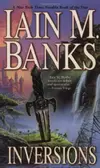
Awesome book. Could be my favorite Culture book. This one is narrated by natives on a medieval-level world, sharing their observations of two individuals—a Doctor and a Bodyguard—who are ostensibly Culture citizens. Inversions actually plays out the debate over contact methodology that Diziet and Linter have in The State of the Art.
Narrating from the natives' perspectives achieves two big things here:
First, it cuts down on infodumps and meandering parentheticals which can interrupt the flow of the story. Banks sometimes overuses such asides in other Culture books. Their relative absence here made Inversions a smooth read for me.
Second, the book has a subtle humor throughout that comes from contrasting the natives' ignorance with the inference that some omnipotent Culture tech is behind the scenes. This intertextuality means its important to have some understanding of the Culture and Special Circumstances from reading other Culture books before this one. (Sufficient context shouldn't be an issue if you're reading along in publication order).
The only thing I didn't like was the lack of interaction between the Doctor and the Bodyguard. If you start to expect a reunion between the two, well, that never materializes.
Awesome book. Could be my favorite Culture book. This one is narrated by natives on a medieval-level world, sharing their observations of two individuals—a Doctor and a Bodyguard—who are ostensibly Culture citizens. Inversions actually plays out the debate over contact methodology that Diziet and Linter have in The State of the Art.
Narrating from the natives' perspectives achieves two big things here:
First, it cuts down on infodumps and meandering parentheticals which can interrupt the flow of the story. Banks sometimes overuses such asides in other Culture books. Their relative absence here made Inversions a smooth read for me.
Second, the book has a subtle humor throughout that comes from contrasting the natives' ignorance with the inference that some omnipotent Culture tech is behind the scenes. This intertextuality means its important to have some understanding of the Culture and Special Circumstances from reading other Culture books before this one. (Sufficient context shouldn't be an issue if you're reading along in publication order).
The only thing I didn't like was the lack of interaction between the Doctor and the Bodyguard. If you start to expect a reunion between the two, well, that never materializes.
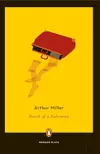
Plays aren't my preferred format, but I appreciate how much drama Miller packed into this slim volume. Poor Linda though. She was faithful to the end. Out of ignorance or out of duty? We never find out with certainty, which might make her the most tragic Loman of the lot.
Plays aren't my preferred format, but I appreciate how much drama Miller packed into this slim volume. Poor Linda though. She was faithful to the end. Out of ignorance or out of duty? We never find out with certainty, which might make her the most tragic Loman of the lot.

Interesting ideas, bad execution, frustrating read.
Famous singer Jason Taverner wakes up to find all records of his existence have vanished. His efforts to figure out why draw police attention, starting a chase that lasts the whole story. It lasts the whole story because Jason repeatedly makes unbelievably boneheaded moves at odds with the urgency of his situation. For example, Jason: discovers a woman helping him is a police informant, but willingly accompanies her back to her apartment; overstays in a safehouse although he knows the police are likely on their way; consumes drugs with Alys, the Police General's sister in the General's apartment.
Jason gets up to all this bumbling despite proudly being a 'Six'—a genetically-engineered human with enhanced smarts and resourcefulness, although I never saw it.
There are several attempts at redeeming Jason's character—when he contrasts his life with the people on the streets and also when he meets the potter—but these never coalesce to any satisfaction.
The idea of a drug that gives reality-changing powers was interesting but wasted, receiving only a few throwaway lines in the denouement.
Interesting ideas, bad execution, frustrating read.
Famous singer Jason Taverner wakes up to find all records of his existence have vanished. His efforts to figure out why draw police attention, starting a chase that lasts the whole story. It lasts the whole story because Jason repeatedly makes unbelievably boneheaded moves at odds with the urgency of his situation. For example, Jason: discovers a woman helping him is a police informant, but willingly accompanies her back to her apartment; overstays in a safehouse although he knows the police are likely on their way; consumes drugs with Alys, the Police General's sister in the General's apartment.
Jason gets up to all this bumbling despite proudly being a 'Six'—a genetically-engineered human with enhanced smarts and resourcefulness, although I never saw it.
There are several attempts at redeeming Jason's character—when he contrasts his life with the people on the streets and also when he meets the potter—but these never coalesce to any satisfaction.
The idea of a drug that gives reality-changing powers was interesting but wasted, receiving only a few throwaway lines in the denouement.


A trippy exploration of Sapir-Whorf and neurolinguistics set in Embassytown, an alien city on the planet Arieka, and namesake of the novel.
The central conceit is Language, the language of the indigenous 'Hosts'. Language has particular qualities necessitating specially engineered Ambassadors: twins who can speak Language and interact with the Hosts.
The story starts slowly because one of Miéville's techniques for building up the world is to first casually drop in neologisms, like immer or miab or exot, then provide a detailed explanation later on. This is cool because it disorientates which enhances the alien feel of the setting, but slows you down while your brain tries to comprehend all the mysterious terms.
The middle picks up the pace a little bit by introducing a crisis (essentially an Ariekei civil war). But, it slows down again by spending too much time swimming in the main character's soup of thoughts. This blunts any urgency and anxiety from the unfolding crisis. Language plays a central role in the crisis, so the chapters here grow dense with exposition on it which also slows down the story.
I felt the ending was rushed and the solution disappointing—brute forcing what is basically an evolutionary change in the Hosts by repeating 'lies' to them? In the midst of a civil war, and while the protagonist and her cadre are being hunted? Also, this evolutionary change benefits Hosts almost immediately like they're just hot-swapping hardware into a computer? Just seems too fantastic to me.
While the world is wonderfully-built and the characters' motivations compelling, the choppy pacing and deus ex machina ending dulled my enjoyment.
A trippy exploration of Sapir-Whorf and neurolinguistics set in Embassytown, an alien city on the planet Arieka, and namesake of the novel.
The central conceit is Language, the language of the indigenous 'Hosts'. Language has particular qualities necessitating specially engineered Ambassadors: twins who can speak Language and interact with the Hosts.
The story starts slowly because one of Miéville's techniques for building up the world is to first casually drop in neologisms, like immer or miab or exot, then provide a detailed explanation later on. This is cool because it disorientates which enhances the alien feel of the setting, but slows you down while your brain tries to comprehend all the mysterious terms.
The middle picks up the pace a little bit by introducing a crisis (essentially an Ariekei civil war). But, it slows down again by spending too much time swimming in the main character's soup of thoughts. This blunts any urgency and anxiety from the unfolding crisis. Language plays a central role in the crisis, so the chapters here grow dense with exposition on it which also slows down the story.
I felt the ending was rushed and the solution disappointing—brute forcing what is basically an evolutionary change in the Hosts by repeating 'lies' to them? In the midst of a civil war, and while the protagonist and her cadre are being hunted? Also, this evolutionary change benefits Hosts almost immediately like they're just hot-swapping hardware into a computer? Just seems too fantastic to me.
While the world is wonderfully-built and the characters' motivations compelling, the choppy pacing and deus ex machina ending dulled my enjoyment.
Interesting ideas, bad execution, frustrating read.
Famous singer Jason Taverner wakes up to find all records of his existence have vanished. His efforts to figure out why draw police attention, starting a chase that lasts the whole story. It lasts the whole story because Jason repeatedly makes unbelievably boneheaded moves at odds with the urgency of his situation. For example, Jason: discovers a woman helping him is a police informant, but willingly accompanies her back to her apartment; overstays in a safehouse although he knows the police are likely on their way; consumes drugs with Alys, the Police General's sister in the General's apartment.
Jason gets up to all this bumbling despite proudly being a 'Six'—a genetically-engineered human with enhanced smarts and resourcefulness, although I never saw it.
There are several attempts at redeeming Jason's character—when he contrasts his life with the people on the streets and also when he meets the potter—but these never coalesce to any satisfaction.
The idea of a drug that gives reality-changing powers was interesting but wasted, receiving only a few throwaway lines in the denouement.
Interesting ideas, bad execution, frustrating read.
Famous singer Jason Taverner wakes up to find all records of his existence have vanished. His efforts to figure out why draw police attention, starting a chase that lasts the whole story. It lasts the whole story because Jason repeatedly makes unbelievably boneheaded moves at odds with the urgency of his situation. For example, Jason: discovers a woman helping him is a police informant, but willingly accompanies her back to her apartment; overstays in a safehouse although he knows the police are likely on their way; consumes drugs with Alys, the Police General's sister in the General's apartment.
Jason gets up to all this bumbling despite proudly being a 'Six'—a genetically-engineered human with enhanced smarts and resourcefulness, although I never saw it.
There are several attempts at redeeming Jason's character—when he contrasts his life with the people on the streets and also when he meets the potter—but these never coalesce to any satisfaction.
The idea of a drug that gives reality-changing powers was interesting but wasted, receiving only a few throwaway lines in the denouement.

Plays aren't my preferred format, but I appreciate how much drama Miller packed into this slim volume. Poor Linda though. She was faithful to the end. Out of ignorance or out of duty? We never find out with certainty, which might make her the most tragic Loman of the lot.
Plays aren't my preferred format, but I appreciate how much drama Miller packed into this slim volume. Poor Linda though. She was faithful to the end. Out of ignorance or out of duty? We never find out with certainty, which might make her the most tragic Loman of the lot.