
Rachel Baack


Watership Down originally began as a set or stories the author made up to tell his daughters, who then encouraged him to write it down, and the end product is an epic, near 500-page adventure story beloved by children and adults alike. Its central characters are a group of rabbits, and readers are given the privilege of imagining along with the author what they might say, feel, think, and do as they live out their surprisingly harrowing days. After his brother, Fiver, who has always had a kind of prophetic sixth sense, is stricken with the understanding that their warren is in imminent danger that they must try to escape, Hazel leads a small but scrappy group of rabbits on a quest for a new home. Along the way, the rabbits encounter challenges of all kinds that they overcome by a combination of wits, skill, teamwork, luck, and—seemingly—even supernatural intervention.
The thing I enjoyed most about the book was the way the characters were shown caring about and for one another, learning from their mistakes, and admitting when they were wrong. I kept thinking as I read the book that this is the kind of story that results when a writer is a loving parent who has their children in mind as the intended audience.


I can’t pretend to have understood enough of the poems in this collection to give a comprehensive review, but I can say that there were some really good lines sprinkled in there (“I’ve been wrong about more than, despite/ memory, I had thought was possible” and “…while decoration is hardly/ ever necessary, it’s rarely meaningless” are a couple of my favorites). This collection, if nothing else, reminded me of the value of wrestling with a text. There were a handful of poems that I felt like I understood reasonably well and that I really liked; they were “He Didn’t Raise Hand or Voice,” “Fixed Shadow, Moving Water,” “Sing a Darkness,” the third section of “Among the Trees,” “Then the War,” “But Waves, They Scatter,” and “Monomoy.”


Summary: In spite of a chaotic upbringing and chronic, excruciating migraines, Eva Mercy has found her success as an author and single mom. What no one knows about her erotic fantasy novels is that their male lead is based on Shane Hall, an author himself and Eva’s high school love, who has also been basing his highly celebrated works on her for the past decade plus as well. When Shane unexpectedly reappears in Eva’s life, all of the old feelings quickly resurface, but Eva can’t be sure that she can trust the man who already broke her heart all those years ago.
There was a lot to enjoy about this book, from how witty it was to the heartwarming, hilarious, and at times realistically frustrating mother/daughter dynamic between the protagonist and her pre-teen. The novel addresses with honesty and skill what it’s like to live with a chronic illness, to navigate the literary world as a Black writer, and to cope with and heal from childhood trauma and addiction, all while offering the reader a vision of joy in the pursuit of self-realization and love.


Summary: For generations, the Gonne family have been the only ones who have known the mystery and beauty of Mockbeggar Wood—and kept the danger it poses at bay. Ten years ago, teenaged Lucia Gonne and her sisters introduced Kate, a new friend from the nearby village, to the woods, with tragic consequences. Since then, the wood has remained untread and quiet, and all remaining members of the Gonne family have moved away. Now, however, Chloe, an outsider, is planning her wedding to Kate’s brother Sam at Small Angels Chapel next to Mockbeggar, and it looks like the woods—and a furious entity contained within—may be waking up again. With most of the village remaining willfully ignorant, the Gonnes absent, and Kate reluctant to face a painful past, who will protect the village from the danger to come?
The premise of this book was incredibly interesting and unique, and I thoroughly enjoyed reading it. I did feel that the ending was a bit abrupt—I had a hard time believing that the characters as they’d been developed throughout the majority of the story would so quickly accept what they needed to accept in order for the book to reach its resolution. All that said, I did still like the resolution; I just felt that the book needed a few more chapters surrounding the climax to make it believable.


In this book, comedian John Fugelsang lays out arguments against the belief system undergirding right-wing Christian extremism. While Fugelsang does include some witty one-liners, he takes the subject matter seriously, providing detailed reasoning and historical context to support his claims. My biggest issue with the book was that there were very few citations provided for evidence that could not be reasonably considered common knowledge. Additionally, I think that Fugelsang glosses over the complexity of some theological principles, and while he bases his arguments on the Bible, he also at times fails to address parts of the Bible that might complicate his claims. While I agree with many of his points and think his ultimate message of the essentiality of love to Christianity is spot-on, I also think that the arguments he provides are unlikely to change the minds of many far-right Christians, and his dismissiveness of Biblical literalism (or anything close to it), of the relevance of some Old Testament principles to modern-day Christians, of the authority of Paul, and of the necessity of belief in basic Christian theological principles for salvation will lose a lot of even his progressive Christian readers.


Contains spoilers
This super quick read is exactly what it sounds like: a list of things a person could tell a man (or at least a man who’s not overly secure and who is a fan of the patriarchy) to get under his skin. It’s quite funny, and it’s less mean that it is thought provoking.
Some of my favorite one-liners are:
- “Well, he is the referee. He’s qualified to make that call,”
- “You give me R.A. vibes,” and,
- “Damn, she sounds cool” in response to a man talking about his “crazy” ex.


In under 250 pages, author Robert P. Jones illuminates the close relationship between white Christianity and white supremacy in the United States, both historically and presently. He describes how white Christians have not only tolerated but actively participated in racist speech and action throughout American history, how white Christian theology developed and still exists in ways that allow and even encourage white supremacy, and the present reality that white Christian identity in American is independently correlated with an increase in racist attitudes (and vice versa). He goes on to call his readers to do the necessary work of reckoning with the past and present of white Christian racism and of pursuing racial justice, providing some examples of churches and communities that have begun that work.
While white American Christians are the imagined audience for the book, I think it would be certainly accessible and likely interesting to a much broader audience, including anyone who has ever observed and wondered at the paradoxical connection between white Christianity and racism in the United States.


Summary: In this retelling of the Cinderella fairy tale, recent fashion graduate Cindy finds herself in a design slump. She sees a perfect opportunity to promote her work and maybe get her groove back when a slot opens up on Before Midnight, a Bachelor-esque dating show that her stepmother (not evil, just a bit of a workaholic) happens to produce. The problem, however, is that Cindy may be a little more into the show’s “suitor” than she’d expected she’d be.
My favorite thing about this retelling is that Cindy gets to have a positive, supportive relationship with her stepfamily. The ending didn’t totally live up to my expectations, but it was still pretty cute.


This Pulitzer Prize-winning collection is both straightforward (hence the title) and melancholic in its tone, addressing topics that run the gamut from addiction to death and loss to the depths and horrors of love and back again. The sonnets are untitled, but my favorites from this collection are on pages 7, 35, 38, 57, 66, and 105.
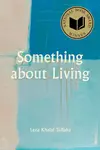

This collection is incredible. It expresses honestly the deep grief and anger that accompany tragedy and injustice while acknowledging the persistence of hope and love. My favorite poems in this collection are “Variations on a Last Chance,” “To Be Self-Evident,” “On Translation,” “Letter to June Jordan in September,” “Tantoura Redux,” “Gloria,” and “Zaghareed.”


This graphic novel depicts nine under-told stories from Black history—those of Henry “Box” Brown, Harry “Bucky” Lew, Richard Potter, Theophilus Thomson, the residents of Malaga Island, the students and teachers of the Noyes Academy, Marshall “Major” Taylor, Spottswood Rice, and Bass Reeves—in a way that honors the legacies of those stories’ subjects and will connect with a modern-day audience of all ages.
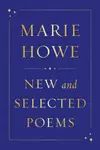

This Pulitzer Prize-winning collection by Marie Howe is achingly beautiful. Especially compelling to me were her expression of love for and grief over the loss of her brother, as well as her exploration of faith. My favorite poems in the collection were “The Singularity,” “Gretel from a Sudden Clearing,” “The Attic,” “The Grave,” “One of the Last Days,” “The Star Market,” the third untitled poem from “Poems from the Life of Mary,” “Magdalene—The Seven Devils,” “The Affliction,” and “Magdalene on Gethsemane.”


In this exploration of the human mind, David McRaney elucidates some of the truths about the ways we behave, think, and regularly fool ourselves. This book is a great introduction to some fascinating psychological phenomena for those who have not had extensive exposure to the field.
The tone of the book was interesting in that (at least as I perceived it) it seemed to be intentionally informative and communicative of a hope that the contents of the book would ultimately be helpful to readers’ lives, but there also seemed to be an underlying enjoyment of the discomfort readers would likely feel upon learning some of the difficult truths being presented.


Summary: After losing her fiancé, Freddie, in a car accident, Lydia Bird is devastated, unable to face life without him. As it turns out, she doesn’t quite have to. Seeking some respite from her grief, she begins taking sleeping pills to help her rest, and she discovers that, every time she takes a pill, she is somehow able to enter an alternate life in her sleep, one in which Freddie didn’t die. Thrilled at first to be united with her fiancé, Lydia soon realizes that she may not be able to sustain a life split between two realities.


Summary: Invited by Dr. Montague, a philosopher wishing to investigate the nature of the supernatural, Eleanor arrives at Hill House, known by the residents of the nearest town to be the site of supernatural disturbances of an undefined nature. Eleanor, herself chosen as a guest of Hill House because of a supernatural event that happened in her childhood home, is joined, in addition to Dr. Montague, by Luke, who is to be next to inherit the house, and Theodora, who seems to have some degree of extrasensory perception. In spite of the ominous air about the house and early indicators that something is in fact amiss, the four guests make one another’s acquaintance and begin their stay in a spirit of something akin to camaraderie that provides a degree of comfort. It is not long, however, before things begin to change in ways the foursome never could have expected.


John Warner, a writing professor and—obviously—a writer himself, makes a case for writing and reading as inherently human activities that we not only should not but simply cannot outsource to generative AI. He argues that any “reading” or “writing” activity that an LLM can do is not the real or meaningful work of reading or writing. Warner encourages his readers not to fear AI but to rethink what it really means to write and what relationship we should cultivate (or not) with generative AI as a result of that consideration.


Summary: When a famous artist dies and unexpectedly leaves his most famous work to Louisa, who has just lost her best friend and is on the verge of aging out of the foster care system, she and the artist’s lifelong friend, Ted, are thrown together against both of their wills to figure out the logistics. As the unlikely pair get to know each other, Ted reveals the story of the artist’s life to Louisa, and Louisa, in turn, begins to share pieces of herself with him.
This book was full of heartbreak laced with small, blindingly bright moments of joy, and its plot was interesting and unique.


Summary: Crawford Cope, the star pitcher of his small Arkansas town’s baseball team, has just been sentenced to 300-hours of community service for beating his dad, an even bigger MLB star and hometown hero, with a baseball bat. Crawford, convinced that his lack of anger management skills are to blame for the whole situation, determines to keep his head down, pay off his debt to society, and learn to keep his emotions under control, if not for his own sake then for the sake of keeping his family, which includes his eight-year-old brother, together. His plan is interrupted, however, when he meets Hannah Flores. Also the recipient of a community service sentence, Hannah is Crawford’s opposite: she is a talkative, edgy, social outcast who loves punk music and, after forming an unlikely connection with Crawford, recognizes that Crawford is carrying the burden of family secrets that he shouldn’t—and possibly can’t—carry alone.


In this collection of short fiction, the stories of Black women and girls—all of whom are impacted in some way, whether large or small, positive or (more commonly) negative, by the church—are told with both heartbreaking clarity and heartwarming humanity.
“Dear Sister,” “How to Make Love to a Physicist,” and “When Eddie Levert Comes” were my personal favorites.


Summary: 35 years after her aunt Viv inexplicably vanished from the Sun Down Motel in Fell, New York, 20-year-old Carly arrives in the small town to investigate. As she looks into the circumstances surrounding Viv’s disappearance, she learns that the situation is much more complex, terrifying, and even supernatural than she had every imagined.
The novel alternates between Carly’s perspective in 2017 and Viv’s in 1982.


Summary: Tress is a seemingly ordinary girl living on an island in the midst of the Emerald Sea, an ocean made not of water but of fluidized green spores that burst to life as deadly vines when coming into contact with water. This naturally makes sailing this and Tress’s planet’s other seas, similarly comprised of spores of varied hues and with different but equally life threatening reactions to water, quite treacherous. In spite of this danger, after Charlie, a young nobleman with whom Tress has fallen in love, is shipped off to the Midnight Sea that is home to the infamous Sorceress, Tress resolves to sail the seas on a rescue mission. The resulting journey is one full of adventure, peril, and—to Tress’s surprise—friendship and personal growth.
This story is as exciting as it is heartwarming, and Brandon Sanderson lays down some banger figurative language and one-liners throughout the novel.


Summary: Tolly Driver is a normal teenager—a near nobody, really, to everyone except his best friend Amber—living in Lamesa, Texas in 1989. It isn’t until a string of violent murders takes place the summer before his senior year that Tolly becomes someone that Lamesa can’t help but note, and not in a way that Tolly ever would have asked for. As Tolly is transformed, Amber investigates and illuminates to him the ways he’s being pulled into the slasher genre against his will.


Summary: It’s December 1985 in Ireland, and Bill Furlong, a hardworking, kindhearted father of five girls, makes a distressing discovery while delivering coal to the local convent. This revelation points to deeper, longstanding issues surrounding the convent’s activities and the town’s willingness to turn a blind eye to them.
This book is a short but poignant one, addressing a historical abuse perpetrated in Ireland between the eighteenth and twentieth centuries and offering readers a vision of hope and integrity in the face of injustices committed by the powerful.