
Rachel Baack


Added to listAdventurewith 18 books.


Added to listRomancewith 50 books.


Added to listRealistic Fictionwith 126 books.


Added to listPoetrywith 59 books.


Watership Down originally began as a set or stories the author made up to tell his daughters, who then encouraged him to write it down, and the end product is an epic, near 500-page adventure story beloved by children and adults alike. Its central characters are a group of rabbits, and readers are given the privilege of imagining along with the author what they might say, feel, think, and do as they live out their surprisingly harrowing days. After his brother, Fiver, who has always had a kind of prophetic sixth sense, is stricken with the understanding that their warren is in imminent danger that they must try to escape, Hazel leads a small but scrappy group of rabbits on a quest for a new home. Along the way, the rabbits encounter challenges of all kinds that they overcome by a combination of wits, skill, teamwork, luck, and—seemingly—even supernatural intervention.
The thing I enjoyed most about the book was the way the characters were shown caring about and for one another, learning from their mistakes, and admitting when they were wrong. I kept thinking as I read the book that this is the kind of story that results when a writer is a loving parent who has their children in mind as the intended audience.
Watership Down originally began as a set or stories the author made up to tell his daughters, who then encouraged him to write it down, and the end product is an epic, near 500-page adventure story beloved by children and adults alike. Its central characters are a group of rabbits, and readers are given the privilege of imagining along with the author what they might say, feel, think, and do as they live out their surprisingly harrowing days. After his brother, Fiver, who has always had a kind of prophetic sixth sense, is stricken with the understanding that their warren is in imminent danger that they must try to escape, Hazel leads a small but scrappy group of rabbits on a quest for a new home. Along the way, the rabbits encounter challenges of all kinds that they overcome by a combination of wits, skill, teamwork, luck, and—seemingly—even supernatural intervention.
The thing I enjoyed most about the book was the way the characters were shown caring about and for one another, learning from their mistakes, and admitting when they were wrong. I kept thinking as I read the book that this is the kind of story that results when a writer is a loving parent who has their children in mind as the intended audience.
Summary: In spite of a chaotic upbringing and chronic, excruciating migraines, Eva Mercy has found her success as an author and single mom. What no one knows about her erotic fantasy novels is that their male lead is based on Shane Hall, an author himself and Eva’s high school love, who has also been basing his highly celebrated works on her for the past decade plus as well. When Shane unexpectedly reappears in Eva’s life, all of the old feelings quickly resurface, but Eva can’t be sure that she can trust the man who already broke her heart all those years ago.
There was a lot to enjoy about this book, from how witty it was to the heartwarming, hilarious, and at times realistically frustrating mother/daughter dynamic between the protagonist and her pre-teen. The novel addresses with honesty and skill what it’s like to live with a chronic illness, to navigate the literary world as a Black writer, and to cope with and heal from childhood trauma and addiction, all while offering the reader a vision of joy in the pursuit of self-realization and love.
Summary: In spite of a chaotic upbringing and chronic, excruciating migraines, Eva Mercy has found her success as an author and single mom. What no one knows about her erotic fantasy novels is that their male lead is based on Shane Hall, an author himself and Eva’s high school love, who has also been basing his highly celebrated works on her for the past decade plus as well. When Shane unexpectedly reappears in Eva’s life, all of the old feelings quickly resurface, but Eva can’t be sure that she can trust the man who already broke her heart all those years ago.
There was a lot to enjoy about this book, from how witty it was to the heartwarming, hilarious, and at times realistically frustrating mother/daughter dynamic between the protagonist and her pre-teen. The novel addresses with honesty and skill what it’s like to live with a chronic illness, to navigate the literary world as a Black writer, and to cope with and heal from childhood trauma and addiction, all while offering the reader a vision of joy in the pursuit of self-realization and love.
I can’t pretend to have understood enough of the poems in this collection to give a comprehensive review, but I can say that there were some really good lines sprinkled in there (“I’ve been wrong about more than, despite/ memory, I had thought was possible” and “…while decoration is hardly/ ever necessary, it’s rarely meaningless” are a couple of my favorites). This collection, if nothing else, reminded me of the value of wrestling with a text. There were a handful of poems that I felt like I understood reasonably well and that I really liked; they were “He Didn’t Raise Hand or Voice,” “Fixed Shadow, Moving Water,” “Sing a Darkness,” the third section of “Among the Trees,” “Then the War,” “But Waves, They Scatter,” and “Monomoy.”
I can’t pretend to have understood enough of the poems in this collection to give a comprehensive review, but I can say that there were some really good lines sprinkled in there (“I’ve been wrong about more than, despite/ memory, I had thought was possible” and “…while decoration is hardly/ ever necessary, it’s rarely meaningless” are a couple of my favorites). This collection, if nothing else, reminded me of the value of wrestling with a text. There were a handful of poems that I felt like I understood reasonably well and that I really liked; they were “He Didn’t Raise Hand or Voice,” “Fixed Shadow, Moving Water,” “Sing a Darkness,” the third section of “Among the Trees,” “Then the War,” “But Waves, They Scatter,” and “Monomoy.”

Added to listHistorical Nonfictionwith 13 books.


This book is a great introduction to the way labor unions have shaped and been shaped by the country, chronicling their formation, rise, and decline, and offering hope for their future.
This book is a great introduction to the way labor unions have shaped and been shaped by the country, chronicling their formation, rise, and decline, and offering hope for their future.


In this book, comedian John Fugelsang lays out arguments against the belief system undergirding right-wing Christian extremism. While Fugelsang does include some witty one-liners, he takes the subject matter seriously, providing detailed reasoning and historical context to support his claims. My biggest issue with the book was that there were very few citations provided for evidence that could not be reasonably considered common knowledge. Additionally, I think that Fugelsang glosses over the complexity of some theological principles, and while he bases his arguments on the Bible, he also at times fails to address parts of the Bible that might complicate his claims. While I agree with many of his points and think his ultimate message of the essentiality of love to Christianity is spot-on, I also think that the arguments he provides are unlikely to change the minds of many far-right Christians, and his dismissiveness of Biblical literalism (or anything close to it), of the relevance of some Old Testament principles to modern-day Christians, of the authority of Paul, and of the necessity of belief in basic Christian theological principles for salvation will lose a lot of even his progressive Christian readers.
In this book, comedian John Fugelsang lays out arguments against the belief system undergirding right-wing Christian extremism. While Fugelsang does include some witty one-liners, he takes the subject matter seriously, providing detailed reasoning and historical context to support his claims. My biggest issue with the book was that there were very few citations provided for evidence that could not be reasonably considered common knowledge. Additionally, I think that Fugelsang glosses over the complexity of some theological principles, and while he bases his arguments on the Bible, he also at times fails to address parts of the Bible that might complicate his claims. While I agree with many of his points and think his ultimate message of the essentiality of love to Christianity is spot-on, I also think that the arguments he provides are unlikely to change the minds of many far-right Christians, and his dismissiveness of Biblical literalism (or anything close to it), of the relevance of some Old Testament principles to modern-day Christians, of the authority of Paul, and of the necessity of belief in basic Christian theological principles for salvation will lose a lot of even his progressive Christian readers.

Added to listMystery & Thrillerwith 31 books.


Added to listDefies Categorizationwith 19 books.


Added to listSupernatural Thrillerwith 14 books.


Added to listHorror & Gothic Fictionwith 29 books.


Summary: For generations, the Gonne family have been the only ones who have known the mystery and beauty of Mockbeggar Wood—and kept the danger it poses at bay. Ten years ago, teenaged Lucia Gonne and her sisters introduced Kate, a new friend from the nearby village, to the woods, with tragic consequences. Since then, the wood has remained untread and quiet, and all remaining members of the Gonne family have moved away. Now, however, Chloe, an outsider, is planning her wedding to Kate’s brother Sam at Small Angels Chapel next to Mockbeggar, and it looks like the woods—and a furious entity contained within—may be waking up again. With most of the village remaining willfully ignorant, the Gonnes absent, and Kate reluctant to face a painful past, who will protect the village from the danger to come?
The premise of this book was incredibly interesting and unique, and I thoroughly enjoyed reading it. I did feel that the ending was a bit abrupt—I had a hard time believing that the characters as they’d been developed throughout the majority of the story would so quickly accept what they needed to accept in order for the book to reach its resolution. All that said, I did still like the resolution; I just felt that the book needed a few more chapters surrounding the climax to make it believable.
Summary: For generations, the Gonne family have been the only ones who have known the mystery and beauty of Mockbeggar Wood—and kept the danger it poses at bay. Ten years ago, teenaged Lucia Gonne and her sisters introduced Kate, a new friend from the nearby village, to the woods, with tragic consequences. Since then, the wood has remained untread and quiet, and all remaining members of the Gonne family have moved away. Now, however, Chloe, an outsider, is planning her wedding to Kate’s brother Sam at Small Angels Chapel next to Mockbeggar, and it looks like the woods—and a furious entity contained within—may be waking up again. With most of the village remaining willfully ignorant, the Gonnes absent, and Kate reluctant to face a painful past, who will protect the village from the danger to come?
The premise of this book was incredibly interesting and unique, and I thoroughly enjoyed reading it. I did feel that the ending was a bit abrupt—I had a hard time believing that the characters as they’d been developed throughout the majority of the story would so quickly accept what they needed to accept in order for the book to reach its resolution. All that said, I did still like the resolution; I just felt that the book needed a few more chapters surrounding the climax to make it believable.

Added to listHow-Towith 2 books.


Added to listShort Nonfictionwith 14 books.


![The Tamworth Reading Room. Letters on an Address Delivered by Sir Robert Peel, Bart., M.P. on the Establishment of a Reading Room at Tamworth. by Catholicus [i.E. J. H. Newman], Etc.](https://production-img.hardcover.app/enlarge?height=100&type=webp&url=https%3A%2F%2Fassets.hardcover.app%2Fedition%2F31822836%2F23697b35b1f1061f66ea8c83cb3ce0c55095eb08.jpeg&width=67)
This super quick read is exactly what it sounds like: a list of things a person could tell a man (or at least a man who’s not overly secure and who is a fan of the patriarchy) to get under his skin. It’s quite funny, and it’s less mean that it is thought provoking.
Some of my favorite one-liners are:
- “Well, he is the referee. He’s qualified to make that call,”
- “You give me R.A. vibes,” and,
- “Damn, she sounds cool” in response to a man talking about his “crazy” ex.
This super quick read is exactly what it sounds like: a list of things a person could tell a man (or at least a man who’s not overly secure and who is a fan of the patriarchy) to get under his skin. It’s quite funny, and it’s less mean that it is thought provoking.
Some of my favorite one-liners are:
- “Well, he is the referee. He’s qualified to make that call,”
- “You give me R.A. vibes,” and,
- “Damn, she sounds cool” in response to a man talking about his “crazy” ex.
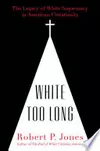
In under 250 pages, author Robert P. Jones illuminates the close relationship between white Christianity and white supremacy in the United States, both historically and presently. He describes how white Christians have not only tolerated but actively participated in racist speech and action throughout American history, how white Christian theology developed and still exists in ways that allow and even encourage white supremacy, and the present reality that white Christian identity in American is independently correlated with an increase in racist attitudes (and vice versa). He goes on to call his readers to do the necessary work of reckoning with the past and present of white Christian racism and of pursuing racial justice, providing some examples of churches and communities that have begun that work.
While white American Christians are the imagined audience for the book, I think it would be certainly accessible and likely interesting to a much broader audience, including anyone who has ever observed and wondered at the paradoxical connection between white Christianity and racism in the United States.
In under 250 pages, author Robert P. Jones illuminates the close relationship between white Christianity and white supremacy in the United States, both historically and presently. He describes how white Christians have not only tolerated but actively participated in racist speech and action throughout American history, how white Christian theology developed and still exists in ways that allow and even encourage white supremacy, and the present reality that white Christian identity in American is independently correlated with an increase in racist attitudes (and vice versa). He goes on to call his readers to do the necessary work of reckoning with the past and present of white Christian racism and of pursuing racial justice, providing some examples of churches and communities that have begun that work.
While white American Christians are the imagined audience for the book, I think it would be certainly accessible and likely interesting to a much broader audience, including anyone who has ever observed and wondered at the paradoxical connection between white Christianity and racism in the United States.
