
yacoob


Mad Planet
Your typical, solid vintage science fiction. All right, more fiction than science, but there's something charming in the world painted by this book. If you've read Space Odyssey, you'll find a lot of similarities. Bear in mind, that this book was written in 1920 - which makes it really impressive.In short: worth reading, if you're bored, and you have a thing for vintage. Skip otherwise.
Your typical, solid vintage science fiction. All right, more fiction than science, but there's something charming in the world painted by this book. If you've read Space Odyssey, you'll find a lot of similarities. Bear in mind, that this book was written in 1920 - which makes it really impressive.In short: worth reading, if you're bored, and you have a thing for vintage. Skip otherwise.

Every time I'm reading this book, I'm truly amazed how come it got published in communist Poland? Fine example of “social fiction”: it uses SF staffage to show - no, not dystopian - socialist/communist society of Poland in '80s. And it does so, with excellent effect.It's a very important book for me, given I've spent my first 10 years in this kind of theatre. If you ever come by English translation of it, and you've enjoyed Nineteen Eighty-Four - you have to read that one.Fun fact: it got published in... year 1984. :)
Every time I'm reading this book, I'm truly amazed how come it got published in communist Poland? Fine example of “social fiction”: it uses SF staffage to show - no, not dystopian - socialist/communist society of Poland in '80s. And it does so, with excellent effect.It's a very important book for me, given I've spent my first 10 years in this kind of theatre. If you ever come by English translation of it, and you've enjoyed Nineteen Eighty-Four - you have to read that one.Fun fact: it got published in... year 1984. :)

Solid science fiction shortie - everything that's needed is there. Anti-DRM propaganda gets a bit boring, but you knew what you're doing, picking up Cory Doctorow's book, didn't you? :) There's something missing from the story, as it seems a bit unframed - perhaps the open ending is the deciding factor. I don't usually have a problem with those, yet here it kind of allowed story to become more and more bland, closer to the end. Oh well, not every book has to be perfect. I enjoyed reading this one :)
Solid science fiction shortie - everything that's needed is there. Anti-DRM propaganda gets a bit boring, but you knew what you're doing, picking up Cory Doctorow's book, didn't you? :) There's something missing from the story, as it seems a bit unframed - perhaps the open ending is the deciding factor. I don't usually have a problem with those, yet here it kind of allowed story to become more and more bland, closer to the end. Oh well, not every book has to be perfect. I enjoyed reading this one :)

I must admit that this is the first time I'm reading this book - I've read almost everything written by Janusz A. Zajdel as a kid, apart from this. And I must admit I'm a bit... disenchanted - there must have been something that made me go ‘wow!' while I was reading things like Limes Inferior, that simply wasn't present here. Typical (for Zajdel) plot, good execution... but it lacked something. It seemed like a movie that didn't get any editing - just a stream of events. Interesting and worth reading, but kind of bland.
I must admit that this is the first time I'm reading this book - I've read almost everything written by Janusz A. Zajdel as a kid, apart from this. And I must admit I'm a bit... disenchanted - there must have been something that made me go ‘wow!' while I was reading things like Limes Inferior, that simply wasn't present here. Typical (for Zajdel) plot, good execution... but it lacked something. It seemed like a movie that didn't get any editing - just a stream of events. Interesting and worth reading, but kind of bland.
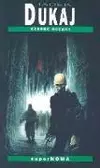
I do remember trying to read that book few years back - and failing, early into the book. I've got through this time, but it was a bit of a challenge. Dukaj loves creating complex worlds, but he never really bothers to present those to the readers in a simple and transparent way. This exercises reader's attention and memory, but also creates a enormous tree of possible interpretations. Which, I guess, isn't that bad - who said that things should always wear a simple and single description? I loved the world painted in the book. I enjoyed the twists and turns of the plot. I found the general concept of psychomemetic field a wee bit naive, but once you accept its existence in the story, all other pieces of puzzles match perfectly. The fact that the narration slips into more action-paced tempo in second half of the story is a bit regrettable, but the book stays interesting. I'm probably more interested in the details of the world itself :DIf I were to compare the complexity level of this book, I'd put it slightly above Anathem. Oh, and it's excellent hard science fiction!
I do remember trying to read that book few years back - and failing, early into the book. I've got through this time, but it was a bit of a challenge. Dukaj loves creating complex worlds, but he never really bothers to present those to the readers in a simple and transparent way. This exercises reader's attention and memory, but also creates a enormous tree of possible interpretations. Which, I guess, isn't that bad - who said that things should always wear a simple and single description? I loved the world painted in the book. I enjoyed the twists and turns of the plot. I found the general concept of psychomemetic field a wee bit naive, but once you accept its existence in the story, all other pieces of puzzles match perfectly. The fact that the narration slips into more action-paced tempo in second half of the story is a bit regrettable, but the book stays interesting. I'm probably more interested in the details of the world itself :DIf I were to compare the complexity level of this book, I'd put it slightly above Anathem. Oh, and it's excellent hard science fiction!
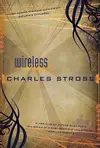
Nice. Can we please make sure Charles Stross restrains from writing novels, and sticks to short stories? This one was bit worse than Toast, but still tasty. Even though Stross claims he can't write funny stories, I had a laugh, finding Star Trek references. I've also fallen asleep (not a problem with the book, rather tiring day) during reading Palimpset - and this resulted in weird, multithreaded dream. So, good food for thought - both conscious and unconscious.
Nice. Can we please make sure Charles Stross restrains from writing novels, and sticks to short stories? This one was bit worse than Toast, but still tasty. Even though Stross claims he can't write funny stories, I had a laugh, finding Star Trek references. I've also fallen asleep (not a problem with the book, rather tiring day) during reading Palimpset - and this resulted in weird, multithreaded dream. So, good food for thought - both conscious and unconscious.

Oh dear. How do I put this? It's was a neat read. It was quite captivating. Hell, I'd probably like to watch a movie based on this. But the amount of propaganda squeezed into that book was staggering. I know, Doctorow wanted to make a point. Well, those attempts made the book much more naive that it could have been. The story was one-sided flash of it-could-have-happened-this-way - but with very little credibility. I guess everything needs its own Stallman - even literature. But you know what? I had good time reading this, so I'm not complaining. Once you make a correction for the writer's bias, it's good fun.
Oh dear. How do I put this? It's was a neat read. It was quite captivating. Hell, I'd probably like to watch a movie based on this. But the amount of propaganda squeezed into that book was staggering. I know, Doctorow wanted to make a point. Well, those attempts made the book much more naive that it could have been. The story was one-sided flash of it-could-have-happened-this-way - but with very little credibility. I guess everything needs its own Stallman - even literature. But you know what? I had good time reading this, so I'm not complaining. Once you make a correction for the writer's bias, it's good fun.
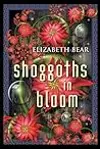
I've decided to read this to test whether I like Elizabeth Bear style. I do! Very good blend of Lovercraftian unease of narration and an interesting contemporary plot.
I've decided to read this to test whether I like Elizabeth Bear style. I do! Very good blend of Lovercraftian unease of narration and an interesting contemporary plot.

I love Larry Niven's books. There's something in the way he writes that I can read things even as absurd as The Integral Trees :) It'll be no surprise then to say that I really liked “The mote...”. It's not one of those books that flood you with new ideas and change your perception of the world, but I still had tremendous amount of fun reading it.If anything, it was the religious aspects of the story irked me off. Religion-backed empire is not an unusual concept, but in here it's a bit too embedded into characters' morals. Some protagonists are showing the kind of discountenance that could only be implied by some rigorous religious ethics - while they don't have a problem acting against those ethics at other times. Good example would be “censorship” of Watchmaker's copulation. It almost felt like someone wrote those scenes specifically into the story, to make a conservative reader happy.This aside, the book was really good. Interesting story, well constructed conflict, really neatly described action scenes. Really worth reading, if you like good science fiction stories.
I love Larry Niven's books. There's something in the way he writes that I can read things even as absurd as The Integral Trees :) It'll be no surprise then to say that I really liked “The mote...”. It's not one of those books that flood you with new ideas and change your perception of the world, but I still had tremendous amount of fun reading it.If anything, it was the religious aspects of the story irked me off. Religion-backed empire is not an unusual concept, but in here it's a bit too embedded into characters' morals. Some protagonists are showing the kind of discountenance that could only be implied by some rigorous religious ethics - while they don't have a problem acting against those ethics at other times. Good example would be “censorship” of Watchmaker's copulation. It almost felt like someone wrote those scenes specifically into the story, to make a conservative reader happy.This aside, the book was really good. Interesting story, well constructed conflict, really neatly described action scenes. Really worth reading, if you like good science fiction stories.

I was hoping for something better.To put it in most blunt terms I can: the difference between a nostalgia book and Ready Player One is the difference between a good fscking and a porn movie. Even if the moves are the same, you can see there's no engagement. And that's the problem of this book - it throws a lot of facts but lacks a certain style to make it more appealing. Granted, this book is abundant with 80s and 90s references, but they're just lying in stacks around, with little if no purpose. That's not how you should do it. It's a bit like those Patrick Stewart pictures with title “Use the Force, Harry. – Gandalf.” Very densely mixed up references with little if no purpose to them.As for the story goes - it's Cory Doctorow's FTW minus ideology plus Young Adult sauce. Straightforward story, properly executed - nothing extraordinary about it, nothing wrong. Very digestible form, it took me two evenings to crunch through it.To wrap it up: neat idea, but execution could use some polish. You'll have some fun, but do not expect much. Some cringeworthy passages (ie. the one about OASIS elections), beware.
I was hoping for something better.To put it in most blunt terms I can: the difference between a nostalgia book and Ready Player One is the difference between a good fscking and a porn movie. Even if the moves are the same, you can see there's no engagement. And that's the problem of this book - it throws a lot of facts but lacks a certain style to make it more appealing. Granted, this book is abundant with 80s and 90s references, but they're just lying in stacks around, with little if no purpose. That's not how you should do it. It's a bit like those Patrick Stewart pictures with title “Use the Force, Harry. – Gandalf.” Very densely mixed up references with little if no purpose to them.As for the story goes - it's Cory Doctorow's FTW minus ideology plus Young Adult sauce. Straightforward story, properly executed - nothing extraordinary about it, nothing wrong. Very digestible form, it took me two evenings to crunch through it.To wrap it up: neat idea, but execution could use some polish. You'll have some fun, but do not expect much. Some cringeworthy passages (ie. the one about OASIS elections), beware.

Only slightly worse than the original trilogy.Bartimaeus is as witty as ever, and he manages not to become a bore. Which is impressive, given it's a fourth book in the cycle. It's a prequel this time, so some of the things are given (ie. that Bartimaeus WILL survive, no matter how dire things will become). The plot is a touch simpler than in previous books, but Jonathan Stroud still manages to squeeze an amazing amount of moral dillemas into otherwise light book. Really neatly written, keeps you hooked till the end.The only thing you could be worried about is whether next book is going to be as good as this one.
Only slightly worse than the original trilogy.Bartimaeus is as witty as ever, and he manages not to become a bore. Which is impressive, given it's a fourth book in the cycle. It's a prequel this time, so some of the things are given (ie. that Bartimaeus WILL survive, no matter how dire things will become). The plot is a touch simpler than in previous books, but Jonathan Stroud still manages to squeeze an amazing amount of moral dillemas into otherwise light book. Really neatly written, keeps you hooked till the end.The only thing you could be worried about is whether next book is going to be as good as this one.

tl;dr: Interesting, but not earth-shaking. Can kill your pleasure drawn from reading of Amber cycle. Useful RPGing bits.I wanted to read this for so long - and I finally did. I guess that has build up the expectations quite high, and the book failed to match this. The noble goal of rooting out dice obsession from RPG succeeded in Amber only partially - you can never ever underestimate the will of people to moan, complain and argue about things with GM. Having said that, the manual actually gives a useful advise on how to resolve those kind of conflicts. There's also fair bit of general roleplaying info, although sometimes it borders on armchair psychoanalyst manual :)The actual setting (Roger Zelazny's Amber) is... abused, so to speak. Even though there are very few tangible properties you describe your character with, the meticulous descriptions of all major characters from the books seem tired and dull. I have a general problem with RPG systems based on pre-existing lore - they tend to cannibalise and nitpick on prose, on something that - most likely - hasn't been designed to survive this. Amber RPG fuels my prejudice without a miss, giving all important story plots realistic and “quantified” description. The fact that Amber's world is base for this RPG wasn't a surprise for me :) but I've seen far better treatments of prose for the purpose of making an RPG out of it.
tl;dr: Interesting, but not earth-shaking. Can kill your pleasure drawn from reading of Amber cycle. Useful RPGing bits.I wanted to read this for so long - and I finally did. I guess that has build up the expectations quite high, and the book failed to match this. The noble goal of rooting out dice obsession from RPG succeeded in Amber only partially - you can never ever underestimate the will of people to moan, complain and argue about things with GM. Having said that, the manual actually gives a useful advise on how to resolve those kind of conflicts. There's also fair bit of general roleplaying info, although sometimes it borders on armchair psychoanalyst manual :)The actual setting (Roger Zelazny's Amber) is... abused, so to speak. Even though there are very few tangible properties you describe your character with, the meticulous descriptions of all major characters from the books seem tired and dull. I have a general problem with RPG systems based on pre-existing lore - they tend to cannibalise and nitpick on prose, on something that - most likely - hasn't been designed to survive this. Amber RPG fuels my prejudice without a miss, giving all important story plots realistic and “quantified” description. The fact that Amber's world is base for this RPG wasn't a surprise for me :) but I've seen far better treatments of prose for the purpose of making an RPG out of it.

I'm very ambivalent about this book.On one hand, it has fair amount of interesting concepts, little scientific in-jokes and interesting construction of the world. On other hand, it has horribly paper-thing characters, that don't really develop - their behavior looks like something that was reverse-engineered back from their final positions and things that they were supposed to do. The overall plot was rather oneiric, with just a bit of too much of a randomness and deus ex machinae overdose.Overall, it wasn't a bad book - but at multiple points it seemed coarse and unrefined, leaving much field for improvement. As this was my first meeting with Rudy Rucker, I don't really know whether it's rule for him or an exception.
I'm very ambivalent about this book.On one hand, it has fair amount of interesting concepts, little scientific in-jokes and interesting construction of the world. On other hand, it has horribly paper-thing characters, that don't really develop - their behavior looks like something that was reverse-engineered back from their final positions and things that they were supposed to do. The overall plot was rather oneiric, with just a bit of too much of a randomness and deus ex machinae overdose.Overall, it wasn't a bad book - but at multiple points it seemed coarse and unrefined, leaving much field for improvement. As this was my first meeting with Rudy Rucker, I don't really know whether it's rule for him or an exception.

It's not the best prose ever - but hey, author himself warns that he doesn't consider him a proper writer. Fair's fair - I still think it deserves those five stars :)I liked the idea, I liked the execution. If I were to nitpick: most of the this book's characters that are also present in The Lord of the Rings are channeling same mixture of disdain and nonchalance. “Hey, I seemed really silly in that other book, so here I'll act cool and seem really smart”. But like I said, it's just a smaller nitpick. It'd be funny to see an analysis of The Last Ringbearer that tries to find errors in it, in a similar way that Yeskov did - but that would be annoyingly meta.If you're not religious about Tolkien's prose - read this. You'll have fun. If you are, you'd better stay away.
It's not the best prose ever - but hey, author himself warns that he doesn't consider him a proper writer. Fair's fair - I still think it deserves those five stars :)I liked the idea, I liked the execution. If I were to nitpick: most of the this book's characters that are also present in The Lord of the Rings are channeling same mixture of disdain and nonchalance. “Hey, I seemed really silly in that other book, so here I'll act cool and seem really smart”. But like I said, it's just a smaller nitpick. It'd be funny to see an analysis of The Last Ringbearer that tries to find errors in it, in a similar way that Yeskov did - but that would be annoyingly meta.If you're not religious about Tolkien's prose - read this. You'll have fun. If you are, you'd better stay away.

tl;dr? Spider Jerusalem meets Night of the Living Dead. It's not a book about zombie outbreak, it's a book about journalism and its challenges. If you look at the emphasized elements of the story, it might as well be about independent bloggers trying to uncover some terrorist plot. Still, the zombie bit is well developed, well thought out and most of the time rather logical. If you like zombie stories, you'll like this one - provided you don't require whole humanity to perish as a result of zombie infection.My main problem with this book is its main protagonist - Georgia is so devoid of emotion and any affection, that she seems to act and behave almost like a robot. Combine that with her tireless truth crusade, and you get very flat, unsophisticated and unlikeable character. For majority of the book I was under impression that it's just mediocre writing - as I haven't read anything else by Mira Grant, I didn't know what to expect. Narration changes entirely the moment Georgia dies, and it turns out that Shaun isn't that much of a simpleton - it's just that Georgia seen him this way. The tone of the story changes too, and it looks to me like the previous sterile and dry tone was fully intended and put in there for a reason. In overall, I liked the book - it could be better, but I had a good fun reading it. The overall plot is rather simple and almost fully predictable. There are rather silly bits in there, but it's not the realism of the story that's strong side of this book. The main theme - what's journalism and what does it justify - is interesting, well executed and complete. Good stuff.Now, should I read the second part...?
tl;dr? Spider Jerusalem meets Night of the Living Dead. It's not a book about zombie outbreak, it's a book about journalism and its challenges. If you look at the emphasized elements of the story, it might as well be about independent bloggers trying to uncover some terrorist plot. Still, the zombie bit is well developed, well thought out and most of the time rather logical. If you like zombie stories, you'll like this one - provided you don't require whole humanity to perish as a result of zombie infection.My main problem with this book is its main protagonist - Georgia is so devoid of emotion and any affection, that she seems to act and behave almost like a robot. Combine that with her tireless truth crusade, and you get very flat, unsophisticated and unlikeable character. For majority of the book I was under impression that it's just mediocre writing - as I haven't read anything else by Mira Grant, I didn't know what to expect. Narration changes entirely the moment Georgia dies, and it turns out that Shaun isn't that much of a simpleton - it's just that Georgia seen him this way. The tone of the story changes too, and it looks to me like the previous sterile and dry tone was fully intended and put in there for a reason. In overall, I liked the book - it could be better, but I had a good fun reading it. The overall plot is rather simple and almost fully predictable. There are rather silly bits in there, but it's not the realism of the story that's strong side of this book. The main theme - what's journalism and what does it justify - is interesting, well executed and complete. Good stuff.Now, should I read the second part...?
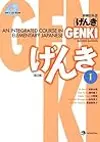
Good textbook, although you could feel it's dated - even the second edition. On a plus side, it talks about non-polite version of verbs pretty early. On minus side, I find the layout of the material weird. Perhaps it's just a result of my undying love for Japanese the Manga Way. I've skimmed this book, as I'm more or less familiar with the material in this volume. Some good tips there, but hard for me to tell how useful the exercises are, as I haven't done any. This book will probably do just fine for a self-learner, but I think that both Japanese the Manga way and Tae Kim's A guide to Japanese Grammar.
Good textbook, although you could feel it's dated - even the second edition. On a plus side, it talks about non-polite version of verbs pretty early. On minus side, I find the layout of the material weird. Perhaps it's just a result of my undying love for Japanese the Manga Way. I've skimmed this book, as I'm more or less familiar with the material in this volume. Some good tips there, but hard for me to tell how useful the exercises are, as I haven't done any. This book will probably do just fine for a self-learner, but I think that both Japanese the Manga way and Tae Kim's A guide to Japanese Grammar.

I really enjoyed this story, despite being allergic to fantasy. The cynical/realistic flavor of it reminds me a bit of Andrzej Sapkowski style. Despite some of the storylines being plain boring (Robb's) and others mind-bogglingly stupid (Sansa's) the overall construction is tasty and definitely worth the time.
I really enjoyed this story, despite being allergic to fantasy. The cynical/realistic flavor of it reminds me a bit of Andrzej Sapkowski style. Despite some of the storylines being plain boring (Robb's) and others mind-bogglingly stupid (Sansa's) the overall construction is tasty and definitely worth the time.

Read it a long time ago in Polish, now rereading it in English. One day I'll read it in Japanese :)I really enjoy the story - it has this air of uneasiness, comparable only to Junji Ito work, but without resorting to any unnatural matters. Nothing out of ordinary happens in that book, but at the same time, the puzzle presented by the author is very tasty and mysterious. With both Polish and English translations I've experienced the same thing - the style of writing felt very William Gibson like. Can't exactly put my finger on which property of the text makes me feel that, but it's very much Gibson - just not in cyberpunk flavour.
Read it a long time ago in Polish, now rereading it in English. One day I'll read it in Japanese :)I really enjoy the story - it has this air of uneasiness, comparable only to Junji Ito work, but without resorting to any unnatural matters. Nothing out of ordinary happens in that book, but at the same time, the puzzle presented by the author is very tasty and mysterious. With both Polish and English translations I've experienced the same thing - the style of writing felt very William Gibson like. Can't exactly put my finger on which property of the text makes me feel that, but it's very much Gibson - just not in cyberpunk flavour.

Prosta ale urocza historia. Jest nutka solarisowa, a całość smakuje trochę jak H.G.Wells.
Prosta ale urocza historia. Jest nutka solarisowa, a całość smakuje trochę jak H.G.Wells.

Templar One
tl;dr: Worse than EVE: The Empyrean Age, but still worth reading if you play Eve OnlineFirst part of the book was rather rough - up to a point where I've considered dropping it alltogether. The presented scenes looked like drafts for short game trailers. I've sticked with the book, and it did get better around part two. The story itself is interesting, although the characters got much flatter (IMO). If you're Eve Online player, you'll find some explanations about the Sleepers and Jove - and for that alone, I think it's a worthwhile read.
tl;dr: Worse than EVE: The Empyrean Age, but still worth reading if you play Eve OnlineFirst part of the book was rather rough - up to a point where I've considered dropping it alltogether. The presented scenes looked like drafts for short game trailers. I've sticked with the book, and it did get better around part two. The story itself is interesting, although the characters got much flatter (IMO). If you're Eve Online player, you'll find some explanations about the Sleepers and Jove - and for that alone, I think it's a worthwhile read.

Well, this was less thrilling than I've expected. The story was fun, but it lacked coherence and convincing characters. As it stands, it's a lightweight version of The Illuminatus! Trilogy: The Eye in the Pyramid/The Golden Apple/Leviathan. Quite predictable past some point, plus it looked like author has run out of ideas (X-Drugs? Really? :). The protagonist was a bit hard to empathise with - perhaps this was done on purpose. If it wasn't, she ended up being quite a nihilist.It wasn't a bad read. It just wasn't that good.
Well, this was less thrilling than I've expected. The story was fun, but it lacked coherence and convincing characters. As it stands, it's a lightweight version of The Illuminatus! Trilogy: The Eye in the Pyramid/The Golden Apple/Leviathan. Quite predictable past some point, plus it looked like author has run out of ideas (X-Drugs? Really? :). The protagonist was a bit hard to empathise with - perhaps this was done on purpose. If it wasn't, she ended up being quite a nihilist.It wasn't a bad read. It just wasn't that good.

All of the shtick from Accelerando in a much lighter rendition a'la Laundry series, with just a dash of Contact (the movie, not the book). I think it'll be next to impossible to enjoy this book without having at least a warm fuzzy feeling about the whole set of transhuman concepts. In that sense it is a joyride to Heaven for nerds. Rather inconsequential, nicely written, with some interesting tapdancing around some meta topics. Good fun.
All of the shtick from Accelerando in a much lighter rendition a'la Laundry series, with just a dash of Contact (the movie, not the book). I think it'll be next to impossible to enjoy this book without having at least a warm fuzzy feeling about the whole set of transhuman concepts. In that sense it is a joyride to Heaven for nerds. Rather inconsequential, nicely written, with some interesting tapdancing around some meta topics. Good fun.

Boring story, horrible execution, predictable plot and really shallow puzzles. Plus, if you've ever read any story about Pan Samochodzik by Zbigniew Nienacki, you've seen it all. Avoid by all means.
Boring story, horrible execution, predictable plot and really shallow puzzles. Plus, if you've ever read any story about Pan Samochodzik by Zbigniew Nienacki, you've seen it all. Avoid by all means.
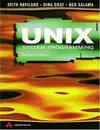
There's always a problem with technical books of this kind: they're either too vague, talking about general concepts, not really relevant past the moment you learn enough, or far too detailed, ungreppable printed man pages (hi there, UNIX Network Programming :). This one strikes a fairly balanced point between those two ends of spectrum, being an useful review of tools Posix presents at your disposal. I've read that book during my university courses, and again, between jobs. Worked like a charm, every time. Recommended, if you want to get a general idea what kind of gnomes jump up and down behind the scene in Unix world.Note: this book doesn't describe much in terms of kernel internals and structures. For this kind of information, in Linux flavor, read Linux Kernel Development 3rd Edition.
There's always a problem with technical books of this kind: they're either too vague, talking about general concepts, not really relevant past the moment you learn enough, or far too detailed, ungreppable printed man pages (hi there, UNIX Network Programming :). This one strikes a fairly balanced point between those two ends of spectrum, being an useful review of tools Posix presents at your disposal. I've read that book during my university courses, and again, between jobs. Worked like a charm, every time. Recommended, if you want to get a general idea what kind of gnomes jump up and down behind the scene in Unix world.Note: this book doesn't describe much in terms of kernel internals and structures. For this kind of information, in Linux flavor, read Linux Kernel Development 3rd Edition.

I find this book much lighter than Paradyzja or other Zajdel's books. This one has even a pseudo-criminal plot and a proper science-fiction plot. Still, it's another great “social ficiton” book, and another of my favourites. And yes, I'm also suprised that it got published back then, despite censorship.
I find this book much lighter than Paradyzja or other Zajdel's books. This one has even a pseudo-criminal plot and a proper science-fiction plot. Still, it's another great “social ficiton” book, and another of my favourites. And yes, I'm also suprised that it got published back then, despite censorship.