
Lauren

Updated a reading goal:
Read 40k pages in 2026
Progress so far: 5119 / 40000 12%

The Knight and the Moth is a story about religion and beliefs; about what is and is not real, and even potentially the effect of believing in something regardless of how real or not it may be.
~ 3.75 ~
While I did enjoy this story (I’m slowly becoming a sucker for Knight based tales), it was predictable. While I could not have guessed the different trials that would be faced precisely, from pretty early on I felt like I knew everything that was going on. I would say I’m pretty average at predicting twists, typically. I mention this because it’s not as if I was particularly clever. The plot was just obvious. I really think we could have lost the on page explicit scenes and this book would have been perfect for upper YA audiences (I say this as a lover of YA books). I also think the romance was pretty insta-love. Don’t get me wrong, I liked their banter, but the MFC and the MMC feelings for each other were pretty obvious.
All that to be said, I’ll give Gillig credit where credit is due - there was still something almost nostalgic about this book that made me want to keep reading. I can’t really pinpoint what it was, but it kept me going with it. Honestly, my star rating is mostly due to the fun I had reading than anything else. I also liked how the theme of starvation was used (being vague here for the sake of avoiding spoilers). I’m curious to see if she will continue its use in the next book.
I’m also hoping for more on Maude’s character. I know she acknowledged one of her flaws just after the mid-point of the book, and it kind of goes with the overarching themes, but I kind of wanted more than just an acknowledgment.
I have one other thought I feel like I need to include, but it would be a MAJOR spoiler. As such I’m going to be really loose with spoilers below. This is your warning. . . . . . . . . . . I wish Gillig would have made Benji more likable. As I stated before, I found everything very predictable (the girls, what was happening to them, the gargoyles, Bartholomew, all of it). I wouldn’t have even minded if all of this was predictable if the Benji reveal was more…exciting. I got the feeling from nearly the first time we met him that he was going to be an issue. Then every time he spoke it just got worse. I never trusted him. Never felt good about him getting power. Never liked him being king. I would have rathered love him, then have the rug pulled out. Instead of showing who he was the whole time, the one meeting without Rory and then maybe show a hint of jealousy at Rory and Sybil. That would have been enough to foreshadow who he could really be without outright telling us in everything he does and says.
The Knight and the Moth is a story about religion and beliefs; about what is and is not real, and even potentially the effect of believing in something regardless of how real or not it may be.
~ 3.75 ~
While I did enjoy this story (I’m slowly becoming a sucker for Knight based tales), it was predictable. While I could not have guessed the different trials that would be faced precisely, from pretty early on I felt like I knew everything that was going on. I would say I’m pretty average at predicting twists, typically. I mention this because it’s not as if I was particularly clever. The plot was just obvious. I really think we could have lost the on page explicit scenes and this book would have been perfect for upper YA audiences (I say this as a lover of YA books). I also think the romance was pretty insta-love. Don’t get me wrong, I liked their banter, but the MFC and the MMC feelings for each other were pretty obvious.
All that to be said, I’ll give Gillig credit where credit is due - there was still something almost nostalgic about this book that made me want to keep reading. I can’t really pinpoint what it was, but it kept me going with it. Honestly, my star rating is mostly due to the fun I had reading than anything else. I also liked how the theme of starvation was used (being vague here for the sake of avoiding spoilers). I’m curious to see if she will continue its use in the next book.
I’m also hoping for more on Maude’s character. I know she acknowledged one of her flaws just after the mid-point of the book, and it kind of goes with the overarching themes, but I kind of wanted more than just an acknowledgment.
I have one other thought I feel like I need to include, but it would be a MAJOR spoiler. As such I’m going to be really loose with spoilers below. This is your warning. . . . . . . . . . . I wish Gillig would have made Benji more likable. As I stated before, I found everything very predictable (the girls, what was happening to them, the gargoyles, Bartholomew, all of it). I wouldn’t have even minded if all of this was predictable if the Benji reveal was more…exciting. I got the feeling from nearly the first time we met him that he was going to be an issue. Then every time he spoke it just got worse. I never trusted him. Never felt good about him getting power. Never liked him being king. I would have rathered love him, then have the rug pulled out. Instead of showing who he was the whole time, the one meeting without Rory and then maybe show a hint of jealousy at Rory and Sybil. That would have been enough to foreshadow who he could really be without outright telling us in everything he does and says.

Updated a reading goal:
Read 40k pages in 2026
Progress so far: 4719 / 40000 11%
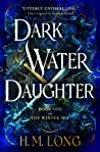
Dark Water Daughter follows Mary, a stormsinger forced into the service of pirates, and Samuel, a pirate hunter. Through a series of events, the two find themselves woven into the same story, but not always working in tandem.
I had to really think about my review for this book. To be completely honest, I do think my current mental space did impact my enjoyment of the book as well as the way I read it. I’ve been dealing with a lot of anxiety, which made focusing more difficult than usual. I also obtained this book via my library, but for whatever reason it was only available to read through Libby and could not be sent to my kindle. As such, I had to read it on my phone, which with notifications also provided some distractions. I tried to take that into account with my review, but even considering it, it’s hard to deny those factors had an impact on my experience.
That being said, I think the strongest parts of this book are the story telling and the magic. The story telling is done very cleverly, giving the audience bits and pieces they could put together to start gaining a bigger picture of what is happening as the characters do. This way of story telling also made all of the characters feel real. Even the side characters had backstories and motivations of their own without feeling like they were bogging down the story.
And the magic. It was unique and I’m excited to see more of it in book 2. The gist is that there are some people with magic, some without. At this time I’m not sure what determines who gains it and who does not. There are stormsingers, whose singing can control weather. Magni, who can push their influence on others. And sooths, who can see snippets of the past and future. (Note: I believe there are more, but these are the prominent types in this book). Each of these magics are connected to the Other, a plane that seems to be the origin of magic. There are also ghitings, spirit-like creatures connected to wood and trees. The magic is really well explained and the details are nicely woven throughout the story.
My issues with the book comes in mostly with the characters. I know I praised how real they felt, and they did, but I didn’t really connect with them. They were interesting, but they felt distant in a way. I really liked that Mary had moments of strength and softness. I liked Samuel’s motivations and sense of duty. They were well crafted, but there was something missing that prevented me from really caring about them. I’m also fairly certain you’re supposed to want to root for Mary and Samuel to be together, but honestly? I felt 0 chemistry.
I’m going to be vague for the sake of not giving spoilers, but another issue I had was with Randalf’s crew. Maybe I missed something, but from the events in the book, I was left really confused about what actually happened to them.
Dark Water Daughter follows Mary, a stormsinger forced into the service of pirates, and Samuel, a pirate hunter. Through a series of events, the two find themselves woven into the same story, but not always working in tandem.
I had to really think about my review for this book. To be completely honest, I do think my current mental space did impact my enjoyment of the book as well as the way I read it. I’ve been dealing with a lot of anxiety, which made focusing more difficult than usual. I also obtained this book via my library, but for whatever reason it was only available to read through Libby and could not be sent to my kindle. As such, I had to read it on my phone, which with notifications also provided some distractions. I tried to take that into account with my review, but even considering it, it’s hard to deny those factors had an impact on my experience.
That being said, I think the strongest parts of this book are the story telling and the magic. The story telling is done very cleverly, giving the audience bits and pieces they could put together to start gaining a bigger picture of what is happening as the characters do. This way of story telling also made all of the characters feel real. Even the side characters had backstories and motivations of their own without feeling like they were bogging down the story.
And the magic. It was unique and I’m excited to see more of it in book 2. The gist is that there are some people with magic, some without. At this time I’m not sure what determines who gains it and who does not. There are stormsingers, whose singing can control weather. Magni, who can push their influence on others. And sooths, who can see snippets of the past and future. (Note: I believe there are more, but these are the prominent types in this book). Each of these magics are connected to the Other, a plane that seems to be the origin of magic. There are also ghitings, spirit-like creatures connected to wood and trees. The magic is really well explained and the details are nicely woven throughout the story.
My issues with the book comes in mostly with the characters. I know I praised how real they felt, and they did, but I didn’t really connect with them. They were interesting, but they felt distant in a way. I really liked that Mary had moments of strength and softness. I liked Samuel’s motivations and sense of duty. They were well crafted, but there was something missing that prevented me from really caring about them. I’m also fairly certain you’re supposed to want to root for Mary and Samuel to be together, but honestly? I felt 0 chemistry.
I’m going to be vague for the sake of not giving spoilers, but another issue I had was with Randalf’s crew. Maybe I missed something, but from the events in the book, I was left really confused about what actually happened to them.

note: this is a DNF and therefore I did not feel comfortable a star rating
Hammajang Luck is a sci-fi about a heist against a disgustingly rich man. It is written in first person POV from Edie’s perspective. At the start of the book, Edie is getting out of prison on parole, something they believed they’d never see after 8 years in prison. I gave this book 76 pages before I gave up during chapter 6, so anything mentioned in this review will likely not be spoilers.
This was one of those books that knew from the first paragraph that it wasn’t going to be for me. However, I still wanted to give it a chance. It didn’t do anything wrong per se. It wasn’t offensive or go off the rails or anything, but I knew if I finished the book it would wind up being 2 stars and my review would more than likely be the same then as it will be now.
Part of the reason I didn’t like this book was the writing style. The sentence structure is very short and simple to the point that it felt choppy and lacked a certain kind of flow I like in my books. I was also kind of bored. I know I was still in the set up, but I just didn’t care about anything that was happening. That may be because Edie felt flat? They told us plenty about themselves (calling themselves old at 29 is crazy, btw), but everything they told us or explained never felt vivid or real. I don’t need to relate to a character to love a book, but I just felt nothing. More often than not it felt like the book was saying a lot about nothing? I don’t know.
I did appreciate the different forms of representation that were present early on in the book, and I actually really liked Andie. I think I may have enjoyed the book more if we were in her perspective (trying to keep her falling apart life together while her sibling is both trying to help the family and going back on their word - sounds far more interesting to me).
TLDR:
I really tried to give this a chance. I have the pretty illumicrate edition, so I’m devastated I don’t love. As far as I got in the book, it was totally and utterly fine, but the writing style was a deal breaker for me.
note: this is a DNF and therefore I did not feel comfortable a star rating
Hammajang Luck is a sci-fi about a heist against a disgustingly rich man. It is written in first person POV from Edie’s perspective. At the start of the book, Edie is getting out of prison on parole, something they believed they’d never see after 8 years in prison. I gave this book 76 pages before I gave up during chapter 6, so anything mentioned in this review will likely not be spoilers.
This was one of those books that knew from the first paragraph that it wasn’t going to be for me. However, I still wanted to give it a chance. It didn’t do anything wrong per se. It wasn’t offensive or go off the rails or anything, but I knew if I finished the book it would wind up being 2 stars and my review would more than likely be the same then as it will be now.
Part of the reason I didn’t like this book was the writing style. The sentence structure is very short and simple to the point that it felt choppy and lacked a certain kind of flow I like in my books. I was also kind of bored. I know I was still in the set up, but I just didn’t care about anything that was happening. That may be because Edie felt flat? They told us plenty about themselves (calling themselves old at 29 is crazy, btw), but everything they told us or explained never felt vivid or real. I don’t need to relate to a character to love a book, but I just felt nothing. More often than not it felt like the book was saying a lot about nothing? I don’t know.
I did appreciate the different forms of representation that were present early on in the book, and I actually really liked Andie. I think I may have enjoyed the book more if we were in her perspective (trying to keep her falling apart life together while her sibling is both trying to help the family and going back on their word - sounds far more interesting to me).
TLDR:
I really tried to give this a chance. I have the pretty illumicrate edition, so I’m devastated I don’t love. As far as I got in the book, it was totally and utterly fine, but the writing style was a deal breaker for me.
Updated a reading goal:
Read 40k pages in 2026
Progress so far: 4319 / 40000 10%

Throne in the Dark is a funny, self-aware romantasy with a hint of something deeper threaded throughout. The story is multi-POV and follows Damien (a villain who is truly terrible at being a villain) and Amma (a girl who makes a mistake the causes her to be tied to Damien for the rest of the book).
I wouldn’t suggest this book if you’re looking for your next five star, incredible world building, or deep characters. That’s not what this book is trying to be. It intentionally pokes fun at the typical “bad guy isn’t really bad” troupe as well as “fantasy girl is a thief” troupe. The word “evil” really loses meaning throughout 80% of this book, and the plot is more the vehicle used to give us these cliches than the focus itself.
I had full intentions of reading this and not picking up the next one because of how unserious. I just needed something easy to read that I would miss too much if I got distracting because sometimes ~life~ just makes focus and using brain power hard. This book gave me what I wanted, but the ending took me by surprise. I wouldn’t say the tone completely changed, but there were a few serious moments that make me curious about the next book that I may pick it up during another of those times when I just need something easy and silly to read.
Throne in the Dark is a funny, self-aware romantasy with a hint of something deeper threaded throughout. The story is multi-POV and follows Damien (a villain who is truly terrible at being a villain) and Amma (a girl who makes a mistake the causes her to be tied to Damien for the rest of the book).
I wouldn’t suggest this book if you’re looking for your next five star, incredible world building, or deep characters. That’s not what this book is trying to be. It intentionally pokes fun at the typical “bad guy isn’t really bad” troupe as well as “fantasy girl is a thief” troupe. The word “evil” really loses meaning throughout 80% of this book, and the plot is more the vehicle used to give us these cliches than the focus itself.
I had full intentions of reading this and not picking up the next one because of how unserious. I just needed something easy to read that I would miss too much if I got distracting because sometimes ~life~ just makes focus and using brain power hard. This book gave me what I wanted, but the ending took me by surprise. I wouldn’t say the tone completely changed, but there were a few serious moments that make me curious about the next book that I may pick it up during another of those times when I just need something easy and silly to read.