
Lauren


Dark Water Daughter follows Mary, a stormsinger forced into the service of pirates, and Samuel, a pirate hunter. Through a series of events, the two find themselves woven into the same story, but not always working in tandem.
I had to really think about my review for this book. To be completely honest, I do think my current mental space did impact my enjoyment of the book as well as the way I read it. I’ve been dealing with a lot of anxiety, which made focusing more difficult than usual. I also obtained this book via my library, but for whatever reason it was only available to read through Libby and could not be sent to my kindle. As such, I had to read it on my phone, which with notifications also provided some distractions. I tried to take that into account with my review, but even considering it, it’s hard to deny those factors had an impact on my experience.
That being said, I think the strongest parts of this book are the story telling and the magic. The story telling is done very cleverly, giving the audience bits and pieces they could put together to start gaining a bigger picture of what is happening as the characters do. This way of story telling also made all of the characters feel real. Even the side characters had backstories and motivations of their own without feeling like they were bogging down the story.
And the magic. It was unique and I’m excited to see more of it in book 2. The gist is that there are some people with magic, some without. At this time I’m not sure what determines who gains it and who does not. There are stormsingers, whose singing can control weather. Magni, who can push their influence on others. And sooths, who can see snippets of the past and future. (Note: I believe there are more, but these are the prominent types in this book). Each of these magics are connected to the Other, a plane that seems to be the origin of magic. There are also ghitings, spirit-like creatures connected to wood and trees. The magic is really well explained and the details are nicely woven throughout the story.
My issues with the book comes in mostly with the characters. I know I praised how real they felt, and they did, but I didn’t really connect with them. They were interesting, but they felt distant in a way. I really liked that Mary had moments of strength and softness. I liked Samuel’s motivations and sense of duty. They were well crafted, but there was something missing that prevented me from really caring about them. I’m also fairly certain you’re supposed to want to root for Mary and Samuel to be together, but honestly? I felt 0 chemistry.
I’m going to be vague for the sake of not giving spoilers, but another issue I had was with Randalf’s crew. Maybe I missed something, but from the events in the book, I was left really confused about what actually happened to them.
Dark Water Daughter follows Mary, a stormsinger forced into the service of pirates, and Samuel, a pirate hunter. Through a series of events, the two find themselves woven into the same story, but not always working in tandem.
I had to really think about my review for this book. To be completely honest, I do think my current mental space did impact my enjoyment of the book as well as the way I read it. I’ve been dealing with a lot of anxiety, which made focusing more difficult than usual. I also obtained this book via my library, but for whatever reason it was only available to read through Libby and could not be sent to my kindle. As such, I had to read it on my phone, which with notifications also provided some distractions. I tried to take that into account with my review, but even considering it, it’s hard to deny those factors had an impact on my experience.
That being said, I think the strongest parts of this book are the story telling and the magic. The story telling is done very cleverly, giving the audience bits and pieces they could put together to start gaining a bigger picture of what is happening as the characters do. This way of story telling also made all of the characters feel real. Even the side characters had backstories and motivations of their own without feeling like they were bogging down the story.
And the magic. It was unique and I’m excited to see more of it in book 2. The gist is that there are some people with magic, some without. At this time I’m not sure what determines who gains it and who does not. There are stormsingers, whose singing can control weather. Magni, who can push their influence on others. And sooths, who can see snippets of the past and future. (Note: I believe there are more, but these are the prominent types in this book). Each of these magics are connected to the Other, a plane that seems to be the origin of magic. There are also ghitings, spirit-like creatures connected to wood and trees. The magic is really well explained and the details are nicely woven throughout the story.
My issues with the book comes in mostly with the characters. I know I praised how real they felt, and they did, but I didn’t really connect with them. They were interesting, but they felt distant in a way. I really liked that Mary had moments of strength and softness. I liked Samuel’s motivations and sense of duty. They were well crafted, but there was something missing that prevented me from really caring about them. I’m also fairly certain you’re supposed to want to root for Mary and Samuel to be together, but honestly? I felt 0 chemistry.
I’m going to be vague for the sake of not giving spoilers, but another issue I had was with Randalf’s crew. Maybe I missed something, but from the events in the book, I was left really confused about what actually happened to them.

Gliff seems to be set in a not-too-distant future (maybe even present day depending where you are in the world). In it you follow two siblings, Briar and Rose. While their ages are never given, Briar seems to be a tween-early teen, and Rose is his younger yet very intelligent sister. Due to a sick Aunt their mother needs to take care of in another country and a boyfriend who is (presumably) more worried about his own well being, the siblings end up on their own. This book was strange. The over all messaging was very clear (to me at least). I understood some of what the author wanted me to walk away with, and I will admit the story was terrifying relevant to society today (particularly in the “western world”). That being said, I would approach this book at more literary fiction than dystopian. While there are dystopian themes, you should not go into this story expecting to understand this world. While it parallels ours in many ways, it is different, and there is little to no world building. It’s really more a story about society while almost reading a character study on Briar. None of those things are bad. I actually think this book had a lot of good. However, this book is not for everyone, and I think I might be included in that. To be honest, I’m conflicted because I am curious about the sequel/companion novel releasing later this year (2026).
The main thing this didn’t work for me was the writing style. I know it’s a thing with some authors (and I’m sure there is a reason for it), but I can’t get behind not using quotations to mark when someone is speaking. It makes for a needlessly confusing read (I like confusing books, but not in this way). I truly hate it. Not only does it makes it confusing and cause me to have to reread sometimes pages at a time, but it also makes for repetitive “he said” or “she said” after talking, which my brain latches onto and I struggle to let go of. It makes the writing feel stilted. Which is then jolting, because so much of this book reads as a rambling, almost stream of consciousness. I’ve never read one of her books, so I may be way off the mark, but from what I heard I imagine this reads similar to a Sally Rooney, but make it dystopian-ish.
Without spoilers, there is also a section where two people are talking, but we only get one side of the conversation (this isn’t taking place on the phone, we should get both sides). Each time the side we don’t get has a question or says something, their dialogue is replaced with a question mark. I can maybe see this a symbolism for censorship, but it doesn’t make sense as that since the side we do get interprets what the other person said when they replied. I also hated the audiobook narrator. I really love immersive reading (thank you to my library for making this possible), but I couldn’t with this book. The audiobook narrator was very monotone and never made it clear when someone else was talking, which added to my confusion.
I think this book is best for people who like unique writing systems and literary fiction. I also think because it is so short, it’s worth giving a try if it seems interesting. Like I said, I didn’t love this, I didn’t hate it. I might pick up the next one solely because of how it ended.
Gliff seems to be set in a not-too-distant future (maybe even present day depending where you are in the world). In it you follow two siblings, Briar and Rose. While their ages are never given, Briar seems to be a tween-early teen, and Rose is his younger yet very intelligent sister. Due to a sick Aunt their mother needs to take care of in another country and a boyfriend who is (presumably) more worried about his own well being, the siblings end up on their own. This book was strange. The over all messaging was very clear (to me at least). I understood some of what the author wanted me to walk away with, and I will admit the story was terrifying relevant to society today (particularly in the “western world”). That being said, I would approach this book at more literary fiction than dystopian. While there are dystopian themes, you should not go into this story expecting to understand this world. While it parallels ours in many ways, it is different, and there is little to no world building. It’s really more a story about society while almost reading a character study on Briar. None of those things are bad. I actually think this book had a lot of good. However, this book is not for everyone, and I think I might be included in that. To be honest, I’m conflicted because I am curious about the sequel/companion novel releasing later this year (2026).
The main thing this didn’t work for me was the writing style. I know it’s a thing with some authors (and I’m sure there is a reason for it), but I can’t get behind not using quotations to mark when someone is speaking. It makes for a needlessly confusing read (I like confusing books, but not in this way). I truly hate it. Not only does it makes it confusing and cause me to have to reread sometimes pages at a time, but it also makes for repetitive “he said” or “she said” after talking, which my brain latches onto and I struggle to let go of. It makes the writing feel stilted. Which is then jolting, because so much of this book reads as a rambling, almost stream of consciousness. I’ve never read one of her books, so I may be way off the mark, but from what I heard I imagine this reads similar to a Sally Rooney, but make it dystopian-ish.
Without spoilers, there is also a section where two people are talking, but we only get one side of the conversation (this isn’t taking place on the phone, we should get both sides). Each time the side we don’t get has a question or says something, their dialogue is replaced with a question mark. I can maybe see this a symbolism for censorship, but it doesn’t make sense as that since the side we do get interprets what the other person said when they replied. I also hated the audiobook narrator. I really love immersive reading (thank you to my library for making this possible), but I couldn’t with this book. The audiobook narrator was very monotone and never made it clear when someone else was talking, which added to my confusion.
I think this book is best for people who like unique writing systems and literary fiction. I also think because it is so short, it’s worth giving a try if it seems interesting. Like I said, I didn’t love this, I didn’t hate it. I might pick up the next one solely because of how it ended.

Kings Rising is the conclusion of the Captive Prince Trilogy (okay, there’s also a collection of short stories, but I’m not counting those). As it is a conclusion, it shows the paths Damen and Laurent must take to attempt to return to their thrones.
Fair warning: as this is book 3 in a series, there will potentially be spoilers for all 3 books.
I’m going to be honest, I just didn’t love it. It was fine, but I wanted so much more. The set up of book one is that Damen, a prince forced into slavery, is given to Laurent, a cruel Prince from the enemy kingdom. In the first installment, slavery was seen as something normal and not heinous. Even Damen, who was experiencing many of the injustices, still found ways of justifying it in the book. I figured that his world had changed suddenly and maybe that was going to be the character arc of both him and Laurent. And it wasn’t. Okay, yes, there were moments in this final installment that Damen started to reflect on slavery (refusing slaves, thinking he didn’t want them, finally noticing how strange it was for grown men to have small boys at their feet, etc), but that should have happened in book 1. Maybe book 2. It’s too late now. Worse, it’s never taken any further. He and Laurent never sit and discuss its wrongness nor do they take any real, measurable actions against it.
Additionally, on a less serious note, the ending felt rushed and very confident. I would have liked to spend more time in that last 15% and less time in the first 20%. There were things I liked about the book. I think over time Damen’s and Laurent’s connection started feeling genuine and they both showed signed of growth. They’re both pretty complex characters (unlike the villains of the story, but I digress). Despite liking them as characters, I just can’t get past the issues in this book.
Although I have many complaints, I think the writing style was okay (not bad, not special, but did the job) and I never found anything happening confusing. I was just bummed. I wanted so much more from this series.
Kings Rising is the conclusion of the Captive Prince Trilogy (okay, there’s also a collection of short stories, but I’m not counting those). As it is a conclusion, it shows the paths Damen and Laurent must take to attempt to return to their thrones.
Fair warning: as this is book 3 in a series, there will potentially be spoilers for all 3 books.
I’m going to be honest, I just didn’t love it. It was fine, but I wanted so much more. The set up of book one is that Damen, a prince forced into slavery, is given to Laurent, a cruel Prince from the enemy kingdom. In the first installment, slavery was seen as something normal and not heinous. Even Damen, who was experiencing many of the injustices, still found ways of justifying it in the book. I figured that his world had changed suddenly and maybe that was going to be the character arc of both him and Laurent. And it wasn’t. Okay, yes, there were moments in this final installment that Damen started to reflect on slavery (refusing slaves, thinking he didn’t want them, finally noticing how strange it was for grown men to have small boys at their feet, etc), but that should have happened in book 1. Maybe book 2. It’s too late now. Worse, it’s never taken any further. He and Laurent never sit and discuss its wrongness nor do they take any real, measurable actions against it.
Additionally, on a less serious note, the ending felt rushed and very confident. I would have liked to spend more time in that last 15% and less time in the first 20%. There were things I liked about the book. I think over time Damen’s and Laurent’s connection started feeling genuine and they both showed signed of growth. They’re both pretty complex characters (unlike the villains of the story, but I digress). Despite liking them as characters, I just can’t get past the issues in this book.
Although I have many complaints, I think the writing style was okay (not bad, not special, but did the job) and I never found anything happening confusing. I was just bummed. I wanted so much more from this series.

As I get older, I really have started to like reading authors notes and acknowledgments that discuss the author’s thought process. I think this section of the book helped it. Olivie said some important things there that I encourage everyone to read. That being said, let me actually review this book.
Girl Dinner is exactly what it promises to be. It’s a duel POV story that seems to have no cross over, but slowly does, though rarely (if ever) do the two POVs directly interact. The first POV we follow is Sloane. At the start of the book she is a new-ish mother returning to work in an adjunct position for sociology. Her marriage is imperfect (and becomes more painful to read about) and while her devotion to her daughter is ever present, she shares how hard and all consuming that can weigh on a person (particularly on women). Then there is Nina, a sophomore in college trying to rush a sorority, seemingly looking for belonging, power, and protection that can be offered within a group. She quickly becomes devoted to the sorority, for better or worse.
Firstly, this book isn’t subtle. Personally, I wanted more. Blake does make it clear she wasn’t really trying to do an in-depth look at feminism and its intersectionalities, but that is kind of what the whole book is about. It’s not bad, but if you’re a woman, you know most of what she is saying already.
The characters, however, are interesting. Everyone lives in a very morally ambiguous space for most of the book. No one person seems totally good or totally bad for a long time. Then, of course, we get to the crux of the question being asked: how far is too far when fighting for power, equality, and rights? (Even side characters end up toeing and often crossing the line).
The book did start to drag in the middle, which no one wants to say about a horror novel. They’re usually fast moving. I’d almost argue this book it more lit fic than horror. If you’re curious when this is, it’s during Part 3 Initiation. It picked up at the end of that part, but particularly Nina’s chapters were kind of boring for a stretch.
I’m going to tread into slight spoiler territory, but if you’ve read the synopsis and understand this book is in the horror genre, anything I will mention is pretty obvious before even opening the book or within the first 2-3 chapters.
The book clearly promises cannibalism, and while even the thought of it gives me a bad feeling, I wanted more? I know that sounds wild, but that was the horror element (okay, the society we live in was, too). It didn’t happen until later in the book and when it did it was almost not a big deal. I don’t know. For all the build up I wanted more.
I will say, without giving spoilers, I didn’t quite expect that ending. They’re all pretty messed up, but I didn’t expect to think Solane was the largest villain of them all until that last page.
As I get older, I really have started to like reading authors notes and acknowledgments that discuss the author’s thought process. I think this section of the book helped it. Olivie said some important things there that I encourage everyone to read. That being said, let me actually review this book.
Girl Dinner is exactly what it promises to be. It’s a duel POV story that seems to have no cross over, but slowly does, though rarely (if ever) do the two POVs directly interact. The first POV we follow is Sloane. At the start of the book she is a new-ish mother returning to work in an adjunct position for sociology. Her marriage is imperfect (and becomes more painful to read about) and while her devotion to her daughter is ever present, she shares how hard and all consuming that can weigh on a person (particularly on women). Then there is Nina, a sophomore in college trying to rush a sorority, seemingly looking for belonging, power, and protection that can be offered within a group. She quickly becomes devoted to the sorority, for better or worse.
Firstly, this book isn’t subtle. Personally, I wanted more. Blake does make it clear she wasn’t really trying to do an in-depth look at feminism and its intersectionalities, but that is kind of what the whole book is about. It’s not bad, but if you’re a woman, you know most of what she is saying already.
The characters, however, are interesting. Everyone lives in a very morally ambiguous space for most of the book. No one person seems totally good or totally bad for a long time. Then, of course, we get to the crux of the question being asked: how far is too far when fighting for power, equality, and rights? (Even side characters end up toeing and often crossing the line).
The book did start to drag in the middle, which no one wants to say about a horror novel. They’re usually fast moving. I’d almost argue this book it more lit fic than horror. If you’re curious when this is, it’s during Part 3 Initiation. It picked up at the end of that part, but particularly Nina’s chapters were kind of boring for a stretch.
I’m going to tread into slight spoiler territory, but if you’ve read the synopsis and understand this book is in the horror genre, anything I will mention is pretty obvious before even opening the book or within the first 2-3 chapters.
The book clearly promises cannibalism, and while even the thought of it gives me a bad feeling, I wanted more? I know that sounds wild, but that was the horror element (okay, the society we live in was, too). It didn’t happen until later in the book and when it did it was almost not a big deal. I don’t know. For all the build up I wanted more.
I will say, without giving spoilers, I didn’t quite expect that ending. They’re all pretty messed up, but I didn’t expect to think Solane was the largest villain of them all until that last page.

Updated a reading goal:
Read 40k pages in 2026
Progress so far: 6688 / 40000 16%

As I get older, I really have started to like reading authors notes and acknowledgments that discuss the author’s thought process. I think this section of the book helped it. Olivie said some important things there that I encourage everyone to read. That being said, let me actually review this book.
Girl Dinner is exactly what it promises to be. It’s a duel POV story that seems to have no cross over, but slowly does, though rarely (if ever) do the two POVs directly interact. The first POV we follow is Sloane. At the start of the book she is a new-ish mother returning to work in an adjunct position for sociology. Her marriage is imperfect (and becomes more painful to read about) and while her devotion to her daughter is ever present, she shares how hard and all consuming that can weigh on a person (particularly on women). Then there is Nina, a sophomore in college trying to rush a sorority, seemingly looking for belonging, power, and protection that can be offered within a group. She quickly becomes devoted to the sorority, for better or worse.
Firstly, this book isn’t subtle. Personally, I wanted more. Blake does make it clear she wasn’t really trying to do an in-depth look at feminism and its intersectionalities, but that is kind of what the whole book is about. It’s not bad, but if you’re a woman, you know most of what she is saying already.
The characters, however, are interesting. Everyone lives in a very morally ambiguous space for most of the book. No one person seems totally good or totally bad for a long time. Then, of course, we get to the crux of the question being asked: how far is too far when fighting for power, equality, and rights? (Even side characters end up toeing and often crossing the line).
The book did start to drag in the middle, which no one wants to say about a horror novel. They’re usually fast moving. I’d almost argue this book it more lit fic than horror. If you’re curious when this is, it’s during Part 3 Initiation. It picked up at the end of that part, but particularly Nina’s chapters were kind of boring for a stretch.
I’m going to tread into slight spoiler territory, but if you’ve read the synopsis and understand this book is in the horror genre, anything I will mention is pretty obvious before even opening the book or within the first 2-3 chapters.
The book clearly promises cannibalism, and while even the thought of it gives me a bad feeling, I wanted more? I know that sounds wild, but that was the horror element (okay, the society we live in was, too). It didn’t happen until later in the book and when it did it was almost not a big deal. I don’t know. For all the build up I wanted more.
I will say, without giving spoilers, I didn’t quite expect that ending. They’re all pretty messed up, but I didn’t expect to think Solane was the largest villain of them all until that last page.
As I get older, I really have started to like reading authors notes and acknowledgments that discuss the author’s thought process. I think this section of the book helped it. Olivie said some important things there that I encourage everyone to read. That being said, let me actually review this book.
Girl Dinner is exactly what it promises to be. It’s a duel POV story that seems to have no cross over, but slowly does, though rarely (if ever) do the two POVs directly interact. The first POV we follow is Sloane. At the start of the book she is a new-ish mother returning to work in an adjunct position for sociology. Her marriage is imperfect (and becomes more painful to read about) and while her devotion to her daughter is ever present, she shares how hard and all consuming that can weigh on a person (particularly on women). Then there is Nina, a sophomore in college trying to rush a sorority, seemingly looking for belonging, power, and protection that can be offered within a group. She quickly becomes devoted to the sorority, for better or worse.
Firstly, this book isn’t subtle. Personally, I wanted more. Blake does make it clear she wasn’t really trying to do an in-depth look at feminism and its intersectionalities, but that is kind of what the whole book is about. It’s not bad, but if you’re a woman, you know most of what she is saying already.
The characters, however, are interesting. Everyone lives in a very morally ambiguous space for most of the book. No one person seems totally good or totally bad for a long time. Then, of course, we get to the crux of the question being asked: how far is too far when fighting for power, equality, and rights? (Even side characters end up toeing and often crossing the line).
The book did start to drag in the middle, which no one wants to say about a horror novel. They’re usually fast moving. I’d almost argue this book it more lit fic than horror. If you’re curious when this is, it’s during Part 3 Initiation. It picked up at the end of that part, but particularly Nina’s chapters were kind of boring for a stretch.
I’m going to tread into slight spoiler territory, but if you’ve read the synopsis and understand this book is in the horror genre, anything I will mention is pretty obvious before even opening the book or within the first 2-3 chapters.
The book clearly promises cannibalism, and while even the thought of it gives me a bad feeling, I wanted more? I know that sounds wild, but that was the horror element (okay, the society we live in was, too). It didn’t happen until later in the book and when it did it was almost not a big deal. I don’t know. For all the build up I wanted more.
I will say, without giving spoilers, I didn’t quite expect that ending. They’re all pretty messed up, but I didn’t expect to think Solane was the largest villain of them all until that last page.
Updated a reading goal:
Read 40k pages in 2026
Progress so far: 6320 / 40000 15%
Updated a reading goal:
Read 40k pages in 2026
Progress so far: 6192 / 40000 15%

Kings Rising is the conclusion of the Captive Prince Trilogy (okay, there’s also a collection of short stories, but I’m not counting those). As it is a conclusion, it shows the paths Damen and Laurent must take to attempt to return to their thrones.
Fair warning: as this is book 3 in a series, there will potentially be spoilers for all 3 books.
I’m going to be honest, I just didn’t love it. It was fine, but I wanted so much more. The set up of book one is that Damen, a prince forced into slavery, is given to Laurent, a cruel Prince from the enemy kingdom. In the first installment, slavery was seen as something normal and not heinous. Even Damen, who was experiencing many of the injustices, still found ways of justifying it in the book. I figured that his world had changed suddenly and maybe that was going to be the character arc of both him and Laurent. And it wasn’t. Okay, yes, there were moments in this final installment that Damen started to reflect on slavery (refusing slaves, thinking he didn’t want them, finally noticing how strange it was for grown men to have small boys at their feet, etc), but that should have happened in book 1. Maybe book 2. It’s too late now. Worse, it’s never taken any further. He and Laurent never sit and discuss its wrongness nor do they take any real, measurable actions against it.
Additionally, on a less serious note, the ending felt rushed and very confident. I would have liked to spend more time in that last 15% and less time in the first 20%. There were things I liked about the book. I think over time Damen’s and Laurent’s connection started feeling genuine and they both showed signed of growth. They’re both pretty complex characters (unlike the villains of the story, but I digress). Despite liking them as characters, I just can’t get past the issues in this book.
Although I have many complaints, I think the writing style was okay (not bad, not special, but did the job) and I never found anything happening confusing. I was just bummed. I wanted so much more from this series.
Kings Rising is the conclusion of the Captive Prince Trilogy (okay, there’s also a collection of short stories, but I’m not counting those). As it is a conclusion, it shows the paths Damen and Laurent must take to attempt to return to their thrones.
Fair warning: as this is book 3 in a series, there will potentially be spoilers for all 3 books.
I’m going to be honest, I just didn’t love it. It was fine, but I wanted so much more. The set up of book one is that Damen, a prince forced into slavery, is given to Laurent, a cruel Prince from the enemy kingdom. In the first installment, slavery was seen as something normal and not heinous. Even Damen, who was experiencing many of the injustices, still found ways of justifying it in the book. I figured that his world had changed suddenly and maybe that was going to be the character arc of both him and Laurent. And it wasn’t. Okay, yes, there were moments in this final installment that Damen started to reflect on slavery (refusing slaves, thinking he didn’t want them, finally noticing how strange it was for grown men to have small boys at their feet, etc), but that should have happened in book 1. Maybe book 2. It’s too late now. Worse, it’s never taken any further. He and Laurent never sit and discuss its wrongness nor do they take any real, measurable actions against it.
Additionally, on a less serious note, the ending felt rushed and very confident. I would have liked to spend more time in that last 15% and less time in the first 20%. There were things I liked about the book. I think over time Damen’s and Laurent’s connection started feeling genuine and they both showed signed of growth. They’re both pretty complex characters (unlike the villains of the story, but I digress). Despite liking them as characters, I just can’t get past the issues in this book.
Although I have many complaints, I think the writing style was okay (not bad, not special, but did the job) and I never found anything happening confusing. I was just bummed. I wanted so much more from this series.
Updated a reading goal:
Read 40k pages in 2026
Progress so far: 5935 / 40000 14%
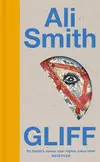
Gliff seems to be set in a not-too-distant future (maybe even present day depending where you are in the world). In it you follow two siblings, Briar and Rose. While their ages are never given, Briar seems to be a tween-early teen, and Rose is his younger yet very intelligent sister. Due to a sick Aunt their mother needs to take care of in another country and a boyfriend who is (presumably) more worried about his own well being, the siblings end up on their own. This book was strange. The over all messaging was very clear (to me at least). I understood some of what the author wanted me to walk away with, and I will admit the story was terrifying relevant to society today (particularly in the “western world”). That being said, I would approach this book at more literary fiction than dystopian. While there are dystopian themes, you should not go into this story expecting to understand this world. While it parallels ours in many ways, it is different, and there is little to no world building. It’s really more a story about society while almost reading a character study on Briar. None of those things are bad. I actually think this book had a lot of good. However, this book is not for everyone, and I think I might be included in that. To be honest, I’m conflicted because I am curious about the sequel/companion novel releasing later this year (2026).
The main thing this didn’t work for me was the writing style. I know it’s a thing with some authors (and I’m sure there is a reason for it), but I can’t get behind not using quotations to mark when someone is speaking. It makes for a needlessly confusing read (I like confusing books, but not in this way). I truly hate it. Not only does it makes it confusing and cause me to have to reread sometimes pages at a time, but it also makes for repetitive “he said” or “she said” after talking, which my brain latches onto and I struggle to let go of. It makes the writing feel stilted. Which is then jolting, because so much of this book reads as a rambling, almost stream of consciousness. I’ve never read one of her books, so I may be way off the mark, but from what I heard I imagine this reads similar to a Sally Rooney, but make it dystopian-ish.
Without spoilers, there is also a section where two people are talking, but we only get one side of the conversation (this isn’t taking place on the phone, we should get both sides). Each time the side we don’t get has a question or says something, their dialogue is replaced with a question mark. I can maybe see this a symbolism for censorship, but it doesn’t make sense as that since the side we do get interprets what the other person said when they replied. I also hated the audiobook narrator. I really love immersive reading (thank you to my library for making this possible), but I couldn’t with this book. The audiobook narrator was very monotone and never made it clear when someone else was talking, which added to my confusion.
I think this book is best for people who like unique writing systems and literary fiction. I also think because it is so short, it’s worth giving a try if it seems interesting. Like I said, I didn’t love this, I didn’t hate it. I might pick up the next one solely because of how it ended.
Gliff seems to be set in a not-too-distant future (maybe even present day depending where you are in the world). In it you follow two siblings, Briar and Rose. While their ages are never given, Briar seems to be a tween-early teen, and Rose is his younger yet very intelligent sister. Due to a sick Aunt their mother needs to take care of in another country and a boyfriend who is (presumably) more worried about his own well being, the siblings end up on their own. This book was strange. The over all messaging was very clear (to me at least). I understood some of what the author wanted me to walk away with, and I will admit the story was terrifying relevant to society today (particularly in the “western world”). That being said, I would approach this book at more literary fiction than dystopian. While there are dystopian themes, you should not go into this story expecting to understand this world. While it parallels ours in many ways, it is different, and there is little to no world building. It’s really more a story about society while almost reading a character study on Briar. None of those things are bad. I actually think this book had a lot of good. However, this book is not for everyone, and I think I might be included in that. To be honest, I’m conflicted because I am curious about the sequel/companion novel releasing later this year (2026).
The main thing this didn’t work for me was the writing style. I know it’s a thing with some authors (and I’m sure there is a reason for it), but I can’t get behind not using quotations to mark when someone is speaking. It makes for a needlessly confusing read (I like confusing books, but not in this way). I truly hate it. Not only does it makes it confusing and cause me to have to reread sometimes pages at a time, but it also makes for repetitive “he said” or “she said” after talking, which my brain latches onto and I struggle to let go of. It makes the writing feel stilted. Which is then jolting, because so much of this book reads as a rambling, almost stream of consciousness. I’ve never read one of her books, so I may be way off the mark, but from what I heard I imagine this reads similar to a Sally Rooney, but make it dystopian-ish.
Without spoilers, there is also a section where two people are talking, but we only get one side of the conversation (this isn’t taking place on the phone, we should get both sides). Each time the side we don’t get has a question or says something, their dialogue is replaced with a question mark. I can maybe see this a symbolism for censorship, but it doesn’t make sense as that since the side we do get interprets what the other person said when they replied. I also hated the audiobook narrator. I really love immersive reading (thank you to my library for making this possible), but I couldn’t with this book. The audiobook narrator was very monotone and never made it clear when someone else was talking, which added to my confusion.
I think this book is best for people who like unique writing systems and literary fiction. I also think because it is so short, it’s worth giving a try if it seems interesting. Like I said, I didn’t love this, I didn’t hate it. I might pick up the next one solely because of how it ended.
Updated a reading goal:
Read 40k pages in 2026
Progress so far: 5647 / 40000 14%

~ 4.75 ~
Middlegame is one of those weird books where things don’t really make sense until they do. I think people should go into this knowing as little as possible. The simplified, non-spoiler gist is this book is mostly about Rodger and Dodger. Rodger excels in reading and language. Dodger is a once in a lifetime mathematician. Despite being from opposite ends of the United States, at a young age they make contact with each other. That single event sets off everything to come…kind of. The first 10%-15% fells a little odd and disconnected, but it vital to the rest of the story. After that it became a book I couldn’t put down. I really liked the characters and trying to piece together what was going on. There is one character in particular that I ended up really enjoying despite not expecting to. I have no idea what the other books in the series are about, but I do think this could be read as a standalone, too. Seanan McGuire is quickly becoming a favorite author. There is just something about her writing that I really enjoy. She also consistently finds ways to blend sci-fi and fantasy pretty seamlessly.
Worth noting, I read this partially physically and partially via audiobook. The scenes featuring Reed and Leigh I simply could not use the audiobook (they are featured heavily at the start). I think the narrator did a good job with everyone else, but for whatever reason she gave them ridiculous voices that I could not get past (the text doesn’t say they sound like that either, so it was just a choice??).
~ 4.75 ~
Middlegame is one of those weird books where things don’t really make sense until they do. I think people should go into this knowing as little as possible. The simplified, non-spoiler gist is this book is mostly about Rodger and Dodger. Rodger excels in reading and language. Dodger is a once in a lifetime mathematician. Despite being from opposite ends of the United States, at a young age they make contact with each other. That single event sets off everything to come…kind of. The first 10%-15% fells a little odd and disconnected, but it vital to the rest of the story. After that it became a book I couldn’t put down. I really liked the characters and trying to piece together what was going on. There is one character in particular that I ended up really enjoying despite not expecting to. I have no idea what the other books in the series are about, but I do think this could be read as a standalone, too. Seanan McGuire is quickly becoming a favorite author. There is just something about her writing that I really enjoy. She also consistently finds ways to blend sci-fi and fantasy pretty seamlessly.
Worth noting, I read this partially physically and partially via audiobook. The scenes featuring Reed and Leigh I simply could not use the audiobook (they are featured heavily at the start). I think the narrator did a good job with everyone else, but for whatever reason she gave them ridiculous voices that I could not get past (the text doesn’t say they sound like that either, so it was just a choice??).