
Hernando


La Isla y Las Cosas son las mejores historias del libro, las demás no son memorables así que la lectura de este libro puede ser una montaña rusa por su naturaleza de relatos cortos.
La Isla y Las Cosas son las mejores historias del libro, las demás no son memorables así que la lectura de este libro puede ser una montaña rusa por su naturaleza de relatos cortos.

Among the 7 stories, the most remarkable was the one that gives the book its name.
It is a very sadistic take on what would an AI turned bad could do to humans that are at its will. The concept was indeed interesting, but I got spoiled by knowing basically everything beforehand. Not a fault of the book itself but I could not help to enjoy it more.
Among the 7 stories, the most remarkable was the one that gives the book its name.
It is a very sadistic take on what would an AI turned bad could do to humans that are at its will. The concept was indeed interesting, but I got spoiled by knowing basically everything beforehand. Not a fault of the book itself but I could not help to enjoy it more.


This book hooked me from the very first 20 pages. One of the best generation ship stories I have ever read.
There is such a sense of wonder when the book tries to explore an idea , which is basically impossible to achieve with current technology, while trying to keep the very idea grounded in modern understanding of physics and playing with the speculative tech of the future.
A few thousand people aboard a sentient or semi sentient ship wanting to go far and beyond our solar system to settle and make a new home is the main premise of the book. The plan for them is to terraform one of our neighbor planetary systems (home of the Tau Ceti star) or at least one of the main planet's moon.
All kinds of situation start happening when they find out that things are not going as expected with the biological system of the sentient ship.
I have seen many people disliking the end of the book, but to me it was just excellent. It gave the needed doses of adrenaline and makes you really think about what lies ahead of human exploration and all the risk that comes with it.
This book hooked me from the very first 20 pages. One of the best generation ship stories I have ever read.
There is such a sense of wonder when the book tries to explore an idea , which is basically impossible to achieve with current technology, while trying to keep the very idea grounded in modern understanding of physics and playing with the speculative tech of the future.
A few thousand people aboard a sentient or semi sentient ship wanting to go far and beyond our solar system to settle and make a new home is the main premise of the book. The plan for them is to terraform one of our neighbor planetary systems (home of the Tau Ceti star) or at least one of the main planet's moon.
All kinds of situation start happening when they find out that things are not going as expected with the biological system of the sentient ship.
I have seen many people disliking the end of the book, but to me it was just excellent. It gave the needed doses of adrenaline and makes you really think about what lies ahead of human exploration and all the risk that comes with it.


Can not say enough to this great-short story. One of my favorites ever.
I have read this story countless of time and it continues being fascinating.
A barely functional robot (Multivac) is being asked the fundamental question of how can we decrease the amount of entropy of the universe in order to "save" it.
This question span eons into the future (is asked every couple of decades) while versions of the robot are more and more intelligent. We would guess that as the robot gathers vast amount of data with the passing of the centuries, it will be able to give a proper answer to the question.
A flawless story with a superb ending.
Can not say enough to this great-short story. One of my favorites ever.
I have read this story countless of time and it continues being fascinating.
A barely functional robot (Multivac) is being asked the fundamental question of how can we decrease the amount of entropy of the universe in order to "save" it.
This question span eons into the future (is asked every couple of decades) while versions of the robot are more and more intelligent. We would guess that as the robot gathers vast amount of data with the passing of the centuries, it will be able to give a proper answer to the question.
A flawless story with a superb ending.

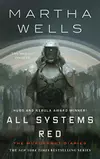
This was a light , fun and quick read.
A robot that gains total control of its own systems and start going deep into existentialism while at the same time keeping the humans of a scientific Spedition on a distant planet safe.
Nothing else really and waiting for the next novella to come out just killed any bit of enthusiasm I had at the time.
This was a light , fun and quick read.
A robot that gains total control of its own systems and start going deep into existentialism while at the same time keeping the humans of a scientific Spedition on a distant planet safe.
Nothing else really and waiting for the next novella to come out just killed any bit of enthusiasm I had at the time.

I almost DNF'd this book.
It relates a story of post humanism where things like communication by thoughts, mind copies, AGI and Singularity are very real. All this is thrown at the reader without any bit of explanation, which makes the book interesting initially.
By the time you know how all things really work and were supposed to be "fun", it felt quite plain and boring.
I did not mind the device the author used to tell the story at all, which I can understand why some people hate it, but by the end of the book I think it was not even worth the struggle.
I might be judging this book too harshly, but I am still interested in giving it a revisit and see if my opinion changes.
I almost DNF'd this book.
It relates a story of post humanism where things like communication by thoughts, mind copies, AGI and Singularity are very real. All this is thrown at the reader without any bit of explanation, which makes the book interesting initially.
By the time you know how all things really work and were supposed to be "fun", it felt quite plain and boring.
I did not mind the device the author used to tell the story at all, which I can understand why some people hate it, but by the end of the book I think it was not even worth the struggle.
I might be judging this book too harshly, but I am still interested in giving it a revisit and see if my opinion changes.

An interesting way to deal with consciousness.
There were a few things that were a bit annoying tho, like how the scenes of what was happening were described, as if something Watts was forgetting in the process of constructing the story. Confusing at times.
The other thing that will probably make this book not as enjojable a second time is the way one of the characters was basically clicking his tongue the whole time.
Apart from that, it's a solid book with a very intriguing and unique set of characters. The climax alone was worth the few hundred pages.
An interesting way to deal with consciousness.
There were a few things that were a bit annoying tho, like how the scenes of what was happening were described, as if something Watts was forgetting in the process of constructing the story. Confusing at times.
The other thing that will probably make this book not as enjojable a second time is the way one of the characters was basically clicking his tongue the whole time.
Apart from that, it's a solid book with a very intriguing and unique set of characters. The climax alone was worth the few hundred pages.


(Read the Spanish version).
This is a very weird book. I felt it was just two or three different books in one. The title does not even have anything to do with the whole story.
I later found out that the author himself forgot what he was writting about right in the middle of the book.
(Read the Spanish version).
This is a very weird book. I felt it was just two or three different books in one. The title does not even have anything to do with the whole story.
I later found out that the author himself forgot what he was writting about right in the middle of the book.
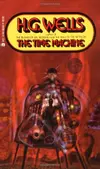
Probably the most influential time travel novel ever. Not only in terms of going on a ride to a distant time but also in terms of its sociological aspect.
Imagining what human beings could look like hundred of thousands of years ahead, opened so many gates of human speculation.
It also made traveling through some sort of device a popular idea, which later became the de facto item for time traveling in pop culture.
I revisited this book after so many years (read it on my teenage years) and this time did not enjoy it quite much as I expected (or remembered) , but I will probably read it again some time in the future.
Probably the most influential time travel novel ever. Not only in terms of going on a ride to a distant time but also in terms of its sociological aspect.
Imagining what human beings could look like hundred of thousands of years ahead, opened so many gates of human speculation.
It also made traveling through some sort of device a popular idea, which later became the de facto item for time traveling in pop culture.
I revisited this book after so many years (read it on my teenage years) and this time did not enjoy it quite much as I expected (or remembered) , but I will probably read it again some time in the future.

Humans fighting for centuries against an alien race in different theaters of war (mostly on far distant planets) are one of the main attractions of this book for me
Those soldiers on the front line travel at the speed of light to fight the enemy, they get older by a few days, while their relatives on earth do it by the years. And old but still cool idea.
The book reflects the very idea of going to war (in the real world) and coming home where everything is so unrecognizable (your family and friends are mostly gone) that you feel like an alien.
This is to me an interesting take on the scars of war. While I enjoyed Starship Troopers premise a bit more, this is a far more honest book.
Humans fighting for centuries against an alien race in different theaters of war (mostly on far distant planets) are one of the main attractions of this book for me
Those soldiers on the front line travel at the speed of light to fight the enemy, they get older by a few days, while their relatives on earth do it by the years. And old but still cool idea.
The book reflects the very idea of going to war (in the real world) and coming home where everything is so unrecognizable (your family and friends are mostly gone) that you feel like an alien.
This is to me an interesting take on the scars of war. While I enjoyed Starship Troopers premise a bit more, this is a far more honest book.

A very good book with plenty of cool ideas.
We got a berserker AI trying to eat whatever races it encounters, a planet of peculiar species of group minds and an interesting take on Singularity.
A galaxy divided into Zones where its laws of physics determine the intelligence their inhabitants have, even for artificial beings makes the book even more intriguing.
Similar to Gateway by Frederik Pohl, I read the Spanish version but in this case the way they translated the name of some species put me a bit off.
A very good book with plenty of cool ideas.
We got a berserker AI trying to eat whatever races it encounters, a planet of peculiar species of group minds and an interesting take on Singularity.
A galaxy divided into Zones where its laws of physics determine the intelligence their inhabitants have, even for artificial beings makes the book even more intriguing.
Similar to Gateway by Frederik Pohl, I read the Spanish version but in this case the way they translated the name of some species put me a bit off.

This is a fantastic account of some deep and fundamental questions that most of us had already asked ourselves before. It is done through multiple conversations between a man and his granddaughter.
I clearly do not believe all the question from the book were literally asked by the child, maybe just a few, but it is to me a very subtle literary device to explain what the author is trying to convey.
In my opinion, this is a much better book than Astrophysics For People in a Hurry by Neil deGrayson. It is more engaging and Although it has some of the same weakness in not going much deeper, I adventure to say that it does the job better in explaining every subject.
The guy is also an astrophysics, but I like how he articulates the ideas better. Some of the questions he is "asked" by his granddaughter are things like what are the stars made of, how can we tell the age of the sun, how distant are the galaxies and one very important, how do we know that is true or not.
The target according to the author is mainly 14 years old teens. In short, this is a very short but good overview of intriguing questions about our universe to pique the interest of young people but also for older ones to have the tools to do the same with their children and grandchildrens when the moment arrives.
This is a fantastic account of some deep and fundamental questions that most of us had already asked ourselves before. It is done through multiple conversations between a man and his granddaughter.
I clearly do not believe all the question from the book were literally asked by the child, maybe just a few, but it is to me a very subtle literary device to explain what the author is trying to convey.
In my opinion, this is a much better book than Astrophysics For People in a Hurry by Neil deGrayson. It is more engaging and Although it has some of the same weakness in not going much deeper, I adventure to say that it does the job better in explaining every subject.
The guy is also an astrophysics, but I like how he articulates the ideas better. Some of the questions he is "asked" by his granddaughter are things like what are the stars made of, how can we tell the age of the sun, how distant are the galaxies and one very important, how do we know that is true or not.
The target according to the author is mainly 14 years old teens. In short, this is a very short but good overview of intriguing questions about our universe to pique the interest of young people but also for older ones to have the tools to do the same with their children and grandchildrens when the moment arrives.


This is a dry, technical and well documented book/research about all the things that happened on planet earth to support life. Not only just any life but the author makes a strong claim that through the ages , on each singular event (Ice age, Cambrian explosion, etc.) the planet happened to be in the best possible state to support the most amount of life.
The main thesis here is that there are just too many things that needed to happen in order for life to even exist, and that improbability is a strong argument of a Creator.
I like that the book is significantly different than other books with a theistic point of view. Here the author paired with a biochemist try his best to give the readers with a high amount of peer reviewed papers on the origins of life and the evolution of the planet. It has almost 40 of 288 pages only for footnotes.
This is a dry, technical and well documented book/research about all the things that happened on planet earth to support life. Not only just any life but the author makes a strong claim that through the ages , on each singular event (Ice age, Cambrian explosion, etc.) the planet happened to be in the best possible state to support the most amount of life.
The main thesis here is that there are just too many things that needed to happen in order for life to even exist, and that improbability is a strong argument of a Creator.
I like that the book is significantly different than other books with a theistic point of view. Here the author paired with a biochemist try his best to give the readers with a high amount of peer reviewed papers on the origins of life and the evolution of the planet. It has almost 40 of 288 pages only for footnotes.

I sort of liked this book, but it was too short on each topic that by the end it barely made sense to me reading it when most of the things are 2 seconds away on a web search. Actually, that was what I did for basically every chapter, as a way to know what else is missing and also explains why it took me longer to finish it. It does not go deep on anything and give you a very surface level understanding of the universe.
I guess that was the point of the book at the end, and I am being too picky here. Despise my rating, it was entertaining and enjoyable, just that I was expecting a bit more substance.
I sort of liked this book, but it was too short on each topic that by the end it barely made sense to me reading it when most of the things are 2 seconds away on a web search. Actually, that was what I did for basically every chapter, as a way to know what else is missing and also explains why it took me longer to finish it. It does not go deep on anything and give you a very surface level understanding of the universe.
I guess that was the point of the book at the end, and I am being too picky here. Despise my rating, it was entertaining and enjoyable, just that I was expecting a bit more substance.


Just a few annotations:
“A big breakthrough in artificial intelligence. It seems somewhat likely that it will happen sometime in this century, but we don't know for sure”.
-I don't think so, but I truly hope to see that with my eyes.
“The idea of a coming technological singularity has been popularized, starting with Vernor Vinge's seminal essay and continuing with the writings of Ray Kurzweil and others. The term ‘Singularity,' however, has been used confusedly in many disparate senses and has accreted an unholy aura of techno-utopian connotations”.
-Agree.
“Machines matching humans in general intelligence have been expected since the invention of computers in the 1940s”
-Add another century to it.
“The fact that the best performance at one time is attained through a complicated mechanism does not mean that no simple mechanism could do the job as well or better. It might simply be that nobody has yet found the simpler alternative”.
-That's my bet for developing a SI.
“How far are we currently from achieving a human whole brain emulation?. One recent assesment presented a technical roadmap and concluded that the prerequisite capabilities might be available around mid-century, though with a large uncertainty level”.
- I also doubt a WBE in the near future. Probably in 2120?.
“Final goal: ‘make us smile'.
Perverse instantiation: ‘paralyze human facial musculatures into constant beaming smiles”.
- I laughed on this because it makes sense.
“...These observations make it plausible that any type of entity that developed a much greater than human level intelligence would be potentially extremely powerful. Such entities could accumulate content much faster than us and invent new technologies on a much shorter timescale. They could also use their intelligence to strategize more effectively than we can”.
- I liked this book a lot specially because of the Realistic Pessimism about an SI. I consider there must be a real concern to think about that level of intelligence.
Just a few annotations:
“A big breakthrough in artificial intelligence. It seems somewhat likely that it will happen sometime in this century, but we don't know for sure”.
-I don't think so, but I truly hope to see that with my eyes.
“The idea of a coming technological singularity has been popularized, starting with Vernor Vinge's seminal essay and continuing with the writings of Ray Kurzweil and others. The term ‘Singularity,' however, has been used confusedly in many disparate senses and has accreted an unholy aura of techno-utopian connotations”.
-Agree.
“Machines matching humans in general intelligence have been expected since the invention of computers in the 1940s”
-Add another century to it.
“The fact that the best performance at one time is attained through a complicated mechanism does not mean that no simple mechanism could do the job as well or better. It might simply be that nobody has yet found the simpler alternative”.
-That's my bet for developing a SI.
“How far are we currently from achieving a human whole brain emulation?. One recent assesment presented a technical roadmap and concluded that the prerequisite capabilities might be available around mid-century, though with a large uncertainty level”.
- I also doubt a WBE in the near future. Probably in 2120?.
“Final goal: ‘make us smile'.
Perverse instantiation: ‘paralyze human facial musculatures into constant beaming smiles”.
- I laughed on this because it makes sense.
“...These observations make it plausible that any type of entity that developed a much greater than human level intelligence would be potentially extremely powerful. Such entities could accumulate content much faster than us and invent new technologies on a much shorter timescale. They could also use their intelligence to strategize more effectively than we can”.
- I liked this book a lot specially because of the Realistic Pessimism about an SI. I consider there must be a real concern to think about that level of intelligence.

First time reading something like this. It is sort of a debate book but with footnotes and without the proponents interrupting each other, and I actually liked the format. It would be nice to find something similar but not only focusing on religious proponents.
About the book itself, Ken Ham's is the guy which most conservative Christians will relate the most as it is basically Christian religion as taught in schools (or were) . I find his essay the weakest of all four, also the guy is quite annoying sometimes as he believes whatever he says is the true because “That is the true”, I later saw him on YouTube and he is even worst. Even the editor of the book had some trouble dealing with him that it made me laugh. Citing the editor:
“The most obvious discrepancy that remains is in the initial essays, where Ham's is noticeable longer than the others. He was unwilling to cut anything further, believing it only fair that he should be given more space than the others since he was the only one defending the young age of the earth and the authority of Scripture vs the authority of the scientific majority”. Quite a guy eh?.
Hugh Ross is an interesting case, as an Astrophysics he believes in like 99% about all the scientific consensus related to cosmic stuff, but he differ in the evolution and origins of life. Researching through his footnotes I see he has an interesting views that few non-religious people also consider, specially that about Fine-tuning of the universe. His weakest point I would say that is that he is actually making the bible to concord with everything Astrophysics find and that is why many people say that he tends to much to Concordism.
Haarsma is a proponent of almost everything that non-religious scientist believe, so most of those people will find her point of view the most compelling of all, but she add God into the equation. So she believes in the Evolution, Origins of life, the LUCA, etc as the scientific consensus says but also that God guided everything in any way. Her weakest point is actually the obvious one, what God has anything to do in all this if all this looked as He was unnecessary. Though Her reply to this opposition is quite interesting. She works for that organization (BioLogos) that is actually run by geneticist Francis Collins which it happens that he is the guy in charge of the NIH in the US and who led the Human Genome Project.
The last guy, Meyer, only based his essay on Intelligent Design so nothing to add to this as even though he has his own position on the age of the universe and origins of life most of his essay is basically explaining everything about ID including why it is not Pseudo-science.
Finally, the editor finish the book saying: “It takes enormous effort, then, on our part to listen to others and consider their critiques of our own positions. But if we're serious about pursuing the truth in the matters, it is important.”
First time reading something like this. It is sort of a debate book but with footnotes and without the proponents interrupting each other, and I actually liked the format. It would be nice to find something similar but not only focusing on religious proponents.
About the book itself, Ken Ham's is the guy which most conservative Christians will relate the most as it is basically Christian religion as taught in schools (or were) . I find his essay the weakest of all four, also the guy is quite annoying sometimes as he believes whatever he says is the true because “That is the true”, I later saw him on YouTube and he is even worst. Even the editor of the book had some trouble dealing with him that it made me laugh. Citing the editor:
“The most obvious discrepancy that remains is in the initial essays, where Ham's is noticeable longer than the others. He was unwilling to cut anything further, believing it only fair that he should be given more space than the others since he was the only one defending the young age of the earth and the authority of Scripture vs the authority of the scientific majority”. Quite a guy eh?.
Hugh Ross is an interesting case, as an Astrophysics he believes in like 99% about all the scientific consensus related to cosmic stuff, but he differ in the evolution and origins of life. Researching through his footnotes I see he has an interesting views that few non-religious people also consider, specially that about Fine-tuning of the universe. His weakest point I would say that is that he is actually making the bible to concord with everything Astrophysics find and that is why many people say that he tends to much to Concordism.
Haarsma is a proponent of almost everything that non-religious scientist believe, so most of those people will find her point of view the most compelling of all, but she add God into the equation. So she believes in the Evolution, Origins of life, the LUCA, etc as the scientific consensus says but also that God guided everything in any way. Her weakest point is actually the obvious one, what God has anything to do in all this if all this looked as He was unnecessary. Though Her reply to this opposition is quite interesting. She works for that organization (BioLogos) that is actually run by geneticist Francis Collins which it happens that he is the guy in charge of the NIH in the US and who led the Human Genome Project.
The last guy, Meyer, only based his essay on Intelligent Design so nothing to add to this as even though he has his own position on the age of the universe and origins of life most of his essay is basically explaining everything about ID including why it is not Pseudo-science.
Finally, the editor finish the book saying: “It takes enormous effort, then, on our part to listen to others and consider their critiques of our own positions. But if we're serious about pursuing the truth in the matters, it is important.”

A while ago (circa 6 years) I read a book called something like “Linux for dumb, naive and extremely clumsy people”. It got my attention as the tittle was really weird for a learning book, but I picked it up and read it.
It was interesting to read all the things the author said about those people who are not actually stupids but when you try to explain them something as hard as you can they just don't get it , they just simply don't understand that easily and that can happen to any people with any other topic.
This book reminds me that, in the way that many people don't really understand what's the deal with general relativity and then quantum mechanics and then with thermodynamics and then again with a world full of probabilities. But still, there are people out there with a profound gift to teach (like in this case ) who want to explain all those topics in simple words; The author here make things very simple, kind of like ELA5.
He gets quite emotional towards the end but I can understand why. He seems to be loving what he is doing as a theoretical physicist.
All the best for him and his team with that weird theory of loop quantum gravity.
A while ago (circa 6 years) I read a book called something like “Linux for dumb, naive and extremely clumsy people”. It got my attention as the tittle was really weird for a learning book, but I picked it up and read it.
It was interesting to read all the things the author said about those people who are not actually stupids but when you try to explain them something as hard as you can they just don't get it , they just simply don't understand that easily and that can happen to any people with any other topic.
This book reminds me that, in the way that many people don't really understand what's the deal with general relativity and then quantum mechanics and then with thermodynamics and then again with a world full of probabilities. But still, there are people out there with a profound gift to teach (like in this case ) who want to explain all those topics in simple words; The author here make things very simple, kind of like ELA5.
He gets quite emotional towards the end but I can understand why. He seems to be loving what he is doing as a theoretical physicist.
All the best for him and his team with that weird theory of loop quantum gravity.
