
Jessica


Even though there's only six years' age difference between my boyfriend and I, somehow there's a bit of a generation gap. He's always going on about video games and movies that were quite a bit before my time, and in return, he somehow missed out on almost everything that shaped “my” generation – most notably, for this review, Harry Potter.I'm not sure when I first read this book. I think I first got it as a Christmas present when I was eight, read the first chapter, dismissed it as boring (which that first chapter kind of is – crotchety, snobby English people living insular village lives, really?) and put it down for several months, after which I gave it another chance and this time was absorbed. Harry Potter captured the imaginations of me and all the other kids at my school. I remember how some of us tried to fake Hogwarts invitation letters to make all the other kids jealous, only to be immediately denounced as the vile fraudsters they were (knowing myself, I was probably doing the forgery and the denouncing). Hogwarts seemed infinitely more exciting than the boring primary school we went to; we constructed elaborate stories about our imaginary lives there (or at least I did...) and, for that reason I think, Harry Potter occupies a central place in the hearts of many people my age.Over the years, of course, my interest waned in Harry Potter, but when Mark Was Reading Harry Potter I reread the third book and #5 through #7, and was amazed at how well they stood up (especially #7, [b:Harry Potter and the Deathly Hallows 818056 Harry Potter and the Deathly Hallows (Harry Potter, #7) J.K. Rowling https://images.gr-assets.com/books/1351958236s/818056.jpg 2963218], which I hadn't even liked the first time). My love for Harry Potter was renewed.Fast-forward a couple of years to when my boyfriend revealed he'd never read the books, nor even watched the movies, and what's more he hated the lot of them on principle (that principle being, “anything other people love that I've never read must suck”, which apparently makes sense to him). I was appalled. He was equally appalled that I'd never watched Star Wars though, so we struck a deal – for each Harry Potter book he read, I would watch one Star Wars movie.This was a terrible deal to strike.This is mainly because he refused to read the books at home in his own time like I'd envisaged, but insisted on reading this book aloud to me, “so I would know he'd really done it”. What this actually meant was that I had to spend 6–7 months listening to him read aloud, laboriously, painstakingly, torturingly, a book that he obviously absolutely hated. By the end of it all, I fucking hated it too. Hated it for being so simplistic and childish, when I know that from [b:Harry Potter and the Prisoner of Azkaban 464164 Harry Potter and the Prisoner of Azkaban (Harry Potter, #3) J.K. Rowling https://images.gr-assets.com/books/1310384602s/464164.jpg 2402163] (#3) onwards they're immensely detailed and complex. Hated it for offering absolutely nothing to an adult raised on shallow, vapid action movies starring Arnold Schwarzenegger who is absolutely determined to hate it. Hating it because I know the later books have plenty to offer adult readers (or I mean, those whose preferred genre is not action movies), but unless they're willing to have faith in that, these first couple of books are really not going to appeal to anyone who has a low tolerance for children's book. They're just not.The book isn't terrible, especially if you love immensely detailed world-building. But that's really the main thing about this book – the central plot, the mystery of the philosopher's stone, is actually very thin, and almost the whole book is given over to setting the scene for the six books to come (which is sort of incredible when you consider there was no guarantee that any of the other books would ever see publication). It just lacks almost all of the depth of the later books, like the first season of Buffy the Vampire Slayer, shall we say.I was reading a little bit about how Harry Potter and the Philosopher's Stone has been translated for overseas audiences – for instance, that the French translator attempted to sanitise it of any reference to class, particularly watering down Malfoy's bigoted comments into something completely neutral, changing his dialogue in the robe shop so rather than asking Harry his surname, so he can place him in the wizarding world's class hierarchy, he asks, “Comment tu t'appelles ?” – something completely different. The regionalisms and colloquial language of the English is gone; instead, everyone speaks in stuffy, academic French, even Irish Seamus Finnigan and West Country Hagrid. (In the Japanese version, Hagrid's dialogue was apparently written in a Japanese dialect with similar sociolinguistic connotations to what West Country accents have in English.) In the US version they made a huge number of changes just in changing individual words, resulting in this ghastly scenario where Ron's first line is “Mom, geroff!” – where these quintessentially British characters are caught with jarring Americanisms in their mouths, just because US publishers have so little faith in their country's children that they don't think they'll be able to understand what the word “mum” means. In a comparison probably no one will get, the little of the US text I've read was as jarring to me as Peter Bush's translation of [b:In Diamond Square 17356826 In Diamond Square Mercè Rodoreda https://images.gr-assets.com/books/1362917783s/17356826.jpg 225621] where there were these vividly Catalan characters running around named “Joe” and “Ernie”. Just what? The only reason any American child would be as ignorant as this (and I don't believe any more than a tiny minority could be) is because their entertainment industry insists on Americanising and homogenising everything, in a way no other English-speaking society does. It is interesting to note that both French and US publishers insisted on changing the title, on the grounds that children don't know or care what “philosophers” are – so you have US Harry Potter and the Sorcerer's Stone, French Harry Potter à l'école des sorciers.So overall I'm giving this three stars... it's an amazing children's book, one I hope I can introduce to my future children if I ever have any (otherwise I'll just target nieces, nephews, cousins... whatever it takes). It's an annoyingly childish introduction to the series if you're trying to get someone into it as an adult, though. Admittedly, you will probably enjoy it more if you're not determined to hate it from the beginning, you read it in a more reasonable timeframe than 6–7 months, and you don't insist on reading the entire damn thing aloud. The only bright side of that bet was that Star Wars IV wasn't too bad.
Even though there's only six years' age difference between my boyfriend and I, somehow there's a bit of a generation gap. He's always going on about video games and movies that were quite a bit before my time, and in return, he somehow missed out on almost everything that shaped “my” generation – most notably, for this review, Harry Potter.I'm not sure when I first read this book. I think I first got it as a Christmas present when I was eight, read the first chapter, dismissed it as boring (which that first chapter kind of is – crotchety, snobby English people living insular village lives, really?) and put it down for several months, after which I gave it another chance and this time was absorbed. Harry Potter captured the imaginations of me and all the other kids at my school. I remember how some of us tried to fake Hogwarts invitation letters to make all the other kids jealous, only to be immediately denounced as the vile fraudsters they were (knowing myself, I was probably doing the forgery and the denouncing). Hogwarts seemed infinitely more exciting than the boring primary school we went to; we constructed elaborate stories about our imaginary lives there (or at least I did...) and, for that reason I think, Harry Potter occupies a central place in the hearts of many people my age.Over the years, of course, my interest waned in Harry Potter, but when Mark Was Reading Harry Potter I reread the third book and #5 through #7, and was amazed at how well they stood up (especially #7, [b:Harry Potter and the Deathly Hallows 818056 Harry Potter and the Deathly Hallows (Harry Potter, #7) J.K. Rowling https://images.gr-assets.com/books/1351958236s/818056.jpg 2963218], which I hadn't even liked the first time). My love for Harry Potter was renewed.Fast-forward a couple of years to when my boyfriend revealed he'd never read the books, nor even watched the movies, and what's more he hated the lot of them on principle (that principle being, “anything other people love that I've never read must suck”, which apparently makes sense to him). I was appalled. He was equally appalled that I'd never watched Star Wars though, so we struck a deal – for each Harry Potter book he read, I would watch one Star Wars movie.This was a terrible deal to strike.This is mainly because he refused to read the books at home in his own time like I'd envisaged, but insisted on reading this book aloud to me, “so I would know he'd really done it”. What this actually meant was that I had to spend 6–7 months listening to him read aloud, laboriously, painstakingly, torturingly, a book that he obviously absolutely hated. By the end of it all, I fucking hated it too. Hated it for being so simplistic and childish, when I know that from [b:Harry Potter and the Prisoner of Azkaban 464164 Harry Potter and the Prisoner of Azkaban (Harry Potter, #3) J.K. Rowling https://images.gr-assets.com/books/1310384602s/464164.jpg 2402163] (#3) onwards they're immensely detailed and complex. Hated it for offering absolutely nothing to an adult raised on shallow, vapid action movies starring Arnold Schwarzenegger who is absolutely determined to hate it. Hating it because I know the later books have plenty to offer adult readers (or I mean, those whose preferred genre is not action movies), but unless they're willing to have faith in that, these first couple of books are really not going to appeal to anyone who has a low tolerance for children's book. They're just not.The book isn't terrible, especially if you love immensely detailed world-building. But that's really the main thing about this book – the central plot, the mystery of the philosopher's stone, is actually very thin, and almost the whole book is given over to setting the scene for the six books to come (which is sort of incredible when you consider there was no guarantee that any of the other books would ever see publication). It just lacks almost all of the depth of the later books, like the first season of Buffy the Vampire Slayer, shall we say.I was reading a little bit about how Harry Potter and the Philosopher's Stone has been translated for overseas audiences – for instance, that the French translator attempted to sanitise it of any reference to class, particularly watering down Malfoy's bigoted comments into something completely neutral, changing his dialogue in the robe shop so rather than asking Harry his surname, so he can place him in the wizarding world's class hierarchy, he asks, “Comment tu t'appelles ?” – something completely different. The regionalisms and colloquial language of the English is gone; instead, everyone speaks in stuffy, academic French, even Irish Seamus Finnigan and West Country Hagrid. (In the Japanese version, Hagrid's dialogue was apparently written in a Japanese dialect with similar sociolinguistic connotations to what West Country accents have in English.) In the US version they made a huge number of changes just in changing individual words, resulting in this ghastly scenario where Ron's first line is “Mom, geroff!” – where these quintessentially British characters are caught with jarring Americanisms in their mouths, just because US publishers have so little faith in their country's children that they don't think they'll be able to understand what the word “mum” means. In a comparison probably no one will get, the little of the US text I've read was as jarring to me as Peter Bush's translation of [b:In Diamond Square 17356826 In Diamond Square Mercè Rodoreda https://images.gr-assets.com/books/1362917783s/17356826.jpg 225621] where there were these vividly Catalan characters running around named “Joe” and “Ernie”. Just what? The only reason any American child would be as ignorant as this (and I don't believe any more than a tiny minority could be) is because their entertainment industry insists on Americanising and homogenising everything, in a way no other English-speaking society does. It is interesting to note that both French and US publishers insisted on changing the title, on the grounds that children don't know or care what “philosophers” are – so you have US Harry Potter and the Sorcerer's Stone, French Harry Potter à l'école des sorciers.So overall I'm giving this three stars... it's an amazing children's book, one I hope I can introduce to my future children if I ever have any (otherwise I'll just target nieces, nephews, cousins... whatever it takes). It's an annoyingly childish introduction to the series if you're trying to get someone into it as an adult, though. Admittedly, you will probably enjoy it more if you're not determined to hate it from the beginning, you read it in a more reasonable timeframe than 6–7 months, and you don't insist on reading the entire damn thing aloud. The only bright side of that bet was that Star Wars IV wasn't too bad.


I'm often a bit hesitant to start reading a space opera. There are lots of ideas and concepts the genre can explore that I find fascinating, and yet a lot of the genre seems to revolve around cardboard cut-out characters and “whose gun is bigger?” petty one-upmanship. Thankfully, that's not at all the case here!
Embers of War is set in a universe some years after an large-scale war that ended in a continent-spanning massacre on the planet of Pelapatarn. The impact left by this war continues to be strongly felt. There are a number of POV characters, including the sentient spaceship Trouble Dog, which had been the one ordered to fire missiles in the massacre of Pelapatarn, and seeks to redeem herself through service with the House of Reclamation – an altruistic organisation that sails through space on a shoestring budget, saving those in danger.
The plot revolves around a rescue mission – a ship carrying hundreds of people has been shot down in a hotly contested solar system where the “planets” consist of gigantic sculptures. Aboard the Trouble Dog, Sal Konstanz and her 2IC Alva Clay are sent to search for survivors. Joining them is a “medic” who turns out to be an unqualified 19-year-old whose father pulled strings to get him a gig. At a stopover point, they pick up two further passengers – Ashton Childe and Laura Petrushka – whose motivations are unclear and loyalty is questionable. Ashton, in turn, is on a mission to recover one specific passenger: Ona Sudak, a poet, although what makes her so important is something he doesn't know.
What impressed me throughout this book was the sheer depth of the characters. These are people (and a spaceship) who carry the emotional baggage of past tragedies around with them. You get to see their soft, vulnerable sides as well as their hard-as-nails businesslike sides.
I also appreciated the bit of philosophy that came through in the book – from the dilemma of whether or not it's right to commit a massacre to end a war, to questions of redemption and how possible that is to achieve, to Nod's conception of the circle of life. I'm not saying that any of these things were explored in great detail, but the inclusion at them at all added a nice humanistic touch (if you can say that about a book where there are many sentient beings other than humans).
Overall, this was a really enjoyable book. There is a sequel already out, which I've duly added to my ever-expanding TBR list.
I'm often a bit hesitant to start reading a space opera. There are lots of ideas and concepts the genre can explore that I find fascinating, and yet a lot of the genre seems to revolve around cardboard cut-out characters and “whose gun is bigger?” petty one-upmanship. Thankfully, that's not at all the case here!
Embers of War is set in a universe some years after an large-scale war that ended in a continent-spanning massacre on the planet of Pelapatarn. The impact left by this war continues to be strongly felt. There are a number of POV characters, including the sentient spaceship Trouble Dog, which had been the one ordered to fire missiles in the massacre of Pelapatarn, and seeks to redeem herself through service with the House of Reclamation – an altruistic organisation that sails through space on a shoestring budget, saving those in danger.
The plot revolves around a rescue mission – a ship carrying hundreds of people has been shot down in a hotly contested solar system where the “planets” consist of gigantic sculptures. Aboard the Trouble Dog, Sal Konstanz and her 2IC Alva Clay are sent to search for survivors. Joining them is a “medic” who turns out to be an unqualified 19-year-old whose father pulled strings to get him a gig. At a stopover point, they pick up two further passengers – Ashton Childe and Laura Petrushka – whose motivations are unclear and loyalty is questionable. Ashton, in turn, is on a mission to recover one specific passenger: Ona Sudak, a poet, although what makes her so important is something he doesn't know.
What impressed me throughout this book was the sheer depth of the characters. These are people (and a spaceship) who carry the emotional baggage of past tragedies around with them. You get to see their soft, vulnerable sides as well as their hard-as-nails businesslike sides.
I also appreciated the bit of philosophy that came through in the book – from the dilemma of whether or not it's right to commit a massacre to end a war, to questions of redemption and how possible that is to achieve, to Nod's conception of the circle of life. I'm not saying that any of these things were explored in great detail, but the inclusion at them at all added a nice humanistic touch (if you can say that about a book where there are many sentient beings other than humans).
Overall, this was a really enjoyable book. There is a sequel already out, which I've duly added to my ever-expanding TBR list.
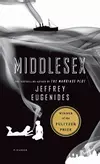
On one level, this was a really interesting book. Over the week and a half that I was reading it, I spent so much time doing outside reading on the many topics it raised – the Great Fire of Smyrna (and how Greeks were pushed out of modern-day Turkey in general), the rise and fall of Detroit, race riots, “white flight”, and intersex conditions (like 5-alpha reductase deficiency, which Cal, the narrator, has). Although the book was better read in small doses, it was extremely absorbing and even once I'd walked away the themes would keep playing on my mind.
On another level, though, I'm not really satisfied with how the story was told. For a start, first-person omniscient is a weird perspective choice. Cal had an engaging voice, but there were so many times that it just got distracting that he knew so much about, say, what his grandparents thought about when they had sex. As well, the book felt somewhat disconnected. One of the other reviews described this book as being like two books glommed together – like Eugenides had written a compelling 150-page novella about Cal but then his publisher asked him to bolt a 400-page story about the Greek-American immigrant experience onto the start. This might not be what actually happened, but from reading it, you'd be forgiven for thinking it is. Both stories are interesting in their own right, but they don't really gel.
The other issue was that I felt like the story about Cal being intersex came out half-baked. The biological side was covered, and I really enjoyed the story of the younger Callie (as she was at the time) discovering the depth of her attraction to other girls and her friendship with the Obscure Object. The thing was that Cal's entire story up to and including this point seemed to be the story of a gay girl – he even states at one point that he never felt out of place as a girl, and even 25 years later still didn't feel entirely at home among men – and the decision to transition just seemed so rushed. I naturally understand why he wouldn't want “feminising” surgery, particularly given it carried the risk of him never experiencing sexual pleasure again, but his sense that he had to socially transition seemed to stem more from not wanting to be gay. Like, Cal had felt that it was wrong to be attracted to other girls, but if he'd secretly been a dude the whole time then phew! Actually it was OK to be attracted to girls all along – and in fact it proved his masculinity!
To be clear, I don't think Eugenides was trying to say that a defining feature of manhood or womanhood is attraction to the opposite sex. Really, I got the impression that he thinks gender itself is artificial, a social convention that we feel obliged to push onto people. Cal comments, towards the end of the book, that the leap from childhood to adulthood was far greater than that from girlhood to boyhood. Indeed, when he decides to transition, the changes that he makes are superficial things: a masculine wardrobe, a haircut, and learning to imitate men's body language. Cal is still fundamentally the same person he always was. I think it's also an important point that Cal's body – an intersex body – might have been atypical, but it wasn't unhealthy and didn't need artificial interventions like surgery. In the book, Cal never seems to feel ill-at-ease in his own skin: all his problems stem from other people's expectations. When he transitions, he does so because he feels his natural self runs closer to what society expects men to be than what it expects from women (including being attracted to women). However, whether as a girl or a man, the only discomfort he really feels is when he can't meet other's expectations: that is, he never gets his period or develops breasts as an adolescent, and he can't offer his lovers penile penetration as an adult, but these only pose problems in relation to others. Really, for him, gender is how society perceives him: he's the same Cal either way.
Even though it would have made the novel longer than it already is (which is almost 200,000 words – the longest book I've read so far this year), I think it could have done with more material (i.e. any material) on Cal growing up and going through young adulthood. The story ends when he's still only 15, a few months after finding out he's intersex, and aside from a few brief and woefully underdeveloped flash-forwards to 41-year-old Cal, we never really get to read anything about Cal getting to grips with manhood, the way we saw Callie grapple with what it meant to be a teenage girl. To me, this felt like a gaping hole in the story. Eugenides could even have slimmed down the 400-page “migrant experience” story to make more room for this (it was pretty verbose, after all). I think the book is lesser for not having it.
To try and wrap this all up, Middlesex is a ground-breaking, thought-provoking book, but it's also a bit of a mess and I feel like it will be (or will have been already) superseded by better books on intersexuality, the history of Detroit, and immigration (not necessarily all in the same book). It's worth reading, but I now feel like I'm on the look out for better treatments of these same themes.
On one level, this was a really interesting book. Over the week and a half that I was reading it, I spent so much time doing outside reading on the many topics it raised – the Great Fire of Smyrna (and how Greeks were pushed out of modern-day Turkey in general), the rise and fall of Detroit, race riots, “white flight”, and intersex conditions (like 5-alpha reductase deficiency, which Cal, the narrator, has). Although the book was better read in small doses, it was extremely absorbing and even once I'd walked away the themes would keep playing on my mind.
On another level, though, I'm not really satisfied with how the story was told. For a start, first-person omniscient is a weird perspective choice. Cal had an engaging voice, but there were so many times that it just got distracting that he knew so much about, say, what his grandparents thought about when they had sex. As well, the book felt somewhat disconnected. One of the other reviews described this book as being like two books glommed together – like Eugenides had written a compelling 150-page novella about Cal but then his publisher asked him to bolt a 400-page story about the Greek-American immigrant experience onto the start. This might not be what actually happened, but from reading it, you'd be forgiven for thinking it is. Both stories are interesting in their own right, but they don't really gel.
The other issue was that I felt like the story about Cal being intersex came out half-baked. The biological side was covered, and I really enjoyed the story of the younger Callie (as she was at the time) discovering the depth of her attraction to other girls and her friendship with the Obscure Object. The thing was that Cal's entire story up to and including this point seemed to be the story of a gay girl – he even states at one point that he never felt out of place as a girl, and even 25 years later still didn't feel entirely at home among men – and the decision to transition just seemed so rushed. I naturally understand why he wouldn't want “feminising” surgery, particularly given it carried the risk of him never experiencing sexual pleasure again, but his sense that he had to socially transition seemed to stem more from not wanting to be gay. Like, Cal had felt that it was wrong to be attracted to other girls, but if he'd secretly been a dude the whole time then phew! Actually it was OK to be attracted to girls all along – and in fact it proved his masculinity!
To be clear, I don't think Eugenides was trying to say that a defining feature of manhood or womanhood is attraction to the opposite sex. Really, I got the impression that he thinks gender itself is artificial, a social convention that we feel obliged to push onto people. Cal comments, towards the end of the book, that the leap from childhood to adulthood was far greater than that from girlhood to boyhood. Indeed, when he decides to transition, the changes that he makes are superficial things: a masculine wardrobe, a haircut, and learning to imitate men's body language. Cal is still fundamentally the same person he always was. I think it's also an important point that Cal's body – an intersex body – might have been atypical, but it wasn't unhealthy and didn't need artificial interventions like surgery. In the book, Cal never seems to feel ill-at-ease in his own skin: all his problems stem from other people's expectations. When he transitions, he does so because he feels his natural self runs closer to what society expects men to be than what it expects from women (including being attracted to women). However, whether as a girl or a man, the only discomfort he really feels is when he can't meet other's expectations: that is, he never gets his period or develops breasts as an adolescent, and he can't offer his lovers penile penetration as an adult, but these only pose problems in relation to others. Really, for him, gender is how society perceives him: he's the same Cal either way.
Even though it would have made the novel longer than it already is (which is almost 200,000 words – the longest book I've read so far this year), I think it could have done with more material (i.e. any material) on Cal growing up and going through young adulthood. The story ends when he's still only 15, a few months after finding out he's intersex, and aside from a few brief and woefully underdeveloped flash-forwards to 41-year-old Cal, we never really get to read anything about Cal getting to grips with manhood, the way we saw Callie grapple with what it meant to be a teenage girl. To me, this felt like a gaping hole in the story. Eugenides could even have slimmed down the 400-page “migrant experience” story to make more room for this (it was pretty verbose, after all). I think the book is lesser for not having it.
To try and wrap this all up, Middlesex is a ground-breaking, thought-provoking book, but it's also a bit of a mess and I feel like it will be (or will have been already) superseded by better books on intersexuality, the history of Detroit, and immigration (not necessarily all in the same book). It's worth reading, but I now feel like I'm on the look out for better treatments of these same themes.


I never got around to reviewing the first book in this series, [b:Vicious 40874032 Vicious (Villains, #1) V.E. Schwab https://images.gr-assets.com/books/1532011194s/40874032.jpg 19250870]. However, the two of them together would have to be my favourite of V.E. Schwab's series, hands down.While this book had a slow beginning, man did it ever pick up. It has a ton of compelling characters – a truly vast number of characters that a less talented author would have made a bewildering mess out of – who all have complicated backgrounds and motivations, and generally not ones beyond reproach. My favourite characters were some of the new ones – Marcella was extremely enjoyable to read about, and June was intriguing. Of course, many characters from the first book, like mortal enemies Victor and Eli, as well as Sydney Clarke, were major figures in this one as well.Overall, a great, fun book if you like reading about superpowers and grey-and-grey morality.
I never got around to reviewing the first book in this series, [b:Vicious 40874032 Vicious (Villains, #1) V.E. Schwab https://images.gr-assets.com/books/1532011194s/40874032.jpg 19250870]. However, the two of them together would have to be my favourite of V.E. Schwab's series, hands down.While this book had a slow beginning, man did it ever pick up. It has a ton of compelling characters – a truly vast number of characters that a less talented author would have made a bewildering mess out of – who all have complicated backgrounds and motivations, and generally not ones beyond reproach. My favourite characters were some of the new ones – Marcella was extremely enjoyable to read about, and June was intriguing. Of course, many characters from the first book, like mortal enemies Victor and Eli, as well as Sydney Clarke, were major figures in this one as well.Overall, a great, fun book if you like reading about superpowers and grey-and-grey morality.

While this is a work of science fiction, in tone it is much more like a work of epic fantasy. It tells the story of Genly Ai, an emissary from a broader human alliance on a remote, wintry planet where the people and the culture are utterly alien to them. A strong cultural value of shifgrethor (which is, roughly, about keeping face) seems, to him, to impede honest communication and leads him into political trouble in two countries. Then there is Estraven, prime minister of Karhide at the story's beginning but quickly disgraced and exiled, who must save him from the dire situation he gets himself into.Like most epic fantasy, the story unfolds at a glacial place. However, rapid-fire plot developments are not why anyone reads that genre. Where this book excels is the beautiful, intimate, and intricately detailed depiction of this world, which Ai's coalition simply refers to as Winter.The book is famous, of course, for the fact that the people of this world are ambisexual: androgynous for much of the month, but for a few days they go into kemmer (i.e. into heat) and will adopt a sexed form, the opposite one of their partner. Genly Ai, hailing from a society of “normal” humans, finds this very disorienting: he wants to pigeonhole everyone he meets into filling “male” or “female” gender roles (and mostly, the former) but then feels a private disgust when people he's mentally classed as male engage in “womanly” behaviours. That in itself is a fascinating theme of this story, and yet what I hadn't expected going in is that it's also only one part of a much larger work.Like in [b:The Dispossessed 13651 The Dispossessed (Hainish Cycle #6) Ursula K. Le Guin https://images.gr-assets.com/books/1353467455s/13651.jpg 2684122], social structures and the development of societies over time make up another big theme of this novel. Given the harshness of Winter's climate, Le Guin presents a world in which technological progress has unfolded at a very slow rate, although it does unfold – societies expend so many resources keeping themselves alive that they have little “surplus” for scientific progress. The first country that the reader is introduced to, Karhide, is an absolute monarchy where hospitality is an enormous, integral part of the traditional culture. From there the action moves to Orgoreyn, which is a more modern, communalist country which has much in common with the states of the former Eastern Bloc. Genly Ai is impressed by Orgoreyn at first, with their more generous provision of heating and governmental structure that isn't totally beholden to a single, paranoid king, and yet in the end it proves not to live up to his expectations.Aside from the world-building, the other main focus of this novel is the relationship between Genly Ai and Estraven, which builds slowly but is deeply compelling and heart-touching.In line with Goodreads' description of 4 stars as “I really liked it”, this is a book I'm giving four stars. It's a book that could easily deserve 5, but such dense, slow-paced books have trouble extracting 5 stars from me, so I'll leave it at four. Just know, though, that when I say I really liked it, I mean I really liked it.
While this is a work of science fiction, in tone it is much more like a work of epic fantasy. It tells the story of Genly Ai, an emissary from a broader human alliance on a remote, wintry planet where the people and the culture are utterly alien to them. A strong cultural value of shifgrethor (which is, roughly, about keeping face) seems, to him, to impede honest communication and leads him into political trouble in two countries. Then there is Estraven, prime minister of Karhide at the story's beginning but quickly disgraced and exiled, who must save him from the dire situation he gets himself into.Like most epic fantasy, the story unfolds at a glacial place. However, rapid-fire plot developments are not why anyone reads that genre. Where this book excels is the beautiful, intimate, and intricately detailed depiction of this world, which Ai's coalition simply refers to as Winter.The book is famous, of course, for the fact that the people of this world are ambisexual: androgynous for much of the month, but for a few days they go into kemmer (i.e. into heat) and will adopt a sexed form, the opposite one of their partner. Genly Ai, hailing from a society of “normal” humans, finds this very disorienting: he wants to pigeonhole everyone he meets into filling “male” or “female” gender roles (and mostly, the former) but then feels a private disgust when people he's mentally classed as male engage in “womanly” behaviours. That in itself is a fascinating theme of this story, and yet what I hadn't expected going in is that it's also only one part of a much larger work.Like in [b:The Dispossessed 13651 The Dispossessed (Hainish Cycle #6) Ursula K. Le Guin https://images.gr-assets.com/books/1353467455s/13651.jpg 2684122], social structures and the development of societies over time make up another big theme of this novel. Given the harshness of Winter's climate, Le Guin presents a world in which technological progress has unfolded at a very slow rate, although it does unfold – societies expend so many resources keeping themselves alive that they have little “surplus” for scientific progress. The first country that the reader is introduced to, Karhide, is an absolute monarchy where hospitality is an enormous, integral part of the traditional culture. From there the action moves to Orgoreyn, which is a more modern, communalist country which has much in common with the states of the former Eastern Bloc. Genly Ai is impressed by Orgoreyn at first, with their more generous provision of heating and governmental structure that isn't totally beholden to a single, paranoid king, and yet in the end it proves not to live up to his expectations.Aside from the world-building, the other main focus of this novel is the relationship between Genly Ai and Estraven, which builds slowly but is deeply compelling and heart-touching.In line with Goodreads' description of 4 stars as “I really liked it”, this is a book I'm giving four stars. It's a book that could easily deserve 5, but such dense, slow-paced books have trouble extracting 5 stars from me, so I'll leave it at four. Just know, though, that when I say I really liked it, I mean I really liked it.

If I could, I'd give this 3.5 stars.Lost Boy provides us with an origin story for Captain Hook, one exceedingly grim and full of carnage but also one with a lot of heart and soul behind it. In this book, Peter is a cavalier and self-obsessed boy, using his incredible charisma to convince young boys to join him in the Other Place so he can have them for playmates forever and ever... at least unless they die prematurely, in which case no matter, he can always go and get some more. Jamie, the protagonist, tries his best to protect the other boys and becomes increasingly disillusioned with Peter's reign of chaos.
It is a good book. I felt, personally, that the first part of it dragged on too long: not content with showing us one or two or three awful things Peter did to cause suffering among the boys, Henry shows Peter doing tons of such things. I felt like the first half (or more) of the book was a bit of a slog as a result: I didn't particularly enjoy reading about three-year-old Charlie crying and being threatened and feeling terrified and I was so impatient to get to the part of the book where things start coming unstuck for Peter. That part did come, and I was rewarded for my persistence, but it still felt a bit unsatisfying that a book of less than 300 pages could drag.
Pacing issues aside though, if you like dark retellings and you're suspicious of everything in Peter Pan, this is a good read.
If I could, I'd give this 3.5 stars.Lost Boy provides us with an origin story for Captain Hook, one exceedingly grim and full of carnage but also one with a lot of heart and soul behind it. In this book, Peter is a cavalier and self-obsessed boy, using his incredible charisma to convince young boys to join him in the Other Place so he can have them for playmates forever and ever... at least unless they die prematurely, in which case no matter, he can always go and get some more. Jamie, the protagonist, tries his best to protect the other boys and becomes increasingly disillusioned with Peter's reign of chaos.
It is a good book. I felt, personally, that the first part of it dragged on too long: not content with showing us one or two or three awful things Peter did to cause suffering among the boys, Henry shows Peter doing tons of such things. I felt like the first half (or more) of the book was a bit of a slog as a result: I didn't particularly enjoy reading about three-year-old Charlie crying and being threatened and feeling terrified and I was so impatient to get to the part of the book where things start coming unstuck for Peter. That part did come, and I was rewarded for my persistence, but it still felt a bit unsatisfying that a book of less than 300 pages could drag.
Pacing issues aside though, if you like dark retellings and you're suspicious of everything in Peter Pan, this is a good read.

A worthy sequel to the first novel in this series, [b:Embers of War 30748899 Embers of War (Embers of War, #1) Gareth L. Powell https://images.gr-assets.com/books/1502367097s/30748899.jpg 51294683] (which I reviewed here). In that book, the spaceship Trouble Dog stumbled across a vast armada of sleeping warships and gave them a mission: to prevent further wars on the scale of the Apocalypse War that had just ended. Here, the ramifications of that suggestion are seen: that armada (now known as the Fleet of Knives) decides that the only sure way to do this is to destroy all warships (including the Trouble Dog which had awakened it) and eliminate interstellar travel.All the strengths of the first book remain strong here: the characterisation is excellent, with Nod the Druff (the Trouble Dog's engineer) getting some particularly awesome, wryly humorous POV chapters. Konstanz, Clay and Preston are back, picking up the pieces after the traumatic events of the first book. Ona Sudak returns, her past experience in the Apocalypse War making her uniquely qualified for service with the Fleet of Knives. And this time, we're introduced to the crew of Lucy's Ghost, “Lucky” Johnny Schultz & co., who attempt a salvage mission on a long-abandoned vessel originating from the alien Nymtoq civilisation... before an attack by interdimensional monsters, breaking through the fabric of reality, puts them into mortal strife.Once again, if you're the kind of person who craves stories about deep space but is sick of the macho, characterisation-light approach that plagues much of the genre, this series is a must-read. There are so many wonderful character moments between the action and plot developments, and everyone feels believable and richly complicated in their inner lives. I'm looking forward to seeing what happens in the next book.
A worthy sequel to the first novel in this series, [b:Embers of War 30748899 Embers of War (Embers of War, #1) Gareth L. Powell https://images.gr-assets.com/books/1502367097s/30748899.jpg 51294683] (which I reviewed here). In that book, the spaceship Trouble Dog stumbled across a vast armada of sleeping warships and gave them a mission: to prevent further wars on the scale of the Apocalypse War that had just ended. Here, the ramifications of that suggestion are seen: that armada (now known as the Fleet of Knives) decides that the only sure way to do this is to destroy all warships (including the Trouble Dog which had awakened it) and eliminate interstellar travel.All the strengths of the first book remain strong here: the characterisation is excellent, with Nod the Druff (the Trouble Dog's engineer) getting some particularly awesome, wryly humorous POV chapters. Konstanz, Clay and Preston are back, picking up the pieces after the traumatic events of the first book. Ona Sudak returns, her past experience in the Apocalypse War making her uniquely qualified for service with the Fleet of Knives. And this time, we're introduced to the crew of Lucy's Ghost, “Lucky” Johnny Schultz & co., who attempt a salvage mission on a long-abandoned vessel originating from the alien Nymtoq civilisation... before an attack by interdimensional monsters, breaking through the fabric of reality, puts them into mortal strife.Once again, if you're the kind of person who craves stories about deep space but is sick of the macho, characterisation-light approach that plagues much of the genre, this series is a must-read. There are so many wonderful character moments between the action and plot developments, and everyone feels believable and richly complicated in their inner lives. I'm looking forward to seeing what happens in the next book.

I felt that this book was a bit messier than [b:Patternmaster 116256 Patternmaster (Patternmaster, #4) Octavia E. Butler https://i.gr-assets.com/images/S/compressed.photo.goodreads.com/books/1389456750i/116256.SY75.jpg 1119636], and I enjoyed it slightly less despite still finding it a gripping, fascinating book.Mind of My Mind is set a long time before Patternmaster, in contemporary southern California. If you're reading in publication order, you're introduced to Doro, a shadowy and sinister man who can switch bodies by killing the former occupant of the body he's switching to. Seemingly immortal, he has spent generations “breeding” people. The purpose of this is initially unclear, although it is apparent that most of the products of this breeding program are mentally unstable – they hear voices, and are prone to sudden violent outbursts.Then the reader is introduced to Mary. She's one of the products of this breeding program, but she's different – stronger – than all the others have been. As the book goes on, Mary's role becomes clear: she is to be the first-ever Patternmaster, a position that will be familiar to publication-order readers from the first book.This book deals with many of the same themes as the first: power, control, submission, freedom. There is a recurring argument in both books about whether or not it's worthwhile to sacrifice a little bit of your autonomy – to allow someone else some level of veto power over your own mind – in exchange for guaranteed happiness and all your material needs (and dreams) being met, with Butler's protagonists always coming resolutely down on the side of “hell no”. Power imbalances between the sexes are looked at here as well.The central conflict between Mary and Doro is extremely well-written, and probably the most compelling thing about this entire book for me. Heading into the climax I really wasn't sure what was going to happen, and I zipped through the pages in my impatience to find out.The rest of the characterisation, though, felt weaker than in Patternmaster. There are a lot more characters, and most of them aren't fleshed out enough. This book is really about Mary and Doro, and every page that follows a different character (except for Karl, I guess) feels like it's more about advancing the setting/worldbuilding than it is about developing the core story. That's fine, but it did mean the story lacked the tightly cohesive quality of its predecessor.Overall, this is a really good book, and a worthy instalment of the Patternmaster series. I think I'll read a palate cleanser or two before tackling the reputedly excellent [b:Wild Seed 52318 Wild Seed (Patternmaster, #1) Octavia E. Butler https://i.gr-assets.com/images/S/compressed.photo.goodreads.com/books/1388462753i/52318.SY75.jpg 1330000], but I will definitely move onto it soon.
I felt that this book was a bit messier than [b:Patternmaster 116256 Patternmaster (Patternmaster, #4) Octavia E. Butler https://i.gr-assets.com/images/S/compressed.photo.goodreads.com/books/1389456750i/116256.SY75.jpg 1119636], and I enjoyed it slightly less despite still finding it a gripping, fascinating book.Mind of My Mind is set a long time before Patternmaster, in contemporary southern California. If you're reading in publication order, you're introduced to Doro, a shadowy and sinister man who can switch bodies by killing the former occupant of the body he's switching to. Seemingly immortal, he has spent generations “breeding” people. The purpose of this is initially unclear, although it is apparent that most of the products of this breeding program are mentally unstable – they hear voices, and are prone to sudden violent outbursts.Then the reader is introduced to Mary. She's one of the products of this breeding program, but she's different – stronger – than all the others have been. As the book goes on, Mary's role becomes clear: she is to be the first-ever Patternmaster, a position that will be familiar to publication-order readers from the first book.This book deals with many of the same themes as the first: power, control, submission, freedom. There is a recurring argument in both books about whether or not it's worthwhile to sacrifice a little bit of your autonomy – to allow someone else some level of veto power over your own mind – in exchange for guaranteed happiness and all your material needs (and dreams) being met, with Butler's protagonists always coming resolutely down on the side of “hell no”. Power imbalances between the sexes are looked at here as well.The central conflict between Mary and Doro is extremely well-written, and probably the most compelling thing about this entire book for me. Heading into the climax I really wasn't sure what was going to happen, and I zipped through the pages in my impatience to find out.The rest of the characterisation, though, felt weaker than in Patternmaster. There are a lot more characters, and most of them aren't fleshed out enough. This book is really about Mary and Doro, and every page that follows a different character (except for Karl, I guess) feels like it's more about advancing the setting/worldbuilding than it is about developing the core story. That's fine, but it did mean the story lacked the tightly cohesive quality of its predecessor.Overall, this is a really good book, and a worthy instalment of the Patternmaster series. I think I'll read a palate cleanser or two before tackling the reputedly excellent [b:Wild Seed 52318 Wild Seed (Patternmaster, #1) Octavia E. Butler https://i.gr-assets.com/images/S/compressed.photo.goodreads.com/books/1388462753i/52318.SY75.jpg 1330000], but I will definitely move onto it soon.

More of a 2.5 star book for me. I feel like the quality of the prose was quite good, there was some interesting detail there, but the book unfolded at such a painfully protracted pace and the characters never quite came alive. Werner Pfennig is a tragic orphan who joins the Hitler Youth to escape poverty; Marie-Laure is a blind girl who's only lost one parent by the start of the story but soon enough loses a second; and the villain could easily have come from a children's movie: he is a Nazi who wants to track down a jewel that, according to legend, will make the beholder live forever.
Of the three, Werner is probably the character with the most potential to be interesting: he joins the Hitler Youth for reasons which are fundamentally apolitical, and witnesses a lot of nastiness from those compatriots of his who are more convinced of the Nazi ideology. Nonetheless, he feels he cannot do anything to resist this system he's become a part of, so even as things get worse and worse he continues filling the role he believes he's been assigned. Predictably, a clichéd sequence of events causes him to change his mind at the end of the book, and then apparently Doerr didn't know what to do with him after that, because the character randomly dies when he feverishly walks into a minefield. Much more interesting ends up being the minor character of his sister, Jutta, who was critical of the Nazis all along... but she only plays a small part in the story.
Probably the main aspect of this book that was good was the way it conveyed the everyday experience of life during the war: the German occupation of northern France, the low-level operations of the French resistance, the horror of loved ones going missing and you never finding out their fate, life as a soldier. None of this was particularly groundbreaking, but it maintained my interest through stretches.
There was also an ongoing theme about Marie-Laure's eccentric family: her great-uncle who never leaves the house after he was traumatised in WW1, her locksmith father who continually devises puzzle boxes for her and creates scale models of the places she lives so she'll be able to navigate them independently... and places like like the tall, tall house in Saint-Malo and the attic with a radio broadcaster capable of reaching Germany. That was all right, too.
Overall, despite some good aspects, I felt like this book was overly long, with simplistic/cliché and (for me) unengaging major characters. There are far worse things you could read, but I'm sure there are better, too.
More of a 2.5 star book for me. I feel like the quality of the prose was quite good, there was some interesting detail there, but the book unfolded at such a painfully protracted pace and the characters never quite came alive. Werner Pfennig is a tragic orphan who joins the Hitler Youth to escape poverty; Marie-Laure is a blind girl who's only lost one parent by the start of the story but soon enough loses a second; and the villain could easily have come from a children's movie: he is a Nazi who wants to track down a jewel that, according to legend, will make the beholder live forever.
Of the three, Werner is probably the character with the most potential to be interesting: he joins the Hitler Youth for reasons which are fundamentally apolitical, and witnesses a lot of nastiness from those compatriots of his who are more convinced of the Nazi ideology. Nonetheless, he feels he cannot do anything to resist this system he's become a part of, so even as things get worse and worse he continues filling the role he believes he's been assigned. Predictably, a clichéd sequence of events causes him to change his mind at the end of the book, and then apparently Doerr didn't know what to do with him after that, because the character randomly dies when he feverishly walks into a minefield. Much more interesting ends up being the minor character of his sister, Jutta, who was critical of the Nazis all along... but she only plays a small part in the story.
Probably the main aspect of this book that was good was the way it conveyed the everyday experience of life during the war: the German occupation of northern France, the low-level operations of the French resistance, the horror of loved ones going missing and you never finding out their fate, life as a soldier. None of this was particularly groundbreaking, but it maintained my interest through stretches.
There was also an ongoing theme about Marie-Laure's eccentric family: her great-uncle who never leaves the house after he was traumatised in WW1, her locksmith father who continually devises puzzle boxes for her and creates scale models of the places she lives so she'll be able to navigate them independently... and places like like the tall, tall house in Saint-Malo and the attic with a radio broadcaster capable of reaching Germany. That was all right, too.
Overall, despite some good aspects, I felt like this book was overly long, with simplistic/cliché and (for me) unengaging major characters. There are far worse things you could read, but I'm sure there are better, too.

What an amazing book! The heart of Wild Seed is the entrancing dynamic between Anyanwu and Doro, two immortal people who meet in western Africa around 1690 before Doro brings Anyanwu across to New York. Anyanwu is a powerful healer and shapeshifter, but Doro – as we might remember from [b:Mind of My Mind 116254 Mind of My Mind (Patternmaster, #2) Octavia E. Butler https://i.gr-assets.com/images/S/compressed.photo.goodreads.com/books/1389676159l/116254.SY75.jpg 111957] – has the power to leap from body to body, killing the person inside. As they gain familiarity with one another their relationship evolves: sometimes lovers, and sometimes mortal enemies, but always with the overriding tension that the more powerful Doro considers himself the rightful “master” of people with supernatural abilities like Anyanwu, and what Anyanwu wants for herself and her descendants is to be free.I did feel like (much like the other Patternmaster books) the novel took a little while to build momentum, but once it did it was unstoppable. Wild Seed felt more focused and cohesive than Mind of My Mind; in fact, I'm glad I read this one after that, because I think Mind of My Mind would have been disappointing in comparison (with the Doro/Mary conflict retreading much of the same ground as the better conflict between Doro and Anyanwu here, and with Anyanwu in that book – now renamed Emma – being an underwhelming character to say the least). I did find it interesting that Doro here seems less sure about what it is he's hoping to create through his breeding program – instead he's working on gut feelings about “potential” – whereas by Mind of My Mind he seems much clearer that he's trying to establish a race of telepaths.Overall, this book shows why Octavia E. Butler deserves her place as one of the greats of the science fiction genre. I'm sure the relationship between Anyanwu and Doro will stick in my mind for a long time to come, especially the way their characters developed in the superb third part of the book. Although [b:Patternmaster 116256 Patternmaster (Patternmaster, #4) Octavia E. Butler https://i.gr-assets.com/images/S/compressed.photo.goodreads.com/books/1389456750l/116256.SY75.jpg 1119636] does come close, this is probably the best instalment in the series yet.
What an amazing book! The heart of Wild Seed is the entrancing dynamic between Anyanwu and Doro, two immortal people who meet in western Africa around 1690 before Doro brings Anyanwu across to New York. Anyanwu is a powerful healer and shapeshifter, but Doro – as we might remember from [b:Mind of My Mind 116254 Mind of My Mind (Patternmaster, #2) Octavia E. Butler https://i.gr-assets.com/images/S/compressed.photo.goodreads.com/books/1389676159l/116254.SY75.jpg 111957] – has the power to leap from body to body, killing the person inside. As they gain familiarity with one another their relationship evolves: sometimes lovers, and sometimes mortal enemies, but always with the overriding tension that the more powerful Doro considers himself the rightful “master” of people with supernatural abilities like Anyanwu, and what Anyanwu wants for herself and her descendants is to be free.I did feel like (much like the other Patternmaster books) the novel took a little while to build momentum, but once it did it was unstoppable. Wild Seed felt more focused and cohesive than Mind of My Mind; in fact, I'm glad I read this one after that, because I think Mind of My Mind would have been disappointing in comparison (with the Doro/Mary conflict retreading much of the same ground as the better conflict between Doro and Anyanwu here, and with Anyanwu in that book – now renamed Emma – being an underwhelming character to say the least). I did find it interesting that Doro here seems less sure about what it is he's hoping to create through his breeding program – instead he's working on gut feelings about “potential” – whereas by Mind of My Mind he seems much clearer that he's trying to establish a race of telepaths.Overall, this book shows why Octavia E. Butler deserves her place as one of the greats of the science fiction genre. I'm sure the relationship between Anyanwu and Doro will stick in my mind for a long time to come, especially the way their characters developed in the superb third part of the book. Although [b:Patternmaster 116256 Patternmaster (Patternmaster, #4) Octavia E. Butler https://i.gr-assets.com/images/S/compressed.photo.goodreads.com/books/1389456750l/116256.SY75.jpg 1119636] does come close, this is probably the best instalment in the series yet.

Part-Time Gods is a follow-up to [b:Minimum Wage Magic 42385018 Minimum Wage Magic (DFZ #1) Rachel Aaron https://i.gr-assets.com/images/S/compressed.photo.goodreads.com/books/1539872062l/42385018.SY75.jpg 66054725], which I reviewed here. This book continues on where that one left off: namely, Opal Yong-ae is trying to find ways to outwit the bad luck curse that she now knows afflicts her, so she can pay off her debt to her controlling father.My opinion of this book is much the same as my opinion of the last one. The best thing about it is its ridiculously awesome setting, the Detroit Free Zone, a lawless high-tech society with dragons and an actively interventionist god. I still think it's the kind of place I'd love to see brought to life on screen; even reading about it in print, you know it'd be visually impressive. More than that, though, is how rich it is with opportunities for social critique, for example the natural tendency of capitalism to lead to dystopia (e.g. an ambulance that won't come to a particularly poor part of the DFZ without a hefty non-refundable security deposit being paid, or even conflict between different schools of thought about magic because one is more easily lent to neoliberal commoditisation than the other!). The high-tech, fantasy, and sociopolitical elements of this setting are all blended extremely well and I just adore it.The story itself is a bit more mixed in quality. I do really like the core plotline, of Opal struggling her hardest to escape her overbearing, rigidly controlling father and to become the master of her own life. What did get irritating over time was how childish Opal is in many ways – and it's not like this was inconsistent or unreasonable for someone who'd grown up so heavily sheltered, it just got annoying. For example, Opal is so determined to rule her own life that she spurns perfectly reasonable offers of help multiple times during this book. For a university graduate (and one who talks casually about past boyfriends), her approach to the romance subplot seems embarrassingly juvenile. She also pushes her body way beyond its limits (minimal sleep, too much coffee, not enough food) more than seems manageable... although the fact that she treats her magic the same way becomes a major plot point, so I can't say this goes unacknowledged. It was just... you could really feel her ever-present AI Sybil's frustration sometimes.In the other reviews I did see some criticism of the ending, but I didn't really have a problem with it. The main thing is that it does feel like it's ramping up for an epic, final third instalment, when after the first book it had seemed like this could have been a longer-running series. I guess I don't really mind though... especially since there can always be other series set in the DFZ! It's just not what I was initially expecting. Overall, like the last book, this one probably gets three stars from me for plot/characters and five stars for setting, leaving it at a thoroughly respectable four. If the next book can show Opal growing into herself into more of a confident, self-possessed adult, which it sure seems to be on the road to doing, then it'll probably be my favourite of the lot.
Part-Time Gods is a follow-up to [b:Minimum Wage Magic 42385018 Minimum Wage Magic (DFZ #1) Rachel Aaron https://i.gr-assets.com/images/S/compressed.photo.goodreads.com/books/1539872062l/42385018.SY75.jpg 66054725], which I reviewed here. This book continues on where that one left off: namely, Opal Yong-ae is trying to find ways to outwit the bad luck curse that she now knows afflicts her, so she can pay off her debt to her controlling father.My opinion of this book is much the same as my opinion of the last one. The best thing about it is its ridiculously awesome setting, the Detroit Free Zone, a lawless high-tech society with dragons and an actively interventionist god. I still think it's the kind of place I'd love to see brought to life on screen; even reading about it in print, you know it'd be visually impressive. More than that, though, is how rich it is with opportunities for social critique, for example the natural tendency of capitalism to lead to dystopia (e.g. an ambulance that won't come to a particularly poor part of the DFZ without a hefty non-refundable security deposit being paid, or even conflict between different schools of thought about magic because one is more easily lent to neoliberal commoditisation than the other!). The high-tech, fantasy, and sociopolitical elements of this setting are all blended extremely well and I just adore it.The story itself is a bit more mixed in quality. I do really like the core plotline, of Opal struggling her hardest to escape her overbearing, rigidly controlling father and to become the master of her own life. What did get irritating over time was how childish Opal is in many ways – and it's not like this was inconsistent or unreasonable for someone who'd grown up so heavily sheltered, it just got annoying. For example, Opal is so determined to rule her own life that she spurns perfectly reasonable offers of help multiple times during this book. For a university graduate (and one who talks casually about past boyfriends), her approach to the romance subplot seems embarrassingly juvenile. She also pushes her body way beyond its limits (minimal sleep, too much coffee, not enough food) more than seems manageable... although the fact that she treats her magic the same way becomes a major plot point, so I can't say this goes unacknowledged. It was just... you could really feel her ever-present AI Sybil's frustration sometimes.In the other reviews I did see some criticism of the ending, but I didn't really have a problem with it. The main thing is that it does feel like it's ramping up for an epic, final third instalment, when after the first book it had seemed like this could have been a longer-running series. I guess I don't really mind though... especially since there can always be other series set in the DFZ! It's just not what I was initially expecting. Overall, like the last book, this one probably gets three stars from me for plot/characters and five stars for setting, leaving it at a thoroughly respectable four. If the next book can show Opal growing into herself into more of a confident, self-possessed adult, which it sure seems to be on the road to doing, then it'll probably be my favourite of the lot.

Ack-Ack Macaque is a fast-paced romp which reminds me a bit of the kind of plotlines you see in Doctor Who. It's set in the future of an alternate universe where Britain and France united in the 1960s, and features nuclear-powered zeppelins, brain implants enabling computer-augmented existences as well as back-ups of people's consciousness, and a world-famous elite VR video game (the eponymous Ack-Ack Macaque).
The book is more grown-up than your average episode of Doctor Who, but most of its happenings would not be out of place in a two-parter of that show (and honestly, the harebrained scheme of the main antagonists – which involves creating an army of robots with the uploaded consciousnesses of real people, hijacking the British monarchy, and starting a nuclear conflict of China to wipe out the human race – sounds like it totally could've come from an abandoned Doctor Who episode). Its cast would not be out of place, either – a brain-augmented journalist, the back-up of her murdered ex-husband, the Prince of Wales, the “digital rights activist” (heavily modelled on real-world vegan activists) who's the Prince of Wales' secret girlfriend, an expert gamer and hacker named K8... and of course Ack-Ack Macaque himself, a monkey augmented to make him a grizzled, cigar-smoking, superhuman fighting machine.
Anyway... the book as a whole is enjoyable enough, hence the three stars. The main problem I had with it, I think, is that I really struggled to suspend my disbelief enough to get invested in what was happening. The villains' motivations were not very believable and I couldn't take them seriously, which meant I didn't feel the stakes. Sort of like how in Doctor Who, the Doctor and his companions get into all kinds of potentially universe-destroying danger every week, but unless there's been a season-long running theme of ominous warnings, you can count on nothing going seriously wrong.
If not for the fact that I'd bought the whole trilogy as an omnibus for cheap, I'd be pretty content to leave the series here (unlike Powell's other series, Embers of War, which is excellent!). Because I have bought the omnibus though, I probably will return in the future to read the further adventures of Ack-Ack Macaque. Probably as palate cleansers after books that are more emotionally taxing.
Ack-Ack Macaque is a fast-paced romp which reminds me a bit of the kind of plotlines you see in Doctor Who. It's set in the future of an alternate universe where Britain and France united in the 1960s, and features nuclear-powered zeppelins, brain implants enabling computer-augmented existences as well as back-ups of people's consciousness, and a world-famous elite VR video game (the eponymous Ack-Ack Macaque).
The book is more grown-up than your average episode of Doctor Who, but most of its happenings would not be out of place in a two-parter of that show (and honestly, the harebrained scheme of the main antagonists – which involves creating an army of robots with the uploaded consciousnesses of real people, hijacking the British monarchy, and starting a nuclear conflict of China to wipe out the human race – sounds like it totally could've come from an abandoned Doctor Who episode). Its cast would not be out of place, either – a brain-augmented journalist, the back-up of her murdered ex-husband, the Prince of Wales, the “digital rights activist” (heavily modelled on real-world vegan activists) who's the Prince of Wales' secret girlfriend, an expert gamer and hacker named K8... and of course Ack-Ack Macaque himself, a monkey augmented to make him a grizzled, cigar-smoking, superhuman fighting machine.
Anyway... the book as a whole is enjoyable enough, hence the three stars. The main problem I had with it, I think, is that I really struggled to suspend my disbelief enough to get invested in what was happening. The villains' motivations were not very believable and I couldn't take them seriously, which meant I didn't feel the stakes. Sort of like how in Doctor Who, the Doctor and his companions get into all kinds of potentially universe-destroying danger every week, but unless there's been a season-long running theme of ominous warnings, you can count on nothing going seriously wrong.
If not for the fact that I'd bought the whole trilogy as an omnibus for cheap, I'd be pretty content to leave the series here (unlike Powell's other series, Embers of War, which is excellent!). Because I have bought the omnibus though, I probably will return in the future to read the further adventures of Ack-Ack Macaque. Probably as palate cleansers after books that are more emotionally taxing.

Well... this is definitely the weakest book in the Patternmaster series.Its main problem is an even worse version of the one that afflicted [b:Mind of My Mind 116254 Mind of My Mind (Patternmaster, #2) Octavia E. Butler https://i.gr-assets.com/images/S/compressed.photo.goodreads.com/books/1389676159l/116254.SY75.jpg 111957]: it has too many characters getting too much page time who just aren't very engaging. But where Mind of My Mind at least has Mary and Doro, whose epic struggle carries the whole book, Clay's Ark has a bunch of weaker characters who are mostly just struggling against themselves – or at least, against an alien organism becoming symbiotically intertwined with their bodies.Not only are the characters unengaging, but this is also a very gruesome, violent book – especially the last part, but not only there. There are so many rapes and beatings and gunshots blowing out half someone's head and decapitations and throat-slittings and on and on... I won't say the other books are all sunshine and rainbows but this one is orders of magnitude more gory than the others, and it didn't feel purposeful.So the setting for this book is southern California, around 2021. Technologically, there are parts of this era that Butler predicted correctly (“screenphones”, cars with GPS navigation) and parts that she has not (faster-than-light travel to Alpha Centauri). It is also a vision of 2021 where there are small pockets of safety (i.e. gated communities) in the midst of vast swathes of lawless, ultraviolent country. The story starts with the Maslin family foolishly taking a cross-country drive, despite all the roads being ridiculously unsafe, and getting abducted and taken to a secluded ranch by a strange extended family.This family are all suffering from a disease, an alien disease brought to them by the only survivor of the Alpha Centauri mission, Eli. The disease basically makes them catlike in various ways: sharpened senses, eternally hungry, insatiably horny, and they only like unseasoned food now, preferably raw. They have an uncontrollable urge to spread their infection, but enough awareness to know they should probably not start a worldwide epidemic, so instead they periodically abduct people off the highway and induct them to life as an infected person on the ranch.Also, when they have kids, those kids are even more cat-like (described as sphinxes); if you've read [b:Patternmaster 116256 Patternmaster (Patternmaster, #4) Octavia E. Butler https://i.gr-assets.com/images/S/compressed.photo.goodreads.com/books/1389456750l/116256.SY75.jpg 1119636], they will be recognisable as the antecedents of the Clayarks in that book.Indeed, the only relevance of Clay's Ark to the overall series is that it provides an origin story for the Clayarks in Patternmaster. There is also a brief reference to a very minor character from Mind of My Mind, and to the psychic powers people exhibit in the other three books, but no one in this book actually has any psychic powers and that story thread is not built on at all. You could posit that the security situation being so bad is a natural extension of the situation in Mind of My Mind, except the cause in that book (incompletely psychic “latents”) doesn't seem to be the cause here, so it'd be a bit of a stretch. Overall, the connection to the other books is weak.Honestly, nearly everything about this book is weak. The only character I could really get interested in was Eli; everyone else just acted against their own best interests all the time (the Maslins) or were just bland (the other ranchers) or one-dimensional ultraviolent maniacs (the “car rats”). It was kind of interesting to read about how infected people's sensory perceptions changed, but it was sandwiched between so much blargh stuff. I think I'd have preferred to read a book set a little later, with a Clayark society at least somewhat established, which could have given the important parts of this book as mere background information. This series could actually have done with one, because Patternmaster is told entirely from the Patternists' perspective and they have no real understanding of the Clayarks. I know there is one more book from this series – [b:Survivor 256890 Survivor Octavia E. Butler https://i.gr-assets.com/images/S/compressed.photo.goodreads.com/books/1186985614l/256890.SY75.jpg 3346577], which Butler disowned – and that it's set after this one, but I don't believe it fleshes out the Clayarks the way I'd really like to see. Such a shame.
Well... this is definitely the weakest book in the Patternmaster series.Its main problem is an even worse version of the one that afflicted [b:Mind of My Mind 116254 Mind of My Mind (Patternmaster, #2) Octavia E. Butler https://i.gr-assets.com/images/S/compressed.photo.goodreads.com/books/1389676159l/116254.SY75.jpg 111957]: it has too many characters getting too much page time who just aren't very engaging. But where Mind of My Mind at least has Mary and Doro, whose epic struggle carries the whole book, Clay's Ark has a bunch of weaker characters who are mostly just struggling against themselves – or at least, against an alien organism becoming symbiotically intertwined with their bodies.Not only are the characters unengaging, but this is also a very gruesome, violent book – especially the last part, but not only there. There are so many rapes and beatings and gunshots blowing out half someone's head and decapitations and throat-slittings and on and on... I won't say the other books are all sunshine and rainbows but this one is orders of magnitude more gory than the others, and it didn't feel purposeful.So the setting for this book is southern California, around 2021. Technologically, there are parts of this era that Butler predicted correctly (“screenphones”, cars with GPS navigation) and parts that she has not (faster-than-light travel to Alpha Centauri). It is also a vision of 2021 where there are small pockets of safety (i.e. gated communities) in the midst of vast swathes of lawless, ultraviolent country. The story starts with the Maslin family foolishly taking a cross-country drive, despite all the roads being ridiculously unsafe, and getting abducted and taken to a secluded ranch by a strange extended family.This family are all suffering from a disease, an alien disease brought to them by the only survivor of the Alpha Centauri mission, Eli. The disease basically makes them catlike in various ways: sharpened senses, eternally hungry, insatiably horny, and they only like unseasoned food now, preferably raw. They have an uncontrollable urge to spread their infection, but enough awareness to know they should probably not start a worldwide epidemic, so instead they periodically abduct people off the highway and induct them to life as an infected person on the ranch.Also, when they have kids, those kids are even more cat-like (described as sphinxes); if you've read [b:Patternmaster 116256 Patternmaster (Patternmaster, #4) Octavia E. Butler https://i.gr-assets.com/images/S/compressed.photo.goodreads.com/books/1389456750l/116256.SY75.jpg 1119636], they will be recognisable as the antecedents of the Clayarks in that book.Indeed, the only relevance of Clay's Ark to the overall series is that it provides an origin story for the Clayarks in Patternmaster. There is also a brief reference to a very minor character from Mind of My Mind, and to the psychic powers people exhibit in the other three books, but no one in this book actually has any psychic powers and that story thread is not built on at all. You could posit that the security situation being so bad is a natural extension of the situation in Mind of My Mind, except the cause in that book (incompletely psychic “latents”) doesn't seem to be the cause here, so it'd be a bit of a stretch. Overall, the connection to the other books is weak.Honestly, nearly everything about this book is weak. The only character I could really get interested in was Eli; everyone else just acted against their own best interests all the time (the Maslins) or were just bland (the other ranchers) or one-dimensional ultraviolent maniacs (the “car rats”). It was kind of interesting to read about how infected people's sensory perceptions changed, but it was sandwiched between so much blargh stuff. I think I'd have preferred to read a book set a little later, with a Clayark society at least somewhat established, which could have given the important parts of this book as mere background information. This series could actually have done with one, because Patternmaster is told entirely from the Patternists' perspective and they have no real understanding of the Clayarks. I know there is one more book from this series – [b:Survivor 256890 Survivor Octavia E. Butler https://i.gr-assets.com/images/S/compressed.photo.goodreads.com/books/1186985614l/256890.SY75.jpg 3346577], which Butler disowned – and that it's set after this one, but I don't believe it fleshes out the Clayarks the way I'd really like to see. Such a shame.


I feel super harsh giving this one three stars, but I still feel like it's where the book deserves to land. Like its predecessor, [b:Six of Crows 23437156 Six of Crows (Six of Crows, #1) Leigh Bardugo https://i.gr-assets.com/images/S/compressed.photo.goodreads.com/books/1459349344l/23437156.SY75.jpg 42077459], it's essentially a tale about a medley crew of petty criminals pulling off an audacious heist. The problem is that what made the first book so great – the delving into the backgrounds of its characters – was not really done so well here.To be fair, this book focuses on some different characters. Where Six of Crows was very heavy on Nina and Matthias, this one focuses on Jesper and Wylan (with Inej and Kaz getting roughly the same focus in both books). I guess I found this disappointing because I really liked Nina and Matthias and they took such a backseat here. Nina's major conflict basically petered out without being resolved, and Matthias didn't even really have one in this book and then he randomly died for no reason.Jesper and Wylan were interesting to read about; their relationships to their dad were central to the story (with, indeed, Wylan's dad being the main antagonist), and their romance was sweet (although I wasn't keen on the spanner that briefly got thrown in the works before they inevitably worked it out). But they weren't as interesting as Nina and Matthias had been.The exploration of different types of magic that was so present in the last book didn't come into things much here (even though the first chapter makes it seem like it will be a big ongoing plot thread). Some questions go unanswered. That was a shame.Overall, the main focus is about the team's complicated scheme to outwit Jan Van Eck (and Pekka Rollins while they're at it), with all other plot threads falling by the wayside in comparison to this. The scheme is fine and all – I did enjoy it – but it wasn't really my favourite aspect of the first book. It also seemed a bit ridiculous how easily Kaz was able to double-bluff his enemies and predict how the complicated chains of events he'd set in motion would unfold. Their plans did go awry sometimes, but it seemed a really low failure rate given how convoluted some of their schemes were.So to sum up, this is a good book, but not quite the book I was hoping for after the first one. Still worth reading, if you did enjoy the first.
I feel super harsh giving this one three stars, but I still feel like it's where the book deserves to land. Like its predecessor, [b:Six of Crows 23437156 Six of Crows (Six of Crows, #1) Leigh Bardugo https://i.gr-assets.com/images/S/compressed.photo.goodreads.com/books/1459349344l/23437156.SY75.jpg 42077459], it's essentially a tale about a medley crew of petty criminals pulling off an audacious heist. The problem is that what made the first book so great – the delving into the backgrounds of its characters – was not really done so well here.To be fair, this book focuses on some different characters. Where Six of Crows was very heavy on Nina and Matthias, this one focuses on Jesper and Wylan (with Inej and Kaz getting roughly the same focus in both books). I guess I found this disappointing because I really liked Nina and Matthias and they took such a backseat here. Nina's major conflict basically petered out without being resolved, and Matthias didn't even really have one in this book and then he randomly died for no reason.Jesper and Wylan were interesting to read about; their relationships to their dad were central to the story (with, indeed, Wylan's dad being the main antagonist), and their romance was sweet (although I wasn't keen on the spanner that briefly got thrown in the works before they inevitably worked it out). But they weren't as interesting as Nina and Matthias had been.The exploration of different types of magic that was so present in the last book didn't come into things much here (even though the first chapter makes it seem like it will be a big ongoing plot thread). Some questions go unanswered. That was a shame.Overall, the main focus is about the team's complicated scheme to outwit Jan Van Eck (and Pekka Rollins while they're at it), with all other plot threads falling by the wayside in comparison to this. The scheme is fine and all – I did enjoy it – but it wasn't really my favourite aspect of the first book. It also seemed a bit ridiculous how easily Kaz was able to double-bluff his enemies and predict how the complicated chains of events he'd set in motion would unfold. Their plans did go awry sometimes, but it seemed a really low failure rate given how convoluted some of their schemes were.So to sum up, this is a good book, but not quite the book I was hoping for after the first one. Still worth reading, if you did enjoy the first.

I really enjoyed this book; I thought it was a perfect example of a character-driven tale in an immersively detailed SF setting. To be sure, it's not a cheerful book, and the descriptions inside really play up the deprivations and bleakness of the future it imagines rather than painting a picture of an enchanting world you'd like to visit. That is the whole point, though, and the result is an awesome book.
The City in the Middle of the Night is set on a world which doesn't rotate on its axis. The side facing the sun is permanently scorched by temperatures of hundreds of degrees; the side facing away is locked in permanent night, covered in ice, hundreds of degrees below zero. Only the thin sliver of the planet located in permanent twilight is survivable for humanity, so that's where they all live.
Humanity arrived on this world many generations before this story starts, and life has been so hard since then that they live amidst technology that they no longer understand, desperately patching them with dwindling supplies of resources to keep themselves afloat. There are two major city-states – Xiosphant and Argelo – whose divisions go back to their early years on-world and even before, to major conflicts aboard the Mothership. Both are fleshed out in thorough, but not overwhelming detail.
Also on this planet are its native inhabitants – a tentacled species most humans pejoratively call crocodiles, but which Sophie – who becomes their ally – calls the Gelet. The Gelet have found ways to carve a sustainable existence for themselves out of the harsh environment, and they realise that the humans thus far have failed. A major theme of the story is the way humans continue to consume all their energy fighting each other, ignoring the looming catastrophe, and whether or not they can be convinced to change direction.
The main characters are two young women – Sophie, a university student turned outlaw, and Mouth, the last survivor of a band of nomads who's joined a smuggling crew. Each of them have a female friend with whom they're intimately close – Bianca and Alyssa, respectively. This core group of four are one of the definite strengths of the novel – in many ways none of them are super likeable (and they end up in conflict with each other at least as much as they're ever allied), but they're all empathetic characters whose personal failings cause trouble for themselves, again and again.
If I was dissatisfied with anything about this novel, it's the ambiguous ending. I think Anders intended for it to be positive – that humanity will find their way, but only incrementally over tens of generations, such that it can't really be made clear in the novel. But at the same time, there's no real evidence in the book that Sophie succeeds in her mission either – that all of the reasons why none of the previous attempts at change have worked are magically fixed now. What the ending does do is give a clear resolution to the conflicts between Sophie and Bianca, and Mouth and Alyssa, so in that sense at least it's successful.
There's so much I could talk about in relation to this book – the obsessive time-keeping of Xiosphant, designed to fluster people if they sense a single minute they could have spent better working; Mouth's pain over the loss of her people and misguided efforts to find her place in the world; the colonial arrogance of humanity towards the Gelet; Bianca and how her genuine eagerness to do good leads to quite the opposite, because of her self-centredness... there truly is so much packed in here and for lovers of character-driven, social science fiction I would whole-heartedly recommend this.
I really enjoyed this book; I thought it was a perfect example of a character-driven tale in an immersively detailed SF setting. To be sure, it's not a cheerful book, and the descriptions inside really play up the deprivations and bleakness of the future it imagines rather than painting a picture of an enchanting world you'd like to visit. That is the whole point, though, and the result is an awesome book.
The City in the Middle of the Night is set on a world which doesn't rotate on its axis. The side facing the sun is permanently scorched by temperatures of hundreds of degrees; the side facing away is locked in permanent night, covered in ice, hundreds of degrees below zero. Only the thin sliver of the planet located in permanent twilight is survivable for humanity, so that's where they all live.
Humanity arrived on this world many generations before this story starts, and life has been so hard since then that they live amidst technology that they no longer understand, desperately patching them with dwindling supplies of resources to keep themselves afloat. There are two major city-states – Xiosphant and Argelo – whose divisions go back to their early years on-world and even before, to major conflicts aboard the Mothership. Both are fleshed out in thorough, but not overwhelming detail.
Also on this planet are its native inhabitants – a tentacled species most humans pejoratively call crocodiles, but which Sophie – who becomes their ally – calls the Gelet. The Gelet have found ways to carve a sustainable existence for themselves out of the harsh environment, and they realise that the humans thus far have failed. A major theme of the story is the way humans continue to consume all their energy fighting each other, ignoring the looming catastrophe, and whether or not they can be convinced to change direction.
The main characters are two young women – Sophie, a university student turned outlaw, and Mouth, the last survivor of a band of nomads who's joined a smuggling crew. Each of them have a female friend with whom they're intimately close – Bianca and Alyssa, respectively. This core group of four are one of the definite strengths of the novel – in many ways none of them are super likeable (and they end up in conflict with each other at least as much as they're ever allied), but they're all empathetic characters whose personal failings cause trouble for themselves, again and again.
If I was dissatisfied with anything about this novel, it's the ambiguous ending. I think Anders intended for it to be positive – that humanity will find their way, but only incrementally over tens of generations, such that it can't really be made clear in the novel. But at the same time, there's no real evidence in the book that Sophie succeeds in her mission either – that all of the reasons why none of the previous attempts at change have worked are magically fixed now. What the ending does do is give a clear resolution to the conflicts between Sophie and Bianca, and Mouth and Alyssa, so in that sense at least it's successful.
There's so much I could talk about in relation to this book – the obsessive time-keeping of Xiosphant, designed to fluster people if they sense a single minute they could have spent better working; Mouth's pain over the loss of her people and misguided efforts to find her place in the world; the colonial arrogance of humanity towards the Gelet; Bianca and how her genuine eagerness to do good leads to quite the opposite, because of her self-centredness... there truly is so much packed in here and for lovers of character-driven, social science fiction I would whole-heartedly recommend this.

I was really unimpressed with this book, to be honest.
I'm not the kind of person who wants to read pages and pages of description of the appearance of one tree, but I've discovered that I do have a limit for how little description is too little, and this book (at least for the first half) has too little. The book starts with the protagonist, Yelena, being brutally tortured then given a deal to live then immediately starting her training on how to identify different poisons... and aside from the gruesomeness of the torture and the flavours of the poisons there was no description of anything!! Where the hell are we, aside from “generic dungeon”? I know the country's called Ixia, but what is it like? What is its climate? What does the landscape look like? How does Yelena feel about it? Why is the only description given of the castle that it's “geometric”? What does that even mean – aren't all shapes geometric by definition?
So, the description was lacking, and the world-building kind of generic, and the level of gruesomeness a bit too high right at the beginning of the story without working up to it, but surely, surely, you might think, given the trend of other reviews, the characterisation might save it?
And the answer is... partially. Yelena herself is an interesting character. She's survived a lot of horrific events, and while she struggles with trauma from that, she's not crippled by it: she actually adapts pretty quickly to the palace scheming and plotting, and finds ways of keeping herself afloat. Then there's Valek, who starts as an apparently cold-hearted, nasty character before acquiring more human layers. I did actually feel that some of those layers were eye-rollingly cheesy (ahem, having sex with Yelena once and calling her “my love” forever after and giving soppy speeches), but mostly it was compelling reading, seeing how he softened.
Most of the other characters lacked depth, though. Like Margg, the housekeeper, is just some mean old lady who hates Yelena for no reason. Yelena encounters a few different evil creepy men who just like raping and torturing all day because of how evil they are. There are also some guards who Yelena befriends who are just kind of generically nice/helpful. Now obviously you can't have every minor character in a novel facing epic conflicts and experiencing transformative character growth, but like... I would have liked a little more depth.
I also don't understand why the publisher decided to crowbar this book into the YA category. It's brutal and bloodthirsty with a lot of rapist villains... but all the YA classification means is that the only consensual sex scene in the whole book got replaced with some gibbering mush about how transcendental it is for two lovers' minds to intertwine, becoming one, and blah blah blah. Not to mention that the lovers in question stink like shit and are hiding in a pile of straw in a dungeon at the time. Transcendental.
Man... I don't want to make out like this is the worst book I've ever read, because it's definitely not; the plot is structured fairly well and some of the characters (Yelena, Valek, Rand) and themes (tests of loyalty, the dependency between Yelena and Valek, defeating demons from your past, etc.) are interesting. But I didn't like the torture scene at the start of the book (I think if you want a torture scene to be emotionally impactful and not just a turn-off, you need to get the reader invested in the character first), I didn't like the shallowness of the description or half the characters, and I thought the climax was kind of meh. I'm glad I'm not obliged to read any of the others in the series, because most of the reviews are along the lines that the first book is great but then the quality drops sharply off a cliff, and I mean... I don't want to see what “dropped sharply off a cliff” means in relation to this.
A disappointing read. Two stars.
I was really unimpressed with this book, to be honest.
I'm not the kind of person who wants to read pages and pages of description of the appearance of one tree, but I've discovered that I do have a limit for how little description is too little, and this book (at least for the first half) has too little. The book starts with the protagonist, Yelena, being brutally tortured then given a deal to live then immediately starting her training on how to identify different poisons... and aside from the gruesomeness of the torture and the flavours of the poisons there was no description of anything!! Where the hell are we, aside from “generic dungeon”? I know the country's called Ixia, but what is it like? What is its climate? What does the landscape look like? How does Yelena feel about it? Why is the only description given of the castle that it's “geometric”? What does that even mean – aren't all shapes geometric by definition?
So, the description was lacking, and the world-building kind of generic, and the level of gruesomeness a bit too high right at the beginning of the story without working up to it, but surely, surely, you might think, given the trend of other reviews, the characterisation might save it?
And the answer is... partially. Yelena herself is an interesting character. She's survived a lot of horrific events, and while she struggles with trauma from that, she's not crippled by it: she actually adapts pretty quickly to the palace scheming and plotting, and finds ways of keeping herself afloat. Then there's Valek, who starts as an apparently cold-hearted, nasty character before acquiring more human layers. I did actually feel that some of those layers were eye-rollingly cheesy (ahem, having sex with Yelena once and calling her “my love” forever after and giving soppy speeches), but mostly it was compelling reading, seeing how he softened.
Most of the other characters lacked depth, though. Like Margg, the housekeeper, is just some mean old lady who hates Yelena for no reason. Yelena encounters a few different evil creepy men who just like raping and torturing all day because of how evil they are. There are also some guards who Yelena befriends who are just kind of generically nice/helpful. Now obviously you can't have every minor character in a novel facing epic conflicts and experiencing transformative character growth, but like... I would have liked a little more depth.
I also don't understand why the publisher decided to crowbar this book into the YA category. It's brutal and bloodthirsty with a lot of rapist villains... but all the YA classification means is that the only consensual sex scene in the whole book got replaced with some gibbering mush about how transcendental it is for two lovers' minds to intertwine, becoming one, and blah blah blah. Not to mention that the lovers in question stink like shit and are hiding in a pile of straw in a dungeon at the time. Transcendental.
Man... I don't want to make out like this is the worst book I've ever read, because it's definitely not; the plot is structured fairly well and some of the characters (Yelena, Valek, Rand) and themes (tests of loyalty, the dependency between Yelena and Valek, defeating demons from your past, etc.) are interesting. But I didn't like the torture scene at the start of the book (I think if you want a torture scene to be emotionally impactful and not just a turn-off, you need to get the reader invested in the character first), I didn't like the shallowness of the description or half the characters, and I thought the climax was kind of meh. I'm glad I'm not obliged to read any of the others in the series, because most of the reviews are along the lines that the first book is great but then the quality drops sharply off a cliff, and I mean... I don't want to see what “dropped sharply off a cliff” means in relation to this.
A disappointing read. Two stars.

I came across this book after reading the first two instalments of the author's DFZ series, [b:Minimum Wage Magic 42385018 Minimum Wage Magic (DFZ #1) Rachel Aaron https://i.gr-assets.com/images/S/compressed.photo.goodreads.com/books/1539872062l/42385018.SY75.jpg 66054725] and [b:Part-Time Gods 46252905 Part-Time Gods (DFZ #2) Rachel Aaron https://i.gr-assets.com/images/S/compressed.photo.goodreads.com/books/1560197632l/46252905.SY75.jpg 71235070]. This series was written earlier, under a different nom de plume, and belongs to a slightly different genre (action sci-fi as opposed to the dystopian science-fantasy mix of the DFZ series). There are definitely some similarities though – a young female protagonist doing a dangerous job, with the same writing style.Fortune's Pawn follows Deviana “Devi” Morris, an ambitious mercenary who accepts a security job on a notoriously dangerous ship to try to fast-track her path into some kind of elite paramilitary unit. Aboard, she meets an array of curious characters, including the devilishly handsome cook, Rupert, the ruthless captain with unclear objectives, Caldswell, and Caldswell's quiet, chess-obsessed daughter, Ren. And of course, once the crew's journey is underway, mysterious things start happening: on one stopover, Devi's attacked by an invisible creature; aboard another ship, she falls under attack only to be saved by a mysterious black scaly alien; and she discovers that the video recordings her armour makes are being tampered with...There are plenty of things that I enjoyed about this book. I definitely got engrossed in the mystery and kept reading hoping to find out more (except most of it clearly won't be revealed until later in the series). I liked the romantic subplot between Devi and Rupert. There were some hints of interesting world-building.Unfortunately, there were also some aspects that weren't quite to my taste. I tend to zone out if an action scene goes on too long – I feel like long action scenes are better suited to movies – and this book definitely has a few long ones. It was also hard to read this book without comparing it to the DFZ series, with Devi here being a very similar character to Opal there, down to the recklessness and anthropomorphising her equipment... and I felt like the setting and the storyline were just a bit better in that series (although, in turn, I think I preferred the characterisation here). The world of this book is definitely not portrayed as vividly as the Detroit Free Zone.Honestly though, the thing that probably cemented me giving this book three stars instead of four was the ending. After Devi gets a bit of context about what's happening from a villain, Caldswell wants to kill her for “knowing too much”. Rupert decides instead to save her life by getting Ren to wipe her memories from the day, and instilling in her a deep, automatic revulsion to seeing him. It felt like it didn't quite work with the first-person, past tense perspective – she fluidly goes from describing events she should have forgotten to explaining how she didn't remember any of the events she just described – and also, I dunno, seemed a bit ill-fitting. The whole manoeuvre seemed very presumptuous on Rupert's part – not just manipulating Devi's mind, but also assuming he can change the facts to get the captain to cancel orders he's aleady issued – and I don't know what this event will mean for Devi's character in the next instalment, but it does seem to have undermined her strength.Overall, if you loved everything about the DFZ series and are looking for something similar, this is a reasonable choice. In my opinion, though, it doesn't benefit from as awesome a setting, and the plot is a bit more generic and action-heavy. If you haven't looked at the DFZ series yet I'd recommend you check that out first.
I came across this book after reading the first two instalments of the author's DFZ series, [b:Minimum Wage Magic 42385018 Minimum Wage Magic (DFZ #1) Rachel Aaron https://i.gr-assets.com/images/S/compressed.photo.goodreads.com/books/1539872062l/42385018.SY75.jpg 66054725] and [b:Part-Time Gods 46252905 Part-Time Gods (DFZ #2) Rachel Aaron https://i.gr-assets.com/images/S/compressed.photo.goodreads.com/books/1560197632l/46252905.SY75.jpg 71235070]. This series was written earlier, under a different nom de plume, and belongs to a slightly different genre (action sci-fi as opposed to the dystopian science-fantasy mix of the DFZ series). There are definitely some similarities though – a young female protagonist doing a dangerous job, with the same writing style.Fortune's Pawn follows Deviana “Devi” Morris, an ambitious mercenary who accepts a security job on a notoriously dangerous ship to try to fast-track her path into some kind of elite paramilitary unit. Aboard, she meets an array of curious characters, including the devilishly handsome cook, Rupert, the ruthless captain with unclear objectives, Caldswell, and Caldswell's quiet, chess-obsessed daughter, Ren. And of course, once the crew's journey is underway, mysterious things start happening: on one stopover, Devi's attacked by an invisible creature; aboard another ship, she falls under attack only to be saved by a mysterious black scaly alien; and she discovers that the video recordings her armour makes are being tampered with...There are plenty of things that I enjoyed about this book. I definitely got engrossed in the mystery and kept reading hoping to find out more (except most of it clearly won't be revealed until later in the series). I liked the romantic subplot between Devi and Rupert. There were some hints of interesting world-building.Unfortunately, there were also some aspects that weren't quite to my taste. I tend to zone out if an action scene goes on too long – I feel like long action scenes are better suited to movies – and this book definitely has a few long ones. It was also hard to read this book without comparing it to the DFZ series, with Devi here being a very similar character to Opal there, down to the recklessness and anthropomorphising her equipment... and I felt like the setting and the storyline were just a bit better in that series (although, in turn, I think I preferred the characterisation here). The world of this book is definitely not portrayed as vividly as the Detroit Free Zone.Honestly though, the thing that probably cemented me giving this book three stars instead of four was the ending. After Devi gets a bit of context about what's happening from a villain, Caldswell wants to kill her for “knowing too much”. Rupert decides instead to save her life by getting Ren to wipe her memories from the day, and instilling in her a deep, automatic revulsion to seeing him. It felt like it didn't quite work with the first-person, past tense perspective – she fluidly goes from describing events she should have forgotten to explaining how she didn't remember any of the events she just described – and also, I dunno, seemed a bit ill-fitting. The whole manoeuvre seemed very presumptuous on Rupert's part – not just manipulating Devi's mind, but also assuming he can change the facts to get the captain to cancel orders he's aleady issued – and I don't know what this event will mean for Devi's character in the next instalment, but it does seem to have undermined her strength.Overall, if you loved everything about the DFZ series and are looking for something similar, this is a reasonable choice. In my opinion, though, it doesn't benefit from as awesome a setting, and the plot is a bit more generic and action-heavy. If you haven't looked at the DFZ series yet I'd recommend you check that out first.


I'm not even sure I can write a review that does justice to the brilliance of this book, but I'll do my best. Cantoras – a word which means ”female singers”, but is also older slang for same-sex attracted women – tells the story of five lesbian women living under the Uruguayan dictatorship. Wanting to escape the suffocating surveillance of the city, the women go out to a remote town on the Atlantic coast – Cabo Polonio, where they can be their true selves amidst the waves, rocks and sand dunes.The characters are all really strong and gripping, forming an excellent ensemble cast. From the beginning, we have Romina, a left-wing Jew who's been arrested and tortured for past involvement in communist activity; Flaca, a third-generation butcher who broke Romina's heart by hooking up with someone else while Romina was imprisoned; Anita “La Venus”, a frustrated housewife and Flaca's new lover; the quietly enigmatic Melena; and the youngest of them all, sixteen-year-old Paz. As the novel unfolds over a number of years, you become swept up in the stories of these women's lives and loves. There are victories, and there are awful tragedies, with the book as a whole concluding in an uplifting if bittersweet kind of way.I really enjoyed how, even when the characters came in conflict with each other, all their perspectives came across as equally understandable and sympathetic. You can see why Anita would leave Flaca for the exciting, vibrant singer Ariella, but you can also feel Flaca's heartbreak at being left. Similarly, when Romina ends her passionless relationship with Melena for the Paraguayan artist Diana, you can understand that too... and although that results in tragedy for Melena, it's hard to agree with Flaca that Romina made the wrong decision for herself, you know? It's also wonderful to see how their friendships endure and mature over time, that their bonds run much deeper than whatever fallings-out they have in the short term.But along with reading about these wonderful characters, reading Cantoras also has you reading about Uruguay, and an extremely dark, violent period in its history. The fear of “el proceso”, the torture meted out against left-wing opponents of the regime, is palpable in this book, as is the rage and indignation of characters like Romina who've endured it. In this Cantoras shares something in common with de Robertis' early books, and especially [b:Perla 12303508 Perla Carolina De Robertis https://i.gr-assets.com/images/S/compressed.photo.goodreads.com/books/1333576681l/12303508.SX50.jpg 17280681], which talked about the cruelty of the Argentine dictatorship on the other side of the Río de la Plata. There's a part where soldiers descend on Cabo Polonio and take over the lighthouse, and you can really feel the women's frustration at having their “safe space” taken away from them.But Cantoras also makes the point that it wasn't just the dictatorship grinding gay people down; it was much of traditional Uruguayan society, under the influence of the Catholic church and patriarchal value systems. There's a grim flashback to a gay conversion clinic in Buenos Aires, and there are also many references to the “esposas”, the handcuffs, which supposedly bound women to the role society demanded of them. Girls having to clean up after their brothers, so their brothers could enjoy the free time; how even the communists had women thanklessly doing all the food prep and cleaning; how women were expected to find husbands, and how profoundly weird you'd be – to the point of attracting suspicion from the regime – if you opted not to marry. But this, too, changes over the course of the book. By the last chapter, same-sex marriage is legal in Uruguay, Paz has long been running a gay bar in Montevideo, and Cabo Polonio has become a tourist attraction for those interested in Uruguay's gay history. The women do joke a bit about how “women getting married” is a concept that seemed an absurdity in their youth, and wistfully lament how the next generation think the word cantoras is amusingly quaint, seeing as they can now openly describe themselves as lesbianas or bisexuales. They're wistful, but overall they have to be pleased that young women who love women don't know the fear that they used to.So, to cut a long story short: read this book!! Great characters, an interesting time and place to be set in, Carolina de Robertis' standard beautiful writing, and a pageturningly brisk pace.
I'm not even sure I can write a review that does justice to the brilliance of this book, but I'll do my best. Cantoras – a word which means ”female singers”, but is also older slang for same-sex attracted women – tells the story of five lesbian women living under the Uruguayan dictatorship. Wanting to escape the suffocating surveillance of the city, the women go out to a remote town on the Atlantic coast – Cabo Polonio, where they can be their true selves amidst the waves, rocks and sand dunes.The characters are all really strong and gripping, forming an excellent ensemble cast. From the beginning, we have Romina, a left-wing Jew who's been arrested and tortured for past involvement in communist activity; Flaca, a third-generation butcher who broke Romina's heart by hooking up with someone else while Romina was imprisoned; Anita “La Venus”, a frustrated housewife and Flaca's new lover; the quietly enigmatic Melena; and the youngest of them all, sixteen-year-old Paz. As the novel unfolds over a number of years, you become swept up in the stories of these women's lives and loves. There are victories, and there are awful tragedies, with the book as a whole concluding in an uplifting if bittersweet kind of way.I really enjoyed how, even when the characters came in conflict with each other, all their perspectives came across as equally understandable and sympathetic. You can see why Anita would leave Flaca for the exciting, vibrant singer Ariella, but you can also feel Flaca's heartbreak at being left. Similarly, when Romina ends her passionless relationship with Melena for the Paraguayan artist Diana, you can understand that too... and although that results in tragedy for Melena, it's hard to agree with Flaca that Romina made the wrong decision for herself, you know? It's also wonderful to see how their friendships endure and mature over time, that their bonds run much deeper than whatever fallings-out they have in the short term.But along with reading about these wonderful characters, reading Cantoras also has you reading about Uruguay, and an extremely dark, violent period in its history. The fear of “el proceso”, the torture meted out against left-wing opponents of the regime, is palpable in this book, as is the rage and indignation of characters like Romina who've endured it. In this Cantoras shares something in common with de Robertis' early books, and especially [b:Perla 12303508 Perla Carolina De Robertis https://i.gr-assets.com/images/S/compressed.photo.goodreads.com/books/1333576681l/12303508.SX50.jpg 17280681], which talked about the cruelty of the Argentine dictatorship on the other side of the Río de la Plata. There's a part where soldiers descend on Cabo Polonio and take over the lighthouse, and you can really feel the women's frustration at having their “safe space” taken away from them.But Cantoras also makes the point that it wasn't just the dictatorship grinding gay people down; it was much of traditional Uruguayan society, under the influence of the Catholic church and patriarchal value systems. There's a grim flashback to a gay conversion clinic in Buenos Aires, and there are also many references to the “esposas”, the handcuffs, which supposedly bound women to the role society demanded of them. Girls having to clean up after their brothers, so their brothers could enjoy the free time; how even the communists had women thanklessly doing all the food prep and cleaning; how women were expected to find husbands, and how profoundly weird you'd be – to the point of attracting suspicion from the regime – if you opted not to marry. But this, too, changes over the course of the book. By the last chapter, same-sex marriage is legal in Uruguay, Paz has long been running a gay bar in Montevideo, and Cabo Polonio has become a tourist attraction for those interested in Uruguay's gay history. The women do joke a bit about how “women getting married” is a concept that seemed an absurdity in their youth, and wistfully lament how the next generation think the word cantoras is amusingly quaint, seeing as they can now openly describe themselves as lesbianas or bisexuales. They're wistful, but overall they have to be pleased that young women who love women don't know the fear that they used to.So, to cut a long story short: read this book!! Great characters, an interesting time and place to be set in, Carolina de Robertis' standard beautiful writing, and a pageturningly brisk pace.

3.5 stars. Really, the first two-thirds were about a 2.5 star read (halfway between “it's okay” and “I like it”), but the last third was where it all came together into a solid four-star read. That makes this a three-star read overall, I guess, but with me having a high confidence that now we know all the world-building and info on the magical system and all that, the next book is gonna be good.
So if you haven't yet read the Mistborn trilogy, you might be reading this post because you want to know: should you? And the answer to that is, of course, it depends. It is a work of epic fantasy, so it's very long with a slow build-up. But the core story seems good. This first instalment, at least, follows Vin, a petty thief who trusts no one and lives in filth in dire poverty, as she discovers she has ultra-rare magic powers and becomes enmeshed in a scheme to overthrow the tyrannical and immortal Lord Ruler and liberate the downtrodden masses (the skaa).
See, Vin comes from a world where there is a dominant form of magic called Allomancy. For Allomancy to work, you have to ingest some of a specific metal, and then (if you're attuned to that metal) you can burn it to unlock whatever power to carries; once the metal's burned through, you'll have to ingest more of the metal to fuel further use of that power. In theory, only noblemen could possibly be attuned to any metals: there are strict laws by which noblemen may have sex with skaa women if they want, but only if they kill them promptly afterwards, to eliminate any risk of allomantic powers being inherited by a skaa child. But even then, the vast majority of allomancers can only burn one metal to use one magical power; only a tiny majority indeed are what's known as Mistborn, able to draw on all the powers if they have access to the metals.
It's an interesting system of magic, notable in my mind for how strictly limited it is: you need fuel, you can only do a limited range of things, and most magic users can't even do the majority of that limited range of things. It's also interesting that it's resulted in such a strongly hereditary form of class domination, whereby the nobility (who aren't all magical, but certainly have access to allomancers within the members of each House) keep the masses subjugated through magically manipulating their emotions to keep them pessimistic and devoid of hope.
Vin, however, is the product of a nobleman's blunder: her mother was a skaa prostitute who this nobleman failed to have killed after he'd impregnated her. By the start of the story her family is all gone, and she's only aware of a small part of her powers, which she calls Luck. It's when she crosses paths with Kelsier – another skaa-born Mistborn – that she's recognised for what she is. She joins Kelsier's crew and he begins to mentor her in how to use her powers.
Now Kelsier himself is an interesting character. He's also known as the Survivor of Hathsin, for escaping from a hard labour camp (a mine) that no one had ever survived before. He despises the Lord Ruler and all of the nobility for condemning the vast majority of the population to live in such misery. I found it interesting that as Vin became more knowledgeable about the political situation and her abilities, she started disagreeing with Kell on some things – like where Kell considered every noble to be an oppressor of all skaa and deserving of death, Vin thought there was a role that “class traitor” nobles could play in the uprising. With Elend emerging as the new king at the end of the book, I am curious to see who the narrative depicts as being more in the right: will we see a “good noble” coming to lead a benevolent absolute monarchy, or will we see the skaa rightfully angry about having their rebellion twisted into channelling power to a new nobleman, such that they still lack political power and justice for themselves? Sanderson has put so much work into crafting this society that I'm really intrigued to see how it all plays out – I just think he's laid too much groundwork to be on the road to disappointing me.
There is more in terms of characters and world-building that I could have touched on here, but it would be more time-efficient just to say trust me, the novel is rich in those things. As for Sanderson's prose, I don't know that I'd say it's my favourite ever – it's functional, more than anything else. Characters don't speak in some artificial, high-falutin' style, which I appreciate, and he does enough to help me visualise the world (the grim, colourless streets, the skies permanently red from ash...). At the same time, there are a lot of action scenes and some of them drag out well beyond the point that I can keep track of where all the people in the brawl are supposed to be, and there are some weaker bits of description that stood out just because I'd have fixed them up if I came across them in my own writing (like, “smiled evilly” is a bit of a twee choice of words in my view). That said, somehow I feel that Sanderson has sold enough millions of copies of this book that he would not care about me nitpicking his prose.
Overall, this is a good book, but it also feels like a set-up book, like things are about to get way more interesting. If you like the sound of anything I've written about it here, and don't mind a longer, slower-paced read, you could definitely go further wrong than picking this book up.
3.5 stars. Really, the first two-thirds were about a 2.5 star read (halfway between “it's okay” and “I like it”), but the last third was where it all came together into a solid four-star read. That makes this a three-star read overall, I guess, but with me having a high confidence that now we know all the world-building and info on the magical system and all that, the next book is gonna be good.
So if you haven't yet read the Mistborn trilogy, you might be reading this post because you want to know: should you? And the answer to that is, of course, it depends. It is a work of epic fantasy, so it's very long with a slow build-up. But the core story seems good. This first instalment, at least, follows Vin, a petty thief who trusts no one and lives in filth in dire poverty, as she discovers she has ultra-rare magic powers and becomes enmeshed in a scheme to overthrow the tyrannical and immortal Lord Ruler and liberate the downtrodden masses (the skaa).
See, Vin comes from a world where there is a dominant form of magic called Allomancy. For Allomancy to work, you have to ingest some of a specific metal, and then (if you're attuned to that metal) you can burn it to unlock whatever power to carries; once the metal's burned through, you'll have to ingest more of the metal to fuel further use of that power. In theory, only noblemen could possibly be attuned to any metals: there are strict laws by which noblemen may have sex with skaa women if they want, but only if they kill them promptly afterwards, to eliminate any risk of allomantic powers being inherited by a skaa child. But even then, the vast majority of allomancers can only burn one metal to use one magical power; only a tiny majority indeed are what's known as Mistborn, able to draw on all the powers if they have access to the metals.
It's an interesting system of magic, notable in my mind for how strictly limited it is: you need fuel, you can only do a limited range of things, and most magic users can't even do the majority of that limited range of things. It's also interesting that it's resulted in such a strongly hereditary form of class domination, whereby the nobility (who aren't all magical, but certainly have access to allomancers within the members of each House) keep the masses subjugated through magically manipulating their emotions to keep them pessimistic and devoid of hope.
Vin, however, is the product of a nobleman's blunder: her mother was a skaa prostitute who this nobleman failed to have killed after he'd impregnated her. By the start of the story her family is all gone, and she's only aware of a small part of her powers, which she calls Luck. It's when she crosses paths with Kelsier – another skaa-born Mistborn – that she's recognised for what she is. She joins Kelsier's crew and he begins to mentor her in how to use her powers.
Now Kelsier himself is an interesting character. He's also known as the Survivor of Hathsin, for escaping from a hard labour camp (a mine) that no one had ever survived before. He despises the Lord Ruler and all of the nobility for condemning the vast majority of the population to live in such misery. I found it interesting that as Vin became more knowledgeable about the political situation and her abilities, she started disagreeing with Kell on some things – like where Kell considered every noble to be an oppressor of all skaa and deserving of death, Vin thought there was a role that “class traitor” nobles could play in the uprising. With Elend emerging as the new king at the end of the book, I am curious to see who the narrative depicts as being more in the right: will we see a “good noble” coming to lead a benevolent absolute monarchy, or will we see the skaa rightfully angry about having their rebellion twisted into channelling power to a new nobleman, such that they still lack political power and justice for themselves? Sanderson has put so much work into crafting this society that I'm really intrigued to see how it all plays out – I just think he's laid too much groundwork to be on the road to disappointing me.
There is more in terms of characters and world-building that I could have touched on here, but it would be more time-efficient just to say trust me, the novel is rich in those things. As for Sanderson's prose, I don't know that I'd say it's my favourite ever – it's functional, more than anything else. Characters don't speak in some artificial, high-falutin' style, which I appreciate, and he does enough to help me visualise the world (the grim, colourless streets, the skies permanently red from ash...). At the same time, there are a lot of action scenes and some of them drag out well beyond the point that I can keep track of where all the people in the brawl are supposed to be, and there are some weaker bits of description that stood out just because I'd have fixed them up if I came across them in my own writing (like, “smiled evilly” is a bit of a twee choice of words in my view). That said, somehow I feel that Sanderson has sold enough millions of copies of this book that he would not care about me nitpicking his prose.
Overall, this is a good book, but it also feels like a set-up book, like things are about to get way more interesting. If you like the sound of anything I've written about it here, and don't mind a longer, slower-paced read, you could definitely go further wrong than picking this book up.

The Well of Ascension didn't exactly go in the direction I was expecting, which is a little disappointing, but what I got is a good book too.In this follow-up to [b:The Final Empire 68428 The Final Empire (Mistborn, #1) Brandon Sanderson https://i.gr-assets.com/images/S/compressed.photo.goodreads.com/books/1480717416l/68428.SY75.jpg 66322], Sanderson introduces us to further elements of this world that we didn't, or barely, saw before: we learn more about Feruchemy, an alternate form of magic that co-exists with the better-known Allomancy, as well as some magical beings called kandra and koloss. The plot largely revolves around Elend (now the beleaguered king of Luthadel), Vin (Elend's partner, famous for her role defeating the Lord Ruler, and revered by a huge part of the city as a religious figure), and Sazed (who is trying to get to the bottom of some troubling historical and religious texts), as Luthadel is besieged by three competing armies.Just like the first book, the plot unfolds very, very slowly, up until the last quarter where everything falls into place for an electrifying finale. If I rated books on finales alone, both these instalments would've got higher ratings than I've given them, but... well... it's hard to set aside the fact that I spent a week struggling through chapter after chapter of characters lamenting how sad the situation is that they find themselves in, interspersed with brief action sequences that never really seem to shake up the stalemate of the siege.If that description of this book sounds harsh, it's because it is harsh... there's a lot of great world-building and character moments in here as well, and (in retrospect) a ton of groundwork being laid for the shocking cliffhanger ending. It's just, man, these slow-paced long books are not the easiest for me to get through.So. At the end of the previous book, Elend Venture stumbled into the role of new king of Luthadel. He tries to set up a quasi-representative democracy with eight seats each reserved for the nobility, the merchant class, and the skaa (you might notice that this leaves the vast majority of the population with only one-third of the seats). In order to continue as king, he is dependent on this institution to keep lending him their support, which proves challenging because half the ding-dongs representing the nobility and the merchants just want to hand the city over to one of its enemies.See, rumours have spread far and wide that Luthadel contains great stockpiles of atium – an almost incalculably valuable metal that allows Mistborn to see a few seconds into the future. As a result, multiple armies march on the city, each one led by a noble who's determined to seize these reserves of atium for himself.Meanwhile, there's something going wrong with the mists. In his travels, Sazed encounters villages which have been attacked by a mysterious force, with the villagers themselves insisting that the mists have been shaking people to death. Sazed immerses himself in his studies. It was foretold, over a thousand years ago, that a Hero of Ages would come to defeat the Deepness. The Lord Ruler had made out that he was that Hero, but the characters are sure that he's not; nonetheless, these mists – which Vin becomes increasingly sure is the Deepness referred to in the historical texts – are clearly a rising threat.Vin herself spends most of the book struggling with her insecurities. Does she deserve the way the skaa have lionised her as the heir to the Survivor of Hathsin? Is she worthy of the love she shares with Elend, or should she randomly ditch him for a weirdo named Zane who keeps stalking her at night, just because Zane is a fellow Mistborn? (Honestly, that love triangle subplot was pretty poor... I don't think Sanderson intended for us to ever have a shred of doubt.) Her main arc over the course of the book is learning to overcome these doubts, to trust her instincts... and obviously to try to save the world.There are other characters who I probably enjoyed reading about more. Vin's kandra, and the friendship that blossomed between the two of them, was wonderful to read about. I also liked Tindwyl, another of Sazed's people – her no-nonsense, tough-love kind of attitude to life, and also the relationship that developed between her and Sazed as they tried to get to the bottom of all those ancient texts.Elend was a bit more eh. In the first book, he had a bit of roguish contrarianism about him. Here, he's just found a way to convince the skaa to be happy with the minutest of incremental reforms, and isn't even able to leverage that to stop the more traditional elements of the nobility trying to oust him. I spent a lot of this book missing Kelsier, just because I know he wouldn't have been as satisfied with Elend's toothless reform agenda as Vin was.In many ways, this was a very traditional “middle book” (and not just because it feels like a bit of an awkward transition): where the first book ends at a point where the main issue of the novel has been dealt with, but there are lingering doubts about where to go next, this book just ends with a full-on cliffhanger. Obviously, having read this far, there's no way I could stop here and never find out what happens at the end! But I do think I wouldn't mind having a little break and reading something else first. I just need to read something faster-paced so I can remind myself what that feels like.Sanderson does have a lot of strengths: the world-building is great, and the way he lays all these clues so they can all suddenly come together in a mind-blowing ending is top-notch. I also think that the prose here is a little better than in the first book, without sacrificing the accessible simplicity of it. He also clearly has a veritable ton of subplots all unfolding here, and the fact that some of them didn't hit the mark for me doesn't negate the fact that others were really good. I mean, Sazed and Tindwyl studying old texts didn't exactly make for the most action-packed of chapters, but man did it pay off at the end. Just wow.Overall, I enjoyed this book, despite some flaws. I feel like if you've read the first instalment and don't really know whether you can be bothered continuing on, this book probably won't convince you that yup, continuing on was totally the right idea. A counterpoint, though, is that if the last book felt like a set-up book, this one also feels like a set-up book. So maybe the conclusion to the trilogy is going to be really, really big.
The Well of Ascension didn't exactly go in the direction I was expecting, which is a little disappointing, but what I got is a good book too.In this follow-up to [b:The Final Empire 68428 The Final Empire (Mistborn, #1) Brandon Sanderson https://i.gr-assets.com/images/S/compressed.photo.goodreads.com/books/1480717416l/68428.SY75.jpg 66322], Sanderson introduces us to further elements of this world that we didn't, or barely, saw before: we learn more about Feruchemy, an alternate form of magic that co-exists with the better-known Allomancy, as well as some magical beings called kandra and koloss. The plot largely revolves around Elend (now the beleaguered king of Luthadel), Vin (Elend's partner, famous for her role defeating the Lord Ruler, and revered by a huge part of the city as a religious figure), and Sazed (who is trying to get to the bottom of some troubling historical and religious texts), as Luthadel is besieged by three competing armies.Just like the first book, the plot unfolds very, very slowly, up until the last quarter where everything falls into place for an electrifying finale. If I rated books on finales alone, both these instalments would've got higher ratings than I've given them, but... well... it's hard to set aside the fact that I spent a week struggling through chapter after chapter of characters lamenting how sad the situation is that they find themselves in, interspersed with brief action sequences that never really seem to shake up the stalemate of the siege.If that description of this book sounds harsh, it's because it is harsh... there's a lot of great world-building and character moments in here as well, and (in retrospect) a ton of groundwork being laid for the shocking cliffhanger ending. It's just, man, these slow-paced long books are not the easiest for me to get through.So. At the end of the previous book, Elend Venture stumbled into the role of new king of Luthadel. He tries to set up a quasi-representative democracy with eight seats each reserved for the nobility, the merchant class, and the skaa (you might notice that this leaves the vast majority of the population with only one-third of the seats). In order to continue as king, he is dependent on this institution to keep lending him their support, which proves challenging because half the ding-dongs representing the nobility and the merchants just want to hand the city over to one of its enemies.See, rumours have spread far and wide that Luthadel contains great stockpiles of atium – an almost incalculably valuable metal that allows Mistborn to see a few seconds into the future. As a result, multiple armies march on the city, each one led by a noble who's determined to seize these reserves of atium for himself.Meanwhile, there's something going wrong with the mists. In his travels, Sazed encounters villages which have been attacked by a mysterious force, with the villagers themselves insisting that the mists have been shaking people to death. Sazed immerses himself in his studies. It was foretold, over a thousand years ago, that a Hero of Ages would come to defeat the Deepness. The Lord Ruler had made out that he was that Hero, but the characters are sure that he's not; nonetheless, these mists – which Vin becomes increasingly sure is the Deepness referred to in the historical texts – are clearly a rising threat.Vin herself spends most of the book struggling with her insecurities. Does she deserve the way the skaa have lionised her as the heir to the Survivor of Hathsin? Is she worthy of the love she shares with Elend, or should she randomly ditch him for a weirdo named Zane who keeps stalking her at night, just because Zane is a fellow Mistborn? (Honestly, that love triangle subplot was pretty poor... I don't think Sanderson intended for us to ever have a shred of doubt.) Her main arc over the course of the book is learning to overcome these doubts, to trust her instincts... and obviously to try to save the world.There are other characters who I probably enjoyed reading about more. Vin's kandra, and the friendship that blossomed between the two of them, was wonderful to read about. I also liked Tindwyl, another of Sazed's people – her no-nonsense, tough-love kind of attitude to life, and also the relationship that developed between her and Sazed as they tried to get to the bottom of all those ancient texts.Elend was a bit more eh. In the first book, he had a bit of roguish contrarianism about him. Here, he's just found a way to convince the skaa to be happy with the minutest of incremental reforms, and isn't even able to leverage that to stop the more traditional elements of the nobility trying to oust him. I spent a lot of this book missing Kelsier, just because I know he wouldn't have been as satisfied with Elend's toothless reform agenda as Vin was.In many ways, this was a very traditional “middle book” (and not just because it feels like a bit of an awkward transition): where the first book ends at a point where the main issue of the novel has been dealt with, but there are lingering doubts about where to go next, this book just ends with a full-on cliffhanger. Obviously, having read this far, there's no way I could stop here and never find out what happens at the end! But I do think I wouldn't mind having a little break and reading something else first. I just need to read something faster-paced so I can remind myself what that feels like.Sanderson does have a lot of strengths: the world-building is great, and the way he lays all these clues so they can all suddenly come together in a mind-blowing ending is top-notch. I also think that the prose here is a little better than in the first book, without sacrificing the accessible simplicity of it. He also clearly has a veritable ton of subplots all unfolding here, and the fact that some of them didn't hit the mark for me doesn't negate the fact that others were really good. I mean, Sazed and Tindwyl studying old texts didn't exactly make for the most action-packed of chapters, but man did it pay off at the end. Just wow.Overall, I enjoyed this book, despite some flaws. I feel like if you've read the first instalment and don't really know whether you can be bothered continuing on, this book probably won't convince you that yup, continuing on was totally the right idea. A counterpoint, though, is that if the last book felt like a set-up book, this one also feels like a set-up book. So maybe the conclusion to the trilogy is going to be really, really big.
