
Jessica


This is a brilliant, if imperfect, book. It's probably the first time I've come across any work of fiction that depicts an Australia I actually recognise – modern-day Melbourne, a city of migrants and vast, sprawling suburbs, and not the usual rural bush society populated almost entirely by Anglo-Celtic stock. A novel that doesn't pander to nationalist mythologies about this country? Hell yes.
And as a Melburnian, it was refreshing to read a novel where characters catch up for a drink at Federation Square, catch the tram along Smith Street, or grimace at the industrial wasteland that is large parts of Altona, all described as casually as New York writers make reference to the urban geography of New York. I'm not so parochial that I'd like to just read novels about my home city all the time, but it's really nice to see it depicted for once, and so thoroughly and honestly. If anyone ever asked me what the best novel is for getting a sense of Melbourne, until further notice I would say this one.
The story is told through eight chapters, each from the point of view of a different character. It begins with a suburban barbecue in which a man hits someone else's child, but this is only the source of some of the conflict in the book. Every marriage is unhappy, every character is flawed and has their own problems from before the barbecue even happened. The novel is character-driven and intensely focused on relationships and work – i.e., the exact things that people spend the majority of their time focused on – and a lot of people hate it for these reasons. It tells the story of people who, many of them, are not likeable. Even for those who are likeable, they make really bad mistakes; they're not perfect. Basically, this is a novel about the real world, unfair and cruel, where almost everyone is prejudiced and does bad things.
After the first few pages I found it very readable and engrossing, but it's not perfect and the first few pages are some of the worst offenders; if I'd just picked it up idly at a bookstore I would not have bought it, and then I would've missed out on so much. The first pages just describe Hector shitting in great detail, which is a bizarre way to start a book. I don't usually complain about “crudeness”, but the first few (I'd guess three) chapters of this book just seem gratuitously so. After that, they either got better or I stopped noticing. Either way... be warned, but don't let that deter you.
The other thing that can make the book hard to get through at times is the uncompromising, unrelenting depictions of sexism. Most of the men in this book are so sexist that a lot of the other reviewers on this site have whinged it's not believable, which I can only wish was true. Still, Hector's and Harry's chapters are both hard to read on this front, especially Harry's (who in addition to being incredibly sexist, seems to be a fascist who hasn't yet discovered his true self). Connie's chapter is, I think, also powerful as it takes the opposite side, that of the vulnerable eighteen-year-old girl. The scene in which she loses her virginity is perfect, and painful reading in all the right ways (also, amazingly aware considering it was written by a man). The novel depicts domestic violence, emotional abuse within relationships, and just so much, really.
Even if most of the men are hard to like, I was moved by Manolis' chapter, which begins when he reads an obituary in the paper for a friend he had, but fell out of touch with long ago. The chapter is about the ravages of time, the tragedy of losing contact with people who were once your closest friends, and perhaps even about the lack of belonging anywhere – living in Australia with imperfect English, but knowing that the Greece you left no longer exists. It was quite removed from the rest of the novel, but I liked it a lot.
I thought the ending to the novel was jarring and unsatisfactory; mostly, I did not believe that Ritchie was in a frame of mind to attempt suicide, regardless of how much Connie humiliated him, and it seemed mostly a narrative device to get Connie and Ritchie to reconcile after she'd lied to him and he'd betrayed her trust. Relying on what seemed to be a very out-of-character act seemed like a cheat, especially disappointing in a novel where the characterisation was otherwise excellent. For certain characters, the ending seemed too neat and easy, and I was saddened by the endings for others (mostly Rosie, left friendless and moving to a small country town with her drunken, abusive husband when her only crime was being too underconfident to stand up for herself). Not that it's really a bad thing to have a novel where not everyone gets a happy ending... but still, that last chapter was the weakest of them all.
So I'm giving this four stars, because of the flaws I mentioned. This is still a brilliant portrait of modern-day Melbourne though, highly recommended to anyone who hasn't read it already.
This is a brilliant, if imperfect, book. It's probably the first time I've come across any work of fiction that depicts an Australia I actually recognise – modern-day Melbourne, a city of migrants and vast, sprawling suburbs, and not the usual rural bush society populated almost entirely by Anglo-Celtic stock. A novel that doesn't pander to nationalist mythologies about this country? Hell yes.
And as a Melburnian, it was refreshing to read a novel where characters catch up for a drink at Federation Square, catch the tram along Smith Street, or grimace at the industrial wasteland that is large parts of Altona, all described as casually as New York writers make reference to the urban geography of New York. I'm not so parochial that I'd like to just read novels about my home city all the time, but it's really nice to see it depicted for once, and so thoroughly and honestly. If anyone ever asked me what the best novel is for getting a sense of Melbourne, until further notice I would say this one.
The story is told through eight chapters, each from the point of view of a different character. It begins with a suburban barbecue in which a man hits someone else's child, but this is only the source of some of the conflict in the book. Every marriage is unhappy, every character is flawed and has their own problems from before the barbecue even happened. The novel is character-driven and intensely focused on relationships and work – i.e., the exact things that people spend the majority of their time focused on – and a lot of people hate it for these reasons. It tells the story of people who, many of them, are not likeable. Even for those who are likeable, they make really bad mistakes; they're not perfect. Basically, this is a novel about the real world, unfair and cruel, where almost everyone is prejudiced and does bad things.
After the first few pages I found it very readable and engrossing, but it's not perfect and the first few pages are some of the worst offenders; if I'd just picked it up idly at a bookstore I would not have bought it, and then I would've missed out on so much. The first pages just describe Hector shitting in great detail, which is a bizarre way to start a book. I don't usually complain about “crudeness”, but the first few (I'd guess three) chapters of this book just seem gratuitously so. After that, they either got better or I stopped noticing. Either way... be warned, but don't let that deter you.
The other thing that can make the book hard to get through at times is the uncompromising, unrelenting depictions of sexism. Most of the men in this book are so sexist that a lot of the other reviewers on this site have whinged it's not believable, which I can only wish was true. Still, Hector's and Harry's chapters are both hard to read on this front, especially Harry's (who in addition to being incredibly sexist, seems to be a fascist who hasn't yet discovered his true self). Connie's chapter is, I think, also powerful as it takes the opposite side, that of the vulnerable eighteen-year-old girl. The scene in which she loses her virginity is perfect, and painful reading in all the right ways (also, amazingly aware considering it was written by a man). The novel depicts domestic violence, emotional abuse within relationships, and just so much, really.
Even if most of the men are hard to like, I was moved by Manolis' chapter, which begins when he reads an obituary in the paper for a friend he had, but fell out of touch with long ago. The chapter is about the ravages of time, the tragedy of losing contact with people who were once your closest friends, and perhaps even about the lack of belonging anywhere – living in Australia with imperfect English, but knowing that the Greece you left no longer exists. It was quite removed from the rest of the novel, but I liked it a lot.
I thought the ending to the novel was jarring and unsatisfactory; mostly, I did not believe that Ritchie was in a frame of mind to attempt suicide, regardless of how much Connie humiliated him, and it seemed mostly a narrative device to get Connie and Ritchie to reconcile after she'd lied to him and he'd betrayed her trust. Relying on what seemed to be a very out-of-character act seemed like a cheat, especially disappointing in a novel where the characterisation was otherwise excellent. For certain characters, the ending seemed too neat and easy, and I was saddened by the endings for others (mostly Rosie, left friendless and moving to a small country town with her drunken, abusive husband when her only crime was being too underconfident to stand up for herself). Not that it's really a bad thing to have a novel where not everyone gets a happy ending... but still, that last chapter was the weakest of them all.
So I'm giving this four stars, because of the flaws I mentioned. This is still a brilliant portrait of modern-day Melbourne though, highly recommended to anyone who hasn't read it already.

It would be such a stretch to say I liked this book, but it's thought-provoking and reasonably left-wing. Set in Thatcher-era London, it follows 36-year-old Alice, a member of a kind of cultish, dubiously left-wing sect who lives a really miserable life, even though she won't recognise it herself.
So this is a very depressing book to read – it's mind-bogglingly slow, and I spent most of the book frustrated with Alice for refusing to make use of any opportunities that arose to make her life better. For one thing, she's stuck in a horrible relationship, a sexless one designed just to give cover to her secretly-gay partner, who twists her wrists any time he doesn't get his way and takes all her money, by stealth or by force, and blows it all on pointless shit until they have no money for like, any bills. (Ah, but as we will get to, paying bills is bourgeois!) She's stolen so much money from her parents to fund his lifestyle that by the beginning of the novel, her parents are sick of her and want nothing to do with her any more. It is just unbelievably frustrating to read about someone who screws her life up like that.
Secondly, the politics of this sect (and, by extension, Alice) are really terrible, which kind of contributes to the terribleness of her life. She condemns basically anyone with a white-collar job as “bourgeois” and “middle-class” (which, to her, are the same thing) and it gets to the point that she condemns people as bourgeois for like, owning furniture, or wanting to not live in a squat. She herself gets condemned as bourgeois by other members of the sect for wanting to live in a squat with hot water and electricity. At one point, she turns down a white-collar job offered to her because she doesn't want to live in a flat she actually pays rent on, which according to her only bourgeois people do. In her mind, the true representatives of the working class are people like the members of her sect, none of which have seemingly ever tried to get a job, and instead live on welfare as a point of principle. Their complete and utter lack of a genuine class analysis leads to the kind of political activity you might be able to guess: unable to work within the working class, organising and strengthening it, they resort to “propaganda of the deed”-style terrorism which kills and injures working-class people and cements them as eternally irrelevant.
I feel like this is a book that would be very easy for right-wing people (or even, say, feminists who are hostile to genuine left-wing politics) to take and say, “hey, look! this PROVES that communism is a terrible idea and communists are terrible people!”, similar to 1984. In this sect, the women make the tea and the men do all the “real work”; many of them (including Alice) are anti-intellectual and think it's bourgeois to read, especially to read anything you might disagree with; they dismiss any idea that “the personal is political”; then there's all the “propaganda of the deed” stuff. Like 1984 though, I don't think this book is really hostile to genuine revolutionary politics, but rather to various badnesses that “Marxism” has been used to justify. The Good Terrorist is hostile to terrorism, isolating oneself from ordinary people, being wilfully blind to sexism in the name of “class struggle”, and so it goes. But it never tries to defend Thatcherism, the cops are mostly thuggish, bureaucracy unfeeling, and the IRA are depicted positively. If anything, I would call it a book of despair. Which I guess is what Orwell wrote too.
Rating this book is hard, since as I'm sure I've made clear I didn't particularly enjoy reading it, even if I think it has merit. Since I can't give it two and a half, I'll give it two. It wasn't a bad book, just slow and frustrating to read.
It would be such a stretch to say I liked this book, but it's thought-provoking and reasonably left-wing. Set in Thatcher-era London, it follows 36-year-old Alice, a member of a kind of cultish, dubiously left-wing sect who lives a really miserable life, even though she won't recognise it herself.
So this is a very depressing book to read – it's mind-bogglingly slow, and I spent most of the book frustrated with Alice for refusing to make use of any opportunities that arose to make her life better. For one thing, she's stuck in a horrible relationship, a sexless one designed just to give cover to her secretly-gay partner, who twists her wrists any time he doesn't get his way and takes all her money, by stealth or by force, and blows it all on pointless shit until they have no money for like, any bills. (Ah, but as we will get to, paying bills is bourgeois!) She's stolen so much money from her parents to fund his lifestyle that by the beginning of the novel, her parents are sick of her and want nothing to do with her any more. It is just unbelievably frustrating to read about someone who screws her life up like that.
Secondly, the politics of this sect (and, by extension, Alice) are really terrible, which kind of contributes to the terribleness of her life. She condemns basically anyone with a white-collar job as “bourgeois” and “middle-class” (which, to her, are the same thing) and it gets to the point that she condemns people as bourgeois for like, owning furniture, or wanting to not live in a squat. She herself gets condemned as bourgeois by other members of the sect for wanting to live in a squat with hot water and electricity. At one point, she turns down a white-collar job offered to her because she doesn't want to live in a flat she actually pays rent on, which according to her only bourgeois people do. In her mind, the true representatives of the working class are people like the members of her sect, none of which have seemingly ever tried to get a job, and instead live on welfare as a point of principle. Their complete and utter lack of a genuine class analysis leads to the kind of political activity you might be able to guess: unable to work within the working class, organising and strengthening it, they resort to “propaganda of the deed”-style terrorism which kills and injures working-class people and cements them as eternally irrelevant.
I feel like this is a book that would be very easy for right-wing people (or even, say, feminists who are hostile to genuine left-wing politics) to take and say, “hey, look! this PROVES that communism is a terrible idea and communists are terrible people!”, similar to 1984. In this sect, the women make the tea and the men do all the “real work”; many of them (including Alice) are anti-intellectual and think it's bourgeois to read, especially to read anything you might disagree with; they dismiss any idea that “the personal is political”; then there's all the “propaganda of the deed” stuff. Like 1984 though, I don't think this book is really hostile to genuine revolutionary politics, but rather to various badnesses that “Marxism” has been used to justify. The Good Terrorist is hostile to terrorism, isolating oneself from ordinary people, being wilfully blind to sexism in the name of “class struggle”, and so it goes. But it never tries to defend Thatcherism, the cops are mostly thuggish, bureaucracy unfeeling, and the IRA are depicted positively. If anything, I would call it a book of despair. Which I guess is what Orwell wrote too.
Rating this book is hard, since as I'm sure I've made clear I didn't particularly enjoy reading it, even if I think it has merit. Since I can't give it two and a half, I'll give it two. It wasn't a bad book, just slow and frustrating to read.

This is very hard to get into. For the first third or so of the book, I found it mind-bogglingly boring – so boring that trying to read it on the train, I would periodically decide that my own thoughts were more attention-grabbing and my eyes would glaze over and I'd stop reading. If you're not very patient, the book starts out as a hard slog.
But I persevered, partly because the last China Miéville I'd read was brilliant and partly because I feel like a failure if I can't finish a novel. Eventually, I got sucked in.
The thing that sucked me in was the impressive world-building, of course. Miéville has constructed an intricately detailed city, New Crobuzon, partly based on industrial revolution-era Europe but with a lot of fantastical twists. This is a city where humans are not the only sentient species, and the specific part of the book that really set me to begrudgingly liking it was where Lin ponders the history of her own migrant community, the khepri, which we would consider a hybrid of beetles and humans, probably. New Crobuzon has dozens of neighbourhoods whose histories and characters get fleetingly described in the novel – too many to actually remember, which is frustrating, especially when the description goes on too long and you're impatient to get back to some action, but fascinating nonetheless.
I will say that some of the other description, not devoted to telling the history or social situation of the city, got really boring. Actual events in the plot seemed to take forever to unfold, which sapped the narrative of a lot of the urgency I think it was supposed to have. Some of the plot didn't sit well with me, either; in particular, I was really disappointed with how Miéville dealt with Lin (seeming to kill her off to fuel the male protagonist's growth, then suddenly reintroduce her at the end of the story – only to immediately have her brain half sucked out by those slake-moths leaving her permanently retarded!). Considering how male-dominated the narrative was otherwise (there were only two women!), it was a pretty poor way to treat her.
So... as you can see, I've given this three stars. The world-building is fantastic, but the description is excessive and I disliked elements of the plot. It's interesting to note that out of everyone who's rated this book in Goodreads, only half have gone on to rate the sequel...
This is very hard to get into. For the first third or so of the book, I found it mind-bogglingly boring – so boring that trying to read it on the train, I would periodically decide that my own thoughts were more attention-grabbing and my eyes would glaze over and I'd stop reading. If you're not very patient, the book starts out as a hard slog.
But I persevered, partly because the last China Miéville I'd read was brilliant and partly because I feel like a failure if I can't finish a novel. Eventually, I got sucked in.
The thing that sucked me in was the impressive world-building, of course. Miéville has constructed an intricately detailed city, New Crobuzon, partly based on industrial revolution-era Europe but with a lot of fantastical twists. This is a city where humans are not the only sentient species, and the specific part of the book that really set me to begrudgingly liking it was where Lin ponders the history of her own migrant community, the khepri, which we would consider a hybrid of beetles and humans, probably. New Crobuzon has dozens of neighbourhoods whose histories and characters get fleetingly described in the novel – too many to actually remember, which is frustrating, especially when the description goes on too long and you're impatient to get back to some action, but fascinating nonetheless.
I will say that some of the other description, not devoted to telling the history or social situation of the city, got really boring. Actual events in the plot seemed to take forever to unfold, which sapped the narrative of a lot of the urgency I think it was supposed to have. Some of the plot didn't sit well with me, either; in particular, I was really disappointed with how Miéville dealt with Lin (seeming to kill her off to fuel the male protagonist's growth, then suddenly reintroduce her at the end of the story – only to immediately have her brain half sucked out by those slake-moths leaving her permanently retarded!). Considering how male-dominated the narrative was otherwise (there were only two women!), it was a pretty poor way to treat her.
So... as you can see, I've given this three stars. The world-building is fantastic, but the description is excessive and I disliked elements of the plot. It's interesting to note that out of everyone who's rated this book in Goodreads, only half have gone on to rate the sequel...

This is basically a book about vapid rich people being rich and vapid. I actually ended up quite liking it; I think it showed well the upper classes' self-absorption and complete dissociation from everyday life, which means they have nothing better to do than organise their own sordid love lives. There are beautiful descriptions here, like that Daisy's voice is “full of money”; she can be so happy and carefree and delightful because she has too much money to have to care about anything important. I found it a neat skewering of the rich and powerful.
I had intended to read this before going to see the movie when it came out last summer, but then I never made plans to see the movie and thus had no incentive to read the book. It stayed on my “to-read” shelf for so long that eventually I deleted it, but then I found myself on a plane home from Hobart with no other novels on my Kindle that I hadn't read already, so I started with this one.
I guess one of the reasons I hesitated so long is I knew it was one of those books that lots of people study at school (although not me evidently), and most of the books I studied at school were kind of boring, so I thought this was going to be one of those. I am happy to say that it wasn't. It probably would've been if it had gone on any longer, but it didn't, so it wasn't. I'd definitely recommend it.
This is basically a book about vapid rich people being rich and vapid. I actually ended up quite liking it; I think it showed well the upper classes' self-absorption and complete dissociation from everyday life, which means they have nothing better to do than organise their own sordid love lives. There are beautiful descriptions here, like that Daisy's voice is “full of money”; she can be so happy and carefree and delightful because she has too much money to have to care about anything important. I found it a neat skewering of the rich and powerful.
I had intended to read this before going to see the movie when it came out last summer, but then I never made plans to see the movie and thus had no incentive to read the book. It stayed on my “to-read” shelf for so long that eventually I deleted it, but then I found myself on a plane home from Hobart with no other novels on my Kindle that I hadn't read already, so I started with this one.
I guess one of the reasons I hesitated so long is I knew it was one of those books that lots of people study at school (although not me evidently), and most of the books I studied at school were kind of boring, so I thought this was going to be one of those. I am happy to say that it wasn't. It probably would've been if it had gone on any longer, but it didn't, so it wasn't. I'd definitely recommend it.
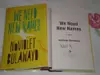
This is an incredibly frustrating book; it has so much it wants to say, and even some moving sections, and yet so much of it is so boring and so laborious and it never devotes enough time to the myriad topics it brings up so you end up thinking to yourself, “What the fuck, all of this at the same school?! What is this, Degrassi High???” which is not really a good comparison because that's a Canadian show and this is all about ~~America~~. Still, it's like Bulawayo made a list of every single social issue in Zimbabwe and the United States and decided to cram them all into one book, narrated by one young character, Darling. It comes across as implausible, so much so that it really ends up just as eye-rolling as Degrassi.
And it's so infuriating because as I said this novel has some really good parts, parts that make you know it could have been so much better. The good news is that the best parts have nothing to do with the plot of the novel, not referencing the characters at all, so they can be (and should be) read in isolation: chapters 10 and 16 are beautiful and poetic, on the theme of the exodus from Zimbabwe and the hardships of life abroad. There's also some good stuff in the other chapters, but they're all mixed up with less good stuff, so you can't look at them in isolation the same way.
The other aspect to this book I liked was the way Darling's voice changed over time. At the beginning of the novel she's a ten-year-old kid living in a Zimbabwean slum after the demolition of her “real home”; by the end she's a teenage indocumentada in Michigan, and has lost all the vibrancy and enthusiasm with which she began her story. It's a subtle progression, and very well done.
It's too bad these things were let down by other aspects of the book. Each chapter is more or less a self-contained story, so you have bizarre things like Darling's father returning from South Africa, dying of AIDS, then never getting mentioned again once his chapter is over. The first half of the book (before chapter 10, the brilliant bridge) follows her life in Zimbabwe, the second half her life in America. Each is characterised by spending long periods of time describing very mundane, boring things in agonising detail, bringing up a very weighty issue and not giving anywhere near enough time to developing it, then returning to mundanity, over and over again. In the “America” half, there is also a kind of revolting chapter where Darling and her friends watch porn including a snuff film and that has to be described, but then in the middle of this revolting chapter is an important and powerful section where Darling ruminates on how hard she finds it to keep in touch with her friends back home... I really liked that section, but why did it have to be bookended with the gross porn descriptions?
Hopefully I've conveyed my frustration enough. This has potential, but it's squandered and I came away disappointed. Some of the reviews of this book, where people have taken the ideas presented here and run with them, I liked much better than the book itself. It has at least increased the urgency in my mind of reading Chinua Achebe's Things Fall Apart, as it's yet another book that makes extensive reference to that.
This is an incredibly frustrating book; it has so much it wants to say, and even some moving sections, and yet so much of it is so boring and so laborious and it never devotes enough time to the myriad topics it brings up so you end up thinking to yourself, “What the fuck, all of this at the same school?! What is this, Degrassi High???” which is not really a good comparison because that's a Canadian show and this is all about ~~America~~. Still, it's like Bulawayo made a list of every single social issue in Zimbabwe and the United States and decided to cram them all into one book, narrated by one young character, Darling. It comes across as implausible, so much so that it really ends up just as eye-rolling as Degrassi.
And it's so infuriating because as I said this novel has some really good parts, parts that make you know it could have been so much better. The good news is that the best parts have nothing to do with the plot of the novel, not referencing the characters at all, so they can be (and should be) read in isolation: chapters 10 and 16 are beautiful and poetic, on the theme of the exodus from Zimbabwe and the hardships of life abroad. There's also some good stuff in the other chapters, but they're all mixed up with less good stuff, so you can't look at them in isolation the same way.
The other aspect to this book I liked was the way Darling's voice changed over time. At the beginning of the novel she's a ten-year-old kid living in a Zimbabwean slum after the demolition of her “real home”; by the end she's a teenage indocumentada in Michigan, and has lost all the vibrancy and enthusiasm with which she began her story. It's a subtle progression, and very well done.
It's too bad these things were let down by other aspects of the book. Each chapter is more or less a self-contained story, so you have bizarre things like Darling's father returning from South Africa, dying of AIDS, then never getting mentioned again once his chapter is over. The first half of the book (before chapter 10, the brilliant bridge) follows her life in Zimbabwe, the second half her life in America. Each is characterised by spending long periods of time describing very mundane, boring things in agonising detail, bringing up a very weighty issue and not giving anywhere near enough time to developing it, then returning to mundanity, over and over again. In the “America” half, there is also a kind of revolting chapter where Darling and her friends watch porn including a snuff film and that has to be described, but then in the middle of this revolting chapter is an important and powerful section where Darling ruminates on how hard she finds it to keep in touch with her friends back home... I really liked that section, but why did it have to be bookended with the gross porn descriptions?
Hopefully I've conveyed my frustration enough. This has potential, but it's squandered and I came away disappointed. Some of the reviews of this book, where people have taken the ideas presented here and run with them, I liked much better than the book itself. It has at least increased the urgency in my mind of reading Chinua Achebe's Things Fall Apart, as it's yet another book that makes extensive reference to that.

As a book, this was exactly like playing a video game where you die constantly and have to keep going back to the last save point until you can do it right. For the first fifth of the book or so, the “save point” was actually just the start of the story, so I think I must have read about Ursula's birth an odd dozen times (plus a couple of extra times later in the book). In video games this usually leads to a sense of frustration (to say the least) and so it was at the beginning here, too. Especially when the child Ursula managed to get herself killed in some particularly stupid way, and forced another start over...
Once Ursula made it to adulthood though, the book got interesting. At this point the book really started to speculate about the question, “If there was something in your life that hadn't happened, or been different from what it was, how would it have changed the rest of your life?” I liked the way that, after being murdered by an abusive husband in one timeline, the "save point" wasn't the moment she met that man but the moment she was raped by her brother's friend years earlier – that rape having destroyed her self-confidence and, ultimately, leading her to allow herself to be seduced by this abuser. These timelines see her living through the London Blitz, the weeks in Berlin before the Soviets march through, again and again leading to her deaths. Once she manages to survive through to retirement age (interestingly, in a timeline that sees her spouseless and childless), it's like she's “won the game” and is able to start again with a better recollection of all the lives that have gone before.
That's the point where things get weird though, because she uses all that experience from her past lives to decide she should kill Hitler, which is a bit kitsch and a concept probably ruined for me by the Doctor Who episode “Let's Kill Hitler”. And many other time-travel-themed works of fiction that have come up with the same idea. Anyway, she also decides she has to kill herself in the life she decides to do this, even though she was totally young enough to start studying German IN THAT LIFETIME. It irked me that the result of finishing a life “successfully” is that she starts to regard all the people around her as less real, I suppose.
I don't want to completely ruin the ending, but it was a bit disappointing, I thought.
Anyway. Evidently, it was a kind of experimental and strange book and I liked it – I was always motivated to keep reading it – even if I couldn't love it. I must say I wouldn't have read a straight historical novel that went through just one of those timelines, because I have read enough novels about bourgeois English people for the duration of my entire life and I usually find them pretty snoozeworthy, but this had enough of an original spin that I got into it. So all in all... good and readable but not brilliant.
As a book, this was exactly like playing a video game where you die constantly and have to keep going back to the last save point until you can do it right. For the first fifth of the book or so, the “save point” was actually just the start of the story, so I think I must have read about Ursula's birth an odd dozen times (plus a couple of extra times later in the book). In video games this usually leads to a sense of frustration (to say the least) and so it was at the beginning here, too. Especially when the child Ursula managed to get herself killed in some particularly stupid way, and forced another start over...
Once Ursula made it to adulthood though, the book got interesting. At this point the book really started to speculate about the question, “If there was something in your life that hadn't happened, or been different from what it was, how would it have changed the rest of your life?” I liked the way that, after being murdered by an abusive husband in one timeline, the "save point" wasn't the moment she met that man but the moment she was raped by her brother's friend years earlier – that rape having destroyed her self-confidence and, ultimately, leading her to allow herself to be seduced by this abuser. These timelines see her living through the London Blitz, the weeks in Berlin before the Soviets march through, again and again leading to her deaths. Once she manages to survive through to retirement age (interestingly, in a timeline that sees her spouseless and childless), it's like she's “won the game” and is able to start again with a better recollection of all the lives that have gone before.
That's the point where things get weird though, because she uses all that experience from her past lives to decide she should kill Hitler, which is a bit kitsch and a concept probably ruined for me by the Doctor Who episode “Let's Kill Hitler”. And many other time-travel-themed works of fiction that have come up with the same idea. Anyway, she also decides she has to kill herself in the life she decides to do this, even though she was totally young enough to start studying German IN THAT LIFETIME. It irked me that the result of finishing a life “successfully” is that she starts to regard all the people around her as less real, I suppose.
I don't want to completely ruin the ending, but it was a bit disappointing, I thought.
Anyway. Evidently, it was a kind of experimental and strange book and I liked it – I was always motivated to keep reading it – even if I couldn't love it. I must say I wouldn't have read a straight historical novel that went through just one of those timelines, because I have read enough novels about bourgeois English people for the duration of my entire life and I usually find them pretty snoozeworthy, but this had enough of an original spin that I got into it. So all in all... good and readable but not brilliant.

It's easy to see how and why this has become one of the most influential novels in English-language African literature. It's been referenced so much in so many novels I've read set afterwards, in the post-colonial era, and I can see why even if the overuse of the phrase “things fell apart” in [b:We Need New Names 15852479 We Need New Names NoViolet Bulawayo https://d202m5krfqbpi5.cloudfront.net/books/1352225506s/15852479.jpg 21600154] was a bit irritating. It's a brilliant precursor to all of those novels, honest and sombre. I feel that a lot of people who didn't like it have oversimplified it; it makes them angry that he acknowledges the problems (in particular, the intensely patriarchal structures) in Igbo society before colonisation, and some of them have gone so far as to say doing so glorifies the colonists. I didn't see this at all. The colonists are arrogant and brutal, but at the same time there were reasons why people gravitated towards their ideological servants, the missionaries... people like Nwoye, who is furious that his father killed his best friend, and a woman who keeps giving birth to twins that tradition dictates she must leave to die. It's simultaneously mournful for what was lost and truthful enough to say that what existed was no utopia. Highly recommended.
It's easy to see how and why this has become one of the most influential novels in English-language African literature. It's been referenced so much in so many novels I've read set afterwards, in the post-colonial era, and I can see why even if the overuse of the phrase “things fell apart” in [b:We Need New Names 15852479 We Need New Names NoViolet Bulawayo https://d202m5krfqbpi5.cloudfront.net/books/1352225506s/15852479.jpg 21600154] was a bit irritating. It's a brilliant precursor to all of those novels, honest and sombre. I feel that a lot of people who didn't like it have oversimplified it; it makes them angry that he acknowledges the problems (in particular, the intensely patriarchal structures) in Igbo society before colonisation, and some of them have gone so far as to say doing so glorifies the colonists. I didn't see this at all. The colonists are arrogant and brutal, but at the same time there were reasons why people gravitated towards their ideological servants, the missionaries... people like Nwoye, who is furious that his father killed his best friend, and a woman who keeps giving birth to twins that tradition dictates she must leave to die. It's simultaneously mournful for what was lost and truthful enough to say that what existed was no utopia. Highly recommended.

I have to give this two stars and no more because, ultimately, I don't think it held together very well. Making Aurora Del Valle the narrator, rather than opting for a third-person narration like in [b:Daughter of Fortune|16527|Daughter of Fortune|Isabel Allende|https://d202m5krfqbpi5.cloudfront.net/books/1299666780s/16527.jpg|3471915], left Aurora narrating lots of things she wasn't present for and has no realistic way of knowing the details of. It didn't work.
And furthermore, Aurora Del Valle just isn't that interesting. She's surrounded by interesting people, but she doesn't have much going for her herself – only her love of photography which didn't interest me at all. She's no Eliza Sommers.
I liked some things about this book. I liked that we finally got to see Eliza Sommers and Tao Chi'en consummate their love, although it would have been nice to see at the end of the last book. I got invested in hating Matías Del Valle (Aurora's biological father), was pleased to see him meet his doom, and I liked Severo and Nivea. I don't remember [b:The House of the Spirits|9328|The House of the Spirits|Isabel Allende|https://d202m5krfqbpi5.cloudfront.net/books/1358615501s/9328.jpg|3374404] very well, so it took a long time before I remembered what role they played in that book, but I was almost tempted to put it on the “to reread” list to see what happened to them. Maybe one day.
I have to say that this book was better as a sequel to Daughter of Fortune than as a prequel to House of the Spirits. The latter draws on the magical realism tradition, unlike the other two, which are straight historical fiction. This leaves Aurora, in this book, having to say things like, “and then the strangest thing happened, wouldn't you believe it, and this child had green skin! if only I'd had my camera...” It stood out and bothered me, I guess.
I did read this in Spanish, but I was too lazy to review it in that language (mostly I got stuck on how to translate “held together” from the first sentence of this review, so I gave up). The Spanish wasn't too tricky, although as always, it slowed down my reading. Overall, you might as well read it if you finished Daughter of Fortune and feel cheated by the ending, but otherwise it's not that great.
I have to give this two stars and no more because, ultimately, I don't think it held together very well. Making Aurora Del Valle the narrator, rather than opting for a third-person narration like in [b:Daughter of Fortune|16527|Daughter of Fortune|Isabel Allende|https://d202m5krfqbpi5.cloudfront.net/books/1299666780s/16527.jpg|3471915], left Aurora narrating lots of things she wasn't present for and has no realistic way of knowing the details of. It didn't work.
And furthermore, Aurora Del Valle just isn't that interesting. She's surrounded by interesting people, but she doesn't have much going for her herself – only her love of photography which didn't interest me at all. She's no Eliza Sommers.
I liked some things about this book. I liked that we finally got to see Eliza Sommers and Tao Chi'en consummate their love, although it would have been nice to see at the end of the last book. I got invested in hating Matías Del Valle (Aurora's biological father), was pleased to see him meet his doom, and I liked Severo and Nivea. I don't remember [b:The House of the Spirits|9328|The House of the Spirits|Isabel Allende|https://d202m5krfqbpi5.cloudfront.net/books/1358615501s/9328.jpg|3374404] very well, so it took a long time before I remembered what role they played in that book, but I was almost tempted to put it on the “to reread” list to see what happened to them. Maybe one day.
I have to say that this book was better as a sequel to Daughter of Fortune than as a prequel to House of the Spirits. The latter draws on the magical realism tradition, unlike the other two, which are straight historical fiction. This leaves Aurora, in this book, having to say things like, “and then the strangest thing happened, wouldn't you believe it, and this child had green skin! if only I'd had my camera...” It stood out and bothered me, I guess.
I did read this in Spanish, but I was too lazy to review it in that language (mostly I got stuck on how to translate “held together” from the first sentence of this review, so I gave up). The Spanish wasn't too tricky, although as always, it slowed down my reading. Overall, you might as well read it if you finished Daughter of Fortune and feel cheated by the ending, but otherwise it's not that great.


Una lectura profundamente incómoda. Aquí, pintor Juan Pablo Castel relata la historia de su relación con la mujer que mató, María Iribarne. Él es completamente demente, y tenía que preguntarme porqué María no se quedaba muy, muy lejos de él - porque le gustaba su pintura, ¿en serio? Pero supongo que no habría ninguna novela si ella hubiera tenido algún instinto de conservación.
Todavía, me gustaba el libro. Es una novela corta, y el lenguaje resultó bastante fácil para mí. Estoy feliz no tener que pasar más tiempo en el mente de este narrador trastornado, pero no me arrepiento de haber hacerlo.
Una lectura profundamente incómoda. Aquí, pintor Juan Pablo Castel relata la historia de su relación con la mujer que mató, María Iribarne. Él es completamente demente, y tenía que preguntarme porqué María no se quedaba muy, muy lejos de él - porque le gustaba su pintura, ¿en serio? Pero supongo que no habría ninguna novela si ella hubiera tenido algún instinto de conservación.
Todavía, me gustaba el libro. Es una novela corta, y el lenguaje resultó bastante fácil para mí. Estoy feliz no tener que pasar más tiempo en el mente de este narrador trastornado, pero no me arrepiento de haber hacerlo.

Harsh rating, I know. The main problem I had with Embassytown is that the first half was very slow, and I never really got sucked in like I did with [b:Perdido Street Station 68494 Perdido Street Station (Bas-Lag, #1) China Miéville https://d.gr-assets.com/books/1393537963s/68494.jpg 3221410] which had a similar problem.The world-building wasn't as intricate, even though it was pretty damn intricate compared to a lot of other fantasy/science fiction writers' works. The Ariekei in particular, despite being the centre of the book, are so underdeveloped. The reader ends up knowing nothing about their culture or social structures. This might have been because the narrator of the book is a part of the settler-colonial society, which (having parallels to the British Empire) doesn't care so much about the cultures of the colonised. But I still thought this aspect was pretty weak, a cop-out.But I couldn't get very invested in the human characters, either. The only one who really tugged my heartstrings at any time was Vin, and only because he was so devastated that Avice hadn't been able to distinguish him, who loved her, from his doppel Cal, who had never even touched her in bed (as she afterwards realised). Avice was kind of cool in theory but didn't seem that way in practice. I spent most of the book desperately wishing it was about her travels through space instead of about her being stuck on this boring, conniving backwater. Those travels sounded more interesting. And her husband Scile was a dickhead too.I guess this book is very interesting if you don't care to get emotionally invested in any characters and you just want to read about high-brow concepts (a “language” that has never developed the symbolic nature of the sign??? how) in an applied, fictional form. It wasn't for me, though. In this light, I'm not sure what Miéville I'll aim to read next; maybe [b:Kraken 6931246 Kraken China Miéville https://d.gr-assets.com/books/1320551670s/6931246.jpg 8814204]. Once I've put a dent in what's already on my “to read” list, though!
Harsh rating, I know. The main problem I had with Embassytown is that the first half was very slow, and I never really got sucked in like I did with [b:Perdido Street Station 68494 Perdido Street Station (Bas-Lag, #1) China Miéville https://d.gr-assets.com/books/1393537963s/68494.jpg 3221410] which had a similar problem.The world-building wasn't as intricate, even though it was pretty damn intricate compared to a lot of other fantasy/science fiction writers' works. The Ariekei in particular, despite being the centre of the book, are so underdeveloped. The reader ends up knowing nothing about their culture or social structures. This might have been because the narrator of the book is a part of the settler-colonial society, which (having parallels to the British Empire) doesn't care so much about the cultures of the colonised. But I still thought this aspect was pretty weak, a cop-out.But I couldn't get very invested in the human characters, either. The only one who really tugged my heartstrings at any time was Vin, and only because he was so devastated that Avice hadn't been able to distinguish him, who loved her, from his doppel Cal, who had never even touched her in bed (as she afterwards realised). Avice was kind of cool in theory but didn't seem that way in practice. I spent most of the book desperately wishing it was about her travels through space instead of about her being stuck on this boring, conniving backwater. Those travels sounded more interesting. And her husband Scile was a dickhead too.I guess this book is very interesting if you don't care to get emotionally invested in any characters and you just want to read about high-brow concepts (a “language” that has never developed the symbolic nature of the sign??? how) in an applied, fictional form. It wasn't for me, though. In this light, I'm not sure what Miéville I'll aim to read next; maybe [b:Kraken 6931246 Kraken China Miéville https://d.gr-assets.com/books/1320551670s/6931246.jpg 8814204]. Once I've put a dent in what's already on my “to read” list, though!

This is another of those books that a lot of people studied at school, but not me. It was recently really cheap in the Kindle Store so I grabbed it. It turned out to be a really nice little book, although I'm not sure there was much about it to study at school (so probably a good thing I didn't read it there, or I would've ended up hating it).
The novel has a couple of different threads – one following the protagonist, Stanley Yelnats, at the hellish Green Lake Camp; another following his family history; and a third that really ties in with the second one that follows the decline of the long-gone town that the camp stands on the site of. The three threads all tie together nicely at the end, and the character of Zero really tugged on my heart strings.
This is yet another of those books that really deserves three and a half. It's a lovely children's book, but it wasn't as meaningful to me as an adult as it might've been if I'd read it when I was younger (without studying it at school). So, three it is. But I still really recommend it.
This is another of those books that a lot of people studied at school, but not me. It was recently really cheap in the Kindle Store so I grabbed it. It turned out to be a really nice little book, although I'm not sure there was much about it to study at school (so probably a good thing I didn't read it there, or I would've ended up hating it).
The novel has a couple of different threads – one following the protagonist, Stanley Yelnats, at the hellish Green Lake Camp; another following his family history; and a third that really ties in with the second one that follows the decline of the long-gone town that the camp stands on the site of. The three threads all tie together nicely at the end, and the character of Zero really tugged on my heart strings.
This is yet another of those books that really deserves three and a half. It's a lovely children's book, but it wasn't as meaningful to me as an adult as it might've been if I'd read it when I was younger (without studying it at school). So, three it is. But I still really recommend it.


There's usually a comforting kind of consistency with Kurt Vonnegut's books – they're never my favourites, with the characterisation being too shallow for that – but they're witty, left-wing, and usually just kinda fun.
Unfortunately, I didn't find this one as fun. I kept getting the characters mixed up and then it all got a bit silly at the end.
There's usually a comforting kind of consistency with Kurt Vonnegut's books – they're never my favourites, with the characterisation being too shallow for that – but they're witty, left-wing, and usually just kinda fun.
Unfortunately, I didn't find this one as fun. I kept getting the characters mixed up and then it all got a bit silly at the end.

I'd like to give this about three and a half. It was an intriguing mystery, but a little slow and I seriously hate this author's habit of writing “phonetically” the dialogue of characters who are lower-class. It's just so patronising, even though I'm sure that's not the intent.
I'd like to give this about three and a half. It was an intriguing mystery, but a little slow and I seriously hate this author's habit of writing “phonetically” the dialogue of characters who are lower-class. It's just so patronising, even though I'm sure that's not the intent.

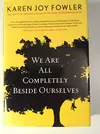
The light-hearted, cheerful tone of this book belies the content, which is (in many parts) very dark. It deals with the serious issue of how our society treats animals; it also has a lot of comic relief that prevents this book becoming simply depressing. Overall, I thought it was brilliant, although if you don't care about animals then the entire point of the book will be lost on you.
The light-hearted, cheerful tone of this book belies the content, which is (in many parts) very dark. It deals with the serious issue of how our society treats animals; it also has a lot of comic relief that prevents this book becoming simply depressing. Overall, I thought it was brilliant, although if you don't care about animals then the entire point of the book will be lost on you.
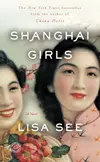
For me this novel treads a lot of the same ground as [b:China Dolls 18404427 China Dolls Lisa See https://d.gr-assets.com/books/1405290827s/18404427.jpg 26038319] (except that China Dolls was actually published later, even if I read it before), but is a lot more mature. It takes place in the same time period, also focuses on the Chinese community in California, and both novels discuss (to varying degrees) the Japanese invasion of China and Chinese involvement in the US entertainment industry. So, if you like one, you will probably appreciate the other.As I implied, I preferred this one. While the novel begins with Pearl (the narrator) and May (her sister) being young, immature and carefree in Shanghai, the narration “grows up” sharply as Pearl does. There is a lot less stupid “boy drama”. While I gave China Dolls four stars with some reservations, Shanghai Girls has fully earnt them.
For me this novel treads a lot of the same ground as [b:China Dolls 18404427 China Dolls Lisa See https://d.gr-assets.com/books/1405290827s/18404427.jpg 26038319] (except that China Dolls was actually published later, even if I read it before), but is a lot more mature. It takes place in the same time period, also focuses on the Chinese community in California, and both novels discuss (to varying degrees) the Japanese invasion of China and Chinese involvement in the US entertainment industry. So, if you like one, you will probably appreciate the other.As I implied, I preferred this one. While the novel begins with Pearl (the narrator) and May (her sister) being young, immature and carefree in Shanghai, the narration “grows up” sharply as Pearl does. There is a lot less stupid “boy drama”. While I gave China Dolls four stars with some reservations, Shanghai Girls has fully earnt them.

This is the first book I've read in months that I've actually enjoyed reading and wanted to continue with. So, that's exciting. Unfortunately, I have to agree with some of the other reviewers' criticisms: many of the most important events in the book don't actually get scenes, but are referred to in passing after the novel skips forward in time. There is a lot of “telling”, rather than showing. Then sections of it seem like a sly wink at that “NYC academics who are also novelists” milieu, as if they were really the intended audience. (It's not as bad on this front as novels like [b:Americanah 15796700 Americanah Chimamanda Ngozi Adichie https://d.gr-assets.com/books/1356654499s/15796700.jpg 21519538], but just in parts...) This combines to make a novel that is nice to read, but once you finish you realise it didn't really have much of a plot. I vastly preferred [b:The Lowland 17262100 The Lowland Jhumpa Lahiri https://d.gr-assets.com/books/1366930267s/17262100.jpg 23858897] and recommend it to everyone who is considering reading this!
This is the first book I've read in months that I've actually enjoyed reading and wanted to continue with. So, that's exciting. Unfortunately, I have to agree with some of the other reviewers' criticisms: many of the most important events in the book don't actually get scenes, but are referred to in passing after the novel skips forward in time. There is a lot of “telling”, rather than showing. Then sections of it seem like a sly wink at that “NYC academics who are also novelists” milieu, as if they were really the intended audience. (It's not as bad on this front as novels like [b:Americanah 15796700 Americanah Chimamanda Ngozi Adichie https://d.gr-assets.com/books/1356654499s/15796700.jpg 21519538], but just in parts...) This combines to make a novel that is nice to read, but once you finish you realise it didn't really have much of a plot. I vastly preferred [b:The Lowland 17262100 The Lowland Jhumpa Lahiri https://d.gr-assets.com/books/1366930267s/17262100.jpg 23858897] and recommend it to everyone who is considering reading this!


Compared to its predecessor, [b:A Darker Shade of Magic 22055262 A Darker Shade of Magic (Shades of Magic, #1) V.E. Schwab https://d.gr-assets.com/books/1400322851s/22055262.jpg 40098252], A Gathering of Shadows is paced much more slowly, and yet provides an infinitely deeper look into the world of Red London. The descriptions of place are so vivid it's easy to become immersed, and the sheer depth of Schwab's creation - languages, geography, history - are impressive without being distracting (you know, like some fantasy books that are more vehicles to show off worlds than narratives).I found this book more compelling than the first in the series; I think I felt closer to the characters. (Love ya, Captain Alucard.) However, while I felt A Darker Shade of Magic never lagged, I felt that this book sometimes did. The Essen Tasch (Element Games) in particular seemed to have a bit too much page time. Not way too much page time, just a bit.Overall, A Gathering of Shadows has enabled me to fall in love with this world and its characters. Bring on the finale!
Compared to its predecessor, [b:A Darker Shade of Magic 22055262 A Darker Shade of Magic (Shades of Magic, #1) V.E. Schwab https://d.gr-assets.com/books/1400322851s/22055262.jpg 40098252], A Gathering of Shadows is paced much more slowly, and yet provides an infinitely deeper look into the world of Red London. The descriptions of place are so vivid it's easy to become immersed, and the sheer depth of Schwab's creation - languages, geography, history - are impressive without being distracting (you know, like some fantasy books that are more vehicles to show off worlds than narratives).I found this book more compelling than the first in the series; I think I felt closer to the characters. (Love ya, Captain Alucard.) However, while I felt A Darker Shade of Magic never lagged, I felt that this book sometimes did. The Essen Tasch (Element Games) in particular seemed to have a bit too much page time. Not way too much page time, just a bit.Overall, A Gathering of Shadows has enabled me to fall in love with this world and its characters. Bring on the finale!
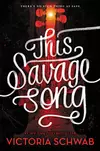
Clearly, I did not really like this book.It's sort of disappointing. I'd previously read three of [a:V.E. Schwab 7168230 V.E. Schwab https://images.gr-assets.com/authors/1511218938p2/7168230.jpg]'s books (Vicious and the first two parts of her Shades of Magic trilogy), and thought they were uniformly great. As for this one... not so much. To be clear: I started reading this book in late 2016. I found it so boring, and dreaded reading it so much, that I didn't open my Kindle again for over a year. Once I did, I didn't remember anything about the story and had to start again. I still didn't find it interesting. In the end I only pushed through because I wanted to move on to other books. I didn't hate it, though. It even picked up in the second half. I just didn't like it very much.So, what do we have in this book? We have our protagonists: Kate Harker, a teenage delinquent who deep down inside only wants the love of her dad. We have August Flynn, a member of a supernatural “species” called the Sunai. (I did like the concept and execution of the Sunai.) We have our setting, a city divided in two, one half run by Kate's ruthless dad, the other by August's not-so-ruthless family. Then there's a bunch of monsters, who up till now have apparently been under control... but they're getting restless.So, here lies the problem: none of this really grabbed me. Perhaps I was spoilt by the depth and intrigue of the four Londons, but this city... it didn't seem well fleshed-out. The Sunai were good, but the other two monster species – the Malchai and the Corsai – made no real impression on me; I'm not even sure what the difference was between them. Kate didn't seem much more but an archetypal “rebel girl with daddy issues”, while August had what you could fairly describe as a subtle personality.As I say, the book wasn't all terrible. Despite the dullness of every school scene (one of them was literally just a geography class where the teacher gave a whole bunch of exposition about the city's surrounds... which I immediately forgot and never needed), there were some good moments of conflict in the second half of the novel. Kate's arc was satisfying. I don't know if I could be bothered ever reading the sequel, but it had its good points. I just wouldn't have read it in the first place, if I had the choice to do it again.
Clearly, I did not really like this book.It's sort of disappointing. I'd previously read three of [a:V.E. Schwab 7168230 V.E. Schwab https://images.gr-assets.com/authors/1511218938p2/7168230.jpg]'s books (Vicious and the first two parts of her Shades of Magic trilogy), and thought they were uniformly great. As for this one... not so much. To be clear: I started reading this book in late 2016. I found it so boring, and dreaded reading it so much, that I didn't open my Kindle again for over a year. Once I did, I didn't remember anything about the story and had to start again. I still didn't find it interesting. In the end I only pushed through because I wanted to move on to other books. I didn't hate it, though. It even picked up in the second half. I just didn't like it very much.So, what do we have in this book? We have our protagonists: Kate Harker, a teenage delinquent who deep down inside only wants the love of her dad. We have August Flynn, a member of a supernatural “species” called the Sunai. (I did like the concept and execution of the Sunai.) We have our setting, a city divided in two, one half run by Kate's ruthless dad, the other by August's not-so-ruthless family. Then there's a bunch of monsters, who up till now have apparently been under control... but they're getting restless.So, here lies the problem: none of this really grabbed me. Perhaps I was spoilt by the depth and intrigue of the four Londons, but this city... it didn't seem well fleshed-out. The Sunai were good, but the other two monster species – the Malchai and the Corsai – made no real impression on me; I'm not even sure what the difference was between them. Kate didn't seem much more but an archetypal “rebel girl with daddy issues”, while August had what you could fairly describe as a subtle personality.As I say, the book wasn't all terrible. Despite the dullness of every school scene (one of them was literally just a geography class where the teacher gave a whole bunch of exposition about the city's surrounds... which I immediately forgot and never needed), there were some good moments of conflict in the second half of the novel. Kate's arc was satisfying. I don't know if I could be bothered ever reading the sequel, but it had its good points. I just wouldn't have read it in the first place, if I had the choice to do it again.

There's a certain dreamlike quality about this book that makes it best read in one setting. Thankfully it's also fairly short (as I was starting, my Kindle estimated it'd take me two hours to reach the end), so it's doable. I read the first third of this book a bit at a time, and I found it hard to get into. The characters of Alice and Hatcher seemed rather closed-off and hard to get to know, and there was a lot of graphic, disturbing sexual violence. Like, we are talking creepy serial killer levels of perversion. I didn't get the impression that the author was including all of this because she thought it was titillating or edgy (quite the opposite, really – she dwelt more on the aftermath than the acts, and conveyed the horror well) but more to emphasise that this is well and truly a Crapsack World as well as to provide context for Alice's own experiences. Nonetheless, I was very guarded reading this book for a long time.
Once I decided I had a couple of hours free and would use them to read this book through to the end, my enjoyment of it increased immensely. Over the course of the novel, Alice and Hatcher – who had begun as prisoners in an old-timey insane asylum, having forgotten most of their lives from before – are filled in about the events missing from their memories and given a sense of purpose. Alice transforms from a confused, helpless young woman to a dedicated force of nature. Hatcher doesn't really change that much, but as Alice warms to him – and learns about his tragic past – so too does the reader. The novel follows them as they defeat a string of foes, conveniently led from one lair to the next by a series of irresistible clues, before finally encountering the Jabberwocky – the terrible villain whose reawakening led to their flight from the insane asylum in the first place. One subplot, that concerning Hatcher's daughter, is conveniently left unresolved to as to leave material for a sequel.
This book will not be to everyone's tastes. If you do not want to read a book where nearly every scene concerns rape, the fear of rape, or the aftermath of rape, you definitely should not read this book. On the other hand, if you enjoy seriously dark works of fiction, which examine the worst and cruellest sides of the human spirit, but nonetheless take the side of good people against evil... you may well like this. I would have given it three and a half stars, but since I can't I'm rounding up.
There's a certain dreamlike quality about this book that makes it best read in one setting. Thankfully it's also fairly short (as I was starting, my Kindle estimated it'd take me two hours to reach the end), so it's doable. I read the first third of this book a bit at a time, and I found it hard to get into. The characters of Alice and Hatcher seemed rather closed-off and hard to get to know, and there was a lot of graphic, disturbing sexual violence. Like, we are talking creepy serial killer levels of perversion. I didn't get the impression that the author was including all of this because she thought it was titillating or edgy (quite the opposite, really – she dwelt more on the aftermath than the acts, and conveyed the horror well) but more to emphasise that this is well and truly a Crapsack World as well as to provide context for Alice's own experiences. Nonetheless, I was very guarded reading this book for a long time.
Once I decided I had a couple of hours free and would use them to read this book through to the end, my enjoyment of it increased immensely. Over the course of the novel, Alice and Hatcher – who had begun as prisoners in an old-timey insane asylum, having forgotten most of their lives from before – are filled in about the events missing from their memories and given a sense of purpose. Alice transforms from a confused, helpless young woman to a dedicated force of nature. Hatcher doesn't really change that much, but as Alice warms to him – and learns about his tragic past – so too does the reader. The novel follows them as they defeat a string of foes, conveniently led from one lair to the next by a series of irresistible clues, before finally encountering the Jabberwocky – the terrible villain whose reawakening led to their flight from the insane asylum in the first place. One subplot, that concerning Hatcher's daughter, is conveniently left unresolved to as to leave material for a sequel.
This book will not be to everyone's tastes. If you do not want to read a book where nearly every scene concerns rape, the fear of rape, or the aftermath of rape, you definitely should not read this book. On the other hand, if you enjoy seriously dark works of fiction, which examine the worst and cruellest sides of the human spirit, but nonetheless take the side of good people against evil... you may well like this. I would have given it three and a half stars, but since I can't I'm rounding up.
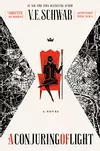
This novel had me seriously questioning my recollection of the first two novels. I remember thinking that they were so good, and then this one was just... somewhat mediocre.
Perhaps it was a terrible mistake to let so much time pass between reading the second and third books? By the time I started this one, I'd entirely forgotten that the previous book had ended on a cliffhanger, and I spent the first few chapters trying to remember what was going on. The characters didn't seem as compelling as I remembered them being. Other reviews have said that with the exceptions of Rhy and Holland, not a lot of character development goes on here, and that is true. Then between about 10%–60% of the way through the book, the plot progresses so slowly and it takes seemingly forever for the characters to decide what to do about the major problem facing them. Once they finally get an idea, they take detour after detour on their way to pursuing that idea. There are random chapters from the POV of minor characters who aren't even in the same London where the bulk of the action is happening, but a parallel one where nothing much is happening. It all just dragged so much, and it was hard to motivate myself to keep reading.
Then, from about that 60% mark, things started picking up. I wouldn't say I loved the book from that point on, but at least I felt engaged. I'd give this book 2.5 stars if Goodreads let me, but it doesn't really deserve a mere 2, so I'll round up.
I mean, there are good things about this book. The prose is high-quality. The system of magic is still interesting, although (and this might be because it's been two and a half years since I read the last instalment) I was never fully clear on what the actual limits were on what the main characters could do. You have a bit of ordinary, non-magical conflict between rival kingdoms in the world of Red London, which seemed a bit more interesting than the magical conflict, and exposed more interesting world-building. As I said before, Rhy goes through some interesting character development (considering he was never exactly my favourite character in this series), while Holland is just consistently this book's best character, from beginning to end. Lots of depth to him, darkness but also softness.
Overall, though, I feel relieved to have finally made it to the end of this book, and glad to have finished the series.
This novel had me seriously questioning my recollection of the first two novels. I remember thinking that they were so good, and then this one was just... somewhat mediocre.
Perhaps it was a terrible mistake to let so much time pass between reading the second and third books? By the time I started this one, I'd entirely forgotten that the previous book had ended on a cliffhanger, and I spent the first few chapters trying to remember what was going on. The characters didn't seem as compelling as I remembered them being. Other reviews have said that with the exceptions of Rhy and Holland, not a lot of character development goes on here, and that is true. Then between about 10%–60% of the way through the book, the plot progresses so slowly and it takes seemingly forever for the characters to decide what to do about the major problem facing them. Once they finally get an idea, they take detour after detour on their way to pursuing that idea. There are random chapters from the POV of minor characters who aren't even in the same London where the bulk of the action is happening, but a parallel one where nothing much is happening. It all just dragged so much, and it was hard to motivate myself to keep reading.
Then, from about that 60% mark, things started picking up. I wouldn't say I loved the book from that point on, but at least I felt engaged. I'd give this book 2.5 stars if Goodreads let me, but it doesn't really deserve a mere 2, so I'll round up.
I mean, there are good things about this book. The prose is high-quality. The system of magic is still interesting, although (and this might be because it's been two and a half years since I read the last instalment) I was never fully clear on what the actual limits were on what the main characters could do. You have a bit of ordinary, non-magical conflict between rival kingdoms in the world of Red London, which seemed a bit more interesting than the magical conflict, and exposed more interesting world-building. As I said before, Rhy goes through some interesting character development (considering he was never exactly my favourite character in this series), while Holland is just consistently this book's best character, from beginning to end. Lots of depth to him, darkness but also softness.
Overall, though, I feel relieved to have finally made it to the end of this book, and glad to have finished the series.