
Jessica


Dawn is, in many parts, an uncomfortable book to read. Butler really does not want to give the reader any easy answers, but instead makes us grapple with some tough dilemmas. The prose is deceptively easy to read, because the real struggle is trying to work out who you're “barracking for”, or what you want to happen.Dawn is set in the aftermath of an all-consuming war which has wiped out human life on Earth. Lilith, the protagonist, wakes up aboard a spaceship – not for the first time – on which she's been woken up and put to sleep, and woken up and put to sleep, over and over again and put through a range of weird experiences over these bouts of wakefulness. At last, her captors present themselves to her, and explain what's happening.Her captors are aliens, a species known as the Oankali. They perpetuate their own species through genetic engineering, basically hybridising themselves with other species they encounter in the galaxy. Seeing that humanity was just about the wipe itself out anyway, they've rescued as many of the survivors as they could, and now plan to splice those humans' DNA with Oankali DNA and (eventually) set those humans free to repopulate the Earth. Through their tests, they've determined that Lilith has the ideal personality to learn all about the Oankali and their culture, teach other survivors about the mission, and ultimately lead a new human society on Earth.There is a fundamental flaw in the Oankali's plans, of course, which is that Lilith and pretty much every other human in the book abhors the idea of having their DNA tampered with and producing not-fully-human offspring. Although the Oankali are kind and well-intentioned in many ways, they refuse point-blank to consider the humans' autonomy in this regard, no matter how many times Lilith tries to explain things to them.But as I said before, Butler couldn't make things as binary as “Oankali evil meddlers, humans good freedom-seekers”. Many of the humans who appear in this book are actually not very nice – there are incidents of rape and murder – while most of the Oankali are very caring, if prone to patronising behaviour. Oankali society is communal and theoretically non-hierarchical; extended Oankali names convey how you're connected to the broader society. They're far more disgusted by violence than humans are, and eat exclusively vegetarian diets. They have the ability to heal humans' wounds through touch (and give them pleasurable sex-analogue experiences); it confounds them that most humans find this alarming and terrifying, when in their minds they're only trying to do good.But the overarching point that Butler seems to be making is that even if Oankali society is “better” than humans', humans must be free to decide their own fate without outside interference – even if, as the Oankali point out, that decision was apparently to wipe out the entire species in nuclear war. That position seems a bit dubious, but on the other hand you can't deny that the forced impregnation, DNA tampering, etc. that the Oankali go ahead with is icky, too (and has a real-life parallel to chattel slavery, when slavers felt entitled to treat other people as livestock and “breed them” accordingly). Lilith tries to take a middle position, where she's on good terms with individual Oankali and helps them out wherever possible, while still planning to bail on them and vanish into the jungle as soon as they let her loose on Earth. Most of the other humans hate this strategy though for being, in their view, too soft.This is a many-layered story; there is also commentary on gender, the difficulty of falling in love in an environment where you have little control over your life, and more. The dominant themes are shared in common with other Butler books that I've read, like Anyanwu's efforts to escape Doro's clutches in [b:Wild Seed 52318 Wild Seed (Patternmaster, #1) Octavia E. Butler https://i.gr-assets.com/images/S/compressed.photo.goodreads.com/books/1388462753l/52318.SY75.jpg 1330000] or Teray's conflict between being compromised but safe or free but endangered in [b:Patternmaster 116256 Patternmaster (Patternmaster, #4) Octavia E. Butler https://i.gr-assets.com/images/S/compressed.photo.goodreads.com/books/1389456750l/116256.SY75.jpg 1119636]. That said, the reason I've rated this book lower than those two is mainly that I was not so emotionally invested in it. Intellectually invested, sure, but the characterisation wasn't as gripping. Still, this might improve over the rest of the trilogy, and I'm still interested to see how things play out from here.
Dawn is, in many parts, an uncomfortable book to read. Butler really does not want to give the reader any easy answers, but instead makes us grapple with some tough dilemmas. The prose is deceptively easy to read, because the real struggle is trying to work out who you're “barracking for”, or what you want to happen.Dawn is set in the aftermath of an all-consuming war which has wiped out human life on Earth. Lilith, the protagonist, wakes up aboard a spaceship – not for the first time – on which she's been woken up and put to sleep, and woken up and put to sleep, over and over again and put through a range of weird experiences over these bouts of wakefulness. At last, her captors present themselves to her, and explain what's happening.Her captors are aliens, a species known as the Oankali. They perpetuate their own species through genetic engineering, basically hybridising themselves with other species they encounter in the galaxy. Seeing that humanity was just about the wipe itself out anyway, they've rescued as many of the survivors as they could, and now plan to splice those humans' DNA with Oankali DNA and (eventually) set those humans free to repopulate the Earth. Through their tests, they've determined that Lilith has the ideal personality to learn all about the Oankali and their culture, teach other survivors about the mission, and ultimately lead a new human society on Earth.There is a fundamental flaw in the Oankali's plans, of course, which is that Lilith and pretty much every other human in the book abhors the idea of having their DNA tampered with and producing not-fully-human offspring. Although the Oankali are kind and well-intentioned in many ways, they refuse point-blank to consider the humans' autonomy in this regard, no matter how many times Lilith tries to explain things to them.But as I said before, Butler couldn't make things as binary as “Oankali evil meddlers, humans good freedom-seekers”. Many of the humans who appear in this book are actually not very nice – there are incidents of rape and murder – while most of the Oankali are very caring, if prone to patronising behaviour. Oankali society is communal and theoretically non-hierarchical; extended Oankali names convey how you're connected to the broader society. They're far more disgusted by violence than humans are, and eat exclusively vegetarian diets. They have the ability to heal humans' wounds through touch (and give them pleasurable sex-analogue experiences); it confounds them that most humans find this alarming and terrifying, when in their minds they're only trying to do good.But the overarching point that Butler seems to be making is that even if Oankali society is “better” than humans', humans must be free to decide their own fate without outside interference – even if, as the Oankali point out, that decision was apparently to wipe out the entire species in nuclear war. That position seems a bit dubious, but on the other hand you can't deny that the forced impregnation, DNA tampering, etc. that the Oankali go ahead with is icky, too (and has a real-life parallel to chattel slavery, when slavers felt entitled to treat other people as livestock and “breed them” accordingly). Lilith tries to take a middle position, where she's on good terms with individual Oankali and helps them out wherever possible, while still planning to bail on them and vanish into the jungle as soon as they let her loose on Earth. Most of the other humans hate this strategy though for being, in their view, too soft.This is a many-layered story; there is also commentary on gender, the difficulty of falling in love in an environment where you have little control over your life, and more. The dominant themes are shared in common with other Butler books that I've read, like Anyanwu's efforts to escape Doro's clutches in [b:Wild Seed 52318 Wild Seed (Patternmaster, #1) Octavia E. Butler https://i.gr-assets.com/images/S/compressed.photo.goodreads.com/books/1388462753l/52318.SY75.jpg 1330000] or Teray's conflict between being compromised but safe or free but endangered in [b:Patternmaster 116256 Patternmaster (Patternmaster, #4) Octavia E. Butler https://i.gr-assets.com/images/S/compressed.photo.goodreads.com/books/1389456750l/116256.SY75.jpg 1119636]. That said, the reason I've rated this book lower than those two is mainly that I was not so emotionally invested in it. Intellectually invested, sure, but the characterisation wasn't as gripping. Still, this might improve over the rest of the trilogy, and I'm still interested to see how things play out from here.

Not a conventional mystery novel – while the first chapter describes two young girls going missing, every chapter thereafter is from the perspective of a different person on the remote Kamchatka Peninsula. Most of them don't know the girls at all, and as such the news of their abduction becomes just part of the background noise to these many different characters' lives (until the last chapter, from the perspective of the girls' mother).
There is in fact a resolution to the mystery, but that's not the main reason to read this novel. Its real strong point is its elaborate depiction of this remote and troubled part of the world. Through its wide range of perspectives, a number of different issues are touched upon: misogyny, racism, the legacy of the Soviet period and the post-Soviet economic crisis, homophobia, elitism, the difficulties of being young in a remote area (the lack of job opportunities, or a large enough pool of people to date that you don't “have” to settle for a less-than-ideal option...). It's very interesting and skilfully done. Don't go into this expecting a real mystery novel, but if you like literary fiction exploring social issues in different parts of the world, this will make a great read.
Not a conventional mystery novel – while the first chapter describes two young girls going missing, every chapter thereafter is from the perspective of a different person on the remote Kamchatka Peninsula. Most of them don't know the girls at all, and as such the news of their abduction becomes just part of the background noise to these many different characters' lives (until the last chapter, from the perspective of the girls' mother).
There is in fact a resolution to the mystery, but that's not the main reason to read this novel. Its real strong point is its elaborate depiction of this remote and troubled part of the world. Through its wide range of perspectives, a number of different issues are touched upon: misogyny, racism, the legacy of the Soviet period and the post-Soviet economic crisis, homophobia, elitism, the difficulties of being young in a remote area (the lack of job opportunities, or a large enough pool of people to date that you don't “have” to settle for a less-than-ideal option...). It's very interesting and skilfully done. Don't go into this expecting a real mystery novel, but if you like literary fiction exploring social issues in different parts of the world, this will make a great read.

It surprised me that I ended up enjoying this book; even at the halfway mark (300 pages in!) I was grumbling that it was so dry and unengaging that I thought it'd barely scrape two stars. However, the more advanced the spider civilisation became, the more interested I became in the story, and by the last third or so I found it a real page-turner.
It's also one of those cerebral books that tries to provoke thoughts more than it does entertain. Children of Time is set deep into the far future, and is mostly about humanity's tendency towards self-destruction. At the very beginning, Doctor Avrana Kern is attempting to begin an experiment on a terraformed world, whereby monkeys will be infected with a nanovirus to hasten their evolution, in the hope that this results in a version of humanity without the same flaws. The experiment is sabotaged by a member of her own team, so the monkeys never land, and instead the planet is populated by ants, spiders, and other creepy-crawlies – with the nanovirus taking root in the spiders. Avrana Kern herself manages to make a getaway while everyone else on her team is killed, and places herself in suspended animation, anticipating rescue.
Rescue never comes. The conflict that destroys her team ends up also destroying Earth, and nearly all of it – just excluding a thin band around the equator – is covered in ice. Humanity's numbers dwindle precipitously, and as day-to-day survival takes up so much of their time, they lose the cultural and technological knowledge that Kern's generation had. Once the species stabilises enough that they can build their technological base back up again, they cause global warming and discover that the permafrost had been covering oodles of nasty poisons. To escape that, they have to put as much of humanity as they can into suspended animation, and send them out into the stars in pursuit of a new, habitable planet, on a vast ship called the Gilgamesh.
The half of the book that focuses on the humans details the struggle of the Gilgamesh's crew to find a planet they can land on. They find Kern's planet, but the AI of the computer keeping Kern's suspended body alive denies them permission to land. And so they remain in space, generation after generation, with the egotists on the crew plunging them into a series of petty, destructive conflicts and with the machinery of the ship slowly but steadily deteriorating beyond the ability of the crew to repair. The main perspective here is that of Holsten, a classicist who periodically comes out of suspended animation to despair at how humanity is falling back into the self-destructive habits of the Ancients before going back into deep sleep again.
Meanwhile, on Kern's planet, a sophisticated arachnid society is emerging, and flourishing. Like I said, I found the first half of their plotline, where they're mainly fighting wars against ants, really boring, but they got exponentially more interesting once they had an actual civilisation going. The spider society is no utopia – one of the major threads running through the book is male spiders' struggle to be given respect and authority on par with females (or at least enough that the females will stop killing them after mating for sport) – but the depiction is sympathetic. Honestly, it's remarkable how well Tchaikovsky has depicted this society which is profoundly non-human, but still made them understandable, and even relatable, for an obviously human readership.
There are definitely some aspects to this book that some readers will find unsatisfying. The ending is a bit of a conceit, if a conceit set up from early on in the book – despite what the cover might suggest, this is not “hard sci fi” in a scientific sense. Most of the human characters are extremely unlikeable. The universe it presents is, mostly, bleak. And overall, its merits are way more that it stimulates the mind rather than grips you by the feels... so if you prefer books that you have more of an emotional investment in, this is not ideal. It is, nonetheless, a very accomplished book that I'm glad to have read, even if it was rough going a lot of the time.
It surprised me that I ended up enjoying this book; even at the halfway mark (300 pages in!) I was grumbling that it was so dry and unengaging that I thought it'd barely scrape two stars. However, the more advanced the spider civilisation became, the more interested I became in the story, and by the last third or so I found it a real page-turner.
It's also one of those cerebral books that tries to provoke thoughts more than it does entertain. Children of Time is set deep into the far future, and is mostly about humanity's tendency towards self-destruction. At the very beginning, Doctor Avrana Kern is attempting to begin an experiment on a terraformed world, whereby monkeys will be infected with a nanovirus to hasten their evolution, in the hope that this results in a version of humanity without the same flaws. The experiment is sabotaged by a member of her own team, so the monkeys never land, and instead the planet is populated by ants, spiders, and other creepy-crawlies – with the nanovirus taking root in the spiders. Avrana Kern herself manages to make a getaway while everyone else on her team is killed, and places herself in suspended animation, anticipating rescue.
Rescue never comes. The conflict that destroys her team ends up also destroying Earth, and nearly all of it – just excluding a thin band around the equator – is covered in ice. Humanity's numbers dwindle precipitously, and as day-to-day survival takes up so much of their time, they lose the cultural and technological knowledge that Kern's generation had. Once the species stabilises enough that they can build their technological base back up again, they cause global warming and discover that the permafrost had been covering oodles of nasty poisons. To escape that, they have to put as much of humanity as they can into suspended animation, and send them out into the stars in pursuit of a new, habitable planet, on a vast ship called the Gilgamesh.
The half of the book that focuses on the humans details the struggle of the Gilgamesh's crew to find a planet they can land on. They find Kern's planet, but the AI of the computer keeping Kern's suspended body alive denies them permission to land. And so they remain in space, generation after generation, with the egotists on the crew plunging them into a series of petty, destructive conflicts and with the machinery of the ship slowly but steadily deteriorating beyond the ability of the crew to repair. The main perspective here is that of Holsten, a classicist who periodically comes out of suspended animation to despair at how humanity is falling back into the self-destructive habits of the Ancients before going back into deep sleep again.
Meanwhile, on Kern's planet, a sophisticated arachnid society is emerging, and flourishing. Like I said, I found the first half of their plotline, where they're mainly fighting wars against ants, really boring, but they got exponentially more interesting once they had an actual civilisation going. The spider society is no utopia – one of the major threads running through the book is male spiders' struggle to be given respect and authority on par with females (or at least enough that the females will stop killing them after mating for sport) – but the depiction is sympathetic. Honestly, it's remarkable how well Tchaikovsky has depicted this society which is profoundly non-human, but still made them understandable, and even relatable, for an obviously human readership.
There are definitely some aspects to this book that some readers will find unsatisfying. The ending is a bit of a conceit, if a conceit set up from early on in the book – despite what the cover might suggest, this is not “hard sci fi” in a scientific sense. Most of the human characters are extremely unlikeable. The universe it presents is, mostly, bleak. And overall, its merits are way more that it stimulates the mind rather than grips you by the feels... so if you prefer books that you have more of an emotional investment in, this is not ideal. It is, nonetheless, a very accomplished book that I'm glad to have read, even if it was rough going a lot of the time.


The previous instalments in this trilogy, Embers of War and Fleet of Knives, have been some of the best space opera I've ever read. Of course they deal with a future where humanity is stretched across a vast expanse of space and relies on highly advanced spaceships, but they do this without ignoring more familiar parts of the human experience: love, family, abandonment, grief... Perhaps it's a sad indictment of most space opera that this alone impresses me, but whatever, this kind of humanist far-futurism is absolutely my jam.
In Light of Impossible Stars, we are introduced to Cordelia Pa, who initially seems nothing more than an unfortunate street urchin on an impoverished, far-flung world near a wormhole called the Intrusion. Of course, it turns out that she's much more than that: her long-absentee father returns to thrust command of a spaceship onto her, and through a convoluted series of events it becomes clear that Cordelia is much more important than she thinks: in effect, she was born to be the key to save humanity.
We are also, of course, reunited with the Trouble Dog and her crew: Captain Sal Konstanz (now battling some heavy grief), mechanic Nod the Druff (now the proud parent to a small army of little Druffs)... and also many of their acquaintances from the last book, like “Lucky” Johnny Schultz and Lucy's Ghost, the spaceship in the form of an eerie young girl. At the book's beginning, crippled by the Fleet of Knives and still pursued by the former poet Ona Sudak, they're gliding and in need of a power source. Through their search, and meanderings in the vicinity of the Intrusion, they cross paths with Cordelia Pa and join forces to tackle the threats facing them.
I think this novel is perhaps the weakest of the trilogy, but not in any way that significantly dampened my enjoyment of it. I just felt like some developments/revelations in the story happened a little too conveniently. Regardless of that, Light of Impossible Stars retains many of the strengths of the first two books: the philosophy of the Druffs, some of the history of the House of Reclamation (a neutral force whose mission is to help all space travellers in danger), the strong pack mentality of the Carnivore-class warships (of which the Trouble Dog is one), their unshakeable loyalty, and the visceral pain they feel at the loss of their pack mates... all of this was just real good stuff. Powell captures the emotions of all different kinds of beings, from all different kinds of societies and upbringings, really well.
Overall, what can I say? If you like science fiction, especially space operas, and you like great characterisation, you NEED this series in your life. It is just incredibly excellent.
If you need more convincing, you might also want to read my review of the first book, Embers of War or my review of the second book, Fleet of Knives.
The previous instalments in this trilogy, Embers of War and Fleet of Knives, have been some of the best space opera I've ever read. Of course they deal with a future where humanity is stretched across a vast expanse of space and relies on highly advanced spaceships, but they do this without ignoring more familiar parts of the human experience: love, family, abandonment, grief... Perhaps it's a sad indictment of most space opera that this alone impresses me, but whatever, this kind of humanist far-futurism is absolutely my jam.
In Light of Impossible Stars, we are introduced to Cordelia Pa, who initially seems nothing more than an unfortunate street urchin on an impoverished, far-flung world near a wormhole called the Intrusion. Of course, it turns out that she's much more than that: her long-absentee father returns to thrust command of a spaceship onto her, and through a convoluted series of events it becomes clear that Cordelia is much more important than she thinks: in effect, she was born to be the key to save humanity.
We are also, of course, reunited with the Trouble Dog and her crew: Captain Sal Konstanz (now battling some heavy grief), mechanic Nod the Druff (now the proud parent to a small army of little Druffs)... and also many of their acquaintances from the last book, like “Lucky” Johnny Schultz and Lucy's Ghost, the spaceship in the form of an eerie young girl. At the book's beginning, crippled by the Fleet of Knives and still pursued by the former poet Ona Sudak, they're gliding and in need of a power source. Through their search, and meanderings in the vicinity of the Intrusion, they cross paths with Cordelia Pa and join forces to tackle the threats facing them.
I think this novel is perhaps the weakest of the trilogy, but not in any way that significantly dampened my enjoyment of it. I just felt like some developments/revelations in the story happened a little too conveniently. Regardless of that, Light of Impossible Stars retains many of the strengths of the first two books: the philosophy of the Druffs, some of the history of the House of Reclamation (a neutral force whose mission is to help all space travellers in danger), the strong pack mentality of the Carnivore-class warships (of which the Trouble Dog is one), their unshakeable loyalty, and the visceral pain they feel at the loss of their pack mates... all of this was just real good stuff. Powell captures the emotions of all different kinds of beings, from all different kinds of societies and upbringings, really well.
Overall, what can I say? If you like science fiction, especially space operas, and you like great characterisation, you NEED this series in your life. It is just incredibly excellent.
If you need more convincing, you might also want to read my review of the first book, Embers of War or my review of the second book, Fleet of Knives.
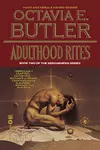
I liked the first book in this trilogy, Dawn, but I'd be lying if I said I didn't enjoy this book so much more. To give credit where it's due, this is probably because Dawn did all the grunt work laying the foundations for this story. It had to introduce the Oankali, their very alien biology, technology and social structures, as well as a large cast of characters which (many of them) remain relevant in this instalment as well. Now that the reader is already familiar with all of that, Adulthood Rites can move on and just tell the story. It also helps that, where the protagonist of the last book was the somewhat prickly Lilith Iyapo (not that you would blame her or anything...), the protagonist here is the somewhat more likeable Akin, her son. Akin is the product of the Oankali's plans for humanity: with two human parents and three Oankali ones, Akin is a hybrid of both species, uniquely placed to understand the outlooks and concerns of them both.
So, since the end of the previous book, the action has moved to Earth. On the one hand, there are villages of humans and Oankali living together, building the new kind of society the Oankali had envisaged. On the other hand, there are villages of “resisters”, who are determined to live without the Oankali. The Oankali have mostly left them alone, except that they have sterilised them, because they believe it would be immoral to allow humans to pass on the “gene” that makes them commit violence against each other.
Because the resisters can't have their own children, they have resorted to abducting hybrid children who look mostly human, which doesn't really make sense considering their entire goal is to have nothing to do with the Oankali, but you get the impression that Butler is making some commentary on how humans regularly try to “solve” problems with solutions that make no sense. (See: “our society is damaging the climate so badly that the long-term stability of our food and water supplies is in doubt... let's stick our finger in our ears and keep electing governments who pledge to keep on doing it!”) So, the real jumping-off point for this story is when a group of brutish resisters kidnap the very young Akin, intending to sell him for a high price to some resister family. He winds up in the care of Tate and Gabriel, who figured prominently in the last novel. They won't let him go home to his own village, and no one from his village comes to retrieve him, so he is left to grow up for a number of years among the resisters.
The beauty of this novel is the tenderness and emotional nuance with which it portrays Akin's situation. It pains Akin deeply to be separated from his family – especially from his closest sibling, who he is supposed to be near during a critical bonding period – and there are some residents of the resister village who are all kinds of nasty and terrifying. But Tate is always caring towards him, and through his bond with her he comes to empathise with – even if not agree with – the resisters' position. They don't want to live at the sufferance of the Oankali, who are so convinced they know better than humanity what's best for us that they treat humans with the same condescension that we might reserve for bratty children. They want to live free, including free to make mistakes if they want. Although Akin eventually returns to his home village and the Oankali, he does so in a unique position: he has the insight into the resisters' motives that the Oankali lack, and the ability to speak to the Oankali and be listened to that the humans (including non-resisters, like Lilith) lack.
Just like the first book, this is not a story about “goodies” and “baddies”. It's sharply critical of human society, and human nature itself (or at least human nature under capitalism...), and in many ways it makes you think humanity would be better off if it gave up and acquiesced to the will of the unbearably smug Oankali. But, as in many of her other works, Butler here seems to suggest it is better to be free, to not be under the control of any other party, than it is to act in your own self-interest.
So, what will happen in the third and final book, Imago? I would guess that some kind of conciliation will have to occur between the resisters and the Oankali, perhaps brokered by the growing generation of hybrids, but it remains to be seen. I'm sure I'll be picking up the next instalment to find out sooner rather than later.
I liked the first book in this trilogy, Dawn, but I'd be lying if I said I didn't enjoy this book so much more. To give credit where it's due, this is probably because Dawn did all the grunt work laying the foundations for this story. It had to introduce the Oankali, their very alien biology, technology and social structures, as well as a large cast of characters which (many of them) remain relevant in this instalment as well. Now that the reader is already familiar with all of that, Adulthood Rites can move on and just tell the story. It also helps that, where the protagonist of the last book was the somewhat prickly Lilith Iyapo (not that you would blame her or anything...), the protagonist here is the somewhat more likeable Akin, her son. Akin is the product of the Oankali's plans for humanity: with two human parents and three Oankali ones, Akin is a hybrid of both species, uniquely placed to understand the outlooks and concerns of them both.
So, since the end of the previous book, the action has moved to Earth. On the one hand, there are villages of humans and Oankali living together, building the new kind of society the Oankali had envisaged. On the other hand, there are villages of “resisters”, who are determined to live without the Oankali. The Oankali have mostly left them alone, except that they have sterilised them, because they believe it would be immoral to allow humans to pass on the “gene” that makes them commit violence against each other.
Because the resisters can't have their own children, they have resorted to abducting hybrid children who look mostly human, which doesn't really make sense considering their entire goal is to have nothing to do with the Oankali, but you get the impression that Butler is making some commentary on how humans regularly try to “solve” problems with solutions that make no sense. (See: “our society is damaging the climate so badly that the long-term stability of our food and water supplies is in doubt... let's stick our finger in our ears and keep electing governments who pledge to keep on doing it!”) So, the real jumping-off point for this story is when a group of brutish resisters kidnap the very young Akin, intending to sell him for a high price to some resister family. He winds up in the care of Tate and Gabriel, who figured prominently in the last novel. They won't let him go home to his own village, and no one from his village comes to retrieve him, so he is left to grow up for a number of years among the resisters.
The beauty of this novel is the tenderness and emotional nuance with which it portrays Akin's situation. It pains Akin deeply to be separated from his family – especially from his closest sibling, who he is supposed to be near during a critical bonding period – and there are some residents of the resister village who are all kinds of nasty and terrifying. But Tate is always caring towards him, and through his bond with her he comes to empathise with – even if not agree with – the resisters' position. They don't want to live at the sufferance of the Oankali, who are so convinced they know better than humanity what's best for us that they treat humans with the same condescension that we might reserve for bratty children. They want to live free, including free to make mistakes if they want. Although Akin eventually returns to his home village and the Oankali, he does so in a unique position: he has the insight into the resisters' motives that the Oankali lack, and the ability to speak to the Oankali and be listened to that the humans (including non-resisters, like Lilith) lack.
Just like the first book, this is not a story about “goodies” and “baddies”. It's sharply critical of human society, and human nature itself (or at least human nature under capitalism...), and in many ways it makes you think humanity would be better off if it gave up and acquiesced to the will of the unbearably smug Oankali. But, as in many of her other works, Butler here seems to suggest it is better to be free, to not be under the control of any other party, than it is to act in your own self-interest.
So, what will happen in the third and final book, Imago? I would guess that some kind of conciliation will have to occur between the resisters and the Oankali, perhaps brokered by the growing generation of hybrids, but it remains to be seen. I'm sure I'll be picking up the next instalment to find out sooner rather than later.

I didn't get around to reviewing the first book in this series, The Cruel Prince, but it's OK because I've now finished this one and this one is better!The Cruel Prince is an easy read with some good stuff in it (particularly in the third act), but I also felt like it took a long time to get going: there was a lot of going to school, and getting bullied by the prince and all his bratty friends at school, and boy drama as one of the bratty friends seems to be secretly nice and seductive but it turns out he was just pretending and is actually still awful, and so it goes. It was a huge relief that despite the short time gap between the two novels, Jude here has matured so much, now in her new position as seneschal of Faerieland.
For me the most enjoyable part of this book was the dynamic between Jude and High King Cardan, who she installed on the throne against his will at the end of the last book, as part of a broader scheme. Cardan hates the position Jude has tricked him into, and is scheming against her just as keenly. As the book unfolds, for the most part they have to work together because their short-term interests align. There's a ton of sexual tension between them, too. But even as they collaborate and flirtatiously tease one another, there's also that awareness that ultimately they're opposed... it's a really addictive love-hate dynamic.
Of course there are also other things going on. In the last book, Jude thwarted the schemes of her sort-of dad (who murdered her real dad) Madoc, and in this one he's keen to repay the favour. Jude's relationship with her twin sister, Taryn, is strained after the boy drama mentioned in this review's first paragraph. Her younger brother, Oak, is safe in the mortal world with her big sister, Vivi, but Vivi's relationship with a “regular person” is showing “Willow and Tara in season six of Buffy” levels of dodginess. The book plays with power dynamics a lot, as well as with loyalty and lies, and I just found it a really compulsive read. Even though I wasn't that big a fan of this trilogy's first instalment, I'm now really keen for the finale, The Queen of Nothing.
I didn't get around to reviewing the first book in this series, The Cruel Prince, but it's OK because I've now finished this one and this one is better!The Cruel Prince is an easy read with some good stuff in it (particularly in the third act), but I also felt like it took a long time to get going: there was a lot of going to school, and getting bullied by the prince and all his bratty friends at school, and boy drama as one of the bratty friends seems to be secretly nice and seductive but it turns out he was just pretending and is actually still awful, and so it goes. It was a huge relief that despite the short time gap between the two novels, Jude here has matured so much, now in her new position as seneschal of Faerieland.
For me the most enjoyable part of this book was the dynamic between Jude and High King Cardan, who she installed on the throne against his will at the end of the last book, as part of a broader scheme. Cardan hates the position Jude has tricked him into, and is scheming against her just as keenly. As the book unfolds, for the most part they have to work together because their short-term interests align. There's a ton of sexual tension between them, too. But even as they collaborate and flirtatiously tease one another, there's also that awareness that ultimately they're opposed... it's a really addictive love-hate dynamic.
Of course there are also other things going on. In the last book, Jude thwarted the schemes of her sort-of dad (who murdered her real dad) Madoc, and in this one he's keen to repay the favour. Jude's relationship with her twin sister, Taryn, is strained after the boy drama mentioned in this review's first paragraph. Her younger brother, Oak, is safe in the mortal world with her big sister, Vivi, but Vivi's relationship with a “regular person” is showing “Willow and Tara in season six of Buffy” levels of dodginess. The book plays with power dynamics a lot, as well as with loyalty and lies, and I just found it a really compulsive read. Even though I wasn't that big a fan of this trilogy's first instalment, I'm now really keen for the finale, The Queen of Nothing.

2.5 stars. Honestly I was going to rate this three stars, but then the story just abruptly ended when my Kindle said I was 86% done, and I felt SO RELIEVED that I realised this probably wasn't a three-star book for me, unfortunately.
The Tea Girl of Hummingbird Lane starts in rural China in the early 1990s, following a young girl, Li-yan, who belongs to the Akha ethnic minority. Her early life is thoroughly miserable, with her elders reminding her constantly that she's a worthless, unwanted nuisance because she's female, and her mother exasperated and frustrated because she can't even get on board with the ritual murder of babies she'll be required to perform if she's to succeed her as a midwife. In her adolescence, she's supposed to be concentrating on school because her teacher thinks she could be the first person from her village – or even from the general area – to ever make it to university. However, she gets distracted when a tea merchant from Hong Kong arrives in her village, seeking out a particularly exquisite brew from the area. She helps him out, translating for her non-Mandarin-speaking village and even providing extra-special tea leaves from a super-secret grove that her mother tells her not to pluck for this man. She also gets distracted from school by a boy in her class, San-pa, on whom she has a crush and who she manages to get pregnant with before he leaves to look for work in Thailand.
She can't raise a baby out of wedlock – only a few years earlier, her mum would have made her sacrifice it in a ritual baby murder – so she surrenders it to an orphanage in a nearby, bigger town. That baby goes on to be adopted by a white American couple and raised in Los Angeles, under the name of Haley. As for Li-yan, things with San-pa don't work out, but she does become a highly successful businesswoman in the tea industry, and ends up moving out to Los Angeles herself.
There are some good things about this book, so don't let my lack of enthusiasm discourage you if you think this book is a great fit for your interests. My own favourite aspect was probably how it depicted the rapid changes in rural China between about 1990 and 2010. Li-yan goes from spending her childhood in abject poverty to being able to make webcam calls over her laptop when she visits her village, as one example. It's the kind of thing where like, sure you could read a Wikipedia article or something about China's economic growth, but reading concrete examples of how people's lives have changed, even in fictional form like this, helps to drive it home.
But unfortunately, there were also parts of this book that I found kind of displeasing, for lack of a better word, and the good things about this book just weren't enough to overcome that. Clearly I found the murder of babies really distasteful (I know there are reasons why small human societies faced with overwhelming, harsh scarcity had such practices, but it doesn't mean I'm chomping at the bit to read visceral accounts of it!), and the vehement hatred of women and girls shown by the village elders in the early part of the book was pretty tough to stomach, too. Then later on, the book acquires a very different problem of existing in a world where everyone is a multi-millionaire with multi-millionaire concerns. There was a romance that just didn't have enough meat on it to be enticing, and even the central plotline – Li-yan's separation from her biological daughter, and their attempts to find each other – just felt underwhelming. The last chapter randomly being from Haley's perspective also felt befuddling, and I had no real sense that the book was winding its way to its ending earlier than like, one page before that end.
Overall, I felt like the other Lisa See book I read recently, The Island of Sea Women, was just a lot better, even though I wasn't in the right frame of mind to read it when I did. The story was tighter, and the historical detail (compared to, in this case, information about tea) struck me as more interesting. I'm not trying to say this was a bad book though, just one I personally didn't find the most enjoyable.
2.5 stars. Honestly I was going to rate this three stars, but then the story just abruptly ended when my Kindle said I was 86% done, and I felt SO RELIEVED that I realised this probably wasn't a three-star book for me, unfortunately.
The Tea Girl of Hummingbird Lane starts in rural China in the early 1990s, following a young girl, Li-yan, who belongs to the Akha ethnic minority. Her early life is thoroughly miserable, with her elders reminding her constantly that she's a worthless, unwanted nuisance because she's female, and her mother exasperated and frustrated because she can't even get on board with the ritual murder of babies she'll be required to perform if she's to succeed her as a midwife. In her adolescence, she's supposed to be concentrating on school because her teacher thinks she could be the first person from her village – or even from the general area – to ever make it to university. However, she gets distracted when a tea merchant from Hong Kong arrives in her village, seeking out a particularly exquisite brew from the area. She helps him out, translating for her non-Mandarin-speaking village and even providing extra-special tea leaves from a super-secret grove that her mother tells her not to pluck for this man. She also gets distracted from school by a boy in her class, San-pa, on whom she has a crush and who she manages to get pregnant with before he leaves to look for work in Thailand.
She can't raise a baby out of wedlock – only a few years earlier, her mum would have made her sacrifice it in a ritual baby murder – so she surrenders it to an orphanage in a nearby, bigger town. That baby goes on to be adopted by a white American couple and raised in Los Angeles, under the name of Haley. As for Li-yan, things with San-pa don't work out, but she does become a highly successful businesswoman in the tea industry, and ends up moving out to Los Angeles herself.
There are some good things about this book, so don't let my lack of enthusiasm discourage you if you think this book is a great fit for your interests. My own favourite aspect was probably how it depicted the rapid changes in rural China between about 1990 and 2010. Li-yan goes from spending her childhood in abject poverty to being able to make webcam calls over her laptop when she visits her village, as one example. It's the kind of thing where like, sure you could read a Wikipedia article or something about China's economic growth, but reading concrete examples of how people's lives have changed, even in fictional form like this, helps to drive it home.
But unfortunately, there were also parts of this book that I found kind of displeasing, for lack of a better word, and the good things about this book just weren't enough to overcome that. Clearly I found the murder of babies really distasteful (I know there are reasons why small human societies faced with overwhelming, harsh scarcity had such practices, but it doesn't mean I'm chomping at the bit to read visceral accounts of it!), and the vehement hatred of women and girls shown by the village elders in the early part of the book was pretty tough to stomach, too. Then later on, the book acquires a very different problem of existing in a world where everyone is a multi-millionaire with multi-millionaire concerns. There was a romance that just didn't have enough meat on it to be enticing, and even the central plotline – Li-yan's separation from her biological daughter, and their attempts to find each other – just felt underwhelming. The last chapter randomly being from Haley's perspective also felt befuddling, and I had no real sense that the book was winding its way to its ending earlier than like, one page before that end.
Overall, I felt like the other Lisa See book I read recently, The Island of Sea Women, was just a lot better, even though I wasn't in the right frame of mind to read it when I did. The story was tighter, and the historical detail (compared to, in this case, information about tea) struck me as more interesting. I'm not trying to say this was a bad book though, just one I personally didn't find the most enjoyable.
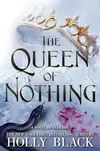
This was addictive reading. Immediately after I finished, I went to read reviews because it was the closest thing to talking about it with someone that I could do. As such, I've read a number of less-positive reviews of this book, and honestly, many of the issues they highlight are things I totally see. A number of massive plot points from the last book fizzle out to nothing, forgotten, and a couple of characters seem to have done unexplained dramatic 180s in terms of their attitudes to Jude. However, I did not notice or care about any of those things while I was actually reading. I was swept along for the ride.
So why did I enjoy this book so much? Honestly, just lots of great character moments. Jude's confrontation with her father figure, Madoc, felt so high-stakes and thrilling. I liked how the Jude/Cardan thing played out. It was satisfying to see Jude outwit her enemies. For me, it was a rewarding follow-up to the brilliant The Wicked King, and certainly leagues ahead of the first book. Maybe not the tightest-plotted novel ever, but still so fun.
This was addictive reading. Immediately after I finished, I went to read reviews because it was the closest thing to talking about it with someone that I could do. As such, I've read a number of less-positive reviews of this book, and honestly, many of the issues they highlight are things I totally see. A number of massive plot points from the last book fizzle out to nothing, forgotten, and a couple of characters seem to have done unexplained dramatic 180s in terms of their attitudes to Jude. However, I did not notice or care about any of those things while I was actually reading. I was swept along for the ride.
So why did I enjoy this book so much? Honestly, just lots of great character moments. Jude's confrontation with her father figure, Madoc, felt so high-stakes and thrilling. I liked how the Jude/Cardan thing played out. It was satisfying to see Jude outwit her enemies. For me, it was a rewarding follow-up to the brilliant The Wicked King, and certainly leagues ahead of the first book. Maybe not the tightest-plotted novel ever, but still so fun.

I've shelved this as science fiction, but what struck me as I was reading it is that it really comes across as a psychological horror. The protagonist, George Orr, has an ability that he considers a horrible curse: when he dreams, sometimes, he wakes up to find the dream has come true. Having got in legal trouble for misappropriating/misusing dream suppressants, he is sent to a psychiatrist, Dr Haber, who sees this ability as an enormous boon. He uses hypnotherapy to put George under and instruct him to dream all manner of things – which, then, become reality.
The novel examines all kind of dystopian and apocalyptic scenarios: war against extraterrestrials, a pandemic that kills most of the world's population, volcanic eruptions, and above all a recurring theme of heavy-handed state control over people's lives (and life and death itself). And it does all this with a tone reminiscent of that kind of nightmare where you're dreaming horrible stuff, and you think you wake up, but then realise you're still trapped in the nightmare. Dr Haber represents a brilliant villain, outwardly effusively charming but coercively keeping George under his control. And, of course, like many a classic villain he has grandiose, noble ambitions – world peace! an end to overpopulation! full health for all! – but no real qualms about the sinister ways he would achieve them.
Overall, a really good, dark little book, especially for those who enjoy the theme of creepy nightmares.
I've shelved this as science fiction, but what struck me as I was reading it is that it really comes across as a psychological horror. The protagonist, George Orr, has an ability that he considers a horrible curse: when he dreams, sometimes, he wakes up to find the dream has come true. Having got in legal trouble for misappropriating/misusing dream suppressants, he is sent to a psychiatrist, Dr Haber, who sees this ability as an enormous boon. He uses hypnotherapy to put George under and instruct him to dream all manner of things – which, then, become reality.
The novel examines all kind of dystopian and apocalyptic scenarios: war against extraterrestrials, a pandemic that kills most of the world's population, volcanic eruptions, and above all a recurring theme of heavy-handed state control over people's lives (and life and death itself). And it does all this with a tone reminiscent of that kind of nightmare where you're dreaming horrible stuff, and you think you wake up, but then realise you're still trapped in the nightmare. Dr Haber represents a brilliant villain, outwardly effusively charming but coercively keeping George under his control. And, of course, like many a classic villain he has grandiose, noble ambitions – world peace! an end to overpopulation! full health for all! – but no real qualms about the sinister ways he would achieve them.
Overall, a really good, dark little book, especially for those who enjoy the theme of creepy nightmares.

I came across this book a while ago, and promptly added it to my “Want to Read” list, intrigued by its Middle Eastern setting and use of Islamic mythology. Unfortunately it then languished on that list for much longer than it deserved to. Well, not any more! Finally I've taken the plunge into The City of Brass, and despite the slow first half, I ended up riveted and really excited to read the second book.
The plot itself, if you reduce it to the essentials, is perhaps not the most original. It begins with Nahri, a professional con artist in nineteenth-century Cairo, with magical powers of healing and no recollection of her childhood. One day she's attacked by malevolent demons called ifrit, and saved by a haughty magical being named Dara, and through this discovers she's actually some kind of long-lost Chosen One to a magical society she knows nothing about. Dara insists that, for her safety, he he has to take her to the city of Daevabad (and then her storyline slows right down because the journey takes up a huge fraction of the book).
The other POV character is Ali, a young prince (second son of Daevabad's king) who wants to help the oppressed shafit, residents of the city who are of mixed magical and human descent. He's a devout Muslim, someone who (at least at the start of the book) wants to assume the best in everyone, and painfully naive. He ends up feeling caught between loyalty to his family and his sense of justice, and I found him a really compelling character.
So you know, Chosen One outsiders to hidden magical societies and junior royals with consciences are not the most unique fantasy characters out there (not that lacking uniqueness would make them unenjoyable). However, the setting and world-building of this story are just incredibly absorbing. I'll admit that the world-building can feel very dense, especially if you (like me) are not very familiar with Islamic mythology, because then you have that to absorb on top of the history and politics of the kingdom of Daevabad. That said, I think it's well worth persevering! The book's last section is action-packed, and since all the groundwork has now been laid, I'm excited for how eventful the next instalment might be without so many hold-ups to explain the lore.
S.A. Chakraborty wanted to pursue an academic career in Middle Eastern history before life intervened and she eventually turned to writing, and I think that background is evident in the richness of the world she's created here. On top of the mythology she draws upon, there's also a lot of interesting stuff in the different tribes of Daevabad, the tensions between the different groups living in the city (which I could imagine mirroring other cities with long histories of diversity, like Jerusalem or Istanbul), and so on. I came to really enjoy the character of the king, calculating and ruthless, but you can follow his tyrannical logic, too. In fact, despite Ali's efforts, this is not really a story about good vs. evil at all, but about power. A lot of Nahri's story, too, becomes about how she can play the game before the other players play her.
So, I think I've made it clear that despite some slowness in the first half, I really enjoyed The City of Brass. If you like worldbuilding-heavy stories, I think this is well worth the read.
I came across this book a while ago, and promptly added it to my “Want to Read” list, intrigued by its Middle Eastern setting and use of Islamic mythology. Unfortunately it then languished on that list for much longer than it deserved to. Well, not any more! Finally I've taken the plunge into The City of Brass, and despite the slow first half, I ended up riveted and really excited to read the second book.
The plot itself, if you reduce it to the essentials, is perhaps not the most original. It begins with Nahri, a professional con artist in nineteenth-century Cairo, with magical powers of healing and no recollection of her childhood. One day she's attacked by malevolent demons called ifrit, and saved by a haughty magical being named Dara, and through this discovers she's actually some kind of long-lost Chosen One to a magical society she knows nothing about. Dara insists that, for her safety, he he has to take her to the city of Daevabad (and then her storyline slows right down because the journey takes up a huge fraction of the book).
The other POV character is Ali, a young prince (second son of Daevabad's king) who wants to help the oppressed shafit, residents of the city who are of mixed magical and human descent. He's a devout Muslim, someone who (at least at the start of the book) wants to assume the best in everyone, and painfully naive. He ends up feeling caught between loyalty to his family and his sense of justice, and I found him a really compelling character.
So you know, Chosen One outsiders to hidden magical societies and junior royals with consciences are not the most unique fantasy characters out there (not that lacking uniqueness would make them unenjoyable). However, the setting and world-building of this story are just incredibly absorbing. I'll admit that the world-building can feel very dense, especially if you (like me) are not very familiar with Islamic mythology, because then you have that to absorb on top of the history and politics of the kingdom of Daevabad. That said, I think it's well worth persevering! The book's last section is action-packed, and since all the groundwork has now been laid, I'm excited for how eventful the next instalment might be without so many hold-ups to explain the lore.
S.A. Chakraborty wanted to pursue an academic career in Middle Eastern history before life intervened and she eventually turned to writing, and I think that background is evident in the richness of the world she's created here. On top of the mythology she draws upon, there's also a lot of interesting stuff in the different tribes of Daevabad, the tensions between the different groups living in the city (which I could imagine mirroring other cities with long histories of diversity, like Jerusalem or Istanbul), and so on. I came to really enjoy the character of the king, calculating and ruthless, but you can follow his tyrannical logic, too. In fact, despite Ali's efforts, this is not really a story about good vs. evil at all, but about power. A lot of Nahri's story, too, becomes about how she can play the game before the other players play her.
So, I think I've made it clear that despite some slowness in the first half, I really enjoyed The City of Brass. If you like worldbuilding-heavy stories, I think this is well worth the read.

Night Shift Dragons is the final instalment in a trilogy that has mainly gripped me with its kick-ass futuristic fantasy setting, the Detroit Free Zone. If you like, you can read my review of the first book or my review of the second book before coming back for this one. While I did enjoy it, I felt like this final instalment was the weakest of the lot, mainly because the awesome setting took a backseat and its dystopian nature was really walked back. Note that from here on out this review will contain spoilers for the previous books.
Following on from the end of Part-Time Gods, Opal Yong-ae has spent the last two months in a pocket dimension of sorts, in hiding with her comatose dad, the fearsome dragon Yong of Korea. She's also started training to become a priestess of the Detroit Free Zone, as in a sworn servant of the deity who is the actual city itself. What these two things mean is that we see a lot less of the city than we did in previous books (even once she leaves hiding, she doesn't travel around too much) and yet we also see a lot more of the DFZ at the same time, because the deity spends at least half the book talking to Opal in her mind. The capriciousness and willingness to sacrifice citizens on the altar of the free market that we have come to associate with the DFZ is mostly gone; instead, we get a lot of justifications about how if the worst excesses were just toned down a liiiiiittle bit, the DFZ would actually be great because it's a city of “freedom”. I found this pretty hard to reconcile with the criticism of neoliberalism in just the last book.
There were definitely some good things, though. Opal comes across as substantially more mature than she was in the first two instalments, almost as though two months of learning how to use her magic properly has given her the assurance she needed that she can be a competent adult after all. Her relationship with her dad definitely takes priority here over her emerging romance with Nik, which didn't bother me, but seems to have disappointed some other viewers. On the other hand, while I was fine with the place where her relationship with her dad ended up, I did feel like we got there way too easily. I mean, this is the guy who's spent two books trying to ruin her life with a bad luck curse, and he was convinced of the error of his ways within a few pages?! It felt like it mainly worked out that way so the tension between them couldn't be a problem as they dealt with the main plot of this book.
That plot involves a fighting arena that is unquestionably one of the worst excesses of the DFZ. Basically, this Gamemaster convinces people to sign up for fights to the death, particularly preying on the homeless and vulnerable. These fights attract huge crowds, huge enough to sustain not only on-site gambling parlours but also brothels and strip clubs?! A worthy villain to fight against, but it really seemed like Opal and the DFZ wouldn't have bothered if not for having a more selfish motivation to go in. I dunno, I guess there's nothing much Opal could have done alone, but all the DFZ's excuses for her inaction were annoying, and then Opal's excuses for the DFZ's excuses...
I've got distracted while typing this up, so I'll try to boil things down to the essentials. Like the first two books in the series, Night Shift Dragons is a fast-paced romp of a read. Opal Yong-ae did grow as a character and her storyline ended up in a good place. However, I was disappointed by the lack of exploration of the city in this book compared to the first two, and even more disappointed by the justifications for free-market callousness where previously this was called out. Three stars from me.
Night Shift Dragons is the final instalment in a trilogy that has mainly gripped me with its kick-ass futuristic fantasy setting, the Detroit Free Zone. If you like, you can read my review of the first book or my review of the second book before coming back for this one. While I did enjoy it, I felt like this final instalment was the weakest of the lot, mainly because the awesome setting took a backseat and its dystopian nature was really walked back. Note that from here on out this review will contain spoilers for the previous books.
Following on from the end of Part-Time Gods, Opal Yong-ae has spent the last two months in a pocket dimension of sorts, in hiding with her comatose dad, the fearsome dragon Yong of Korea. She's also started training to become a priestess of the Detroit Free Zone, as in a sworn servant of the deity who is the actual city itself. What these two things mean is that we see a lot less of the city than we did in previous books (even once she leaves hiding, she doesn't travel around too much) and yet we also see a lot more of the DFZ at the same time, because the deity spends at least half the book talking to Opal in her mind. The capriciousness and willingness to sacrifice citizens on the altar of the free market that we have come to associate with the DFZ is mostly gone; instead, we get a lot of justifications about how if the worst excesses were just toned down a liiiiiittle bit, the DFZ would actually be great because it's a city of “freedom”. I found this pretty hard to reconcile with the criticism of neoliberalism in just the last book.
There were definitely some good things, though. Opal comes across as substantially more mature than she was in the first two instalments, almost as though two months of learning how to use her magic properly has given her the assurance she needed that she can be a competent adult after all. Her relationship with her dad definitely takes priority here over her emerging romance with Nik, which didn't bother me, but seems to have disappointed some other viewers. On the other hand, while I was fine with the place where her relationship with her dad ended up, I did feel like we got there way too easily. I mean, this is the guy who's spent two books trying to ruin her life with a bad luck curse, and he was convinced of the error of his ways within a few pages?! It felt like it mainly worked out that way so the tension between them couldn't be a problem as they dealt with the main plot of this book.
That plot involves a fighting arena that is unquestionably one of the worst excesses of the DFZ. Basically, this Gamemaster convinces people to sign up for fights to the death, particularly preying on the homeless and vulnerable. These fights attract huge crowds, huge enough to sustain not only on-site gambling parlours but also brothels and strip clubs?! A worthy villain to fight against, but it really seemed like Opal and the DFZ wouldn't have bothered if not for having a more selfish motivation to go in. I dunno, I guess there's nothing much Opal could have done alone, but all the DFZ's excuses for her inaction were annoying, and then Opal's excuses for the DFZ's excuses...
I've got distracted while typing this up, so I'll try to boil things down to the essentials. Like the first two books in the series, Night Shift Dragons is a fast-paced romp of a read. Opal Yong-ae did grow as a character and her storyline ended up in a good place. However, I was disappointed by the lack of exploration of the city in this book compared to the first two, and even more disappointed by the justifications for free-market callousness where previously this was called out. Three stars from me.


I feel like it's easier for me to explain what didn't work for me in this book than what did. Cruel Beauty is, as many other reviews will tell you, basically a retelling of The Beauty and the Beast mashed up with some Ancient Greek mythology. It takes place within a lost part of Romana-Graecia, Arcadia, which was cursed and locked away in its own pocket universe by a vengeful demon 900 years ago. The protagonist, Nyx Triskelion, was promised at birth to one day marry this exact demon, in exchange for her twin sister Astraia being allowed to live a normal, happy life. Nyx has spent her short life thus far being trained for this event, and when she arrives at her husband's cursed castle, it's with a mission: to destroy him, and probably also herself, to break the curse keeping Arcadia isolated. Once she gets inside, though, everything gets a lot more confusing and complicated.
So... where do I begin? I will say that this is not a book with strong world-building. Arcadia is a real part of Greece, and a lot bigger than the “one village and a castle” than it seems to be in this book. We learned a lot about the differences between the gods worshipped by the nobility (Zeus, etc.) and those worshipped by the peasantry, and a bit about their festivals and funerary rites. What wasn't really that clear was the magic system that kept getting referred to (Hermetic magic...?) – how was that supposed to work? what was it supposed to do? – or who the demons were that were screwing over Arcadia's people and how they all related to each other. The mystery is a large part of the story, but it's never truly answered, imo.
Then there's Nyx herself. She's had a rough upbringing, having been raised to be a sacrifice to the Gentle Lord, and is full of resentments. In the enchanted castle, she has no idea who to trust and ceases to be sure whether to follow through on the mission she's been trained for, or whether something else is a better idea... which seems to lead to the outcome that she changes her mind every five pages. Neither of these things make her a bad character, and certainly not an unrealistic character, but it made it very hard to know what I was supposed to be hoping for. Sometimes plot developments would happen that you'd think would mark a significant turning point in the story, only for them to be completely disregarded. I spent so much of this book confused.
A large component of this book is the romance, of course, but I even found this confusing. I just didn't feel like I'd seen why Nyx started to fall in love... instead, I just had the book telling me that she had indeed fallen in love. So then I was like, well OK, I'll just accept that these two are in love now. (To be fair, it was the kind of dark romance that I really wanted to be able to enjoy.) But then the book threw a huge curveball at me (explanation cut for spoilers) so look, overall, I just don't think this romance had a lot of depth.
The ending had its fair share of confusion, but I actually found it one of the most enjoyable parts of the book. Only here did I really start to see the sisterly love that was supposed to exist between Nyx and Astraia (and I wrote more but cut for spoilers).
This review probably sounds mostly negative, but it's really more that I found this story confusing. When I shrugged my shoulders and gave up on trying to understand things, this book was enjoyable enough. I liked the duality of Ignifex (the Gentle Lord) – the malevolence but also the tenderness. Shade was an interesting character, too. I just kind of wish the story around them – the web of curses and such – had been better explained.
I feel like it's easier for me to explain what didn't work for me in this book than what did. Cruel Beauty is, as many other reviews will tell you, basically a retelling of The Beauty and the Beast mashed up with some Ancient Greek mythology. It takes place within a lost part of Romana-Graecia, Arcadia, which was cursed and locked away in its own pocket universe by a vengeful demon 900 years ago. The protagonist, Nyx Triskelion, was promised at birth to one day marry this exact demon, in exchange for her twin sister Astraia being allowed to live a normal, happy life. Nyx has spent her short life thus far being trained for this event, and when she arrives at her husband's cursed castle, it's with a mission: to destroy him, and probably also herself, to break the curse keeping Arcadia isolated. Once she gets inside, though, everything gets a lot more confusing and complicated.
So... where do I begin? I will say that this is not a book with strong world-building. Arcadia is a real part of Greece, and a lot bigger than the “one village and a castle” than it seems to be in this book. We learned a lot about the differences between the gods worshipped by the nobility (Zeus, etc.) and those worshipped by the peasantry, and a bit about their festivals and funerary rites. What wasn't really that clear was the magic system that kept getting referred to (Hermetic magic...?) – how was that supposed to work? what was it supposed to do? – or who the demons were that were screwing over Arcadia's people and how they all related to each other. The mystery is a large part of the story, but it's never truly answered, imo.
Then there's Nyx herself. She's had a rough upbringing, having been raised to be a sacrifice to the Gentle Lord, and is full of resentments. In the enchanted castle, she has no idea who to trust and ceases to be sure whether to follow through on the mission she's been trained for, or whether something else is a better idea... which seems to lead to the outcome that she changes her mind every five pages. Neither of these things make her a bad character, and certainly not an unrealistic character, but it made it very hard to know what I was supposed to be hoping for. Sometimes plot developments would happen that you'd think would mark a significant turning point in the story, only for them to be completely disregarded. I spent so much of this book confused.
A large component of this book is the romance, of course, but I even found this confusing. I just didn't feel like I'd seen why Nyx started to fall in love... instead, I just had the book telling me that she had indeed fallen in love. So then I was like, well OK, I'll just accept that these two are in love now. (To be fair, it was the kind of dark romance that I really wanted to be able to enjoy.) But then the book threw a huge curveball at me (explanation cut for spoilers) so look, overall, I just don't think this romance had a lot of depth.
The ending had its fair share of confusion, but I actually found it one of the most enjoyable parts of the book. Only here did I really start to see the sisterly love that was supposed to exist between Nyx and Astraia (and I wrote more but cut for spoilers).
This review probably sounds mostly negative, but it's really more that I found this story confusing. When I shrugged my shoulders and gave up on trying to understand things, this book was enjoyable enough. I liked the duality of Ignifex (the Gentle Lord) – the malevolence but also the tenderness. Shade was an interesting character, too. I just kind of wish the story around them – the web of curses and such – had been better explained.
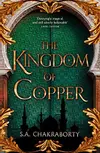
This book had me rapt. It was full of political intrigue and scheming, in a way that reminded me of the best aspects of A Game of Thrones (but honestly this series is more enjoyable). With all the world-building groundwork having been accomplished in the first book, this one can afford to be much faster-paced, and is all the better for it.
Much of this book revolves around the main characters' efforts to do the right thing (mostly struggle in support of the oppressed shafit, and against blind tribalism) when they live in a society filled with powerful people who want to thwart every such effort. King Ghassan is, like in the first book, ruthlessly tyrannical, but the forces conspiring against him are just as bad. It makes for compelling reading and I'm very keen to move on to the third book now, to see what happens next.
This book had me rapt. It was full of political intrigue and scheming, in a way that reminded me of the best aspects of A Game of Thrones (but honestly this series is more enjoyable). With all the world-building groundwork having been accomplished in the first book, this one can afford to be much faster-paced, and is all the better for it.
Much of this book revolves around the main characters' efforts to do the right thing (mostly struggle in support of the oppressed shafit, and against blind tribalism) when they live in a society filled with powerful people who want to thwart every such effort. King Ghassan is, like in the first book, ruthlessly tyrannical, but the forces conspiring against him are just as bad. It makes for compelling reading and I'm very keen to move on to the third book now, to see what happens next.
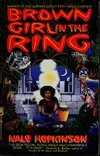
This is a book that Goodreads has been nagging me to read for aaaaages, but sadly it didn't really work for me. The setting felt too far-fetched – maybe it would've made sense amidst the white flight and urban decay of 1970s North America (even though the book was actually published in 1998), but with 2020 vision it's pretty hard to imagine the Canadian/Ontarian governments just abandoning downtown Toronto. None of the main characters are particularly sympathetic; Ti-Jeanne spends most of the book being a fawning idiot over her deadbeat ex Tony, Tony makes terrible decisions at pretty much every turn, and the grandmother, Gros-Jeanne, is a grouchy hardass. Nearly all the dialogue is written in an Afro-Caribbean dialect, which wouldn't be a problem if the book was otherwise engaging but I didn't find it so. And the ending is basically just a deus ex machina.
Even though I didn't like it, I don't think this is the kind of objectively bad novel that nearly everyone would hate. Horror fans might appreciate it more than me, because (despite Goodreads classifying it as fantasy) it's basically a horror novel in a dystopian/post-apocalyptic setting (with lots of explicit gore). Some people might feel that the richly detailed incorporation of Caribbean culture and legends outweighs the book's flaws. So if you really want to read it, don't let this review stop you... but be warned that characterisation and setting are not really its strong suits.
This is a book that Goodreads has been nagging me to read for aaaaages, but sadly it didn't really work for me. The setting felt too far-fetched – maybe it would've made sense amidst the white flight and urban decay of 1970s North America (even though the book was actually published in 1998), but with 2020 vision it's pretty hard to imagine the Canadian/Ontarian governments just abandoning downtown Toronto. None of the main characters are particularly sympathetic; Ti-Jeanne spends most of the book being a fawning idiot over her deadbeat ex Tony, Tony makes terrible decisions at pretty much every turn, and the grandmother, Gros-Jeanne, is a grouchy hardass. Nearly all the dialogue is written in an Afro-Caribbean dialect, which wouldn't be a problem if the book was otherwise engaging but I didn't find it so. And the ending is basically just a deus ex machina.
Even though I didn't like it, I don't think this is the kind of objectively bad novel that nearly everyone would hate. Horror fans might appreciate it more than me, because (despite Goodreads classifying it as fantasy) it's basically a horror novel in a dystopian/post-apocalyptic setting (with lots of explicit gore). Some people might feel that the richly detailed incorporation of Caribbean culture and legends outweighs the book's flaws. So if you really want to read it, don't let this review stop you... but be warned that characterisation and setting are not really its strong suits.

Kindred is a very good book, but it's not the easiest book to read. At no point did I ever feel like this book was going to have a happy ending. It is, of course, a novel about slavery in the antebellum Southern US, so you might expect it to be bleak, and it isn't coy about describing the violence and terror that Black people endured – things like brutal lashings, having your children our spouse sold away from you, or even the fact that free Black people were expected to be able to prove their status at all times with a certificate, and if a slaver took it off them and ripped it up, that slaver could then abduct them and sell them on. It's so important for people to know about this history, and as such novels like this play an important role keeping that history alive in the public memory.
The novel is ostensibly science fiction, but only really in getting the main character to the setting where the story takes place – otherwise it's more historical fiction. The protagonist is Dana, an African-American woman living in 1976 Los Angeles, who keeps getting sucked back in time to save the life of her ancestor (a red-headed white boy at the story's start, later a man – and a slave owner). The time travel element is never explained, or even investigated; it's really just a plot device so the attitudes of those living with slavery can be contrasted with Dana's modern sensibilities. Dana has no real control over her coming and going, though, so despite those modern sensibilities she has to find a way of surviving in the 19th century as a slave. This is also the source of a lot of the story's disquietingness; Dana is faced with a number of choices where every possible option is utterly repugnant, and while you might hope she finds a way to short-circuit the dilemma and pull a magical good outcome out of nowhere, she doesn't. Like I said, it's not the kind of book where happy endings ever seem realistic.
The book does share some similarities with other books I've read by Octavia E. Butler. Like them, the prose here is sparing and utilitarian – rather than lush description, Butler's strength is more in the dialogue and character dynamics she brings forth. And Dana here is a very similar character to some other Butler protagonists, particularly Lilith in Dawn, in the sense that a reader can understand but still wish she'd make some different decisions (like here, you wish Dana'd be harder on her slave-owning ancestor, even though you understand why she can't!). These factors might deter some readers, and contribute to me rating this three stars, but it's still a very worthwhile book.
Kindred is a very good book, but it's not the easiest book to read. At no point did I ever feel like this book was going to have a happy ending. It is, of course, a novel about slavery in the antebellum Southern US, so you might expect it to be bleak, and it isn't coy about describing the violence and terror that Black people endured – things like brutal lashings, having your children our spouse sold away from you, or even the fact that free Black people were expected to be able to prove their status at all times with a certificate, and if a slaver took it off them and ripped it up, that slaver could then abduct them and sell them on. It's so important for people to know about this history, and as such novels like this play an important role keeping that history alive in the public memory.
The novel is ostensibly science fiction, but only really in getting the main character to the setting where the story takes place – otherwise it's more historical fiction. The protagonist is Dana, an African-American woman living in 1976 Los Angeles, who keeps getting sucked back in time to save the life of her ancestor (a red-headed white boy at the story's start, later a man – and a slave owner). The time travel element is never explained, or even investigated; it's really just a plot device so the attitudes of those living with slavery can be contrasted with Dana's modern sensibilities. Dana has no real control over her coming and going, though, so despite those modern sensibilities she has to find a way of surviving in the 19th century as a slave. This is also the source of a lot of the story's disquietingness; Dana is faced with a number of choices where every possible option is utterly repugnant, and while you might hope she finds a way to short-circuit the dilemma and pull a magical good outcome out of nowhere, she doesn't. Like I said, it's not the kind of book where happy endings ever seem realistic.
The book does share some similarities with other books I've read by Octavia E. Butler. Like them, the prose here is sparing and utilitarian – rather than lush description, Butler's strength is more in the dialogue and character dynamics she brings forth. And Dana here is a very similar character to some other Butler protagonists, particularly Lilith in Dawn, in the sense that a reader can understand but still wish she'd make some different decisions (like here, you wish Dana'd be harder on her slave-owning ancestor, even though you understand why she can't!). These factors might deter some readers, and contribute to me rating this three stars, but it's still a very worthwhile book.

Having now reached the end, all I can say is there's just so much I love about this series. I love all the intrigue and scheming, the complicated web of alliances and grudges. I love how much intricate detail is given of the world itself – even things like the food are described in such sumptuous detail that you'd swear you can smell it and your belly starts growling in anticipation. Things like the clothing and the architecture and the climates of different places are also conveyed beautifully. But the detail never bogs down the story (things do slow down sometimes, but never from description), it's all seamlessly weaved through. Incredibly well-written.
As I mentioned in my review of the first book, it's also refreshing to read a story that doesn't draw on the same old Western European mythology (not that such stories can't also be interesting), but on Middle Eastern legends that I'm not so familiar with. I really loved how, in this book, deities from ancient Egypt and Babylonia made reappearances, and just that neat correlation where they faded in power and influence as belief in them faded (supplanted by Islam). The way all these different mythical creatures and legends and the magical system blended together made for an awesome setting.
But much as I've enjoyed all of this, what really makes this series stand out to me is the characters. They've all grown and gained a lot of richness since the first book. Nahri is so compelling in her determination to end the oppression of the shafit, her dedication to her healing craft, her out-scheming of extremely experienced schemers like Ghassan and Manizheh. I like how, while there are hints of romance in the series, Nahri's priorities are always her people and her own independence. Dara's an interesting character – I don't think I could say I like him, his utterly grim and depressing chapters are coloured by his conflictedness and his guilty conscience in a way that makes for good reading. Ali has grown massively from how naïve and easily manipulated he was in the first book. Then a number of the side characters are great as well – Muntadhir reminds me so much of my partner's oldest brother, Zaynab is another character who's grown massively since the first book, Jamshid is impossible not to like, Hatset's motherly protectiveness is so understandable, Manizheh is an incredible villain and what happens with her over the course of the book is just chilling. But to be honest, it's great characters all the way down. There are a number of even more minor characters I could have brought up here. I think this is an area where books 2 and 3 have been able to ramp up so well from the first one.
The book is very long, and there are points (mostly around the middle) where it bogs down a little – mostly scenes with expository dialogue are the culprits though, which is a tough one to resolve because it wouldn't be the same story if some of these details were kept from the reader. At any rate, it didn't stop me loving the book. Overall, this has been such an impressive series, especially once the ground-laying of the first book was over (and I did like that one well enough!). Very excited to see what further stories S.A. Chakraborty puts out.
Having now reached the end, all I can say is there's just so much I love about this series. I love all the intrigue and scheming, the complicated web of alliances and grudges. I love how much intricate detail is given of the world itself – even things like the food are described in such sumptuous detail that you'd swear you can smell it and your belly starts growling in anticipation. Things like the clothing and the architecture and the climates of different places are also conveyed beautifully. But the detail never bogs down the story (things do slow down sometimes, but never from description), it's all seamlessly weaved through. Incredibly well-written.
As I mentioned in my review of the first book, it's also refreshing to read a story that doesn't draw on the same old Western European mythology (not that such stories can't also be interesting), but on Middle Eastern legends that I'm not so familiar with. I really loved how, in this book, deities from ancient Egypt and Babylonia made reappearances, and just that neat correlation where they faded in power and influence as belief in them faded (supplanted by Islam). The way all these different mythical creatures and legends and the magical system blended together made for an awesome setting.
But much as I've enjoyed all of this, what really makes this series stand out to me is the characters. They've all grown and gained a lot of richness since the first book. Nahri is so compelling in her determination to end the oppression of the shafit, her dedication to her healing craft, her out-scheming of extremely experienced schemers like Ghassan and Manizheh. I like how, while there are hints of romance in the series, Nahri's priorities are always her people and her own independence. Dara's an interesting character – I don't think I could say I like him, his utterly grim and depressing chapters are coloured by his conflictedness and his guilty conscience in a way that makes for good reading. Ali has grown massively from how naïve and easily manipulated he was in the first book. Then a number of the side characters are great as well – Muntadhir reminds me so much of my partner's oldest brother, Zaynab is another character who's grown massively since the first book, Jamshid is impossible not to like, Hatset's motherly protectiveness is so understandable, Manizheh is an incredible villain and what happens with her over the course of the book is just chilling. But to be honest, it's great characters all the way down. There are a number of even more minor characters I could have brought up here. I think this is an area where books 2 and 3 have been able to ramp up so well from the first one.
The book is very long, and there are points (mostly around the middle) where it bogs down a little – mostly scenes with expository dialogue are the culprits though, which is a tough one to resolve because it wouldn't be the same story if some of these details were kept from the reader. At any rate, it didn't stop me loving the book. Overall, this has been such an impressive series, especially once the ground-laying of the first book was over (and I did like that one well enough!). Very excited to see what further stories S.A. Chakraborty puts out.

I feel a bit guilty rating this so low, because there were some aspects of this book that I did like. Mostly the actual science fiction aspects: the plague, the scientists trying to get to the bottom of it, and the ultra-powerful AI Black Swan. The last 40% of the book or thereabouts is a lot more eventful (and interesting) than the first 60%. If this novel were like, 400 pages shorter, it could have been an enjoyable read.
The problem is that the things I liked were vastly outnumbered by the things I did not like. The far-right villains are absolutely the most boring pieces of shit imaginable; there is nothing intriguing or compelling about them or the fight against them. Most of the “good” characters weren't very interesting either (except Benji, I didn't mind him). Shana is just grouchy to everyone and I didn't buy the fast and furious progression of her romantic subplot. The Christian preacher guy... I mean, he's so excruciatingly dim that he gets sucked in by the far-right's chicanery (and Wendig is NOT able to suppress his contempt for them long enough to make it even remotely plausible that they, as depicted in this book, would appeal to anyone), and by being around them constantly in his chapters he forces me to have to read about them. The gay rock star past his prime is just kinda padding, he doesn't really do much (except at the very end). I guess Marcy was OK, although I don't know that it was conclusively explained why being around the flock makes her headaches ease up.
So overall, no, I would not recommend this. There was a kernel of a good story in there, but it got buried under mounds and mounds of pointless subplots and cartoonishly evil villains. It is pretty easy reading if you just need something unsophisticated to fill up hours upon hours of your time in a hospital bed or something... but in pretty much any other situation there are much better choices.
I feel a bit guilty rating this so low, because there were some aspects of this book that I did like. Mostly the actual science fiction aspects: the plague, the scientists trying to get to the bottom of it, and the ultra-powerful AI Black Swan. The last 40% of the book or thereabouts is a lot more eventful (and interesting) than the first 60%. If this novel were like, 400 pages shorter, it could have been an enjoyable read.
The problem is that the things I liked were vastly outnumbered by the things I did not like. The far-right villains are absolutely the most boring pieces of shit imaginable; there is nothing intriguing or compelling about them or the fight against them. Most of the “good” characters weren't very interesting either (except Benji, I didn't mind him). Shana is just grouchy to everyone and I didn't buy the fast and furious progression of her romantic subplot. The Christian preacher guy... I mean, he's so excruciatingly dim that he gets sucked in by the far-right's chicanery (and Wendig is NOT able to suppress his contempt for them long enough to make it even remotely plausible that they, as depicted in this book, would appeal to anyone), and by being around them constantly in his chapters he forces me to have to read about them. The gay rock star past his prime is just kinda padding, he doesn't really do much (except at the very end). I guess Marcy was OK, although I don't know that it was conclusively explained why being around the flock makes her headaches ease up.
So overall, no, I would not recommend this. There was a kernel of a good story in there, but it got buried under mounds and mounds of pointless subplots and cartoonishly evil villains. It is pretty easy reading if you just need something unsophisticated to fill up hours upon hours of your time in a hospital bed or something... but in pretty much any other situation there are much better choices.

I thought this novella had a unique and interesting setting. The part of the story about Binti leaving home (secretly, because she knows it would enrage her family) and trying to cling on to her people's traditions in a part of the galaxy where she's the only one of her people there, that was interesting. But overall, I felt like this book was rushed and inflicted emotional whiplash so strongly that I just disconnected from the story.
I thought this novella had a unique and interesting setting. The part of the story about Binti leaving home (secretly, because she knows it would enrage her family) and trying to cling on to her people's traditions in a part of the galaxy where she's the only one of her people there, that was interesting. But overall, I felt like this book was rushed and inflicted emotional whiplash so strongly that I just disconnected from the story.

I'm not sure who the translator was for the edition I read, but I feel like they weren't one of the better ones... the prose in this was just stilted and maintained some level of distance from me; it wasn't the kind of engaging prose I'm used to reading. So a large part of my low rating is really because of the poor translation.
This is obviously considered one of the big books of Russian literature, and I certainly appreciated some of the snark and the sending-up of Soviet society. But the story itself was kind of incoherent, like a 500-page dream sequence where you can't expect any kind of continuity to last too long and there's a lot of seemingly unrelated things happening. (The closer you get to the end, the more related they turn out to be, but I endured a lot of confusion first.) It's also not really a book for character development... it's more like the kind of traditional tale where the characters represent things, rather than be people. Which is fine, there's still value in those kinds of stories, I just don't find them the most enjoyable. As for rewarding, I think this book could have been that, if I'd taken it slower (like one chapter a day) and had a reading guide or something to explain all the references. So, if you're not a habitual reader of old classics, that's the approach I'd recommend with this one... it's just not accessible enough to read straight through and expect to enjoy.
I'm not sure who the translator was for the edition I read, but I feel like they weren't one of the better ones... the prose in this was just stilted and maintained some level of distance from me; it wasn't the kind of engaging prose I'm used to reading. So a large part of my low rating is really because of the poor translation.
This is obviously considered one of the big books of Russian literature, and I certainly appreciated some of the snark and the sending-up of Soviet society. But the story itself was kind of incoherent, like a 500-page dream sequence where you can't expect any kind of continuity to last too long and there's a lot of seemingly unrelated things happening. (The closer you get to the end, the more related they turn out to be, but I endured a lot of confusion first.) It's also not really a book for character development... it's more like the kind of traditional tale where the characters represent things, rather than be people. Which is fine, there's still value in those kinds of stories, I just don't find them the most enjoyable. As for rewarding, I think this book could have been that, if I'd taken it slower (like one chapter a day) and had a reading guide or something to explain all the references. So, if you're not a habitual reader of old classics, that's the approach I'd recommend with this one... it's just not accessible enough to read straight through and expect to enjoy.

I found Amberlough hard to get into at first; there are a ton of names – of people, places and political groups – and while I picked them up before too long, it took a lot of furrowed concentration at the start. The good news is that so long as you're willing to do that, you'll be rewarded with a fantastic spec fic thriller, set in an analogue for Weimar-era Germany as it succumbs to Nazi rule.
The main characters are split between spies and burlesque theatre folk, most of them gay, and the rest dead broke (my god how refreshing it is to read a book where not everyone is rich!!). The characters are all far from perfect people, but especially Cyril, whose flaws are so glaring and decision-making skills so horrible that his chapters made me squirm to read at times. That said, despite their flaws I found them all compelling to read about, the way their stories crossed paths and had them sometimes allied and sometimes working against each other. That was neat.
There is a palpable sense of dread over the course of the book that gets sharper and heavier the closer you get to the end. The real theme of it is the way that the impending seizure of power by the Ospies (Nazi equivalents) forces people into some nasty dilemmas where every option sucks, but it still matters what option they choose anyway. I'm looking forward to seeing how that develops over the rest of the trilogy.
As an aside, I also appreciated the depiction of Amberlough itself – the many districts, from genteel to bawdy and everything in between; the public transport routes; the sights and smells of the city parks; the sounds of the different accents of its residents... it was just clearly a book from someone who loves urban life and can put into words all the things that make cities great. It made for an immersive environment as all the politics and scheming were underway. If this book sounds like anything you might be interested in I encourage you to give it a try, because it really gripped me.
I found Amberlough hard to get into at first; there are a ton of names – of people, places and political groups – and while I picked them up before too long, it took a lot of furrowed concentration at the start. The good news is that so long as you're willing to do that, you'll be rewarded with a fantastic spec fic thriller, set in an analogue for Weimar-era Germany as it succumbs to Nazi rule.
The main characters are split between spies and burlesque theatre folk, most of them gay, and the rest dead broke (my god how refreshing it is to read a book where not everyone is rich!!). The characters are all far from perfect people, but especially Cyril, whose flaws are so glaring and decision-making skills so horrible that his chapters made me squirm to read at times. That said, despite their flaws I found them all compelling to read about, the way their stories crossed paths and had them sometimes allied and sometimes working against each other. That was neat.
There is a palpable sense of dread over the course of the book that gets sharper and heavier the closer you get to the end. The real theme of it is the way that the impending seizure of power by the Ospies (Nazi equivalents) forces people into some nasty dilemmas where every option sucks, but it still matters what option they choose anyway. I'm looking forward to seeing how that develops over the rest of the trilogy.
As an aside, I also appreciated the depiction of Amberlough itself – the many districts, from genteel to bawdy and everything in between; the public transport routes; the sights and smells of the city parks; the sounds of the different accents of its residents... it was just clearly a book from someone who loves urban life and can put into words all the things that make cities great. It made for an immersive environment as all the politics and scheming were underway. If this book sounds like anything you might be interested in I encourage you to give it a try, because it really gripped me.
