nicanical




There's more of a plot here than in the first two books thanks to a unifying objective: help Slartibartfast stop the Krikkit from destroying the universe.
Unfortunately, I still found the story boring and hard to engage with—after three installments in this series, it's clear that the absurd style does little for me.
There's more of a plot here than in the first two books thanks to a unifying objective: help Slartibartfast stop the Krikkit from destroying the universe.
Unfortunately, I still found the story boring and hard to engage with—after three installments in this series, it's clear that the absurd style does little for me.

A good story but off-the-shelf characters and motivations give it a mass-produced flavor.
The prose is okay. A little languid. It doesn't exactly get up off the pages and walk around. Specifically: narration is precise and functional but feels stiff; the dialogue is good though—punchy, terse, and Archer has some good, pithy quips.
A good story but off-the-shelf characters and motivations give it a mass-produced flavor.
The prose is okay. A little languid. It doesn't exactly get up off the pages and walk around. Specifically: narration is precise and functional but feels stiff; the dialogue is good though—punchy, terse, and Archer has some good, pithy quips.

There's more of a plot here than in the first two books thanks to a unifying objective: help Slartibartfast stop the destruction of the universe by the Krikkit. Unfortunately, I still found the story boring and hard to engage with—after three installments in this series, it's clear that absurdity does little for me.
There's more of a plot here than in the first two books thanks to a unifying objective: help Slartibartfast stop the destruction of the universe by the Krikkit. Unfortunately, I still found the story boring and hard to engage with—after three installments in this series, it's clear that absurdity does little for me.

This is an awesome collection of Dashiell Hammett's Continental Op stories, originally published in Black Mask.
The stories are well-paced and feature surprising variety in antagonists, supporting characters, motivations, and locations. Stories for the pulps are constrained by the commercial demands of the format so I expected some rehashing, but I finished reading never getting that impression.
Hammett sticks to certain narrative patterns though. He is particularly fond of twists, which all the stories have. Hammett's twists are satisfying, impeccably-timed, and simple—simple is good because there's authenticity in their simplicity. (Compared with the convoluted deductive chains from the "Golden Age" of detective fiction).
The stories are grouped into three parts corresponding to Hammett's periods of contribution. The honing of Hammett's writing is palpable progressing through the parts: prose is streamlined; there's more showing, less telling; command of language is tightened; and the Op behaves more consistently.
Later stories feature more gratuitous violence too, to better appeal to Black Mask's audience—an unfortunate change because it's at the expense of the wonderful investigative details Hammett included in earlier stories (no doubt drawn from his experience as a Pinkerton), such as the use of collodion to fake scar tissue in Bodies Piled Up. Instead, we get stories like The Gutting of Couffignal and Corkscrew which are almost pure violence and, consequently, the least engaging.
Note: this ebook version of The Big Book of the Continental Op is missing the novels and Three Dimes.
This is an awesome collection of Dashiell Hammett's Continental Op stories, originally published in Black Mask.
The stories are well-paced and feature surprising variety in antagonists, supporting characters, motivations, and locations. Stories for the pulps are constrained by the commercial demands of the format so I expected some rehashing, but I finished reading never getting that impression.
Hammett sticks to certain narrative patterns though. He is particularly fond of twists, which all the stories have. Hammett's twists are satisfying, impeccably-timed, and simple—simple is good because there's authenticity in their simplicity. (Compared with the convoluted deductive chains from the "Golden Age" of detective fiction).
The stories are grouped into three parts corresponding to Hammett's periods of contribution. The honing of Hammett's writing is palpable progressing through the parts: prose is streamlined; there's more showing, less telling; command of language is tightened; and the Op behaves more consistently.
Later stories feature more gratuitous violence too, to better appeal to Black Mask's audience—an unfortunate change because it's at the expense of the wonderful investigative details Hammett included in earlier stories (no doubt drawn from his experience as a Pinkerton), such as the use of collodion to fake scar tissue in Bodies Piled Up. Instead, we get stories like The Gutting of Couffignal and Corkscrew which are almost pure violence and, consequently, the least engaging.
Note: this ebook version of The Big Book of the Continental Op is missing the novels and Three Dimes.
This is an awesome collection of Dashiell Hammett's Continental Op stories, originally published in Black Mask.
The stories are well-paced and feature surprising variety in antagonists, supporting characters, motivations, and locations. Stories for the pulps were constrained by the commercial demands of the format so I expected some rehashing, but I finished reading never getting that impression.
Hammett sticks to certain narrative patterns though. He is particularly fond of twists, which all the stories have. Hammett's twists are satisfying, impeccably-timed, and simple—simple is good because there's authenticity in their simplicity. (Compared with the convoluted deductive chains from the '"Golden Age" of detective fiction).
The stories are grouped into three parts corresponding to Hammett's periods of contribution. The honing of Hammett's writing is palpable progressing through the parts: prose is streamlined; there's more showing, less telling; command of language is tightened; and the Op behaves more consistently.
Later stories feature more gratuitous violence too, to better appeal to Black Mask's audience—an unfortunate change because it's at the expense of the wonderful investigative details Hammett included in earlier stories (no doubt drawn from his experience as a Pinkerton), such as the use of collodion to fake scar tissue in Bodies Piled Up. Instead, we get stories like The Gutting of Couffignal and Corkscrew which are almost pure violence and, consequently, the least engaging.
Note: this ebook version of The Big Book of the Continental Op is missing the novels and Three Dimes.
This is an awesome collection of Dashiell Hammett's Continental Op stories, originally published in Black Mask.
The stories are well-paced and feature surprising variety in antagonists, supporting characters, motivations, and locations. Stories for the pulps were constrained by the commercial demands of the format so I expected some rehashing, but I finished reading never getting that impression.
Hammett sticks to certain narrative patterns though. He is particularly fond of twists, which all the stories have. Hammett's twists are satisfying, impeccably-timed, and simple—simple is good because there's authenticity in their simplicity. (Compared with the convoluted deductive chains from the '"Golden Age" of detective fiction).
The stories are grouped into three parts corresponding to Hammett's periods of contribution. The honing of Hammett's writing is palpable progressing through the parts: prose is streamlined; there's more showing, less telling; command of language is tightened; and the Op behaves more consistently.
Later stories feature more gratuitous violence too, to better appeal to Black Mask's audience—an unfortunate change because it's at the expense of the wonderful investigative details Hammett included in earlier stories (no doubt drawn from his experience as a Pinkerton), such as the use of collodion to fake scar tissue in Bodies Piled Up. Instead, we get stories like The Gutting of Couffignal and Corkscrew which are almost pure violence and, consequently, the least engaging.
Note: this ebook version of The Big Book of the Continental Op is missing the novels and Three Dimes.

Excession follows several Minds responding to a strange sphere (the Excession of the title) in Culture space, while tenuous allies—the Affront—also encroach. This is the Culture novel for fans of the AI: Minds are the focus with humans in supporting roles. There are plenty of ships, exhibits of obscenely powerful Culture technology, and repartee between Minds (the names sometimes make it difficult to follow along though).
But, because the Minds are practically omnipotent, Culture failure seems impossible no matter what happens with the Excession. This defuses any tension in the main plot, making it kind of dull. This is why, despite being a fan of the Minds, I was more invested in the human subplot with Genar-Hofoen and Dajeil: their reconciliation is not guaranteed, and the possibility of failure is captivating.
I wish Banks had cut Ulver Seich out of the story though. She doesn't add anything, and her character is insufferable. Many Culture stories feature immature characters but Ulver is the worst of the worst, being something like a combination trust fund baby-social media influencer.
Excession follows several Minds responding to a strange sphere (the Excession of the title) in Culture space, while tenuous allies—the Affront—also encroach. This is the Culture novel for fans of the AI: Minds are the focus with humans in supporting roles. There are plenty of ships, exhibits of obscenely powerful Culture technology, and repartee between Minds (the names sometimes make it difficult to follow along though).
But, because the Minds are practically omnipotent, Culture failure seems impossible no matter what happens with the Excession. This defuses any tension in the main plot, making it kind of dull. This is why, despite being a fan of the Minds, I was more invested in the human subplot with Genar-Hofoen and Dajeil: their reconciliation is not guaranteed, and the possibility of failure is captivating.
I wish Banks had cut Ulver Seich out of the story though. She doesn't add anything, and her character is insufferable. Many Culture stories feature immature characters but Ulver is the worst of the worst, being something like a combination trust fund baby-social media influencer.
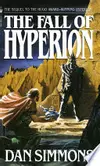
The Fall of Hyperion concludes the events of Hyperion with the Hegemony's response to the Ousters, and the outcome of the final Shrike pilgrimage. The story is experienced through CEO Meina Gladstone's confidant, Joseph Severn, whose origins are mysterious. Severn's curiously omniscient dreams replace Hyperion's frame structure, allowing Simmons to continue detailing far-flung parts of the universe simultaneously.
The attraction for many readers will be learning the fates of the pilgrims. Unfortunately, the pilgrims' chapters are frustratingly repetitive because confronting the Shrike follows one pattern: the Shrike isolates one pilgrim, while those remaining go and pound sand around the Time Tombs. This repetitiveness is aggravated by some backtracking over Hyperion's events—ostensibly a courtesy for readers who need it, but still repetitive.
Severn's narrative doesn't mitigate these issues. He lacks agency, and therefore any true story of his own. His uncanny timing and fantastic abilities are explained away by his origin, but not satisfyingly; they are thinly-veiled excuses for shifting Severn's location so that he can report on other characters.
Simmons could have replaced Severn with a third-person omniscient perspective and avoided the hand wringing about connecting dataspheres. But, then, Simmons would be missing justification for inflating the book with verses lifted from Keats.
And that's my big issue with this book—it feels gratuitously inflated, as if merely to meet a word count.
I still think Fall is a good read for the worldbuilding, well-paced story is good, and a neat twist.
The Fall of Hyperion concludes the events of Hyperion with the Hegemony's response to the Ousters, and the outcome of the final Shrike pilgrimage. The story is experienced through CEO Meina Gladstone's confidant, Joseph Severn, whose origins are mysterious. Severn's curiously omniscient dreams replace Hyperion's frame structure, allowing Simmons to continue detailing far-flung parts of the universe simultaneously.
The attraction for many readers will be learning the fates of the pilgrims. Unfortunately, the pilgrims' chapters are frustratingly repetitive because confronting the Shrike follows one pattern: the Shrike isolates one pilgrim, while those remaining go and pound sand around the Time Tombs. This repetitiveness is aggravated by some backtracking over Hyperion's events—ostensibly a courtesy for readers who need it, but still repetitive.
Severn's narrative doesn't mitigate these issues. He lacks agency, and therefore any true story of his own. His uncanny timing and fantastic abilities are explained away by his origin, but not satisfyingly; they are thinly-veiled excuses for shifting Severn's location so that he can report on other characters.
Simmons could have replaced Severn with a third-person omniscient perspective and avoided the hand wringing about connecting dataspheres. But, then, Simmons would be missing justification for inflating the book with verses lifted from Keats.
And that's my big issue with this book—it feels gratuitously inflated, as if merely to meet a word count.
I still think Fall is a good read for the worldbuilding, well-paced story is good, and a neat twist.


Added to listOwnedwith 87 books.


There are several things to dislike about Lolita. That it portrays pedophilia and sexual assault perhaps tops the list. Thankfully, the difficult scenes are dispensed with early, and largely depicted euphemistically—i.e., they are not pornographic or gratuitous. Neither is pedophilia glorified. The protagonist and abuser, Humbert, himself acknowledges his obsession is a paraphilia and mental illness.
The discomfort of the pedophilia aside, the next obstacle is Nabokov's style. The prose, while mostly poetic and easy to read, occasionally turns unbearably flowery and flamboyant (quite noticeable around two-thirds through). There are also distracting tangents, and interjections in French. The flowery language and tangents are at least justifiable because they convey Humbert's degrading state of mind. The French though? If you don't read French, then the lack of contextual clues or, e.g., footnotes with translations, means sometimes relying on external materials to understand Humbert. And I find it irritating to be taken out of a book like that.
Nevertheless, I found Lolita compelling because of Dolores's (that's Lolita's real name) story told between the lines: I read to the end not for Humbert, but to see if Dolores survives, if she ends up okay.
The foreword is fictional and a part of the story. It should be read.
The afterword is a nice read as well. It gives background on Lolita's development, and some of Nabokov's perspectives on writing and fiction.
There are several things to dislike about Lolita. That it portrays pedophilia and sexual assault perhaps tops the list. Thankfully, the difficult scenes are dispensed with early, and largely depicted euphemistically—i.e., they are not pornographic or gratuitous. Neither is pedophilia glorified. The protagonist and abuser, Humbert, himself acknowledges his obsession is a paraphilia and mental illness.
The discomfort of the pedophilia aside, the next obstacle is Nabokov's style. The prose, while mostly poetic and easy to read, occasionally turns unbearably flowery and flamboyant (quite noticeable around two-thirds through). There are also distracting tangents, and interjections in French. The flowery language and tangents are at least justifiable because they convey Humbert's degrading state of mind. The French though? If you don't read French, then the lack of contextual clues or, e.g., footnotes with translations, means sometimes relying on external materials to understand Humbert. And I find it irritating to be taken out of a book like that.
Nevertheless, I found Lolita compelling because of Dolores's (that's Lolita's real name) story told between the lines: I read to the end not for Humbert, but to see if Dolores survives, if she ends up okay.
The foreword is fictional and a part of the story. It should be read.
The afterword is a nice read as well. It gives background on Lolita's development, and some of Nabokov's perspectives on writing and fiction.