nicanical


Farewell, My Lovely is one of my favorite novels—by Raymond Chandler or otherwise.
The story drips with style from the first page, and many lines and scenes etch themselves into memory: the intro, with the Moose manhandling Marlowe before spiriting him into Florian's—A hand I could have sat in came out of the dimness and took hold of my shoulder and squashed it to a pulp; Nulty's repeated pestering and Marlowe's reaction—I held the dead phone and snarled into it: 'Seventeen hundred and fifty cops in this town and they want me to do their leg work for them.'; Marlowe working the Sans Souci desk clerk—He corked the bottle firmly and pushed it across the counter. 'Two is all, brother — before sundown. I thank you. Your method of approach is soothin' to a man's dignity . . . .'; the first interview of Jessie Florian—I poured her a slug that would have made me float over a wall.
The story farts around in the middle when Marlowe confronts Jules Amthor. But, fortunately, it resumes steady beats afterwards, until the end.
Farewell, My Lovely is one of my favorite novels—by Raymond Chandler or otherwise.
The story drips with style from the first page, and many lines and scenes etch themselves into memory: the intro, with the Moose manhandling Marlowe before spiriting him into Florian's—A hand I could have sat in came out of the dimness and took hold of my shoulder and squashed it to a pulp; Nulty's repeated pestering and Marlowe's reaction—I held the dead phone and snarled into it: 'Seventeen hundred and fifty cops in this town and they want me to do their leg work for them.'; Marlowe working the Sans Souci desk clerk—He corked the bottle firmly and pushed it across the counter. 'Two is all, brother — before sundown. I thank you. Your method of approach is soothin' to a man's dignity . . . .'; the first interview of Jessie Florian—I poured her a slug that would have made me float over a wall.
The story farts around in the middle when Marlowe confronts Jules Amthor. But, fortunately, it resumes steady beats afterwards, until the end.

Snow Crash starts out promising: hacker Hiro and courier Y.T. hunt for links between a unique virus, a cult, and Raven—a hog-riding terrorist with a nuke for a sidecar. The setting is a dystopian vision of the Western Seaboard with corporatocracies and a collective virtual space. High tech, low life. Standard cyberpunk stuff.
But, unfortunately, Neal Stephenson becomes too enamored with his satire—ideas and tropes become too exaggerated, too absurd, and too numerous. Consequently, entire elements of the story are either unbelievable, or underdeveloped and forgotten: the Mafia turning into a pizza franchise with its own sovereign territory? Unbelievable; the Metaverse, a virtual social nexus and important part of the protagonist's background? Underdeveloped and forgotten for most of the book.
The individual ideas are interesting and ripe for exploration; Snow Crash just has too many in one place, making its world a mile wide but an inch deep.
Snow Crash also suffers from issues of composition. First: entire chapters are infodumps. (One character responsible for a lot of the exposition is even called the Librarian). Exposition is okay in moderation, but Snow Crash's infodumps are excessive. Second: the story reads like a collection of loosely-related events. Major beats are tied together because "Raven was here", not really through any initiative of Hiro's or Y.T.'s.
Snow Crash starts out promising: hacker Hiro and courier Y.T. hunt for links between a unique virus, a cult, and Raven—a hog-riding terrorist with a nuke for a sidecar. The setting is a dystopian vision of the Western Seaboard with corporatocracies and a collective virtual space. High tech, low life. Standard cyberpunk stuff.
But, unfortunately, Neal Stephenson becomes too enamored with his satire—ideas and tropes become too exaggerated, too absurd, and too numerous. Consequently, entire elements of the story are either unbelievable, or underdeveloped and forgotten: the Mafia turning into a pizza franchise with its own sovereign territory? Unbelievable; the Metaverse, a virtual social nexus and important part of the protagonist's background? Underdeveloped and forgotten for most of the book.
The individual ideas are interesting and ripe for exploration; Snow Crash just has too many in one place, making its world a mile wide but an inch deep.
Snow Crash also suffers from issues of composition. First: entire chapters are infodumps. (One character responsible for a lot of the exposition is even called the Librarian). Exposition is okay in moderation, but Snow Crash's infodumps are excessive. Second: the story reads like a collection of loosely-related events. Major beats are tied together because "Raven was here", not really through any initiative of Hiro's or Y.T.'s.


Added to listOwnedwith 86 books.


Farewell, My Lovely is one of my favorite novels—by Raymond Chandler or otherwise.
The story drips with style from the first page, and many lines and scenes etch themselves into memory: the intro, with the Moose manhandling Marlowe before spiriting him into Florian's—A hand I could have sat in came out of the dimness and took hold of my shoulder and squashed it to a pulp; Nulty's repeated pestering and Marlowe's reaction—I held the dead phone and snarled into it: 'Seventeen hundred and fifty cops in this town and they want me to do their leg work for them.'; Marlowe working the Sans Souci desk clerk—He corked the bottle firmly and pushed it across the counter. 'Two is all, brother — before sundown. I thank you. Your method of approach is soothin' to a man's dignity . . . .'; the first interview of Jessie Florian—I poured her a slug that would have made me float over a wall.
The story farts around in the middle though, when Marlowe confronts Jules Amthor, but it makes steady beats after up to the end.
Farewell, My Lovely is one of my favorite novels—by Raymond Chandler or otherwise.
The story drips with style from the first page, and many lines and scenes etch themselves into memory: the intro, with the Moose manhandling Marlowe before spiriting him into Florian's—A hand I could have sat in came out of the dimness and took hold of my shoulder and squashed it to a pulp; Nulty's repeated pestering and Marlowe's reaction—I held the dead phone and snarled into it: 'Seventeen hundred and fifty cops in this town and they want me to do their leg work for them.'; Marlowe working the Sans Souci desk clerk—He corked the bottle firmly and pushed it across the counter. 'Two is all, brother — before sundown. I thank you. Your method of approach is soothin' to a man's dignity . . . .'; the first interview of Jessie Florian—I poured her a slug that would have made me float over a wall.
The story farts around in the middle though, when Marlowe confronts Jules Amthor, but it makes steady beats after up to the end.

There are several things to dislike about Lolita. That it portrays pedophilia and sexual assault perhaps tops the list. Thankfully, the difficult scenes are dispensed with early, and largely portrayed euphemistically—i.e., they are not pornographic or gratuitous. Neither is pedophilia glorified. The protagonist and abuser, Humbert, himself acknowledges his obsession is a paraphilia and mental illness.
The discomfort of the pedophilia aside, the next obstacle is Nabokov's style. The prose, while mostly poetic and easy to read, occasionally turns unbearably flowery and flamboyant (quite noticeable around two-thirds through). There are also distracting tangents and asides, and interjections in French. The flowery language and tangents are at least justifiable because they convey Humbert's degrading state of mind. The French though? If you don't read French, then the lack of contextual clues or, e.g., footnotes with translations, means sometimes relying on external materials to understand Humbert. And I find it irritating to be taken out of a book like that.
Nevertheless, I found Lolita compelling because of Dolores's (that's Lolita's real name) story told between the lines: I read to the end not for Humbert, but to see if Dolores survives, if she ends up okay.
The foreword is fictional and a part of the story. It should be read.
The afterword is a nice read as well. It gives background on Lolita's development, and some of Nabokov's perspectives on writing and fiction.
There are several things to dislike about Lolita. That it portrays pedophilia and sexual assault perhaps tops the list. Thankfully, the difficult scenes are dispensed with early, and largely portrayed euphemistically—i.e., they are not pornographic or gratuitous. Neither is pedophilia glorified. The protagonist and abuser, Humbert, himself acknowledges his obsession is a paraphilia and mental illness.
The discomfort of the pedophilia aside, the next obstacle is Nabokov's style. The prose, while mostly poetic and easy to read, occasionally turns unbearably flowery and flamboyant (quite noticeable around two-thirds through). There are also distracting tangents and asides, and interjections in French. The flowery language and tangents are at least justifiable because they convey Humbert's degrading state of mind. The French though? If you don't read French, then the lack of contextual clues or, e.g., footnotes with translations, means sometimes relying on external materials to understand Humbert. And I find it irritating to be taken out of a book like that.
Nevertheless, I found Lolita compelling because of Dolores's (that's Lolita's real name) story told between the lines: I read to the end not for Humbert, but to see if Dolores survives, if she ends up okay.
The foreword is fictional and a part of the story. It should be read.
The afterword is a nice read as well. It gives background on Lolita's development, and some of Nabokov's perspectives on writing and fiction.
There are several things to dislike about Lolita. That it portrays pedophilia and sexual assault perhaps tops the list. Thankfully, the difficult scenes are dispensed with early, and largely portrayed euphemistically—i.e., they are not pornographic or gratuitous. Neither is pedophilia glorified. The protagonist and abuser, Humbert, himself acknowledges his obsession is a paraphilia and mental illness.
The discomfort of the pedophilia aside, the next obstacle is Nabokov's style. The prose, while mostly poetic and easy to read, occasionally turns unbearably flowery and flamboyant (quite noticeable around two-thirds through). There are also distracting tangents and asides, and interjections in French. The flowery language and tangents are at least justifiable because they convey Humbert's degrading state of mind. The French though? If you don't read French, then the lack of contextual clues or, e.g., footnotes with translations, means sometimes relying on external materials to understand Humbert. And I find it irritating to be taken out of a book like that.
Nevertheless, I found Lolita compelling because of Dolores's (that's Lolita's real name) story told between the lines: I read to the end not for Humbert, but to see if Dolores survives, if she ends up okay.
The foreword is fictional and a part of the story. It should be read.
The afterword is a nice read as well. It gives background on Lolita's development, and some of Nabokov's perspectives on writing and fiction.
There are several things to dislike about Lolita. That it portrays pedophilia and sexual assault perhaps tops the list. Thankfully, the difficult scenes are dispensed with early, and largely portrayed euphemistically—i.e., they are not pornographic or gratuitous. Neither is pedophilia glorified. The protagonist and abuser, Humbert, himself acknowledges his obsession is a paraphilia and mental illness.
The discomfort of the pedophilia aside, the next obstacle is Nabokov's style. The prose, while mostly poetic and easy to read, occasionally turns unbearably flowery and flamboyant (quite noticeable around two-thirds through). There are also distracting tangents and asides, and interjections in French. The flowery language and tangents are at least justifiable because they convey Humbert's degrading state of mind. The French though? If you don't read French, then the lack of contextual clues or, e.g., footnotes with translations, means sometimes relying on external materials to understand Humbert. And I find it irritating to be taken out of a book like that.
Nevertheless, I found Lolita compelling because of Dolores's (that's Lolita's real name) story told between the lines: I read to the end not for Humbert, but to see if Dolores survives, if she ends up okay.
The foreword is fictional and a part of the story. It should be read.
The afterword is a nice read as well. It gives background on Lolita's development, and some of Nabokov's perspectives on writing and fiction.

Raymond Chandler's The Big Sleep is a cornerstone of the hardboiled school, and the quintessential Philip Marlowe novel.
The story starts simply: frail fossil General Sternwood hires Marlowe to deal with a pornographer blackmailing daughter Carmen; older daughter Vivian thinks Marlowe's on the trail of her missing bootlegger husband, Rusty Regan. From there, the story quickly tangles upon itself, hitting memorable notes as it saunters along: stylish, polished scenes; repartees and wisecracks; whisky, cigarettes, heads sapped and gritted teeth. All in Chandler's wonderfully-styled prose.
While I like Chandler's later novels better—Farewell My Lovely, The Lady in the Lake, Playback are more cohesive in all facets of their composition—The Big Sleep will always have my favorite Chandlerism: Dead men are heavier than broken hearts.
Raymond Chandler's The Big Sleep is a cornerstone of the hardboiled school, and the quintessential Philip Marlowe novel.
The story starts simply: frail fossil General Sternwood hires Marlowe to deal with a pornographer blackmailing daughter Carmen; older daughter Vivian thinks Marlowe's on the trail of her missing bootlegger husband, Rusty Regan. From there, the story quickly tangles upon itself, hitting memorable notes as it saunters along: stylish, polished scenes; repartees and wisecracks; whisky, cigarettes, heads sapped and gritted teeth. All in Chandler's wonderfully-styled prose.
While I like Chandler's later novels better—Farewell My Lovely, The Lady in the Lake, Playback are more cohesive in all facets of their composition—The Big Sleep will always have my favorite Chandlerism: Dead men are heavier than broken hearts.

A Farewell to Arms is set during World War I, and follows Lieutenant Frederic Henry: an American enlisted with the Italian army. Frederic grows jaded with the war, but finds solace in a love affair with English nurse Catherine Barkley.
Composed in Ernest Hemingway's iceberg style, the writing is easy to read yet effortlessly conveys depth and detail. I also like that the chapters are relatively short and digestible.
The plot is simple. This is very much a character-driven story, but driven by its supporting characters. (Frederic is actually languid and disinterested much of the time). The supporting cast—surgeon Rinaldi, Frederic's comrades, and of course, Catherine—are believable and honest and draw you into the story. I especially enjoyed scenes where the soldiers banter. Hemingway cut too many tags though, sometimes it's unclear who is talking.
As a story featuring love and war, naturally something tragic has to happen (beyond the usual wartime suffering). Farewell's comes at the end, and it's a capstone on all the ordeals Frederic endures—injury, loss, even almost being executed. Sadly, the tragedy is the weakest part for me: this is where the reader should feel the greatest sympathy for Frederic, but I felt very little. There's just so much drinking and ... I don't know what Frederic (and Catherine) expected.
A Farewell to Arms is set during World War I, and follows Lieutenant Frederic Henry: an American enlisted with the Italian army. Frederic grows jaded with the war, but finds solace in a love affair with English nurse Catherine Barkley.
Composed in Ernest Hemingway's iceberg style, the writing is easy to read yet effortlessly conveys depth and detail. I also like that the chapters are relatively short and digestible.
The plot is simple. This is very much a character-driven story, but driven by its supporting characters. (Frederic is actually languid and disinterested much of the time). The supporting cast—surgeon Rinaldi, Frederic's comrades, and of course, Catherine—are believable and honest and draw you into the story. I especially enjoyed scenes where the soldiers banter. Hemingway cut too many tags though, sometimes it's unclear who is talking.
As a story featuring love and war, naturally something tragic has to happen (beyond the usual wartime suffering). Farewell's comes at the end, and it's a capstone on all the ordeals Frederic endures—injury, loss, even almost being executed. Sadly, the tragedy is the weakest part for me: this is where the reader should feel the greatest sympathy for Frederic, but I felt very little. There's just so much drinking and ... I don't know what Frederic (and Catherine) expected.

Milliways, the titular restaurant, is a cool idea: a restaurant rocking back and forth in time, like a flux capacitor on a seesaw. But the characters are only there briefly before splitting up to pursue separate narratives.
Ford and Arthur initially stay on the Ultimate Question. They uncover some interesting Earth lore, but the Question remains elusive. Zaphod and Trillian search for the true leader of the universe; this sidequest just seems like pretext to reveal more of Zaphod's backstory, and ultimately inconsequential.
I like that there is some structure here with the two narratives, but the anticlimactic conclusion, and little progress made on the matter of the Ultimate Question makes The Restaurant at the End of the Universe feel like mere filler until the next book.
Milliways, the titular restaurant, is a cool idea: a restaurant rocking back and forth in time, like a flux capacitor on a seesaw. But the characters are only there briefly before splitting up to pursue separate narratives.
Ford and Arthur initially stay on the Ultimate Question. They uncover some interesting Earth lore, but the Question remains elusive. Zaphod and Trillian search for the true leader of the universe; this sidequest just seems like pretext to reveal more of Zaphod's backstory, and ultimately inconsequential.
I like that there is some structure here with the two narratives, but the anticlimactic conclusion, and little progress made on the matter of the Ultimate Question makes The Restaurant at the End of the Universe feel like mere filler until the next book.

Sublime. 😏
The Overlords subjugate humanity (albeit peacefully) and manifest utopia on Earth. Most people are content with enjoying the benefits. Others resist, sensing a stagnation in the human spirit—they are closer to the truth than they realize, because the Overlords are grooming humanity for something.
Childhood's End reminds me of Isaac Asimov's End of Eternity and Iain M. Banks's The Hydrogen Sonata. If you enjoyed those books, you might enjoy this one.
There are twists around the Overlords, quite creative twists. The big one is over their identity and true nature, and I liked it a lot. But the more minor twists are equally enjoyable, and they reveal how intricately woven the story elements are—like why Rath is interested in the occult, and the fate of Jean and George's children (and of Jan Rodericks too).
The writing style is functional and generally gets out of your way. But sometimes the perspective shifts drastically (e.g., to another character, or to a different time) without letting the reader know. This was annoying, and my only complaint.
Sublime. 😏
The Overlords subjugate humanity (albeit peacefully) and manifest utopia on Earth. Most people are content with enjoying the benefits. Others resist, sensing a stagnation in the human spirit—they are closer to the truth than they realize, because the Overlords are grooming humanity for something.
Childhood's End reminds me of Isaac Asimov's End of Eternity and Iain M. Banks's The Hydrogen Sonata. If you enjoyed those books, you might enjoy this one.
There are twists around the Overlords, quite creative twists. The big one is over their identity and true nature, and I liked it a lot. But the more minor twists are equally enjoyable, and they reveal how intricately woven the story elements are—like why Rath is interested in the occult, and the fate of Jean and George's children (and of Jan Rodericks too).
The writing style is functional and generally gets out of your way. But sometimes the perspective shifts drastically (e.g., to another character, or to a different time) without letting the reader know. This was annoying, and my only complaint.
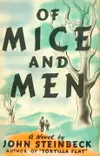
A short and easy read.
The writing is warm and honest and candid. Unfortunately, tragedy is foreshadowed so loudly that the impact of the final scene is dulled. Also, the extensive use of "eye dialect" is tiring to read (although, admittedly, its quaintness and authenticity is part of the story's charm).
A short and easy read.
The writing is warm and honest and candid. Unfortunately, tragedy is foreshadowed so loudly that the impact of the final scene is dulled. Also, the extensive use of "eye dialect" is tiring to read (although, admittedly, its quaintness and authenticity is part of the story's charm).

Milliways, the titular restaurant, is a cool idea: a restaurant rocking back and forth in time, like a flux capacitor on a seesaw. But the characters are only there briefly before splitting up to pursue separate narratives.
Ford and Arthur initially stay on the Ultimate Question. They uncover some interesting Earth lore, but the question itself remains elusive. Zaphod and Trillian search for the true leader of the universe; this sidequest just seems like pretext to reveal more of Zaphod's backstory, and ultimately inconsequential.
I like that there is some structure here with the two narratives, but the anticlimactic conclusion, and little progress made on the matter of the Ultimate Question makes The Restaurant at the End of the Universe feel like mere filler until the next book.
Milliways, the titular restaurant, is a cool idea: a restaurant rocking back and forth in time, like a flux capacitor on a seesaw. But the characters are only there briefly before splitting up to pursue separate narratives.
Ford and Arthur initially stay on the Ultimate Question. They uncover some interesting Earth lore, but the question itself remains elusive. Zaphod and Trillian search for the true leader of the universe; this sidequest just seems like pretext to reveal more of Zaphod's backstory, and ultimately inconsequential.
I like that there is some structure here with the two narratives, but the anticlimactic conclusion, and little progress made on the matter of the Ultimate Question makes The Restaurant at the End of the Universe feel like mere filler until the next book.
Added to listNon-Fictionwith 6 books.


Added to listOwnedwith 86 books.

I expected something like Frederick Forsyth's The Fourth Protocol, but Call for the Dead is more of a detective story with spies. Call leans towards the English school of detective fiction: while some of the characters exhibit hardboiled qualities—gritty, cunning, and blackjacks—they posture and monologue like in Golden Age whodunits, and each chapter is set up like an act in a play.
Stylistically, John le Carré is fond of long, flowing sentences with lots of chintz. They look nice and literary, but are tiring to read and hampered my enjoyment. Call is good enough to finish, but I'm not sure I'll continue with the series now. (I originally planned to read up to Tinker Tailor Soldier Spy at least, after seeing the 2011 film).
I expected something like Frederick Forsyth's The Fourth Protocol, but Call for the Dead is more of a detective story with spies. Call leans towards the English school of detective fiction: while some of the characters exhibit hardboiled qualities—gritty, cunning, and blackjacks—they posture and monologue like in Golden Age whodunits, and each chapter is set up like an act in a play.
Stylistically, John le Carré is fond of long, flowing sentences with lots of chintz. They look nice and literary, but are tiring to read and hampered my enjoyment. Call is good enough to finish, but I'm not sure I'll continue with the series now. (I originally planned to read up to Tinker Tailor Soldier Spy at least, after seeing the 2011 film).


Earth is destroyed, thrusting lone human survivor Arthur Dent into a universe of adventure. A quest around an "Ultimate Question" is an underlying plot thread, otherwise the story is just a series of absurd events.
The story is fun, not really funny though ... except for Zaphod's sarcasm towards Arthur. The humor might appeal more to fans of Monty Python-style absurdist (or surreal) comedy.
The writing is simple and pleasant to read. Characters are memorable, situations are colorful. I also like that the chapters are kept short. Douglas Adams uses too many distracting dialogue tags though, but he tones this down in subsequent books in the series.
Earth is destroyed, thrusting lone human survivor Arthur Dent into a universe of adventure. A quest around an "Ultimate Question" is an underlying plot thread, otherwise the story is just a series of absurd events.
The story is fun, not really funny though ... except for Zaphod's sarcasm towards Arthur. The humor might appeal more to fans of Monty Python-style absurdist (or surreal) comedy.
The writing is simple and pleasant to read. Characters are memorable, situations are colorful. I also like that the chapters are kept short. Douglas Adams uses too many distracting dialogue tags though, but he tones this down in subsequent books in the series.
Added to listNon-Fictionwith 5 books.