
nicanical


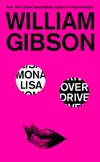
The third and final book in William Gibson's Sprawl trilogy: Mona Lisa Overdrive follows Count Zero, and concludes Angie and Bobby's story. Overdrive also revisits the end of Neuromancer, yoking the shattered AI superentity with the voodoo gods from Count Zero, as well as the aleph—a device introduced in Overdrive.
Like Count Zero, Overdrive has multiple narrative streams that eventually merge. One nice surprise is the return of Neuromancer's Molly; she joins Kumiko's narrative—a Yakuza boss's daughter laying low in England. Unfortunately, this is the weakest narrative of the book because it's just a weak frame for Molly's parts; Gibson should have cut Kumiko's parts and written it from Molly's perspective. There are other callbacks to Neuromancer as well: Lady 3Jane, Case, Riviera, so Overdrive is a real treat for fans of the first book.
As a composition, Overdrive is on par with Count Zero in terms of writing and story quality, with balanced characterization, dialogue, and action.
The third and final book in William Gibson's Sprawl trilogy: Mona Lisa Overdrive follows Count Zero, and concludes Angie and Bobby's story. Overdrive also revisits the end of Neuromancer, yoking the shattered AI superentity with the voodoo gods from Count Zero, as well as the aleph—a device introduced in Overdrive.
Like Count Zero, Overdrive has multiple narrative streams that eventually merge. One nice surprise is the return of Neuromancer's Molly; she joins Kumiko's narrative—a Yakuza boss's daughter laying low in England. Unfortunately, this is the weakest narrative of the book because it's just a weak frame for Molly's parts; Gibson should have cut Kumiko's parts and written it from Molly's perspective. There are other callbacks to Neuromancer as well: Lady 3Jane, Case, Riviera, so Overdrive is a real treat for fans of the first book.
As a composition, Overdrive is on par with Count Zero in terms of writing and story quality, with balanced characterization, dialogue, and action.


Hannu Rajaniemi's The Quantum Thief is The Saint meets Jupiter Ascending.
Legendary gentleman thief Jean Le Flambeur is rescued (a shade of him is, anyway) from a prison orbiting Neptune on behalf of entities unknown, and for reasons unknown. Jean successfully argues for a detour to The Oubliette—a Martian city ambling around the red planet like one of Theo Jansen's Strandbeests. This city is where the bulk of the story takes place and it's a good story: well-paced and a fun ride, with creative settings and set pieces, and memorably-portrayed characters (although, they are a skosh cookie-cutter).
Two issues though:
First, some parts could have used more direct exposition, but Rajaniemi prefers the delayed approach. E.g., "gogols," over several chapters, are described as having relationships, being susceptible to "piracy", and then being comprised of code-like "scripts" before it becomes clear they are a form of digitized human consciousness. While delayed exposition can be immersive, it can also be confusing.
Second, Rajaniemi also uses multiple narrative perspectives: Jean in first-person, the rest from third. Arthur C. Clarke's Childhood's End does the same thing, and it was distracting there too.
Hannu Rajaniemi's The Quantum Thief is The Saint meets Jupiter Ascending.
Legendary gentleman thief Jean Le Flambeur is rescued (a shade of him is, anyway) from a prison orbiting Neptune on behalf of entities unknown, and for reasons unknown. Jean successfully argues for a detour to The Oubliette—a Martian city ambling around the red planet like one of Theo Jansen's Strandbeests. This city is where the bulk of the story takes place and it's a good story: well-paced and a fun ride, with creative settings and set pieces, and memorably-portrayed characters (although, they are a skosh cookie-cutter).
Two issues though:
First, some parts could have used more direct exposition, but Rajaniemi prefers the delayed approach. E.g., "gogols," over several chapters, are described as having relationships, being susceptible to "piracy", and then being comprised of code-like "scripts" before it becomes clear they are a form of digitized human consciousness. While delayed exposition can be immersive, it can also be confusing.
Second, Rajaniemi also uses multiple narrative perspectives: Jean in first-person, the rest from third. Arthur C. Clarke's Childhood's End does the same thing, and it was distracting there too.
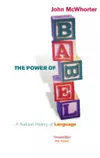
An okay, if dated, primer on historical linguistics. John McWhorter's The Power of Babel presents languages as loose groups of similar dialects, highly malleable, and ever-changing through mechanisms like grammaticalization and rebracketting. This contrasts with the layman's concept of languages as distinct, reflecting their rigid codification in writing.
The mechanisms of change are fascinating, from sounds to semantics—just the type of stuff I wanted to read about and what I imagined linguistics to be about. So I was surprised to learn, in chapter seven, that these are peripheral topics in linguistics, with most attention and resources going to the Chomskyan study of innate, biological, human language ability:
[T]he linguist who does not display at least token interest in the Chomskyan endeavor is not considered "a linguist linguist" . . . .
(At least, this was the case in the early 2000s when Babel was published—a quick search didn't clarify whether this is or isn't still the case).
While its contents are interesting, Babel is poor as a composition. There's a sense that the manuscript went through poor or little editing. The latter half is notably tedious: McWhorter veers off on tangents and frets to the reader over the substance and quality of his analogies—many of which are inaccessible now because they reference pop culture of the time, and pop culture has expiry dates.
Some parts are simply sloppy. E.g., chapter five where McWhorter discusses "decorative gunk" accumulating in languages over time: he variously refers to it as gunk, bric-a-brac, crud, doodads, barnacles, like he was skipping through a thesaurus—pick one word and stick to it, John.
An okay, if dated, primer on historical linguistics. John McWhorter's The Power of Babel presents languages as loose groups of similar dialects, highly malleable, and ever-changing through mechanisms like grammaticalization and rebracketting. This contrasts with the layman's concept of languages as distinct, reflecting their rigid codification in writing.
The mechanisms of change are fascinating, from sounds to semantics—just the type of stuff I wanted to read about and what I imagined linguistics to be about. So I was surprised to learn, in chapter seven, that these are peripheral topics in linguistics, with most attention and resources going to the Chomskyan study of innate, biological, human language ability:
[T]he linguist who does not display at least token interest in the Chomskyan endeavor is not considered "a linguist linguist" . . . .
(At least, this was the case in the early 2000s when Babel was published—a quick search didn't clarify whether this is or isn't still the case).
While its contents are interesting, Babel is poor as a composition. There's a sense that the manuscript went through poor or little editing. The latter half is notably tedious: McWhorter veers off on tangents and frets to the reader over the substance and quality of his analogies—many of which are inaccessible now because they reference pop culture of the time, and pop culture has expiry dates.
Some parts are simply sloppy. E.g., chapter five where McWhorter discusses "decorative gunk" accumulating in languages over time: he variously refers to it as gunk, bric-a-brac, crud, doodads, barnacles, like he was skipping through a thesaurus—pick one word and stick to it, John.
An okay, if dated, primer on historical linguistics. John McWhorter's The Power of Babel presents languages as loose groups of similar dialects, highly malleable, and ever-changing through mechanisms like grammaticalization and rebracketting. This contrasts with the layman's concept of languages as distinct, rigidly codified in writing, only mixing into pidgins and creoles where populations rub up against each other.
The mechanisms of change are fascinating, from sounds to semantics—just the type of stuff I wanted to read about and what I imagined linguistics to be about. So I was surprised to learn, in chapter seven, that these are peripheral topics in linguistics, with most attention and resources going to the Chomskyan study of innate, biological, human language ability:
[T]he linguist who does not display at least token interest in the Chomskyan endeavor is not considered "a linguist linguist" . . . .
(At least, this was the case in the early 2000s when Babel was published—a cursory search didn't clarify whether this is or isn't still the case).
While its contents are interesting, Babel as a composition is poor. There's a sense that the manuscript went through poor or little editing. The latter half is notably tedious: McWhorter veers off on tangents or frets to the reader over the substance and quality of his analogies. Many of his analogies are inaccessible now because they rely on pop culture of the time, and pop culture has expiry dates.
Some parts are simply sloppy. E.g., chapter five where McWhorter discusses "decorative gunk" accumulating in languages over time: he variously refers to it as gunk, bric-a-brac, crud, doodads, barnacles, like he was skipping through a thesaurus—pick one word and stick to it, John.
An okay, if dated, primer on historical linguistics. John McWhorter's The Power of Babel presents languages as loose groups of similar dialects, highly malleable, and ever-changing through mechanisms like grammaticalization and rebracketting. This contrasts with the layman's concept of languages as distinct, rigidly codified in writing, only mixing into pidgins and creoles where populations rub up against each other.
The mechanisms of change are fascinating, from sounds to semantics—just the type of stuff I wanted to read about and what I imagined linguistics to be about. So I was surprised to learn, in chapter seven, that these are peripheral topics in linguistics, with most attention and resources going to the Chomskyan study of innate, biological, human language ability:
[T]he linguist who does not display at least token interest in the Chomskyan endeavor is not considered "a linguist linguist" . . . .
(At least, this was the case in the early 2000s when Babel was published—a cursory search didn't clarify whether this is or isn't still the case).
While its contents are interesting, Babel as a composition is poor. There's a sense that the manuscript went through poor or little editing. The latter half is notably tedious: McWhorter veers off on tangents or frets to the reader over the substance and quality of his analogies. Many of his analogies are inaccessible now because they rely on pop culture of the time, and pop culture has expiry dates.
Some parts are simply sloppy. E.g., chapter five where McWhorter discusses "decorative gunk" accumulating in languages over time: he variously refers to it as gunk, bric-a-brac, crud, doodads, barnacles, like he was skipping through a thesaurus—pick one word and stick to it, John.
An okay, if dated, primer on historical linguistics. John McWhorter's The Power of Babel presents languages as loose groups of similar dialects, highly malleable, and ever-changing through mechanisms like grammaticalization and rebracketting. This contrasts with the layman's concept of languages as distinct, rigidly codified in writing, only mixing into pidgins and creoles where populations rub up against each other.
The mechanisms of change are fascinating, from sounds to semantics—just the type of stuff I wanted to read about and what I thought linguistics to be about. So I was surprised to learn, in chapter seven, that these are peripheral topics in linguistics; most attention and resources going to the Chomskyan study of innate, biological, human language ability:
[T]he linguist who does not display at least token interest in the Chomskyan endeavor is not considered "a linguist linguist" . . . .
(At least, this was the case in the early 2000s when Babel was published—a cursory search didn't clarify whether this is or isn't still the case).
While its contents are interesting, Babel as a composition is poor. There's a sense that the manuscript went through poor or little editing. The latter half is notably tedious: McWhorter veers off on tangents or frets to the reader over the substance and quality of his analogies. Many of his analogies are inaccessible now because they rely on pop culture of the time, and pop culture has expiry dates.
Some parts are simply sloppy. E.g., chapter five where McWhorter discusses "decorative gunk" accumulating in languages over time: he variously refers to it as gunk, bric-a-brac, crud, doodads, barnacles, like he was skipping through a thesaurus—pick one word and stick to it, John.
An okay, if dated, primer on historical linguistics. John McWhorter's The Power of Babel presents languages as loose groups of similar dialects, highly malleable, and ever-changing through mechanisms like grammaticalization and rebracketting. This contrasts with the layman's concept of languages as distinct, rigidly codified in writing, only mixing into pidgins and creoles where populations rub up against each other.
The mechanisms of change are fascinating, from sounds to semantics—just the type of stuff I wanted to read about and what I thought linguistics to be about. So I was surprised to learn, in chapter seven, that these are peripheral topics in linguistics; most attention and resources going to the Chomskyan study of innate, biological, human language ability:
[T]he linguist who does not display at least token interest in the Chomskyan endeavor is not considered "a linguist linguist" . . . .
(At least, this was the case in the early 2000s when Babel was published—a cursory search didn't clarify whether this is or isn't still the case).
While its contents are interesting, Babel as a composition is poor. There's a sense that the manuscript went through poor or little editing. The latter half is notably tedious: McWhorter veers off on tangents or frets to the reader over the substance and quality of his analogies. Many of his analogies are inaccessible now because they rely on pop culture of the time, and pop culture has expiry dates.
Some parts are simply sloppy. E.g., chapter five where McWhorter discusses "decorative gunk" accumulating in languages over time: he variously refers to it as gunk, bric-a-brac, crud, doodads, barnacles, like he was skipping through a thesaurus—pick one word and stick to it, John.

Hannu Rajaniemi's The Quantum Thief is The Saint meets Jupiter Ascending.
Legendary gentleman thief Jean Le Flambeur is rescued (a shade of him is, anyway) from a prison orbiting Neptune on behalf of entities unknown, and for reasons unknown. Jean successfully argues for a detour to The Oubliette—a Martian city ambling around the red planet like one of Theo Jansen's Strandbeests. This city is where the bulk of the story takes place and it's a good one: well-paced and a fun ride, with creative settings and set pieces, and memorably-portrayed characters (although, they are a skosh cookie-cutter).
Two issues though:
First, some parts could have used more direct exposition, but Rajaniemi prefers the delayed approach. E.g., "gogols," over several chapters, are described as having relationships, being susceptible to "piracy", and then being comprised of code-like "scripts" before it becomes clear they are a form of digitized human consciousness. While delayed exposition can be immersive, it can also be confusing.
Second, Rajaniemi also uses multiple narrative perspectives: Jean in first-person, the rest from third. Arthur C. Clarke's Childhood's End does the same thing, and it was distracting there too.
Hannu Rajaniemi's The Quantum Thief is The Saint meets Jupiter Ascending.
Legendary gentleman thief Jean Le Flambeur is rescued (a shade of him is, anyway) from a prison orbiting Neptune on behalf of entities unknown, and for reasons unknown. Jean successfully argues for a detour to The Oubliette—a Martian city ambling around the red planet like one of Theo Jansen's Strandbeests. This city is where the bulk of the story takes place and it's a good one: well-paced and a fun ride, with creative settings and set pieces, and memorably-portrayed characters (although, they are a skosh cookie-cutter).
Two issues though:
First, some parts could have used more direct exposition, but Rajaniemi prefers the delayed approach. E.g., "gogols," over several chapters, are described as having relationships, being susceptible to "piracy", and then being comprised of code-like "scripts" before it becomes clear they are a form of digitized human consciousness. While delayed exposition can be immersive, it can also be confusing.
Second, Rajaniemi also uses multiple narrative perspectives: Jean in first-person, the rest from third. Arthur C. Clarke's Childhood's End does the same thing, and it was distracting there too.

Added to listOwnedwith 91 books.



The hearts of men are alike wherever you go. The rest is scenery.
A wonderful inaugural offering from Ferdia Lennon.
Glorious Exploits starts out like a slice of life but quickly becomes not that. Lampo, the narrator, and his friend Gelon are unemployed potters in ancient Syracuse. In the aftermath of the Sicilian Expedition and Athenian defeat, nearby quarries are filled with Athenian prisoners of war.
Gelon and Lampo get the curiously ambitious idea to stage a play with the Athenian prisoners acting. The duo's pursuit of this singular goal takes them through ups and downs, across the paths of a diverse supporting ensemble, to tell a story about compassion, sympathy, and patience.
I admire the balance of the composition—the overall optimistic and persevering tone tempered with some somber moments. Glorious Exploits is well-paced, with chapters kept to digestible lengths. Scenes blend the right amounts of dialogue, action, and reflection. And Lennon makes some discerning stylistic decisions, like having Lampo sound like a Cockney dockworker (which works remarkably well).
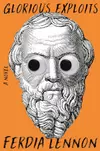
Also, the cover with the googly eyes got me by the bubu.
The hearts of men are alike wherever you go. The rest is scenery.
A wonderful inaugural offering from Ferdia Lennon.
Glorious Exploits starts out like a slice of life but quickly becomes not that. Lampo, the narrator, and his friend Gelon are unemployed potters in ancient Syracuse. In the aftermath of the Sicilian Expedition and Athenian defeat, nearby quarries are filled with Athenian prisoners of war.
Gelon and Lampo get the curiously ambitious idea to stage a play with the Athenian prisoners acting. The duo's pursuit of this singular goal takes them through ups and downs, across the paths of a diverse supporting ensemble, to tell a story about compassion, sympathy, and patience.
I admire the balance of the composition—the overall optimistic and persevering tone tempered with some somber moments. Glorious Exploits is well-paced, with chapters kept to digestible lengths. Scenes blend the right amounts of dialogue, action, and reflection. And Lennon makes some discerning stylistic decisions, like having Lampo sound like a Cockney dockworker (which works remarkably well).
Also, the cover with the googly eyes got me by the bubu.

A good follow-up to Neuromancer. Count Zero fleshes out William Gibson's Sprawl nicely, introducing a new cast, but also revisiting some characters and locations from Neuromancer for continuity.
Gibson goes with three narrative streams this time: one follows Turner, a mercenary hired to run a corporate defection; another follows budding console jockey Bobby Newmark—the titular Count; the final stream follows disgraced curator Marly Krushkhova, hired to find the creator of enigmatic box-shaped sculptures.
The story unfolds like a Greek tragedy; unlike Neuromancer where Case and Molly ran the show, Turner, Bobby, and Marly aren't so much inciting events as they are being dwarfed and manipulated by wildly influential entities: multibillionaires, multinationals, and mysterious 'voodoo gods' in cyberspace—remnants of the Neuromancer-Wintermute merger.
Count Zero's prose and pacing is good, following the same propulsive style as Neuromancer. Two complaints though: first, Gibson excessively name-drops corporations, e.g., Sony Biomonitor, Citroen-Dornier car. In moderation, it enhances the realism and grounds the world, but here it's overused and distracting; second, there are some decking sequences in the latter half but once again they underwhelm like in Neuromancer—just autopilot milk runs in the Matrix.
A good follow-up to Neuromancer. Count Zero fleshes out William Gibson's Sprawl nicely, introducing a new cast, but also revisiting some characters and locations from Neuromancer for continuity.
Gibson goes with three narrative streams this time: one follows Turner, a mercenary hired to run a corporate defection; another follows budding console jockey Bobby Newmark—the titular Count; the final stream follows disgraced curator Marly Krushkhova, hired to find the creator of enigmatic box-shaped sculptures.
The story unfolds like a Greek tragedy; unlike Neuromancer where Case and Molly ran the show, Turner, Bobby, and Marly aren't so much inciting events as they are being dwarfed and manipulated by wildly influential entities: multibillionaires, multinationals, and mysterious 'voodoo gods' in cyberspace—remnants of the Neuromancer-Wintermute merger.
Count Zero's prose and pacing is good, following the same propulsive style as Neuromancer. Two complaints though: first, Gibson excessively name-drops corporations, e.g., Sony Biomonitor, Citroen-Dornier car. In moderation, it enhances the realism and grounds the world, but here it's overused and distracting; second, there are some decking sequences in the latter half but once again they underwhelm like in Neuromancer—just autopilot milk runs in the Matrix.

William Golding's Lord of the Flies is about some British schoolboys stranded on an island, trying to stay civilized while awaiting rescue.
The schoolboys represent society in miniature, with the main characters Ralph and Jack (and Piggy, to an extent) standing in for human qualities and archetypes. Thus, their interactions invoke struggles familiar and timeless—between the powerful and the powerless, haves and have-nots, bullies and the bullied.
Sounds great. Unfortunately, Golding's execution does not impress. His sentences are too long, passively-constructed, and maddeningly uniform in cadence which transforms swathes of the book into monolithic blocks that sink eyelids. Narrative portions, like descriptions and scene-setting, are verbose and nebulous to the point of frustrating comprehension of important moments. E.g., when Simon realizes the monster's true nature, I wasn't sure if his epiphany was genuine or merely a hallucination.
Golding does better with dialogue and character interactions. Sometimes, too many tags are omitted making it hard to follow who is speaking. But otherwise, the dialogue and choreography wonderfully conveys all the tension expected of a band of marooned adolescents.
William Golding's Lord of the Flies is about some British schoolboys stranded on an island, trying to stay civilized while awaiting rescue.
The schoolboys represent society in miniature, with the main characters Ralph and Jack (and Piggy, to an extent) standing in for human qualities and archetypes. Thus, their interactions invoke struggles familiar and timeless—between the powerful and the powerless, haves and have-nots, bullies and the bullied.
Sounds great. Unfortunately, Golding's execution does not impress. His sentences are too long, passively-constructed, and maddeningly uniform in cadence which transforms swathes of the book into monolithic blocks that sink eyelids. Narrative portions, like descriptions and scene-setting, are verbose and nebulous to the point of frustrating comprehension of important moments. E.g., when Simon realizes the monster's true nature, I wasn't sure if his epiphany was genuine or merely a hallucination.
Golding does better with dialogue and character interactions. Sometimes, too many tags are omitted making it hard to follow who is speaking. But otherwise, the dialogue and choreography wonderfully conveys all the tension expected of a band of marooned adolescents.

This is an awesome collection of Dashiell Hammett's Continental Op stories, originally published in Black Mask.
The stories are well-paced and feature surprising variety in antagonists, supporting characters, motivations, and locations. Stories for the pulps are constrained by the commercial demands of the format so I expected some rehashing, but I finished reading never getting that impression.
Hammett sticks to certain narrative patterns. He is particularly fond of twists, which all the stories have. Hammett's twists are satisfying, impeccably-timed, and simple—simple is good because there's authenticity in their simplicity. (Compared with the convoluted deductive chains from the "Golden Age" of detective fiction).
The stories are grouped into three parts corresponding to Hammett's periods of contribution. The honing of Hammett's writing is palpable progressing through the parts: prose is streamlined; there's more showing, less telling; command of language is tightened; and the Op behaves more consistently.
Later stories feature more gratuitous violence, to better appeal to Black Mask's audience—an unfortunate change because it comes at the expense of wonderful investigative details Hammett included in earlier stories (no doubt drawn from his experience as a Pinkerton) like the use of collodion to fake scar tissue in Bodies Piled Up. Instead, we get stories like The Gutting of Couffignal and Corkscrew which are almost pure violence and, consequently, the least engaging.
Note: this ebook version of The Big Book of the Continental Op is missing the novels and Three Dimes.
This is an awesome collection of Dashiell Hammett's Continental Op stories, originally published in Black Mask.
The stories are well-paced and feature surprising variety in antagonists, supporting characters, motivations, and locations. Stories for the pulps are constrained by the commercial demands of the format so I expected some rehashing, but I finished reading never getting that impression.
Hammett sticks to certain narrative patterns. He is particularly fond of twists, which all the stories have. Hammett's twists are satisfying, impeccably-timed, and simple—simple is good because there's authenticity in their simplicity. (Compared with the convoluted deductive chains from the "Golden Age" of detective fiction).
The stories are grouped into three parts corresponding to Hammett's periods of contribution. The honing of Hammett's writing is palpable progressing through the parts: prose is streamlined; there's more showing, less telling; command of language is tightened; and the Op behaves more consistently.
Later stories feature more gratuitous violence, to better appeal to Black Mask's audience—an unfortunate change because it comes at the expense of wonderful investigative details Hammett included in earlier stories (no doubt drawn from his experience as a Pinkerton) like the use of collodion to fake scar tissue in Bodies Piled Up. Instead, we get stories like The Gutting of Couffignal and Corkscrew which are almost pure violence and, consequently, the least engaging.
Note: this ebook version of The Big Book of the Continental Op is missing the novels and Three Dimes.


A good follow-up to Neuromancer. Count Zero fleshes out William Gibson's Sprawl nicely, introducing a new cast, but also revisiting some characters and locations from Neuromancer for continuity.
Gibson goes with three narrative streams this time: one follows Turner, a mercenary hired to run a corporate defection; another follows budding console jockey Bobby Newmark—the titular Count; the final stream follows disgraced curator Marly Krushkhova, hired to find the creator of enigmatic box-shaped sculptures.
The story unfolds like a Greek tragedy; unlike Neuromancer where Case and Molly ran the show, Turner, Bobby, and Marly aren't so much inciting events as they are being dwarfed and manipulated by wildly influential entities: multibillionaires, multinationals, and mysterious 'voodoo gods' in cyberspace—remnants of the Neuromancer-Wintermute merger.
Count Zero's prose and pacing is good, following the same propulsive style as Neuromancer. Two complaints though: first, Gibson excessively name-drops corporations, e.g., Sony Biomonitor, Citroen-Dornier car. In moderation, it enhances the realism and grounds the world, but here it's overused and distracting; second, there are some decking sequences in the latter half but once again they underwhelm like in Neuromancer—just autopilot milk runs in the Matrix.
A good follow-up to Neuromancer. Count Zero fleshes out William Gibson's Sprawl nicely, introducing a new cast, but also revisiting some characters and locations from Neuromancer for continuity.
Gibson goes with three narrative streams this time: one follows Turner, a mercenary hired to run a corporate defection; another follows budding console jockey Bobby Newmark—the titular Count; the final stream follows disgraced curator Marly Krushkhova, hired to find the creator of enigmatic box-shaped sculptures.
The story unfolds like a Greek tragedy; unlike Neuromancer where Case and Molly ran the show, Turner, Bobby, and Marly aren't so much inciting events as they are being dwarfed and manipulated by wildly influential entities: multibillionaires, multinationals, and mysterious 'voodoo gods' in cyberspace—remnants of the Neuromancer-Wintermute merger.
Count Zero's prose and pacing is good, following the same propulsive style as Neuromancer. Two complaints though: first, Gibson excessively name-drops corporations, e.g., Sony Biomonitor, Citroen-Dornier car. In moderation, it enhances the realism and grounds the world, but here it's overused and distracting; second, there are some decking sequences in the latter half but once again they underwhelm like in Neuromancer—just autopilot milk runs in the Matrix.

Larry Niven's Ringworld is about a massive artificial bracelet encircling a distant sun, and the motley crew sent to explore it. This solid premise is wasted by weak character growth, and the relegation of the titular Ringworld to mere MacGuffin.
The story starts slow, with the first third spent assembling the crew. Niven didn't need to spend a third of the story assembling the crew. Then, when the crew finally reach Ringworld, they just pass the time discussing Puppeteer machinations while jetting around on flycycles. The plot moves along on its own, as if by providence which . . . is actually close to the truth because the story features an interesting concept of luck (a concept that strips the characters of their agency though).
The writing is amateurish in parts: there are clumsy constructions (e.g., strange choices for metaphors); the coined expletive "tanj" is ridiculous and overused; and similar character voices with the omission of too many tags makes the dialogue hard to follow. Ringworld also dates itself through some stereotypes expressed.
I read somewhere that Niven wrote Ringworld to resolve loose ends, and tie his short stories together in anticipation of more novels. If true, it explains why the story feels like such an afterthought. This, fortunately, is somewhat mitigated by Niven's wonderful worldbuilding.
Larry Niven's Ringworld is about a massive artificial bracelet encircling a distant sun, and the motley crew sent to explore it. This solid premise is wasted by weak character growth, and the relegation of the titular Ringworld to mere MacGuffin.
The story starts slow, with the first third spent assembling the crew. Niven didn't need to spend a third of the story assembling the crew. Then, when the crew finally reach Ringworld, they just pass the time discussing Puppeteer machinations while jetting around on flycycles. The plot moves along on its own, as if by providence which . . . is actually close to the truth because the story features an interesting concept of luck (a concept that strips the characters of their agency though).
The writing is amateurish in parts: there are clumsy constructions (e.g., strange choices for metaphors); the coined expletive "tanj" is ridiculous and overused; and similar character voices with the omission of too many tags makes the dialogue hard to follow. Ringworld also dates itself through some stereotypes expressed.
I read somewhere that Niven wrote Ringworld to resolve loose ends, and tie his short stories together in anticipation of more novels. If true, it explains why the story feels like such an afterthought. This, fortunately, is somewhat mitigated by Niven's wonderful worldbuilding.
A good successor to Neuromancer. Count Zero fleshes out William Gibson's Sprawl nicely, introducing a new cast, but also revisiting some characters and locations from Neuromancer for continuity.
Gibson goes with three narrative streams this time: one follows Turner, a mercenary hired to run a corporate defection; another follows budding console jockey Bobby Newmark—the titular Count; the final stream follows disgraced curator Marly Krushkhova, hired to find the creator of enigmatic box-shaped sculptures.
The story unfolds like a Greek tragedy; unlike Neuromancer where Case and Molly ran the show, Turner, Bobby, and Marly aren't so much inciting events as they are being dwarfed and manipulated by wildly influential entities: multibillionaires, multinationals, and mysterious 'voodoo gods' in cyberspace—remnants of the Neuromancer-Wintermute merger.
Count Zero's prose and pacing is good, following the same propulsive style as Neuromancer. Two complaints though: first, Gibson excessively name-drops corporations, e.g., Sony Biomonitor, Citroen-Dornier car. In moderation, it enhances the realism and grounds the world, but here it's overused and distracting; second, there are some decking sequences in the latter half but once again they underwhelm like in Neuromancer—just autopilot milk runs in the Matrix.
A good successor to Neuromancer. Count Zero fleshes out William Gibson's Sprawl nicely, introducing a new cast, but also revisiting some characters and locations from Neuromancer for continuity.
Gibson goes with three narrative streams this time: one follows Turner, a mercenary hired to run a corporate defection; another follows budding console jockey Bobby Newmark—the titular Count; the final stream follows disgraced curator Marly Krushkhova, hired to find the creator of enigmatic box-shaped sculptures.
The story unfolds like a Greek tragedy; unlike Neuromancer where Case and Molly ran the show, Turner, Bobby, and Marly aren't so much inciting events as they are being dwarfed and manipulated by wildly influential entities: multibillionaires, multinationals, and mysterious 'voodoo gods' in cyberspace—remnants of the Neuromancer-Wintermute merger.
Count Zero's prose and pacing is good, following the same propulsive style as Neuromancer. Two complaints though: first, Gibson excessively name-drops corporations, e.g., Sony Biomonitor, Citroen-Dornier car. In moderation, it enhances the realism and grounds the world, but here it's overused and distracting; second, there are some decking sequences in the latter half but once again they underwhelm like in Neuromancer—just autopilot milk runs in the Matrix.