
Sandwich Joe


In The Secret Commonwealth, Pullman trades the intimacy of Oxford and the frozen wonder of the North for a sprawling, politically charged journey across Europe, the Near East, and Central Asia… and it works. This installment feels like a mature evolution of His Dark Materials: a world still threaded with Dust and dæmons, but one wrestling with modern realities and the pain of getting older.
Lyra, now grown and disenchanted, experiences a second fall, one not from innocence, but from belief. The sense of loss is profound, but so is the beauty of her search to recover faith in the unseen.
Others have noted some of the rougher aspects of the novel, so I won’t go into those. I’ll just say that this is a rich, mature, and deeply philosophical entry in the series: less adventure, more pilgrimage. Even in its darkness, it never loses the wonder that makes Lyra’s world so unforgettable. I can’t wait for the final chapter later this week.
In The Secret Commonwealth, Pullman trades the intimacy of Oxford and the frozen wonder of the North for a sprawling, politically charged journey across Europe, the Near East, and Central Asia… and it works. This installment feels like a mature evolution of His Dark Materials: a world still threaded with Dust and dæmons, but one wrestling with modern realities and the pain of getting older.
Lyra, now grown and disenchanted, experiences a second fall, one not from innocence, but from belief. The sense of loss is profound, but so is the beauty of her search to recover faith in the unseen.
Others have noted some of the rougher aspects of the novel, so I won’t go into those. I’ll just say that this is a rich, mature, and deeply philosophical entry in the series: less adventure, more pilgrimage. Even in its darkness, it never loses the wonder that makes Lyra’s world so unforgettable. I can’t wait for the final chapter later this week.

Murakami’s Norwegian Wood is unlike the surreal, dreamlike novels I’ve read of his before—it’s grounded, melancholic, and intensely personal. Told through the retrospective lens of Toru Watanabe (a semi-autobiographical narrator), it’s a story of grief, love, and the difficult passage into adulthood in 1960s Tokyo.
What stayed with me most is the novel’s exploration of how death shapes life. The many suicides in Toru’s life leave him torn between memory and possibility, and force him to face how “death is not the opposite of life, but a part of it.”
The novel isn’t always comfortable. The pacing is slow, the atmosphere heavy, and the characters are not designed to be easily likable. But by the end, it’s devastating and strangely beautiful, like the Beatles song it takes its name from: bittersweet, nostalgic, and impossible to shake.
Jay Rubin’s English translation of Norwegian Wood from the Japanese is absolutely beautiful. I highly recommend it.
Murakami’s Norwegian Wood is unlike the surreal, dreamlike novels I’ve read of his before—it’s grounded, melancholic, and intensely personal. Told through the retrospective lens of Toru Watanabe (a semi-autobiographical narrator), it’s a story of grief, love, and the difficult passage into adulthood in 1960s Tokyo.
What stayed with me most is the novel’s exploration of how death shapes life. The many suicides in Toru’s life leave him torn between memory and possibility, and force him to face how “death is not the opposite of life, but a part of it.”
The novel isn’t always comfortable. The pacing is slow, the atmosphere heavy, and the characters are not designed to be easily likable. But by the end, it’s devastating and strangely beautiful, like the Beatles song it takes its name from: bittersweet, nostalgic, and impossible to shake.
Jay Rubin’s English translation of Norwegian Wood from the Japanese is absolutely beautiful. I highly recommend it.


One of my most anticipated books this year was Katabasis by R.F. Kuang. I read Babel last December and loved it, so I was anxious to see where her latest journey would take me. And, while the novel isn’t perfect, it didn’t disappoint. Katabasis, which tells the story of a student’s literal descent into Hell, blends Dante, Greek myth, and Buddhist afterlife courts into a wild dark academia fever dream.
There’s a lot to enjoy about the novel and Kuang’s writing. I love the biting humor, the way paradoxes like the Möbius strip or the Lethe become worldbuilding. It’s funny, bleak, and oddly moving.
One of my most anticipated books this year was Katabasis by R.F. Kuang. I read Babel last December and loved it, so I was anxious to see where her latest journey would take me. And, while the novel isn’t perfect, it didn’t disappoint. Katabasis, which tells the story of a student’s literal descent into Hell, blends Dante, Greek myth, and Buddhist afterlife courts into a wild dark academia fever dream.
There’s a lot to enjoy about the novel and Kuang’s writing. I love the biting humor, the way paradoxes like the Möbius strip or the Lethe become worldbuilding. It’s funny, bleak, and oddly moving.

My Heart Is a Chainsaw is both a love letter to and an autopsy of the slasher genre. Stephen Graham Jones takes every trope (the Final Girl, the caretaker, the small-town curse, etc.) and makes them feel alive, uncomfortable, and personal.
Jade, the narrator, is one of the most compelling voices I’ve read in horror. She’s unreliable, but not because she’s dishonest. Her world is filtered through slasher logic because it’s the only framework that makes sense to her.
Jones pulls off something remarkable: horror that’s both “elevated” and defiantly not ashamed of its roots. The violence and pulp are still there, but so is heart, empathy, and social commentary. Jade’s awkwardness, her low self-worth, her obsession—all of it makes her painful to watch and impossible not to root for.
At its core, My Heart Is a Chainsaw isn’t just a slasher story; it’s about what it means to love a genre that doesn’t love you back, and to find a sense of self in its rules anyway.
My Heart Is a Chainsaw is both a love letter to and an autopsy of the slasher genre. Stephen Graham Jones takes every trope (the Final Girl, the caretaker, the small-town curse, etc.) and makes them feel alive, uncomfortable, and personal.
Jade, the narrator, is one of the most compelling voices I’ve read in horror. She’s unreliable, but not because she’s dishonest. Her world is filtered through slasher logic because it’s the only framework that makes sense to her.
Jones pulls off something remarkable: horror that’s both “elevated” and defiantly not ashamed of its roots. The violence and pulp are still there, but so is heart, empathy, and social commentary. Jade’s awkwardness, her low self-worth, her obsession—all of it makes her painful to watch and impossible not to root for.
At its core, My Heart Is a Chainsaw isn’t just a slasher story; it’s about what it means to love a genre that doesn’t love you back, and to find a sense of self in its rules anyway.
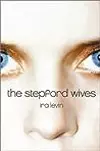
Ira Levin’s The Stepford Wives is terrifying not because of monsters, but because of how ordinary its horror feels. Levin exposes the quiet violence of conformity—how easily a woman’s sanity can be dismissed as “hysteria,” how quickly independence becomes a threat.
What’s most chilling is the gaslighting: Joanna’s every fear is turned against her until she starts to doubt her own mind. The evil here isn’t supernatural; it’s polite, domestic, and smiling. Even worse, some of the women in Stepford enforce the same ideals that imprison them, a dynamic that still echoes in modern “tradwife” culture.
It’s a story about losing a shared reality, about realizing that everyone else has agreed on something you know is wrong. Levin’s horror doesn’t scream; it reassures you that everything’s fine, and that’s what makes it unforgettable.
Ira Levin’s The Stepford Wives is terrifying not because of monsters, but because of how ordinary its horror feels. Levin exposes the quiet violence of conformity—how easily a woman’s sanity can be dismissed as “hysteria,” how quickly independence becomes a threat.
What’s most chilling is the gaslighting: Joanna’s every fear is turned against her until she starts to doubt her own mind. The evil here isn’t supernatural; it’s polite, domestic, and smiling. Even worse, some of the women in Stepford enforce the same ideals that imprison them, a dynamic that still echoes in modern “tradwife” culture.
It’s a story about losing a shared reality, about realizing that everyone else has agreed on something you know is wrong. Levin’s horror doesn’t scream; it reassures you that everything’s fine, and that’s what makes it unforgettable.


Here is one of the most unique graphic novels I’ve ever read, and I’ve read a lot of them. The concept is deceptively simple: every panel shows the same corner of a room, but across thousands of years. The setting itself becomes the main character, quietly observing as people, furniture, and even species come and go.
McGuire structures time like a shuffled deck of cards, showing how people don’t really change, even as everything else does. It’s both cosmic and intimate, a reminder that all things are impermanent, yet somehow continuous. The effect is mesmerizing: a story that feels like watching time breathe.
Here is one of the most unique graphic novels I’ve ever read, and I’ve read a lot of them. The concept is deceptively simple: every panel shows the same corner of a room, but across thousands of years. The setting itself becomes the main character, quietly observing as people, furniture, and even species come and go.
McGuire structures time like a shuffled deck of cards, showing how people don’t really change, even as everything else does. It’s both cosmic and intimate, a reminder that all things are impermanent, yet somehow continuous. The effect is mesmerizing: a story that feels like watching time breathe.


It would be difficult to overstate my longtime love of the His Dark Materials series. I stumbled upon the books when I was around age 10, and they were such a large part of my childhood. It feels surreal that the series has finally come to a close.
I know The Rose Field disappointed many HDM fans, but I thought it was an enjoyable read. The key is to treat the novel as yet another part of the whole rather than a culmination of the entire series.
🎧 I both read the ebook and listened to the audiobook, and I think I actually preferred the audiobook. Michael Sheen did an excellent job as narrator.
It would be difficult to overstate my longtime love of the His Dark Materials series. I stumbled upon the books when I was around age 10, and they were such a large part of my childhood. It feels surreal that the series has finally come to a close.
I know The Rose Field disappointed many HDM fans, but I thought it was an enjoyable read. The key is to treat the novel as yet another part of the whole rather than a culmination of the entire series.
🎧 I both read the ebook and listened to the audiobook, and I think I actually preferred the audiobook. Michael Sheen did an excellent job as narrator.


Master Class has a great premise, but the execution never lives up to it. The world building stays strangely narrow, focusing entirely on schooling instead of exploring even a few other broader consequences of such a system. The protagonist is hard to root for; her choices often feel illogical or convenient rather than character-driven. And the book’s themes aren’t subtext so much as text shouted through a megaphone, with Nazi parallels so obvious they lose their impact.
A quick, mildly interesting read, but ultimately shallow and frustratingly underdeveloped.
Master Class has a great premise, but the execution never lives up to it. The world building stays strangely narrow, focusing entirely on schooling instead of exploring even a few other broader consequences of such a system. The protagonist is hard to root for; her choices often feel illogical or convenient rather than character-driven. And the book’s themes aren’t subtext so much as text shouted through a megaphone, with Nazi parallels so obvious they lose their impact.
A quick, mildly interesting read, but ultimately shallow and frustratingly underdeveloped.

The three books in this series (baby, toddler, and child) explore way to raise children in the Montessori way outside of school.
I’ve read the series, and I found this one to be the weakest of the three. While it was informative, I believe the others (especially the toddler one) were more novel and interesting.
That said, it’s a helpful book for guardians and caregivers to read, and I’ll be able to use these strategies in caring for my niece.
The three books in this series (baby, toddler, and child) explore way to raise children in the Montessori way outside of school.
I’ve read the series, and I found this one to be the weakest of the three. While it was informative, I believe the others (especially the toddler one) were more novel and interesting.
That said, it’s a helpful book for guardians and caregivers to read, and I’ll be able to use these strategies in caring for my niece.


Perfume by Patrick Süskind is one of those books that’s impossible to “enjoy,” but equally impossible to look away from. It’s grotesque, hypnotic, and written with such precision that even the filthiest moments feel strangely beautiful. Süskind builds an entire metaphysics out of scent, turning smell into a stand-in for identity, soul, and power.
It’s weird. It’s uncomfortable. It’s brilliant. And the language is gorgeous throughout.
Perfume by Patrick Süskind is one of those books that’s impossible to “enjoy,” but equally impossible to look away from. It’s grotesque, hypnotic, and written with such precision that even the filthiest moments feel strangely beautiful. Süskind builds an entire metaphysics out of scent, turning smell into a stand-in for identity, soul, and power.
It’s weird. It’s uncomfortable. It’s brilliant. And the language is gorgeous throughout.