Sandwich Joe


In The Secret Commonwealth, Pullman trades the intimacy of Oxford and the frozen wonder of the North for a sprawling, politically charged journey across Europe, the Near East, and Central Asia… and it works. This installment feels like a mature evolution of His Dark Materials: a world still threaded with Dust and dæmons, but one wrestling with modern realities and the pain of getting older.
Lyra, now grown and disenchanted, experiences a second fall, one not from innocence, but from belief. The sense of loss is profound, but so is the beauty of her search to recover faith in the unseen.
Others have noted some of the rougher aspects of the novel, so I won’t go into those. I’ll just say that this is a rich, mature, and deeply philosophical entry in the series: less adventure, more pilgrimage. Even in its darkness, it never loses the wonder that makes Lyra’s world so unforgettable. I can’t wait for the final chapter later this week.
In The Secret Commonwealth, Pullman trades the intimacy of Oxford and the frozen wonder of the North for a sprawling, politically charged journey across Europe, the Near East, and Central Asia… and it works. This installment feels like a mature evolution of His Dark Materials: a world still threaded with Dust and dæmons, but one wrestling with modern realities and the pain of getting older.
Lyra, now grown and disenchanted, experiences a second fall, one not from innocence, but from belief. The sense of loss is profound, but so is the beauty of her search to recover faith in the unseen.
Others have noted some of the rougher aspects of the novel, so I won’t go into those. I’ll just say that this is a rich, mature, and deeply philosophical entry in the series: less adventure, more pilgrimage. Even in its darkness, it never loses the wonder that makes Lyra’s world so unforgettable. I can’t wait for the final chapter later this week.


Reading The Hole by Pyun Hye-young feels like waking in a hospital room you can’t leave. At first, nothing much happens. The novel seems like quiet musings on recovery. Then the light grows harsher, the silences heavier, the house smaller. The hole in the yard keeps getting deeper, and so does the suffocating horror. It’s a novel about paralysis, about being trapped inside your own body, and suffering from someone else’s grief.
That said, I feel the beginning was too slow. I wasn’t very invested until at least the middle, and it ended just when it was really starting to get going.
🇰🇷 The English translation from the Korean by Sora Kim-Russell is very good.
🎧 The narrator, Tim Campbell, does a solid job with the audiobook.
Reading The Hole by Pyun Hye-young feels like waking in a hospital room you can’t leave. At first, nothing much happens. The novel seems like quiet musings on recovery. Then the light grows harsher, the silences heavier, the house smaller. The hole in the yard keeps getting deeper, and so does the suffocating horror. It’s a novel about paralysis, about being trapped inside your own body, and suffering from someone else’s grief.
That said, I feel the beginning was too slow. I wasn’t very invested until at least the middle, and it ended just when it was really starting to get going.
🇰🇷 The English translation from the Korean by Sora Kim-Russell is very good.
🎧 The narrator, Tim Campbell, does a solid job with the audiobook.

I found Snake Oil by Kelsey Rae Dimberg entertaining, especially with my corporate background. The way Dimberg captures power plays, appearances, and manipulation felt sharp and familiar. The writing is stylish, and the setup pulled me in right away.
That said, it's a long book, and the middle section hit a lull. There was too much information that didn't add much to the story, slowing the momentum that made the opening so strong. As a result, the ending felt a bit distracted and flat.
I've read a bunch of these “weird girl wellness” novels (youthjuice, Natural Beauty, etc.), and while Snake Oil isn't as surreal or strange, it actually offers sharper insight into the corporate world. It shows how privilege and power can be both intoxicating and corrupting, and while it could have been tighter and more focused, it's still a sleek, unsettling read worth picking up.
🎧 It's easier for me to consume longer books as audiobooks, and this one was was very good. The three different narrators (Rhoda, Dani, and Cecilia) were three separate voices, which added to the story.
I found Snake Oil by Kelsey Rae Dimberg entertaining, especially with my corporate background. The way Dimberg captures power plays, appearances, and manipulation felt sharp and familiar. The writing is stylish, and the setup pulled me in right away.
That said, it's a long book, and the middle section hit a lull. There was too much information that didn't add much to the story, slowing the momentum that made the opening so strong. As a result, the ending felt a bit distracted and flat.
I've read a bunch of these “weird girl wellness” novels (youthjuice, Natural Beauty, etc.), and while Snake Oil isn't as surreal or strange, it actually offers sharper insight into the corporate world. It shows how privilege and power can be both intoxicating and corrupting, and while it could have been tighter and more focused, it's still a sleek, unsettling read worth picking up.
🎧 It's easier for me to consume longer books as audiobooks, and this one was was very good. The three different narrators (Rhoda, Dani, and Cecilia) were three separate voices, which added to the story.

The three books in this series (baby, toddler, and child) explore way to raise children in the Montessori way outside of school.
I’ve read the series, and I found this one to be the weakest of the three. While it was informative, I believe the others (especially the toddler one) were more novel and interesting.
That said, it’s a helpful book for guardians and caregivers to read, and I’ll be able to use these strategies in caring for my niece.
The three books in this series (baby, toddler, and child) explore way to raise children in the Montessori way outside of school.
I’ve read the series, and I found this one to be the weakest of the three. While it was informative, I believe the others (especially the toddler one) were more novel and interesting.
That said, it’s a helpful book for guardians and caregivers to read, and I’ll be able to use these strategies in caring for my niece.

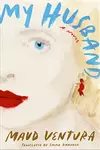
Added to listWeird Girl Litwith 147 books.


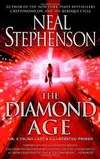
Answered a promptWhat are your favorite books of all time?


Answered a promptFavorite Space Opera books


I went into Wake Up and Open Your Eyes by Clay McLeod Chapman with high expectations. Given the current political climate, the premise felt timely, maybe even urgent. I was so excited for a bold, thought-provoking narrative that held a mirror to our current reality. What I got instead was... disappointing.
The writing style just doesn't work for me. It feels overwrought and lacking the kind of rhythm or subtlety I usually look for in speculative or politically-charged fiction. The characters are thinly drawn, more like mouthpieces for ideas than fully realized people. As a result, I struggled to feel any emotional connection or investment in their storylines.
And while the book clearly has something to say, it delivers its message with the subtlety of a bullhorn. I don't mind fiction that is clear, bold, and political, but this feels like an odd sermon rather than a story. Combine that with a plot that treads familiar ground without offering much new insight, and the novel doesn't land for me.
That said, I did enjoy the disturbing horror elements. Chapman knows how to unsettle, and there were moments that genuinely creeped me out in a good way. I just wish those strong horror beats had been anchored in a more nuanced story.
I wanted to love this book. I really did. But ultimately, it left me more frustrated than inspired.
I went into Wake Up and Open Your Eyes by Clay McLeod Chapman with high expectations. Given the current political climate, the premise felt timely, maybe even urgent. I was so excited for a bold, thought-provoking narrative that held a mirror to our current reality. What I got instead was... disappointing.
The writing style just doesn't work for me. It feels overwrought and lacking the kind of rhythm or subtlety I usually look for in speculative or politically-charged fiction. The characters are thinly drawn, more like mouthpieces for ideas than fully realized people. As a result, I struggled to feel any emotional connection or investment in their storylines.
And while the book clearly has something to say, it delivers its message with the subtlety of a bullhorn. I don't mind fiction that is clear, bold, and political, but this feels like an odd sermon rather than a story. Combine that with a plot that treads familiar ground without offering much new insight, and the novel doesn't land for me.
That said, I did enjoy the disturbing horror elements. Chapman knows how to unsettle, and there were moments that genuinely creeped me out in a good way. I just wish those strong horror beats had been anchored in a more nuanced story.
I wanted to love this book. I really did. But ultimately, it left me more frustrated than inspired.


Noor Naga's If an Egyptian Cannot Speak English is incredibly profound and thought-provoking. The prose is stunning—sharp, lyrical, and emotionally charged—and the structure is masterfully executed. I especially loved the dual perspective, where the same moment is seen through two very different lenses. It makes the disconnect between the characters all the more powerful.
Set after the Arab Spring in Cairo, the backdrop isn't just historical context; it's its own character, an active force shaping everything. The city's tensions mirror those in the characters' relationship, which is entangled in power dynamics of gender, class, nationality, language, and desire. The American-Egyptian girl imagines herself as returning home, only to realize how complex identity really is. The boy, hardened by lived experience and addiction, sees her as an outsider and punishes her for nostalgia for a homeland she never knew. Both characters are deeply flawed, but the novel resists taking sides in a clean way.
In fact, at times the realism made me deeply uncomfortable. It didn't feel exploitative—it felt true. I recognized parts of my own relationships in the dynamic between the boy and the girl, and that made the reading experience all the more affecting.
The novel doesn't offer easy answers to anything (highlighted in the meta-narrative section), and that's part of what makes it so brilliant. There can be both beauty and turmoil in ambiguity.
🎧 I listened to the audiobook, and the two voice actors (one of whom is the author) do an excellent job.
Noor Naga's If an Egyptian Cannot Speak English is incredibly profound and thought-provoking. The prose is stunning—sharp, lyrical, and emotionally charged—and the structure is masterfully executed. I especially loved the dual perspective, where the same moment is seen through two very different lenses. It makes the disconnect between the characters all the more powerful.
Set after the Arab Spring in Cairo, the backdrop isn't just historical context; it's its own character, an active force shaping everything. The city's tensions mirror those in the characters' relationship, which is entangled in power dynamics of gender, class, nationality, language, and desire. The American-Egyptian girl imagines herself as returning home, only to realize how complex identity really is. The boy, hardened by lived experience and addiction, sees her as an outsider and punishes her for nostalgia for a homeland she never knew. Both characters are deeply flawed, but the novel resists taking sides in a clean way.
In fact, at times the realism made me deeply uncomfortable. It didn't feel exploitative—it felt true. I recognized parts of my own relationships in the dynamic between the boy and the girl, and that made the reading experience all the more affecting.
The novel doesn't offer easy answers to anything (highlighted in the meta-narrative section), and that's part of what makes it so brilliant. There can be both beauty and turmoil in ambiguity.
🎧 I listened to the audiobook, and the two voice actors (one of whom is the author) do an excellent job.