
Nithou


A really great book that takes you traveling around the ethics and how to improve and be a better person through the thoughts of several great philosophers across History. The whole book is written with a lot of humor and quirky remarks making it really easy to read while still learning a lot (and has a way of translating some ethicists thoughts in something way more understandable for us mortals). Totally recommend it!
Remember: We are wrong, all the time. We are wrong, and we try again, and we’re wrong again, and again, and again. Keep trying. Choosing to not try is still making a choice, and it won’t make you (or anyone else) a better person
A really great book that takes you traveling around the ethics and how to improve and be a better person through the thoughts of several great philosophers across History. The whole book is written with a lot of humor and quirky remarks making it really easy to read while still learning a lot (and has a way of translating some ethicists thoughts in something way more understandable for us mortals). Totally recommend it!
Remember: We are wrong, all the time. We are wrong, and we try again, and we’re wrong again, and again, and again. Keep trying. Choosing to not try is still making a choice, and it won’t make you (or anyone else) a better person

Added to listOwnedwith 241 books.


Récit d’une enfance et d’un cadre familial compliqué, des petits chapitres courts et une écriture très fluide. On suit le narrateur dans son cadre familial dysfonctionnel jusqu’à la découverte de son homosexualité (comme souvent plus vite découverte par les bourreaux que par soi même, tristement). Assez poétique et touchant.
Regardez-nous, regardez notre dernière nuit ensemble, quand on était encore frères.
Récit d’une enfance et d’un cadre familial compliqué, des petits chapitres courts et une écriture très fluide. On suit le narrateur dans son cadre familial dysfonctionnel jusqu’à la découverte de son homosexualité (comme souvent plus vite découverte par les bourreaux que par soi même, tristement). Assez poétique et touchant.
Regardez-nous, regardez notre dernière nuit ensemble, quand on était encore frères.
Récit d’une enfance et d’un cadre familial compliqué, des petits chapitres courts et une écriture très fluide. On suit le narrateur dans son cadre familial dysfonctionnel jusqu’à la découverte de son homosexualité (comme souvent plus vite découverte par les bourreaux que par soi même, tristement). Assez poétique et touchant.
Regardez-nous, regardez notre dernière nuit ensemble, quand on était encore frères.
Récit d’une enfance et d’un cadre familial compliqué, des petits chapitres courts et une écriture très fluide. On suit le narrateur dans son cadre familial dysfonctionnel jusqu’à la découverte de son homosexualité (comme souvent plus vite découverte par les bourreaux que par soi même, tristement). Assez poétique et touchant.
Regardez-nous, regardez notre dernière nuit ensemble, quand on était encore frères.

Un beau retracage de l’histoire de l’homophobie depuis « l’apparition du terme » jusqu’à nos jours. Je pense qu’on aurait pu aller plus loin que se borner au moment temporel du terme et creuser plus à travers l’histoire où des exemples ne manquent pas, mais l’auteur semble souscrire à la même vision temporelle bornée pour l’homosexualité. Reste une bonne analyse des dernières décades et de la bascule de la répression étatique de l’homosexualité vers celle de l’homophobie.
L’essai de terminé par une réflexion contre le système carcéral, après avoir démontré le peu d’impact du juridique punitif, mais reste chiche sur de véritables possibles. Une bonne base de réflexion toutefois trop limitée et frustrante sur plusieurs points.
Mais ce n'est pas « à cause du capitalisme» que des individus en viennent à attenter à la vie de personnes qu'ils identifient comme homosexuelles, c'est plutôt le résultat de rapports de force induits par un système économique qui prend son ancrage dans une hiérarchisation des formes de masculinités, entre celles qu'on idéalise, celles qu'on sacrifie, celles qu'on contrôle et celles qu'on fantasme.
Un beau retracage de l’histoire de l’homophobie depuis « l’apparition du terme » jusqu’à nos jours. Je pense qu’on aurait pu aller plus loin que se borner au moment temporel du terme et creuser plus à travers l’histoire où des exemples ne manquent pas, mais l’auteur semble souscrire à la même vision temporelle bornée pour l’homosexualité. Reste une bonne analyse des dernières décades et de la bascule de la répression étatique de l’homosexualité vers celle de l’homophobie.
L’essai de terminé par une réflexion contre le système carcéral, après avoir démontré le peu d’impact du juridique punitif, mais reste chiche sur de véritables possibles. Une bonne base de réflexion toutefois trop limitée et frustrante sur plusieurs points.
Mais ce n'est pas « à cause du capitalisme» que des individus en viennent à attenter à la vie de personnes qu'ils identifient comme homosexuelles, c'est plutôt le résultat de rapports de force induits par un système économique qui prend son ancrage dans une hiérarchisation des formes de masculinités, entre celles qu'on idéalise, celles qu'on sacrifie, celles qu'on contrôle et celles qu'on fantasme.


Un essai très intéressant sur la place qu'a pris l'Extrême Droite dans le paysage médiatique et sur Internet, ainsi que son influence grandissante sur les esprits, aidé par les algorithmes et les médias bolloréens. On y découvre aussi l'évolution de ces influenceurs acquis à la cause de l'extrême droite, entre union et désamour. Extrêmement intéressant, mais aurait sans doute bénéficié d'une petit travail d'élagage, certains passages revenant en boucle (on évoque ainsi la même vidéo de Papacito pas moins de 7 fois à 7 différents endroits de l'essai) qui tendent un peu à légèrement déforcer le propos. Mais extrêmement intéressant et montre comment l'extrême droite a réussi à investir le champ culturel sur Internet et l'utiliser comme tremplin pour sa propagation.
Un essai très intéressant sur la place qu'a pris l'Extrême Droite dans le paysage médiatique et sur Internet, ainsi que son influence grandissante sur les esprits, aidé par les algorithmes et les médias bolloréens. On y découvre aussi l'évolution de ces influenceurs acquis à la cause de l'extrême droite, entre union et désamour. Extrêmement intéressant, mais aurait sans doute bénéficié d'une petit travail d'élagage, certains passages revenant en boucle (on évoque ainsi la même vidéo de Papacito pas moins de 7 fois à 7 différents endroits de l'essai) qui tendent un peu à légèrement déforcer le propos. Mais extrêmement intéressant et montre comment l'extrême droite a réussi à investir le champ culturel sur Internet et l'utiliser comme tremplin pour sa propagation.

Not so surprisingly this was pretty mad, I think I expected something a bit more clever regarding the aura pop culture set around Unabomber.
This was published in 1995 and while it might look like the ravings of a madman, this contains all the moral panic the right / far right and republicans have been playing on during the last few years:
- A will to return to the "good old past" and natural selection
- Society created deviants "looks those damn homosexuals and transsexuals!"
- Society makes men weak
- "We can't even spank our children anymore"
- "The government is trying to edit your genes to make you comply"
- Sex Education shouldn't be taught in school!
- Schools have become terrible places
It's filled with a deep hate of the left, while trying to present a malformed "ecological" society (based on the most violent natural selection), with all the fears you could imagine around AI, gene editing, mass control, ... While it might have looked crazy in 1995, this is the exact same discourse that is going on in the Trump & consorts circles nowadays.
Sure there are some (very) rare observations about the impact of work on our well being, but those small observations are drowned inside a maelstrom of unfinished thoughts tackling society as a whole without really any understanding. This book has the pretense of intellectualism but doesn't hold in the details.
I think I'll close by one of the rare quote that hit me as containing a semblance of truth:
"It might be argued that the human race would never be foolish enough to hand over all the power to the machines. But we are suggesting neither that the human race would voluntarily turn power over to the machines nor that the machines would willfully seize power. What we do suggest is that the human race might easily permit itself to drift into a position of such dependence on the machines that it would have no practical choice but to accept all of the machines' decisions.
As society and the problems that face it become more and more complex and machines become more and more intelligent, people will let machines make more of their decisions for them, simply because machine-made decisions will bring better result than man-made ones. Eventually a stage may be reached at which the decisions necessary to keep the system running will be so complex that human beings will be incapable of making them intelligently."
Not so surprisingly this was pretty mad, I think I expected something a bit more clever regarding the aura pop culture set around Unabomber.
This was published in 1995 and while it might look like the ravings of a madman, this contains all the moral panic the right / far right and republicans have been playing on during the last few years:
- A will to return to the "good old past" and natural selection
- Society created deviants "looks those damn homosexuals and transsexuals!"
- Society makes men weak
- "We can't even spank our children anymore"
- "The government is trying to edit your genes to make you comply"
- Sex Education shouldn't be taught in school!
- Schools have become terrible places
It's filled with a deep hate of the left, while trying to present a malformed "ecological" society (based on the most violent natural selection), with all the fears you could imagine around AI, gene editing, mass control, ... While it might have looked crazy in 1995, this is the exact same discourse that is going on in the Trump & consorts circles nowadays.
Sure there are some (very) rare observations about the impact of work on our well being, but those small observations are drowned inside a maelstrom of unfinished thoughts tackling society as a whole without really any understanding. This book has the pretense of intellectualism but doesn't hold in the details.
I think I'll close by one of the rare quote that hit me as containing a semblance of truth:
"It might be argued that the human race would never be foolish enough to hand over all the power to the machines. But we are suggesting neither that the human race would voluntarily turn power over to the machines nor that the machines would willfully seize power. What we do suggest is that the human race might easily permit itself to drift into a position of such dependence on the machines that it would have no practical choice but to accept all of the machines' decisions.
As society and the problems that face it become more and more complex and machines become more and more intelligent, people will let machines make more of their decisions for them, simply because machine-made decisions will bring better result than man-made ones. Eventually a stage may be reached at which the decisions necessary to keep the system running will be so complex that human beings will be incapable of making them intelligently."

I think the author should have took their own advice and make some severe cuts in this book. It felt like a lot of common advices (I don't know but reading "just do it" advices don't work that much on me so that's that...) wrapped into a lot of American new-age talking (have you tried meditation? meditation is great! You should try meditation!). While a lot of the advices are really interesting, I had a really hard time getting through this one and it felt it could have been at least half shorter and be more interesting (and less preachy).
I think the author should have took their own advice and make some severe cuts in this book. It felt like a lot of common advices (I don't know but reading "just do it" advices don't work that much on me so that's that...) wrapped into a lot of American new-age talking (have you tried meditation? meditation is great! You should try meditation!). While a lot of the advices are really interesting, I had a really hard time getting through this one and it felt it could have been at least half shorter and be more interesting (and less preachy).
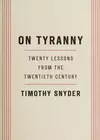
Written in the wake of the (sadly) first Trump election, this book gives keys on how to resist in an age of rising tyranny. When the far right is rising a bit everywhere, I feel such books are vital into not giving up, and while it might be hard to keep hope, it also give some paths to explore on how to resist and face those rising dangers for our democracies.
Aristotle warned that inequality brought instability, while Plato believed that demagogues exploited free speech to install themselves as tyrants.
Written in the wake of the (sadly) first Trump election, this book gives keys on how to resist in an age of rising tyranny. When the far right is rising a bit everywhere, I feel such books are vital into not giving up, and while it might be hard to keep hope, it also give some paths to explore on how to resist and face those rising dangers for our democracies.
Aristotle warned that inequality brought instability, while Plato believed that demagogues exploited free speech to install themselves as tyrants.

Faisant partie de "ceux qui partent" je me suis toujours demandé ce qui faisait rester dans ces villages que j'ai fuis, les raisons pour lesquelles beaucoup des gens de mon enfance n'ont pas bougé de l'espace géographique et restent encore en bande.
Cet essai, même s'il traite de la campagne française en déclin, peut s'appliquer en dehors des frontières françaises.
Sans jugement, l'auteur explicite les comportements adoptés, les bandes de potes, les renvois d'ascenseur, les contradictions entre situation et votes FN, entre "entre-soi" vital mais aussi source de jugement constant, ...
Un livre très intéressant qui m'a permis de mieux comprendre certaines anciennes connaissances et comportements.
« Ici », on répète à l’inverse que « tout le monde se connaît », même s’il existe chez les jeunes adultes comme un agacement de « tout le temps voir les mêmes têtes » et de se sentir « toujours épié ».
Faisant partie de "ceux qui partent" je me suis toujours demandé ce qui faisait rester dans ces villages que j'ai fuis, les raisons pour lesquelles beaucoup des gens de mon enfance n'ont pas bougé de l'espace géographique et restent encore en bande.
Cet essai, même s'il traite de la campagne française en déclin, peut s'appliquer en dehors des frontières françaises.
Sans jugement, l'auteur explicite les comportements adoptés, les bandes de potes, les renvois d'ascenseur, les contradictions entre situation et votes FN, entre "entre-soi" vital mais aussi source de jugement constant, ...
Un livre très intéressant qui m'a permis de mieux comprendre certaines anciennes connaissances et comportements.
« Ici », on répète à l’inverse que « tout le monde se connaît », même s’il existe chez les jeunes adultes comme un agacement de « tout le temps voir les mêmes têtes » et de se sentir « toujours épié ».