
Wren


There’s a choice, when you know your fate’s to be hunted and gobbled up and used. You can give in like it’s inevitable or you can turn the tables.
The thing that I found the most interesting about the book is definitely its structure. It starts off the way the summary promises: there are three teens caught up in both an awkward not-quite-love-triangle and in a bank robbery. But this situation, while high-stakes and exciting in its own right, acts mostly as a framing device for revealing the MC’s backstory in a very twisty, non-linear way. Weaving all the threads together felt like solving a puzzle, and I’m very here for it.
While the backstory parts fascinated me, though, both in how they were constructed and what they revealed, I feel like the present-day part of the story suffered a little. All the action and tension in those bank robbery parts would have probably sustained my attention better if I wasn’t so eager to get to the next reveal about Nora’s past. I almost feel like picking a less action-y framing device storyline with lower, more personal stakes would have helped the story, because then those present-day chapters would have served as breathers.
Also, I definitely expected more teenage messiness with complex feelings and all. But while Iris and Wes both had their moments, I never felt like I got to know them as their own people and not just parts of Nora’s life. Frankly, I feel like Nora’s the only character in the story who genuinely had a fully realized personality. Everyone else is fairly one-note. Okay, maybe two-note at times. I guess that is what I get for picking up a novel that’s far more plot-oriented than character-oriented, lol. I did overall enjoy the experience regardless!
There’s a choice, when you know your fate’s to be hunted and gobbled up and used. You can give in like it’s inevitable or you can turn the tables.
The thing that I found the most interesting about the book is definitely its structure. It starts off the way the summary promises: there are three teens caught up in both an awkward not-quite-love-triangle and in a bank robbery. But this situation, while high-stakes and exciting in its own right, acts mostly as a framing device for revealing the MC’s backstory in a very twisty, non-linear way. Weaving all the threads together felt like solving a puzzle, and I’m very here for it.
While the backstory parts fascinated me, though, both in how they were constructed and what they revealed, I feel like the present-day part of the story suffered a little. All the action and tension in those bank robbery parts would have probably sustained my attention better if I wasn’t so eager to get to the next reveal about Nora’s past. I almost feel like picking a less action-y framing device storyline with lower, more personal stakes would have helped the story, because then those present-day chapters would have served as breathers.
Also, I definitely expected more teenage messiness with complex feelings and all. But while Iris and Wes both had their moments, I never felt like I got to know them as their own people and not just parts of Nora’s life. Frankly, I feel like Nora’s the only character in the story who genuinely had a fully realized personality. Everyone else is fairly one-note. Okay, maybe two-note at times. I guess that is what I get for picking up a novel that’s far more plot-oriented than character-oriented, lol. I did overall enjoy the experience regardless!



“This is the most Skylar thing Skylar has ever done. She’s actually out Skylar-ed herself.”
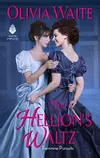
I have really nothing bad to say about this book, but I also don’t expect to remember much about it a month from now. It’s a cute, mildly entertaining read with some nice characters. There are some nice romance moments. There are some even nicer moments focused around a fun, nerdy, queer group of friends. The writing flows smoothly, the romantic leads help each other grow, and there’s lots to smile about.
But I guess maybe I wasn’t in the 100% right headspace for this book, or maybe the whole thing is just a tad too… generic? I mean, I read romance for the vibes and the happy ending, and I don’t expect my feel-good books to wow me every time. But something about this just felt very paint-by-the-numbers. Though again, maybe it’s just my brain being weird these days.
Still would rec it to anyone who’s just looking to relax with a nice sapphic read and doesn’t mind plots that wouldn’t happen if a whole bunch of people just talked to each other like adults from the get-go.
“This is the most Skylar thing Skylar has ever done. She’s actually out Skylar-ed herself.”
I have really nothing bad to say about this book, but I also don’t expect to remember much about it a month from now. It’s a cute, mildly entertaining read with some nice characters. There are some nice romance moments. There are some even nicer moments focused around a fun, nerdy, queer group of friends. The writing flows smoothly, the romantic leads help each other grow, and there’s lots to smile about.
But I guess maybe I wasn’t in the 100% right headspace for this book, or maybe the whole thing is just a tad too… generic? I mean, I read romance for the vibes and the happy ending, and I don’t expect my feel-good books to wow me every time. But something about this just felt very paint-by-the-numbers. Though again, maybe it’s just my brain being weird these days.
Still would rec it to anyone who’s just looking to relax with a nice sapphic read and doesn’t mind plots that wouldn’t happen if a whole bunch of people just talked to each other like adults from the get-go.
Whenever she got particularly depressed Greta would remind herself how lucky she was to be able to do things like drastically improving a patient’s quality of life with a few hours of work and some extremely basic supplies, and the clouds would lift a bit.
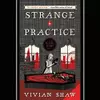
Another mixed bag. I seem to be landing on quite a few of those lately. The cover style and some quotes I’ve seen from the book originally led me to believe this was a historical urban fantasy, something set in Victorian times, or possibly 1920s at the latest. But no, it’s your regular contemporary UF, just written in a more formal, almost old-timey language than is commonly associated with the subgenre. It actually suited the vibe of the story and the side characters around Greta, who are nearly all quite old-timey themselves. (And all male. Why couldn’t she have a single female friend for more varied dynamics / cast? Missed opportunity, sigh).
The story starts fairly low-key, with the protagonist paying a doctor’s visit to a long-time patient/friend’s place, and then progresses into an increasingly higher stakes mystery that gets infernal and celestial powers involved. I admit it lost me at some point of that progression. There was just less and less emphasis on the things that drew me in, and also the way the story was structured stood in the way of immersion for me personally. It was kind of TV/movie-like, with the metaphorical camera zooming out sometimes to show a detail the POV character was missing, or a scene getting injected into the narrative that showed something the bad guys were up to without giving away too much. There’s nothing objectively wrong with this approach to structuring a book, and it was actually executed technically really well here! I simply don’t prefer it.
I did very much enjoy the concept of a doctor for the supernaturals, a lot of the worldbuilding (especially the distinction between the vampires and the vampyres), and the found family vibes. The book got me thinking that in a lot of found families in fiction, the protagonist ends up forging a lot of sibling-type bonds and/or becoming a surrogate parent figure to someone younger, and sometimes they also get a single mentor figure who’s kind of way on the fringes. Here, the MC is very much the baby of the found family, and it’s a fine change in dynamic. Also, I really liked the kindness and compassion Greta was able to show others.
I don’t think I’ll be continuing with this series, given the amount of series in progress and other TBR books that already threaten to bury me. But this first novel surely had its moments and I don’t regret trying it out.
Whenever she got particularly depressed Greta would remind herself how lucky she was to be able to do things like drastically improving a patient’s quality of life with a few hours of work and some extremely basic supplies, and the clouds would lift a bit.
Another mixed bag. I seem to be landing on quite a few of those lately. The cover style and some quotes I’ve seen from the book originally led me to believe this was a historical urban fantasy, something set in Victorian times, or possibly 1920s at the latest. But no, it’s your regular contemporary UF, just written in a more formal, almost old-timey language than is commonly associated with the subgenre. It actually suited the vibe of the story and the side characters around Greta, who are nearly all quite old-timey themselves. (And all male. Why couldn’t she have a single female friend for more varied dynamics / cast? Missed opportunity, sigh).
The story starts fairly low-key, with the protagonist paying a doctor’s visit to a long-time patient/friend’s place, and then progresses into an increasingly higher stakes mystery that gets infernal and celestial powers involved. I admit it lost me at some point of that progression. There was just less and less emphasis on the things that drew me in, and also the way the story was structured stood in the way of immersion for me personally. It was kind of TV/movie-like, with the metaphorical camera zooming out sometimes to show a detail the POV character was missing, or a scene getting injected into the narrative that showed something the bad guys were up to without giving away too much. There’s nothing objectively wrong with this approach to structuring a book, and it was actually executed technically really well here! I simply don’t prefer it.
I did very much enjoy the concept of a doctor for the supernaturals, a lot of the worldbuilding (especially the distinction between the vampires and the vampyres), and the found family vibes. The book got me thinking that in a lot of found families in fiction, the protagonist ends up forging a lot of sibling-type bonds and/or becoming a surrogate parent figure to someone younger, and sometimes they also get a single mentor figure who’s kind of way on the fringes. Here, the MC is very much the baby of the found family, and it’s a fine change in dynamic. Also, I really liked the kindness and compassion Greta was able to show others.
I don’t think I’ll be continuing with this series, given the amount of series in progress and other TBR books that already threaten to bury me. But this first novel surely had its moments and I don’t regret trying it out.

We can’t predict what’ll happen, or whether we’ll be alive tomorrow. We can’t even be sure what already happened. But we can hold onto a feeling, we can all share a feeling together, and that makes us stronger.
This was such a mixed bag for me! On one hand, this is exactly what the blurb promised; on the other hand, it’s an entirely different story than I expected. That’s definitely on me. When I hear “New England academia + witchcraft,” I just automatically assume Lovecraftian flavor. Sorcerers pouring over ancient library tomes, arcane and eldritch rules that lie just beyond the edge of human comprehension but one must aspire to learn them all the same, that kind of thing. Instead, the magic system is all vibes and feels, and generally sways toward a magical realism type of deal, with a rather beautiful emphasis on liminal places in every sense. And while there’s indeed a magical book at the heart of the story, just as advertised, it’s the farthest thing from Necronomicon.
Once I got over my expectations, I can say I greatly enjoyed the magic system for what it is. I also loved all the nerdiness and bookishness ingrained in the narrative, the way Jamie sometimes paused to think about the language we use for things or literary tropes. It felt a bit like Among Others by Jo Walton, but queerer—and I absolutely loved the queerness and the overall inclusiveness as well. I also appreciated the structure and the complexity of it, though I sometimes felt like the structural complexity was given aaaaaalmost more weight than the actual story beneath it, like the author was showing off a little. On the other hand, successfully braiding together two timelines (each with its own share of flashbacks and asides), a made-up book, and an extra story existing within the made-up book is a skill that’s worth showing off, if you ask me!
The thing that made it kind of hard for me to get through the story was the Jamie/Ro storyline and the way the narrative was strongly urging me to side with Ro and accept that Jamie fucked up. Because I guess to me, they both fucked up? And also, I’ve never felt like a partner (or literally anyone) is entitled to the 100% of another human being’s humans experience. Like, yeah, I do want to know my partner’s goals and values, to see if we can be aligned permanently in the important things, and I’d like to know if they’re maybe on some kind of international criminal list, or if their salary was just cut in two, etc, etc. But their inner life, the spiritual things, the stuff they can’t even fully articulate? I’d feel privileged to learn any of it, but it would never be an expectation for them to tell me—and by the same token, I’d be genuinely surprised to learn I’m supposed to share all the equivalent stuff with anyone. So every time the subject of Jamie not telling Ro about magic soon enough came up, I had to ask the book, “But is this really supposed to be THAT big of a deal?”
That discrepancy between my personal convictions and the narrative angle aside, I found this to be a beautiful, thoughtful exploration of grief, trauma, identity, connection, healing, and the messiness inherent to even the most loving relationships. At times, there was just a little too much therapy speak and handholding, but overall, it’s a beautiful and very humane story.
We can’t predict what’ll happen, or whether we’ll be alive tomorrow. We can’t even be sure what already happened. But we can hold onto a feeling, we can all share a feeling together, and that makes us stronger.
This was such a mixed bag for me! On one hand, this is exactly what the blurb promised; on the other hand, it’s an entirely different story than I expected. That’s definitely on me. When I hear “New England academia + witchcraft,” I just automatically assume Lovecraftian flavor. Sorcerers pouring over ancient library tomes, arcane and eldritch rules that lie just beyond the edge of human comprehension but one must aspire to learn them all the same, that kind of thing. Instead, the magic system is all vibes and feels, and generally sways toward a magical realism type of deal, with a rather beautiful emphasis on liminal places in every sense. And while there’s indeed a magical book at the heart of the story, just as advertised, it’s the farthest thing from Necronomicon.
Once I got over my expectations, I can say I greatly enjoyed the magic system for what it is. I also loved all the nerdiness and bookishness ingrained in the narrative, the way Jamie sometimes paused to think about the language we use for things or literary tropes. It felt a bit like Among Others by Jo Walton, but queerer—and I absolutely loved the queerness and the overall inclusiveness as well. I also appreciated the structure and the complexity of it, though I sometimes felt like the structural complexity was given aaaaaalmost more weight than the actual story beneath it, like the author was showing off a little. On the other hand, successfully braiding together two timelines (each with its own share of flashbacks and asides), a made-up book, and an extra story existing within the made-up book is a skill that’s worth showing off, if you ask me!
The thing that made it kind of hard for me to get through the story was the Jamie/Ro storyline and the way the narrative was strongly urging me to side with Ro and accept that Jamie fucked up. Because I guess to me, they both fucked up? And also, I’ve never felt like a partner (or literally anyone) is entitled to the 100% of another human being’s humans experience. Like, yeah, I do want to know my partner’s goals and values, to see if we can be aligned permanently in the important things, and I’d like to know if they’re maybe on some kind of international criminal list, or if their salary was just cut in two, etc, etc. But their inner life, the spiritual things, the stuff they can’t even fully articulate? I’d feel privileged to learn any of it, but it would never be an expectation for them to tell me—and by the same token, I’d be genuinely surprised to learn I’m supposed to share all the equivalent stuff with anyone. So every time the subject of Jamie not telling Ro about magic soon enough came up, I had to ask the book, “But is this really supposed to be THAT big of a deal?”
That discrepancy between my personal convictions and the narrative angle aside, I found this to be a beautiful, thoughtful exploration of grief, trauma, identity, connection, healing, and the messiness inherent to even the most loving relationships. At times, there was just a little too much therapy speak and handholding, but overall, it’s a beautiful and very humane story.

No crown sits so sure that a knife in the dark may not topple it.
This is a difficult novel for me to rate, tbh. I can say I've been entertained consistently throughout the fairly lengthy audiobook. But I don't know if I can say I've enjoyed it.
There are, as a lot of us nerds know, books that do a good job at capturing the unhinged vibes of a typical D&D/other such TTRPG campaign. I've always felt that a good job here should mean "captures the vibes, but also puts them into something that's actually book-shaped." As a weightier example of that job getting done successfully, I could name Kings of the Wyld by Nicholas Eames (third book when? 🥺); for a far sillier one, there's Red King by Lisa Henry and Sarah Honey. Those books are full of moments that send your mind right back to your favorite gaming table, but they're also stories that fit their medium. The plot and character arc beats happen roughly when you expect them to hit. There's structure and purpose to everything that's happening.
The Blacktongue Thief, by contrast, is much closer in structure to a TTRPG campaign, and not even a particularly story-heavy one. It's a journey narrative, not a destination narrative. The main character, for a huge part of the story, barely knows anything about the destination or purpose of the long, dangerous journey he's on. Sure, there's the general vibe of a grand quest, but we take it one session at the time, you know? Today, we're sailing on a ship and fighting a kraken. Next week, we'll be exploring a wizard's library. It's all part of the fun. We all hope to eventually resolve the grand quest, but we've also got busy lives and we're aware that real world can interfere at any time, so really, we just focus on what's in front of us and hope the dice don't fail us too badly.
Kinch's tone as a narrator definitely adds to that feel for me. He's witty, rambly, and has about as much common sense as my youngest cat, which is to say, he definitely has a little bit of it on his brightest days. His tale sounds/reads like a bunch of in-character session notes written by someone who's got a good grasp on language and a tendency to go on tangents. Which is where a lot of the entertainment came from, but also, now and then I kept thinking that maybe I should just listen to one of the many actual play podcasts in my bookmarks instead. Just to get more perspectives on each adventure at the time, you know? Including ones less steeped in dudebro humor and with a smaller propensity for focusing on gore, just for some variety.
What I really, unequivocally enjoyed here was the worldbuilding. It's incredibly inventive and immersive, and once again made it feel like a TTRPG—one that I wouldn't at all mind playing, actually, because there's so much cool stuff here that's just begging to be interacted with. It's got goblins, giants, giant corvids, living books that want to murder you, badass tattoo magic, other types of magic that are also badass, fucked-up social conventions, quantifiable luck, and so much more. Genuinely, when it comes to worldbuilding, this author's imagination is hard to beat. It's probably what kept me going with the book in the early chapters when I was still deciding whether the tone is something I'm going to enjoy for 12+ hours of listening, and also what kept me engaged whenever the structure and/or the character voice threatened to lose me.
No crown sits so sure that a knife in the dark may not topple it.
This is a difficult novel for me to rate, tbh. I can say I've been entertained consistently throughout the fairly lengthy audiobook. But I don't know if I can say I've enjoyed it.
There are, as a lot of us nerds know, books that do a good job at capturing the unhinged vibes of a typical D&D/other such TTRPG campaign. I've always felt that a good job here should mean "captures the vibes, but also puts them into something that's actually book-shaped." As a weightier example of that job getting done successfully, I could name Kings of the Wyld by Nicholas Eames (third book when? 🥺); for a far sillier one, there's Red King by Lisa Henry and Sarah Honey. Those books are full of moments that send your mind right back to your favorite gaming table, but they're also stories that fit their medium. The plot and character arc beats happen roughly when you expect them to hit. There's structure and purpose to everything that's happening.
The Blacktongue Thief, by contrast, is much closer in structure to a TTRPG campaign, and not even a particularly story-heavy one. It's a journey narrative, not a destination narrative. The main character, for a huge part of the story, barely knows anything about the destination or purpose of the long, dangerous journey he's on. Sure, there's the general vibe of a grand quest, but we take it one session at the time, you know? Today, we're sailing on a ship and fighting a kraken. Next week, we'll be exploring a wizard's library. It's all part of the fun. We all hope to eventually resolve the grand quest, but we've also got busy lives and we're aware that real world can interfere at any time, so really, we just focus on what's in front of us and hope the dice don't fail us too badly.
Kinch's tone as a narrator definitely adds to that feel for me. He's witty, rambly, and has about as much common sense as my youngest cat, which is to say, he definitely has a little bit of it on his brightest days. His tale sounds/reads like a bunch of in-character session notes written by someone who's got a good grasp on language and a tendency to go on tangents. Which is where a lot of the entertainment came from, but also, now and then I kept thinking that maybe I should just listen to one of the many actual play podcasts in my bookmarks instead. Just to get more perspectives on each adventure at the time, you know? Including ones less steeped in dudebro humor and with a smaller propensity for focusing on gore, just for some variety.
What I really, unequivocally enjoyed here was the worldbuilding. It's incredibly inventive and immersive, and once again made it feel like a TTRPG—one that I wouldn't at all mind playing, actually, because there's so much cool stuff here that's just begging to be interacted with. It's got goblins, giants, giant corvids, living books that want to murder you, badass tattoo magic, other types of magic that are also badass, fucked-up social conventions, quantifiable luck, and so much more. Genuinely, when it comes to worldbuilding, this author's imagination is hard to beat. It's probably what kept me going with the book in the early chapters when I was still deciding whether the tone is something I'm going to enjoy for 12+ hours of listening, and also what kept me engaged whenever the structure and/or the character voice threatened to lose me.
When people treat you like a monster, you start to act like one.
I remember when I read the first installment, I felt so incredibly sad even though it was magical and enjoyable. Just because it reminded me that everyone who wants to break out of any box society places them in has to try at least twice as hard for their effort to be appreciated. It wasn’t enough for Aster to have magical gifts and want to be a witch, he had to go above and beyond anything that could be expected from a kid to be given the chance to learn. There was something so realistic and heartbreaking about it that I kept putting this next installment off, despite loving Ostertag’s work.
I’m really glad I did pick it up eventually, though, because not only is it just as magical and enjoyable, but it also explores what this approach can actually do to people. While it starts off with similar ideas, with Aster’s grandmother telling him that the best way to respond to people not wanting him to be a witch is by being a very, very good one, it soon shifts to poking at the responsibility of all those gatekeepers and naysayers. I don’t want to spoil anything, but I will say I was very satisfied with how some of the plot threads from the first book were tied up, in a bittersweet sort of way.
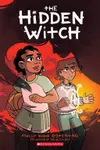
I also felt like this is just structurally such a good sequel, with a great overlap between the aftermath of the first book’s story and the introduction of something (and someone) new. It was great to learn more about this world’s magic and to see the magical family and the non-magical community shift closer. I loved the little friend group that formed over the course of the story. Also, the art is once again absolutely stunning, with such rich colors and with all the characters, even the background once, being so diverse and distinct.
Overall, this is a very nice story of kindness, redemption, responsibility, and second chances, and I’m looking forward to checking out book 3 as well.
When people treat you like a monster, you start to act like one.
I remember when I read the first installment, I felt so incredibly sad even though it was magical and enjoyable. Just because it reminded me that everyone who wants to break out of any box society places them in has to try at least twice as hard for their effort to be appreciated. It wasn’t enough for Aster to have magical gifts and want to be a witch, he had to go above and beyond anything that could be expected from a kid to be given the chance to learn. There was something so realistic and heartbreaking about it that I kept putting this next installment off, despite loving Ostertag’s work.
I’m really glad I did pick it up eventually, though, because not only is it just as magical and enjoyable, but it also explores what this approach can actually do to people. While it starts off with similar ideas, with Aster’s grandmother telling him that the best way to respond to people not wanting him to be a witch is by being a very, very good one, it soon shifts to poking at the responsibility of all those gatekeepers and naysayers. I don’t want to spoil anything, but I will say I was very satisfied with how some of the plot threads from the first book were tied up, in a bittersweet sort of way.
I also felt like this is just structurally such a good sequel, with a great overlap between the aftermath of the first book’s story and the introduction of something (and someone) new. It was great to learn more about this world’s magic and to see the magical family and the non-magical community shift closer. I loved the little friend group that formed over the course of the story. Also, the art is once again absolutely stunning, with such rich colors and with all the characters, even the background once, being so diverse and distinct.
Overall, this is a very nice story of kindness, redemption, responsibility, and second chances, and I’m looking forward to checking out book 3 as well.