
Wren



and my friends
know nothing
about me
and neither do I.
I should really read novels in verse more often. The combination of story and poetry hits in the feels so hard, when done right, and this book definitely does it right. I appreciated how the types of verse the author uses change now and then to draw extra attention to specific points in the character arcs, and how the lyricism is always there, always poignant, but never too flowery to distract from the actual story.
Speaking of the story, some parts of it definitely surprised me and made me double-check that this wasn’t YA, because I usually don’t expect drugs, alcohol, and the word “slut” to feature in MG books heavily. When I look back at my memories from when I was 13, I’m pretty convinced that for my classmates these were all things that happened on TV, or maybe possibly to way older, wilder kids who were like 15. I don’t know if it’s a generational or cultural thing, or maybe just a specific bubble I lived in. Regardless, I do hope that the kids whose reality is reflected in this book manage to get their hands on it and can see their experiences through this lens and feel seen and supported.
In a lot of other ways though, the way the thirteen-ness of the main characters was portrayed, this suspension between childhood and teenage years, resonated with me deeply. Like the way the Crash were partaking in fairly childish pranks and then sneaking out to parties, or the girls’ first kisses happening on a playground. I was really affected by the depictions of Olivia’s and Eden’s relationships (or lack thereof) with their respective parents, these different brands of distance and gloom. (Olivia’s mother is way easier to empathize with than Eden’s dad, by the way; I could see she was trying her best despite her own suffering. Poor Eden got the far shorter end of the stick.)
Overall, I feel like this is a beautiful snapshot of a complicated, liminal time, of strong feelings that are meant to become a memory and an inspiration, of steps toward discovering yourself. I will say it maybe added a little abruptly for me—I would have appreciated just a few more pages to pull all the stitches together, especially for Eden. But it was a beautiful experience regardless.
I should *definitely* read more novels in verse.
and my friends
know nothing
about me
and neither do I.
I should really read novels in verse more often. The combination of story and poetry hits in the feels so hard, when done right, and this book definitely does it right. I appreciated how the types of verse the author uses change now and then to draw extra attention to specific points in the character arcs, and how the lyricism is always there, always poignant, but never too flowery to distract from the actual story.
Speaking of the story, some parts of it definitely surprised me and made me double-check that this wasn’t YA, because I usually don’t expect drugs, alcohol, and the word “slut” to feature in MG books heavily. When I look back at my memories from when I was 13, I’m pretty convinced that for my classmates these were all things that happened on TV, or maybe possibly to way older, wilder kids who were like 15. I don’t know if it’s a generational or cultural thing, or maybe just a specific bubble I lived in. Regardless, I do hope that the kids whose reality is reflected in this book manage to get their hands on it and can see their experiences through this lens and feel seen and supported.
In a lot of other ways though, the way the thirteen-ness of the main characters was portrayed, this suspension between childhood and teenage years, resonated with me deeply. Like the way the Crash were partaking in fairly childish pranks and then sneaking out to parties, or the girls’ first kisses happening on a playground. I was really affected by the depictions of Olivia’s and Eden’s relationships (or lack thereof) with their respective parents, these different brands of distance and gloom. (Olivia’s mother is way easier to empathize with than Eden’s dad, by the way; I could see she was trying her best despite her own suffering. Poor Eden got the far shorter end of the stick.)
Overall, I feel like this is a beautiful snapshot of a complicated, liminal time, of strong feelings that are meant to become a memory and an inspiration, of steps toward discovering yourself. I will say it maybe added a little abruptly for me—I would have appreciated just a few more pages to pull all the stitches together, especially for Eden. But it was a beautiful experience regardless.
I should *definitely* read more novels in verse.


She didn’t need an easy life. She didn’t need a safe life. Like she had told Cenric, she wanted a life of freedom.
Like many, I’ve come to know Elizabeth Wheatley from her amazingly fun YouTube shorts. I relate to both Book Goblin and the unhinged romance writer so hard, and all those “romance subgenre” videos are my jam. So it was only a matter of time before I decided I had to check out her books.
I guess this was… fine? I definitely enjoyed the overall idea of the book, but every individual aspect of it was a little on the “but not enough” side. The prose was straightforward, to the point, and flowed smoothly most of the time, but there was nothing memorable about it, and the book definitely needed another round of copyediting, what with the number of missed words and typos. I appreciated the research that went into constructing this low fantasy version of the Saxon kingdom, but I felt like the historical details and the fantasy aspects didn’t fully mesh.
And then, of course, there was the romance. I liked the characters’ dynamic in the first couple of chapters and looked forward to a slow burn development where Brynn slowly thawed from her grief and trauma. And for the most part, I did get that! I liked the portrayal of grief and healing here. But there was a small part early on, while the characters were traveling to Cernic’s land after the wedding, when suddenly they were getting all flirty and mutually interested and looking forward to consummating their marriage, which was only postponed because Cernic had to urgently leave upon arrival. Then after he came back, the slow burn returned, but that odd little foray into practically insta love territory really confused me. And afterward, the characters also spent so much of the plot apart. Presumably, they had that extended period of taking long walks together nightly and getting to know each other. But all of those walks save for the first one were summarized in a couple of paragraphs, while their times apart were full scenes with actual plot and character development. So basically, the bones of a nice slow burn story focused on healing from trauma were there, but that skeleton needed a lot more flesh.
Then there was the characterization. Brynn had a bunch of interesting moments, particularly early on, and like I’ve said already, I appreciate the depiction of trauma and healing in her arc. But there were also a lot of moments where her entire personality turned into “absolutely perfect at doing her duty.” At those times she kind of reminded me of the way Sansa Stark is often depicted in Sansa-centric fan fiction: flawlessly great at everything a lady should be great at and then some, from running a household to negotiating with hostile neighbors, very concerned with doing her duty, somehow fully prepared to be underappreciated for her efforts. As for Cenric, he just often seemed kind of… young? Like, a good person, but still figuring himself out in many ways.
I did really, really love the telepathic dogs and the way the communication with them went. I liked the way the narrative discussed the subject of revenge. I enjoyed the whole political tangle behind the marriage and Brynn’s mother’s plans, although I wish the mother herself was a less obviously villainous villain. Like, seriously, this whole thing would have been even more compelling if she was morally grey rather than abjectly terrible. I intend to continue the series to see if it grows beyond all these “almost but not quite” moments for me!
She didn’t need an easy life. She didn’t need a safe life. Like she had told Cenric, she wanted a life of freedom.
Like many, I’ve come to know Elizabeth Wheatley from her amazingly fun YouTube shorts. I relate to both Book Goblin and the unhinged romance writer so hard, and all those “romance subgenre” videos are my jam. So it was only a matter of time before I decided I had to check out her books.
I guess this was… fine? I definitely enjoyed the overall idea of the book, but every individual aspect of it was a little on the “but not enough” side. The prose was straightforward, to the point, and flowed smoothly most of the time, but there was nothing memorable about it, and the book definitely needed another round of copyediting, what with the number of missed words and typos. I appreciated the research that went into constructing this low fantasy version of the Saxon kingdom, but I felt like the historical details and the fantasy aspects didn’t fully mesh.
And then, of course, there was the romance. I liked the characters’ dynamic in the first couple of chapters and looked forward to a slow burn development where Brynn slowly thawed from her grief and trauma. And for the most part, I did get that! I liked the portrayal of grief and healing here. But there was a small part early on, while the characters were traveling to Cernic’s land after the wedding, when suddenly they were getting all flirty and mutually interested and looking forward to consummating their marriage, which was only postponed because Cernic had to urgently leave upon arrival. Then after he came back, the slow burn returned, but that odd little foray into practically insta love territory really confused me. And afterward, the characters also spent so much of the plot apart. Presumably, they had that extended period of taking long walks together nightly and getting to know each other. But all of those walks save for the first one were summarized in a couple of paragraphs, while their times apart were full scenes with actual plot and character development. So basically, the bones of a nice slow burn story focused on healing from trauma were there, but that skeleton needed a lot more flesh.
Then there was the characterization. Brynn had a bunch of interesting moments, particularly early on, and like I’ve said already, I appreciate the depiction of trauma and healing in her arc. But there were also a lot of moments where her entire personality turned into “absolutely perfect at doing her duty.” At those times she kind of reminded me of the way Sansa Stark is often depicted in Sansa-centric fan fiction: flawlessly great at everything a lady should be great at and then some, from running a household to negotiating with hostile neighbors, very concerned with doing her duty, somehow fully prepared to be underappreciated for her efforts. As for Cenric, he just often seemed kind of… young? Like, a good person, but still figuring himself out in many ways.
I did really, really love the telepathic dogs and the way the communication with them went. I liked the way the narrative discussed the subject of revenge. I enjoyed the whole political tangle behind the marriage and Brynn’s mother’s plans, although I wish the mother herself was a less obviously villainous villain. Like, seriously, this whole thing would have been even more compelling if she was morally grey rather than abjectly terrible. I intend to continue the series to see if it grows beyond all these “almost but not quite” moments for me!


“In order to keep those you love safe, you need to become what they fear most. Are you prepared to do that?”
Well, this was an interesting experience, in a way. I went into the book mostly blind; someone on Pagebound asked for arranged marriage recs, someone recced this, and the one-line description of the arranged marriage situation hooked me. I really liked the beginning, despite the density all the Gaelic names for every little thing added to it. It was fun to see an unapologetically queer heroine in a f/m romantasy, the religious conflict was promising, and the magic system even more so, what with the magic gifts being amplified by entering bonds with magical creatures. The presence of dragons and dragon riders gave it a bit of a Game of Thrones/House of the Dragon vibe, but at this point those books/shows are such a huge cultural phenomenon that virtually everything with dragons and royalty feels like a nod in that direction.
But then I read on, and Aemyra’s father appeared, and I was like… hang on, why does this guy remind me so much of Daemon Targaryen? And then there were some scenes with the royal family, and the next thing I knew, I turned into that Leonardo DiCaprio pointing his finger meme. Oh, this is so obviously Aegon! And this is Alicent! And the MMC is clearly a slightly OOC Aemond with serial numbers not so much filed off as papered over, how was I so stupid that I didn’t notice at once?
So then I pulled up Google, and yup, this started life as an Aemond/OC HotD fanfic.
The further I read, the harder those origins were to unsee. I do appreciate how much thought was put into constructing the non-Westeros setting, but the problem is, a lot of what was seen of it in the early chapters remained in the early chapters. The characters often felt kind of divorced of the whole magical and religious context they’d supposedly grew up with, outside of the key points of the plot when that context was brought to the front of the events. The readers’ informed that the bonds with the magical beasts go both ways, the dragons are just one type of such beasts, there are specifics to the whole thing that are pretty unique and definitely not Martin-esque. But the book only gives us one creature that isn’t a dragon, and for the most part just shows us the fairly typical dragon/rider interactions that are just very HotD. The original setting shines brightest in the earliest couple of chapters + at a few choice moments throughout the book, but otherwise, it feels separate from the very HotD characters and the very HotD plot.
Also, there are just so many small details that weren’t reconstructed so much as reskinned. Like the royal family having a special hair color shared by no one else. Or even some figures of speech / names of things. Like, there was a point when Aemyra swore to take what’s hers “with fire and fury,” and my brain immediately corrected it to “fire and blood.” Or there was that part about the river lairds declaring for her, and it was hard not to go mentally, “surely you mean the River Lords.”
I’m not opposed to fanfic getting turned into original books in general, but after reading this I’m convinced that it works best when the fanfic is initially written as an AU, keeping the characters’ vibes and dynamics, but transporting them from the get-go into a different world, different set of circumstances, and letting them develop in those circumstances. That way, it’s easier for the writer to file off those serial numbers and also way easier for the reader to just enjoy the ride that may remind them of another fictional pairing, but still be its own thing. But when the entire story is mired in the canon circumstances, even with some twists put on them (or maybe especially with twists, because the “what if x, but y?” premises in fanfic work so well precisely because we’re very familiar with x)… Well, let’s just say, right now I can’t even decide if I want to buy the second book, because on one hand, I kind of want to know how the conflict resolves, but on the other hand, it literally feels like I’m asked to pay for something that belongs on AO3.
To try to focus more on the actual story… well, honestly, it’s very hard to focus on in without the HotD context 😅 I do wonder what I would think of it without being familiar with the source material, but alas, that ship has sailed. I’ll say that I liked Aemyra for the most part, although I cringed at some of her “not like other girls” moments, like when she was declaring in one chapter how she wanted to save all women from oppression and patriarchy, and then in the very next one rolling her eyes at some of the oppressed women and calling them pitiful and spineless. I also felt like she was acting younger and more naive than would make sense with her backstory.
The romance had some fun moments and some good banter, but I think I would have liked the burn to be slower. Some of the developments felt very sudden to me. Like, seriously, you’re having a tense conversation with someone over their involvement in the murder of your family, and the next thing you do is… surrender to the chemistry between you? Are the allosexuals okay? I wonder if it was the same in the original fanfic where there was no need to stick to the industry-dictated word counts and…
*throws hands up* Gah. No, see, I’m incapable of discussing it without thinking of the fanfic origins. Sorry. For all the early-chapter promise the new setting held, it just isn’t far enough divorced from the source material for me.
“In order to keep those you love safe, you need to become what they fear most. Are you prepared to do that?”
Well, this was an interesting experience, in a way. I went into the book mostly blind; someone on Pagebound asked for arranged marriage recs, someone recced this, and the one-line description of the arranged marriage situation hooked me. I really liked the beginning, despite the density all the Gaelic names for every little thing added to it. It was fun to see an unapologetically queer heroine in a f/m romantasy, the religious conflict was promising, and the magic system even more so, what with the magic gifts being amplified by entering bonds with magical creatures. The presence of dragons and dragon riders gave it a bit of a Game of Thrones/House of the Dragon vibe, but at this point those books/shows are such a huge cultural phenomenon that virtually everything with dragons and royalty feels like a nod in that direction.
But then I read on, and Aemyra’s father appeared, and I was like… hang on, why does this guy remind me so much of Daemon Targaryen? And then there were some scenes with the royal family, and the next thing I knew, I turned into that Leonardo DiCaprio pointing his finger meme. Oh, this is so obviously Aegon! And this is Alicent! And the MMC is clearly a slightly OOC Aemond with serial numbers not so much filed off as papered over, how was I so stupid that I didn’t notice at once?
So then I pulled up Google, and yup, this started life as an Aemond/OC HotD fanfic.
The further I read, the harder those origins were to unsee. I do appreciate how much thought was put into constructing the non-Westeros setting, but the problem is, a lot of what was seen of it in the early chapters remained in the early chapters. The characters often felt kind of divorced of the whole magical and religious context they’d supposedly grew up with, outside of the key points of the plot when that context was brought to the front of the events. The readers’ informed that the bonds with the magical beasts go both ways, the dragons are just one type of such beasts, there are specifics to the whole thing that are pretty unique and definitely not Martin-esque. But the book only gives us one creature that isn’t a dragon, and for the most part just shows us the fairly typical dragon/rider interactions that are just very HotD. The original setting shines brightest in the earliest couple of chapters + at a few choice moments throughout the book, but otherwise, it feels separate from the very HotD characters and the very HotD plot.
Also, there are just so many small details that weren’t reconstructed so much as reskinned. Like the royal family having a special hair color shared by no one else. Or even some figures of speech / names of things. Like, there was a point when Aemyra swore to take what’s hers “with fire and fury,” and my brain immediately corrected it to “fire and blood.” Or there was that part about the river lairds declaring for her, and it was hard not to go mentally, “surely you mean the River Lords.”
I’m not opposed to fanfic getting turned into original books in general, but after reading this I’m convinced that it works best when the fanfic is initially written as an AU, keeping the characters’ vibes and dynamics, but transporting them from the get-go into a different world, different set of circumstances, and letting them develop in those circumstances. That way, it’s easier for the writer to file off those serial numbers and also way easier for the reader to just enjoy the ride that may remind them of another fictional pairing, but still be its own thing. But when the entire story is mired in the canon circumstances, even with some twists put on them (or maybe especially with twists, because the “what if x, but y?” premises in fanfic work so well precisely because we’re very familiar with x)… Well, let’s just say, right now I can’t even decide if I want to buy the second book, because on one hand, I kind of want to know how the conflict resolves, but on the other hand, it literally feels like I’m asked to pay for something that belongs on AO3.
To try to focus more on the actual story… well, honestly, it’s very hard to focus on in without the HotD context 😅 I do wonder what I would think of it without being familiar with the source material, but alas, that ship has sailed. I’ll say that I liked Aemyra for the most part, although I cringed at some of her “not like other girls” moments, like when she was declaring in one chapter how she wanted to save all women from oppression and patriarchy, and then in the very next one rolling her eyes at some of the oppressed women and calling them pitiful and spineless. I also felt like she was acting younger and more naive than would make sense with her backstory.
The romance had some fun moments and some good banter, but I think I would have liked the burn to be slower. Some of the developments felt very sudden to me. Like, seriously, you’re having a tense conversation with someone over their involvement in the murder of your family, and the next thing you do is… surrender to the chemistry between you? Are the allosexuals okay? I wonder if it was the same in the original fanfic where there was no need to stick to the industry-dictated word counts and…
*throws hands up* Gah. No, see, I’m incapable of discussing it without thinking of the fanfic origins. Sorry. For all the early-chapter promise the new setting held, it just isn’t far enough divorced from the source material for me.

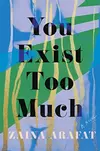
Other Arab women have been mutilated by knives, shrapnel, acid, bombs, and I was shaken because my mother told me I was average? Is narcissism an inherited trait?
For a book that left me with a profound “what did I just read and why?” impression, it was a pretty quick read, so there's that. To focus on the positives, there were some interesting insights about the ways our parents fuck us up, about the Middle East experience, about internalized homophobia and addiction. The MC offers a highly realistic depiction of someone living with a huge hole inside and constantly, unsuccessfully seeking ways to fill it. I also liked the author's decision to not give the MC a name. Strangely enough, it created a more intimate experience, like I was reading someone's anonymous diary.
That same “personal diary,” however, was also a big part of the reason I didn't enjoy the book. For the entirety of the novel, we're very deep in the MC's head, and she's such an unlikable person. The fact that she's got her reasons for being that way doesn't make it easier to read about all her bad decisions, cheating, strange relationships with other awful people, etc. All the side characters are filtered heavily through her skewed perspective, so while some of them potentially could be interesting and sympathetic, there were never enough of them to latch on. They were barely characters in their own right, more like extensions, subjects, and objects of her experience.
But then there was another thing. See, sometimes I do very much enjoy reading about shitty unhinged fictional people doing bad things for bad reasons. One of my favorite books is Yellowface by R.F. Kuang, and if I had to interact with someone like its protagonist in real life, I'd grind my teeth until no dentist could save them. But following her story was so compelling, even if I was actively rooting for her to fail. So what makes a difference between a compelling unlikable character and a tiresome one? For me, as this book helped me understand, it's the presence of goals. Here, the MC is just drifting for most of the story. I struggled all the while to understand what she even wants. To genuinely solve her love addiction problem? To sort out her relationship with her mother? To figure out her goals? Who knows. That kind of approach could be hard for me to handle even with a more likable and relatable character tbh, but at least then I'd be able to enjoy the process of getting to know them.
On the other hand, I know that this brand of slice-of-life litfic has a lot of fans, and I can understand the appeal even if I don't share it. Such books definitely help expand empathy. Fiction is a great space for exploring how the types of people we dislike might actually work. It may not get us to like them more, but it helps understand them better, and perhaps ourselves, too, as we ponder what exactly makes certain traits, outlooks, and behaviors so unpleasant for us.
So, yeah. Not really the book for me, but I did find value in reading it.
Other Arab women have been mutilated by knives, shrapnel, acid, bombs, and I was shaken because my mother told me I was average? Is narcissism an inherited trait?
For a book that left me with a profound “what did I just read and why?” impression, it was a pretty quick read, so there's that. To focus on the positives, there were some interesting insights about the ways our parents fuck us up, about the Middle East experience, about internalized homophobia and addiction. The MC offers a highly realistic depiction of someone living with a huge hole inside and constantly, unsuccessfully seeking ways to fill it. I also liked the author's decision to not give the MC a name. Strangely enough, it created a more intimate experience, like I was reading someone's anonymous diary.
That same “personal diary,” however, was also a big part of the reason I didn't enjoy the book. For the entirety of the novel, we're very deep in the MC's head, and she's such an unlikable person. The fact that she's got her reasons for being that way doesn't make it easier to read about all her bad decisions, cheating, strange relationships with other awful people, etc. All the side characters are filtered heavily through her skewed perspective, so while some of them potentially could be interesting and sympathetic, there were never enough of them to latch on. They were barely characters in their own right, more like extensions, subjects, and objects of her experience.
But then there was another thing. See, sometimes I do very much enjoy reading about shitty unhinged fictional people doing bad things for bad reasons. One of my favorite books is Yellowface by R.F. Kuang, and if I had to interact with someone like its protagonist in real life, I'd grind my teeth until no dentist could save them. But following her story was so compelling, even if I was actively rooting for her to fail. So what makes a difference between a compelling unlikable character and a tiresome one? For me, as this book helped me understand, it's the presence of goals. Here, the MC is just drifting for most of the story. I struggled all the while to understand what she even wants. To genuinely solve her love addiction problem? To sort out her relationship with her mother? To figure out her goals? Who knows. That kind of approach could be hard for me to handle even with a more likable and relatable character tbh, but at least then I'd be able to enjoy the process of getting to know them.
On the other hand, I know that this brand of slice-of-life litfic has a lot of fans, and I can understand the appeal even if I don't share it. Such books definitely help expand empathy. Fiction is a great space for exploring how the types of people we dislike might actually work. It may not get us to like them more, but it helps understand them better, and perhaps ourselves, too, as we ponder what exactly makes certain traits, outlooks, and behaviors so unpleasant for us.
So, yeah. Not really the book for me, but I did find value in reading it.
Updated a reading goal:
Read 111 books by December 30, 2026
Progress so far: 25 / 111 22%

“I know it’s scary, Nat, but people change. They’re allowed to change. They’re allowed to try and be better than what they were before. And when we care about them, then we need to support them.”
This is a book I didn’t know I needed. I feel like I’ve become a really angry and unapologetic person lately, what with, you know. *gestures at the state of the world, the news, the geopolitics* Everything. It’s easy to look at people who choose to participate in hurting others and wish them away. But sometimes, people can choose to change, to build a different future without losing accountability of that past, and this book was a good reminder of that. Perhaps the approach it took to the subject was a bit too saccharine at times, what with it being a feel-good cozy fantasy romance first and foremost, but there was a certain depth to it, too, and a good reminder that we are never locked in our choices forever. As long as life goes on, so do the choices.
I have to say one thing that interfered with my enjoyment of the story was lack of clarity about the protagonist’s motivations. It’s over 60% into the book that we finally learn *why* she choose to stop being a villain. I actually think the reveal was done pretty well; when it happens, you instantly see all the breadcrumbs leading up to it, and so much begins to make sense. But at the same time, while I appreciate how it was handled on a technical level, I’m not sure it was the right choice to withhold this specific bit of information like that. Especially since there was another secret/twist tied to it, so that one could have been concealed for just as long and have the same impact when revealed. But the protagonist’s motivation, especially when the protagonist is on a redemption arc, is something that I feel should be made clearer from the start. Because for a long time it felt like Violet mostly decided to switch from evil to good “just because,” or maybe like the author expected the reader to fill in that gap on their own, and it really messed with my immersion.
Outside of that, though, I really enjoyed most aspects of the book, particularly the romance. From the blurb I expected the MC and the LI to slowly change their opinions of each other as they work together to save the town from the blight. But the truth is, they start working on understanding each other before they even know there’s a blight, and that’s what enables them to work together to combat it, which is an approach I loved even more. I also appreciated that each of them has their own redemption arc with a distinct flavor.
Also, I generally enjoyed getting to know the town of Dragon’s Rest and the supporting characters. Pru especially is my favorite, I love what a great bard she makes, and her relationship with Nathaniel, and how determined she was to befriend Violet in the start. If the author decides to turn this into a series, I hope Pru gets her own book. Or at least gets an even more prominent role, if the potential sequel still follows Violet mainly.
Other random things that stuck with me:
- The small flashbacks about Violet’s past relationship with Guy Shadowfade. There was a bit of a Silco and Jinx vibe there, and really, the whole thing hurt in just the right way.
- While the plant magic Violet wielded was too vague and whatever-the-plot-demands for me, I liked the descriptions of alchemy and how invested Nathaniel was in his alchemical work.
- The rock goblins! THE CUTEST.
I’m really excited to read whatever Emily Krempholtz writes next, and I do hope she revisits this setting, because there’s a lot of series potential here. The story feels even a little incomplete, come to think of it. Not in a glaring sort of way, but there’s definitely stuff that could be explored further!
“I know it’s scary, Nat, but people change. They’re allowed to change. They’re allowed to try and be better than what they were before. And when we care about them, then we need to support them.”
This is a book I didn’t know I needed. I feel like I’ve become a really angry and unapologetic person lately, what with, you know. *gestures at the state of the world, the news, the geopolitics* Everything. It’s easy to look at people who choose to participate in hurting others and wish them away. But sometimes, people can choose to change, to build a different future without losing accountability of that past, and this book was a good reminder of that. Perhaps the approach it took to the subject was a bit too saccharine at times, what with it being a feel-good cozy fantasy romance first and foremost, but there was a certain depth to it, too, and a good reminder that we are never locked in our choices forever. As long as life goes on, so do the choices.
I have to say one thing that interfered with my enjoyment of the story was lack of clarity about the protagonist’s motivations. It’s over 60% into the book that we finally learn *why* she choose to stop being a villain. I actually think the reveal was done pretty well; when it happens, you instantly see all the breadcrumbs leading up to it, and so much begins to make sense. But at the same time, while I appreciate how it was handled on a technical level, I’m not sure it was the right choice to withhold this specific bit of information like that. Especially since there was another secret/twist tied to it, so that one could have been concealed for just as long and have the same impact when revealed. But the protagonist’s motivation, especially when the protagonist is on a redemption arc, is something that I feel should be made clearer from the start. Because for a long time it felt like Violet mostly decided to switch from evil to good “just because,” or maybe like the author expected the reader to fill in that gap on their own, and it really messed with my immersion.
Outside of that, though, I really enjoyed most aspects of the book, particularly the romance. From the blurb I expected the MC and the LI to slowly change their opinions of each other as they work together to save the town from the blight. But the truth is, they start working on understanding each other before they even know there’s a blight, and that’s what enables them to work together to combat it, which is an approach I loved even more. I also appreciated that each of them has their own redemption arc with a distinct flavor.
Also, I generally enjoyed getting to know the town of Dragon’s Rest and the supporting characters. Pru especially is my favorite, I love what a great bard she makes, and her relationship with Nathaniel, and how determined she was to befriend Violet in the start. If the author decides to turn this into a series, I hope Pru gets her own book. Or at least gets an even more prominent role, if the potential sequel still follows Violet mainly.
Other random things that stuck with me:
- The small flashbacks about Violet’s past relationship with Guy Shadowfade. There was a bit of a Silco and Jinx vibe there, and really, the whole thing hurt in just the right way.
- While the plant magic Violet wielded was too vague and whatever-the-plot-demands for me, I liked the descriptions of alchemy and how invested Nathaniel was in his alchemical work.
- The rock goblins! THE CUTEST.
I’m really excited to read whatever Emily Krempholtz writes next, and I do hope she revisits this setting, because there’s a lot of series potential here. The story feels even a little incomplete, come to think of it. Not in a glaring sort of way, but there’s definitely stuff that could be explored further!