
Wren


“I don’t want to be funny”—Audrey’s mum was wearing an unmistakably parental expression—“but have you ever considered trying to get with a girl who isn’t completely horrible?”
This concludes the trilogy of loosely interlinked contemporary fiction books marketed for some incomprehensible reason as romcoms. Actually, compared to the first two this one is the most romance-like, though it still doesn’t hit the right beats for a romcoms, but it still leans “chick lit” (much as I’m meh on that term) with the romantic plot line being there to support the character study. I’m wondering if it would have landed differently if this was a dual POV. Especially since in the previous books Jennifer was the antagonist/as close to a villain as a story focused around the fictional equivalent of The Great British Bake Off. So when a character like that is moved into the LI position, you kind of want to get into their head to properly see them from a new angle, you know?
Though the funny thing is, by the end of the book even without getting Jennifer’s POV I kind of warmed up to her. She never stopped being horrible to people, but she did reveal some interesting depths. So while I never got truly sold on the romance, it was more because of Audrey, whom I greatly enjoyed as her own character! But she was just *so* hung up on her ex the entire time, to the point of having conversations with her in her head. Early in the book, it was somewhat tolerable, but the further in we got, the more I felt like any kind of relationship this character was currently capable of would be a rebound. Like, she was still having to actively swat away thoughts of her ex while intimate with Jennifer 94% into the book. So yeah, maybe dual POV actually wouldn’t have fixed anything here.
I did really enjoy the individual character arcs. Audrey grew so much over the course of the story, from someone entirely too polite for her own good to someone with a much more confident approach to life. I also really enjoyed all the budding intergenerational friendships: Audrey and Alanis, Audrey and Doris, Jennifer and Grace (though that last one can’t be called budding, I suppose). The parallel storyline with Doris’s past was an interesting addition, though also one it took me a bit to get into. I guess I was making the mistake of trying to appreciate it for its own sake and balking at how awful Emily was, but once I started treating it as a narrative device meant to explore *Audrey’s* approach to relationships, it got a lot easier to bear.
Tangentially, I was a big fan of all the pokes at how life becomes a narrative, the differences between what happened and how it was framed, etc. That was an interesting angle, and I think pursuing it made the book structurally stronger. Alexis Hall can be very all-over-the-place with constructing his plots at times—I think our minds work quite similarly in that way, so I fully empathize. I’ve noticed there’s a lot more clarity in the novels he writes with a specific theme/lens that is “on” all the time.
Overall, I had a much better time than I expected, which is always a good feeling to have when you finish a book, if you ask me. I’d say I’m excited to see what the author does next, but you know what, while I totally am, maybe I shouldn’t look up his new releases just yet. Maybe I should first work through the parts of his backlog that are still on my TBR.
“I don’t want to be funny”—Audrey’s mum was wearing an unmistakably parental expression—“but have you ever considered trying to get with a girl who isn’t completely horrible?”
This concludes the trilogy of loosely interlinked contemporary fiction books marketed for some incomprehensible reason as romcoms. Actually, compared to the first two this one is the most romance-like, though it still doesn’t hit the right beats for a romcoms, but it still leans “chick lit” (much as I’m meh on that term) with the romantic plot line being there to support the character study. I’m wondering if it would have landed differently if this was a dual POV. Especially since in the previous books Jennifer was the antagonist/as close to a villain as a story focused around the fictional equivalent of The Great British Bake Off. So when a character like that is moved into the LI position, you kind of want to get into their head to properly see them from a new angle, you know?
Though the funny thing is, by the end of the book even without getting Jennifer’s POV I kind of warmed up to her. She never stopped being horrible to people, but she did reveal some interesting depths. So while I never got truly sold on the romance, it was more because of Audrey, whom I greatly enjoyed as her own character! But she was just *so* hung up on her ex the entire time, to the point of having conversations with her in her head. Early in the book, it was somewhat tolerable, but the further in we got, the more I felt like any kind of relationship this character was currently capable of would be a rebound. Like, she was still having to actively swat away thoughts of her ex while intimate with Jennifer 94% into the book. So yeah, maybe dual POV actually wouldn’t have fixed anything here.
I did really enjoy the individual character arcs. Audrey grew so much over the course of the story, from someone entirely too polite for her own good to someone with a much more confident approach to life. I also really enjoyed all the budding intergenerational friendships: Audrey and Alanis, Audrey and Doris, Jennifer and Grace (though that last one can’t be called budding, I suppose). The parallel storyline with Doris’s past was an interesting addition, though also one it took me a bit to get into. I guess I was making the mistake of trying to appreciate it for its own sake and balking at how awful Emily was, but once I started treating it as a narrative device meant to explore *Audrey’s* approach to relationships, it got a lot easier to bear.
Tangentially, I was a big fan of all the pokes at how life becomes a narrative, the differences between what happened and how it was framed, etc. That was an interesting angle, and I think pursuing it made the book structurally stronger. Alexis Hall can be very all-over-the-place with constructing his plots at times—I think our minds work quite similarly in that way, so I fully empathize. I’ve noticed there’s a lot more clarity in the novels he writes with a specific theme/lens that is “on” all the time.
Overall, I had a much better time than I expected, which is always a good feeling to have when you finish a book, if you ask me. I’d say I’m excited to see what the author does next, but you know what, while I totally am, maybe I shouldn’t look up his new releases just yet. Maybe I should first work through the parts of his backlog that are still on my TBR.
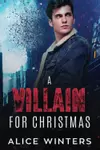
It’s really not my fault I was raised by supervillains.
This is the first book I’ve read by Alice Winters, but she’s been recommended to me a lot, usually as an author you need when you’re after a mindless fun time, and so that time has come. This was indeed a fun read, though it’s not the kind of humor I often vibe with—it’s just so silly. Today I vibed with it enough to finish the book in practically a single sitting, though. The deeply unserious banter and ridiculous events piling up is a great combo for when you just want to unwind.
I will say that alongside all the silliness, there were some practically poignant moments related to family and identity, and in the second half of the book, all the fun nonsense somehow crystallized into a pretty decent superhero comic-style plot with actual stakes and consequences. All of that happened without losing the general silly comedy vibe for more than a minute, which is, come to think of it, a pretty cool accomplishment.
I just wish Balzac the adorable ugly cat had an easier time here. The poor thing was introduced nearly suffocating and then kept getting grabbed, carried to loud places, and otherwise stressed. It was all played for laughs and the cat was always saved and cuddled at the end, but I’m a cat person. I was worried for the kitty.
I’m not sure if I want to continue with this series in particular, but I’ll keep the author on my radar for sure. This is great stuff for bad brain days.
It’s really not my fault I was raised by supervillains.
This is the first book I’ve read by Alice Winters, but she’s been recommended to me a lot, usually as an author you need when you’re after a mindless fun time, and so that time has come. This was indeed a fun read, though it’s not the kind of humor I often vibe with—it’s just so silly. Today I vibed with it enough to finish the book in practically a single sitting, though. The deeply unserious banter and ridiculous events piling up is a great combo for when you just want to unwind.
I will say that alongside all the silliness, there were some practically poignant moments related to family and identity, and in the second half of the book, all the fun nonsense somehow crystallized into a pretty decent superhero comic-style plot with actual stakes and consequences. All of that happened without losing the general silly comedy vibe for more than a minute, which is, come to think of it, a pretty cool accomplishment.
I just wish Balzac the adorable ugly cat had an easier time here. The poor thing was introduced nearly suffocating and then kept getting grabbed, carried to loud places, and otherwise stressed. It was all played for laughs and the cat was always saved and cuddled at the end, but I’m a cat person. I was worried for the kitty.
I’m not sure if I want to continue with this series in particular, but I’ll keep the author on my radar for sure. This is great stuff for bad brain days.

I have no interest in being a man. What I want is to be a knight.
I think we need a new subgenre called “faux historical romance.” This book would fit there seamlessly, right alongside Emma R. Alban's works—because it's a medieval story exactly to the same extent as Alban's queer romances are Regencies. These books deliberately, knowingly sacrifice historical accuracy in favor of the pop culture understanding of the time period, keeping the bits that would help tell a fun story and forgetting the rest. As for the characters, the dialogue, or the way the conflicts get resolved, all of those is kept pointedly modern. Some readers find this approach grating, and I can totally understand that, although I personally see it as a refreshing change of pace. You just have to know what you're getting into.
My favorite part of the story without a doubt was the omniscient narrator. For the most part, this warm yet snarky all-knowing voice faded politely into the background, leaving the spotlight on whichever girl the given chapter was focusing on. However, during the interludes (or, as they're called here, the interstitials) it shined openly on its own, rife with that irreverent tongue-in-cheek quality I often seek to bring into my GM narration when I run tabletop games. It was just a very familiar type of humor that delighted me to no end.
And then of course there's the story itself, with it's slightly nonsensical premise and fun, earnest characters who are both looking for the keys to their respective cages and eventually find a way out together. I suppose I could poke at how strange it was for Gwen to be so successful in the tournament with her minimal training compared to all the actual seasoned knights, or how piling up a second fake identity on top of the ruse she already had going was just asking for trouble. I could also prod at the detours and budding subplots that went nowhere, and how they may have added to the vibes, but at the expense of muddling the main story. But you know what, the book made me smile so often, I can forgive it its little blunders. After all, it so explicitly doesn't take itself seriously—why shouldn't I follow suit?
Reccing this to everyone who just wants some good mindless fun with a feminist and sapphic bend; who sees the word “medieval” and immediately thinks about castles, jousts, and dragons; who enjoys movies like the 2022 Rosaline and would love something in that vein but queer. If you want something with a more genuinely historical feel and sapphic characters though, perhaps look at Tessa Gratton or Nicola Griffith.
I have no interest in being a man. What I want is to be a knight.
I think we need a new subgenre called “faux historical romance.” This book would fit there seamlessly, right alongside Emma R. Alban's works—because it's a medieval story exactly to the same extent as Alban's queer romances are Regencies. These books deliberately, knowingly sacrifice historical accuracy in favor of the pop culture understanding of the time period, keeping the bits that would help tell a fun story and forgetting the rest. As for the characters, the dialogue, or the way the conflicts get resolved, all of those is kept pointedly modern. Some readers find this approach grating, and I can totally understand that, although I personally see it as a refreshing change of pace. You just have to know what you're getting into.
My favorite part of the story without a doubt was the omniscient narrator. For the most part, this warm yet snarky all-knowing voice faded politely into the background, leaving the spotlight on whichever girl the given chapter was focusing on. However, during the interludes (or, as they're called here, the interstitials) it shined openly on its own, rife with that irreverent tongue-in-cheek quality I often seek to bring into my GM narration when I run tabletop games. It was just a very familiar type of humor that delighted me to no end.
And then of course there's the story itself, with it's slightly nonsensical premise and fun, earnest characters who are both looking for the keys to their respective cages and eventually find a way out together. I suppose I could poke at how strange it was for Gwen to be so successful in the tournament with her minimal training compared to all the actual seasoned knights, or how piling up a second fake identity on top of the ruse she already had going was just asking for trouble. I could also prod at the detours and budding subplots that went nowhere, and how they may have added to the vibes, but at the expense of muddling the main story. But you know what, the book made me smile so often, I can forgive it its little blunders. After all, it so explicitly doesn't take itself seriously—why shouldn't I follow suit?
Reccing this to everyone who just wants some good mindless fun with a feminist and sapphic bend; who sees the word “medieval” and immediately thinks about castles, jousts, and dragons; who enjoys movies like the 2022 Rosaline and would love something in that vein but queer. If you want something with a more genuinely historical feel and sapphic characters though, perhaps look at Tessa Gratton or Nicola Griffith.

I'm always the center of attention. And they think if I screw up or freak out, it's because y I'm a trans girl... Not because I'm just not perfect.
Such a sweet and wholesome story about identity, teamwork, rekindled friendship, and the general teenage experience of being a work in progress. I love the art here: so bright, engaging, and full of realistic, diverse body types. The characters are all so genuine, and by the end of the comic I felt like I've known them forever.
All the messages here are really transparent, to the point of being a bit in your face, but also so important and needed that I can't possibly complain about that. I particularly liked the depiction of well-meaning actions and microaggressions not being mutually exclusive, and that search for the line between genuine support and virtue signalling. I think that while first and foremost this can be a great relatable read for trans teens, it's also a good book for educating allies on how to do better.
I did feel it was a little rushed—the pace would probably benefit from having up to another 20 pages or so spread throughout the book, showing some day-to-day situations during squad training, school, etc. I would also love to see a bit more of Annie's mom. She's the coolest.
I'm always the center of attention. And they think if I screw up or freak out, it's because y I'm a trans girl... Not because I'm just not perfect.
Such a sweet and wholesome story about identity, teamwork, rekindled friendship, and the general teenage experience of being a work in progress. I love the art here: so bright, engaging, and full of realistic, diverse body types. The characters are all so genuine, and by the end of the comic I felt like I've known them forever.
All the messages here are really transparent, to the point of being a bit in your face, but also so important and needed that I can't possibly complain about that. I particularly liked the depiction of well-meaning actions and microaggressions not being mutually exclusive, and that search for the line between genuine support and virtue signalling. I think that while first and foremost this can be a great relatable read for trans teens, it's also a good book for educating allies on how to do better.
I did feel it was a little rushed—the pace would probably benefit from having up to another 20 pages or so spread throughout the book, showing some day-to-day situations during squad training, school, etc. I would also love to see a bit more of Annie's mom. She's the coolest.

A white knight of the realm isn't supposed to be vacationing in the black sorcerer's castle.
For at least half of the book, probably even closer to 3/4 of the book, this was honestly such good fun. Sure, the prose was sometimes clunky, with everyone’s body parts acting independently way too often (you can’t convince me “her eyes bounced between them” isn’t a terrifying mental image, lol) and other assorted small troubles. But the fun and funny banter made up for it. The characters were entertaining, and I liked how they alternated between leaning into the tropes they were built around and slightly subverting them. The world, while clearly a deliberately generic D&D-ish fare, presented some fun monsters to fight and challenges to overcome. The audiobook narrator did a great job conveying the tongue-in-cheek irreverence of it all. Genuinely, it was an excellent bedtime story.
I also really appreciated the progression of the romance, how it was sorta insta-love on Tan’s side, but also slow-burn because Devan needed time to start considering the idea (and then there’s that later plot development that explains how the “insta” part was actually less “insta” than one might think, I enjoyed that one too). I was glad to see Devan presented as demisexual as explicitly as possible without mentioning the word—yay for repping the identities from under the ace umbrella! In general, I think these two guys complimented each other so well, at least for the huge part of the book while Tan remained less evil and more chaotically neutral with such a staunch commitment to chaos that everyone couldn’t help but call him a villain, and Devan was gradually progressing from lawful good to neutral good as he leaned into the spirit of the law versus the letter.
What changed for me late in the book, I think, was when they stopped focusing on having adventures and relationship developments and switched to organizing a revolution against the titular princess. On one hand, I’m all for dismounting the system instead of putting out small fires constantly. On the other hand, I didn’t like how flat the princess’s character was, or rather, how she was more prop than character. Everyone was already fed up with her and couldn’t wait to switch to a different side, and so it wasn’t clear how she’d maintained power and influence for so long. Especially given that there was a king, too, and now and then he acted like he was the actual ruler, so why was it the princess who made all the decisions, terrorized the citizens, etc? How was this Kingdom even working? This story in general is too humor-focused to be very nuanced, true, but something about how this entire part was handled grated me a lot. Perhaps it would’ve been easier to stomach without the pages and pages of justification about how Devan murdering the princess actually made him a good character, or without Tan fully turning from the kind of evil sorcerer people feel safe siccing beginner adventurers on because he’d never really hurt them to someone who’s like “Yay! Murder spree!”
A white knight of the realm isn't supposed to be vacationing in the black sorcerer's castle.
For at least half of the book, probably even closer to 3/4 of the book, this was honestly such good fun. Sure, the prose was sometimes clunky, with everyone’s body parts acting independently way too often (you can’t convince me “her eyes bounced between them” isn’t a terrifying mental image, lol) and other assorted small troubles. But the fun and funny banter made up for it. The characters were entertaining, and I liked how they alternated between leaning into the tropes they were built around and slightly subverting them. The world, while clearly a deliberately generic D&D-ish fare, presented some fun monsters to fight and challenges to overcome. The audiobook narrator did a great job conveying the tongue-in-cheek irreverence of it all. Genuinely, it was an excellent bedtime story.
I also really appreciated the progression of the romance, how it was sorta insta-love on Tan’s side, but also slow-burn because Devan needed time to start considering the idea (and then there’s that later plot development that explains how the “insta” part was actually less “insta” than one might think, I enjoyed that one too). I was glad to see Devan presented as demisexual as explicitly as possible without mentioning the word—yay for repping the identities from under the ace umbrella! In general, I think these two guys complimented each other so well, at least for the huge part of the book while Tan remained less evil and more chaotically neutral with such a staunch commitment to chaos that everyone couldn’t help but call him a villain, and Devan was gradually progressing from lawful good to neutral good as he leaned into the spirit of the law versus the letter.
What changed for me late in the book, I think, was when they stopped focusing on having adventures and relationship developments and switched to organizing a revolution against the titular princess. On one hand, I’m all for dismounting the system instead of putting out small fires constantly. On the other hand, I didn’t like how flat the princess’s character was, or rather, how she was more prop than character. Everyone was already fed up with her and couldn’t wait to switch to a different side, and so it wasn’t clear how she’d maintained power and influence for so long. Especially given that there was a king, too, and now and then he acted like he was the actual ruler, so why was it the princess who made all the decisions, terrorized the citizens, etc? How was this Kingdom even working? This story in general is too humor-focused to be very nuanced, true, but something about how this entire part was handled grated me a lot. Perhaps it would’ve been easier to stomach without the pages and pages of justification about how Devan murdering the princess actually made him a good character, or without Tan fully turning from the kind of evil sorcerer people feel safe siccing beginner adventurers on because he’d never really hurt them to someone who’s like “Yay! Murder spree!”
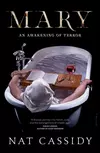
Because the past is like the moon, isn’t it? It’s always there, but it shifts, it’s never the same when you revisit it.
I was intrigued by the premise as soon as I spotted this book on someone’s TBR: a middle-aged main protagonist, someone normally quiet and meek becoming the monster, horror plot centered around the menopause experience. I did feel like maybe that last part could be better developed by someone who actually lived through menopause, or faced the prospect of living through it and was intimately acquainted with all the other ways AFAB bodies fuck up our lives. But hey, authors can totally do their research and have sensitivity readers. If we all only wrote what we have personally lived, it would be immensely boring.
The book started strong enough, with the protagonist immediately placed in a set of frustrating circumstances you can’t help but empathize with. She’s just trying to be a good person, but doctors don’t take her seriously, rent is going up, her long-time employer is letting her go, and something she never thought she’d do—going back to a tiny desert town to take care of her aunt—is legit her only option at this point. Oh, also, whenever she looks at herself in the mirror, she sees her reflection turn into a decaying corpse. Fun times.
I was having fun throughout the entire first half or so. The author kept adding new elements and raising new questions, but they all fit together reasonably well and escalated the tension nicely. All the gore was creepy and well-written. Aunt Nadine was quite the character, the kind you love to hate. The budding intergenerational friendship between Mary and Eleanor was really interesting to follow.
And then all those additions just continued and continued. By the last quarter of the book, I genuinely wasn’t sure what kind of story I was reading. The menopause angle got pretty much lost somewhere along the way. The plot turned into a maze of serial killers, cults, reincarnation, ghosts, furies, and something else I feel like I’m forgetting. The author tells us in the afterword that he first came up with the plot bunny for this book in his early teens and spent most of his life coming back to poke at it, and I guess that shows—probably every time he attempted to draft it, it was a slightly different story, and then the book we eventually got has turned into a hodgepodge of all those previous variations. Or at least that’s my theory that would explain why I eventually felt like I read 3-4 books rolled into one.
There are some really standout scenes here, and a bunch of good ideas for sure. It’s the kind of horror that makes you viscerally recoil from the page sometimes. I’m sad that the initial thematic concept wasn’t kept front and center throughout the story, and I wish the author added more layers to Mary as a person than to the plot, because she’s pretty much a vessel for what’s happening to her most of the time. But the parts that did work for me worked pretty well.
Oh, and I really liked the poetry bits. And all the descriptions of the desert. How is it that whenever I pick up a horror book lately, it turns out to be set in a desert? Are the sands calling me home?
Because the past is like the moon, isn’t it? It’s always there, but it shifts, it’s never the same when you revisit it.
I was intrigued by the premise as soon as I spotted this book on someone’s TBR: a middle-aged main protagonist, someone normally quiet and meek becoming the monster, horror plot centered around the menopause experience. I did feel like maybe that last part could be better developed by someone who actually lived through menopause, or faced the prospect of living through it and was intimately acquainted with all the other ways AFAB bodies fuck up our lives. But hey, authors can totally do their research and have sensitivity readers. If we all only wrote what we have personally lived, it would be immensely boring.
The book started strong enough, with the protagonist immediately placed in a set of frustrating circumstances you can’t help but empathize with. She’s just trying to be a good person, but doctors don’t take her seriously, rent is going up, her long-time employer is letting her go, and something she never thought she’d do—going back to a tiny desert town to take care of her aunt—is legit her only option at this point. Oh, also, whenever she looks at herself in the mirror, she sees her reflection turn into a decaying corpse. Fun times.
I was having fun throughout the entire first half or so. The author kept adding new elements and raising new questions, but they all fit together reasonably well and escalated the tension nicely. All the gore was creepy and well-written. Aunt Nadine was quite the character, the kind you love to hate. The budding intergenerational friendship between Mary and Eleanor was really interesting to follow.
And then all those additions just continued and continued. By the last quarter of the book, I genuinely wasn’t sure what kind of story I was reading. The menopause angle got pretty much lost somewhere along the way. The plot turned into a maze of serial killers, cults, reincarnation, ghosts, furies, and something else I feel like I’m forgetting. The author tells us in the afterword that he first came up with the plot bunny for this book in his early teens and spent most of his life coming back to poke at it, and I guess that shows—probably every time he attempted to draft it, it was a slightly different story, and then the book we eventually got has turned into a hodgepodge of all those previous variations. Or at least that’s my theory that would explain why I eventually felt like I read 3-4 books rolled into one.
There are some really standout scenes here, and a bunch of good ideas for sure. It’s the kind of horror that makes you viscerally recoil from the page sometimes. I’m sad that the initial thematic concept wasn’t kept front and center throughout the story, and I wish the author added more layers to Mary as a person than to the plot, because she’s pretty much a vessel for what’s happening to her most of the time. But the parts that did work for me worked pretty well.
Oh, and I really liked the poetry bits. And all the descriptions of the desert. How is it that whenever I pick up a horror book lately, it turns out to be set in a desert? Are the sands calling me home?