
Astrid Hawk


Added to listRomancewith 14 books.


Added to listLgbtwith 16 books.


Updated a reading goal:
Read 10 books by August 1, 2026
Progress so far: 8 / 10 80%


Added to listMysterywith 4 books.


Read as a First Reads July 2026 selection. This book was fine - hence the 3 star rating. Pacing is steady, the prose is professional, and the plot progresses rationally - all signs that this is an experienced author who has honed her craft.
However, as seems to be increasingly common these days, the title promises something that the book is... not quite. Lyssa Moore is a biography writer who lives in Oxford, and when she's hired to write the biography of a (possibly misunderstood) party girl lover of a rock musician from the 60s, she uncovers a lot of suspicious motivations and hidden truths wrapped up in her subject's story. Ultimately, this leads Lyssa to try to figure out who the woman really was, and whether her death was really the accident it's accepted to be.
The title makes it sound like this will be a fun buddy mystery - sort of a modern adult Nancy Drew. But it really isn't. Lyssa does discuss her work with her group of friends who live in her building, but they don't really accompany her on her fact-finding missions, and most of the book consists of Lyssa's interviews, 1 on 1, with various descendents and relatives of figures from her subject's life. Her friends do have distinct personalities, but because her interactions with them are few, they mostly just exist as caricatures of NPCs rather than critical characters in the story.
Because everyone Lyssa is writing about is actually dead, and her subject's controversial death occurred in the 60s so has long gone "cold", Lyssa has to gather information entirely through speaking to surviving relatives of the book's subjects and occasionally asking them to look for family heirlooms or records. As a result, the book reads more like a procedural than a live mystery. The so-called "Oxford Detective Society" doesn't have crime scenes to explore, or even suspects houses and offices to look through in secret. The entire book is interviews (with one brief car chase scene) - so it almost doesn't feel like a detective story at all.
That said, it wasn't a bad book, especially for a First Reads selection. It just isn't remarkable.
Read as a First Reads July 2026 selection. This book was fine - hence the 3 star rating. Pacing is steady, the prose is professional, and the plot progresses rationally - all signs that this is an experienced author who has honed her craft.
However, as seems to be increasingly common these days, the title promises something that the book is... not quite. Lyssa Moore is a biography writer who lives in Oxford, and when she's hired to write the biography of a (possibly misunderstood) party girl lover of a rock musician from the 60s, she uncovers a lot of suspicious motivations and hidden truths wrapped up in her subject's story. Ultimately, this leads Lyssa to try to figure out who the woman really was, and whether her death was really the accident it's accepted to be.
The title makes it sound like this will be a fun buddy mystery - sort of a modern adult Nancy Drew. But it really isn't. Lyssa does discuss her work with her group of friends who live in her building, but they don't really accompany her on her fact-finding missions, and most of the book consists of Lyssa's interviews, 1 on 1, with various descendents and relatives of figures from her subject's life. Her friends do have distinct personalities, but because her interactions with them are few, they mostly just exist as caricatures of NPCs rather than critical characters in the story.
Because everyone Lyssa is writing about is actually dead, and her subject's controversial death occurred in the 60s so has long gone "cold", Lyssa has to gather information entirely through speaking to surviving relatives of the book's subjects and occasionally asking them to look for family heirlooms or records. As a result, the book reads more like a procedural than a live mystery. The so-called "Oxford Detective Society" doesn't have crime scenes to explore, or even suspects houses and offices to look through in secret. The entire book is interviews (with one brief car chase scene) - so it almost doesn't feel like a detective story at all.
That said, it wasn't a bad book, especially for a First Reads selection. It just isn't remarkable.


Added to list2026 BotM Challengewith 38 books.


Added to listAsia Pacificwith 8 books.


An incredibly dark, gritty, nihilistic set of vignettes into lower-class life and struggle in Bangkok in the 1980s, 1990s, and 2000s. The summary describes this as a set of interconnected stories following 3 families (and some reviewers parrot this description) - this is misleading and makes me think that neither the marketer/publisher nor the reviewers actually read the book cover to cover.
These are not so much "stories", with actual plot and a beginning, progression, and resolution, as they are viscerally detailed glimpses into various characters' lives. You have to be ready for them to end "artistically" - maybe in the middle of the action if there is any, or sometimes just with an ambiguous inconclusive stop.
It's also tough to count them as following 3 "families" when there are actually many different families involved here (including some orphans), and for most of them we only follow one representative of each family or group. The characters do interact with each other, so there are some tie-ins across the different stories, but the different glimpses we get never tell any one character's story or life linearly from beginning to end.
We get the most "stories" about Nam, who is a character in the opening three stories - the daughter of a school teacher in a southern rural region of Thailand who, finding herself orphaned before she's able to get a secondary education or start a career, moves to Bangkok and makes choices that end up directing her into an unhappy future, and her daughter Lara. What I found most interesting about this is that we follow Nam in half or more of the stories, but we never once have a chapter from Nam's own perspective - her story is entirely told through other people.
The vignettes portray different forms of survival across a set of characters with varying backgrounds - survival in the face of misogyny, classism, economic depression, racism, ethnic bigotry, etc. I didn't find a single one of the characters lovable; while some were downright violent and evil, most of the others were unlikeable due to being self-destructive or immorally pragmatic. I felt an acute level of discomfort reading the first few chapters, a feeling that gradually numbed to a pervasive disappointment or sadness as the chapters went on and it was clear that no one ever had a happy ending or made "good" choices (or even had "good" choices available to them). While I doubt I will want to read this again, I think it'll stick with me for a long time, and it brought to life a much grittier side of Bangkok (and aspects of Thai culture in general) than what I've seen as a "farang". I think that's the mark of a good work of fiction.
An incredibly dark, gritty, nihilistic set of vignettes into lower-class life and struggle in Bangkok in the 1980s, 1990s, and 2000s. The summary describes this as a set of interconnected stories following 3 families (and some reviewers parrot this description) - this is misleading and makes me think that neither the marketer/publisher nor the reviewers actually read the book cover to cover.
These are not so much "stories", with actual plot and a beginning, progression, and resolution, as they are viscerally detailed glimpses into various characters' lives. You have to be ready for them to end "artistically" - maybe in the middle of the action if there is any, or sometimes just with an ambiguous inconclusive stop.
It's also tough to count them as following 3 "families" when there are actually many different families involved here (including some orphans), and for most of them we only follow one representative of each family or group. The characters do interact with each other, so there are some tie-ins across the different stories, but the different glimpses we get never tell any one character's story or life linearly from beginning to end.
We get the most "stories" about Nam, who is a character in the opening three stories - the daughter of a school teacher in a southern rural region of Thailand who, finding herself orphaned before she's able to get a secondary education or start a career, moves to Bangkok and makes choices that end up directing her into an unhappy future, and her daughter Lara. What I found most interesting about this is that we follow Nam in half or more of the stories, but we never once have a chapter from Nam's own perspective - her story is entirely told through other people.
The vignettes portray different forms of survival across a set of characters with varying backgrounds - survival in the face of misogyny, classism, economic depression, racism, ethnic bigotry, etc. I didn't find a single one of the characters lovable; while some were downright violent and evil, most of the others were unlikeable due to being self-destructive or immorally pragmatic. I felt an acute level of discomfort reading the first few chapters, a feeling that gradually numbed to a pervasive disappointment or sadness as the chapters went on and it was clear that no one ever had a happy ending or made "good" choices (or even had "good" choices available to them). While I doubt I will want to read this again, I think it'll stick with me for a long time, and it brought to life a much grittier side of Bangkok (and aspects of Thai culture in general) than what I've seen as a "farang". I think that's the mark of a good work of fiction.
Updated a reading goal:
Read 10 books by August 1, 2026
Progress so far: 5 / 10 50%
Updated a reading goal:
Read 10 books by August 1, 2026
Progress so far: 5 / 10 50%
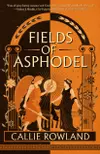
Read as a First Reads July 2026 pick. Based on the cover and the synopsis, I thought this would have similar tone and aesthetics to Madeline Miller's works - I really enjoyed Circe despite the fact that I've never been able to summon an interest in Greek mythology. Unfortunately, this book compares unfavorably to Miller's work.
I was initially drawn in by the first couple of chapters, where we meet Del (short for Asphodel) in the midst of brewing up a magical concoction to use at a summer festival of the gods in the underworld that evening. She's living alone on her island of trees and flowers, and the initial descriptions are lush, succulent, and colorful. Unfortunately, this tone does not persist through the book once Del starts interacting with other mythological figures, whereupon the atmospheric setting is dropped in favor of describing family Drama (capital D intended) with teenage dialog. Every character behaves in a juvenile manner, and while I realize some of this is true to Greek mythology in general - gods were always capricious, impulsive, shallow, and vindictive - the moralizing that the author tries to do through Del and all this Drama feels heavy-handed, as if trying to explain things to a child. (And this may be a nit, but every time Del has an angry response to something, she has "rage-red flowers blooming in her throat", which is such an overt, recognizable metaphor that it can really only be used once... but the author uses it at least 6 times throughout the book, making it seem like she very quickly ran out of ways to describe the feeling of anger.)
I struggled (and failed) to care about any of the characters. The lies they told and past actions they tried to hide seemed increasingly more "much ado about nothing" - everyone was harboring unmitigated resentment for something done to them in the past, and it was up to Del to discover the lies and fix the problems. Just a very teenage-girl-with-diary kind of style to me, and I couldn't care about the other gods at all. Pretty much everyone was the same character, behaving petulantly and vindictively and then finding ways to justify it. Even when Del finally embarks on a Fates-given "quest" over halfway through the book, when I thought we'd get into some interesting plotting and puzzle-solving, it's just more family Drama - Del solves all the puzzles in fits of revelation, and the actual resolution comes down in all cases to a lot of yelling and threatening and tears and confessions and more threatening.
Perhaps worst of all, about halfway through, we're "treated" to some very abrupt and very explicit sex scenes. I guess the good thing is that they're all smushed together in the same spot, so they're easily skippable. I don't have an problem with smut in principle, but it really didn't fit with this book at all, and felt cringey in the abrupt and blunt language used to describe them.
I'm fighting the feeling that I need to apologize for this rating after reading the author's notes at the back - it's clear she considered this a labor of love and that storytelling has been her passion since she was a child. Sadly this felt like it was actually cobbled together from a 9 or 10-year-old mythology lover's perspective, with some smut thrown in to appeal to adults.
Read as a First Reads July 2026 pick. Based on the cover and the synopsis, I thought this would have similar tone and aesthetics to Madeline Miller's works - I really enjoyed Circe despite the fact that I've never been able to summon an interest in Greek mythology. Unfortunately, this book compares unfavorably to Miller's work.
I was initially drawn in by the first couple of chapters, where we meet Del (short for Asphodel) in the midst of brewing up a magical concoction to use at a summer festival of the gods in the underworld that evening. She's living alone on her island of trees and flowers, and the initial descriptions are lush, succulent, and colorful. Unfortunately, this tone does not persist through the book once Del starts interacting with other mythological figures, whereupon the atmospheric setting is dropped in favor of describing family Drama (capital D intended) with teenage dialog. Every character behaves in a juvenile manner, and while I realize some of this is true to Greek mythology in general - gods were always capricious, impulsive, shallow, and vindictive - the moralizing that the author tries to do through Del and all this Drama feels heavy-handed, as if trying to explain things to a child. (And this may be a nit, but every time Del has an angry response to something, she has "rage-red flowers blooming in her throat", which is such an overt, recognizable metaphor that it can really only be used once... but the author uses it at least 6 times throughout the book, making it seem like she very quickly ran out of ways to describe the feeling of anger.)
I struggled (and failed) to care about any of the characters. The lies they told and past actions they tried to hide seemed increasingly more "much ado about nothing" - everyone was harboring unmitigated resentment for something done to them in the past, and it was up to Del to discover the lies and fix the problems. Just a very teenage-girl-with-diary kind of style to me, and I couldn't care about the other gods at all. Pretty much everyone was the same character, behaving petulantly and vindictively and then finding ways to justify it. Even when Del finally embarks on a Fates-given "quest" over halfway through the book, when I thought we'd get into some interesting plotting and puzzle-solving, it's just more family Drama - Del solves all the puzzles in fits of revelation, and the actual resolution comes down in all cases to a lot of yelling and threatening and tears and confessions and more threatening.
Perhaps worst of all, about halfway through, we're "treated" to some very abrupt and very explicit sex scenes. I guess the good thing is that they're all smushed together in the same spot, so they're easily skippable. I don't have an problem with smut in principle, but it really didn't fit with this book at all, and felt cringey in the abrupt and blunt language used to describe them.
I'm fighting the feeling that I need to apologize for this rating after reading the author's notes at the back - it's clear she considered this a labor of love and that storytelling has been her passion since she was a child. Sadly this felt like it was actually cobbled together from a 9 or 10-year-old mythology lover's perspective, with some smut thrown in to appeal to adults.

Added to listMagicwith 30 books.


